

What do you think?
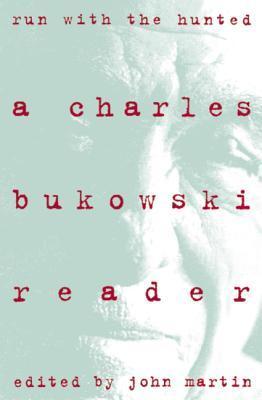
Run With the Hunted: A Charles Bukowski Reader
The best of Bukowski's novels, stories, and poems, this collection reads like an autobiography, relating the extraordinary story of his life and offering a sometimes harrowing, invariably exhilarating reading experience. A must for this counterculture idol's legion of fans.
497 pages, Paperback
First published January 1, 1962
About the author
Charles Bukowski
894 books30.6k followersHenry Charles Bukowski (born as Heinrich Karl Bukowski) was a German-born American poet, novelist and short story writer. His writing was influenced by the social, cultural and economic ambience of his home city of Los Angeles.It is marked by an emphasis on the ordinary lives of poor Americans, the act of writing, alcohol, relationships with women and the drudgery of work. Bukowski wrote thousands of poems, hundreds of short stories and six novels, eventually publishing over sixty books
Charles Bukowski was the only child of an American soldier and a German mother. At the age of three, he came with his family to the United States and grew up in Los Angeles. He attended Los Angeles City College from 1939 to 1941, then left school and moved to New York City to become a writer. His lack of publishing success at this time caused him to give up writing in 1946 and spurred a ten-year stint of heavy drinking. After he developed a bleeding ulcer, he decided to take up writing again. He worked a wide range of jobs to support his writing, including dishwasher, truck driver and loader, mail carrier, guard, gas station attendant, stock boy, warehouse worker, shipping clerk, post office clerk, parking lot attendant, Red Cross orderly, and elevator operator. He also worked in a dog biscuit factory, a slaughterhouse, a cake and cookie factory, and he hung posters in New York City subways.
Bukowski published his first story when he was twenty-four and began writing poetry at the age of thirty-five. His first book of poetry was published in 1959; he went on to publish more than forty-five books of poetry and prose, including Pulp (1994), Screams from the Balcony (1993), and The Last Night of the Earth Poems (1992).
He died of leukemia in San Pedro on March 9, 1994.
Charles Bukowski was the only child of an American soldier and a German mother. At the age of three, he came with his family to the United States and grew up in Los Angeles. He attended Los Angeles City College from 1939 to 1941, then left school and moved to New York City to become a writer. His lack of publishing success at this time caused him to give up writing in 1946 and spurred a ten-year stint of heavy drinking. After he developed a bleeding ulcer, he decided to take up writing again. He worked a wide range of jobs to support his writing, including dishwasher, truck driver and loader, mail carrier, guard, gas station attendant, stock boy, warehouse worker, shipping clerk, post office clerk, parking lot attendant, Red Cross orderly, and elevator operator. He also worked in a dog biscuit factory, a slaughterhouse, a cake and cookie factory, and he hung posters in New York City subways.
Bukowski published his first story when he was twenty-four and began writing poetry at the age of thirty-five. His first book of poetry was published in 1959; he went on to publish more than forty-five books of poetry and prose, including Pulp (1994), Screams from the Balcony (1993), and The Last Night of the Earth Poems (1992).
He died of leukemia in San Pedro on March 9, 1994.
Ratings & Reviews
Friends & Following
Create a free account to discover what your friends think of this book!
Community Reviews
Displaying 1 - 30 of 256 reviews

April 18, 2012
It's like the Modest Mouse song "Bukowski" says: He's a pretty good read, but who'd wanna be such an asshole? At least Charles Bukowski came by his assholery honestly -- "born into this sorrowful deadliness" -- not like that overgrown fratboy date-rapist Jack Kerouac. Bukowski was ostracized in school, abused at home, grotesquely scarred by acne and largely unloved. So he started hating back, channeling his hurt and rage into prose and poetry that was plainspoken but eloquent and occasionally even beautiful in its own grimy way. Like the last girl at the bar at closing time. Once he got published and semifamous and the literary cult formed around him, Bukowski had no shortage of company from mustachioed skanks and slumming celebrities. And Bono, Lord help poor Bukowski. But the bile never dried up, and the poison, tho slightly tempered by old age, kept flowing onto the page. In Bukowski's world, everyone is rotten and corrupt except for the Bukowski-stand-in narrator, and he's rotten and corrupt, but at least he has some integrity about it. "Run With the Hunted" is sort of a Bukowski Greatest Hits collection of poems and short stories and novel excerpts arranged in a way to serve as a ramshackle autobiography. It's not something I'd recommend reading from cover to cover. The constant misanthropy and misogyny and drunken self-abuse can get a little tiring. But it's a good book to dip into and sample, and every so often, you might find surprising spots of warmth and tenderness.
January 11, 2013
Charles Bukowski, the man with the plan. Bukowski is extremely entertaining and I love reading his stuff. I don't know about you, but I get a warm fuzzy feeling inside every time I read his stuff. Like drinking a fine scotch on a cold winter night...(I don't drink scotch nor live in a cold climate). His stories are both comforting and extremely inspiring to me for some reason. I find them even cathartic. After reading his stuff, I usually get a strong urge to be really really adventurous, drink heavily, and "bang" prostitutes in the nearest metropolitan alleyways and get in fights with random people and drive drunk and do other things a 30 year old adolescent might do...Anyways, it is both invigorating and completely delusional/depressing/pathetic/immature at the same time...I suppose I would just rather stick to the stories and drink by myself in my parents basement at the age of 29 in the middle of the suburbs...Now that is "real" living...and much safer... I also get completely depressed and misanthropic when reading his stuff for some reason...meh...
Anyways, Bukowski is simply written, alienated, and so fun to read. I really suspect 90% of his stuff is made up, which makes it that much more awesome. He is totally full of shit... I think if I taught high school, Bukowski would be a required read. Though I would never teach high school cause I hate it and teenagers are assholes... I think Bukowski should be read because he is very digestible and a great gateway to other better writers...
My biggest complaint with Bukowski is he can over do things from time to time. Like trying hard to find "meaning" in every shitty little thing his drunken eyes fall upon (a brown floor, some broken glass, or some turd floating in a toilet for a week cause he was too lazy to flush it down)... It can be too much, too romantic (I literally picture him staring into a toilet bowl at a turd and trying to make "sense" of it and write a poem out of it)...Though subtle, at times it seems unnatural and forced. However, it's not too much to the extent that it becomes an annoying aspect (like these reviews). It's tolerable (unlike these reviews).
I don't like quoting Bukowski much cause I think he has to be read in its entirety to fully enjoy it. It takes roughly a day to read the longest of his books cause they are so easy to read. Some laugh out loud parts in this book for sure...This book reads a bit like an autobiography the way it is arranged...
Here are notable poems no one gives a shit about:
"Alone with everybody"
"hug the dark"
"ill"
"8 count"
"Bring me your love"
"face of a political candidate on a street billboard"
"genius of the crowd"
"Dinosauria, we"
Anyways, Bukowski is simply written, alienated, and so fun to read. I really suspect 90% of his stuff is made up, which makes it that much more awesome. He is totally full of shit... I think if I taught high school, Bukowski would be a required read. Though I would never teach high school cause I hate it and teenagers are assholes... I think Bukowski should be read because he is very digestible and a great gateway to other better writers...
My biggest complaint with Bukowski is he can over do things from time to time. Like trying hard to find "meaning" in every shitty little thing his drunken eyes fall upon (a brown floor, some broken glass, or some turd floating in a toilet for a week cause he was too lazy to flush it down)... It can be too much, too romantic (I literally picture him staring into a toilet bowl at a turd and trying to make "sense" of it and write a poem out of it)...Though subtle, at times it seems unnatural and forced. However, it's not too much to the extent that it becomes an annoying aspect (like these reviews). It's tolerable (unlike these reviews).
I don't like quoting Bukowski much cause I think he has to be read in its entirety to fully enjoy it. It takes roughly a day to read the longest of his books cause they are so easy to read. Some laugh out loud parts in this book for sure...This book reads a bit like an autobiography the way it is arranged...
Here are notable poems no one gives a shit about:
"Alone with everybody"
"hug the dark"
"ill"
"8 count"
"Bring me your love"
"face of a political candidate on a street billboard"
"genius of the crowd"
"Dinosauria, we"

February 1, 2015
Always a joy to hear Buk read, like the voice of an old friend. His tone betrays a gentle soul, somewhat at odds with his more callous/crass persona, and his delivery seems natural and unaffected. Like all of his recordings, this one provides bits and pieces of context between each selection, and his interactions with those others present are both revealing and entertaining in equal measure. Initially I questioned the producer for including so many retakes when the slurred bits could have easily been edited out, but the end result is a raw, uninterrupted document (with all its imperfections) that makes you feel like you're sitting in on something really quite intimate.
I didn't love this one quite as much as Hostage, and of course nothing beats The Bukowski Tapes, but a good listen all in all.
I didn't love this one quite as much as Hostage, and of course nothing beats The Bukowski Tapes, but a good listen all in all.

June 3, 2010
I have gone through a few stages over the years in reading Buk. The first few years, I suppose I was like any kid eagerly devouring all the beat/countercultural stuff out there. At some point in time I just got tired of his apparent qualities of egotism, narcissism, misogyny, and what I saw as a romanticization of poverty and alcoholism... What was there to like about Bukowski?
As it turns out, I have been reading this anthology, which gathers some of his "best" writing in his forty or fifty books. His writing tends to be opaque--that is, the protagonists (usually named Henry or Hank Chinaski, which might or might not signify an alter ego of Bukowski) don't bother to tell us what they're thinking, either in their minds or to the other characters. They might even say something but a subliminal text is evident that says something entirely different. While behaving as a selfish prick toward a woman, for example, it occurs to the reader that the protagonist has had any number of negative experiences that burnt him to the point that he no longer has any ability to imagine a different response--as if he lacks any power, sometimes the awareness as well, to behave in a healthy way. This, Bukowski seems to recognize as being a factor in his loneliness and alienation, but considering all the alternatives that might be less lonely, he would have to compromise something essential to the Bukowskian man: personal freedom. That is sort of a Faustian bargain though, as personal freedom also begets loneliness.
Personal freedom is necessary for his male, white characters because they are stuck in a working class prison that basically demands the confrontation of stark choices. Either one works like a dog in a dead end job and lives a straight life, or one holds true to one's own sense of what is enjoyable, aesthetically rewarding. One offers an easier retirement and perhaps a (dysfunctional, of course) family, but sacrifices dignity. The alternative, having an indifferent attitude towards work means that other aspects of life will suffer; one will not be able to conform to the straight society; one will not find a respectable woman as a girlfriend or whatever. Self-respect also fails if one remains only a bum, but it's not that Bukowski's characters have no work ethic; they have a strong interest in maintaining their own writing.
Usually the protagonist's relationship to women, once you get over the initial revulsion you may have toward someone with such evident misogyny, is usually hilarious and at the end is poignant. Sex is not something he seems to care whether someone gets hurt over--sometimes the character commits rape (e.g. in the novel "Women.") Yet he does have ethical behavior in other ways. It's hard to explain--he is sometimes very kind to people and at the same time he sometimes treats people like shit, depending on what they mean to him as people.
The scene of Factotum, where a whore corners him in his furnished room and forcibly sucks him off despite his begging for mercy, is one of the funniest scenes I've ever read.
It's also worth noting how he can write prose that is dry, deadpan and flat in his own way; perhaps the only writer who I could compare to who uses such an "anti-art" aesthetic is Kurt Vonnegut. Things that we are accustomed to hear about in flowery, lyrical prose are treated mockingly, such as sex, while real emotions and traumatic events he conveys without a language for feelings, simply describing actions that show the characters' states of mind.
There are also selections of poetry in this book, but I chose to focus on the prose because I prefer the prose. If you would like to sample Bukowski over the thirty years or so of his career, this would be a good place to start.
As it turns out, I have been reading this anthology, which gathers some of his "best" writing in his forty or fifty books. His writing tends to be opaque--that is, the protagonists (usually named Henry or Hank Chinaski, which might or might not signify an alter ego of Bukowski) don't bother to tell us what they're thinking, either in their minds or to the other characters. They might even say something but a subliminal text is evident that says something entirely different. While behaving as a selfish prick toward a woman, for example, it occurs to the reader that the protagonist has had any number of negative experiences that burnt him to the point that he no longer has any ability to imagine a different response--as if he lacks any power, sometimes the awareness as well, to behave in a healthy way. This, Bukowski seems to recognize as being a factor in his loneliness and alienation, but considering all the alternatives that might be less lonely, he would have to compromise something essential to the Bukowskian man: personal freedom. That is sort of a Faustian bargain though, as personal freedom also begets loneliness.
Personal freedom is necessary for his male, white characters because they are stuck in a working class prison that basically demands the confrontation of stark choices. Either one works like a dog in a dead end job and lives a straight life, or one holds true to one's own sense of what is enjoyable, aesthetically rewarding. One offers an easier retirement and perhaps a (dysfunctional, of course) family, but sacrifices dignity. The alternative, having an indifferent attitude towards work means that other aspects of life will suffer; one will not be able to conform to the straight society; one will not find a respectable woman as a girlfriend or whatever. Self-respect also fails if one remains only a bum, but it's not that Bukowski's characters have no work ethic; they have a strong interest in maintaining their own writing.
Usually the protagonist's relationship to women, once you get over the initial revulsion you may have toward someone with such evident misogyny, is usually hilarious and at the end is poignant. Sex is not something he seems to care whether someone gets hurt over--sometimes the character commits rape (e.g. in the novel "Women.") Yet he does have ethical behavior in other ways. It's hard to explain--he is sometimes very kind to people and at the same time he sometimes treats people like shit, depending on what they mean to him as people.
The scene of Factotum, where a whore corners him in his furnished room and forcibly sucks him off despite his begging for mercy, is one of the funniest scenes I've ever read.
It's also worth noting how he can write prose that is dry, deadpan and flat in his own way; perhaps the only writer who I could compare to who uses such an "anti-art" aesthetic is Kurt Vonnegut. Things that we are accustomed to hear about in flowery, lyrical prose are treated mockingly, such as sex, while real emotions and traumatic events he conveys without a language for feelings, simply describing actions that show the characters' states of mind.
There are also selections of poetry in this book, but I chose to focus on the prose because I prefer the prose. If you would like to sample Bukowski over the thirty years or so of his career, this would be a good place to start.

November 3, 2013
Bukowski is not for the light-hearted, but well worth exploring. This 500-page reader is culled from over 20 works by the writer, and this is the weak point in the book. Editor John Martin has done a good job of mixing the poetry and prose of the writer from his early days until late in his life. Still, it is at times a clunky mix, missing the cohesiveness a writer gives a work. Nearly any anthology faces this dilemma, and few get around it. Still, as an introduction to his work, it would be hard to find a better mix.
As for the writing itself, you get all the highlights of Bukowski's style. It is raw, filled with life and obscenity, which nearly overlap for Bukowski. I find his prose a bit forced as he writes his own legend. If you do not know Bukowski's story, it is worth getting an overview somewhere else. Suffice it to say, he had a very rough childhood, and he seemed to relish a rough life on his own. He goes through women as fast as his drinking, and seems to hold them in about the same regard -- at times he worships both, and at times he is sick of them.
I find his best work showing up in his poetry. There too he can be seen consciously holding a mirror to his work, but at times you hear just the writer. For example:
"for Jane"
225 days under grass
and you know more than I.
they have long taken your blood,
you are a dry stick in a basket.
is this how it works?
in this room
the hours of love
still make shadows.
when you left
you took almost
everything.
I kneel in the nights
before tigers
that will not let me be.
what you were
will not happen again.
the tigers have found me
and I do not care.
Lines like "what you were/will not happen again" are not what usually get quoted for Bukowski. But this famous poem, for what many consider his first and main love, is one of many ways the writer kept his love alive.
I'm clearly not in the camps that sees Bukowski as a demigod, but he was a great writer and worth spending time with.
As for the writing itself, you get all the highlights of Bukowski's style. It is raw, filled with life and obscenity, which nearly overlap for Bukowski. I find his prose a bit forced as he writes his own legend. If you do not know Bukowski's story, it is worth getting an overview somewhere else. Suffice it to say, he had a very rough childhood, and he seemed to relish a rough life on his own. He goes through women as fast as his drinking, and seems to hold them in about the same regard -- at times he worships both, and at times he is sick of them.
I find his best work showing up in his poetry. There too he can be seen consciously holding a mirror to his work, but at times you hear just the writer. For example:
"for Jane"
225 days under grass
and you know more than I.
they have long taken your blood,
you are a dry stick in a basket.
is this how it works?
in this room
the hours of love
still make shadows.
when you left
you took almost
everything.
I kneel in the nights
before tigers
that will not let me be.
what you were
will not happen again.
the tigers have found me
and I do not care.
Lines like "what you were/will not happen again" are not what usually get quoted for Bukowski. But this famous poem, for what many consider his first and main love, is one of many ways the writer kept his love alive.
I'm clearly not in the camps that sees Bukowski as a demigod, but he was a great writer and worth spending time with.

February 12, 2008
I enjoyed reading this anthology of Mr. Bukowski's many stories, poems and excerpts from his novels. Charles Bukowski was an alcoholic and many of his stories touch upon his barfly life. With his strong descriptions and wonderful dialogue, I felt like I was right there with him. He also wrote about his working life - working for the post office, and eventually as a writer. He wrote about his experiences freely under fictional characters. He loved women but did not seem to have much respect for him. His stories are rough and not for the timid.

December 22, 2020
Rereading in 2020. This is the perfect Covid 19 book. It is usually too depressing, but since I am a bit depressed during these hard times, it works.
He can be funny. Right here at Christmas, I laughed out loud as he told about the Christmas tree falling on him, the hot lights burning his skin.
Since he writes so well, he can write about anything and make it interesting.
Chronologically arranged by the age of the narrator. It seems autobiographical.
Must add that I don't like the way he treats women. He is a very screwed up person.
He can be funny. Right here at Christmas, I laughed out loud as he told about the Christmas tree falling on him, the hot lights burning his skin.
Since he writes so well, he can write about anything and make it interesting.
Chronologically arranged by the age of the narrator. It seems autobiographical.
Must add that I don't like the way he treats women. He is a very screwed up person.
February 6, 2015
Bukowski es un "chiste", se disfruta con los personajes además que prueba su gran conocimiento de escritores europeos, poetas y por supuestos conocimiento de los clásicos.
Peleando a la contra contiene una serie de relatos de diferentes de sus libros publicados junto con secciones de poemas intercalándose en cada narración pero manteniendo la fluidez y la estilo de esta misma en algunas ocasiones; no obstante, esta alternancia de relatos y poemas hace que el libro tenga "salto de tiempos" (no exactamente al pie de la letra) que hará que el lector divida en su mente 4 relatos diferentes pero que a fin de cuentas todo pertenece a uno (aunque con diferente nombre de personaje) que no es más que el alter ego de Charles Buwski y éste es Hank Chinaski.
El estilo de Bukowski en sus poemas, es único (menos mal). Sus poemas son como látigos en el pecho de Bécquer y su prosa, soez, sin reparos, sin ninguna restricción.
Peleando a la contra contiene una serie de relatos de diferentes de sus libros publicados junto con secciones de poemas intercalándose en cada narración pero manteniendo la fluidez y la estilo de esta misma en algunas ocasiones; no obstante, esta alternancia de relatos y poemas hace que el libro tenga "salto de tiempos" (no exactamente al pie de la letra) que hará que el lector divida en su mente 4 relatos diferentes pero que a fin de cuentas todo pertenece a uno (aunque con diferente nombre de personaje) que no es más que el alter ego de Charles Buwski y éste es Hank Chinaski.
El estilo de Bukowski en sus poemas, es único (menos mal). Sus poemas son como látigos en el pecho de Bécquer y su prosa, soez, sin reparos, sin ninguna restricción.
October 25, 2011
Rarely does a collection do a truly talented writer justice - and Bukowski has such a mastery of words and language, an inherent ability to capture beauty and ugliness and loss and pain with such incredibly vivid detail that it haunts me. This collection has most of what you need, whether you just want to reread some favorite poems or stories, or whether you are discovering Charles for the first time. The mad, drunk poet laureate of Los Angeles, the genius bum and drunk, the man is a fascinating enigma, and his work is powerful, deep and personal. One of my favorite books of all time.

December 12, 2024
Oh daddy, this is hard…
I loved your writing, but I can’t finish you, sorry.
You revel on female pubic hair and I’m gay.
And let’s say I prefer drinking water, shall we?
We just aren’t meant for each other.
I wish you all the best.
I loved your writing, but I can’t finish you, sorry.
You revel on female pubic hair and I’m gay.
And let’s say I prefer drinking water, shall we?
We just aren’t meant for each other.
I wish you all the best.

July 31, 2022
..ja iepriekš šo biju lasījis, tagad arī paklausījos. bez lasītajiem dzejoļiem šeit ir saturīgas un dziļas sarunas ar džekiem, kas šo ierakstu veikuši un kopā ar Bukovski iedzer. īsta bauda.

February 27, 2017
I definitely struggled a bit with this one, trying to come to terms with literary merit vs. the author's biography. I enjoyed most of the writing collected here, and Bukowski does an amazing job of capturing the seedy underbelly of LA and those who inhabit it, in a way that completely expresses the everyday banality and suffering of that life. And it's refreshing to read a writer who didn't pen his poems from an ivory tower (psychologically or in terms of his physical circumstances). His writing is crude sometimes but every word feels like it was placed with intent.
The editor did an amazing job of compiling this collection. It reflects the author's often strange, sad, despicable life. This was the first collection of Bukowski that I've read. Before this I'd only read a few of his poems (such as "the bluebird," collected here on pg. 496). My general experience with him has been that he's somewhat romanticized as a rebellious literary figure of heroic proportion, and I guess that's the part that I just don't understand, after reading this chronological compilation of his [semi]auto-biographical poems and stories. I think Bukowski wrote some great things and he recorded his own human experience, which was of the sort that generally isn't widely or truthfully told with any sort of emotional depth. He gives voice to the fucked-up masses. But he was also an alcoholic, a womanizer, and an abuser, and writes about these experiences (and his victims) quite unrepentantly most of the time, which is where I become puzzled by the reverence he commands among some circles. You can't revere the man as a genius and also, secondarily, condemn his behavior (which, those who worship him don't usually do anyway). The very content of his work was made possible by that behavior. At the very least, that needs to be acknowledged.
It sounds like throughout his life, Bukowski was with a number of women who were artists...I think it would be really interesting to see a collection that places their work beside his, to see the creative output of these women, who are portrayed as such fleeting objects of desire (or confusion) in his work. I don't know if such a collection could ever exist. But throughout the stories and poems, I found myself wishing for a fuller picture of many of these women. Some of them seemed to impact him deeply, but we get only a superficial sense of who they were as individuals.
Anyway, I don't have any answers for reconciling the man and his work, though now that I'm a bit more familiar with his writing I'm better prepared to raise a critical eyebrow at anyone who praises him as some sort of nihilist hero.
One of the poems I particularly enjoyed:
air and light and time and space (pg. 411)
"--you know, I've either had a family, a job, something
has always been in the
way
but now
I've sold my house, I've found this
place, a large studio, you should see the space and
the light.
for the first time in my life I'm going to have a place and the time to
create."
no baby, if you're going to create
you're going to create
whether you work
16 hours a day in a coal mine
or
you're going to create in a small room with 3 children
while you're on
welfare,
you're going to create with part of your mind and your
body blown
away,
you're going to create blind
crippled
demented,
you're going to create with a cat crawling up your
back while
the whole city trembles in earthquake, bombardment,
flood and fire.
baby, air and light and time and space
have nothing to do with it
and don't create anything
except maybe a longer life to find
new excuses
for.
The editor did an amazing job of compiling this collection. It reflects the author's often strange, sad, despicable life. This was the first collection of Bukowski that I've read. Before this I'd only read a few of his poems (such as "the bluebird," collected here on pg. 496). My general experience with him has been that he's somewhat romanticized as a rebellious literary figure of heroic proportion, and I guess that's the part that I just don't understand, after reading this chronological compilation of his [semi]auto-biographical poems and stories. I think Bukowski wrote some great things and he recorded his own human experience, which was of the sort that generally isn't widely or truthfully told with any sort of emotional depth. He gives voice to the fucked-up masses. But he was also an alcoholic, a womanizer, and an abuser, and writes about these experiences (and his victims) quite unrepentantly most of the time, which is where I become puzzled by the reverence he commands among some circles. You can't revere the man as a genius and also, secondarily, condemn his behavior (which, those who worship him don't usually do anyway). The very content of his work was made possible by that behavior. At the very least, that needs to be acknowledged.
It sounds like throughout his life, Bukowski was with a number of women who were artists...I think it would be really interesting to see a collection that places their work beside his, to see the creative output of these women, who are portrayed as such fleeting objects of desire (or confusion) in his work. I don't know if such a collection could ever exist. But throughout the stories and poems, I found myself wishing for a fuller picture of many of these women. Some of them seemed to impact him deeply, but we get only a superficial sense of who they were as individuals.
Anyway, I don't have any answers for reconciling the man and his work, though now that I'm a bit more familiar with his writing I'm better prepared to raise a critical eyebrow at anyone who praises him as some sort of nihilist hero.
One of the poems I particularly enjoyed:
air and light and time and space (pg. 411)
"--you know, I've either had a family, a job, something
has always been in the
way
but now
I've sold my house, I've found this
place, a large studio, you should see the space and
the light.
for the first time in my life I'm going to have a place and the time to
create."
no baby, if you're going to create
you're going to create
whether you work
16 hours a day in a coal mine
or
you're going to create in a small room with 3 children
while you're on
welfare,
you're going to create with part of your mind and your
body blown
away,
you're going to create blind
crippled
demented,
you're going to create with a cat crawling up your
back while
the whole city trembles in earthquake, bombardment,
flood and fire.
baby, air and light and time and space
have nothing to do with it
and don't create anything
except maybe a longer life to find
new excuses
for.

October 18, 2023
Compilation de textes de Bukowski issus de plusieurs de ses ouvrages. Ce livre permet de retracer la vie de l'auteur car tous les extraits sont classés par ordre chronologique. C'est donc l'histoire d'un écrivain alcoolique, pervers et dépressif aux Etats Unis. Il y a des extraits de journaux intimes, de nouvelles, de poèmes, de témoignages... C'est globalement intéressant mais sans plus. Parfois, il y a des morceaux de bravoure qui poussent à continuer le livre toutefois cette lecture est objectivement totalement dispensable.
Read
April 2, 2012 For me Bukowski is one of the truest voices in both poetry and prose I have ever encountered.
I discovered him in Tower Records main store in Dublin in 1984. Took to his prose first and Run with the hunted was one of my first purchases.
I fully understand the hostility he generates, and I am glad in a way I nver met him.
There was a very mean streak in him and he acted dispicably towards many who were his greatest supporters.
But the more I read of him the more
I appreciate the clarity and incisive nature of his work.
Words are like bullets, he once said. That is so true. His words can go straight to the heart or the head.There is no floss or artifice in either his poetry or his prose.
He remains an outsider even years after his death. He had great compassion and depth while at the same time being a querelous and outrageous in the way he acted.
He reminds me somewhat of Patrick Kavanagh in that sense, but Kavanagh wrote some of the best and most compasionate poetry written by an Irish poet in the last century.
He was crue and ignorant jist as Buk was, but that does not invalidate his take on the world.
It wasn't all bleak either and it had an immediacy I that is unsurpassed in my view.
As I write this five volumes of his work are looking back at me as well as The John Fante Reader.
ll.
His work refle
t and the loneremains an outsider and most of his work reflects the plight of the los- the estab and
I discovered him in Tower Records main store in Dublin in 1984. Took to his prose first and Run with the hunted was one of my first purchases.
I fully understand the hostility he generates, and I am glad in a way I nver met him.
There was a very mean streak in him and he acted dispicably towards many who were his greatest supporters.
But the more I read of him the more
I appreciate the clarity and incisive nature of his work.
Words are like bullets, he once said. That is so true. His words can go straight to the heart or the head.There is no floss or artifice in either his poetry or his prose.
He remains an outsider even years after his death. He had great compassion and depth while at the same time being a querelous and outrageous in the way he acted.
He reminds me somewhat of Patrick Kavanagh in that sense, but Kavanagh wrote some of the best and most compasionate poetry written by an Irish poet in the last century.
He was crue and ignorant jist as Buk was, but that does not invalidate his take on the world.
It wasn't all bleak either and it had an immediacy I that is unsurpassed in my view.
As I write this five volumes of his work are looking back at me as well as The John Fante Reader.
ll.
His work refle
t and the loneremains an outsider and most of his work reflects the plight of the los- the estab and
Read
March 1, 2011Charles Bukowski shows his life through use of emotion and the dark life of an LA poet, as well as a rambunctious teenager living with abusive parents and horrible acne. There is also a great amount of profound poetry in this book. The profound poetry is vulgar and violent, but it comes straight from the heart of Charles i.e. Henry Chinaski. When Charles was walking up and down the streets with all of his pus filled bandages, he didn't let anything get to him, he stood up for himself even through all of those weird stares. Or the time Charles had to go and live with his Hell-bent parents for a while, which was a revival of old hate and rude disposition, but he didn't let the crude likes of his Father stop whatever it was he was doing... writing. Charles didn't mind waking up at 8 and going to the bar for a drink with Harry. In this memoir-esque biography, Charles sticks it to the man, discovers women, evolves into a crabby, dirt poor, Los Angeles poet/writer, and meets a new best friend, alcohol. This is one for the ages, and something all those with aspirations to write biographies/memoirs should read.

February 12, 2013
What I loved about this anthology is the fact that it was chronological. Bukowski never truly wrote a detailed autobiography of his life. What he wrote instead was a series of autobiographical fiction like Ham on Rye that this compilation pulls from.
Here the author has pieced together the various prose and poetry from Bukowski's life and arranged it in chronological order for us to take in. If you are a die hard Bukowski fan this may be repeat stuff for you. This book is best in the hands of a novice as they can read from start to finish the evolution from a tortured, isolated, lonely boy to a tortured, isolated lonely man. Bukowski as a read is very gritty, very vulgar but achingly honest. Through all of this pain I see a sensitive man who had been beaten up by life's circumstances and the patriarchy of early 20th century which was even less forgiving than it is today. The ending entry in this anthology, the poem "Bluebird", is a perfect example of what I mean.
Here the author has pieced together the various prose and poetry from Bukowski's life and arranged it in chronological order for us to take in. If you are a die hard Bukowski fan this may be repeat stuff for you. This book is best in the hands of a novice as they can read from start to finish the evolution from a tortured, isolated, lonely boy to a tortured, isolated lonely man. Bukowski as a read is very gritty, very vulgar but achingly honest. Through all of this pain I see a sensitive man who had been beaten up by life's circumstances and the patriarchy of early 20th century which was even less forgiving than it is today. The ending entry in this anthology, the poem "Bluebird", is a perfect example of what I mean.

December 26, 2015
Gracias Bukowski por tanto.
un maravilloso libro en el que se mezclan relatos, cuentos y poemas. En ocasiones eso me lió un poco. Disfruté de forma arrolladora de todo el libro, especialmente de los poemas. Alguien me dijo que Bukowski era demasiado pesimista, pero yo jamás lo he visto así. Creó que era negativo con todo aquello con lo que debía serlo, y a pesar de todo yo descubría unas increíbles ganas de vivir entre sus páginas. Me resultaban tiernos algunos poemas que no tenían un ápice de ternura y el autor que yo conocí entre estas palabras, era un hombre-niño: egoísta, dulce, sincero... y sobre todo un amante de las pequeñas cosas.
La esencia de Bukowski es que dice las cosas como le salen, con sus palabrotas, su grosería o su más tierna dulzura.
Supongo que no para todo el mundo es así.
un maravilloso libro en el que se mezclan relatos, cuentos y poemas. En ocasiones eso me lió un poco. Disfruté de forma arrolladora de todo el libro, especialmente de los poemas. Alguien me dijo que Bukowski era demasiado pesimista, pero yo jamás lo he visto así. Creó que era negativo con todo aquello con lo que debía serlo, y a pesar de todo yo descubría unas increíbles ganas de vivir entre sus páginas. Me resultaban tiernos algunos poemas que no tenían un ápice de ternura y el autor que yo conocí entre estas palabras, era un hombre-niño: egoísta, dulce, sincero... y sobre todo un amante de las pequeñas cosas.
La esencia de Bukowski es que dice las cosas como le salen, con sus palabrotas, su grosería o su más tierna dulzura.
Supongo que no para todo el mundo es así.

April 3, 2018
"drunken misogyny of the rebellious & popular" could be another title
Trigger Warning
Some stuff I really liked, some I didn't. I'm glad to be familiar with Bukowski now, but also not really interested in reading anything else of his. I liked the drunkenness, I liked the class consciousness, I liked the vicious eye. I didn't like that he seems to use the term rape as synonymous with sex. Women were sex objects or home creators, but also their own failures and growth and far too good for him and he does depict all those things, but yeah I wouldn't want to read it while feeling sensitive and really the relationships are some of the weakest subjects. Alcohol, weakness and social criticism are some of the better subjects he writes about.
Trigger Warning
Some stuff I really liked, some I didn't. I'm glad to be familiar with Bukowski now, but also not really interested in reading anything else of his. I liked the drunkenness, I liked the class consciousness, I liked the vicious eye. I didn't like that he seems to use the term rape as synonymous with sex. Women were sex objects or home creators, but also their own failures and growth and far too good for him and he does depict all those things, but yeah I wouldn't want to read it while feeling sensitive and really the relationships are some of the weakest subjects. Alcohol, weakness and social criticism are some of the better subjects he writes about.

July 31, 2012
Writing about Charles Bukowski — or, even more so, about his work — is like writing about driving in a pounding thunderstorm … or experiencing the sounds and smells of a paper mill running at full production … or walking through the neighborhood you grew up in, many years later, and marveling at how small and shabby the houses and people and cars and even the street-signs seem to have become. One can describe all of these things, of course; but ultimately, the experience itself is irreducible. And that is Charles Bukowski.
June 16, 2014
Excelente recopilatorio de las novelas y poemas de mi hombre Bukowski, el hecho de que este ordenado de manera cronologica es una gran idea, y sirve muy bien para hacerte una idea de la vida y pensamiento de este irrelevante escritor. Cronicas de un borracho, un perdedor sin suerte, desencantado con la vida, pero retratando esas pequeñas bellezas de la vida cotidiana.
Es curiosa su forma de escribir, siempre en primera persona, mucho dialogo con frases cortas, y mucha autobiografia en sus textos.
La parte primera del libro es la mejor, su infancia y adolescencia me resultan fascinantes...
Es curiosa su forma de escribir, siempre en primera persona, mucho dialogo con frases cortas, y mucha autobiografia en sus textos.
La parte primera del libro es la mejor, su infancia y adolescencia me resultan fascinantes...

March 9, 2013
Genial recuento de los escritos de Bukowski, presentados en forma cronológica en términos de vivencia. La gran ventaja que posee este texto, sino la principal, es que permite conocer de cerca la vida de su autor, de mano de su editor. Nos muestra gran cantidad de poemas (algunos brutales como Dinosauria, Abrazando la oscuridad o El pájaro azul) y deja entrever gran cantidad de escritos del autor. Un libro, sin duda alguna, necesario para cualquiera que disfrute de Charles Bukowski.

February 1, 2016
He always comes through. It was a delight to be taken through his work in this arrangement. I've read most of his published work and was comforted in seeing the passages and poems I'd read as well as some new stories and poems i hadn't gotten to yet. When the loneliness seems too great, he always comes through.
May 13, 2019
What a great writer Charles Bukowski was! Such vivid imagery and emotions! The subjects are usually difficult, but very compelling and, I think, important. I particularly liked the poems: be kind, trashcan lives, this, putrefaction, and Dinosauria we. They are very relevant, even (or especially) today.

October 11, 2016
Me conozco la vida de Bukowski: sus padres, sus trabajos, sus mujeres y todos sus libros. Pero me gusta la edición de este reader, porque mezcla poemas con relatos y partes de novela segun el momento de su vida. Nunca mas encontré una poesia que me gustara y me llegara tanto como la de Charles

December 18, 2017
Some of his boyhood stories are OK; some truly funny : "The Death of the Father"(p.182), "Maja Thurup" (p.199), "No Way to Paradise"(p.256). The so-called poetry stinks. I stand by my previous opinion on Charles Bukowski as expressed in my review of South of No North - see there.

April 12, 2020
Selections of poetry and excerpts from novels — pieces of his best work. The poetry is mostly above average, and the prose is captivating. I will be picking up Ham on Rye at the very least. Worth reading if you are not familiar with Bukowski.
August 8, 2007
probably all the bukowski the average person will ever need. a great introduction to his prose and poetry.

April 21, 2013
One of the treasures of my early book reading past and early love affair with the work of Bukowski.

October 12, 2015
A nice compilation of poems and novel excerpts arranged by the time period in Bukowski's life that they reflect. Reads like a novel in its own right. Very much enjoyed it.
July 13, 2022
This was my introduction to Bukowski outside of a couple love poems and a couple tales from my father about poorly-documented loanings of his books. I absolutely adore it.
It's easy to praise Bukowski, he's pessimistic and more than a little nihilistic but he's unwaveringly human. The short stories, poems, and novel excerpts in this book are each carefully selected and serve to epitomize these positive qualities in his writing.
This leads into what distinguished this book: its format. This book is split into five sections, each of which corresponds to part of Bukowski's life. Each section also has a predominately excerpted book, for example, section 1 made heavy use of Ham on Rye. The result is a very unique biography that tells the story of Bukowski's life through his own eyes in a way that an autobiography could never accomplish. I think John Martin deserves as much credit as Bukowski does for this - it's curated flawlessly.
I just loved this. Go read it.
It's easy to praise Bukowski, he's pessimistic and more than a little nihilistic but he's unwaveringly human. The short stories, poems, and novel excerpts in this book are each carefully selected and serve to epitomize these positive qualities in his writing.
This leads into what distinguished this book: its format. This book is split into five sections, each of which corresponds to part of Bukowski's life. Each section also has a predominately excerpted book, for example, section 1 made heavy use of Ham on Rye. The result is a very unique biography that tells the story of Bukowski's life through his own eyes in a way that an autobiography could never accomplish. I think John Martin deserves as much credit as Bukowski does for this - it's curated flawlessly.
I just loved this. Go read it.
Displaying 1 - 30 of 256 reviews