What do you think?
Rate this book


280 pages, Hardcover
First published August 27, 2019

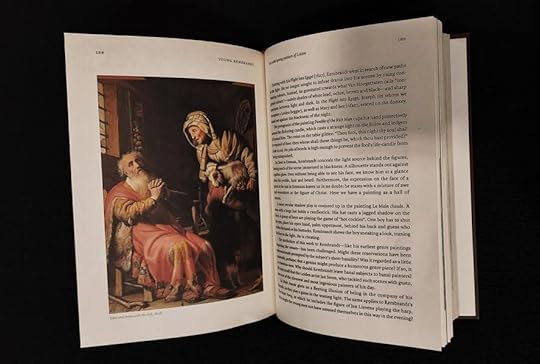
"In 1626 in painting his TOBIT AND ANNA WITH A KID, Rembrandt was still using his multicolored palette of his Amsterdam teacher. The painting epitomises his ability to render fabrics and other materials, from the torn cloak of the aged Tobit to the rough coat of the little kid under Anna's arm."
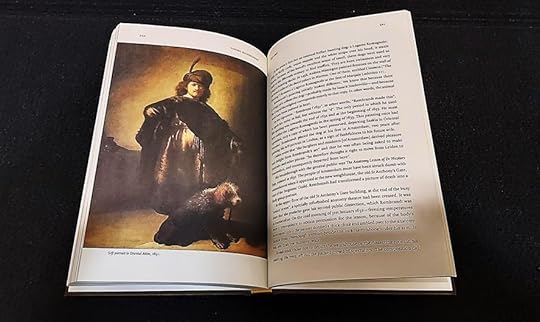
"In 1631, Rembrandt had made a full-length painting of himself as an Oriental. In this portrait, the artist wears a shiny gold robe, a dark velvet cloak and a turban sporting a frivolous feather. Rembrandt's pupils had told Arnold Houbraken that the painter was capable of spending two days "arranging a turban exactly as he wanted it . . . At the artist's feet lies an unusual Italian hunting dog: a Lagotto Romagnolo. With its fluffy curls, warm muzzle and the white stripe over his head, it steals hearts.""
"It is an irresistible image: two young boys from a provincial town in Holland who team up and determine to conquer the world, recognizing the spark of genius not only in themselves but in each other. They are totally absorbed with one another. Rembrandt van Rijn and Jan Lievens . . . At the end of the 1620's, even art connoisseurs found the work by Rembrandt and Lievens hard to tell apart.""
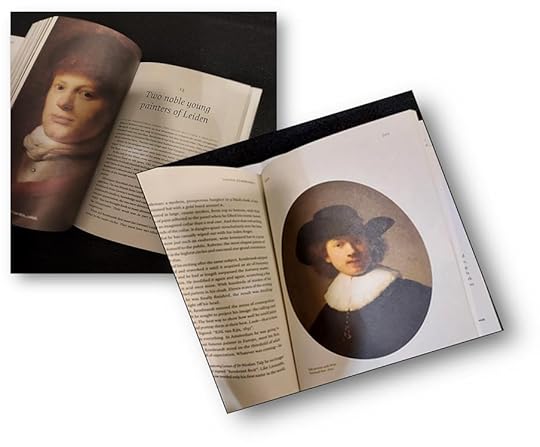
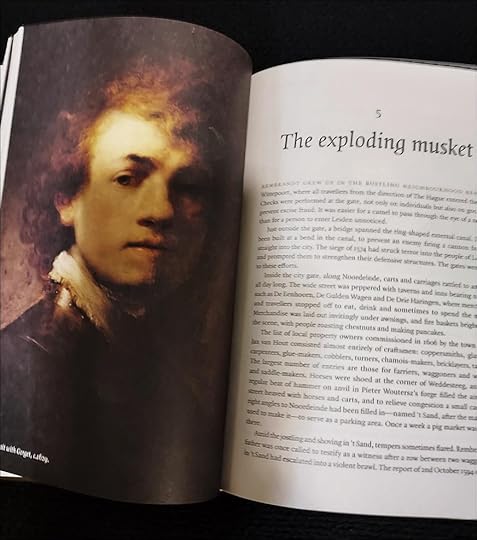
"Rembrandt may well have worn his father's own gorget for the 1629 self portrait. The painting shows a self assured, pugnacious figure with his hair styled in fashionable curls complete with the aristocratic "love lock", a tapering corkscrew curl. A little neckscarf completed the outfit. Rembrandt was proud of the fighting spirit of Leiden's civic militia. Although he probably never fired a shot himself, the bright illumination of the portrait depicting him as a military dandy conveys his allegiance to the men of arms.""
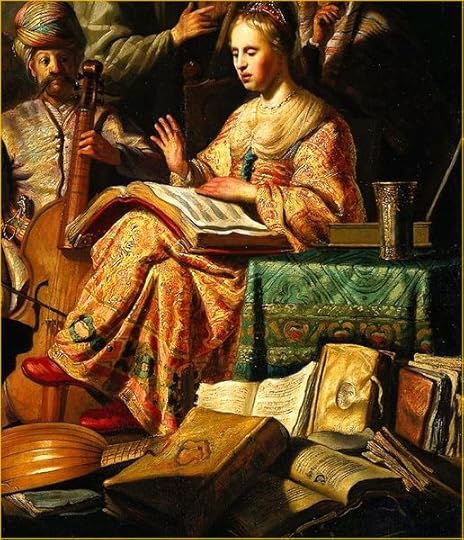
“Depicting books and paper was a special skill which Rembrandt had mastered at an early age . . . With their weathered vellum binding and rumpled paper, the books appear to serve here as vanitas symbols, emphasizing the vanity and transience of earthly life. Elsewhere, however—in the hands of the hermit St. Jerome or the prophetess Hannah—books are generally emblems of erudition and piety.”"