

What do you think?
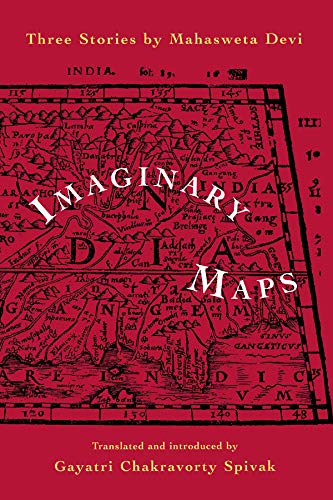
Imaginary Maps
Imaginary Maps presents three stories from noted Bengali writer Mahasweta Devi in conjunction with readings of these tales by famed cultural and literary critic, Gayatri Chakravorty Spivak. Weaving history, myth and current political realities, these stories explore troubling motifs in contemporary Indian life through the figures and narratives of indigenous tribes in India. At once delicate and violent, Devi's stories map the experiences of the "tribals" and tribal life under decolonization. In "The Hunt," "Douloti the Bountiful" and the deftly wrought allegory of tribal agony "Pterodactyl, Pirtha, and Puran Sahay," Ms. Devi links the specific fate of tribals in India to that of marginalized peoples everywhere. Gayatri Spivak's readings of these stories connect the necessary "power lines" within them, not only between local and international structures of power (patriarchy, nationalisms, late capitalism), but also to the university.
245 pages, Kindle Edition
First published January 1, 1994
About the author
Mahasweta Devi
202 books340 followersMahasweta Devi was an Indian social activist and writer. She was born in 1926 in Dhaka, to literary parents in a Hindu Brahmin family. Her father Manish Ghatak was a well-known poet and novelist of the Kallol era, who used the pseudonym Jubanashwa. Mahasweta's mother Dharitri Devi was also a writer and a social worker.
She joined the Rabindranath Tagore-founded Vishvabharati University in Santiniketan and completed a B.A. (Hons) in English, and then finished an M.A. in English at Calcutta University as well. She later married renowned playwright Bijon Bhattacharya who was one of the founding fathers of the IPTA movement. In 1948, she gave birth to Nabarun Bhattacharya, currently one of Bengal's and India's leading novelist whose works are noted for their intellectual vigour and philosophical flavour. She got divorced from Bijon Bhattacharya in 1959.
In 1964, she began teaching at Bijoygarh College (an affiliated college of the University of Calcutta system). During those days, Bijoygarh College was an institution for working class women students. During that period she also worked as a journalist and as a creative writer. Recently, she is more famous for her work related to the study of the Lodhas and Shabars, the tribal communities of West Bengal, women and dalits. She is also an activist who is dedicated to the struggles of tribal people in Bihar, Madhya Pradesh and Chhattisgarh. In her elaborate Bengali fiction, she often depicts the brutal oppression of tribal peoples and the untouchables by potent, authoritarian upper-caste landlords, lenders, and venal government officials.
Major awards:
1979: Sahitya Akademi Award (Bengali): – Aranyer Adhikar (novel)
1986: Padma Shri[2]
1996: Jnanpith Award - the highest literary award from the Bharatiya Jnanpith
1997: Ramon Magsaysay Award - Journalism, Literature, and the Creative Communication Arts
1999: Honoris causa - Indira Gandhi National Open University (IGNOU)
2006: Padma Vibhushan - the second highest civilian award from the Government of India
2010:Yashwantrao Chavan National Award
2011: Bangabibhushan - the highest civilian award from the Government of West Bengal
2012: Hall of Fame Lifetime Achievement Sahityabramha - the first Lifetime Achievement award in Bengali Literature from 4thScreen-IFJW.
মহাশ্বেতা দেবী একটি মধ্যবিত্ত বাঙালি পরিবারে জন্মগ্রহণ করেছিলেন । তাঁর পিতা মনীশ ঘটক ছিলেন কল্লোল যুগের প্রখ্যাত সাহিত্যিক এবং তাঁর কাকা ছিলেন বিখ্যাত চিত্রপরিচালক ঋত্বিক ঘটক। মা ধরিত্রী দেবীও ছিলেন সাহিত্যিক ও সমাজসেবী। মহাশ্বেতা দেবী বিখ্যাত নাট্যকার বিজন ভট্টাচার্যের সঙ্গে বিবাহবন্ধনে আবদ্ধ হন। তাঁদের একমাত্র পুত্র, প্রয়াত নবারুণ ভট্টাচার্য স্মরণীয় কবিতার পঙ্ক্তি ‘এ মৃত্যু উপত্যকা আমার দেশ নয়’ এবং হারবার্ট উপন্যাস লিখে বাংলা সাহিত্যে স্থায়ী স্বাক্ষর রেখে গেছেন।
তাঁর শৈশব ও কৈশোরে স্কুলের পড়াশোনা ঢাকায়। দেশভাগের পর চলে আসেন কলকাতায়। এরপর শান্তিনিকেতনের বিশ্বভারতী বিশ্ববিদ্যালয় থেকে ইংরেজিতে অনার্স এবং কলকাতা বিশ্ববিদ্যালয় থেকে স্নাতকোত্তর ডিগ্রি নেন।
১৯৬৪ খ্রীষ্টাব্দে তিনি বিজয়গড় কলেজে শিক্ষকতা শুরু করেন । এই সময়েই তিনি একজন সাংবাদিক এবং লেখিকা হিসাবে কাজ করেন। পরবর্তীকালে তিনি বিখ্যাত হন মূলত পশ্চিমবাংলার উপজাতি এবং নারীদের ওপর তাঁর কাজের জন্য । তিনি বিভিন্ন লেখার মাধ্যমে বিভিন্ন উপজাতি এবং মেয়েদের উপর শোষণ এবং বঞ্চনার কথা তুলে ধরেছেন। সাম্প্রতিক কালে মহাশ্বেতা দেবী পশ্চিমবঙ্গ সরকারের শিল্পনীতির বিরুদ্ধে সরব হয়েছেন । সরকার কর্তৃক বিপুল পরিমাণে কৃষিজমি অধিগ্রহণ এবং স্বল্পমূল্যে তা শিল্পপতিদের কাছে বিতরণের নীতির তিনি কড়া সমালোচক । এছাড়া তিনি শান্তিনিকেতনে প্রোমোটারি ব্যবসার বিরুদ্ধেও প্রতিবাদ করেছেন ।
তাঁর লেখা শতাধিক বইয়ের মধ্যে হাজার চুরাশির মা অন্যতম। তাঁকে পদ্মবিভূষণ (ভারত সরকারের দ্বিতীয় সর্বোচ্চ নাগরিক পুরস্কার,২০০৬), রামন ম্যাগসেসে পুরস্কার (১৯৯৭), জ্ঞানপীঠ পুরস্কার (সাহিত্য একাডেমির সর্বোচ্চ সাহিত্য সম্মান), সার্ক সাহিত্য পুরস্কার (২০০৭) প্রভৃতি পদকে ভূষিত করা হয়।
২০১৬ সালের ২৮ জুলাই, বৃহস্পতিবার বেলা ৩টা ১৬ মিনিটে চিকিৎসাধীন অবস্থায় তিনি শেষনিশ্বাস ত্যাগ করেন।
जन्म : 1926, ढाका।
She joined the Rabindranath Tagore-founded Vishvabharati University in Santiniketan and completed a B.A. (Hons) in English, and then finished an M.A. in English at Calcutta University as well. She later married renowned playwright Bijon Bhattacharya who was one of the founding fathers of the IPTA movement. In 1948, she gave birth to Nabarun Bhattacharya, currently one of Bengal's and India's leading novelist whose works are noted for their intellectual vigour and philosophical flavour. She got divorced from Bijon Bhattacharya in 1959.
In 1964, she began teaching at Bijoygarh College (an affiliated college of the University of Calcutta system). During those days, Bijoygarh College was an institution for working class women students. During that period she also worked as a journalist and as a creative writer. Recently, she is more famous for her work related to the study of the Lodhas and Shabars, the tribal communities of West Bengal, women and dalits. She is also an activist who is dedicated to the struggles of tribal people in Bihar, Madhya Pradesh and Chhattisgarh. In her elaborate Bengali fiction, she often depicts the brutal oppression of tribal peoples and the untouchables by potent, authoritarian upper-caste landlords, lenders, and venal government officials.
Major awards:
1979: Sahitya Akademi Award (Bengali): – Aranyer Adhikar (novel)
1986: Padma Shri[2]
1996: Jnanpith Award - the highest literary award from the Bharatiya Jnanpith
1997: Ramon Magsaysay Award - Journalism, Literature, and the Creative Communication Arts
1999: Honoris causa - Indira Gandhi National Open University (IGNOU)
2006: Padma Vibhushan - the second highest civilian award from the Government of India
2010:Yashwantrao Chavan National Award
2011: Bangabibhushan - the highest civilian award from the Government of West Bengal
2012: Hall of Fame Lifetime Achievement Sahityabramha - the first Lifetime Achievement award in Bengali Literature from 4thScreen-IFJW.
মহাশ্বেতা দেবী একটি মধ্যবিত্ত বাঙালি পরিবারে জন্মগ্রহণ করেছিলেন । তাঁর পিতা মনীশ ঘটক ছিলেন কল্লোল যুগের প্রখ্যাত সাহিত্যিক এবং তাঁর কাকা ছিলেন বিখ্যাত চিত্রপরিচালক ঋত্বিক ঘটক। মা ধরিত্রী দেবীও ছিলেন সাহিত্যিক ও সমাজসেবী। মহাশ্বেতা দেবী বিখ্যাত নাট্যকার বিজন ভট্টাচার্যের সঙ্গে বিবাহবন্ধনে আবদ্ধ হন। তাঁদের একমাত্র পুত্র, প্রয়াত নবারুণ ভট্টাচার্য স্মরণীয় কবিতার পঙ্ক্তি ‘এ মৃত্যু উপত্যকা আমার দেশ নয়’ এবং হারবার্ট উপন্যাস লিখে বাংলা সাহিত্যে স্থায়ী স্বাক্ষর রেখে গেছেন।
তাঁর শৈশব ও কৈশোরে স্কুলের পড়াশোনা ঢাকায়। দেশভাগের পর চলে আসেন কলকাতায়। এরপর শান্তিনিকেতনের বিশ্বভারতী বিশ্ববিদ্যালয় থেকে ইংরেজিতে অনার্স এবং কলকাতা বিশ্ববিদ্যালয় থেকে স্নাতকোত্তর ডিগ্রি নেন।
১৯৬৪ খ্রীষ্টাব্দে তিনি বিজয়গড় কলেজে শিক্ষকতা শুরু করেন । এই সময়েই তিনি একজন সাংবাদিক এবং লেখিকা হিসাবে কাজ করেন। পরবর্তীকালে তিনি বিখ্যাত হন মূলত পশ্চিমবাংলার উপজাতি এবং নারীদের ওপর তাঁর কাজের জন্য । তিনি বিভিন্ন লেখার মাধ্যমে বিভিন্ন উপজাতি এবং মেয়েদের উপর শোষণ এবং বঞ্চনার কথা তুলে ধরেছেন। সাম্প্রতিক কালে মহাশ্বেতা দেবী পশ্চিমবঙ্গ সরকারের শিল্পনীতির বিরুদ্ধে সরব হয়েছেন । সরকার কর্তৃক বিপুল পরিমাণে কৃষিজমি অধিগ্রহণ এবং স্বল্পমূল্যে তা শিল্পপতিদের কাছে বিতরণের নীতির তিনি কড়া সমালোচক । এছাড়া তিনি শান্তিনিকেতনে প্রোমোটারি ব্যবসার বিরুদ্ধেও প্রতিবাদ করেছেন ।
তাঁর লেখা শতাধিক বইয়ের মধ্যে হাজার চুরাশির মা অন্যতম। তাঁকে পদ্মবিভূষণ (ভারত সরকারের দ্বিতীয় সর্বোচ্চ নাগরিক পুরস্কার,২০০৬), রামন ম্যাগসেসে পুরস্কার (১৯৯৭), জ্ঞানপীঠ পুরস্কার (সাহিত্য একাডেমির সর্বোচ্চ সাহিত্য সম্মান), সার্ক সাহিত্য পুরস্কার (২০০৭) প্রভৃতি পদকে ভূষিত করা হয়।
২০১৬ সালের ২৮ জুলাই, বৃহস্পতিবার বেলা ৩টা ১৬ মিনিটে চিকিৎসাধীন অবস্থায় তিনি শেষনিশ্বাস ত্যাগ করেন।
जन्म : 1926, ढाका।
Ratings & Reviews
Friends & Following
Create a free account to discover what your friends think of this book!
Community Reviews
Displaying 1 - 30 of 35 reviews

December 6, 2019
2.5/5stars
October 18, 2011
haunting...read it before reading the 'Breast Stories' trilogy. reading M Devi almost became a sort of ritual for me at one time. i love the apparently flat-toned and non-poetic invocation of the landscape of Central India, complemented by the starkness of the storytelling.

May 28, 2007
A must-read for anyone concerned with oppression, and that should be everyone.

February 28, 2020
“There are landowners and moneylenders in every village. They are not all so ruthless. Bonded labor is sown into the soil of this district. Every house has a bonded laborer. Not all masters are so ruthless. No one has seen what a good master is like. But they have heard that there are good masters.”
(from “Douloti the Bountiful”)
*
“But the old stories are also getting lost, they are losing their way, like mote in the face of a dust storm, ancient tales, history, songs, sagas, folklore, folkways. How will fifty-nine million six hundred and twenty-eight thousand, six hundred and thirty-nine people capture and put together their history and their culture from the storm winds of areas ruled by twenty-five states and the central government? Will they too finally seek shelter from mainstream writers? If Nagesia has to learn from the writings of some anthropologist, he has to get that much education in order to read that material. If he wrote his own story!”
(from “Pterodactyl, Puran Sahay, and Pirtha”)
*
these stories are a brutal and moving testament to the power of a documentary realism (tempered in the case of “Pterodactyl, Puran Sahay, and Pirtha” with a not-quite-realism, if also not-quite-anything-else) that I have frankly very little faith in, generally speaking. wow.
(from “Douloti the Bountiful”)
*
“But the old stories are also getting lost, they are losing their way, like mote in the face of a dust storm, ancient tales, history, songs, sagas, folklore, folkways. How will fifty-nine million six hundred and twenty-eight thousand, six hundred and thirty-nine people capture and put together their history and their culture from the storm winds of areas ruled by twenty-five states and the central government? Will they too finally seek shelter from mainstream writers? If Nagesia has to learn from the writings of some anthropologist, he has to get that much education in order to read that material. If he wrote his own story!”
(from “Pterodactyl, Puran Sahay, and Pirtha”)
*
these stories are a brutal and moving testament to the power of a documentary realism (tempered in the case of “Pterodactyl, Puran Sahay, and Pirtha” with a not-quite-realism, if also not-quite-anything-else) that I have frankly very little faith in, generally speaking. wow.

January 20, 2019
The story and two novellas included in this book each address the struggles of the Adivasi populations in India in complex, dense and nuanced ways. They certainly aren't easy reads, and Devi is less concerned with building a compelling or even coherent plot than she is in creating a narrative collage. But despite the challenges, the whole is more than the sum of the parts in each case. They bristle with political energy as indigenous rights, gender rights, and environmental justice all converge in fascinating ways. I wish I could read it in the original Bangla!
![Profile Image for [ashes].](https://i.gr-assets.com/images/S/compressed.photo.goodreads.com/users/1545842040i/22080900._UX200_CR0,50,200,200_.jpg)
May 7, 2016
Three great stories. ''Pterodactyl, Pirtha, and Puran Sahay'' being my favourite for incorporating postcolonialism, globalisation, media theory and hauntology.
April 17, 2021
A very important book but Spivak's translation is AWFUL.

August 26, 2021
Literature has long been used as a tool for resistance and the correct representation of people and societies that do not generally find themselves includedwithin the mainstream society. Such writings aim towards the upliftment of the said minority societies. It is what critics have often referred to as “writing one’s way to power”. Imaginary Maps by Mahashweta Devi is one such work that brings out the oppression of the colonizers and the inherent prejudice and cultural bias of people belonging to the upper class; people much like you and me; who have never really struggled for anything.
For people who don’t know who Mahashweta Devi is, she is considered to beone of the prominent faces of India’s Adivasi movement. She was a Bengali activist and writer who devoted her whole life to the empowerment of the tribal people of West Bengal, Madhya Pradesh, and Chattisgarh regions. Her works are primarily in Bengali but they have been widely translated into other Indian languages as well as in English.
Imaginary Maps is a collection of three short stories although the second and third are often considered novelettes. They were translated from individual works written in Bengali by renowned literary critic and translator Gayatri Chakravorty Spivak.
The book opens with an interview of the author that was conducted by the translator herself. The interview creates a premise for the readers as to what they should be expecting in her works. Mahashweta Devi talks about her journey as an activist and how her travels in the obscure forest and hilly regions of Bengal, MP, and Chattisgarh led her to create characters in her stories. She emphasizes that these characters are not mere fictional descriptions but such characters can actually be found in the tribal villages that she has spent her life in, interacting and working with them. The translator’s note by Spivak helps the reader in situating the stories into a historical context since most Indian and Western readers are expected to be unfamiliar with the tribal experiences. Both the author’s interview and the translator’s note were very insightful for me.
Coming to the three stories, the first one is titled ‘The Hunt’. The original Bengali title of the story is ‘Shikar’. The story is about tribal women’s struggle for survival but the story of Mary Oraon could also easily be the story of every woman in our country where her privileges - economic, political, and sexual - are determined by and judged by the dominant cultural perspectives. It discusses in detail the issue of sexual violence and power that upper caste men tend to exert on tribal women. Mary Oraon has been portrayed as a powerful character, hardened by her circumstances as she takes matters of her sexual freedom into her own hands.
‘Douloti, the bountiful’ is probably one of the most heartbreaking stories I have ever read about the subjection of women who are forced into sexual labor as a way of paying back monetary loans given to them and their families by men in power. The second story gives more insight into the bonded labor system that is still prevalent in the tribal villages. The character of Douloti acts as a sharp contrast to Mary Oraon and her story marks the real position of a helpless tribal woman in Indian society.
‘Pterodactyl, Puran Sahay, and Pirtha’ is the third story and is a more factual account of the workings of a fictional tribal village. It was surely a compelling narrative but with each page, I started feeling more and more disconnected from the characters because frankly, there are too many of them to keep a track of. Nevertheless, the story presents an appropriate account of the culture and ways of the indegenious people, their beliefs and the realities in which they continue to exist even when their identity is often almost negated by the rest of our country.
For people who don’t know who Mahashweta Devi is, she is considered to beone of the prominent faces of India’s Adivasi movement. She was a Bengali activist and writer who devoted her whole life to the empowerment of the tribal people of West Bengal, Madhya Pradesh, and Chattisgarh regions. Her works are primarily in Bengali but they have been widely translated into other Indian languages as well as in English.
Imaginary Maps is a collection of three short stories although the second and third are often considered novelettes. They were translated from individual works written in Bengali by renowned literary critic and translator Gayatri Chakravorty Spivak.
The book opens with an interview of the author that was conducted by the translator herself. The interview creates a premise for the readers as to what they should be expecting in her works. Mahashweta Devi talks about her journey as an activist and how her travels in the obscure forest and hilly regions of Bengal, MP, and Chattisgarh led her to create characters in her stories. She emphasizes that these characters are not mere fictional descriptions but such characters can actually be found in the tribal villages that she has spent her life in, interacting and working with them. The translator’s note by Spivak helps the reader in situating the stories into a historical context since most Indian and Western readers are expected to be unfamiliar with the tribal experiences. Both the author’s interview and the translator’s note were very insightful for me.
Coming to the three stories, the first one is titled ‘The Hunt’. The original Bengali title of the story is ‘Shikar’. The story is about tribal women’s struggle for survival but the story of Mary Oraon could also easily be the story of every woman in our country where her privileges - economic, political, and sexual - are determined by and judged by the dominant cultural perspectives. It discusses in detail the issue of sexual violence and power that upper caste men tend to exert on tribal women. Mary Oraon has been portrayed as a powerful character, hardened by her circumstances as she takes matters of her sexual freedom into her own hands.
‘Douloti, the bountiful’ is probably one of the most heartbreaking stories I have ever read about the subjection of women who are forced into sexual labor as a way of paying back monetary loans given to them and their families by men in power. The second story gives more insight into the bonded labor system that is still prevalent in the tribal villages. The character of Douloti acts as a sharp contrast to Mary Oraon and her story marks the real position of a helpless tribal woman in Indian society.
‘Pterodactyl, Puran Sahay, and Pirtha’ is the third story and is a more factual account of the workings of a fictional tribal village. It was surely a compelling narrative but with each page, I started feeling more and more disconnected from the characters because frankly, there are too many of them to keep a track of. Nevertheless, the story presents an appropriate account of the culture and ways of the indegenious people, their beliefs and the realities in which they continue to exist even when their identity is often almost negated by the rest of our country.

March 13, 2019
I really enjoyed the majority of this, surprisingly, despite taking me forever to read. The first two stories in this short story collection were so gripping, striking and difficult to read, but I also think they were very important. The last story was definitely my least favourite and I didn't care as much about the story or the characters.
May 6, 2024
2.5
as soon as I saw that Spivak translated it, I knew it would be a rough one
as soon as I saw that Spivak translated it, I knew it would be a rough one


April 14, 2024
Only read douloti have to finish

February 3, 2016
In postcolonial literature, the two prominent ideals which surface repeatedly are representation and resistance. Inevitably, the history of resistances has taught us that it is not easy for society to divorce resistance from the working of hegemonies. As a theory, the idea of using literature as a tool for resistance points to the prevalence of dominant ideologies. In other words, the process is perceived as ‘writing back’, pointing out oppression and racism of the colonisers or the inherent cultural bias of the educated people. Therefore, it would be incorrect for readers to celebrate resistance as a symbol of freedom as it amounts to ignore the all-encompassing force of power in general.
‘Imaginary Maps’ by Mahaswetha Devi translated by Gayatri Chakravorty Spivak consists of a short story (The Hunt) and two novellas (Douloti: The Bountiful and Pterodactyl, Puran Sahay and Pirtha). All three stories in this anthology are set in the tribal areas of eastern India and therefore, the protagonists are tribals. The anthology has a fairly detailed introductory essay by Gayatri Spivak which helps readers in situating the stories and a historical context, which many Indian and western readers unfamiliar with tribal experiences tend to be unfamiliar with.
Spivak features as prominently as Mahaswetha Devi herself. With each story accompanied by a detailed analysis of an almost equivalent length, through either or foreword, analysis or notes on each story, makes it impossible to ignore. The analysis, needless to say, is done keeping in mind a postcolonial academic but adds very little for a casual reader. Imaginary Maps has the translator’s comments heavily laced with postcolonial and academic jargon. Given that Mahaswetha Devi’s stories make for a disturbing read, it is only a guess that moderately serious readers would attempt them.
‘The Hunt’ attends to the issue of sexual violence and power while Douloti: The Bountiful marks the place of a tribal woman in Indian society. While Pterodactyl, Puran Sahay and Pirtha is a fascinating novella for the way it engages with identity, history, the relationships among various sorts of past and examining contemporary truths and realities while also accounting for the role of memory in recording these insights.
Given that there are insidious ways in which resistances get absorbed back into the structures of dominance, the iterative irony and the almost journalistic form of writing comes from Mahaswetha Devi’s deep commitment as a social activist, aiming for the liberation of the victims of the inhuman social and economic system in the country. Moving from the specifics to the generics, ‘Imaginary Maps’ as a whole, is symbolic of a shameful reality of contemporary India: representing the bonded labourer/prostitute systems of Seora village while also carrying forward the concerns of such oppressive systems prevalent across India.
‘Imaginary Maps’ by Mahaswetha Devi translated by Gayatri Chakravorty Spivak consists of a short story (The Hunt) and two novellas (Douloti: The Bountiful and Pterodactyl, Puran Sahay and Pirtha). All three stories in this anthology are set in the tribal areas of eastern India and therefore, the protagonists are tribals. The anthology has a fairly detailed introductory essay by Gayatri Spivak which helps readers in situating the stories and a historical context, which many Indian and western readers unfamiliar with tribal experiences tend to be unfamiliar with.
Spivak features as prominently as Mahaswetha Devi herself. With each story accompanied by a detailed analysis of an almost equivalent length, through either or foreword, analysis or notes on each story, makes it impossible to ignore. The analysis, needless to say, is done keeping in mind a postcolonial academic but adds very little for a casual reader. Imaginary Maps has the translator’s comments heavily laced with postcolonial and academic jargon. Given that Mahaswetha Devi’s stories make for a disturbing read, it is only a guess that moderately serious readers would attempt them.
‘The Hunt’ attends to the issue of sexual violence and power while Douloti: The Bountiful marks the place of a tribal woman in Indian society. While Pterodactyl, Puran Sahay and Pirtha is a fascinating novella for the way it engages with identity, history, the relationships among various sorts of past and examining contemporary truths and realities while also accounting for the role of memory in recording these insights.
Given that there are insidious ways in which resistances get absorbed back into the structures of dominance, the iterative irony and the almost journalistic form of writing comes from Mahaswetha Devi’s deep commitment as a social activist, aiming for the liberation of the victims of the inhuman social and economic system in the country. Moving from the specifics to the generics, ‘Imaginary Maps’ as a whole, is symbolic of a shameful reality of contemporary India: representing the bonded labourer/prostitute systems of Seora village while also carrying forward the concerns of such oppressive systems prevalent across India.

February 22, 2015
This book could be better if the translation itself wasn't such an issue. I understand that Spivak wanted to keep the translation as close to the original language of the book, but it makes it almost impossible for the English reader to understand - which is problematic because we often spend more time trying to figure out what is going on than getting a chance to reflect on what is going on.

September 11, 2022
The absurdity of having to rate a book possessing magnitude such as this.
Having only read Douloti the Bountiful (I have a class discussion on it tomorrow, excuse me), I'll only write about that but I'm sure most of the themes will permeate to the other stories too.
Douloti the Bountiful shows the evil that is bonded labour within the tribal community. Our protagonist from the fictional village of Seora, is shoved into a patriarchal and capitalist society without preparation. As such, the story is a gendered exploration of the exploitation of tribal women through this form of modern day slavery where it is impossible to escape debt because of high compound interest rates.
Spoiler: The ending is griping. The body of the titular character, diseased and dead, on the drawing of the nation, disturbs the very myth of Indian Independence. While it is true that Indians may have achieved their freedom, for years after and much to our dismay, even to this day, our tribal folks have not. Mahasweta Devi questions this myth of Independence scrutinizing mainstream history.
Although, an upper class woman herself, Devi's writings are filled with sensibility and empathy. There is no romanticisation of the subaltern. Instead, her writing (at least what I gather from the translated version by Gayatri Spivak) are simple, to the point and devoid of emotions.
This story becomes the fictional lens through which we view and try to understand the plight of the North-east Indian tribals as discrimination, inequality, social injustice and so much more plague them.
Having only read Douloti the Bountiful (I have a class discussion on it tomorrow, excuse me), I'll only write about that but I'm sure most of the themes will permeate to the other stories too.
Douloti the Bountiful shows the evil that is bonded labour within the tribal community. Our protagonist from the fictional village of Seora, is shoved into a patriarchal and capitalist society without preparation. As such, the story is a gendered exploration of the exploitation of tribal women through this form of modern day slavery where it is impossible to escape debt because of high compound interest rates.
Spoiler: The ending is griping. The body of the titular character, diseased and dead, on the drawing of the nation, disturbs the very myth of Indian Independence. While it is true that Indians may have achieved their freedom, for years after and much to our dismay, even to this day, our tribal folks have not. Mahasweta Devi questions this myth of Independence scrutinizing mainstream history.
Although, an upper class woman herself, Devi's writings are filled with sensibility and empathy. There is no romanticisation of the subaltern. Instead, her writing (at least what I gather from the translated version by Gayatri Spivak) are simple, to the point and devoid of emotions.
This story becomes the fictional lens through which we view and try to understand the plight of the North-east Indian tribals as discrimination, inequality, social injustice and so much more plague them.

April 14, 2025
This book has had a lot of impact on my thinking as I became interested in global issues related to Indigeneity, however I am aware that in some ways it is a problematic book. The first story was really fun as it presents the strong, independent and likeable character of Mary. The second one is extremely disturbing, but the symbolism of Douloti dying on the map of India that is meant for independence day celebrations was a very well-written ending. The third story is the one that has drawn the most international attention, and it's one that I've read several times and pondered about. I don't really like how it makes the Adivasi cultures seem like helpless, passive victims who can not speak for themselves and have a stagnant culture that is confined to the ancient past. But the language is great, the character of Puran makes sense as a starting point for learning about these issues as he is new to them as well and will have similar views to the well-intentioned reader. The symbolism of the pterodactyl is a great way to get the point across clearly. I just don't like how the story seems to make the tribal cultures seem helpless and hopelessly endangered.

May 24, 2017
Devi's collection of short stories is a must-read for any reader who enjoys being ripped out of their comfort zone. These stories focus on the plight of marginalised tribal groups in India and Bengal, and while there are some culturally-specific events, many of the themes are applicable to disenfranchised groups around the globe. Imaginary Maps would also be of great interest to those interested in eco-literature, as Devi explores the relationship between tribal groups, their environments, and the powerful capitalist systems that regularly displace them.
Devi originally wrote her stories in Bengali and had them translated by the acclaimed scholar Gayatri Spivak. Her commitment to writing in her native tongue has lent her stories a tone and lyrical quality not inherent to English. Reading these stories can be challenging at times, but if one is willing to put in the effort, is immensely rewarding.
I strongly recommend reading 'The Author in Conversation', 'Preface', 'Translator's Preface' and the 'Afterword' to aide in your understanding and appreciation of the stories.
Devi originally wrote her stories in Bengali and had them translated by the acclaimed scholar Gayatri Spivak. Her commitment to writing in her native tongue has lent her stories a tone and lyrical quality not inherent to English. Reading these stories can be challenging at times, but if one is willing to put in the effort, is immensely rewarding.
I strongly recommend reading 'The Author in Conversation', 'Preface', 'Translator's Preface' and the 'Afterword' to aide in your understanding and appreciation of the stories.

August 30, 2020
The translation ruined much of what would’ve otherwise been a very powerful, sobering, harrowing reading experience. Thankfully Mahasweta Devi (my first time reading her) is such a punch to the gut that it was most of these things anyway, despite Spivak relentlessly Spivak-ing all over it. I would’ve reallyyyy preferred not having the flow interrupted by translations like “unsweetened yogurt”, “buttered flatbread”, etc which have no place in post-colonial fiction like this. And don’t even get me started on the translator’s preface.

November 7, 2024
when you have to spend so much time trying to understand the surface facts it leaves no room to engage with the text deeper
only had to read the last story (for uni) which everyone is saying is the worst so ok maybe i’m harsh… also i think it’s mostly the translators fault bc the way this is written/laid out is so bad sorry
only had to read the last story (for uni) which everyone is saying is the worst so ok maybe i’m harsh… also i think it’s mostly the translators fault bc the way this is written/laid out is so bad sorry

October 19, 2020
Had to read this for class and enjoyed it more than I thought. “the Hunt” was my favorite from the three stories.


May 10, 2024
The first two stories were amazing.
The last one felt a bit like an academic paper.
The last one felt a bit like an academic paper.

May 16, 2024
No doubt the stories are good but that format and translation really killed the vibe. Shame!

February 4, 2025
Read Doulonti the Bountiful

March 11, 2025
mid writing,
the subject matter - harrowing.
how do i go back and unread this?
the subject matter - harrowing.
how do i go back and unread this?

January 24, 2015
3.5/5. Her longer stories drag. The reason her short stories "Draupadi" and "Behind the Bodice" are so good is their terseness. Those stories convey such fury and resistance in so few pages. The stories in this book, by contrast, become repetitive. Pterodactyl, in particular, reads more like the same essay repeated over and over. While it is of some interest as it suggests how an intellectual can engage ethically with Tribals in resistance, it can use an edit. Also, the writing style where none of the quotes are attributed to speakers gets difficult to follow in the longer stories. I often found myself rereading pages simply to make sure I was identifying who was speaking in conversations correctly.

April 25, 2008
The author of this book (rather the third author, after the actual stories themselves--timeless--and the Indian writer) is known for being an unapproachable intellectual. In fact, or maybe better yet, she's known for using words that noone understands. That said, I love this exercise in story-telling. It's really tremendous to read something that is so well thought out.

November 23, 2008
"how much responsibility can a person who had nothing to eat today take to stop separatism and communalism all over India" - could not be more true. Best line in the whole book.

to-read-4
March 23, 2009Author nominated for Booker International Prize 2009

October 11, 2011
Great window into Indian tribal life. The stories are as insightful as Gayatri Spivak's (many!) supplementary texts enclosed within.
Displaying 1 - 30 of 35 reviews