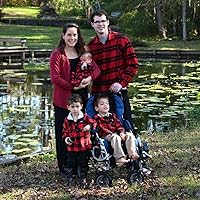
For those of you who may not know me, my name is Tammie Jo Shults and I am a Southwest Airlines Captain and former Navy pilot. I grew up in New Mexico, and my early interest in flying led me to pursue a career in aviation. I eventually become one of the first females to fly the F/A-18 Hornet after overcoming several obstacles due to being a woman in the man’s world of military aviation at the time.
My time in the Navy was well spent, not only because of the flying and leadership skills I learned, but also because it is where I met Dean, the “one whom my soul loves,” and the one who has shown me love in action, as well as sacrificial support. Together, we have raised two (amazing) children, Sydney and Marshall, coaching, teaching or docenting through the years and in their interests. We live in the hill country north of San Antonio, Texas, and enjoy all the outdoor interests of the area, from four-wheeling and canoeing to shooting and fishing. We enjoy friends and family and our church. I have continued to coach javelin in the local track club and spend Monday afternoons with first through fourth graders at the Oaks Academy school-having cookies and working on life lessons (like how to write a thank you note). On work days, Dean and I go flying— for Southwest Airlines.
I hope my story can be a source of encouragement. Time and experience has taught me that while “adventures are worthwhile,” there are no adventures without adversity. And those adversities groom us, prepare us for even bigger challenges ahead, and the ability to meet those challenges—ready to make a difference. Although I am still an active airline pilot, when I’m on the ground, I would love to hear from you, my reader! Please feel free to connect with me on my social media platforms listed below.
I gave it a 5 star - maybe 4 1/2 would have been more just but I did find it to be a good read. I picked this up at the library off the new book shelf and with not much other recommendation other than the cover, fly leaf, and the newness and 'current history' of this biography. I was not disappointed. My husband also read it and highly regarded the whole story of Tammie's life. She is a classy lady and a talented, competent pilot. She is a strong woman of God is appears to have her head on well. As a book I found this book to be an easy read. At times it was hard to stop reading for the night. (Due to some personal eye problems I would just have to quit.) This book is probably not on the biography level of Unbroken or even Boys in the Boat. Although completely different kinds of family/ circumstances this book is as engrossing as Glass Castle. I am recommending this to others to read.
By Bill Marsano. Ernest K. Gann, probably the greatest of American aviation writers, said there were two kind of pilots: airmen and airplane drivers. Airmen were at one with their airplanes; they had the “right stuff”: remained calm in the worst situations; almost always found a way to survive. Airplane drivers were competent hacks who might just as well have been driving buses. The pilots who crashed an Air France jet into the Atlantic a few years back were airplane drivers. Chesley Sullenberger, who managed to bring USAirways Flight 1549 down to a safe water landing in the Hudson River with no fatalities, is an airman. So is author-pilot Tammi Jo Shults, an American heroine and role model. She grew up lower-middle class on farms out west. She did her chores, studied hard, worked through college, joined the Navy and became one of the first female naval aviators—all of which was tougher than you may imagine. Money was always tight, for example; more important was that more than a few male officers tried to sabotage her flight training. They failed. And Tammi Jo (reading this book puts you naturally on a first-name basis) became fully qualified in such advanced airplanes as the A-7 Corsair and the F/A-18 Hornet, the latter an 18-ton fighter-bomber capable of 1200 mph and costing $29 million. She accomplished that with her combination of brains, guts and determination—the right stuff—and that was what she relied on in April 2018. On the 17th of that month she was pilot in command of a Southwest Air Flight 1380 when after climbing past 32,000 feet the left engine of her Boeing 737 simply exploded. Debris smashed a passenger’s window; the resulting rapid decompression would have sucked her out of the airplane but for her seatbelt. OK, we’ve all heard that a twin-engine airplane can fly on one engine safely, but here you’ll learn just how difficult that is and just how dangerous it can be as Tammi Jo faces the challenges of bringing her 737, with 149 souls aboard, to a safe landing in Philadelphia. One of her most admirable traits is generosity. She credits and NAMES everyone who helped in that crisis—the co-pilot, who never lost his cool; the three stewardesses, who knew exactly what to do despite being flung about the cabin like pinballs; and the passengers who took serious risks of their own trying to save the woman who’d been pulled halfway out the shattered window. When she says “commercial aviation “is a team sport,“ she means it. In these rather anti-religious times, some readers may shrink from author’s frequent references to her (non-denominational) Christian faith, but they shouldn’t: she credits her faith but doesn’t push it. For my part I have no religious beliefs at all, but if I’m aboard an airplane that’s doing it’s best to fall out of the sky and the pilot thinks “Help, me, Heavenly Father” while applying every ounce of her right stuff to get me and all the other “souls aboard” down in one piece, why, that’s jake with me, and I’d be a fool to think otherwise.—Bill Marsano is an elderly writer, editors and aviation buff who once looped-the-loop in over St, Francis, KA. in a Stearman biplane that was as old as he was.
I like this trend of rewriting adult books for the middle grade market. Kids this age aren't given enough nonfiction to read, so I appreciate the widening market for personality-driven narratives. Tammie Jo Shults is the pilot of the Southwest flight that experienced engine failure mid-flight who brought the plane down safely at Philadelphia airport. The tragedy of the accident was the loss of one life -- a woman who was hit by the debris when a window blew out and was almost sucked out of the plane. All others survived.
The story is chronological, setting the stage in the prologue for the impending disaster, but then backtracking and starting with Ms. Shults's childhood. Many chapters have sidebars that provide information having something to do with flight -- dogfighting maneuvers, women pilots in the military, ROTC explained, etc. For a child (or adult!) interested in flying, these are great additions to the book.
And that's my only caveat. I think you need a strong interest in flight to read every word of this book. I found myself skipping sections because I couldn't visualize the concepts being described or the particulars of the different planes. The most interesting chapters dealt with the obstacles Ms. Shults faced in trying to become a pilot. Discrimination from men repeatedly delayed and derailed her career path. She endured one particular incident in which a male pilot made it look like she -- not he! -- had made serious errors on one particular flight. Ms. Shults had to hire a lawyer and go to court to overcome that lie.
Thomas Nelson is a Christian publisher, so I expected -- and was glad to see -- so much material about Ms. Shults's faith and how she leaned on it in her life and in the crisis of the crippled Southwest flight. Too often, Christian publishers try to widen the appeal of their books by eliminating all but the most cursory mentions of God.
I have to admit, though, I would have liked a little more tension in the narrative. Ms. Shults's childhood is painted as almost idyllic and her every challenge met with grit and God. Her courtship and marriage is almost fairytale-like. I think readers might have liked to hear more about, say, the decision to choose part-time work after the couple's child is born. I know it's not a decision made lightly and even if the right decision, doesn't come without regrets. I think children of this age can handle the nuances of real life.
What an incredible human being with an exceptional story to tell. I was immensely impressed at how she handled dealing with sexism and walls put up as she chased her dreams. While reading I felt like it was a conversation over a coffee. I work in a male dominated field and can relate to many of the instances she described, she handled them with better poise and professionalism than myself. I found it interesting that she recognized people that helped her throughout her career by name and used alternative names for those who tried to stand in her way, I’m not sure I’d be able to do the same. I’m not a big fan of religion but found her story to explain where she found the strength and poise to carry on. She’s a bright light in such a dimly light world. I’m very glad I picked up the book randomly. Sometimes a book finds you right when you need it.
I’d highly recommend to anyone that needs an inspirational story about perseverance, resilience and breaking glass ceilings.
I loved this book. Captain Shults pulls back the curtain behind what it means to be a trailblazer. We admire women and people of color who have smashed through the glass ceiling but forget the cuts and bruises suffered along the way. There are times in this book when you want Captain Shults to go toe to toe with the men( and yes they are almost all men) who are hell bent on keeping her out of the air. But I also was in a male dominated profession at a time women were just breaking in. Anytime I ran into the “good old boy” network, I was told if I didn’t like it, I could quit. To quote Tennessee Williams, “the victory of a cat on a hot tin roof, is to hang on.” Captain Shults not only hung on, but thrived. I wonder why this story hasn’t been optioned for a film. Maybe only Captain Sullenberger ( of whom I am an admirer) gets a movie. Good old boy network alive and well in Hollywood? Hmmm
Such amazing courage and discipline Tammi Jo displayed throughout this book. Growing up as a child Tammi Jo learned to be disciplined and have much self-control, principles that would carry her through much denigration and abuse as she met challenges along the way in her naval pilot career. Tammi Jo, who started each day with devotion time in God's Word ,learned to put these scriptural guidelines into practice as she was constantly challenged by men who would not accept women in this dangerous career she had chosen. Harrassment from beginning to end even with slander and lies from some of her CO's, Tammi Jo responded without a vengeful attitude and became expert in her field ,not allowing anyone to hinder her progress or change her attitude in her profession. These Godly principles along with her negative experiences, coupled with what her parents taught her, prepared her for making a difference in what could have been a disastrous ending for a 737 full of people. This goodreads giveaway was filled with practical wisdom and I learned a lot from her experiences in how to respond in an emergency situation. She never claimed to be a heroine in the end but lauded all the people she worked with on the plane that worked to save other lives. Her strength and courage through all she undertook was phenomenal and really exhibited her love for God and people..
Great story of the life of the pilot that landed a disabled Southwest airlines plane. We learn about her life growing up that prepared her to be one of the early women combat aviators. The SW flight was a minor portion of the book, it felt, but it seemed like the right balance. The author tells her story in a clear way with extra details for those without any knowledge of the military or aviation. Very encouraging read!
I love how integrated Tammie Jo's faith is throughout every area of her life. This was an intriguing book that was hard to put down! I was glad to know the ending yet could have never guessed the extent of her tale! I loved the open and vulnerability and the lessons learned through each season.
Wow this is my first book to ever finish and yeahh I-TO-THE-LOVE-IT! The story , The writing, And the inspiration Quotes, Women empowerment, And of course GOD , it all blends together like a smoothh cup of tea(tammie jo's morning cup)
The tone of the book is generally positive, however she is honest about the obstacles that have gotten thrown in front of her. When I closed the book it left me smiling. If her aviation talk bores you, fear not for she has a glossary in the back to help you understand. She gives good and adequate detail about the famed flight 1380 disaster. The last chapter although short had some of the most important take-away's in the entire book. This book is up lifting and has at least one lesson for everyone.
FANTASTIC STORY AND BOOK; YOU DO NOT GET TO THE DAY OF THE AIRLINE CRISIS UNTIL THE VERY END OF THE BOOK; THIS ALLOWS YOU TO GO ON THE ADVENTURE THAT WAS HERS AS SHE PERSERVERED THROUGH ALL THE STUFF THROWN AT HER FOR BEING A FEMALE PILOT IN THE NAVY AND AT SOUTHWEST AIRLINES INCLUDING LOSING HER JOB AND HAVING TO SUE TO GET IT BACK - AMAZING STUFF INCLUDING OVERCOMING HEALTH ISSUES, ADOPTING THEIR FIRST CHILD AND BALANCING BEING A WIFE AND MOM WHILE WORKING; HER FAITH COMES THRU LOUD AND CLEAR
Husband read book because of his high interest in aviation. I read the book because about a confident woman who faced many challenges. With support of her family, friends and religious beliefs Tammie Jo was able to move forward when so many others would have been frozen in their steps.
Earlier in the fall, I received a daily devotional e-mail written by the author. Her story of overcoming challenges while being a female pilot was inspiring. I knew I wanted to read this story. I learned so much about the military and flying. I do agree that this book does talk quite a bit about the author's faith. But she would credit that is the single most important factor that helped her to overcome being discriminated against because she was a female pilot. She would also credit it for the reason that she was able to land the plane when she had major malfunctions back in 2018. This is Tammie Jo's story, but it is also a tribute to those who impacted her life. This is far from a narcissistic memoir. While she does tell about her part in landing the plane, she also tells about her crew's actions. She credits many of her flight instructors and fellow pilots. This is not about what a wonderful inspiration she is - instead she points everyone to God's part in her life. Thank you to #netgalley for allowing me a copy to read - all opinions are my own!
This story was fascinating! I wasn’t sure I would enjoy it first because the Prologue was first person present tense which I really have a hard time reading. But the story is just first person and a great read. I found myself not wanting to put the book down as I needed to know what happened next. I also learned more about planes and pilots. I loved that her strong faith in God is part of the story. If I were flying, I want Captain Tammie Jo to be my pilot! This book has several pages devoted to specific topics like “women pilots,” “ROTC” or “Is it safe to fly?” I think anyone who is interested in flying, or just in the story of someone who kept her head in disaster and saved 148 lives would enjoy this book.
This was an incredible read! Tammie Jo Shults is such an inspiring, dedicated woman who displays so many valuable traits. Be prepared to be inspired, encouraged and motivated to be the best you can be everyday. Aside from the incredible skill she exercised on the day she landed a commercial airliner on one enginer, she demonstrates to the reader the power of never giving up. Despite many personal and professional setbacks throughout her life, she just kept pushing through. Tammi Jo never backed down as she pursued her dream of flying. I will remember this book and the lessons she spoke about for a very long time.
Here is the story of another Sully Sullenberger--and where is the movie? Shults is not just padding the book until she can tell of the minutes of hazardous airtime. She had an interesting life from childhood and the amount of sexism she faced in trying to join the military, trying to become a Navy pilot, and trying to become a commercial airline pilot is staggering. I admire her devotion to her Christian faith and how it helped her get through the bad and good times. This would make a great movie! And it makes a fine book.
The harrowing experience of landing a badly damaged plane does not define this book, or this woman. This is the story of her life, her love of flying, how she had to fight for the right to fly, and how the military at the time often tried to block her efforts solely because she was female. As she says, there were people who were just plain bullies, but there were also supportive mentors and fellow aviators who were a joy to work with.
Inspiring for girls, and educational for anyone interested in what it takes to be a pilot.
This was a great ride with a woman who was determined to become a Military Aviator when it was very unpopular choice for a woman. When telling a friend about the book I described Tammie as "Humbly Badass". But all the time and struggle along the way did make her a tough woman, and what her own toughness couldn't carry her through she knew God could. Up to and including the biggest challenge of her life that came during what started out as a typical day at work as a Captain for Southwest airlines on flight 1380. Good read I really enjoyed.
Thank you to NetGalley and Thomas Nelson Publishers for allowing an advanced look at this novel in exchange for an honest review. Captain Tammie Jo Shults' story encourages young people everywhere who aspire to soar above the clouds in the sky. Her perseverance and tenacity are an inspiration. "Nerves of steel" gave her the ability to maintain control in the cockpit of an out-of-control plane. Humility allows her to share her story and thank the Lord for guiding her path.
This memoir and first-person account of Tammie Jo Shults's experiences as a pilot in the Navy and for Southwest Airlines traces her growing up years in the Southwest and ends with her catapult into national attention when she and her first officer safely landed a disabled passenger 737 in April 2018. She writes with clarity, humor, aviation terminology, and heart. Because it is so well-told, I couldn't put it down til finished. Her heroic story would make excellent reading by young adults.