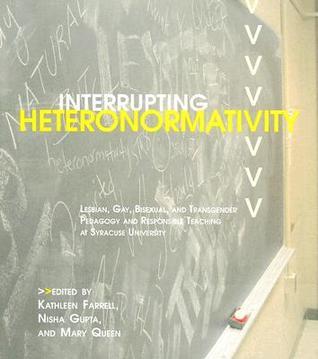
Aims to make visible the everyday, seemingly inconsequential ways in which classrooms become sites for the reinforcement of heteronormative ideologies and practices that inhibit student learning and student-teacher interactions; and to aid educators in identifying, and working with students to avoid marginalizaton in the classroom.
the book promotes a teaching style where the reader is supposed to think about given prompts and come up with their own meanings. i found that a bit controversial as too many people these days don’t care about critical thinking, or about marginalized groups. i care a lot about advocating for diversity but just kept being reminded that the general public isn’t that concerned about minorities. that made me kind of depressed reading. not only do we deal with discrimination and lack of basic consideration, but now we also have to explain to cis straight people why they should care in the first place. it is draining. the book sort of highlights that emotional energy it takes to have this kind of discourse.. continuously.
interrupting heteronormativity was written in the early 2000s and it pulls data from the 90s too. if i knew how dated it was i probably would not have read this book. it doesn’t go into actual complexities of being queer. it mostly encourages conversations about how queer people navigate though a cis het world and the basic differences in our everyday lives. nothing new to learn here.
a lot of the topics feel repetitive too, not sure why there was such a focus on closeted people and conformity. i really don’t want to hear about straight people being scared of others thinking they’re gay. that’s a personal issue at that point, like insecurity issues not related to gay culture. also when talking about trans issues it only mentions trans man and women.
the book is more of a history lesson on “LGBT” life in early 2000s than anything. also, the formatting of the publication wasn’t very readable. the justified paragraphs are hard to look at and the random quote placement makes the legibility quite low. the publication structure combined with the book content makes a disappointing read for me.
overall there’s nothing groundbreaking here and it’s all very basic. might be a better read for homophobic parents or boomers.