

What do you think?

A History of the Medicines We Take: From Ancient Times to Present Day
A HISTORY OF THE MEDICINES WE TAKE gives a lively account of the development of medicines from traces of herbs found with the remains of Neanderthal man, to prescriptions written on clay tablets from Mesopotamia in the third millennium BC, to pure drugs extracted from plants in the nineteenth century to the latest biotechnology antibody products.
The first ten chapters of the book in PART ONE give an account of the development of the active drugs from herbs used in early medicine, many of which are still in use, to the synthetic chemical drugs and modern biotechnology products. The remaining eight chapters in PART TWO tell the story of the developments in the preparations that patients take and their inventors, such as Christopher Wren, who gave the first intravenous injection in 1656, and William Brockedon who invented the tablet in 1843. The book traces the changes in patterns of prescribing from simple dosage forms, such as liquid mixtures, pills, ointments, lotions, poultices, powders for treating wounds, inhalations, eye drops, enemas, pessaries and suppositories mentioned in the Egyptian Ebers papyrus of 1550 BCE to the complex tablets, injections and inhalers in current use. Today nearly three-quarters of medicines dispensed to patients are tablets and capsules. A typical pharmacy now dispenses about as many prescriptions in a working day as a mid-nineteenth- century chemist did in a whole year.
The first ten chapters of the book in PART ONE give an account of the development of the active drugs from herbs used in early medicine, many of which are still in use, to the synthetic chemical drugs and modern biotechnology products. The remaining eight chapters in PART TWO tell the story of the developments in the preparations that patients take and their inventors, such as Christopher Wren, who gave the first intravenous injection in 1656, and William Brockedon who invented the tablet in 1843. The book traces the changes in patterns of prescribing from simple dosage forms, such as liquid mixtures, pills, ointments, lotions, poultices, powders for treating wounds, inhalations, eye drops, enemas, pessaries and suppositories mentioned in the Egyptian Ebers papyrus of 1550 BCE to the complex tablets, injections and inhalers in current use. Today nearly three-quarters of medicines dispensed to patients are tablets and capsules. A typical pharmacy now dispenses about as many prescriptions in a working day as a mid-nineteenth- century chemist did in a whole year.
272 pages, Paperback
Published January 22, 2020
Ratings & Reviews
Friends & Following
Create a free account to discover what your friends think of this book!
Community Reviews
Displaying 1 - 19 of 19 reviews

September 23, 2023
The book offers a comprehensive exploration of the history of medicine, spanning from ancient times to the present day. It delves into the achievements of various civilizations, making it a valuable resource for anyone with a keen interest in the field of medical history.
What is good about this book is that it doesn't just stick to Western medicine like a lot of others do. It dives into medical stories from all over the place, like Egypt, Mesopotamia, Spain, India, Greece, Persia, and Arabia. So, you get a global picture of the whole medical scene.
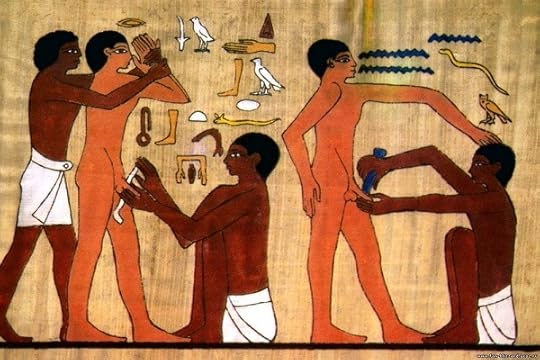
However, it's worth noting that the book's format resembles that of a encyclopedia/wikipedia, presenting a multitude of topics in succinct, headline-like style. I came across some interesting historical nuggets that got me curious, but I also noticed a few things that could be improved.
This book has some issues with how it's set up and how it reads. It's kind of like a school textbook in its structure, which can make it a bit dull and not very smooth to get through. it seem like it's meant for the academic crowd, not the everyday reader. It's got plenty of detail, but it's not all that exciting. It's got loads of lists, studies, facts, herbs, and historical figures, which can make it feel more like a data dump than a well-told story.
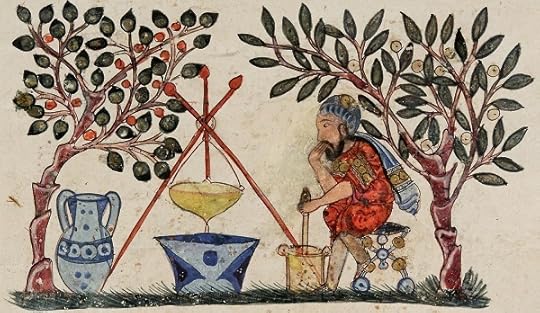
Because it's so focused on giving you all the nitty-gritty details without really making them engaging, this book misses a chance to make the fascinating history of medicine pop. To make it a fun read for more people, they'd need to make some big changes in how it's put together and how it's written.
What is good about this book is that it doesn't just stick to Western medicine like a lot of others do. It dives into medical stories from all over the place, like Egypt, Mesopotamia, Spain, India, Greece, Persia, and Arabia. So, you get a global picture of the whole medical scene.
However, it's worth noting that the book's format resembles that of a encyclopedia/wikipedia, presenting a multitude of topics in succinct, headline-like style. I came across some interesting historical nuggets that got me curious, but I also noticed a few things that could be improved.
This book has some issues with how it's set up and how it reads. It's kind of like a school textbook in its structure, which can make it a bit dull and not very smooth to get through. it seem like it's meant for the academic crowd, not the everyday reader. It's got plenty of detail, but it's not all that exciting. It's got loads of lists, studies, facts, herbs, and historical figures, which can make it feel more like a data dump than a well-told story.
Because it's so focused on giving you all the nitty-gritty details without really making them engaging, this book misses a chance to make the fascinating history of medicine pop. To make it a fun read for more people, they'd need to make some big changes in how it's put together and how it's written.

February 23, 2020
First of all, I must say I love a well-researched non-fiction with a tight focus but this book is not a typical non-fiction that I am used to. It feels like a textbook for students or more like a doctorate thesis. It is excruciatingly detailed for a casual reader. I thought I was in on an interesting historical reading about medicines and pharmaceuticals but from the first page I realized I had gotten way in over my head like I was studying for an exam. Not what I expected, had to skip some parts to see it through the end before suffocating.
However, ı have learnt about some weird sexist methods of healing applied by the father of medicine and I thanked once again for having being born into 21st century:
“Some of the Hippocratic treatments combine physical methods with the use of medicines. For example, to correct a prolapse of the uterus, the woman was attached to a ladder by her feet, upside down, and the ladder then raised and dropped to the ground. Then the woman’s legs were crossed and tied together and she was left for a day and a night with only some cold barley water to drink.”
(Received an ARC from Netgalley in exchange for honest review)
However, ı have learnt about some weird sexist methods of healing applied by the father of medicine and I thanked once again for having being born into 21st century:
“Some of the Hippocratic treatments combine physical methods with the use of medicines. For example, to correct a prolapse of the uterus, the woman was attached to a ladder by her feet, upside down, and the ladder then raised and dropped to the ground. Then the woman’s legs were crossed and tied together and she was left for a day and a night with only some cold barley water to drink.”
(Received an ARC from Netgalley in exchange for honest review)
April 7, 2021
I loved the book! I have to admit I am surprised by the negative reviews on here. This is a non-fiction, history book, on a very specific topic. It assumes some prior knowledge and it has, as expected, long descriptions too. I don't see why is this an issue though.
It has two parts, a history of medicines, starting from prehistory to modern day. The second part is a history of dosage forms and how the medicines are delivered, from pills and tablets to injections and so on. My favourite chapter was on inhalers, it was really fascinating. The second part of the book, dedicated to how medicine is taken, it is presented in a chronological manner and that is helpful to see how it evolved over time. I like that the book contains many modern day details too, such as differences in how people prefer to take the medicines within different societies.
I recommend the book because I liked it a lot. It is packed with lots of details and information and it's very likely that I will re-read some chapters when I will study a period of history in the future.
It has two parts, a history of medicines, starting from prehistory to modern day. The second part is a history of dosage forms and how the medicines are delivered, from pills and tablets to injections and so on. My favourite chapter was on inhalers, it was really fascinating. The second part of the book, dedicated to how medicine is taken, it is presented in a chronological manner and that is helpful to see how it evolved over time. I like that the book contains many modern day details too, such as differences in how people prefer to take the medicines within different societies.
I recommend the book because I liked it a lot. It is packed with lots of details and information and it's very likely that I will re-read some chapters when I will study a period of history in the future.

January 29, 2020
I have mixed feelings about this book. It contains a lot of interesting information, but it does so in a way that is difficult to absorb. It reminds me more of an academic textbook, than a book for general reading. I’m not sure I agree with the blurb that calls it “lively”.
The first section works through history, from ancient times to present day, listing the medicines we have evidence for, and in some cases their uses. Unfortunately, it is written in such a way that (to me at least) it came across as simply a list of studies and discoveries that have shown that herbs have been used historically by early man etc, followed by a list of historical figures and the books they’ve written. This is very tedious, making it difficult for any of the information to be retained.
The second section is far more interesting, describing each of the different methods of taking medicines (eg tablets, inhalations), and charts their histories from ancient to current times. With the number of references to the people (doctors and pharmacists) and publications in part one, it feels as though most of part one is surplus to requirements. I enjoyed parts of this section, though having the pictures within the text, rather than all at the end of the book, would make it far more interesting. The index and notes would be very useful for finding particular information and further reading, respectively.
In conclusion, if you have a deep interest in the topic, and don’t mind some dry sections, this book may be for you. I personally feel as though a good editor could do a lot to make it more interesting to a wider audience.
The first section works through history, from ancient times to present day, listing the medicines we have evidence for, and in some cases their uses. Unfortunately, it is written in such a way that (to me at least) it came across as simply a list of studies and discoveries that have shown that herbs have been used historically by early man etc, followed by a list of historical figures and the books they’ve written. This is very tedious, making it difficult for any of the information to be retained.
The second section is far more interesting, describing each of the different methods of taking medicines (eg tablets, inhalations), and charts their histories from ancient to current times. With the number of references to the people (doctors and pharmacists) and publications in part one, it feels as though most of part one is surplus to requirements. I enjoyed parts of this section, though having the pictures within the text, rather than all at the end of the book, would make it far more interesting. The index and notes would be very useful for finding particular information and further reading, respectively.
In conclusion, if you have a deep interest in the topic, and don’t mind some dry sections, this book may be for you. I personally feel as though a good editor could do a lot to make it more interesting to a wider audience.

January 27, 2020
An interesting, delightful, and well-researched look at the history of medicines we take today. I thoroughly enjoyed the ride through the ages as each time period's contribution was reviewed. I also really enjoyed the history of how the dosing and delivery of medications evolved. I have always been fascinated by the science behind medicines and the sense of exploration the scientists demonstrated in the development of pioneer treatments. Medication development requires calculated risk, creativity, and dedication to progress. Despite the complex nature of medications, this book did a great job of breaking it down into simple to understand segments and tied it all together in a natural progression. While those with medical or pharmacology backgrounds will likely get the most out of the specific, detailed content, lay people will learn a lot and appreciate the complexity of medicine. There are takeaways for all levels of interest and learning.
I received a complimentary copy of this from the publisher. All opinions expressed are solely my own.
I received a complimentary copy of this from the publisher. All opinions expressed are solely my own.
March 26, 2020
Thank you to the authors, Pen & Sword and NetGalley for an ARC in exchange for an honest review.
This is a fascinating topic, with lots of interesting history to cover. Unfortunately, this is not the book that will draw you in and not let you go. Much of it is extremely, excruciatingly detailed, and reminded me more of a textbook listing historical figures, studies and discoveries than anything else. The first third reads tediously, and after reading it's difficult if not impossible to remember any of the masses of random information you've just plowed through. The middle section is a bit more palatable, but the last third again gives much too much information, instead of choosing to focus more clearly.
I should also note that the Kindle format (only format available for ARC from NetGalley) doesn't do this book any favors. Lots of strange jumps in formatting, complete lack of illustrations in the text (they're all bunched up at the back) and lists/tables that were not formatted, run out through the body of the text.
This is a fascinating topic, with lots of interesting history to cover. Unfortunately, this is not the book that will draw you in and not let you go. Much of it is extremely, excruciatingly detailed, and reminded me more of a textbook listing historical figures, studies and discoveries than anything else. The first third reads tediously, and after reading it's difficult if not impossible to remember any of the masses of random information you've just plowed through. The middle section is a bit more palatable, but the last third again gives much too much information, instead of choosing to focus more clearly.
I should also note that the Kindle format (only format available for ARC from NetGalley) doesn't do this book any favors. Lots of strange jumps in formatting, complete lack of illustrations in the text (they're all bunched up at the back) and lists/tables that were not formatted, run out through the body of the text.

February 10, 2020
Great fun for me! BUT. I am a retired RN who has cared for patients in multiple settings in the US, a history geek, love reading both historical fiction and nonfiction, and learned some very interesting things. Others who will enjoy and learn and use as reference are: other nurses, pharmacist, overseas medicals, and historical novelists. There are a considerable picture illustrations and references from all over the world.
A few things: evidence of prehistoric use of specific herbs, specific treatments in ancient Egypt, the hard work of the apothecary in middle times, how some new pharmaceuticals are developed, and even how the bad reputation of the mild sedative Thalidomide has been modified by its efficacy in treatment of Leprosy and myeloma. Lots of lists. For me, I'd prefer print copy for doing reference work or hunting up specifics. However.
I requested and received a free ebook copy from Pen and Sword History via NetGalley. Thank you!
A few things: evidence of prehistoric use of specific herbs, specific treatments in ancient Egypt, the hard work of the apothecary in middle times, how some new pharmaceuticals are developed, and even how the bad reputation of the mild sedative Thalidomide has been modified by its efficacy in treatment of Leprosy and myeloma. Lots of lists. For me, I'd prefer print copy for doing reference work or hunting up specifics. However.
I requested and received a free ebook copy from Pen and Sword History via NetGalley. Thank you!

February 1, 2020
A History of the Medicines We Take was an entertaining read in many respects. I certainly learnt a few things along the way, and much of the information was interesting. The book did, however, get bogged down in details and scientific explanation here and there, which is doubtless fascinating for those with a background in the field, but it could be off-putting to a layperson who doesn't understand all the terminology. At times when this occurred, the book did become a little dry. Overall, I enjoyed learning more about the history of medicine, but I would only recommend this book to those who won't be put off by the heavier, science-focused sections. To my mind, this work is more for the interested professional or keen amateur than the everyday general reader.
I received this book as a free eBook ARC via NetGalley in exchange for an honest review.
I received this book as a free eBook ARC via NetGalley in exchange for an honest review.

April 3, 2020
While this book does contain a lot of factual information, my main problem with it is the way that information is presented. The book feels like a cut and paste collection of Wikipedia articles and is laden down with lists of names and publications etc that to be honest seem to add little other than word/ page count. While the idea of breaking down this vast subject into topics like medicine in the ancient world, medicine from natural sources, various dosage forms etc makes sense when dealing with such a vast subject, each of those sections reads more like a reference guide than a cohesive or informative monograph. It is simply not a user friendly book.
I read and reviewed an ARC courtesy of NetGalley and the publisher, all opinions are my own.
I read and reviewed an ARC courtesy of NetGalley and the publisher, all opinions are my own.

February 29, 2020
Thorough, at time too much so, history of medicine
I enjoyed this book. It provided a very thorough history of medicine but at times became bogged down. There were too many long lists of herbs etc and I started skipping this information. In addition, the discussion of ancient history was mostly this person wrote this book about these remedies, etc. The discussions of drugs only happened when the story got to more modern times. Nonetheless, it was an interesting read and I recommend it for anyone interested in the history of science.
Disclosure: I received a complimentary copy of this book via Netgalley for review purposes.
I enjoyed this book. It provided a very thorough history of medicine but at times became bogged down. There were too many long lists of herbs etc and I started skipping this information. In addition, the discussion of ancient history was mostly this person wrote this book about these remedies, etc. The discussions of drugs only happened when the story got to more modern times. Nonetheless, it was an interesting read and I recommend it for anyone interested in the history of science.
Disclosure: I received a complimentary copy of this book via Netgalley for review purposes.

March 8, 2020
An extremely detailed history of medicine, herbal supplements, dental health, and more. Very interesting for the curious-minded individual. Anyone in the medical field will find this answering questions they didn’t know they had. Curious little tidbits that are actually good conversation starters as well as for discussion with other medical professionals. For example, a patient bringing up the history of toothpaste to her dentist. Also good for midwives and health practitioners and herbalists.
I received an advanced reader copy from NetGalley in exchange for my volunteer review.
I received an advanced reader copy from NetGalley in exchange for my volunteer review.

April 26, 2020
From ancient historical records to animal and plant ingredients, and straight to today's achievements, A History of the Medicines We Take lays before us answers to all questions we might possibly ask about the history, nature, and facts of the medicine humanity uses. This book got highly technical at points, but it was definitely interesting to read. And if your profession or hobbies revolve around medicine, then this is definitely for you.

April 24, 2023
An interesting, and well-researched look at the history of medicines we take today.
It contains a lot of interesting information about medicines through the age's, it also looks at how dosing and the delivery of medications has changed over time.
However times it did reminded me of an academic textbook, and some points I did find the reading hard going. However I do recommend for these who have interest in the history of medicine.
It contains a lot of interesting information about medicines through the age's, it also looks at how dosing and the delivery of medications has changed over time.
However times it did reminded me of an academic textbook, and some points I did find the reading hard going. However I do recommend for these who have interest in the history of medicine.

February 16, 2020
A History of the Medicines We Take is an interesting book although I did find some of it very much like I was back in college reading a text for exams.
The book covers lots of information about medicines and is well thought out and very well researched.
Not a book for you if you just want to dip in for fun.
Thanks to Netgalley and Pen and Sword for the ARC.
The book covers lots of information about medicines and is well thought out and very well researched.
Not a book for you if you just want to dip in for fun.
Thanks to Netgalley and Pen and Sword for the ARC.

March 6, 2020
Can I just start off by saying that my degree includes the history of science, technology and medicine and even I found this book very hardgoing. I'd say this is far beyond the casual interested lay-person. I'd say far more suited to Doctors or Pharmacologists as a textbook for students or thesis tool. Very detailed and goes over doses, etc.
April 9, 2020
This books covers the subject in great detail and is undoubtedly well researched, but I found it a little dry and disjointed and struggled to finish it.
. Thank you to NetGalley and to the publisher for allowing me to read a copy of this book in exchange for an honest review.
. Thank you to NetGalley and to the publisher for allowing me to read a copy of this book in exchange for an honest review.

April 22, 2020
ARC from NetGalley
I actually quite liked this book. Yes, it is full of facts, perhaps a bit dry at times, but I didn't go into it expecting a novel. If you are interested in medicinal knowledge, it's a good read.
I actually quite liked this book. Yes, it is full of facts, perhaps a bit dry at times, but I didn't go into it expecting a novel. If you are interested in medicinal knowledge, it's a good read.

April 30, 2020
Thanks to NetGalley and Pen & Sword for a free copy of this book in exchange for an honest review.
"A History of the Medicines We Take" by N. Anthony Armstrong & Anthony C. Cartwright is one hell of a book. Prescriptions, using the herbs to medicate, and modern biotechnology are such fascinating topics to me. I work in a pharmacy, and seeing the birth of most of the medicine I see almost every day and how they were developed during the centuries gave me a new perspective on the subject. I'm also a history nerd, so I feel like this book was written for me specifically. What I liked about it is that it gives the reader EXACTLY what promises in the title. I read so many books lately where "History of" didn't mean anything. This book covers THE ENTIRE HISTORY OF MEDICINE from prehistory to recent times. And, wait for it, it's not only about western medicine but also Asian and Arabic. Are you crying yet? Because I cried a little bit. I was so freaking happy. My favorite bits were obviously the parts about Ancient times, specifically Egyptian, Greek, Arabian and Roman medicine. The book is comprehensive, fascinating, and undoubtedly well-researched. Some bits made me laugh for days. If you love medicine and you love history and all the little facts, this book was written for you.
"A History of the Medicines We Take" by N. Anthony Armstrong & Anthony C. Cartwright is one hell of a book. Prescriptions, using the herbs to medicate, and modern biotechnology are such fascinating topics to me. I work in a pharmacy, and seeing the birth of most of the medicine I see almost every day and how they were developed during the centuries gave me a new perspective on the subject. I'm also a history nerd, so I feel like this book was written for me specifically. What I liked about it is that it gives the reader EXACTLY what promises in the title. I read so many books lately where "History of" didn't mean anything. This book covers THE ENTIRE HISTORY OF MEDICINE from prehistory to recent times. And, wait for it, it's not only about western medicine but also Asian and Arabic. Are you crying yet? Because I cried a little bit. I was so freaking happy. My favorite bits were obviously the parts about Ancient times, specifically Egyptian, Greek, Arabian and Roman medicine. The book is comprehensive, fascinating, and undoubtedly well-researched. Some bits made me laugh for days. If you love medicine and you love history and all the little facts, this book was written for you.
March 23, 2020
This book has a great topic to cover. But that is also it's weakness. It has do much data available, so it's hard to make it palatable.
Hence it becomes very academic. Sort of book medical students will read on sleepless nights.
It is not for masses.
First one third covers history and historical medical texts and is difficult to read. In middle when medicines are discussed it is interesting.
And at end again it falls in trap of telling too much.
Could find much to recommend to general curious readers.
Thanks netgalley and publisher for review copy.
Hence it becomes very academic. Sort of book medical students will read on sleepless nights.
It is not for masses.
First one third covers history and historical medical texts and is difficult to read. In middle when medicines are discussed it is interesting.
And at end again it falls in trap of telling too much.
Could find much to recommend to general curious readers.
Thanks netgalley and publisher for review copy.
Displaying 1 - 19 of 19 reviews