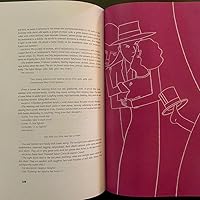
Batman must escape Riddler's foolproof deathtrap in time to recover his own lost soul. But time is of the essence, as Batman's empty shell of a body has begun adjusting to the status quo and soon will be closed to his soul's return. 'Primal Riddle' part 3.
Steve Englehart went to Wesleyan University in Middletown, Connecticut. After a stint in the Army, he moved to New York and began to write for Marvel Comics. That led to long runs on Captain America, The Hulk, The Avengers, Dr. Strange, and a dozen other titles. Midway through that period he moved to California (where he remains), and met and married his wife Terry.
He was finally hired away from Marvel by DC Comics, to be their lead writer and revamp their core characters (Superman, Batman, Wonder Woman, Flash, and Green Lantern). He did, but he also wrote a solo Batman series (immediately dubbed the "definitive" version) that later became Warner Brothers' first Batman film (the good one).
After that he left comics for a time, traveled in Europe for a year, wrote a novel (The Point Man™), and came back to design video games for Atari (E.T., Garfield). But he still liked comics, so he created Coyote™, which within its first year was rated one of America's ten best series. Other projects he owned (Scorpio Rose™, The Djinn™) were mixed with company series (Green Lantern [with Joe Staton], Silver Surfer, Fantastic Four). Meanwhile, he continued his game design for Activision, Electronic Arts, Sega, and Brøderbund.
And once he and Terry had their two sons, Alex and Eric, he naturally told them stories. Rustle's Christmas Adventure was first devised for them. He went on to add a run of mid-grade books to his bibliography, including the DNAgers™ adventure series, and Countdown to Flight, a biography of the Wright brothers selected by NASA as the basis for their school curriculum on the invention of the airplane.
In 1992 Steve was asked to co-create a comics pantheon called the Ultraverse. One of his contributions, The Night Man, became not only a successful comics series, but also a television show. That led to more Hollywood work, including animated series such as Street Fighter, GI Joe, and Team Atlantis for Disney.
(B) 74% | More than Satisfactory Notes: Puns and jokes (no riddles, folks!), clues form a punny trail: but ending's great, nice counterweight—re: editorial fail.
I was excited to see a Riddler-centric story but it was pretty underwhelming. I enjoyed the idea of seeing Batman and his drive/determination as a separate entity from the physical body of Bruce Wayne, but the finale and the need for a punchline to close it out didn't do it for me.
This is easily my least favorite Legends of the Dark Knight story so far, which is a shame because the art is genuinely fantastic. The plotting, pacing, and dialogue are pure ass. One of the worst Batman comics I've ever read.