Jump to ratings and reviews
Rate this book

Den sista vargen

Rate this book
Han är författare och får i uppdrag att skriva en text om den sista vargen i Extremadura, ett högslättsområde som tidigare var utposten för de spanska erövrarna. Det är högst ovisst varför han, bosatt i Berlin, fått uppdraget. Av misstag? Har han tagits för någon annan? Ödet? Uppdraget, som kanske inte är ett uppdrag, växer i storlek och blir till en alltigenom olycksbringande upplevelse, likt en berättelse utan början och slut, en mening som förvägras att sätta punkt eller till den sista vargens sorgesamma ylande.

Jägmästaren Herman får i uppgift att utplåna ett skogsområdes sista rovdjur. Han tar sig an uppdraget med friskt mod, men kommer snart på andra tankar. I den efterföljande Herman II betraktas samma skeende utifrån några barocka besökares blickar. Skabrösa officerare från överklassen, som förlustar sig i en by vid skogens utkant, blir på olika sätt indragna i Hermans angelägenheter och hela berättelsen välts över ända.

Den sista vargen, Herman och Herman II visar att László Krasznahorkai är en mästare även i det kortare formatet. Med osviklig känsla för prosans yttre gränser har han här samlat tre berättelser som på olika sätt öppnar texten lika mycket som den kör in en pil rakt in i människans mest fördärvbringande sidor.


Om hans senaste bok Seiobo där nere:

"Det här är en komplicerad och mång­tydig bok på ett hypnotiserande konstfullt språk som värjer sig mot vardaglig slöläsning. Översättaren Daniel Gustafsson har utfört ett herkuliskt storverk, och man förstår varför författaren allt oftare nämns som Nobelpriskandidat." Aftonbladet

"Seiobo där nere är ett märkvärdigt konstverk." Expressen

"Det är inget annat än storslaget. Om inte mer än så." GP

"Vad är detta för bok? En roman? Novellsamling? Essä? ... Krasznahorkai skriver i långa men sällsamt lätta satser. Genom dessa periodiska bågar, fulla av inskott och utvikningar, får prosan en ornamental karaktär som påminner om utsmyckningarna i Alhambra eller Bachs barocka passioner." Dagens Nyheter

127 pages, Hardcover

First published October 1, 2009

39 people are currently reading
560 people want to read

About the author

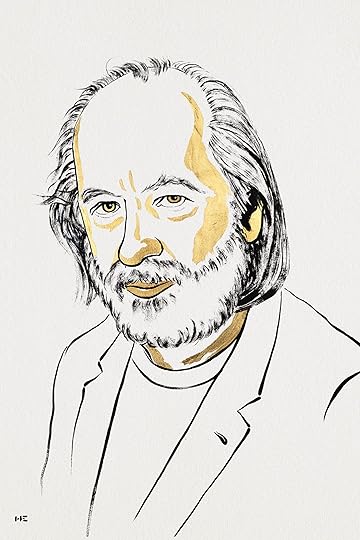
László Krasznahorkai

41 books2,925 followers
László Krasznahorkai is a Hungarian novelist and screenwriter who is known for critically difficult and demanding novels, often labelled as postmodern, with dystopian and bleak melancholic themes. He was awarded the Nobel Prize in Literature in 2025.

He is probably best known through the oeuvre of the director Béla Tarr, who has collaborated with him on several movies.

Apart from the Nobel Prize, Krasznahorkai has also been honored with numerous literary prizes, among them the highest award of the Hungarian state, the Kossuth Prize, and the 2015 Man Booker International Prize for his English-translated oeuvre.

Ratings & Reviews

What do you think?
Rate this book

Friends & Following

Create a free account to discover what your friends think of this book!

Community Reviews

5 stars
169 (22%)
4 stars
311 (40%)
3 stars
228 (29%)
2 stars
48 (6%)
1 star
12 (1%)
Displaying 1 - 30 of 104 reviews
Profile Image for Jean Ra.
414 reviews1 follower
October 4, 2025
Hace apenas unos minutos que he terminado esta lectura y mi cerebro todavía intenta desacelerar, escapar de ese continuo flujo de subordinadas que suelen ser las novelas de László Krasznahorkai y este relato no es la excepción. De hecho el libro se divide en dos: primero la traducción de Adan Kovacsis y después el original en húngaro (con alguna frase en español) por si quieres aprender tan ameno idioma o realizar tu propia traducción y superar a Kovacsis. Intento todavía recuperar el aliento porque ese relato de 57 páginas está escrita en una sola frase que ese extiende, serpentea, avanza y salta en el tiempo por más de cincuenta páginas.

Es un viaje de ida y vuelta a un antro de Alemania por parte de su narrador, que en muchos aspectos se identifica con el autor, aunque no en todos. De forma sorprendente, mientras anda sumergido en el alcoholismo y la depresión, recibe una invitación por parte de una fundación extremeña que desea impulsar a nivel artístico la visión acerca de Extremadura, renovarla y hacerle entrar otros aires a nivel cultural. Por supuesto el libro que he leído es el de la fundación Ortega Muñoz, que sin duda se dirigió al escritor húngaro para realizarle ese mismo encargo, yo supongo que por mediación o consejo de la crítica española Mercedes Montmany. El escritor opina que el lenguaje es la basura del hombre y que la filosofía ha muerto, así de alegre es el tono festivo de este relato.

El percutor dramático es una noticia que el autor leyó acerca de la extinción del lobo al sur del Duero, cosa que ocurrió según la noticia hacia 1983 pero que luego se desentraña y se descubre más compleja y matizada. De esta forma el húngaro realiza un diagnóstico del crepúsculo del pensamiento, del ocaso de la civilización, que a su vez consume y destruye la naturaleza, intenta interrumpir el curso natural de la misma por cuestiones de beneficio económico, tomándose así un cobro demasiado elevado para sencillamente mantener un mundo en descomposición. Insisto y vuelvo a remarcar que el relato despunta por su embelesada inocencia y alegría.

Pero en mitad de ese panorama de extinciones varias, surge una historia de un guarda rural extremeño que quizás añade una nota de bondad y generosidad al relato, si bien no enmienda su tono pesimista, de hecho al final el autor regresa a su vida alcohólica para sencillamente da a entender que el circulo se cierra y todo sigue en su lugar, a pesar que al autor le ha gustado Extremadura y ha disfrutado su visita pero en absoluto lo ha transformado.

La vida es derrota y desesperación pero durante el trayecto surgen los fogonazos de belleza, los instantes de luz, que es lo que durante la lectura nos estimula y hace brillar la mente, y que parece lo verdaderamente valioso, aunque sea pasajero, pero nos queda la escritura para fijarlo en la memoria.

Quizás fábula animalista, simulacro filosófico acerca del fin de la civilización, la laberíntica prosa de Karasznahorkai requiere atención y concentración y sin embargo a mí me parece que no es tan rebuscada y complicada, de hecho utiliza palabras sencillas, por más que en general su fraseo se adentre por vericuetos muy digresivos y los saltos adelante y atrás en el tiempo pueda generar cierta confusión en momentos puntuales. Por lo demás, en general, es aconsejable dejarse arrastrar por su peculiar ritmo y permitir que el curso de la prosa te lleve hasta el punto final.
Profile Image for Alan (on December semi-hiatus) Teder.
2,705 reviews251 followers
October 9, 2025
October 9, 2025 Update László Krasznahorkai has been announced as the winner of the 2025 Nobel Prize for Literature today. See the announcement here.


Wild Thing
Review of the Loomingu Raamatukogu estonian language edition (2018) translated from the Hungarian language original Az utolsó farkas (The Last Wolf) (2009)
This story by the Hungarian master of the apocalypse, who won the International Man Booker Prize, is about a former German professor who spends his days in a Berlin tavern. He unexpectedly receives an invitation to Extremadura, an isolated and sparsely occupied part of Spain, to write about their potentially prosperous future. However, a strangely worded sentence in an ecological article that he reads in preparation for the trip triggers an unforeseen sequence of events, which leads him to dig further into a search for the last wolf in the countryside. - a translation of the Estonian language synopsis.

I'm working my way up to the longer novels of Krasznohorkai and the short novella Viimne hunt (The Last Wolf) is an excellent way to get started. It combines the use of the one-sentence, one paragraph format with a tale of an obsessive quest as told by the protagonist narrator to a not very attentive barman. The format of the Estonian LR series was also ideal for this as the very thorough afterword provides an excellent overview of Krasznohorkai's life and writing career.

The book has the standard disclaimer that its events and characters are not based on real life, but it is also interesting that Spain's Fundacion Ortega Munozi (named after the Spanish painter Ortega Muñoz, who was from Extremadura) is thanked for its support in helping in its writing. i.e. it seems to have a lot in common with the protagonist in the book getting an unexpected commission from Spain.

In any case, I didn't think of this book as being strongly apocalyptic. It seemed more to me that the philosophy professor saw in the wolves a symbol of his own separation from society where his books are not respected and even his retelling of his tales to the Berlin barman are met with indifference.

Trivia and Links
The Loomingu Raamatukogu (The Creation Library) is a modestly priced Estonian literary journal which initially published weekly (from 1957 to 1994) and which now publishes 40 issues a year as of 1995. It is a great source for discovery as its relatively cheap prices (currently 3 to 5€ per issue) allow for access to a multitude of international writers in Estonian translation and of shorter works by Estonian authors themselves. These include poetry, theatre, essays, short stories, novellas and novels (the lengthier works are usually parcelled out over several issues).

For a complete listing of all works issued to date by Loomingu Raamatukogu see Estonian Wikipedia at: https://et.wikipedia.org/wiki/Looming...
Profile Image for Hákon Gunnarsson.
Author 29 books162 followers
September 22, 2019
This short book by the Hungarian writer László Krasznahorkai is written in a style that usually tires me out. The whole book contains one sentence. It starts on page 5 and ends on page 70. I try to avoid books like these, because reading them tends to feel like listening to someone with a monotonous voice try to tell a story. Which is not fun. But for some reason I end up buying books of this kind, every three or four years.

This story is about a failed philosopher that gets invited to write a article about a place he has never been to. He will get a plane ticket, a hotel room, a personal driver, a translator, and quite a bit of money for the article itself. He thinks it must be a mistake because no one really reads his stuff, even when he was still trying to write, but takes the job anyway. When he gets there he ends by accident up with the subject for his article, the death of the last wolf in the area.

When I realized that this was written in a way that usually bores me, I almost gave up on it, but that would have been a mistake, because there actually is a good story there. It is slightly odd, and often laugh out loud funny. Essentially it is an interesting story that takes place on many different levels all at once. And is as much about telling stories, as it is an actual story.

On one level it is the story of the wolfs, and what happens to them. Another level is the trip of the failed philosopher, and his investigation. And then it is the philosopher trying tell his story to a barman, and does it in such a way that the barman almost falls asleep. So maybe there is a reason why the author has decided to use this method. It conveys that monotonous, tiresome voice of that failed philosopher quite well. Even so, I think it could have been told just as effectively in more sentences, and that would have been a more pleasant read. Still, I have to admit that I liked it even though it is written in a style that I don’t like.
Profile Image for Jorge Morcillo.
Author 5 books72 followers
May 6, 2025
«Solo quería decir que Extremadura era fascinante y no sólo le parecía magnífico su paisaje, sino también su gente, ¿sabe?, dijo al húngaro, la manera más exacta de definirla era decir que eran hombres buenos, ¿hombres buenos?, preguntó el húngaro arqueando las cejas, pues sí, respondió él, hombres buenos, eso también le parecía maravilloso, aunque al mismo tiempo le resultaba horrendo pensar qué ocurriría cuando esa gente buena se enterara de lo que les esperaba, porque las autopistas y los nuevos barrios de Cáceres y de Plasencia, de Trujillo, de Badajoz y de Mérida indicaban ya por dónde irían los tiros, y el mundo irrumpiría allí también, porque había de saber una cosa, dijo alzando un poco la voz para que el húngaro oyera al menos esto con claridad en medio del estridente griterío de la música máquina, había de saber que Extremadura se hallaba fuera del mundo, extre, ¿entendía?, por eso era todo tan maravilloso, desde la naturaleza hasta las personas, y nadie sabía nada del peligro que suponía la amenazante proximidad del mundo, la gente de Extremadura vivía en una situación de peligro extrema, explicó el húngaro, la gente de Extremadura no tenía ni la menor idea de lo que estaba dejando entrar, a qué espíritu estaba dando acceso cuando construían establecimientos comerciales y autopistas a diestro y siniestro>> (y lo dejo ahí pero la frase sigue).... 

Una vez más estamos de vuelta con László Krasznahorkai. En esta ocasión con uno de sus libros más desconocidos por el gran público, el cual tuve la suerte de leer hace un montón de años por primera vez y el cual he vuelto a releer en estos últimos días.

Lo primero que tengo que decir que estamos ante una edición muy especial, bilingüe, en español y húngaro, y editado por la Junta de Extremadura a través de la Fundación Ortega Muñoz; lo segundo es que es un libro de encargo, pero que eso no le afecta al contenido; lo tercero es que estamos ante una nouvelle, o sí se prefiere relato extenso, de unas cincuenta y siete páginas y en un único párrafo, como es muy habitual en la prosística del húngaro; lo cuarto y último es que da igual las veces que se lea y se relea este librito porque hasta los libros menores de Krasznahorkai tienen un nivel tan superior a la mayoría de libros que se editan que hasta compararlos resulta injusto; y ahora —escritas y aclaradas estas cuestiones mínimas sobre el supuesto contenido de este libro— vamos al verdadero aullido que en estas pocas páginas se encierra.

No estamos en Extremadura; estamos en un bar de Berlín. Hay una cerveza Sternburger y un húngaro detrás de la barra sirve, atiende y escucha al escritor «desdichado de las frases complicadas y los pensamientos laberínticos». Podemos suponer que el bebedor es el propio Krasznahorkai y que el húngaro es un colega suyo, o quizá un doble; no creo que existan muchos individuos que se vayan todos los días a un bar a pensar en el vacío de la existencia, «y en tratar de averiguar si existía una diferencia entre el peso de la futilidad y el desprecio»; por lo tanto, estamos ante una visión del propio Krasznahorkai sobre el propio Krasznahorkai, quizá algo deformada y bromista, desde luego no muy optimista sobre su labor literaria, hasta cierto punto, porque la verdad que suena muy sincera esta frase de «ni siquiera sabía qué era Extremadura» (lo mismo nos pasaría a nosotros si nos preguntasen sobre algunas regiones de Hungría); y luego nos confiesa «que tenía dos conocidos en España, su antiguo y altruista traductor (sin duda solo puede ser el incombustible y genial Adan Kovacsics), y su antiguo y altruista editor» (y aquí solo puede ser el desaparecido Jaume Vallcorba, que a finales del siglo XX fundó Acantilado y el que pocos años después, un año o incluso uno y medio, se atrevió a comenzar a editar en español a este, por entonces, muy desconocido escritor húngaro). Más o menos desde esas fechas, entre 2001 y 2002, lo descubrí gracias a un polaco que estaba estudiando español y que me lo recomendó. De hecho en Leer es vivir. El entusiasmo de la literatura, mi último libro, le dedico más páginas a László Krasznahorkai que a ningún otro escritor.

Pero este libro en concreto (me refiero a El último lobo) no salió hasta 2009. Durante muchos años los escasos, pero no menos entusiastas lectores de Krasznahorkai, solo pudimos disfrutar de unos pocos libros, Melancolía de la resistencia, Al norte la montaña, al sur el lago, al oeste el camino, al este el río, luego vendría Guerra y guerra, Ha llegado Isaías y Tango Satánico, todos poco a poco traducidos y editados, en definitiva muchos y muy buenos libros por extensión y por ambición literaria. Si bien, en mi opinión, Melancolía de la resistencia, que se editó primero en nuestro idioma, está muy por encima del Tango Satánico, que es el más conocido.


Krasznahorkai nos cuenta (o el Krasznahorkai de este librito) que «perdió el contacto con su traductor al español y con su editor al español desde que empezaron a retirar y a convertir en pasta de papel sus libros traducidos», porque no se vendían. Y esto es muy cierto. Me he pasado décadas recomendando a Krasznahorkai a diestro y siniestro y solo desde hace unos pocos años (cuando su éxito internacional es ya imparable) comienza a tener auténticos lectores en España. Por supuesto, todavía son un número muy reducido, es un escritor exigente y que en sus mejores libros conduce el lenguaje hasta el extremo; la prosa del húngaro no tiene nada que ver con la prosa de los escritores españoles que escriben novelas y artículos en la prensa, por lo general escritores infames que se quejan de que las editoriales les editen libros a los chavales youtubers cuando ellos se dirigen y se alimentan casi del mismo nicho lector. Tanto la literatura de Pérez Reverte, de Carmen Mola y todos esos “estilistas de salchichas ultraprocesadas al por mayor” pueden verse incluidos y reflejados en este segmento sin desperdicio del húngaro:

«La filosofía había dejado de existir, sólo era como si existiera, libros en los escaparates de las librerías y en el interior de las librerías, un miserable montón de basura, mera máscara, mero disfraz, mero adorno, simple y repugnante mentira».

Pues bien, el protagonista está con su cerveza (como todos los días) en un bar de Berlín y recibe una carta de España. Le invitan a viajar y a conocer Extremadura. Le pagan todo, la estancia, la comida. Le pagarán una buena cantidad de euros por lo que escriba. Lo único que tiene que hacer es escribir sobre Extremadura. Lo que quiera escribir, lo que desee inmortalizar. Extremadura tiene que progresar, que la retrate en su narración.

El protagonista se siente perplejo. Va a un ciber y busca información sobre Extremadura; la cantidad de dinero que le ofrecen es tan importante que no puede renunciar a esa oportunidad que le brindan los dioses del azar. Así que se encuentra sobre la noticia del último lobo de Extremadura, más o menos fechado sobre 1983. No le hace mucho caso a esa información hasta que llega a Extremadura y se ve obligado a escribir algo. Entonces, poco a poco, va descubriendo y tirando del hilo del último lobo.

Lo que descubre es que la modernidad está asesinando y aniquilando los últimos vestigios del mundo natural. Pronto sabe a través de entrevistas con cazadores que el de 1983 no fue el último lobo, que apareció años después toda una manada, y que esta fue perseguida hasta la aniquilación completa.

Los supermercados, las carreteras, las autopistas, la masificación, el supuesto progreso informático no son más que asesinos del orden natural, y cuando los lobos no son tumbados con trampas o a tiros de fusil, lo son por atropellos, puesto que sus territorios de caza han sido invadidos por la mano humana, destrozándolos y convirtiendo la lucha por la supervivencia de estos animales en una aventura trágica.

Recuerdo que los primeros libros que leí en mi vida en los que los lobos no solo aparecían, sino que eran en buena parte los auténticos protagonistas, fueron Colmillo Blanco y La llamada de lo salvaje de Jack London. Me hice con un tomo con una cubierta preciosa en el que se incluían las dos novelas. Pero si mi memoria no me falla, los primeros lobos que creo haber conocido en literatura fueron los incluidos en la edición de Anaya sobre relatos de literatura china, Cuentos de la China Milenaria, que se editó en dos tomos y que yo devoré. Pero ni en la cultura china ni en la cultura europea los lobos son bien tratados. Siempre son tildados de crueles, de voraces, de enemigos del hombre y del progreso. En esos cuentos el lobo siempre era «el malo». Representaban todo lo negativo. Y es que desde muy pequeños nos tratan de meter eso en la cabeza, seamos chinos, ladinos o lo que sea. Recuerdo que en ciertos cuentos de origen sefardí, en los que los animales hablaban e interactuaban con otros animales, el lobo siempre era el más taimado, y el cordero el débil y el manipulado. Y este último acababa sucumbiendo ante las arteras artimañas del lobo...

Cuando en realidad es lo contrario: son los hombres los que son enemigos de la naturaleza y de los lobos; los que no respetan la biodiversidad del planeta; los que se han desarrollado hasta un punto insostenible y sin tener en cuenta ni a la naturaleza ni a los ritmos naturales; los que asesinan por puro placer. A la vista está con las decisiones vergonzosas que se están tomando en algunas regiones de nuestro país, por nuestros gobiernos autonómicos, que por otro lado son una masa de incompetentes en los que solo se premia el peloteo y el enchufismo, la corrupción y todos los chanchullos que puedan ofrecer dinerito contante y sonante por la espalda, como ofrecen muchas empresas privadas para poder obtener algún tipo de contrato con la administración pública. Tuvo que llegar un americano aventurero y amante del riesgo (en todos los sentidos), como Jack London, para que los lobos recuperasen (al menos literariamente) algo de prestigio. Y otro libro donde los lobos son inolvidables resulta en Todos los hermosos caballos, de Cormac McCarthy, que es la primera parte de la llamada Trilogía de la frontera, en realidad uno de mis libros preferidos de este autor, mucho más que Meridiano de sangre. Suttree habría que colocarla en otro pedestal distinto, no menos glorioso. Creo que fue Harold Bloom el que escribió que «algo falleció en el espíritu de Cormac tras escribir este libro», y he pensado muchas veces en esa reflexión y creo que lleva algo de razón, que después de escribir Suttree, Meridiano de sangre y Todos los hermosos caballos (más los dos libros restantes de la Trilogía) ya nada fue igual en su literatura. Por supuesto, nunca escribió un libro malo, pero ya no volvió a tener esa esperanza íntima y salvaje de los grandes espacios naturales. El precio a pagar por transitar por el salvajismo de lo sublime fue muy alto.

Lo escribo porque una de esas frases antológicas de El último lobo (que aun siendo un libro menor de Krasznahorkai no tiene desperdicio) es esta:

«El amor de los animales es el único amor que el hombre puede cultivar sin cosechar desengaño».

Quizá sea una frase que dice muy poco de los seres humanos y mucho y bien de los animales.

Y hasta aquí esta reseña. De seguro que volveremos alguna que otra vez con el maestro húngaro. Si no es revisitando uno de sus libros, como es el caso hoy, con alguna otra novedad que llegue traducida a nuestras librerías. Y es realmente mágico que un escritor tan ajeno a las corrientes del mercado, con tal nivel de exigencia estilística, que en cierta medida ha sido un nómada de culturas y de literaturas, vaya encontrando sus lectores y su espacio. En cierto sentido, resulta esperanzador.

Hasta otra.
Profile Image for cycads and ferns.
815 reviews95 followers
February 20, 2025
A philosophy professor and writer, living and lecturing in Sparschwein, Germany, recounts his recent visit to Extremadura, a remote area in Spain, to a bartender serving him drinks. He was invited to Extremadura, promised accommodations and a translator, to write an article afterwards of his visit. Having become disillusioned with philosophical theories and unable to write, he nonetheless excepted the offer. While in Extremadura, the writer heard the story, multiple accounts and all contradictory, of the demise of the last wolves from the region. José Miquel, a game warden from a local estate, told the professor and his translator the story of the last two wolves. After evading traps for years, Miquel described how the female wolf was hit by a car and how the younger male wolf was shot by a local. Near the end of the excursion, Miquel asked to talk to the writer privately. To the bartender, the professor says, “…well, it was what I expected…so I told him not to tell me, and that was how I left him…and this is how he brought on the sense of anxiety that I still suffer from to this very day…what remained for him was a life without thought, in other words the deathly wasteland…had instead locked Extremadura in the depths of his own cold, empty, hollow heart, and that ever since then, day after day, he had been rewriting the end of José Miguel's story in his head, and that that's exactly where he was now, at the end.”

A story within a story, seventy pages long and a single sentence. Did Miguel try to confess that he was the one who interfered with the traps, preventing the capture of the last two wolves? Did Miquel’s attempt to confess to such an act of futility, since the wolves were both eventually killed, act as a form of recognition or establish a connection between the professor and the warden?
“...how could he explain how long ago he had given up the idea of thought, the point at which he first understood the way things were and knew that any sense we had of existence was merely a reminder of the incomprehensible futility of existence, a futility that would repeat itself ad infinitum...the knowledge that futility and scorn, replete with purpose, was coextensive with the world, was the world....”
This entire review has been hidden because of spoilers.
Profile Image for Paul Raud.
Author 10 books43 followers
April 21, 2025
„Viimne hunt“ on väga ilus lugu, jutustatud osavalt ja hästi, mistõttu olen talle, hoolimata mõnest järgnevast kriitikanoolest, ka võrdlemisi palju tähti andnud. Krasznahorkai teoseid tasuks kindlasti veel eesti keelde tõlkida ja mina kavatsen tulevikuski tema juurde tagasi pöörduda, vajadusel siis kasvõi nt inglise keeles.

Esimene probleem seisneb, vähemalt minu jaoks, just selles, mis jutustuse n-ö eriliseks teeb. Raamatule viidataksegi ennekõike kui „see ühe lausega romaan“, mitte tegeliku pealkirjaga, mis kiiresti meelest libiseb. Kuigi iseenesest on tore rääkida, et „näe, lugesin raamatut, kus on ainult üks lause, kas pole äge“, siis kirjanduslikult ei anna selline kirjaviis siinkohal paraku palju juurde. Kohati loob see üks lause mingi huvitava rütmi, kuid raske on mõelda, et see rütm lugu ennast palju võimendaks ning tihemini tekib frustratsioon kirjakohtades, kus täiesti rahulikult võiks koma asemel olla punkt. Ainult lugeda on niimoodi raskem.
Samas ei taha ma öelda, et see kirjaviis alati täiesti viljatu oleks ja igasugune taoline eksperimenteerimine on tegelikult alati lahe. Kuid kui nt Georges Pereci La disparition, mis on kirjutatud kordagi e-tähte - teatavasti prantsuse keeles kõige hädavajalikumat tähte - kasutades nii, et too trikitamine ka süžeega (väidetavalt) selgelt seostub, siis „Viimse hundi“ erilisus on justkui mõni eesti autor kirjutanuks raamatu ilma z-täheta, mitte eriti raske ja võrdlemisi asjatu. Hiljuti loetud romaanis Kalad ja draakonid hakib leedu autor Undinė Radzevičiūtė jällegi pikemad laused lühikesteks ja seal, kus võinuks olla komad, on hoopis punktid; esiotsa on lugemine küll raskendatud, kuid ajapikku saab kirjaniku otsus lugu niimoodi jutustada väga selgeks ja teisit kirjutatult jääks raamat kõvasti vaesemaks.

Ja teiseks tahan öelda, et kuigi tõlkijate järelsõnad on peaaegu alati - eriti Loomingu Raamatukogu raamatute lõpus - huvitavad ja vajalikud, siis teinekord võiks proovida hoiduda jutustamast lugejale ka kõik teised kirjaniku romaanid algusest lõpuni koos süžee ja olulisemate pööretega ära.
Profile Image for Hrafnkell Úlfur.
112 reviews6 followers
June 4, 2022
Öll sagan er ein 65 blaðsíðna setning sem minnir mig á það þegar ég var í grunnskóla og verið var að reyna að kenna mér hvernig ætti að nota punkt án árangurs að mínu mati en samt reyndi kennarinn og skýrði fyrir mér að ég ætti að nota punkt þegar að setning endar og að setning endar þegar hugsun endar ég hinsvegar skildi ekkert hvað hún meinti með því! hvað meinaru með að hugsun endi? og því fylgi ég nú til dags einfaldlega í fótspor Timothy Dexter og krydda textann eftir á með punkta og kommur algjörlega giskandi með hvar þeir ættu að vera og gef ég því því lesendanum líkt og Dexter gerði nokkra kryddstauka af kommum punktum og framvegis til að krydda þessa gagnrýni með

,,,,,,,,,,,,,,,,,,,,,,,,,,,,,,,,,,,,,,
;;;;;;;;;;;;;;;;;;;;;;;;;;;;;;;;;;;;;;
::::::::::::::::::::::::::::::::::::::
???????????????????????????
!!!!!!!!!!!!!!!!!!!!!!!!!!!!!!!!!!!!!!
''''''''''''''''''''''''''''''''''''''
..............................................
---------------------
Profile Image for Suhrob.
500 reviews60 followers
October 16, 2011
Note: The Petofi Literary Museum host a lots of full, free
books - even contemporary ones (though in hungarian of course)! I've
read this book from here and there is much more there. The link is:

http://www.pim.hu/object.90867f8f-d45...

Thank you pim.hu!


Review:

Incredibly, since I've learned hungarian it took only 21 short years
for me to read a first hungarian book (that is voluntarily, cover to
cover). I've googled for contemporary hungarian writers and
Krasznahorkai was one of the first matches. In addition it turned out
that he is somewhat of a court write for Bela Tarr so it was going to
be good, right?

And it was! I've enjoyed this sentences tremendously! Did I forget to
mention that this is a single, 70 pages long sentence? Yep, it
is. Krasznahorkai clearly shows off his great technical skills, the
writing is rock solid.

An end-of-road academic (likely philosophy professor) tells his story
to a totally disinterested hungarian bartender about his strange trip
to Spain and investigation of an unusual report about the death of the
last wolf in that area. The story/setting is definitively Tarr-ishly
(Tarr-esquely?) bleak, but also has that deep humanistic undertone
(never really expressed directly, lost in translation or amidst the
disinterest of the listener).

Recommended and I'll coming for more!
Profile Image for En Terapia.
110 reviews13 followers
February 9, 2025
Lo empecé a las doce de la noche porque tengo insomnio desde que me separé de mi pareja. Leí la mitad, luego me dormí. A las cuatro de la madrugada lo retomé y llegué hasta el final. ¿Al final de qué? No lo sé. Me gustaría pensar tantas veces en la imagen de ese último lobo, al igual que lo hace el protagonista, para de alguna forma modificarlo y que todo vuelva a renacer.
Profile Image for Tobias Eriksson.
67 reviews3 followers
October 9, 2025
Tre väldigt starka vargtassar! Skulle kanske varit fyra men mitt läsfokus är inte stort just nu!
Profile Image for Clara.
51 reviews1 follower
November 2, 2025
Tre noveller (!?) med samma fast olika motiv: jakt, den första saknar punkter, de andra har några få, med betong på få, och jag gillar det starkt, det är ett otroligt häftigt och underhållande, samtidigt precist, språk, när jag nu har kämpat för att skriva denna recension utan punkter kan jag dock även se hur avancerat språket är för jag tror satan i mig inte att denna recension är så lättläst som Krasznahorkais lilla samling.
Profile Image for Anna.
379 reviews56 followers
October 10, 2025
Now worthy winner of the Nobel Prize in Literature 2025

The Way Out Is Pointing Inside

The Last Wolf reads like War & War in miniature: we have a narrator falling apart, with a more or less unenthusiastic audience to whom he relates what he believes to be the most extraordinary if puzzling experience / project. It is one monumental sentence built around the same motifs as Krasznahorkai’s entire oeuvre: the inevitable experience of absurdity; the urge to speak, to write, to get to the core of a mystery sensed underneath the futility; life as the impossibility to stop at the absurdity experienced:
his feeling of anxiety was more pressing, more intense, more insistent, than the sense of emptiness that constituted his very being

The lead character is an alcoholic philosopher whose sole audience is a Hungarian bartender in Berlin. As in every book of Krasznahorkai I read, subtle self-irony is hidden between the lines of the protagonist’s self-characterization:
[he] had written a few unreadable books full of ponderously negative sentences and depressing logic in claustrophobic prose, a series of books in fact… his hopelessly complex, thoughts and sentences.

The narration gives us glimpses of the German capital and Extremadura region in Spain, where a reluctantly accepted assignment took him, only to be caught up in an environmental issue that he perceives to have an existential dimension: the killing of the last wolf. As his investigation deepens, the last wolf turns out not to be a single last wolf, but a few last wolves. As such it becomes a symbol of meaning that keeps coming back despite attempts at abandoning thought:
as soon as you abandoned thought and tried simply to look at things, thought cropped up again in a new form, a form from which, in other words, there was no escape whatever man thought or did not think, because he remained the prisoner of thought either way

One would think there’s no hope in the gloom of inevitability. While War & War’s Korim was desperately and unsuccessfully looking for a way out, the narrator here does actually find the way out, which is storytelling, a rewriting of the inescapability, and in fact, it points inside. The desire, urge, or need to hear newer versions of the story appears in Krasznahorkai's first novel, Satantango, as well, where the tavern-keeper cautiously waits for the truth to be assembled from repetition and variation. He is open to hearing, but our wolfish hero here does it all by himself:
[he] had instead locked Extremadura in the depths of his own cold, empty, hollow heart, and that ever since then, day after day, he had been rewriting the end of José Miguel’s story in his head.
Profile Image for Mina Widding.
Author 2 books76 followers
October 9, 2025
Litterärt intressant. Hela första delen (mer än halva boken) en enda mening. En monolog, stream of consciousness-känsla, från en bruten man som berättar om ett märkligt uppdrag att skriva om Extremadura, och halkar in på historien om den sista vargen som dödats i regionen. Andra och tredje delen om jägmästaren Hermans något, milt sagt, underliga beteende, ur olika perspektiv. Tematiskt om utarmning av naturen, människans inkräktande och herrevälde, kanske. Lämnar mig med bilder, frågor och tankar. Tänkte på förändringen i stil i de olika delarna, snacka om att rösten kommer fram, karaktärens röst. Första delens flöde också imponerande, det fungerade. Lite drygt utan styckeindelning etc, men det är en kort bok.

Uppdatering: Krasznahorkai har nu fått nobelpriset i litteratur. Jag tror att det här är den enda jag läst av honom hittills.
Profile Image for Anna.
33 reviews1 follower
April 25, 2020
Berättartekniken!!! Hela första delen skriven i en enda lång mening. En monolog som växlar mellan platser och som ändå låter läsaren på ett naturligt sätt ta del av både berättarens minne i Spanien och kontakten med den ungerska bartendern. Tänkte först "fy vad jobbigt det kommer bli att läsa" men det var så himla bra flyt och skickligt sammanvävt, otroligt stämningsskapande.
5 reviews
November 25, 2025
Un interesantísimo flujo de pensamientos y una historia atrapante y conmovedora
Profile Image for Elodie Drt.
300 reviews10 followers
November 22, 2025
L'histoire est assez simple mais ce qui m'a bluffé c'est plutôt l'écriture. C'est déjà une prouesse de faire une nouvelle de 70 pages en seulement une seule phrase. Mais ajoutez à cela des changements de temporalités, de points de vues et l'intervention de divers personnages, franchement bravo ! Ça donne envie de décortiquer tout ça 🔍
Profile Image for Sofia Selberg.
31 reviews2 followers
October 22, 2025
Läste Den sista vargen efter att Krasznahorkai tilldelades Nobelpriset, och det är jag glad att jag gjorde. Språket är flödande och vackert, berättelsen gripande. Jag fastnar särskilt för det makalösa citatet: ”Kärlek från djur är den enda kärleken människan kan odla utan att behöva skörda besvikelser.” Kommer definitivt att läsa mer av författaren!
Profile Image for lourdes.
24 reviews
November 28, 2025
RARISIMO, frenético y profundamente simbólico.
Un personaje principal que navega el nihilismo, la falta de motivación para escribir, que es un poco síntoma de época, de la carencia de sentido contemporánea. Se encuentra en el camino con lo contrario, el relato folclórico (casi mitológico?) que llena de sentido e identidad a un pueblo, en extinción (como los lobos) y a él le da algo que contar.
Profile Image for Tamara Vojnovic.
89 reviews1 follower
November 7, 2025
Kako na hrvatskom nema knjige u tiskanom obliku, nisam baš bila sretna kad sam vidjela gusto zbijeni tekst (u pdf formatu). Ali već nakon jedne stranice postala je zanimljiva. Iako čitati sve u jednoj rečenici zahtijeva koncentraciju, bez problema sam mogla stati i nakon nekoliko sati/dana se vratiti čitanju. Priča je zanimljiva. Propali filozof, depresivni usamljenjak koji stalno ima iste rute, koji zarađuje 300 eura lekturama, u Sparschweinu gdje radi "neki mađarski šanker" koji je puštao ljigavi turski pop, Mustafa Sandala ili Tarkana, jednog dana počne priču o tome kako je dobio pismo koje ga poziva kao poštovanog profesora da dođe u Španjolsku, u Ekstremaduru, da tamo provede tjedan ili dva i da napiše nešto o toj regiji...
Dalje ostavljam vama
Možda mi je pomoglo što volim Thomasa Bernharda.
35 reviews1 follower
November 29, 2025
Jag vet inte. Jag får väl tänka att jag är för ringa för att förstå storheten. Jag har aldrig tagit så lång tid på mig att läsa en bok som inte ens är 100 sidor.
Det är liksom inte dåligt. Bara ”svårt” och jobbigt att läsa.
Det är inte avsaknaden av punkter, för även Jon Fosse använder dessa sparsmakat och det går att läsa med god behållning.
Att det inte blir en etta är för det finns skönhet emellan åt, men eftersom det inte finns utrymme till (egen) reflektion i läsandet blir upplevelsen lidande.
15 reviews
December 17, 2025
The first part is a lingering drunk-talk to whomever is interested. Hard to get a grip of what is actually told, very tiring.

The second part is about the game keeper Herman who turnes loony and catches humans...

The third part is of a party coming to the game keepers small town to collect a heritage, but end up in a multi people hotel orgie/party.
This entire review has been hidden because of spoilers.
Profile Image for Miguel Blanco Herreros.
691 reviews54 followers
October 19, 2025
Curioso. Lo he leído más por catar el estilo de Krasznahorkai que por interés en la historia, pero aún así tiene su interés. Sin embargo, en lo respectivo a su pluma, es intimidante, casi una única oración continua que no para ni te deja descansar... Y al mismo tiempo resulta rítmica y musical. Me deja con curiosidad.
Profile Image for Lu Bravin.
21 reviews
October 17, 2025
una oración que dura 80 páginas, el principio divertido, y el final triste, pero era de esperar.
Profile Image for Udo.
102 reviews
April 17, 2025
Tre noveller varav den första sticker ut genom att vara en enda lång mening - 75 sidor. Ger onekligen en viss känsla av forcerad medvetandeström men är mer imponerande hantverksskicklighet än bra berättelse. De andra två novellerna både mer lättillgängliga och bättre.
19 reviews2 followers
June 25, 2018
Hoogne lugemine, meenutas Tsõpkini "Suvi Baden-Badenis". Tõlkija järelsõna oli väga-väga hea.
120 reviews
November 15, 2025
Jamen ganska kul och gripande historier. Men vad har punkt gjort vår käre Nobelpristagare för ont? Kommatecken, citattecken, frågetecken, talstreck har alla funnit nåd inför hans ögon. Men att låta den stackars läsaren då och då vila vid en punkt, eller kanske till och med, ve och fasa genom nytt stycke, är otänkbart.
Det verkar vara en Nobelkvalitet att försvåra läsning. Fosse har samma skrivstil. Båda skriver fina och u derfundiga historier, men...
Men visst, man tvingas läsa långsamt och noga för att inte tappa bort sig.
Blir nog inga fler.
Profile Image for Juan Ocampo.
206 reviews51 followers
April 4, 2025
4.6
Uff, 50 páginas de un relato muy bueno. Aquí seguimos a un profesor de literatura que narra a un barman en Alemania la historia de cómo fue invitado, tal vez por error, a una zona de España para escribir sobre ella y termina obsesionándose por la historia del último lobo que habitó allí y sobre cómo fue 'asesinado'.
Krasznahorkai escribe sus libros en una línea continua sin puntos. Creo haber leído que alguna vez le preguntaron al respecto y contestó que él no utilizaba puntos porque solo los podía utilizar Dios. Ja ja ja, tremendo. Su estilo es buenísimo, me impresiona su forma de saltar entre momentos y tiempos, pude visualizar la narración.
Está edición es bilingüe: primero en español y luego en húngaro.
Se lee de un tirón y me parece una excelente introducción a su literatura.
Displaying 1 - 30 of 104 reviews

Can't find what you're looking for?

Get help and learn more about the design.