

What do you think?

O fata de moda veche
Fata de moda veche nu trebuie privita ca modelul perfect, ci ca o posibila varianta imbunatatita a fetei timpurilor noastre, care, din nefericire, pare sa ignore sau sa se rusineze de vechile obiceiuri bune – acelea care fac ca o femeie sa fie cu adevarat frumoasa si demna de stima, si caminul sa fie, datorita ei, ceea ce trebuie sa fie cu adevarat: un loc fericit, unde parintii si copiii, fratii si surorile invata sa se iubeasca si sa se ajute unii pe altii. Daca intamplarile prin care trece mica Polly ne pun pe ganduri sau ne ofera o lectie ce poate fi invatata, atunci, in ciuda multelor greutati pe care le‑am intampinat, pot spune ca nu mi‑am neglijat cu totul datoria fata de tinerii – baieti si fete – pentru care este o onoare si o placere sa scriu, caci ei mi‑au fost intotdeauna cei mai buni indrumatori, cei mai ingaduitori critici si cei mai apropiati prieteni. - Louisa May Alcott
368 pages, Paperback
First published January 1, 1870
About the author
Louisa May Alcott
4,366 books11.1k followersLouisa May Alcott was an American novelist, short story writer, and poet best known for writing the novel Little Women (1868) and its sequels Good Wives (1869), Little Men (1871) and Jo's Boys (1886). Raised in New England by her transcendentalist parents, Abigail May Alcott and Amos Bronson Alcott, she grew up among many well-known intellectuals of the day, including Margaret Fuller, Ralph Waldo Emerson, Nathaniel Hawthorne, Henry David Thoreau, and Henry Wadsworth Longfellow.
Alcott's family suffered from financial difficulties, and while she worked to help support the family from an early age, she also sought an outlet in writing. She began to receive critical success for her writing in the 1860s. Early in her career, she sometimes used pen names such as A.M. Barnard, under which she wrote lurid short stories and sensation novels for adults that focused on passion and revenge.
Published in 1868, Little Women is set in the Alcott family home, Orchard House, in Concord, Massachusetts, and is loosely based on Alcott's childhood experiences with her three sisters, Abigail May Alcott Nieriker, Elizabeth Sewall Alcott, and Anna Bronson Alcott Pratt. The novel was well-received at the time and is still popular today among both children and adults. It has been adapted for stage plays, films, and television many times.
Alcott was an abolitionist and a feminist and remained unmarried throughout her life. She also spent her life active in reform movements such as temperance and women's suffrage. She died from a stroke in Boston on March 6, 1888, just two days after her father's death.
Alcott's family suffered from financial difficulties, and while she worked to help support the family from an early age, she also sought an outlet in writing. She began to receive critical success for her writing in the 1860s. Early in her career, she sometimes used pen names such as A.M. Barnard, under which she wrote lurid short stories and sensation novels for adults that focused on passion and revenge.
Published in 1868, Little Women is set in the Alcott family home, Orchard House, in Concord, Massachusetts, and is loosely based on Alcott's childhood experiences with her three sisters, Abigail May Alcott Nieriker, Elizabeth Sewall Alcott, and Anna Bronson Alcott Pratt. The novel was well-received at the time and is still popular today among both children and adults. It has been adapted for stage plays, films, and television many times.
Alcott was an abolitionist and a feminist and remained unmarried throughout her life. She also spent her life active in reform movements such as temperance and women's suffrage. She died from a stroke in Boston on March 6, 1888, just two days after her father's death.
Ratings & Reviews
Friends & Following
Create a free account to discover what your friends think of this book!
Community Reviews
Displaying 1 - 30 of 1,571 reviews

August 21, 2012
Holy sermonizing, Batman! This isn't just an old-fashioned story, it's an old-fashioned way to tell a story -- heavy-handed preachiness in which dear little Polly, daughter of a poor minister, inspires morality among wealthy Bostonians, pleases her elders with her goodness and simplicity, and spreads joy to everyone in her path.
As subtle as a tornado.
If you can get past the preaching, the story has its charms. It shares some sweet elements with Little Women -- a spirited American girl grows up poor but virtuous and eventually inspires her childhood playmate to exchange his foppishness for manliness. Hmm, sorry. That still sound kinda preachy and old-fashioned. Should I be embarrassed that it appeals to me?
I also need to make a confession about Alcott's sermons -- as unpopular as this book would be to modern teens, I still will want my daughter to read it some day (preferably before she masters the eye roll). Alcott's social commentary, though 150 years old, is spot-on. In fact, not much has changed beyond fashion (snoods and bustles, anyone? some fetching muttonchop sleeves?). We still complain about kids growing up too fast and then acting bored and disaffected when they reach young adulthood. We still live in a society of gossip, back-stabbing, idleness, selfishness, waste and excess.
Also, Alcott hits on a middle political ground that appeals to me. Nowadays, my Republican friends rail about how the poor need to suck it up and work harder and stop bleeding the system with their laziness. My Democrat friends point out that anyone who says this is completely out of touch with those outside their own social class, many of whom only lack opportunity. Alcott manages to balance both sides in a traditional, common-sense American approach: her idea of virtue is to work hard, to value independence, to be content with little; and yet she also sees virtue as generosity, providing charity (money, work, food/clothing) to those in need, fostering sympathetic and active awareness of and kindness toward those outside your social class. (Granted, Republican Friends, all her needy characters are willing to work hard and only lack opportunity. Still, in this big, imperfect world where greed and selfishness and laziness are not limited to any one class, I'd rather err on the side of mercy...)
Similarly, Alcott's old-fashioned-sounding ideas of femininity initially sound abrasive but have an appeal. She celebrates marriage as equal yoking that capitalizes on the complementary natures of men and women. But, at the same time, she shows that an admirable woman is one who is confident, capable, self-sufficient, never simpering or false or overly delicate.
Uh oh. Now who's sermonizing? Sorry. She started it.
As subtle as a tornado.
If you can get past the preaching, the story has its charms. It shares some sweet elements with Little Women -- a spirited American girl grows up poor but virtuous and eventually inspires her childhood playmate to exchange his foppishness for manliness. Hmm, sorry. That still sound kinda preachy and old-fashioned. Should I be embarrassed that it appeals to me?
I also need to make a confession about Alcott's sermons -- as unpopular as this book would be to modern teens, I still will want my daughter to read it some day (preferably before she masters the eye roll). Alcott's social commentary, though 150 years old, is spot-on. In fact, not much has changed beyond fashion (snoods and bustles, anyone? some fetching muttonchop sleeves?). We still complain about kids growing up too fast and then acting bored and disaffected when they reach young adulthood. We still live in a society of gossip, back-stabbing, idleness, selfishness, waste and excess.
Also, Alcott hits on a middle political ground that appeals to me. Nowadays, my Republican friends rail about how the poor need to suck it up and work harder and stop bleeding the system with their laziness. My Democrat friends point out that anyone who says this is completely out of touch with those outside their own social class, many of whom only lack opportunity. Alcott manages to balance both sides in a traditional, common-sense American approach: her idea of virtue is to work hard, to value independence, to be content with little; and yet she also sees virtue as generosity, providing charity (money, work, food/clothing) to those in need, fostering sympathetic and active awareness of and kindness toward those outside your social class. (Granted, Republican Friends, all her needy characters are willing to work hard and only lack opportunity. Still, in this big, imperfect world where greed and selfishness and laziness are not limited to any one class, I'd rather err on the side of mercy...)
Similarly, Alcott's old-fashioned-sounding ideas of femininity initially sound abrasive but have an appeal. She celebrates marriage as equal yoking that capitalizes on the complementary natures of men and women. But, at the same time, she shows that an admirable woman is one who is confident, capable, self-sufficient, never simpering or false or overly delicate.
Uh oh. Now who's sermonizing? Sorry. She started it.

November 16, 2010
I'm one of the biggest fans of Louisa May Alcott after reading her Little Women when I was in high school. It was an amazing book that every girls and boys would love and cherish until end and it was one of the greatest classics that I read since I started reading. This time, Louisa May Alcott turned the old pages of this book into a magnificent old-fashioned story. Real and fluent in a way that every reader will appreciate the old ways and life of Polly Milton.
Me, myself is an old-fashioned. I lived in a rural area before, no high buildings, few population, more green and fresh air. Money and style were never been a priority of every citizen. We cherish every simple blessings that we receive. Until, I went to an urban city where money and stars are ready to explode and every people are trying to catch every piece of those shiny stone. A little poverty might not hurt ones interest if we just live in simple and with harmony.
Only few appreciated life in simple way and one of them is Polly Milton. When she was 14 she was invited by her friend Franny Shaw and to live with life in the city. Unfortunately, she was a girl with simple dresses and manner like an old-fashioned woman. She was rejected by many friends and people she met because of her taste in fashion as well as her point of view to simple life.
After the rejection, she went back to her hometown and continued her life as a provincial girl. After six years, she went back to Boston to help her brother Will to enter college by teaching music lesson to her students. But a great lost happened to the Shaw, as their business become bad and they have to live in small expense. The kids were forced to live with Polly and live with their small income.
Because of her selflessness and sacrifice, the Shaw brothers and sisters changed as the days came by and the simplest love become the greatest power to conquer poverty.
Like any Louisa May Alcott books, she always recognized her characters as old-fashioned in a way that they are simple, although through this book she emphasized it clearly the advantage of living with small poverty. No excess money to be used and to be contented in small things. But I must say, that the contentment of men never end as it is a continues process. At least in the end, she unleash the true essence of being simple not only for girls but to everyone.
Although, Alcott's romantic interest of her characters were not interesting like in her other books. Purely, it was well written in an old-fashioned that looses the essence of writing it romantically or maybe she's not really a romantic writer itself and consider the words that her characters said as to be well-chosen. Other problem with it was too short and slow-paced that few may get interest to read this book.
Her interest of making girls to read her books were more distinguished since she used a strong female characters and extras as well as dictating female clothes and manners in her generation. Not recommended to male readers but more recommended to those girls who enjoyed reading classics, chic-lit and young adult novels, and to those guys who are curious to read this book. But I can't guarantee the reader's likeness because of its girly content.
Review posted on Old-Fashioned Reader .
Rating: An Old-Fashioned Girl by Louisa May Alcott, 3 Sweets
Challenges:
Book #190 for 2011
Book #108 for Off the Shelf!
Me, myself is an old-fashioned. I lived in a rural area before, no high buildings, few population, more green and fresh air. Money and style were never been a priority of every citizen. We cherish every simple blessings that we receive. Until, I went to an urban city where money and stars are ready to explode and every people are trying to catch every piece of those shiny stone. A little poverty might not hurt ones interest if we just live in simple and with harmony.

This is the welcome sign built nearby the boundary of my hometown with the strong green color and blue sky that made every people live with harmony with nature. If I'm not mistaken, the city had planted many trees last month to be recognize in the Guinness Book of Records.
Only few appreciated life in simple way and one of them is Polly Milton. When she was 14 she was invited by her friend Franny Shaw and to live with life in the city. Unfortunately, she was a girl with simple dresses and manner like an old-fashioned woman. She was rejected by many friends and people she met because of her taste in fashion as well as her point of view to simple life.
After the rejection, she went back to her hometown and continued her life as a provincial girl. After six years, she went back to Boston to help her brother Will to enter college by teaching music lesson to her students. But a great lost happened to the Shaw, as their business become bad and they have to live in small expense. The kids were forced to live with Polly and live with their small income.
Because of her selflessness and sacrifice, the Shaw brothers and sisters changed as the days came by and the simplest love become the greatest power to conquer poverty.

First illustrated pictures of Louisa May Alcott's book as drawn and published by Roberts Bros. in 1870. Left, Polly went to Boston again. Right, Tom went back to Polly's place when he succeed in looking a job in the West.
Like any Louisa May Alcott books, she always recognized her characters as old-fashioned in a way that they are simple, although through this book she emphasized it clearly the advantage of living with small poverty. No excess money to be used and to be contented in small things. But I must say, that the contentment of men never end as it is a continues process. At least in the end, she unleash the true essence of being simple not only for girls but to everyone.
Although, Alcott's romantic interest of her characters were not interesting like in her other books. Purely, it was well written in an old-fashioned that looses the essence of writing it romantically or maybe she's not really a romantic writer itself and consider the words that her characters said as to be well-chosen. Other problem with it was too short and slow-paced that few may get interest to read this book.
Her interest of making girls to read her books were more distinguished since she used a strong female characters and extras as well as dictating female clothes and manners in her generation. Not recommended to male readers but more recommended to those girls who enjoyed reading classics, chic-lit and young adult novels, and to those guys who are curious to read this book. But I can't guarantee the reader's likeness because of its girly content.

The city celebrated T'nalak Festival, a week long celebration to show case its town's beauty and culture by many forms of arts by street dancing, fashion walk and many more. The T'nalak Festival is celebrated starting July 18. A must visit festival every year!
Review posted on Old-Fashioned Reader .
Rating: An Old-Fashioned Girl by Louisa May Alcott, 3 Sweets
Challenges:
Book #190 for 2011
Book #108 for Off the Shelf!

February 13, 2018
Cute story but I did not enjoy it as much as Little Women.

March 10, 2013
I could never quite stomach Little Women, as a child or adult, but An Old-Fashioned Girl has all the positives of LW with less sentimentality, a proper romance with the right person, and social commentary I found much more powerful and direct than LW's. I loved it when I was young, reread it many times, and loved reading it to the girls.
Then when I was doing my second-time round studying, and we read Portrait of a Lady, I had a Moment of profound significance. Okay, neither profound nor really significant, but I liked my Moment. Just as James "rewrote" Middlemarch's Dorothea on her honeymoon in Rome in Portrait, I think Alcott "rewrote" Isabel Archer's sitting alone pondering by the fire scene with Polly doing exactly that in the "Nipped in the bud" chapter. Which made me very happy, even though I could find no evidence for the argument that it was an intentional homage. (A few years later I did an essay on AOFG and that was fun too.) (Well, writing the essay wasn't fun, but the research and thinking about how so many authors were writing interactively in the nineteenth century and how very much that included those who sometimes or always wrote for younger readers.)
Then when I was doing my second-time round studying, and we read Portrait of a Lady, I had a Moment of profound significance. Okay, neither profound nor really significant, but I liked my Moment. Just as James "rewrote" Middlemarch's Dorothea on her honeymoon in Rome in Portrait, I think Alcott "rewrote" Isabel Archer's sitting alone pondering by the fire scene with Polly doing exactly that in the "Nipped in the bud" chapter. Which made me very happy, even though I could find no evidence for the argument that it was an intentional homage. (A few years later I did an essay on AOFG and that was fun too.) (Well, writing the essay wasn't fun, but the research and thinking about how so many authors were writing interactively in the nineteenth century and how very much that included those who sometimes or always wrote for younger readers.)

August 28, 2025
When I was young, Louisa May Alcott was my favorite author. I must have read Little Women dozens of times, but I also read Little Men, Eight Cousins, Rose in Bloom, Jo's Boys. Reading this novel took me right back to that time and that feeling. It is sentimental, but for this moment, so was I.
Polly Milton is the epitome of good, healthy country manners and living. She comes to the city to visit her friends, the Shaws, whose daughter, Fan, wants to be very modern, dresses in the latest fashion and engages in some behavior that Polly finds shocking. Over the weeks that Polly visits, the contrast between the Shaw children and sweet and wholesome Polly becomes obvious and hearts and behaviors are changed.
Polly isn’t preachy or sanctimonious, she just sets the right example and the parents and children cannot help noticing the difference. She is slow to anger and quick to forgive, she loves her own siblings, she respects the adults, and she does not have to be bribed or threatened into being honest. The story doesn’t end after the visit is over, and we get to see what becomes of the friendship, the characters and the futures of these young people.
I’m totally unsure how most adults would react to this book. It isn’t really written for us, so I was enchanted rather than put off. I do hope young girls still read and appreciate this kind of book, but I seriously doubt it. I, personally, enjoyed a trip into the past, not just the 1800s but my own past. There was innocence and sweetness there.
Polly Milton is the epitome of good, healthy country manners and living. She comes to the city to visit her friends, the Shaws, whose daughter, Fan, wants to be very modern, dresses in the latest fashion and engages in some behavior that Polly finds shocking. Over the weeks that Polly visits, the contrast between the Shaw children and sweet and wholesome Polly becomes obvious and hearts and behaviors are changed.
Polly isn’t preachy or sanctimonious, she just sets the right example and the parents and children cannot help noticing the difference. She is slow to anger and quick to forgive, she loves her own siblings, she respects the adults, and she does not have to be bribed or threatened into being honest. The story doesn’t end after the visit is over, and we get to see what becomes of the friendship, the characters and the futures of these young people.
I’m totally unsure how most adults would react to this book. It isn’t really written for us, so I was enchanted rather than put off. I do hope young girls still read and appreciate this kind of book, but I seriously doubt it. I, personally, enjoyed a trip into the past, not just the 1800s but my own past. There was innocence and sweetness there.

May 1, 2024
Un immancabile gioiellino per tutti gli amanti di Piccole Donne.
Una ragazza fuori moda è un libro dinamico e trascinante che si apre con una struttura ad episodi per poi sfociare nel romanzo vero e proprio.
Scalda il cuore e riporta a un immaginario infantile e tenero.
Una ragazza fuori moda è un libro dinamico e trascinante che si apre con una struttura ad episodi per poi sfociare nel romanzo vero e proprio.
Scalda il cuore e riporta a un immaginario infantile e tenero.

July 21, 2018
Update 2019: I love it even more.
——————————
2018
I went into this book knowing it would be good, and needing “a little old-fashioned,” (to shamelessly quote Phil Coulson), but I had no idea that it would take me on such a roller-coaster of emotions. I experienced just about every feeling under the sun while reading An Old-Fashioned Girl... and that's the true magic of storytelling.
Polly
"I don’t want a religion that I put away with my Sunday clothes, and don’t take out till the day comes round again; I want something to see and feel and live by day-by-day.”
This girl is one of Alcott’s characteristic strong-yet-feminine heroines, and I liked her more and more as the story progressed. She was a lot like Meg from Little Women, and to be honest, a big chunk of the book was like an extended version of Meg’s visit to the Moffats. But instead of succumbing so much to peer pressure, Polly brought her good old-fashioned sunshine into the worldly-minded house of the Shaws. That said, she was still an imperfect human being, and I loved that.
Tom
“… I’m only a curse instead of a comfort.”
Tom reminded me so much of Laurie, that I couldn’t help but love him. His character arc was one of the most poignant in the book (although his sister Fanny did a fair amount of growing too), and by the end he’d gone from a harum-scarum boy, to an unmistakable dandy, and finally, to a man.
Another thing I have always liked about Alcott’s writing is her witty descriptions. I found myself frequently stopping to chuckle, smile, or simply ponder a phrase or idea. There was a fair amount of “moralizing,” as some of her characters would put it, but I never found it overpowering. We need more old-fashioned girls (and boys) in the world.
In closing, if you like sweet, simple tales of love, friendship, and remembering the important things in life, this book is for you.
——————————
2018
I went into this book knowing it would be good, and needing “a little old-fashioned,” (to shamelessly quote Phil Coulson), but I had no idea that it would take me on such a roller-coaster of emotions. I experienced just about every feeling under the sun while reading An Old-Fashioned Girl... and that's the true magic of storytelling.
Polly
"I don’t want a religion that I put away with my Sunday clothes, and don’t take out till the day comes round again; I want something to see and feel and live by day-by-day.”
This girl is one of Alcott’s characteristic strong-yet-feminine heroines, and I liked her more and more as the story progressed. She was a lot like Meg from Little Women, and to be honest, a big chunk of the book was like an extended version of Meg’s visit to the Moffats. But instead of succumbing so much to peer pressure, Polly brought her good old-fashioned sunshine into the worldly-minded house of the Shaws. That said, she was still an imperfect human being, and I loved that.
Tom
“… I’m only a curse instead of a comfort.”
Tom reminded me so much of Laurie, that I couldn’t help but love him. His character arc was one of the most poignant in the book (although his sister Fanny did a fair amount of growing too), and by the end he’d gone from a harum-scarum boy, to an unmistakable dandy, and finally, to a man.
Another thing I have always liked about Alcott’s writing is her witty descriptions. I found myself frequently stopping to chuckle, smile, or simply ponder a phrase or idea. There was a fair amount of “moralizing,” as some of her characters would put it, but I never found it overpowering. We need more old-fashioned girls (and boys) in the world.
In closing, if you like sweet, simple tales of love, friendship, and remembering the important things in life, this book is for you.

October 2, 2020
5 stars (7/10 hearts). This is such a sweet, wholesome story! <3 Alcott was evidently passionate about children and distressed by the way many of them were brought up at the time. This book is a sort of cross between
Eight Cousins
(raising children in the hearty old-fashioned way),
Rose in Bloom
(a young woman choosing a simpler, honester way of life + doing something with her life instead of being a mindless doll), and
Jack & Jill
(homemaking), with bits of
Little Women
thrown in.
It’s an untypical Alcott setting—a rich family in a big city—but one quickly recognizes the familiar character types and story morals. Alcott’s writing style lends itself well to humorous descriptions of life and people, as well as strong, honest preaching.
The characters, of course, are the best part of the story. Sweet, upright Polly, so bright and honest and realistic—how I love that girl, and how I aspire to be like her! Silly, warm-hearted Fanny, who is not so shallow as she seems. Boisterous, tender Tom, needing only a firm hand to guide him and a warm love to guard him. Fussy, hearty Maud, who turns out much better than expected. Tired, honest Mr. Shaw; sweet old Grandmother; excellent Mr. Sydney; bubbly Belle… <3 they’re all so much fun!
Next, the plot. I love how it starts with Tom, Polly, and Fanny being children, and Maud a baby, and then has the second part when they’re adults. The first part, with Polly’s visit as a country girl to the rich Shaws, is amusing and touching and heartbreaking all at once. The second part, with Polly set up as a music teacher, Tom + Fanny’s struggles in the matrimonial/love department, and Maud growing up, is twisty and sweet and hilarious. The romances in this book are adorable!!
As for themes, messages, and topics—there are so many! Respect and love for family members, true friendship, modesty, being hardworking… But it basically comes down to contentment in your present situation and being respectable + responsible—being a person who can make a difference in the world by just being a beautiful, dependable soul… and having hope + courage, which gives strength.
Overall, it’s a sweet, funny, sober, wise, old-fashioned, beautiful little book and I love it so much. <3
A Favourite Quote: “You don't seem to have as many worries as other people. What's the secret, Polly?”…
“Well,” said Polly, slowly, “I just try to look on the bright side of things; that helps one amazingly. Why, you've no idea how much goodness and sunshine you can get out of the most unpromising things, if you make the best of them.… You can learn; I did. I used to croak and fret dreadfully, and get so unhappy, I was n't fit for anything. I do it still more than I ought, but I try not to, and it gets easier, I find. Get a-top of your troubles, and then they are half cured.
A Favourite Humorous Quote: Tom was reposing on the sofa with his boots in the air, absorbed in one of those delightful books in which boys are cast away on desert islands, where every known fruit, vegetable and flower is in its prime all the year round; or, lost in boundless forests, where the young heroes have thrilling adventures, kill impossible beasts, and, when the author's invention gives out, suddenly find their way home, laden with tiger skins, tame buffaloes and other pleasing trophies of their prowess.
“Dun no,” was Tom's brief reply, for he was just escaping from an alligator of the largest size.
“Do put down that stupid book, and let's do something,” said Fanny, after a listless stroll round the room. “Hi, they've got him!” was the only answer vouchsafed by the absorbed reader.
“Where's Polly?” asked Maud, joining the party with her hands full of paper dolls all suffering for ball-dresses….
But Tom was now under water stabbing his alligator, and took no notice of the indignant departure of the young ladies.
It’s an untypical Alcott setting—a rich family in a big city—but one quickly recognizes the familiar character types and story morals. Alcott’s writing style lends itself well to humorous descriptions of life and people, as well as strong, honest preaching.
The characters, of course, are the best part of the story. Sweet, upright Polly, so bright and honest and realistic—how I love that girl, and how I aspire to be like her! Silly, warm-hearted Fanny, who is not so shallow as she seems. Boisterous, tender Tom, needing only a firm hand to guide him and a warm love to guard him. Fussy, hearty Maud, who turns out much better than expected. Tired, honest Mr. Shaw; sweet old Grandmother; excellent Mr. Sydney; bubbly Belle… <3 they’re all so much fun!
Next, the plot. I love how it starts with Tom, Polly, and Fanny being children, and Maud a baby, and then has the second part when they’re adults. The first part, with Polly’s visit as a country girl to the rich Shaws, is amusing and touching and heartbreaking all at once. The second part, with Polly set up as a music teacher, Tom + Fanny’s struggles in the matrimonial/love department, and Maud growing up, is twisty and sweet and hilarious. The romances in this book are adorable!!
As for themes, messages, and topics—there are so many! Respect and love for family members, true friendship, modesty, being hardworking… But it basically comes down to contentment in your present situation and being respectable + responsible—being a person who can make a difference in the world by just being a beautiful, dependable soul… and having hope + courage, which gives strength.
Overall, it’s a sweet, funny, sober, wise, old-fashioned, beautiful little book and I love it so much. <3
A Favourite Quote: “You don't seem to have as many worries as other people. What's the secret, Polly?”…
“Well,” said Polly, slowly, “I just try to look on the bright side of things; that helps one amazingly. Why, you've no idea how much goodness and sunshine you can get out of the most unpromising things, if you make the best of them.… You can learn; I did. I used to croak and fret dreadfully, and get so unhappy, I was n't fit for anything. I do it still more than I ought, but I try not to, and it gets easier, I find. Get a-top of your troubles, and then they are half cured.
A Favourite Humorous Quote: Tom was reposing on the sofa with his boots in the air, absorbed in one of those delightful books in which boys are cast away on desert islands, where every known fruit, vegetable and flower is in its prime all the year round; or, lost in boundless forests, where the young heroes have thrilling adventures, kill impossible beasts, and, when the author's invention gives out, suddenly find their way home, laden with tiger skins, tame buffaloes and other pleasing trophies of their prowess.
“Dun no,” was Tom's brief reply, for he was just escaping from an alligator of the largest size.
“Do put down that stupid book, and let's do something,” said Fanny, after a listless stroll round the room. “Hi, they've got him!” was the only answer vouchsafed by the absorbed reader.
“Where's Polly?” asked Maud, joining the party with her hands full of paper dolls all suffering for ball-dresses….
But Tom was now under water stabbing his alligator, and took no notice of the indignant departure of the young ladies.

September 18, 2026
3 stars ⭐️ Secular/Classic - Middle-Grade - Historical
When I first started listening to this book, I didn’t look at reviews, but expected that a lot of people probably hate Polly for her sweet and “goody-two-shoes” nature. Now after finishing this book, I’m a little shocked there aren’t more negative reviews about the author’s view on femininity, a woman’s role, and/or Polly’s almost-too-good-to-be-true attitude.
Regardless of this, I really liked Polly, her sweetness to others, and her rose-colored glasses when viewing life and being content with little. Perhaps all of her moral tendencies were a little heavy handed at times, but it worked for the time period and her kind heart. Fan and Tom accuse Polly of “preaching”, but I thought it was showing Polly’s heart and how it was in the right place of caring for others. I probably would have enjoyed this book as a young girl as someone who would have likely been great friends with Polly.
The first hundred and fifty pages or so of this book is when Polly and the others are young teens, and then it skips six years to them all being young adults. I wasn’t quite sure how I wanted the romances to go as I saw pros and cons for both potential suitors, but the ending was sweet. One potential love interest was 6-8 years older than Polly and Fan, and knew them when they were around 14 and he was then at least 20, so I was worried about the whole “I’ve known you since you were a child” element being romanticized like it was with Emma and Mr. Knightley in Jane Austen’s “Emma”. If everyone met when they were adults, sure, that age gap is fine. And I’m sure it’s due to the time period of looking at it as okay, but I always want to mention it for the sake of modern-day young girls reading about it and my concern over it planting seeds of that being acceptable in our current time when it would not only being incredibly worrisome, but also illegal in today’s world.
Random notes while reading:
- Miss Mills was a lovely character and a great influence on Polly! I wish we had seen more of her and her wisdom.
- The humor was very subtle, but when I picked up on it, I laughed.
I was confused at times with certain characters having two or more names/nicknames that were used interchangeably (such as Jane/Jenny and Jip/Snip) and then all the time period references/slang/comments that are not used or discussed nowadays. Nothing too terrible, though, and I would say I noticed that less in this book compared to “Under the Lilacs”.
If I had to rank the two books I’ve read by Louisa May Alcott as I plan to do that as I read her books, I would say:
1- An Old-Fashioned Girl - 3 ⭐️
2- Under the Lilacs - 3 ⭐️
I was thinking that this book would be a 3.5, but honestly, it took me over a week to listen to it and I think that was because it was a little long with a slower pace. I did still enjoy it a bit more than “Under the Lilacs”, though.
As a note for parents, I have content details below, but there are mentions of a side character who tried to take her life and wanted to leave the world because of it. Polly becomes a good influence on the girl and there’s not many details on how the girl tried to commit suicide besides her taking laudanum and waiting for death to take her. I was a little shocked by these mentioned for the time period and the target age of this book feeling younger, but it showed how others have it worse, to count your own blessings, and how to be a helpful hand to others.
Main Content-
Christianity/Religious-
A character Thanks God; Other characters say “thank heaven”.
When Polly gives moral advice or tell Tom and Fanny what they ought to do (such as having to good characters), they tell her not to “preach”; Polly gives a “sermon” about life being like plum cake (which Tom says is a “model sermon” as it was short, sweet, sensible, and “not a bit sleepy”).
Mentions of God; Mentions of ministers, churches, & church going;
A few mentions of prayers; A mention of angels being extinct.
Instead of saying, “here comes the devil” someone’s sudden appearance is said to be of a “mischievous little god”’s doing; Someone else says that a mischievous boy can “go to the devil”; A comment about a beautiful girl being a “sight for gods and men”; A mention of a goddess; A mention of receiving luck from saints.
Language, Attitudes, + Negative-
Phrases like “how the deuce” and “the deuce” are both said; Some name calling such as “stupid”; Historical exclamations like “Jove!” and “By George” are said; A mention of Tom using “strong language”; A girl is called a “witch” (because of acting sly and giddy over a secret).
Tom lies and plays pranks on Polly and his sisters (including ones that scares Polly); Fanny tells Polly to cover for her by lying and Polly will not; Some gossip is shared; Some eavesdropping.
Polly grieves her late bother who passed away after an accident.
Fanny says she’ll kill a girl in anger and wishes the girl was never born.
A grandmother tells a childhood story of her and her sister stealing plums and climbing a tree to a dangerous height (and falling out of it); She also tells about the time she burned herself when secretly making something in the kitchen; In another story, she tells about her making the plan for another girl at their boarding school to sneak out and get them all snacks (the girls are given only bread and water for days when they are caught).
At a party, Polly starts to feel envy over the other girls’ and feels like her dress is “very babyish and old-fashioned” compared to the other girls’ dresses, so she tries to make herself happy by helping others.
As a young adult, Tom starts smoking (mentioned a few times).
Mentions of deaths & grief (including for a brother and grandmother); Mentions of injuries, receiving stitches, pain, & blood/bleeding; Mentions of thieves/robbers; Mentions of alcohol, drinking (including a young teen after receiving stitches), drunks, & a drunk driving a carriage; Mentions of jealousy; Mentions of gossip; A few mentions of fights/fighting; A couple mentions of horses being killed or becoming lame; A couple mentions of lies & lying; A mention of gambling.
Family/Sibling Dynamics-
The Shaw siblings tease, taunt, and bicker with each other (including with sarcasm); Tom also often plays pranks on the girls which causes hurt feelings and ruined items (he sometimes feels remorse, but Fanny also decides to get back at him by locking him in a cellar after one prank and keeping a toothache medicine from him); Tom and Fanny have a “row” and box each other’s ears (which Polly is shocked to witness because she wouldn’t fight or scream with her siblings); Tom dresses up in one of Fanny’s dresses and intends to ruin her gathering by wearing it, but Polly stops him (though he gets upset and grabs her wrist which causes a bruise; Tom feels sorry after seeing that he has hurt Polly).
Despite all his pranks, Polly likes Tom and notices that he is neglected by his parents; Tom refuses to ask his father for help because he’ll call him stupid (which Polly doesn’t believe would happen, but Tom says his father likes Polly more than him) and later says he is a curse to his father.
The Shaw siblings find Polly’s journal, read it, and are affected by what she’s written about them (Polly is very upset when she discovers this and the others apologize and feel guilty).
Tom calls his littlest sister a “crybaby”, but she still “worshipped him from afar”.
The Shaw siblings keep secrets from their parents (such as Fanny about the attention a young man is paying her), which doesn’t make sense to Polly as she tells her parents everything and says it saves trouble; Fanny sasses her father when he is already upset with her.
Polly notes how Mr. and Mrs. Shaw do not pay much love and attention to their children and pities them all as her parents have shown her a lot of care and love; Polly is very close to her siblings and cherishes them; Polly notices the hunger that Maud has for receiving love and approval from her parents and older siblings.
Boy vs Girls Comments-
In their bickering, the Shaw siblings say different negative things about the opposite gender (such as Fanny saying that all boys are horrid, but Tom is the worst one; Tom saying he wouldn’t ask a girl to help him; etc.)
Attempted Suicide-
When Fanny is older and living at a boardinghouse, she hears about a young women (age seventeen) who tried to kill herself (implied by taking laudanum) and left a note saying she can’t get work and hates to be a burden; She waits for death to come take her because there “didn’t seem to be any room for her in the world”; When she is saved, she says “oh, why did you bring me back?” and both the boardinghouse owner and Polly take her under her wing and the girl starts to do better; The girl says she was wicked and doesn’t deserve everyone’s kindness, but Polly says she does deserve it.
Fanny makes a couple comments about dying (of boredom) and might as well be dead because no one cares for her.
After receiving bad news, Tom says he was “pretty near blowing [his] own brains out” but didn’t.
Romance-
1 kiss (which is quick and shocking to Polly, no details about it).
A few touches & embraces (including petting someone’s hair, up to a couple sentences).
When young teenagers, Fanny asks Polly not to tell her father about the interest a boy is paying to her (which Polly agrees with at first because Polly says she’s shared about it with her mother; But as it continues, Polly is more uncomfortable keeping the secret and when Fanny’s father finds out, he is very unhappy with Fanny).
Polly finds it silly for young teens to entertain the idea of romance because she’s been taught that it’s a “very serious and sacred thing” and it’s very improper to flirt with more than one boy (like some friends of Fanny are doing); Polly is amazed by young Maud (around age six) asking if she can have a beau because all her friends do and her mother saying she can because it’s “so cunning”.
When a young adult, Polly accidentally flirts a little and starts to think of a certain man as a potential spouse, but ends up loving a different man; She thinks at times about the “forbidden fruit” and temptations that other young woman face regarding their statues and flirting with many men.
*Spoilers* .
The word “lover” is used often by Fanny and others when describing a boyfriend or crush.
Many mentions of romance, flirting/flirtations, & crushes/interest in others (both as young teenagers and young adults); Mentions of girls catching/“bagging” multiple young men; Mentions of a girl running away with her music teacher (Polly thinks this is dreadful, but other society girls thinks it was fun; The other girls seem to admire the girl who ran away and one comments that she doesn’t see why girls have to be watched so closely when boys can do what they like); A couple mentions of young adults kissing (when engaged); A couple mentions of romance novels; A mention of a woman marrying a man twenty years older than her.
Other-
Fanny takes Polly to a play, but Polly feels very uncomfortable about the play’s subject matter (which is said to be “very gorgeous, very vulgar, and very fashionable”) and feels ashamed of the girls in the play dancing in the ways they did; Others tell Polly that it was how it’s done in Paris, but Polly cries that “it wasn’t proper for little girls to see, or I shouldn’t have been so ashamed!” (Fanny’s grandmother tells Polly that she hasn’t learned that modesty has “gone out of fashion”).
Fanny tells Polly that she thinks Polly should be ashamed to play with dolls as she hasn’t for a long time (Polly says she’s not ashamed because it makes the younger girls in her life happy).
Fanny tells Polly that they are too old to kiss her grandmother goodnight, but Polly says no one is ever too old to kiss their fathers and mothers.
Time-period notes-
(Some things that worked for the time period this book was written in, but might raise eyebrows now.)
The audiobook I listened to had more dated words used while the new ebook/physical copy had more updated words (such as “odd” or “strange” for “queer”; Some “gaily” was kept in both editions, but “gay” was removed and replaced with “merry” or “happy”); These words were used frequently) and made a little more “politically correct” with words like Indian and Gypsy being omitted completely (a couple of times); When others are called “devoted slaves” in the original text, the new addition says “devoted servants” (with no original context to slavery).
In the original text, some is said to have “ejaculated” their surprise, but the revised text says “exclaimed” (x2); Something is updated to say “worn out” rather than “fagged out”.
There’s a few “like a man” (strong/brave) and “like a girl” (timid/shy) comments that were mostly removed in the newer text.
Tom calls Maud “Midget” once in the original text, but it’s changed to a nickname in the revised.
Tom comments in the original text about having the “fun” idea about shooting off a little pistol at the cats in the yard, but the cat comment in removed in the updated text; In this conversation, he aims the pistols at the girls’ faces, but that was also removed.
A couple comments about beating someone (in anger) were removed.
A mention of a comment from Mrs. Shaw about a young teen Maud’s shoulders “growing round” and not allowing her to go to school because of it and her “figure to be spoiled” by it.
Fanny shares about her friends that took belladonna and arsenic to approve their appearances.
When I first started listening to this book, I didn’t look at reviews, but expected that a lot of people probably hate Polly for her sweet and “goody-two-shoes” nature. Now after finishing this book, I’m a little shocked there aren’t more negative reviews about the author’s view on femininity, a woman’s role, and/or Polly’s almost-too-good-to-be-true attitude.
Regardless of this, I really liked Polly, her sweetness to others, and her rose-colored glasses when viewing life and being content with little. Perhaps all of her moral tendencies were a little heavy handed at times, but it worked for the time period and her kind heart. Fan and Tom accuse Polly of “preaching”, but I thought it was showing Polly’s heart and how it was in the right place of caring for others. I probably would have enjoyed this book as a young girl as someone who would have likely been great friends with Polly.
The first hundred and fifty pages or so of this book is when Polly and the others are young teens, and then it skips six years to them all being young adults. I wasn’t quite sure how I wanted the romances to go as I saw pros and cons for both potential suitors, but the ending was sweet. One potential love interest was 6-8 years older than Polly and Fan, and knew them when they were around 14 and he was then at least 20, so I was worried about the whole “I’ve known you since you were a child” element being romanticized like it was with Emma and Mr. Knightley in Jane Austen’s “Emma”. If everyone met when they were adults, sure, that age gap is fine. And I’m sure it’s due to the time period of looking at it as okay, but I always want to mention it for the sake of modern-day young girls reading about it and my concern over it planting seeds of that being acceptable in our current time when it would not only being incredibly worrisome, but also illegal in today’s world.
Random notes while reading:
- Miss Mills was a lovely character and a great influence on Polly! I wish we had seen more of her and her wisdom.
- The humor was very subtle, but when I picked up on it, I laughed.
I was confused at times with certain characters having two or more names/nicknames that were used interchangeably (such as Jane/Jenny and Jip/Snip) and then all the time period references/slang/comments that are not used or discussed nowadays. Nothing too terrible, though, and I would say I noticed that less in this book compared to “Under the Lilacs”.
If I had to rank the two books I’ve read by Louisa May Alcott as I plan to do that as I read her books, I would say:
1- An Old-Fashioned Girl - 3 ⭐️
2- Under the Lilacs - 3 ⭐️
I was thinking that this book would be a 3.5, but honestly, it took me over a week to listen to it and I think that was because it was a little long with a slower pace. I did still enjoy it a bit more than “Under the Lilacs”, though.
As a note for parents, I have content details below, but there are mentions of a side character who tried to take her life and wanted to leave the world because of it. Polly becomes a good influence on the girl and there’s not many details on how the girl tried to commit suicide besides her taking laudanum and waiting for death to take her. I was a little shocked by these mentioned for the time period and the target age of this book feeling younger, but it showed how others have it worse, to count your own blessings, and how to be a helpful hand to others.
Main Content-
Christianity/Religious-
A character Thanks God; Other characters say “thank heaven”.
When Polly gives moral advice or tell Tom and Fanny what they ought to do (such as having to good characters), they tell her not to “preach”; Polly gives a “sermon” about life being like plum cake (which Tom says is a “model sermon” as it was short, sweet, sensible, and “not a bit sleepy”).
Mentions of God; Mentions of ministers, churches, & church going;
A few mentions of prayers; A mention of angels being extinct.
Instead of saying, “here comes the devil” someone’s sudden appearance is said to be of a “mischievous little god”’s doing; Someone else says that a mischievous boy can “go to the devil”; A comment about a beautiful girl being a “sight for gods and men”; A mention of a goddess; A mention of receiving luck from saints.
Language, Attitudes, + Negative-
Phrases like “how the deuce” and “the deuce” are both said; Some name calling such as “stupid”; Historical exclamations like “Jove!” and “By George” are said; A mention of Tom using “strong language”; A girl is called a “witch” (because of acting sly and giddy over a secret).
Tom lies and plays pranks on Polly and his sisters (including ones that scares Polly); Fanny tells Polly to cover for her by lying and Polly will not; Some gossip is shared; Some eavesdropping.
Polly grieves her late bother who passed away after an accident.
Fanny says she’ll kill a girl in anger and wishes the girl was never born.
A grandmother tells a childhood story of her and her sister stealing plums and climbing a tree to a dangerous height (and falling out of it); She also tells about the time she burned herself when secretly making something in the kitchen; In another story, she tells about her making the plan for another girl at their boarding school to sneak out and get them all snacks (the girls are given only bread and water for days when they are caught).
At a party, Polly starts to feel envy over the other girls’ and feels like her dress is “very babyish and old-fashioned” compared to the other girls’ dresses, so she tries to make herself happy by helping others.
As a young adult, Tom starts smoking (mentioned a few times).
Mentions of deaths & grief (including for a brother and grandmother); Mentions of injuries, receiving stitches, pain, & blood/bleeding; Mentions of thieves/robbers; Mentions of alcohol, drinking (including a young teen after receiving stitches), drunks, & a drunk driving a carriage; Mentions of jealousy; Mentions of gossip; A few mentions of fights/fighting; A couple mentions of horses being killed or becoming lame; A couple mentions of lies & lying; A mention of gambling.
Family/Sibling Dynamics-
The Shaw siblings tease, taunt, and bicker with each other (including with sarcasm); Tom also often plays pranks on the girls which causes hurt feelings and ruined items (he sometimes feels remorse, but Fanny also decides to get back at him by locking him in a cellar after one prank and keeping a toothache medicine from him); Tom and Fanny have a “row” and box each other’s ears (which Polly is shocked to witness because she wouldn’t fight or scream with her siblings); Tom dresses up in one of Fanny’s dresses and intends to ruin her gathering by wearing it, but Polly stops him (though he gets upset and grabs her wrist which causes a bruise; Tom feels sorry after seeing that he has hurt Polly).
Despite all his pranks, Polly likes Tom and notices that he is neglected by his parents; Tom refuses to ask his father for help because he’ll call him stupid (which Polly doesn’t believe would happen, but Tom says his father likes Polly more than him) and later says he is a curse to his father.
The Shaw siblings find Polly’s journal, read it, and are affected by what she’s written about them (Polly is very upset when she discovers this and the others apologize and feel guilty).
Tom calls his littlest sister a “crybaby”, but she still “worshipped him from afar”.
The Shaw siblings keep secrets from their parents (such as Fanny about the attention a young man is paying her), which doesn’t make sense to Polly as she tells her parents everything and says it saves trouble; Fanny sasses her father when he is already upset with her.
Polly notes how Mr. and Mrs. Shaw do not pay much love and attention to their children and pities them all as her parents have shown her a lot of care and love; Polly is very close to her siblings and cherishes them; Polly notices the hunger that Maud has for receiving love and approval from her parents and older siblings.
Boy vs Girls Comments-
In their bickering, the Shaw siblings say different negative things about the opposite gender (such as Fanny saying that all boys are horrid, but Tom is the worst one; Tom saying he wouldn’t ask a girl to help him; etc.)
Attempted Suicide-
When Fanny is older and living at a boardinghouse, she hears about a young women (age seventeen) who tried to kill herself (implied by taking laudanum) and left a note saying she can’t get work and hates to be a burden; She waits for death to come take her because there “didn’t seem to be any room for her in the world”; When she is saved, she says “oh, why did you bring me back?” and both the boardinghouse owner and Polly take her under her wing and the girl starts to do better; The girl says she was wicked and doesn’t deserve everyone’s kindness, but Polly says she does deserve it.
Fanny makes a couple comments about dying (of boredom) and might as well be dead because no one cares for her.
After receiving bad news, Tom says he was “pretty near blowing [his] own brains out” but didn’t.
Romance-
1 kiss (which is quick and shocking to Polly, no details about it).
A few touches & embraces (including petting someone’s hair, up to a couple sentences).
When young teenagers, Fanny asks Polly not to tell her father about the interest a boy is paying to her (which Polly agrees with at first because Polly says she’s shared about it with her mother; But as it continues, Polly is more uncomfortable keeping the secret and when Fanny’s father finds out, he is very unhappy with Fanny).
Polly finds it silly for young teens to entertain the idea of romance because she’s been taught that it’s a “very serious and sacred thing” and it’s very improper to flirt with more than one boy (like some friends of Fanny are doing); Polly is amazed by young Maud (around age six) asking if she can have a beau because all her friends do and her mother saying she can because it’s “so cunning”.
When a young adult, Polly accidentally flirts a little and starts to think of a certain man as a potential spouse, but ends up loving a different man; She thinks at times about the “forbidden fruit” and temptations that other young woman face regarding their statues and flirting with many men.
*Spoilers* .
The word “lover” is used often by Fanny and others when describing a boyfriend or crush.
Many mentions of romance, flirting/flirtations, & crushes/interest in others (both as young teenagers and young adults); Mentions of girls catching/“bagging” multiple young men; Mentions of a girl running away with her music teacher (Polly thinks this is dreadful, but other society girls thinks it was fun; The other girls seem to admire the girl who ran away and one comments that she doesn’t see why girls have to be watched so closely when boys can do what they like); A couple mentions of young adults kissing (when engaged); A couple mentions of romance novels; A mention of a woman marrying a man twenty years older than her.
Other-
Fanny takes Polly to a play, but Polly feels very uncomfortable about the play’s subject matter (which is said to be “very gorgeous, very vulgar, and very fashionable”) and feels ashamed of the girls in the play dancing in the ways they did; Others tell Polly that it was how it’s done in Paris, but Polly cries that “it wasn’t proper for little girls to see, or I shouldn’t have been so ashamed!” (Fanny’s grandmother tells Polly that she hasn’t learned that modesty has “gone out of fashion”).
Fanny tells Polly that she thinks Polly should be ashamed to play with dolls as she hasn’t for a long time (Polly says she’s not ashamed because it makes the younger girls in her life happy).
Fanny tells Polly that they are too old to kiss her grandmother goodnight, but Polly says no one is ever too old to kiss their fathers and mothers.
Time-period notes-
(Some things that worked for the time period this book was written in, but might raise eyebrows now.)
The audiobook I listened to had more dated words used while the new ebook/physical copy had more updated words (such as “odd” or “strange” for “queer”; Some “gaily” was kept in both editions, but “gay” was removed and replaced with “merry” or “happy”); These words were used frequently) and made a little more “politically correct” with words like Indian and Gypsy being omitted completely (a couple of times); When others are called “devoted slaves” in the original text, the new addition says “devoted servants” (with no original context to slavery).
In the original text, some is said to have “ejaculated” their surprise, but the revised text says “exclaimed” (x2); Something is updated to say “worn out” rather than “fagged out”.
There’s a few “like a man” (strong/brave) and “like a girl” (timid/shy) comments that were mostly removed in the newer text.
Tom calls Maud “Midget” once in the original text, but it’s changed to a nickname in the revised.
Tom comments in the original text about having the “fun” idea about shooting off a little pistol at the cats in the yard, but the cat comment in removed in the updated text; In this conversation, he aims the pistols at the girls’ faces, but that was also removed.
A couple comments about beating someone (in anger) were removed.
A mention of a comment from Mrs. Shaw about a young teen Maud’s shoulders “growing round” and not allowing her to go to school because of it and her “figure to be spoiled” by it.
Fanny shares about her friends that took belladonna and arsenic to approve their appearances.

June 4, 2016
This will forever be one of my favorite books (tying with The Scarlet Pimpernel). I love and relate to Polly so, so much and I think her plight of having to remain secure in who she is, is something girls of today can still relate to. None of the characters are perfect, but their interactions and desire to be better makes the book very compelling as it follows Polly's visits to her (very different) friend, Fanny's, house. It's similar to some of Alcott's other works because of the strong life lessons and family values that come through the anecdotal storytelling, but much shorter and simpler than Little Women. While the book itself is definitely old-fashioned, this world could do with some of that, especially in the areas of friendship despite differences and security despite ridicule.

October 25, 2015

 https://www.youtube.com/watch?v=0CN3w...
 Description: Tells the story of Polly, the old-fashioned girl, her friendship with the wealthy Shaws of Boston and the lessons she learns about happiness and riches.

February 15, 2016
An Old-Fashioned Girl was my second favorite of Alcott’s after Little Women in my adolescence, occasionally even taking the top spot. Reading it now, I can appreciate how much it formed me, how I think about womanhood, and what I look for in a heroine. In many ways this novel is Alcott’s most Austenesque, intentional or not. Gentlefolk in reduced circumstances? A poor but worthy cousin? Still waters that run deep in the swirl of society? No wonder I was primed to love Fanny Price after growing up with Polly Milton!
What I love about An Old-Fashioned Girl is Alcott’s subversion. Polly seems quaint and old-fashioned, but those values prepare her for a newfangled life. Chapter 13, “The Sunny Side,” is one of my all-time favorite chapters of Alcott’s, up there with “Camp Laurence.” Polly is the most modern character in the book. She eschews the different expressions of Victorian womanhood in the Shaw household: Grandma, who is nice enough but takes a backseat in household matters; Mrs. Shaw, who also is not present to her household and who is constantly laid up with unspecified complaints; Fanny, who is left to herself and unsatisfied with the whirl of materialism and flirtations that make up “good” society. Instead, Polly lives independently and supports herself, which, if not uncommon in that day, was at least strange for people of the Shaw’s status. Polly survives where Fanny couldn’t because of her “old-fashioned” training in housekeeping. She has forward-thinking opinions about the poor and women’s rights, even about womanhood itself. She is old-fashioned in the sense that she knows how to keep house and isn’t invested in industrial-age materialism, but many of her values are modern for her day. Holding both old-fashioned and newfangled goodness without conflict in one character is Alcott's great gift here.
For me, "The Sunny Side" saves Polly from being that worst of heroines, the Not Like Other Girls™ individualist who has no community because she is so superior to other women. I wish Alcott had spent the whole novel with the women of “The Sunny Side,” but at least we get this glimpse into Polly’s life. These women want the vote, they live independently, and live in community with one another. Alcott presents an alternative vision to the frantic world of society, the world of communal artistry. Sadly, this only seems accessible to women who have some artistic talent, as Fanny feels keenly.
At times, Polly reminded me of what Alcott’s sister Lizzie might have been. A musician, ever sweet and the peacekeeper of the house--though Polly is very human, she has that idealized place that Lizzie held in the Alcott house. Polly is also musical, giving music lessons and singing/playing. In the same paragraph she is described as shy and social. There’s also an interesting character, Jane, who is rescued from a suicide attempt and rehabilitated by some kind friends. I’m not super into biographical interpretation…but Polly and Jane together put me in mind of Lizzie, and Alcott perhaps imagining what her sister might have been like without her psychological and physical problems.
Overall, I thoroughly enjoyed reading An Old-Fashioned Girl again. I kept expecting my reactions to be different from my adolescence but they were not. I still don’t love the first seven chapters, and the book doesn’t get truly enjoyable for me until Polly returns “Six Years Later.” And at the end of the day, and we all know how we feel about that. Yet, if you love the part of Little Women where Jo sojourns in New York City, you’ll likely find much to love in the latter two-thirds of An Old-Fashioned Girl.
I also treated myself to the 1949 musical comedy film, which turns Polly into a Disney princess. She sings at all times without reason; she has an animal companion; there’s a washing-up song complete with pots and pans making the tune. Unfortunately, the audio quality is not great. Like other literary adaptations from the 1930s and 1940s that I’ve seen, the original material is not cherished by the scriptwriters. (At least it begins with Polly’s return, where it could have only adapted the first part of the book, which is my least favorite.) Yet, the film is completely hilarious and worth its seventy-five-minute runtime for a good laugh.
Maud: “Betty Sanderson’s sister is going to marry a doctor, so she can be sick for nothing. But if Polly marries a minister, she can be good for nothing!”
The Shaws, as one: “Maud!”
Fanny: “Cooking? What can you cook?”
Maud: “Fudge!”
Mrs. Shaw: “AAAUGH” *cue smellings salts*
-----
“They were girls still, full of spirits fun, and youth; but below the light-heartedness each cherished a purpose, which seemed to ennoble her womanhood, to give her a certain power, a sustaining satisfaction, a daily stimulus, that led her on to daily effort, and in time to some success in circumstance or character, which was worth all the patience, hope, and labor of her life.” (244)
“...being brought up in the most affectionate and frank relations with her brothers, she had early learned what it takes most women some time to discover, that sex does not make nearly as much difference in hearts and souls as we fancy. Joy and sorrow, love and fear, life and death, bring so many of the same needs to all that it is a wonder we do not understand each other better but wait till times of tribulation teach us that human nature is very much the same in men and women.” (311)
“Never mind what the business was--it suffices to say that it was a good beginning for a young man like Tom, who, having been born and bred in the most conservative class of the most conceited city of New England, needed just the healthy, hearty social influences of the West to widen his views and make a man of him.” (319)
What I love about An Old-Fashioned Girl is Alcott’s subversion. Polly seems quaint and old-fashioned, but those values prepare her for a newfangled life. Chapter 13, “The Sunny Side,” is one of my all-time favorite chapters of Alcott’s, up there with “Camp Laurence.” Polly is the most modern character in the book. She eschews the different expressions of Victorian womanhood in the Shaw household: Grandma, who is nice enough but takes a backseat in household matters; Mrs. Shaw, who also is not present to her household and who is constantly laid up with unspecified complaints; Fanny, who is left to herself and unsatisfied with the whirl of materialism and flirtations that make up “good” society. Instead, Polly lives independently and supports herself, which, if not uncommon in that day, was at least strange for people of the Shaw’s status. Polly survives where Fanny couldn’t because of her “old-fashioned” training in housekeeping. She has forward-thinking opinions about the poor and women’s rights, even about womanhood itself. She is old-fashioned in the sense that she knows how to keep house and isn’t invested in industrial-age materialism, but many of her values are modern for her day. Holding both old-fashioned and newfangled goodness without conflict in one character is Alcott's great gift here.
For me, "The Sunny Side" saves Polly from being that worst of heroines, the Not Like Other Girls™ individualist who has no community because she is so superior to other women. I wish Alcott had spent the whole novel with the women of “The Sunny Side,” but at least we get this glimpse into Polly’s life. These women want the vote, they live independently, and live in community with one another. Alcott presents an alternative vision to the frantic world of society, the world of communal artistry. Sadly, this only seems accessible to women who have some artistic talent, as Fanny feels keenly.
At times, Polly reminded me of what Alcott’s sister Lizzie might have been. A musician, ever sweet and the peacekeeper of the house--though Polly is very human, she has that idealized place that Lizzie held in the Alcott house. Polly is also musical, giving music lessons and singing/playing. In the same paragraph she is described as shy and social. There’s also an interesting character, Jane, who is rescued from a suicide attempt and rehabilitated by some kind friends. I’m not super into biographical interpretation…but Polly and Jane together put me in mind of Lizzie, and Alcott perhaps imagining what her sister might have been like without her psychological and physical problems.
Overall, I thoroughly enjoyed reading An Old-Fashioned Girl again. I kept expecting my reactions to be different from my adolescence but they were not. I still don’t love the first seven chapters, and the book doesn’t get truly enjoyable for me until Polly returns “Six Years Later.” And at the end of the day, and we all know how we feel about that. Yet, if you love the part of Little Women where Jo sojourns in New York City, you’ll likely find much to love in the latter two-thirds of An Old-Fashioned Girl.
I also treated myself to the 1949 musical comedy film, which turns Polly into a Disney princess. She sings at all times without reason; she has an animal companion; there’s a washing-up song complete with pots and pans making the tune. Unfortunately, the audio quality is not great. Like other literary adaptations from the 1930s and 1940s that I’ve seen, the original material is not cherished by the scriptwriters. (At least it begins with Polly’s return, where it could have only adapted the first part of the book, which is my least favorite.) Yet, the film is completely hilarious and worth its seventy-five-minute runtime for a good laugh.
Maud: “Betty Sanderson’s sister is going to marry a doctor, so she can be sick for nothing. But if Polly marries a minister, she can be good for nothing!”
The Shaws, as one: “Maud!”
Fanny: “Cooking? What can you cook?”
Maud: “Fudge!”
Mrs. Shaw: “AAAUGH” *cue smellings salts*
-----
“They were girls still, full of spirits fun, and youth; but below the light-heartedness each cherished a purpose, which seemed to ennoble her womanhood, to give her a certain power, a sustaining satisfaction, a daily stimulus, that led her on to daily effort, and in time to some success in circumstance or character, which was worth all the patience, hope, and labor of her life.” (244)
“...being brought up in the most affectionate and frank relations with her brothers, she had early learned what it takes most women some time to discover, that sex does not make nearly as much difference in hearts and souls as we fancy. Joy and sorrow, love and fear, life and death, bring so many of the same needs to all that it is a wonder we do not understand each other better but wait till times of tribulation teach us that human nature is very much the same in men and women.” (311)
“Never mind what the business was--it suffices to say that it was a good beginning for a young man like Tom, who, having been born and bred in the most conservative class of the most conceited city of New England, needed just the healthy, hearty social influences of the West to widen his views and make a man of him.” (319)

April 2, 2020
This book, An Old-Fashioned Girl, by my favorite author, Louisa May Alcott, is another one of my favorite books. It shows that even though one may know that following the status quo is not the right thing to do, and that one must act differently to be a good person, how very hard that is to do! The main character, Polly Milton, experiences this when she sees her very fashionable friends. Polly learns that one must be true to oneself, and with love, common sense, and a good conscience, this burden will become lighter. Even though this book was written a long time ago, it’s reoccurring message, “modesty has gone out of fashion,” hasn’t changed. If you too have the same struggles, you will be reassured by reading this book. Five stars all the way!

December 10, 2016
I read 'Little Women' a long time ago and loved that book. Ok, I was much younger then. However, I cannot help but being disappointed by 'An Old-Fahsioned Girl'. The story is very sweet but marred by the narrator's preachy comments. They intrude on the story so much.
I could not help smiling at times at some of them. 'Plus ca change'! Blaming the youth for their apparent lack of purpose and superficiality etc. Glad to know that our well meaning set have been at it for more than a century now. :P
Looking at the date when the book was written - 1869 - it did advocate some more 'advanced' ideas about women's independence, that was nice. I am sure quite forward for the age.
I could not help smiling at times at some of them. 'Plus ca change'! Blaming the youth for their apparent lack of purpose and superficiality etc. Glad to know that our well meaning set have been at it for more than a century now. :P
Looking at the date when the book was written - 1869 - it did advocate some more 'advanced' ideas about women's independence, that was nice. I am sure quite forward for the age.
September 6, 2007
This book left me with such a happy feeling as a kid and I know I would still love this book when I read it again. It's like watching "The Sound of Music", you want to find comfort in it when the world dissapoints you, because you will be reminded that no matter what, being sincere and true to yourself will pay (and surely will get the boy/ the man you fall for!). Of course when you went to high school, you might learn another thing, that inner beauty didn't always prevail, thanks to the boys' hormones who will ask for more than just you having a heart of gold. But those boys will be men, and the right men will want to get the ones with inner beauty. So yes, tell your dearest daughters that inner beauty rocks, and one trait that this materialistic, superficial world will surely need.

August 28, 2025
Beautifully written and lovely to hear. I loved the narration, but I would liked to have been reading this one to note some great quotes.

December 11, 2021
Loved it. Loved the complexity of the women in this book.
February 24, 2025
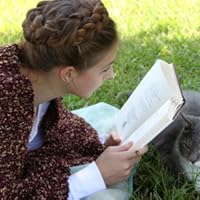
A re-read of an old favorite! It didn't disappoint, I do love this dear, old-fashioned book!! 🥰📖

July 23, 2014
Polly Milton is a fourteen-year-old country girl raised on old-fashioned values and invited to Boston for an extended stay with her friend, Fanny Shaw. Quite the unlikely friendship since Fanny, despite being only two years older, is no longer just a girl, not poor, and not old-fashioned. Little does Polly know the breakers which lie ahead: flounces and frizzles and the height of fashion, girls who consider flirtation the true purpose of schooling, and one particularly beastly red-headed boy who insists on plaguing his sister’s country friend.
Aww. I first fell in love with An Old-Fashioned Girl after discovering a hard copy version amongst the Louisa May Alcott collection on my grandmother’s shelf. That copy, which was in perfectly decent condition when I first read it, is now so tattered I doubt the cover or the binding would survive another reading.
This is my favorite Louisa May Alcott book and also one of my favorite books of all time. All the characters have spunk and fire and flaws. The dialogue is engaging, and it’s fun to hear the slang of the era. (I also love how the little sister, Maud, speaks with a lisp throughout the first portion of the novel). Like Little Women, An Old-Fashioned Girl begins with the main character in her teens, then fast forwards in time. Six years to be exact for the final two-thirds of the novel. All the main characters (Polly, Fan, and Tom) are forced to learn to swim or sink in the face of scheming marriage hunters, the societal expectations of Boston’s High Society, and the allure and illusion of monetary security. One of those novels I can read again . . . and again . . . and again.
In a way, Louisa May Alcott wrote An Old-Fashioned Girl to please all those readers who were heartbroken by the way she ended Little Women. And personally, I am so glad she did.
Aww. I first fell in love with An Old-Fashioned Girl after discovering a hard copy version amongst the Louisa May Alcott collection on my grandmother’s shelf. That copy, which was in perfectly decent condition when I first read it, is now so tattered I doubt the cover or the binding would survive another reading.
This is my favorite Louisa May Alcott book and also one of my favorite books of all time. All the characters have spunk and fire and flaws. The dialogue is engaging, and it’s fun to hear the slang of the era. (I also love how the little sister, Maud, speaks with a lisp throughout the first portion of the novel). Like Little Women, An Old-Fashioned Girl begins with the main character in her teens, then fast forwards in time. Six years to be exact for the final two-thirds of the novel. All the main characters (Polly, Fan, and Tom) are forced to learn to swim or sink in the face of scheming marriage hunters, the societal expectations of Boston’s High Society, and the allure and illusion of monetary security. One of those novels I can read again . . . and again . . . and again.
In a way, Louisa May Alcott wrote An Old-Fashioned Girl to please all those readers who were heartbroken by the way she ended Little Women. And personally, I am so glad she did.

November 3, 2024
Louisa May Alcott is one of my favorite authors of all time, and she did not disappoint with this book! It started out a little slow through the first chapters, but I didn’t want to put it down through the last chapters…though I knew what was coming. I will definitely add this to my read-again list.

January 6, 2019
I ended up enjoying this more than I expected to at the beginning, but it didn't make me care as much as Little Women. I think it's because a child was teaching children and adults to be better people, rather than an adult with life experience. It took longer for me to see the characters as individuals rather than caricatures. I was rooting for characters at the end, though, so I did care more than I thought.

December 27, 2023
I Love this book! Honestly, it's one of my favorite Alcott books, but that's hard to decide because her books are so good! You know? But this is such a timeless piece with so many fun stories and good lessons.
Characters:
Polly is a dear! I love her. She tries her best to be good and not disappoint her parents or friends and family, but she is just a girl and it's hard sometimes.
Fanny is a girl that undergoes a lot of growth and change and I love her journey throughout the book.
Tom! I love Tom, he's such a rogue but deep down he's really got a good heart he just never really was set in the right direction.
Will is Polly's dear brother, and I love him!
Maud is hilarious and just fun.
Themes:
That making do with a little isn't bad and sometimes having a lot isn't all it's cracked up to be. I love the emphasis on sibling relationships and treasuring each other. Of family and the importance of parents in a child's life. Of not being so fast to grow up and that it's okay to be an old soul.
Romance:
Just touches that are beautiful!
Language:
N/A
Overall:
This is such a good book that highly recommend to everyone! It's just such a sweet wholesome story. I've read it so many times over the years and enjoy it more each time!
Recommended 9+ that's how old I was when I read it, but I was an advanced reader...but if a parent or sibling is willing to answer questions or make Google accessible for the few tricky words it could work well.
Characters:
Polly is a dear! I love her. She tries her best to be good and not disappoint her parents or friends and family, but she is just a girl and it's hard sometimes.
Fanny is a girl that undergoes a lot of growth and change and I love her journey throughout the book.
Tom! I love Tom, he's such a rogue but deep down he's really got a good heart he just never really was set in the right direction.
Will is Polly's dear brother, and I love him!
Maud is hilarious and just fun.
Themes:
That making do with a little isn't bad and sometimes having a lot isn't all it's cracked up to be. I love the emphasis on sibling relationships and treasuring each other. Of family and the importance of parents in a child's life. Of not being so fast to grow up and that it's okay to be an old soul.
Romance:
Just touches that are beautiful!
Language:
N/A
Overall:
This is such a good book that highly recommend to everyone! It's just such a sweet wholesome story. I've read it so many times over the years and enjoy it more each time!
Recommended 9+ that's how old I was when I read it, but I was an advanced reader...but if a parent or sibling is willing to answer questions or make Google accessible for the few tricky words it could work well.

January 17, 2021
Una historia que sigue el estilo de Mujercitas. Una lectura amable, para pasar un rato en una tarde de lluvia.
Narra la historia de una joven que visita a su amiga en la ciudad, chocando enseguida sus orígenes humildes con las costumbres de la acomodada familia. Con su buen carácter y actitud, no sólo se gana el beneplácito de la familia, sino que demuestra que es más rico aquel que vive de acuerdo con su conciencia y principios aunque sea con humildad que los que se guían sólo de la diversión sin medida y el gasto superfluo.
Narra la historia de una joven que visita a su amiga en la ciudad, chocando enseguida sus orígenes humildes con las costumbres de la acomodada familia. Con su buen carácter y actitud, no sólo se gana el beneplácito de la familia, sino que demuestra que es más rico aquel que vive de acuerdo con su conciencia y principios aunque sea con humildad que los que se guían sólo de la diversión sin medida y el gasto superfluo.

November 20, 2020
Llegué a este libro buscando en internet libros del siglo XIX. Lo había dejado en el kindle almacenado y decidí sacarlo, luego de leer: el lobo estepario y la ratonera.
El libro logra engancharte desde las primeras páginas, los personajes están tan vivos que logras conectar con ellos, en mi caso fue la abuela, también el señor Shaw (como personajes secundarios), la historia esta muy bien planteada y la manera de llevar el amor me gustó, porque no estuvo forzado. Creo que May se dio un gusto y también a todos los lectores.
Lo que por lo menos, a mí me agrada de Polly, es su forma de ser, no cambia su forma de actuar frente a la vida ni tampoco sus gustos, para agrandar a los demás, para meterse en el mundo de sus amigos. Eso es algo muy lindo e interesante.
PD: Polly me recuerda a mi, cuando iba a la escuela. todos hablaban de sus cantantes favoritos, yo no conocía a ninguno 🤷 y cuándo me preguntaban, les decía: "no me gusta la música"
El libro logra engancharte desde las primeras páginas, los personajes están tan vivos que logras conectar con ellos, en mi caso fue la abuela, también el señor Shaw (como personajes secundarios), la historia esta muy bien planteada y la manera de llevar el amor me gustó, porque no estuvo forzado. Creo que May se dio un gusto y también a todos los lectores.
Lo que por lo menos, a mí me agrada de Polly, es su forma de ser, no cambia su forma de actuar frente a la vida ni tampoco sus gustos, para agrandar a los demás, para meterse en el mundo de sus amigos. Eso es algo muy lindo e interesante.
PD: Polly me recuerda a mi, cuando iba a la escuela. todos hablaban de sus cantantes favoritos, yo no conocía a ninguno 🤷 y cuándo me preguntaban, les decía: "no me gusta la música"

February 18, 2021
Wow.
This book was beautiful, an amazing and inspiring story that left me with a happy heart and a determination to keep holding on to the things that matter.
Polly was a lovely, relatable protagonist whose journey and character growth touched and encouraged me to stay true to the values and truths I believe. The setting and secondary characters were so real and interesting, and the story kept me hooked until the end. The themes, as I’ve mentioned, were the best part of the book; Alcott is so insightful, and many of the things she points out about the time period then are still relevant now.
I’ve always been a Louisa May Alcott fan, but I didn’t expect to love this book so much. Heartily recommend this wonderful classic.
This book was beautiful, an amazing and inspiring story that left me with a happy heart and a determination to keep holding on to the things that matter.
Polly was a lovely, relatable protagonist whose journey and character growth touched and encouraged me to stay true to the values and truths I believe. The setting and secondary characters were so real and interesting, and the story kept me hooked until the end. The themes, as I’ve mentioned, were the best part of the book; Alcott is so insightful, and many of the things she points out about the time period then are still relevant now.
I’ve always been a Louisa May Alcott fan, but I didn’t expect to love this book so much. Heartily recommend this wonderful classic.

June 29, 2010
My rational self gives this 3 stars, but my sentimental self gives it 4. It’s a very sweet, sentimental, cozy re-read. Perfect for tweens, but doesn’t quite hold up unless you have nostalgia for it 😄
There was plenty to find fault with, but what enjoyed the most was seeing the interplay between Alcott’s feminism and femininity. She seems very much to think that women make themselves far too weak and unfruitful, but at the same time has a high value for “womanly” virtues. She seems to have a counter cultural (for her time) sense that men and women are more the same than different, but also retains a strong sense of gender distinction and that men and women offer each other distinctly different things. This passage talking about the heroine giving comfort to her friend demonstrates it as good any (emphasis mine):
“…. she had learned early what it takes most women some time to discover, that sex does not make nearly as much difference in hearts and souls as we fancy. Joy and sorrow, love and fear, life and death, bring so many of the same needs to all that the wonder is we do not understand each other better but wait till times of tribulation teach us that human nature is very much the same in men and women. Thanks to this knowledge, Polly understood Tom in a way that surprised and won him. She knew that he wanted *womanly* sympathy and that she could give it to him because she was not afraid to stretch her hand across the barrier which our artificial education puts between boys and girls and to say to him in all good faith, ‘If I can help you, let me.’”
I’m sure there are papers written about Alcott’s kind of feminism, and reading this book again makes me want to read them. This kind of feminism feels quite native to me.
There was plenty to find fault with, but what enjoyed the most was seeing the interplay between Alcott’s feminism and femininity. She seems very much to think that women make themselves far too weak and unfruitful, but at the same time has a high value for “womanly” virtues. She seems to have a counter cultural (for her time) sense that men and women are more the same than different, but also retains a strong sense of gender distinction and that men and women offer each other distinctly different things. This passage talking about the heroine giving comfort to her friend demonstrates it as good any (emphasis mine):
“…. she had learned early what it takes most women some time to discover, that sex does not make nearly as much difference in hearts and souls as we fancy. Joy and sorrow, love and fear, life and death, bring so many of the same needs to all that the wonder is we do not understand each other better but wait till times of tribulation teach us that human nature is very much the same in men and women. Thanks to this knowledge, Polly understood Tom in a way that surprised and won him. She knew that he wanted *womanly* sympathy and that she could give it to him because she was not afraid to stretch her hand across the barrier which our artificial education puts between boys and girls and to say to him in all good faith, ‘If I can help you, let me.’”
I’m sure there are papers written about Alcott’s kind of feminism, and reading this book again makes me want to read them. This kind of feminism feels quite native to me.

December 28, 2018
Un classico “evergreen”, scritto a fine Ottocento ma che ha molto da insegnare ad adolescenti e genitori di oggi. Due amiche, una ricca, il cui unico problema è scegliere il vestito da indossare, ed una povera, sempre con il sorriso sulle labbra e sempre pronta ad aiutare il prossimo, soprattutto quello più sfortunato di lei.
~Il contatto con la povertà mi rende riconoscente e grata di quello che ho, mi fa sentire ricca e mi rende disponibile a fare quanto posso per quelle disgraziate creature.
~...quante cose i poveri sono in grado di insegnare ai ricchi...
~Ci sono buoni sentimenti, dolcezza, rassegnazione anche nei casi più squallidi: basta avere occhi per vederli, cuore per intuire.
È molto chiaro il messaggio che ci lascia l’autrice: non sono i soldi, le frivolezze, le cose materiali a fare la felicità, bensì l’amicizia e l’amore verso il prossimo, la famiglia ed anche verso il lavoro.
Cerco soltanto di prendere tutto dal lato migliore: è una ricetta quasi infallibile. Non puoi immaginare quante cose buone di possono tirar fuori dalle situazioni più difficili, se solo ci si prova.
Si potrebbero fare tantissime altre citazioni, tutte dense di significato, l’ultima e poi mi fermo qui: Se cerchi di combattere i tuoi guai, li hai già risolti per metà.
~Il contatto con la povertà mi rende riconoscente e grata di quello che ho, mi fa sentire ricca e mi rende disponibile a fare quanto posso per quelle disgraziate creature.
~...quante cose i poveri sono in grado di insegnare ai ricchi...
~Ci sono buoni sentimenti, dolcezza, rassegnazione anche nei casi più squallidi: basta avere occhi per vederli, cuore per intuire.
È molto chiaro il messaggio che ci lascia l’autrice: non sono i soldi, le frivolezze, le cose materiali a fare la felicità, bensì l’amicizia e l’amore verso il prossimo, la famiglia ed anche verso il lavoro.
Cerco soltanto di prendere tutto dal lato migliore: è una ricetta quasi infallibile. Non puoi immaginare quante cose buone di possono tirar fuori dalle situazioni più difficili, se solo ci si prova.
Si potrebbero fare tantissime altre citazioni, tutte dense di significato, l’ultima e poi mi fermo qui: Se cerchi di combattere i tuoi guai, li hai già risolti per metà.

January 24, 2017
I love this book. I've read it once before, several years ago, but I didn't remember much of it and it was fun to go through it again - especially now that I appreciate all the lessons tucked into "Old Fashioned Girl". Polly Milton rather reminded me of Pollyanna in a way - she comes to the city to visit her best friend Fanny Shaw and brings the sunshine with her to a rich but struggling household. She is a blessing to those around her, and her old-fashioned ways turn out to be the best as Polly influences the circle she finds herself in. Some might call Louisa May Alcott's books preachy, but I love them, and I must say I enjoyed Miss Alcott's insight into a girl's character/emotions. Made me smile and nod in agreement! :)

March 13, 2022
Par usual, Louisa May Alcott has crafted a heart-warming story by mixing a tender story of a young girl seeking independence, and a young man searching--just like she is.
It took me a while to get through this book, not because it was hard to get into, but it was relatively easy to put down.
CHARACTERS: My favorite, by far, was Polly. I think there's a little bit of Little Women's Beth and Jo in each of Alcott's characters, and I could defiantly see the Beth in Polly. She should be the role-model of every young woman seeking God. She finds beauty in everything, and smile at everyone. She is strong, independent, and wise, but isn't afraid to admit when she needs help. And then there's Tom. Just. . .Tom. It honestly made me a little but mad when I got to the "6 years later" and realized what had happened to him. But, I knew it couldn't last long.
PLOT: I loved how much time this book spanned, and how easily and smooth it progressed. I do have to give a little Content Warning, because suicide was mentioned while two women were talking (one woman was telling Polly the story of a young girl), but it was never followed-though.
ROMANCE: Yes. There was romance. But it was Old-Fashioned. Adn it was written very well. And please, is the word "romance" turns you off, READ THIS BOOK ANYWAY!! Alcott writes purely simplistic, and lovely romance.
OVERALL: Overall, I'm sad I can only give it five stars. I wish I could give it ten!!
It took me a while to get through this book, not because it was hard to get into, but it was relatively easy to put down.
CHARACTERS: My favorite, by far, was Polly. I think there's a little bit of Little Women's Beth and Jo in each of Alcott's characters, and I could defiantly see the Beth in Polly. She should be the role-model of every young woman seeking God. She finds beauty in everything, and smile at everyone. She is strong, independent, and wise, but isn't afraid to admit when she needs help. And then there's Tom. Just. . .Tom. It honestly made me a little but mad when I got to the "6 years later" and realized what had happened to him. But, I knew it couldn't last long.
PLOT: I loved how much time this book spanned, and how easily and smooth it progressed. I do have to give a little Content Warning, because suicide was mentioned while two women were talking (one woman was telling Polly the story of a young girl), but it was never followed-though.
ROMANCE: Yes. There was romance. But it was Old-Fashioned. Adn it was written very well. And please, is the word "romance" turns you off, READ THIS BOOK ANYWAY!! Alcott writes purely simplistic, and lovely romance.
OVERALL: Overall, I'm sad I can only give it five stars. I wish I could give it ten!!
July 16, 2014
RATING: 3 STARS
Polly is invited to stay with wealthy friends in Boston and finds herself to be an old-fashioned country girl. She is not worldly about parties, boys or acting like she has money. She would prefer to help her elders, read books and spend her time with hobbies. Polly seems to be helping each of the Shaws more than receiving their patronage.
I LOVE Little Women so was excited to read another book by Alcott but I found this one to lack the heart and story of Little Women. An Old-Fashioned Girl I think is more simplistic and fluffy. You never get to really know Polly like you do the characters in Little Women and the storyline does not have much climax. It is a fair book and if I read it as a child maybe I would have liked it a lot more.
My Novelesque Blog
Polly is invited to stay with wealthy friends in Boston and finds herself to be an old-fashioned country girl. She is not worldly about parties, boys or acting like she has money. She would prefer to help her elders, read books and spend her time with hobbies. Polly seems to be helping each of the Shaws more than receiving their patronage.
I LOVE Little Women so was excited to read another book by Alcott but I found this one to lack the heart and story of Little Women. An Old-Fashioned Girl I think is more simplistic and fluffy. You never get to really know Polly like you do the characters in Little Women and the storyline does not have much climax. It is a fair book and if I read it as a child maybe I would have liked it a lot more.
My Novelesque Blog
Displaying 1 - 30 of 1,571 reviews