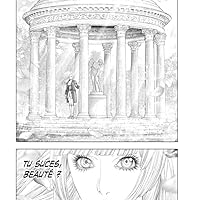
La storia è quella di Iba, giovane e solerte storico giapponese che scomparve misteriosamente durante un viaggio in Cina, dove si era recato per svolgere una ricerca sulla cosiddetta Via della seta. Dopo un anno, la fidanzata Kyoko, certa del fatto che il giovane amato sia ancora in vita, decide di mettersi anche lei in viaggio e, una volta giunta in quelle terre, si trova al centro di un enigma: terrificanti nuvole nere, infatti, la circondano facendole perdere conoscenza e catapultandola… nell’anno 1212 e nella regione cinese di Seika, a quel tempo sotto il controllo dell’Impero Mongolo.
Okamura Yoshiyuki (岡村善行), also known as Buronson (武論尊) or Sho Fumimura (史村翔 Fumimura Shō), is a Japanese manga writer most known by his famous work Hokuto no Ken. known in English as Fist of the North Star. He graduated from the Japanese Air Force Training School in 1967 and served as an Air Force radar mechanic. In 1969 he discharged from the Japanese Navy and was soon hired by Hiroshi Motomiya as a manga assistant. He started his manga writing career when he wrote the script of Pink Punch: Miyabi in 1972, drawn by Goro Sakai. In 1975 Buronson wrote his first big hit The Doberman Detective, drawn by Shinji Hiramatsu. The famous Hokuto no Ken made its debute as Buronson's greatest hit in 1983, drawn by Tetsuo Hara. In 1989 his story Ourou was released as a manga serialized in Animal Magazine, drawn by Kentarou Miura, and in 1990 a sequel entitled Ourou Den was released by the same manga artist. Buronson also collaborated with the manga artist Ryoichi Ikegami in many works as Strain (manga) , Human (manga) and the famous Sanctuary (manga). Among his other major works are The Phantom Gang, with art by Kaoru Shintani.
Buronson was mainly influenced by movies such as Bruce Lee's, and Mad Max.
The nickname Buronson is a tribute to the American actor Charles Bronson, whose way of growing the mustache was imitated by Yoshiyuki Okamura too.
Σε γενικές γραμμές το ευχαριστήθηκα όταν το διάβασα. Προφανώς δεν έχει καμία σχέση με το Berserk ποιοτικά, αλλά περισσότερο είναι πρόδρομος αυτού σχεδιαστικά, κάτι σαν πειραματισμός του Muira για να δει τι θα κρατήσει και τι όχι για την μεγαλύτερη επερχόμενη δουλειά του. Παρόλα αυτά, το σχέδιο φωνάζει κάτι από Berserk στα περισσότερα σημεία του(οι μεγάλες σπάθες του Muira είναι πλέον σήμα κατατεθέν) και τα character designs καθώς και η δομή των εκφράσεων και κινήσεων είναι ίδιοι με τους αντίστοιχους της άλλης σειράς. Σεναριακά τον Buronson τον ευχαριστήθηκα πολύ περισσότερο στο Hokuto No Ken, και ας ήταν εκεί πιο κατεστραμμένος κάφρος από ότι εδώ. Το σενάριο είναι διασκεδαστικό αλλά πολύ κοινότυπο, και οι ανατροπές στην πλοκή είναι κάπως βεβιασμένες γιατί είναι μόνο ένας τόμος 200 σελίδων γεμάτος με παραπάνω πληροφορία και γεγονότα από όσα θα έπρεπε. Θα το πρότεινα κυρίως σε άτομα που τους άρεσε πολύ το Berserk και θέλουν να δουν μια άτυπη έμπνευση του, αλλά μην νομίζετε ότι θα πιάσετε και κανένα αριστούργημα.Για ένα χαλαρό απόγευμα πάντως είναι ότι πρέπει. Και μιας που το θυμήθηκα, πρέπει να κάνω παρουσίαση το berserk.
Υ.Γ. Είναι δυνατόν να βάζεις ένα τύπο που ξέρει Kendo,που είναι άθλημα και όχι πολεμική τέχνη, να παλέψει με έναν από τους πιο τούμπανους samurai (για την φάση με τον Minamoto λέω)? Τελείως λάθος πρακτικά και αναρωτιέμαι πως και γιατί μπήκε.
una trama totalmente ridicola accompagna un ottimo disegno ed uno stile che poi si ritroverà pure in berserk dove Miura farà qualcosa di ben più valido
I never knew Buronson and Miura had a joint manga so I was intrigued to see how the pairing works. It definitely has the blood of 'Fist of the North Star', coated in a layer of proto-Berserk artwork. You can definitely see similarities between some Berserk Golden Age characters (like Wyald) and Miura's original design of the Black Swordsman. However, the story is very strange and simplistic and I would say it's intended for hardcore fans of both manga artists only as a piece of trivia, not a serious study.
Picked this up on a whim yesterday and read through the entire volume--I've never read Berserk or Fist of the North Star, so this is my first real introduction to either Buronson or Miura Kentaro. The ending resonated with me very deeply: how do we determine our responsibilities? Time travel is always a plus, too.
Se trata de un tomo único muy corto (cosa que por desgracia lleva a la historia a acontecer rápidamente), entretenido y fácil de leer. No llega al nivel de Berserk o Hokuto no Ken y quizá esperaba algo más viniendo de tales autores, pero es igualmente recomendable sólo por disfrutar del dibujo de Miura y de una trama que, en mi opinión, podría haber dado para mucho más.
Una storia di Buronson, l’autore di Ken Il Guerriero (Fist of the North Star) con disegni del compianto Kentaro Miura (Berserk); tramite viaggi nel tempo e riletture abbastanza particolari della figura di Gengis Khan, otteniamo una sorta di dark fantasy “storico” dove sono le scene d’azione a farla da padrona.
Non serve una recensione, basta leggere chi è lo sceneggiatore e di chi sono i disegni. Questa è il primo manga di Miura come disegnatore... Il resto è storia.
This was great. Picked it up at random on a regional comic con (Rumia comic con FTW!) not expecting anything much from it. Always wanted to get into Berserk though the sheer length of it was in the way. Couldn’t put it down, had to finish in one read. A great and fun read, that was very entertaining and yet left me with some intense post read thinking
Wariacja na temat Czyngis-Chana. Bohater wciąż pieprzy, że 'trzeba zachować bieg historii', ale... czy jego pojawienie się już tego biegu nie zmieniło? Duh.
La trama è purtroppo piena di buchi,a cominciare dal punto principale della storia,il viaggio nel tempo che da inizio alla vicenda,che avviene apparentemente senza alcun motivo e non ha alcun tipo di regola,semplicemente si apre un buco nello spazio-tempo e conduce dalla Cina moderna a quella di Gengis Khan,senza una spiegazione del come o del perché...in più l'intero colpo di scena di metà volume è basato su una leggenda diffusa in epoca imperiale in giappone per cercare di dimostrare la superiorità della popolazione nipponica sulle altre popolazioni limitrofe...non solo non ha un minimo di veridicità storica,ma è anche un punto piuttosto razzista...questi due elementi riescono quasi completamente a rovinare un'opera che in teoria dovrebbe essere un sogno diventato realtà,lo sceneggiatore di Ken e il disegnatore di Berserk uniti per un manga storico estremamente violento...e in effetti la maggior parte del volume è ottima,i dettagli della veste grafica sono impressionanti e le scene di lotta sono ottime,soprattutto i due duelli finali,se solo la trama fosse stata curata un po' di più....
Jason Thompson gave this one-shot manga 1.5 stars in his "Manga - The Complete Guide" and that's really laughable. Amazing artwork from Kentaro Miura meets with a story that all fans of Berserk would love. One of the best one-shots I've ever read.
All in all a solid one-shot manga with good art, a fairly interesting story (with a rather touching ending) and a cool take on history and time-travel. But I expected more from a two masterminds (Buronson and Kentaro Miura). It lacks that extra 'punch' that a real masterpiece has.
Me ha gustado. El dibujo sensacional, como siempre al ser de Kentaro Miura. Se nota que aquí era muy joven y tiene un añadido de trazo de los 80-90 q te lleva a otro periodo otaku/mangaka. Eso si, al ser 1 sólo volumen la historia es sencilla y acelerada, pero se acepta muy bien.
Pese a que Kentaro Miura (el dibujante) y Buronson han logrado por separado dos de las obras magnas del manga ("Berserk" el primero y "Hokuto no ken", aquí editado como "El puño de la estrella del norte", el segundo), juntos no logran una obra que, como mínimo, haga justicia a las nombradas.
Al igual que con "Japón", otro trabajo que realizaron juntos, "Oh-Roh. El rey lobo" es una obra muy menor, incluso mediocre, que con la excusa de utilizar como esqueleto de la historia una serie de datos históricos y teorías, nos presenta una aventura en un mundo violento. En un principio esto no esta mal, el problema es que todo pasa demasiado rápido, sin profundizar ni en los personajes ni en los sucesos y al final es una obra sin chicha ni llimona, que se lee rápido y que entretiene, pero que no aporta nada y se olvida al instante.
Eso sí, lo mejor es el recargado y sucio dibujo de Miura al que no se le puede reprochar nada.