Set in Senegal, this modern-day Oliver Twist is a meditation on the power of love, and the strength that can emerge when we have no other choice but to survive.
Six-year-old Ibrahimah loves snatching pastries from his mother's kitchen, harvesting string beans with his father, and searching for sea glass with his sisters. But when he is approached in his rural village one day by Marabout Ahmed, a seemingly kind stranger and highly regarded teacher, the tides of his life turn forever. Ibrahimah is sent to the capital city of Dakar to join his cousin Étienne in studying the Koran under Marabout Ahmed for a year, but instead of the days of learning that Ibrahimah's parents imagine, the young boys, called Talibé, are forced to beg in the streets in order to line their teacher's pockets.
To make it back home, Étienne and Ibrahimah must help each other survive both the dangers posed by their Marabout, and the darker sides of Dakar: threats of black-market organ traders, rival packs of Talibé, and mounting student protest on the streets.
Drawn from real incidents and transporting readers between rural and urban Senegal, No Heaven for Good Boys is a tale of hope, resilience, and the affirming power of love.
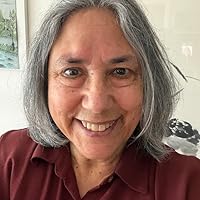
Keisha Bush is the author of No Heaven For Good Boys, a New York Times Editors' Choice and Paperback Row pick, and winner of the Sarah Verdone Writing Award. She is also the author of the Scholastic children’s book My Family Tree.
She has received fellowships from the Lower Manhattan Cultural Council’s Workspace Residency, the Tyrone Guthrie Centre, Moulin à Nef, the Virginia Center for the Creative Arts, and Vermont Studio Center. Her work has appeared in The New York Times, Lion’s Roar Magazine, Literary Hub, The Rumpus, Electric Literature, and CommonLit.
Keisha holds a Bachelor of Science in Management from Bentley University, an MFA in creative writing from The New School, and a Master of Theological Studies from Harvard Divinity School.
She teaches writing at the Center for Fiction, and currently lives in Cambridge, Massachusetts.
The Feb. 2021 selection for Amerie's Book Club is NO HEAVEN FOR GOOD BOYS by Keisha Bush!
In No Heaven for Good Boys, Keisha Bush examines family, tradition, modernity, abuse, and survival. I fell in love with six-year-old Ibrahimah and his cousin Étienne, who felt not like characters, but flesh-and-blood children; I was with them every step of their harrowing journey, and they remain with me. I couldn’t read another book for days after finishing. This story is heartbreaking. But also Bush has a way of softening the blows with much-needed magical realism, granting just enough respite to keep one going. Over a hundred thousand real-life boys are Talibé, and it is Keisha Bush’s thoughtful characterization of their lives that gives this story its beating heart. 📚 To donate and/or learn more about how to help Talibé children in Senegal: Maison de la Gare www.mdgsl.com Empire des Enfants www.EmpireDesEnfants.sn/en Samu Social Senegal www.SamuSocialSenegal.com/en 📚 #AmeriesBookClub #ReadwithAmerie #ABC @KeishaBush #NoHeavenForGoodBoys @AmeriesBookClub @randomhouse
ABOUT KEISHA BUSH Keisha Bush was born and raised in Boston, Massachusetts. She received her MFA in creative writing from The New School, where she was a Riggio Honors Teaching Fellow and recipient of an NSPE Dean’s Scholarship. After a career in corporate finance and international development that brought her to live in Dakar, Senegal, she decided to focus full-time on her writing. She lives in East Harlem.
*****
Jan. 2021 Wow. Just...wow. Riveting, heartbreaking, sometimes funny, and raw... And thank you Ms. Bush for the magical realism because with so much pain in the world, and so much Black pain, I needed the hope that even the slightest touch of magical realism can bring.
Ugh. This book hurt my soul. "No Heaven for Good Boys" is a beautiful debut novel by Keisha Bush. The plot is dark and depressing but so rewarding and profound. We follow 6 year-old Ibrahimah and his cousin, Etienne through the streets of Dakar, as they beg for money for their abusive teacher, Marabout Ahmed. I thought the opening scene where Ibrahimah and Etienne go to the zoo was gorgeously written. Beautiful imagery and excellent dialogue throughout this whole novel. And even though this book might upset some due to the abuse that the two cousins endure, I think you will wholeheartedly root for them every step of the way. I had to dock a star only because of the magical realism elements. Not badly written, just not my cup of tea. I appreciated the cryptic ending, it wasn't cookie-cutter or patronizing. The cover art is stunning as well. Such an emotive and heartbreaking novel. You might shed a tear of two.
Thank you, Netgalley and Random House for the digital ARC.
“No one can mistake the sight of a Talibé; toting the economy-size red tin tomato can, bare callused feet, shaved heads patched with eczema, skinny bodies, and faces of children without love.”
In Senegal and other Moslem countries young boys, a talibé, are sent to a man called a marabout to be educated in the Quran. To support the maribout these children must spend their days begging in the streets for money and food. It is a relationship that is full of abuse and exploitation. This book is about Ibrahimah 7 and his older cousin Étienne who are sent by their families to Dakar to live with, and work for, Marabout Ahmed. Ahmed is one of the worst maribouts - greedier and more abusive.
This book is really relentlessly depressing. There is just no excuse for the treatment of these children. The whole custom is a human rights violation and I don’t know how it is permitted to exist. The book was generally written well and there were a few hopeful moments, but there was also a lot of repetition because there was not a lot of variety in the days of these boys. The book exposes a shameful situation, but it wasn’t a fun read. 3.5 stars
I received a free copy of this book from the publisher.
This may end up being one of my favorite reads this year. The setting, the story, the characters are all intriguing. If you know nothing of Senegal this is your book. You'll be caught up in the story of the boys who are forced to be out begging everyday and the families they have left behind. This book needs to shoot right up to the top of the best seller's list and I look forward to reading her next work.
I was caught up in the story from beginning to end. Sadness, joy, horror, celebration.....an emotional journey. It was also an education on the talibe . Heart wrenching at times.
5/5 Just wow. Gut-punching story based on real events about two young boys in West Africa becoming Talibe (students of the Quran) per cultural tradition & being forced to live in squalor & beg for money to satisfy their master, otherwise be beaten. Sad but immensely beautiful narrative with feelings of hope and resiliency. One that makes you feel truly changed after reading.
Telling the story of two talibé—boys sent to study the Quran under a Muslim religious leader—Keisha Bush's debut follows Ibrahimah and Etienne, cousins living in Dakar under their Marabout Ahmed. He is a cruel man who forces them to beg for money and food each day to bring back so he can fund his family back in their village, rather than teach them the Quran and guide them as he's instructed to do. However, the culture and legal protection he has over the boys keeps them from being able to run away or for their own families to call them back home. As events escalate, the two boys seek a way out while trying to make it through each day under the abuses of their master, meanwhile their families back home grapple with the reality of their situation.
This book was heartbreaking. Bush did a great job of capturing the emotions of everyone involved, and knowing this is based on real experiences of boys just like Ibrahimah and Etienne is even more heartbreaking. I was so angry for them and the book definitely doesn't shy away from portraying some pretty difficult scenes that further highlight how terrible this practice is.
I didn't know anything about talibé before this book, and I appreciated how it was both educational and an engaging, emotional story.
Gorgeous. Heartbreaking. "No Heaven for Good Boys" transports you to Senegal, a country I confess I knew little about. From the talibés with their tomato cans begging for coins on the streets of Dakar to the yassa poisson being prepared in a village kitchen, this book brings it all alive. The characterizations of the young cousins, Ibrahimah and Étienne, is brilliant; they're a realistic blend of naive and knowing, wise and silly. It would have been easy to make them symbols, but instead they were rendered as flesh-and-blood boys.
The reason I'm not giving this five stars is that there were a few elements of magic realism/mysticism that didn't work for me, though that's purely subjective on my part (I'm not a fan of that sort of thing, so I felt those instances made the story drag). Regardless, if you want to be immersed into a culture little known here in the States and are open to a few emotional sucker punches, this is the book for you.
Thank you, NetGalley and Random House, for providing me with an advanced copy in exchange for an honest review.
This was a gut punch of a novel. Child abuse, starvation, murder, and betrayal are frequent occurrences throughout the book. The story centers on a young child named Ibrahimah who was taken from his home and his family in Southern Senegal to live as a talibe (student of the Quran) in the capital city of Dakar. Each day, Ibrahimah, his cousin Etienne, and the other talibe arise from their cardboard mats to venture out and collect enough earnings for their marabout (teacher) to avoid his wrath. As Ibrahimah roams around the city, he thinks of his family back home and tries to figure out a way to return.
As devastating as this book is, there is immense beauty in its narrative. Bush weaves feelings of hope and resilience tethered to the love of family and community throughout the heartbreak. There are beautiful moments of joy and spiritual/dreamy scenes that take you beyond the hurt the characters face. Above all, it is a moving tale that teaches about the power of the human spirit as well as an intimate look into Senegalese culture.
This is a heartbreaking look at boys taken from their families at an early age by a "religious" leader to beg on the streets of Western Africa. The reader rotates between the mother's reaction (she was also an abused child) and her six year old son who is so abused and neglected. Unfortunately, it is a story of tradition and how sometimes "tradition" does not allow us to do the right thing, even when we know better. Although heartbreaking, I could not put this family's story down. I gave it five stars for how it held my interest, but the story line is not for the weak of heart.
Fictionalized account based on a religious custom in Senegal of giving boys to a Marabout who is supposed to educate them in Quran. Over the years this practice has become abused and thousands of these Talibe children are starved, mistreated, abused and forced to beg for food and the daily quota alloted by their Marabouts. Well-written, heartbreaking story!
I am very surprised at the high ratings for this novel. It is a very sad story about a six-year boy, Ibrahimah, who is sent by his family from a small village in Senegal (Salloulou) to the city of Dakar to become a Talibé (a boy who studies the Quran at a daara) to join his cousin, 12-year old Etienne. Life is very hard for them and the other students, who basically are beggars for their marabout (teacher), Ahmed, who beats them if they do not bring in a daily tithe, and who has several wives, befitting a devoted disciple of Allah. The horrors of their lives in the city is one story, which is told in parallel with the story of his bereaved mother, who misses Ibrahimah terribly, cannot find comfort with her three remaining daughters, eventually lapsing into delirium. Keisha Bush lived in Senegal and must have seen and spoken with these pitiful souls, who live off of the kindness/coins of tourists and the wealthy residents or are the focus of their scorn. Too depressing for me.
A heart breaking journey which follows two cousins Ibrahimah and Etienne, who are taken away from their Loving families to live with a marabout ( teacher of the Quran) The boys are forced to beg and survive on the streets of Dakar. This well written story will stay with me for some time.
Incredible debut and one of the best written and just plain best books I have read in a long time. The book is about a country and customs I know almost nothing about. The fictional characters came alive to educate and narrate this harrowing and haunting yet beautiful story of these young boys. The author has done a great service by so viscerally describing their lives. I predict this will be one of the most memorable books I read this year and one of few I would read again.
In No Heaven for Good Boys, a seven year-old is sent from his village to the bustling city of Dakar, where he joins his cousin on the streets begging for money to support their marabout, who is supposed to give his charges a moral and spiritual education, but instead instructs them in the ways of abuse and neglect. Separated from his mother, who is desperate for his return, Ibrahim is caught up in the many dangers and contradictions of an adult world he doesn’t yet understand.
No Heaven for Good Boys is a story of suffering by circumstance. All the characters, regardless of the power afforded them by wealth, status, or gender--from the marabout who abuses, traumatizes, and neglects the children under his care, to the wealthy women who answer to their husbands, or Ibrahim’s well-intentioned father, who must stay in his brother’s good graces to preserve the family financially--are burdened by tradition and bound by paternalistic social rule, whose effects are compounded by the economic legacy of colonialism. Each faces a struggle to assert independence and determine their own fate, one way or another. Eloquently summing up this struggle, Ibrahim’s grandmother observes towards of the end of the novel: “To fail is not something to be ashamed of. Life is a series of failures, my child, and the greater the failure, the greater the spirit to rise up from the ashes.” The novel is full of such wisdom and reflection.
An important book, beautifully rendered with such visceral and compelling detail, this a must-read for all.
NO HEAVEN FOR GOOD BOYS by Keisha Bush is a heart breaking novel about a boy, Ibrahimah, who leaves his family in Salloulou, Senegal at the age of six to become a Talibé (a boy who studies the Quran at a daara) in Dakar but then must endure a hard life put upon him by his marabout (teacher). It was oftentimes hard to read this sad story. We follow the day to day life as Ibrahimah and his cousin have to beg strangers for food and money in order to avoid beatings from their marabout. It was difficult to read about these boys struggling to survive. It was also difficult to read about his mother who was so distraught to live without her son. In the end I found so many parts disturbing that I was just glad to have finished reading it. Msg me for the many content warnings! . Thank you to Random House via NetGalley for my advance review copy!
One of the best so far this year. Young boys (lead character is only 6) are given up by their families to the ownership of a marabout, a so-called Quranic teacher, who in reality, has a far more sinistefunction. As riveting as this story is, it is distressingly based in reality. Heartbreaking.
This book brought tears to my eyes and I learned so much from this book the fact that this is really happening frightens me. This book was well written 😊
Set in Senegal, we follow the young Talibe boys taken by the religious teachers, supposedly to study the Koran. Instead, they’re forced to beg in the streets to pay their teachers. Those who did not meet their daily quota face abuse, including beatings and rape.
We mainly follow 2 characters: 6-years old Ibrahimah and his cousin, Etienne. The boys sleep on the floor, eat what they can find and beg for food, clothes and money. When lucky, they meet people who shower them with generosity. At their worst, the Talibe boys steal from each other to avoid punishment.
The story is based on a true event in Senegal, and it’s still happening today. It did not gloss over the suffering and mistreatment of children. It shows how religion is twisted for personal benefit. It shows how tradition can be a burden to society.
Throughout the novel, there are sprinkles of Senegalese traditions and beliefs. There is a red bird that often appears to Ibrahimah, who thinks it’s his fairy godmother. I learnt that the pithis (or red-billed fire finches) are filled in cages on the streets of Senegal. The locals purchase the birds and set them free as they believe it carries away sins and anxieties. The locals also slaughter animals for sacrifices and prayers at important events.
Heart-wrenching and eye-opening. No Heaven for Good Boys depicts the detrimental consequences of blindly following religion and traditions.
A modern day Oliver Twist, beautifully written by Keisha Bush. This book is so engaging you just can't put it down! Don't get me wrong, it's one of the saddest books I've ever encountered but I'm glad I did. Not glad however for the heartbreak every couple of chapters. Highly recommended!
Een prachtig verhaal over ouders, kinderen en liefde die elke afstand overstijgt vol hartverscheurende getuigenissen van het leven als talibé, maar vooral over vriendschap en hoop houden in donkere tijden.
Hurts to read, but is so beautifully written. Really brings to light the corruption of the modern world, and the hell some must endure during their lifetime. This book spotlights familial love, and is laden with so much tenderness. Wonderful book. I also listened to the audiobook -- very vivid and well done. I recommend either!
***** Five stars. One of my favorite reads in such as long time. Taught me so much of what I know so little about. Trafficking of Talibe boys in Dakar as young as 5 years old still goes on today. The teachers, also known as Marabouts, will recruit from rural areas of Senegal and bring them back to teach them the Quran, and in many cases beg for money and daily food. Some take advantage of these boys-- abusing them emotionally, physically, and sometimes sexually. This story is a fictional version of what happens in Dakar with the Talibe boys. It follows two cousins, Ibrahimah (6yr old) and Etienne (12yr old) through their struggles under abusive Maramout Ahmed. He is truly despicable. Both boys are such powerful characters you just want to help and root for: but the odds are stacked so high against them. Also - the power of a mother's love - we follow Ibrahimah's mother Maimouna. Her love and need to protect her young son is so strong and really tugged at my heartstrings. She wants to find her son and bring him back home and goes thru waves of emotions herself. All three of these characters I was completely invested in as I read this book. I was furious at times of the situation that still goes on today as depicted in this book. Mad at the ignorance of not knowing. Hopeless of any change I could possibly make to fix it. It really was a book that woke me up and got me emotionally charged up. Such strong characters. Strong feelings. Excellent storytelling as a way to build awareness as "news" these days tend to fall on deaf ears. I loved this book.