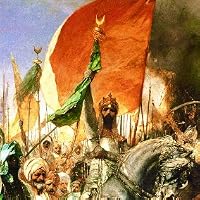
On Tuesday, May 29, 1453, the young Sultan Mehemmed, known to history as “the Conqueror,” launched the final assault against the walls of Constantinople and added that imperial capital, as coping stone; to the Empire that his fathers had conquered. As the Sultan’s Imam intoned the Muslim creed within the walls of Hagia Sophia, the Greek cathedral become a Turkish mosque, and the curtain went up on a new era. In this, the ninth volume of The Centers of Civilization Series, Bernard Lewis describes the city and its civilization in the great age of the Ottoman Sultanate, between the fifteenth and seventeenth centuries.
Under the Ottomans, the city once again became the center of a vest empire and of a flourishing civilization. The conquerors did not destroy the captured Christian city, but took care to preserve and embellish; they added four Muslim minarets to Hagia Sophia, built many fine mosques and palaces of their own, and transformed the shrunken remnant of the Byzantine city into a new and splendid imperial capital.
The great new Muslim city of Istanbul which they created became a center of cultural as well we political life. It was the gateway between East and West, the place where Asia and Europe clashed and blended. It was the seat of the Sultans and the Grand Viziers, of the government of the Ottoman Empire. No less interesting than the concepts of government and the Muslim religion practiced by the Ottoman Turks were the imperial place and household and the people of the city.
Mr. Lewis relies upon the first-hand accounts of Turkish historians and poets and European travelers, thus enabling the reader to see the city, its people, and their life through the eyes of contemporary participants and observers.
Librarian Note: There is more than one author by this name in the Goodreads database.
Bernard Lewis was the Cleveland E. Dodge Professor of Near Eastern Studies Emeritus at Princeton University and the author of many critially acclaimed and bestselling books, including two number one New York Times bestsellers: What Went Wrong? and Crisis of Islam. The Middle East: A Brief History of the Last 2,000 Years was a National Book Critics Circle Award finalist. Internationally recognized as the greatest historian of the Middle East, he received fifteen honorary doctorates and his books have been translated into more than twenty languages.
Abszolút kompakt kis kézikönyv, ár-érték aránya kiemelkedő*, különösen annak fényében, hogy milyen kevés nemzetközileg jegyzett szöveg van a korszakról és a témáról magyar nyelven. Lewis nem lineárisan mutatja be a vizsgált tárgyat, hanem a különböző egységeket különálló fejezetekben tárgyalja – egy kis államigazgatás, egy kis várostörténet, egy kis oszmán eredettörténet, egy kis vallástudomány –, és aztán ezekből kell kirajzolódjon egy átfogó kép a szultánok birodalmáról. Mondjuk azért ez az „átfogó kép” egy kicsit kevésbé volt átfogó, mint szerettem volna – Lewis nem nagyon törekszik arra, hogy akár Isztambulról, akár magáról a törökökről minden igényt kielégítő, részletező tanulmányt írjon, inkább csak ízelítőt ad mindenféléből. (Néha mintha egy ezeroldalas nagymonográfia trailerét látnám.) Ettől függetlenül sok érdekességet és alapvető információt, valamint színes vendégszöveget tartalmaz kortárs utazók tollából, amik üdvösen egészítik ki a korszakról birtokolt szerény információmennyiségemet. Csak épp jó lenne egyszer valami kerekebb, egészebb szakirodalmat is olvasni.
* Értve ezalatt, hogy szégyenletesen olcsón jutottam hozzá. Rosszul is érzem magam emiatt**. ** De elmúlik***. *** Már el is múlt.
Ik wou wat bijleren voor mijn reis maar twas vrij academisch en moeilijk om te volgen. Ik voelde me dus best dom tijdens het lezen en heb er zeker niet veel van onthouden 😢
Bernard Lewis'in okuduğum ilk kitabı. Baskı için konuşursak; anlatımı düzgün modern Türkçe ile yazılmış; anlamına bakmak zorunda olacağınız çok kelime yok. Kitap, 1453 istanbulun fethi ile başlıyor ve Osman'lının önemli Padişahlarının dönemlerini özetliyor. Sonrasında gündelik yaşam, inanç gibi konuları detaylandırıyor. Evliya Çelebi gibi tarihçilerin anlatımına ve gözlemlerine de bolca yer veriyor. Bernard Lewis orientlist olarak tanınan bir tarihçi, benim dikkatimi çeken şöyle kısımlar mevcut kitapta. Mesela Osmanlı'da var olan, sultan&şehzadelerin kanı akıtılmadan ipek bir ip ile boğulmaları geleneğini islami inançlara bağlıyor. Ancak Türkolog olan Peter Goldman'ı okumuşsanız eğer bunun orta asya bozkırından gelen bir gelenek olduğunu, aynı boğma merasiminin hükümdar başa geleceği zaman şamanlar tarafından kendisine uygulanıp yönetimde kalacağı sürenin de bu şekilde belirlendiği ve Lewis'in belirttiği fikrin eksik kaldığını görüyorsunuz. Ama mesala istanbulun fethinden sonraki İstanbulun toplumsal yapısını Müslüman, Hıristiyan,Yahudi ve diğer dinlerden insanlarla sayıları ile inceleme, Lonca'lar, yapılan eserler ile ilgili bolca bilgi edinebiliyorsunuz.
It's an easy to read book,it got me restarted on reading in a genre I never thought I would enjoy reading.
The book uses a lot of direct primary sources, the language was unpleasant to read, especially the untranslated old English text.
The layout of the book reads like a textbook, not very flowing between each section especially with the inserted primary texts. I personally would have preferred the history followed a chronological order which would have helped understand with so many sultans having the same first name how the life in Istanbul unfolds.
Ce livre est littéralement un « Que sais-je » sur l’Empire Ottoman et sa civilisation (pouvoir, fondement du pouvoir, ville et campagne, l’aristocratie etc) ce livre est une merveille pour qui veut s’informer en 200 pages sur 600 ans d’histoire !
Bence çok güzel bir tarih kitabı, tam kapsamlı olduğunu iddia etmiyorum, zaten ince bir kitap, ama benim bişiyler öğrendiğim ve okurken zevk aldığım bir kitap oldu
Istanbul and the Civilization of the Ottoman Empire (Paperback) by Bernard Lewis
I often read history books not only to learn more about some time, place or person, but also to see what I can adopt and adapt to my own fiction writing. In both respects, this book proved to be a wondrous little gem. My knowledge of the Ottoman Empire is little enough, and this book helped to fill in some of the wider lines with just enough detail that I'll want to go and learn more. Plainly, this is an introductory book and will not work well for people who are already well-versed in the history of the city, except perhaps, to glean a few more details from his lists and quotes which might not be easily available elsewhere.
The one oddity of the book was that, because all the native material was translated to modern words, those sections read far better than the quoted English material, which was left in its own archaic style and proved hard to read on occasion.
I did find the discussion of the introduction of coffee and the sudden popularity of coffee houses with the literati to be amusing. Apparently, if there is a coffee house, it will draw writers anywhere in the world.
From the perspective a fiction writer, this book is filled with the kinds of details that send a fantasy and science fiction writer's heart fluttering with world building ecstasy. Everything from the layout of the Imperial Palace to the hierarchy of who stands before whom in the line is laid out in lovely little details. Details about the city itself are sometimes given I excruciating detail, but from which many helpful city building details can be gathered.
At a mere 176 pages, this little gem is well worth reading on many levels.
Ik had bedacht dit boek te lezen in de aanloop naar onze reis naar Istanbul, of op zijn minst tijdens die reis. Het werd informatie achteraf. Ook dit heeft zijn charme, want nu had ik verschillende plaatsen die Lewis beschrijft met eigen ogen gezien.
Het boek kun je denk ik het beste beschouwen als een inleiding, een inleiding tot Ottomaans Istanbul. Lewis stipt veel aan, maar graaft niet diep. Dit is misschien maar goed ook... Lees de rest van mijn bespreking hier
Un libro davvero utile per chi, come me, non conosce nulla sullo sviluppo e le caratteristiche della civiltà ottomana e vuole farsi un'idea senza scendere troppo nel dettaglio.