

What do you think?

Goya
Monographie sur l'œuvre de Francisco de Goya permettant d'appréhender l'évolution de son travail artistique. Portraitiste officiel de la cour, Francisco de Goya (1746–1828) demeure l'un des plus importants peintres et graveur qu'ait connu l'Espagne. Des cartons pour tapisserie aux peintures religieuses, des satires sociales aux peintures noires, il a su sans cesse renouveler ses sujets tout en manifestant un engagement politique marqué. De cette époque en crise naîtront ses œuvres les plus célèbres, scènes fantastiques peuplées de monstres inquiétants. " Nul n'a osé plus que lui dans le sens de l'absurde possible ", disait Charles Baudelaire.
Languages : Fr. En. Es.
----------
Official portraitist of the court, Francisco de Goya (1746-1828) remains one of the most important painters and engravers that Spain has ever known. From cartoons for tapestries to religious paintings, from social satires to black paintings, he knew how to constantly renew his subjects while showing a marked political commitment. His most famous works, fantastic scenes populated by disturbing monsters, were born of this period of crisis. "No one has dared more than him in the sense of the possible absurd", said Charles Baudelaire.
------
El retratista oficial de la corte Francisco de Goya (1746-1828) sigue siendo uno de los pintores y grabadores más importantes que ha conocido España. De los cartones para tapices a las pinturas religiosas, de las sátiras sociales a las pinturas negras, renovó constantemente sus temas al tiempo que mostraba un marcado compromiso político. Sus obras más famosas, escenas fantásticas pobladas por inquietantes monstruos, surgieron de este periodo de crisis. "Nadie se ha atrevido más que él en el sentido de lo absurdo posible", dijo Charles Baudelaire.
Languages : Fr. En. Es.
----------
Official portraitist of the court, Francisco de Goya (1746-1828) remains one of the most important painters and engravers that Spain has ever known. From cartoons for tapestries to religious paintings, from social satires to black paintings, he knew how to constantly renew his subjects while showing a marked political commitment. His most famous works, fantastic scenes populated by disturbing monsters, were born of this period of crisis. "No one has dared more than him in the sense of the possible absurd", said Charles Baudelaire.
------
El retratista oficial de la corte Francisco de Goya (1746-1828) sigue siendo uno de los pintores y grabadores más importantes que ha conocido España. De los cartones para tapices a las pinturas religiosas, de las sátiras sociales a las pinturas negras, renovó constantemente sus temas al tiempo que mostraba un marcado compromiso político. Sus obras más famosas, escenas fantásticas pobladas por inquietantes monstruos, surgieron de este periodo de crisis. "Nadie se ha atrevido más que él en el sentido de lo absurdo posible", dijo Charles Baudelaire.
288 pages, Hardcover
Published December 14, 2017
Ratings & Reviews
Friends & Following
Create a free account to discover what your friends think of this book!
Community Reviews
Displaying 1 - 5 of 5 reviews

March 14, 2026
The Recurring Nightmare of History
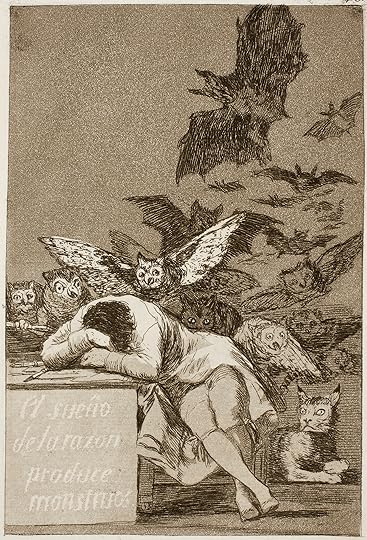
El sueño de la razón produce monstruos/The Sleep of Reason Produces Monsters - from the Caprichos (1799)
A mostly enjoyable survey of the life and art of Francisco José de Goya y Lucientes (1746-1828).
Over all, I learned more about Goya's different trades and media and his relationship with the budding Rationalism and liberalism of his day, facing a staunch opposition under the rule of Ferdinand VII following the restoration of the Bourbon dynasty in Spain. Many series of his works are a testimony to his fight against obscurantism and political oppression (see for instance the Caprichos, a series of etchings with a hidden moral message, damning for the Spanish society of his day).
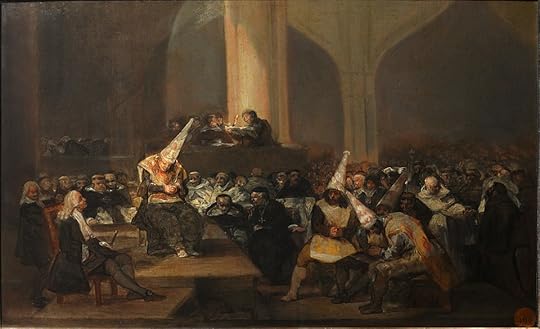
Auto de fe de la Inquisición/The Inquisition Tribunal (1812-1819)
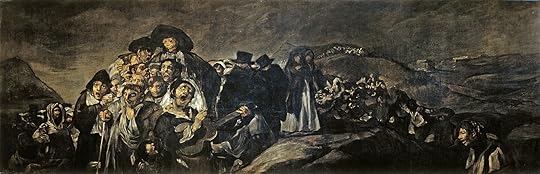
La romería de San Isidro/A Pilgrimage to San Isidro (1820-1823)
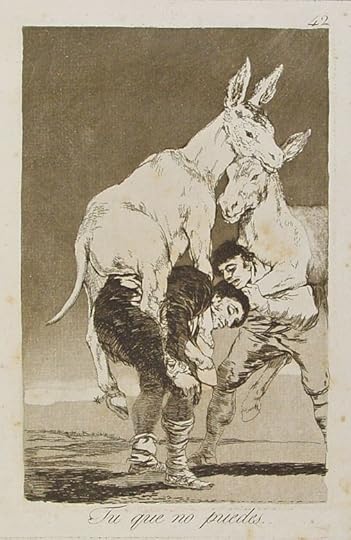
Tú que no puedes/You Who Cannot Take It Anymore - from the Caprichos (1799)
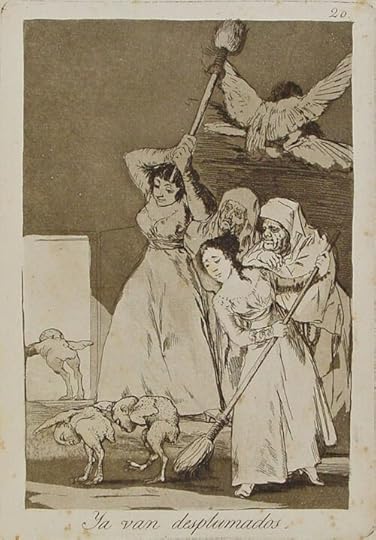
Ya van desplumados/There They Go Plucked - from the Caprichos (1799)
Nothing to declare in the illustrations departement as this book includes a fair share of Goya's works of art made throughout his life, be it frescoes, tapestries, paintings, etchings... My main grievance is about the text itself. As often in books from this series, there is a liberal number of typos and omissions, at least in the English text. Along with Jan, we noticed some very odd phrasing about Goya's painting himself and servants among the portrait of the Spanish royal family, making not much sense either in the French and English version or the original German.
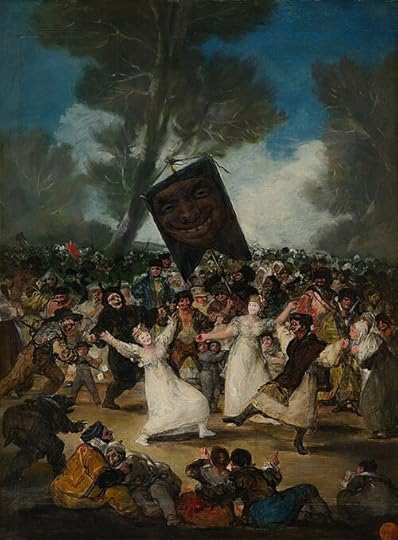 El entierro de la Sardina/The Burial of the Sardine (1812-1814)
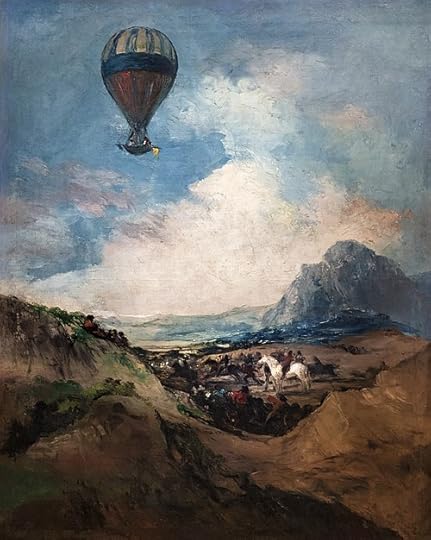
El Globo/The Hot Air Balloon (1812-1816)
What is less customary is the biographical component proved severely lacking, merely gliding over Goya's life and times, leaving his late years almost untouched, prioritizing a highly synthetic view over analysis. Not a hackwork by any means, just something aimed at the general public, with debatable choices in that regard.
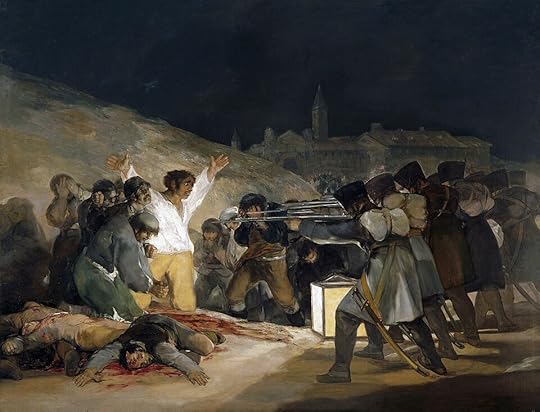
El tres de mayo de 1808 en Madrid/May 3, 1808 in Madrid (1814)
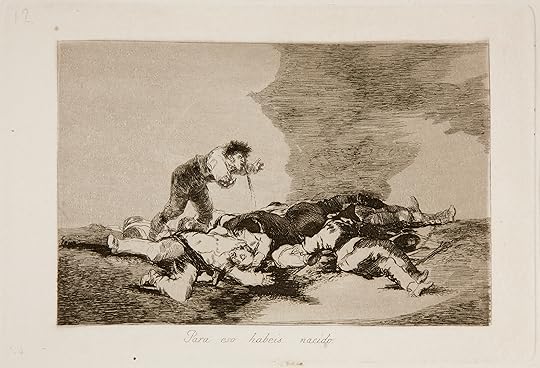
Para eso habeis nacido/This is what you were born for - from Los Desastres de la Guerra (1810-1815)
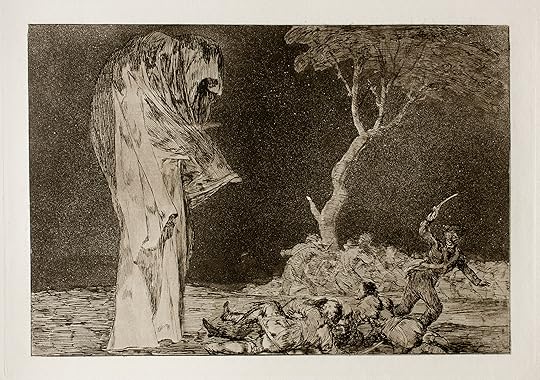
Disparate de miedo/Fearful Folly (1815-1823)
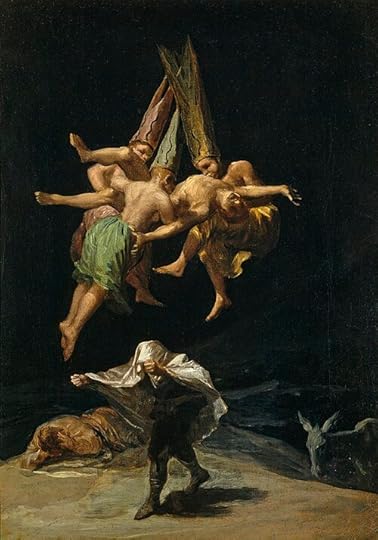
Vuelo de brujas/Witches' Flight (1798)
********************
See also:
La sombra del águila
The Good Soldier Švejk
Les Navigateurs
El sueño de la razón produce monstruos/The Sleep of Reason Produces Monsters - from the Caprichos (1799)
A mostly enjoyable survey of the life and art of Francisco José de Goya y Lucientes (1746-1828).
Over all, I learned more about Goya's different trades and media and his relationship with the budding Rationalism and liberalism of his day, facing a staunch opposition under the rule of Ferdinand VII following the restoration of the Bourbon dynasty in Spain. Many series of his works are a testimony to his fight against obscurantism and political oppression (see for instance the Caprichos, a series of etchings with a hidden moral message, damning for the Spanish society of his day).
Auto de fe de la Inquisición/The Inquisition Tribunal (1812-1819)
La romería de San Isidro/A Pilgrimage to San Isidro (1820-1823)
Tú que no puedes/You Who Cannot Take It Anymore - from the Caprichos (1799)
Ya van desplumados/There They Go Plucked - from the Caprichos (1799)
Nothing to declare in the illustrations departement as this book includes a fair share of Goya's works of art made throughout his life, be it frescoes, tapestries, paintings, etchings... My main grievance is about the text itself. As often in books from this series, there is a liberal number of typos and omissions, at least in the English text. Along with Jan, we noticed some very odd phrasing about Goya's painting himself and servants among the portrait of the Spanish royal family, making not much sense either in the French and English version or the original German.
El entierro de la Sardina/The Burial of the Sardine (1812-1814)
El Globo/The Hot Air Balloon (1812-1816)
What is less customary is the biographical component proved severely lacking, merely gliding over Goya's life and times, leaving his late years almost untouched, prioritizing a highly synthetic view over analysis. Not a hackwork by any means, just something aimed at the general public, with debatable choices in that regard.
El tres de mayo de 1808 en Madrid/May 3, 1808 in Madrid (1814)
Para eso habeis nacido/This is what you were born for - from Los Desastres de la Guerra (1810-1815)
Disparate de miedo/Fearful Folly (1815-1823)
Vuelo de brujas/Witches' Flight (1798)
********************
See also:
La sombra del águila
The Good Soldier Švejk
Les Navigateurs

February 18, 2025
Me gustó mucho a pesar de tener muchas imágenes pero al final y al cabo es para conocer las pinturas de Francisco (Goya) me encanta de como en si es la humanidad aunque muchos no lo ven así y piensan que exagera las cosas.
August 31, 2024
I personally preferred the back story and his art before his breakdown were gorgeous but afterwards they were disturbing

July 2, 2025
veľmi pekne, len som očakával viacej analýzy :(

December 29, 2020
I'm very impressed with this collection from taschen. Would recommend to every art student for its images. The pictures have high resolution and average size.
Displaying 1 - 5 of 5 reviews