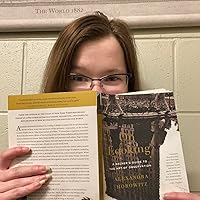
The story of the lie detector takes us straight into the dark recesses of the American soul. It also leads us on a noir journey through some of the most storied episodes in American history. That is because the device we take for granted as an indicator of guilt or innocence actually tells us more about our beliefs than about our deeds. The machine does not measure deception so much as feelings of guilt or shame. As Ken Alder reveals in his fascinating and disturbing account, the history of the lie detector exposes fundamental truths about our why we long to know the secret thoughts of our fellow citizens; why we believe in popular science; and why America embraced the culture of "truthiness." For centuries, people searched in vain for a way to unmask liars, seeking clues in blushing cheeks, shifty eyes, and curling toes...all the body's outward signs. But not until the 1920s did a cop with a Ph.D. team up with an entrepreneurial high school student from Berkeley, California and claim to have invented a foolproof machine that peered directly into the human heart. In a few short years their polygraph had transformed police work, seized headlines, solved sensational murders, and enthralled the nation. In Chicago, the capital of American vice, the two men wielded their device to clean up corruption, reform the police, and probe the minds of infamous killers. Before long the lie detector had become the nation's "mechanical conscience," searching for honesty on Main Street, in Hollywood, and even within Washington, D.C. Husbands and wives tested each other's fidelity. Corporations tested their employees' honesty. Movie studios and advertisers tested their audiences' responses. Eventually, thousands of government employees were tested for their loyalty and "morals" -- for lack of which many lost their jobs. Yet the machine was flawed. It often was used to accuse the wrong person. It could easily be beaten by those who knew how. Repeatedly it has been applied as an instrument of psychological torture, with the goal of extracting confessions. And its creators paid a commensurate price. One went mad trying to destroy the Frankenstein's monster he had created. The other became consumed by jealous of his cheating wife, contemptuous of his former mentor, and driven to an early death. The only happy man among the machine's champions was the eccentric psychologist who went on to achieve glory as the creator of Wonder Woman. Yet this deceptive device took America -- and only America -- by storm. Today, the CIA still administers polygraphs to its employees. Accused celebrities loudly trumpet its clean bill of truth. And the U.S. government, as part of its new "war on terror," is currently exploring forms of lie detection that reach directly into the brain. Apparently, America still dreams of a technology that will render human beings transparent. The Lie Detectors is the entertaining and thought-provoking story of that American obsession.
Alder looks back at the early years of the polygraph and its development by John Larson and Leonarde Keeler. They dreamed of replacing corruption and the frailty of human judgment — not to mention the brutality of the third degree — with the perfect rational analysis of a machine (it's eerily reminiscent of similar claims about using AIs today). Trouble was, it didn't work. Interpreting the physical reactions was subjective and often wrong; in practice, the "lie detector" relied heavily on tricks by the polygrapher (telling someone they'd failed the test to provoke a confession) or wearing someone down with hours of interrogation. As with other high-pressure interrogations, they produced false positives a lot. Nevertheless, the polygraph saw use in criminal investigations, war on terror probes and employee hiring processes (are they honest? This will tell!). Alder explains the U.S. is unique in its heavy use of the machines, hence the emphasis on an "American" obsession. This would get another star except Alder keeps getting pretentious about truth and falsehood and Frankenstein monster analogies.
Excellent and page-turning study on the Frankenstein’s monster we call the polygraph, which, despite a century of scientific consensus that it cannot detect lies, is still put to work today to extract confessions in government agencies and interrogation rooms. Using an impressive array of primary archival materials, Alder traces the machine as it migrated from criminal investigations in Berkeley and Chicago to Hollywood, the Manhattan Project and the Oak Ridge nuclear plant, the Korean War, the Red and Lavender Scares of the McCarthy era, September 11, and beyond. Through the history of this one object and its many inventors we can better understand the American ethos on both science and the social contract
I picked up and set down this book several times before committing to finish reading it through. Much of the history is fascinating, but repetitive. It tells us the truth that we already inherently know - humanity, and especially that of American society, is fascinated by the idea of the truth. The lie detector is little more than a box wrapped up to look like science, while its true design lies in theatre, entertainment, and its ability to create an atmosphere that convinces people that what’s happening will catch them out. Truth sells- and the ability to sell the truth? Well, that sells better.
The book was interesting, and I learned a lot from it. It was also engaging to learn about Larson's and Keeler's personal life and their journey. Also, learning of the bias of lie detectors.
The "lie detector" is an American invention of the 20th century that measures the physical changes (blood pressure, sweat, hear rate) that are said to correspond to willful deception--lies. However, there are serious scientific and philosophical questions about whether willful deception can be unequivocally linked to specific bodily reactions, and about whether a device of this or any (known) scientific type can accurately measure and predict or proscribe results based on physical changes.
Alder's book covers these theoretical issues, as well as providing an interesting history of the three men most instrumental to the lie detector technology: John Larson, Leonarde Keeler, and William Marston, who went on to write the Wonder Woman comics with his wife--mother of two of his children--and his live-in mistress--mother of his other two children! As distant as that may seem from normalcy, amazingly enough, despite these twists or because of them, he handled the notoriety and the stresses of the position better than either Larson or Keeler.
Alder spends considerable time placing the device in America's history ("red scares", Cold Wars) and culture (violent crime, tabloid journalism), and points out that
--despite the occasional outburst of emphasis on lie detection (after 9/11, for example), legal and scientific opinions still are split and mostly against it, and
--reliance on the device in any application is almost completely isolated to the US.
Reasonably good history and analysis of the uniquely American fixation with mechanical lie detection/guilt detection machinery, from phrenology and fingerprints, through polygraphs, to touch on functional magnetic resonance imagery techniques in current usage, and spends a lot of time discussing what exactly these systems detect: truth, guilt, perceived guilt, or the prejudices of the person asking the question. (One developer of early machines said it was very difficult to "use them on negros for their greater emotional reactions" and many of the early uses involved young women, who were felt to be too cunning and duplicitous for normal police to deal with. As the author points out, while lie detectors aren't used much or at all in our current legal system, they're still extensively used in civil situations, particularly job interviews, although they still work the same way as they did back when people believed that negros were too emotional to get valid readings.
The chapter on Marston (the guy who wrote the Wonder Woman comic) was the most interesting part of the book in some ways, but completely unrelated to the main arc as far as I could tell.
I thought the author did not do a good job of bringing it all together. It was just anecdotes of the few people who really were the force behind what the lie detector is today. It should have been more interesting than it was.
A great read. Traces the history and development of the lie detector and tells you a great deal about the characters involved in its creation and promotion.