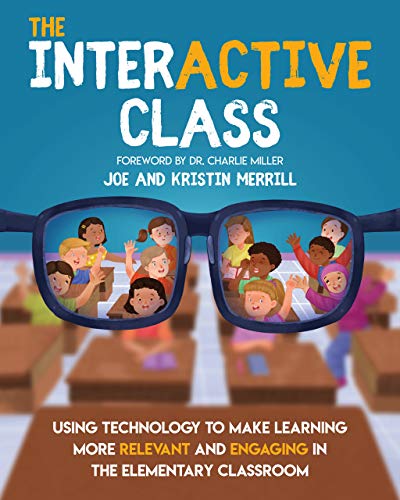
Are you looking for ways to make teaching and learning more interactive in your classroom?Do you ever feel overwhelmed when it comes to integrating technology and content standards?Are you searching for lessons that you can immediately implement in your learning environment?Then you are ready to dive into The InterACTIVE Classroom!In this practical and idea-packed book, coauthors, classroom teachers Joe and Kristin Merrill share their personal framework for teaching. As you implement the lessons and strategies, you will . . .● Define interactive learning and how to use it to instantly transform your learning space.● Create long-lasting bonds with students and parents that will empower your learners and lead to success both in and out of the classroom.● Learn to PIVOT! You’ll design interactive lessons that foster grit and challenge students to grow.Get InterACTIVE lessons you can use in your classroom tomorrow!
Summary The book begins with information about how the brain works and learns under different learning environments. This nicely complements learning and coursework in my master’s program. According to Merrill and Merrill (2020), "Educators need to take this information about how the brain responds and use it to create low-stress and high-interest learning environments, lessons, and overall experiences for students" (p. 10). Teachers must be up-to-date on the latest brain research and technologies. Part One of the book focuses on defining “interACTIVE” within several different contexts. Interactive learning focuses on knowing how the brain receives and processes information. Learners can be responsive or reactive, depending on the learning environment. The reflective brain, located in the front of the brain, reflects on new information, controls what information the brain stores and can regulate input. The learner is relaxed, happy, feels safe, and, most importantly, can retain information. Alternatively, a high-stress environment can cause the reactive brain to take over. The reactive brain ignores, fights, or avoids sensory input. The brain then shuts down, preventing students from learning and leading to negative experiences and problematic behavior (Merrill & Merrill, 2020). “Adding interactive elements to a lesson not only keeps students’ brains functioning in a responsive way, but it allows students to learn in a stress-free environment, giving their brains time to process the sensory information in a way that will lead to better overall retention” (Merrill & Merrill, 2020, p. 11). Merrill and Merrill suggest several interactive elements teachers can bring into their classroom to create an interACTIVE learning environment, including: music, movement, games, humor, and novelty. They have developed the Interactive Method and detail the process in the following five parts: Prepare, Innovate, Visualize, Observe, and Troubleshoot. Other chapters describe the characteristics of an interactive class (flexible, authentic, colorful, and engaging). Additionally, empowering students, personalizing learning, being positive, communicating with parents, and meeting students' social-emotional needs are all emphasized as essential features. To become interactive educators, teachers are encouraged to establish their personal learning network (PLN) and develop professionally by joining Twitter, blogging, or creating podcasts. Critique Part 1 nicely summarizes best practices for teaching in the 21st century. Creating a trusting and nurturing environment where students feel safe and happy is the first step in creating a thriving learning community. Social-emotional learning is a high priority in education today, especially under the circumstances of a worldwide pandemic. And, for several years now, there has been a movement away from teacher-led direct instruction to student-centered, project-based learning. Research has shown that giving students choice and providing authentic learning experiences leads to more successful learning. Merrill and Merrill (2020) also give teachers a plan for modifying traditional classrooms into more engaging and “interACTIVE” classrooms through their Interactive Method. There plan clearly show teachers how to prepare classrooms for collaboration and cooperative work, build interactive experiences for students, visualize their lesson plans, observe and reflect on the learning process, and troubleshoot through the struggles of embarking on more interactive and student-centered lessons. Part 1 of The Interactive Class nicely summarizes what excellent teaching should be in the 21st century. Education needs to respond to the findings in the latest research, especially brain research. The authors wisely acknowledge how we now know so much more about how the brain works. Teaching frameworks, pedagogies, and curricula need to adapt and change. Merrill and Merrill (2020) emphasize the importance of giving students choice, integrating the arts and movement, using humor, facilitating collaboration, creating a nurturing environment, and personal reflection to meet the “ultimate goal,” which is “growth in regard to both student learning and teacher mindset” (Merrill & Merrill 2020, p. 27). In Part 2, the authors strategically select ten technology tools and share several creative implementations for each one. The apps include Flipgrid, Do Ink Green Screen, Buncee, Seesaw, Texting Story, Chatterpix Kids, Onenote, Thinklink, Apple Clips, Book Creator, and Piccollage Edu. Each section tells what the app is, what platforms it works on, how it can be used in the classroom. Several lesson examples are provided. The book itself is interactive, containing QR Codes throughout that take the reader to more examples and resources. Before reading The Interactive Class, I was only familiar with three of the apps in the book. This is notable because, since distance learning began in March 2020, I have immersed myself in education technology. Here are three examples of how technology can engage and positively impact student learning: • Flipgrid: Flipgrid is a video discussion platform. Teachers create topics, and students respond by recording short videos (Merrill & Merrill, 2020, p. 72). In the lesson Guess the Genre, students illustrate and post a fake book cover. Classmates view the posts and reply with their guesses. • Buncee: Buncee allows students and teachers to create and share visual presentations. In the All About Me lesson (Merrill & Merrill, 2020, p. 106), students edit slides with video, pictures, and animations. Slides can be shared individually or using the "clip and stitch" feature, can be clipped together to make a class Buncee. • Seesaw: Seesaw is a digital portfolio where students can show their understanding of a lesson and their growth throughout the year. In the In or Out? lesson (Merrill & Merrill, 2020, p. 120), teachers display four images in a Google or PowerPoint slide. Students look at the four images and decide which image doesn’t belong. Then, using the microphone tool, students record their thinking. Author’s Qualifications Kristin Merrill comes from a family of educators. Her grandmother, mother, and two sisters are all teachers. She knew from a young age that teaching was her calling. In high school, she was already taking college courses and was soon accepted into one of the best education programs. She worked hard as an intern and mentor, gaining experience before getting her master’s degree. She spent months teaching in very different types of schools and has a wide variety of expertise but finally landed a fourth-grade position where she has stayed. Her husband, Joe Merrill, took an entirely opposite path to teaching. He was getting his degree in computer information systems and graphic design. With only two credits to go, he changed his mind. While in school, he was working at an after-school program. He had always loved working with kids and decided to pursue a teaching credential. He began his teaching career in a first-grade classroom, his dream come true. He has a background as a musician, being a grocery clerk, and a graphic designer. He believes the skills learned from those experiences, “being organized, strategic, collaborative, and consistent to be successful,” transfer into teaching (Merrill & Merrill, 2020, p. 6). Both Kristin and Joe suggest that educators adjust their teaching pedagogies and shift their thinking to meet the needs of this next generation of students because they learn differently. They have short attention spans, communicate in small chunks, and deal with external factors and technology shaping their intelligence (Merrill & Merrill, 2020, p. 7). The authors show a lot of passion, innovation, and technical expertise. Every teacher should read this book and learn how to prepare his or her students for the 21st century.
References Merrill, J., Merrill, K., & Miller, C. (2020). The interactive class: using technology to make learning more relevant and engaging in the elementary classroom. Elevatebooksedu.
I really liked this book. It made me get more motivated to create an interactive class of my own. I found a lot of the information very helpful and insightful. I felt like the authors knew what they were talking about and had actually experienced all that they discussed. I appreciated how real the authors were about everything. They didn't sugar coat the truth and talked about how difficult it might be but they gave excellent tips, advice and lessons on ways that you can make the transition more successful. I would recommend this book to other teachers who are wanting to incorporate more interactive elements or lessons into their classroom.
This book would be perfect for a campus or district book study! The first part gives practical ideas for how to plan lessons, set up a classroom, and become a connected educator, and part two is full of ideas for specific apps. Teachers everywhere will come away with ideas to implement tomorrow!
Kristin and Joe Merrill are a married couple who teach at the same elementary school. They share a passion for technology-infused learning and have created this book to share their knowledge and experience with other educators. The subtitle of this book is “Using technology to make learning more relevant and engaging in the elementary class,” which is exactly what they have done. I think this book is a wonderful resource for both experienced and new-to-tech teachers. Because their lessons begin with a listed “Comfort Level,” it will be easy for teachers to decide whether they are ready to bring that lesson into their classrooms. Many of the suggestions given would have been unreasonable to my community prior to the pandemic due to technology accessibility issues; however, since the pandemic forced an increased access to technology for all learners, most of these options now seem tenable. I appreciate the way the Merrills have worked to make creating an engaging classroom seem both possible and necessary for today’s learners. Their writing style is easy to follow and makes the authors and topics feel approachable, though I did notice some typographical errors that their editors missed. I was initially hoping for a more physically active component to the lessons when I selected this book; however, after reading their philosophy and methods sections, I appreciated what the authors were offering. Keeping students engaged with active brains is equally important. I also really appreciate that they included notes about features and options that make specific apps and lessons more accessible for inclusive classrooms. This is something that is often overlooked or lacking in books like this even though it should be a requirement since it is a necessary and important part of most classrooms today.
Joe and Kristin Merrill share their framework for teaching. This is based on psychology, technology, and actual classroom practice. They share lesson examples that will transform your classroom to make learning come alive. Every teacher, especially at the elementary level, should read this book and learn how to prepare students for the 21st century. If you are a beginner using tech in your classes, I think this is a fabulous choice. Merrill says, “when learning something new, it is okay to be the ‘technology turtle,’ slow and steady.” Their goal is to help develop responsive and not reactive students, focusing on the classroom environment being key to allow students to interact. This book encourages integrating technology into small groups stations and never using technology as a reward, as they believe technology should be for all students to create new learning experiences. The book itself is interactive, containing QR Codes throughout that take the reader to more examples and resources. I strongly recommend this book.
This was fine. The beginning section - where the authors explain the rationale for making learning more interactive - was a little... idealized and overly optimistic. But it is indisputable that these two know about ed tech. I was able to get a few good ideas for my secondary classroom even though the book was geared for elementary.
I guess I felt like *reading* about technology applications just wasn't that effective, though. Especially when the text being shared about each app and idea was SO minimal. Which I understand... to fully explain each app and each idea would have made the book 500 pages. But the text was minimal, and then a lot of the apps suggested had to be purchased. Since I didn't have a license, it was hard to really SEE what the app could do and explore the ideas they were talking about. With only brief text descriptions and no access to a visual component, it made it hard to fully grasp the usefulness or functionality of the app/idea.
And the fact that so many of the suggestions had to be paid for was frustrating. There are SO MANY free ed tech options out there... why not share more of those?!
In The Interactive Class, Using Technology to Make Learning More Relevant and Engaging in the Elementary Classroom, Joe and Kristin Merrill, a married couple and both educators, share ideas on how we can make learning interactive while integrating technology. In their book, they share great ideas they use in their classrooms using various apps such as Flipgrid, SeeSaw, Google Slides, Book Creator, Buncee, Apple Clips, Onenote, Chatterpix Kids, Texting Story, and Do Ink Green Screen. In each chapter, they have included QR codes that allow you to explore different strategies. Some of the QR codes direct you to more information about the strategy or they direct you to a teacher’s video on Twitter. The second section of the book shares lessons in different subjects using these apps. The lessons offer a description, the ISTE standards covered, and a summary.
Joe and Kristin Merrill begin by sharing the importance of the brain and the type of learners we want to help develop. The goal is to help develop students that are responsive and not reactive. They make a great point by connecting interactive lessons and responsive students. Learning in a stress free responsive environment allows students to process sensory information in a way that leads to better retention (Merrill & Merrill, 2019). The Merrills focus on the classroom environment being key to allow students to interact. A question to consider is how does the design of our classroom promote success? The students we welcome each year will never compare to the previous years.’ Also, what works for one group may not work for another. As a growing educator, they suggest we no longer expect students to listen, behave, and practice skills over and over (Merrill & Merrill, 2019). They encourage integrating technology into small groups stations and to never use technology as a reward. Technology should be for all students to use to create new learning experiences. We must also empower students by giving them opportunities to create and share their voices.
A great recommendation the Merrills offer which I plan on using for myself and my students when things become challenging and frustrating is, “when learning something new it is okay to be the ‘technology turtle,’ slow and steady” (Merrill & Merrill, 2019).
The Interactive Class: Using Technology to Make Learning More Relevant and Engaging in the Elementary Classroom by Joe and Kristin Merrill is a seed of inspiration for a change in education. The book explains to educators how to create an interACTIVE learning experience in the classroom and is a toolkit for creating one. It is inspiring educators to change their teaching style to help support the learners of the 21st-century. This book has inspired me to reflect on all components of my teaching next year, from the classroom setup, how I integrate technology to connecting with students and families. The chapters are detailed but succinct, and they are filled with ideas and resources to help inspire and support a teacher in creating change in their practice. The book is interactive with QR codes built in for exploring more about a topic, book recommendations, spots to take notes, and over a hundred lesson ideas. Though I do see newer versions of this book needing to be produced over time since the ideas will become outdated, but they are incredibly relevant right now. I appreciated that the authors began their book by discussing what it means to create an interACTIVE learning environment. Their description of an interactive classroom is always the type of classroom that I've wanted to build for learners. If you teach in an elementary school and have not put this one on your reading list, I would add it!!
This textbook is excellent for those educators who are trying to create an interactive classroom and trying to integrate technology into their classroom. This textbook provided me with more information on how to implement technology in the classroom successfully. I enjoyed scanning the codes present on certain pages to learn more information about a specific idea or tip. This book has really inspired me to look at my teaching style and make the adjustments I need to create a more interactive learning classroom. Don't think you have to change your whole teaching style to make your class more interactive. You can take it step-by-step and implement small changes. I encourage you all to check out this book if you’re struggling to create engaging lessons or need help implementing technology. I actually think all student teaching programs should have this book as part of their learning. As 21st century educators, we implement a lot of technology in our classrooms. This textbook teaches you how to create a more interactive classroom but also helps you successfully implement the technology by providing tutorials, videos, templates, and much more resources. Excellent tips, advice, and lessons! Highly recommend!!
The InterACTIVE Class provided me with great ideas and tech tools to implement in the classroom. The book was engaging and it translated very well to the current setting of today's classrooms. I appreciated how each chapter of the ebook linked itself with a Flipgrid response by the authors. They gave a quick synopsis and reflection on the chapter. It was a great way to "hook" the reader. I truly enjoyed that the authors included various links to Google files that provide #edtech tips, references, and resources. A lot of these will be utilized in my classroom next year! The authors dived into what makes an interACTIVE classroom. It included tips for engaging students, professional development, educators staying connected, and it also focused on how to include families in the interACTIVE classroom. The second part of the book was specific to lessons and apps for the classroom. Throughout the book, the authors included personal stories that allowed me to be more connected to the reason they wrote this book. I highly recommend this book to all elementary teachers.
This book was a great and easy read, especially for busy teachers. Instead of delving deep into theory, the book explains the importance of change in education, why an interactive class is important and beneficial to students, and how to incorporate interactive learning in your lessons. I believe that Merrill and Merrill both have a great way to ensure that students are in charge of their learning, engaged, and explains the teacher's role in interACTIVE learning thoroughly.
This is a great book for teachers that are looking to give their students the reins, allow them to explore new technology, information that interests them, and utilize research on how students learn to improve their outcomes.
I found this book to be an extremely helpful guide to transforming your classroom in order to incorporate technology. The authors were very clear and concise in their description and explanations of what an interACTIVE classroom should look like and how to implement it in a realistic classroom. This book also provides a great library of educational technology tools and sample lessons for each technology that spans all different elementary grade levels. It was really helpful in order to be able to have clear examples of how to incorporate these technologies and use the techniques described throughout the book. Definitely, a great book, and I would recommend this book for anyone looking for ideas on how to meaningfully incorporate technology into the classroom.
What a great read for 21 Century educators! This book started off with the components of a 21st century classroom and ended with 11 technology resources along with lessons to guide teachers into a more tech engaging classroom. This book is great for teachers who are just starting out virtually or teachers who need a "refresher." This book could also serve for educators who are familiar with technology platforms but need new lessons and ideas! 5 Stars all the way! Easy to read and very well laid out!
If you want to increase student engagement, this is your book! Kristin and Joe Merrill are brilliant educators who have written a book to share what they do in their classrooms with the rest of the world. It is filled with idea after idea that teachers can implement right away. In addition to lesson ideas, they have included QR code’s that link to videos showing many of these lessons and activities in action. This is a must have book for all educators!!!
I loved the clear writing, examples, and explanations of how to build engagement in classrooms through the use of technology. This book provides a myriad of examples that are even more relevant now during this distance learning time even though it was written prior - in fact, that is part of what makes it so valuable because the ideas are time and classroom tested. Loved this book!
This book has some great ideas, in 2020 this probably would have been a higher review. However, in 2026 many of the technology tools it guides the activities which no longer exist. Instead of focusing on the tools, if it focused on the activities - simply linking the tools as suggestions - this book wouldn’t feel so outdated.
I read this book cover to cover in the span of about 24 hours. There are so many fantastic things to try that are all spelled out for teachers like me who need a new, more current approach to teaching.
This book wasn’t overly helpful to me. My tech skills are a bit beyond this (not bragging-just being realistic). However, if you are a beginner to using tech in your classes, then I think this is a fabulous choice.