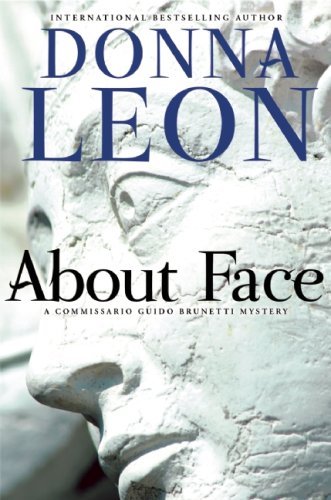
Like so many of Donna Leon's Brunetti fictions, we learn so much more about the author's beliefs (some might say her prejudices) and what she thinks is right and just. This is no more so than in About Face, a fine and elegantly written story about the malpractice of a phony dentist, the love of an aging and wealthy Venetian for his disfigured wife, a rich entrepreneur who does business or had done business with the Conte Falier, Poala's father. Along the way, we learn just how unbridled and corrupt the reign of the Mafia is in Italy and their shameless practice bribing Ministers so they can commit their crimes with impunity. Leon's righteous crusade against gender discrimination and sexual assault fully blossoms in this book.
The reader devotes a number of pleasant hours learning through the behaviour of her characters causes Leon will lead--usually 2/3 to 3/4 of the early part of the book--before Brunetti and Viannello and whoever else Brunetti enlists swing into action, where the crime committed becomes more clear, where Brunetti's skills as a cop come into focus, and where we begin to appreciate why the study of the Classis and Ancients are important, something that binds me to these novels. In this particular episode, we seem to learn more about the Vice-Questore Patta than in other books, a character so focused on his own personal advancement in Venezian society and in the ranks of the police that he overlooks the commission of crimes until Brunetti and Viannello force the evidence upon him.
I do not object to learning about the author's political and social beliefs, largely because I am in agreement with her on the issues she finds most important: official corruption, environmentalism, gender and ethnic discrimination, and her objections to the fear, loathing, and disdain for migrants seen throughout Western Europe (now, sadly, also a central issue in America under the puppet President Donald Trump, a man so riddled with corruption and beset by ignorance that many, like me fear for the longevity of American democracy).
But, there always seems to be a point too far where credulity is tested, as in this book, Paola's lecturing Brunetti in bed about sexual assault and rape as though incredulously, the Commissario of police married to an outspoken college professor would be unaware of the brutality of it. The wisdom of the lectures are important because of the prescience of what we must do to curb this brutality--it is the believability of it, though, that strikes me as misplaced. After all, Brunetti had just released the woman who committed murder because he believed she had been abused by her lover and he understood clearly the brutality of sexual assault, sexual extortion, and sexual harassment. Brunetti, it seemed to me, did not have to be told about the brutality against woman, unless, of course, every man, regardless of how sensitive and aware they are of such issues, has to be told so that they never forget, something, I think, that is important to remember always and because our wives should be listened to. We become better men. Nevertheless, sometimes, it strains credulity.
I really do enjoy the writing and its nearly elegant construction, the attention to grammar, detail, and description, the portraits of Venice painted by the author, and our evolution toward understanding the brutality of the crimes that have been committed.