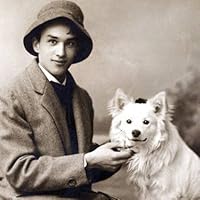
"In the elegant capital city of Warsaw, the editor Mieczyslaw Grydzewski would come with his two dachshunds to a café called Ziemianska." Thus begins the history of a generation of Polish literati born at the fin de siècle . They sat in Café Ziemianska and believed that the world moved on what they said there. Caviar and Ashes tells the story of the young avant-gardists of the early 1920s who became the radical Marxists of the late 1920s. They made the choice for Marxism before Stalinism, before socialist realism, before Marxism meant the imposition of Soviet communism in Poland. It ended tragically. Marci Shore begins with this generation’s coming of age after the First World War and narrates a half-century-long journey through futurist manifestos and proletarian poetry, Stalinist terror and Nazi genocide, a journey from the literary cafés to the cells of prisons and the corridors of power. Using newly available archival materials from Poland and Russia, as well as from Ukraine and Israel, Shore explores what it meant to live Marxism as a European, an East European, and a Jewish intellectual in the twentieth century.
Marci Shore (born 1972) is an American professor of intellectual history at the University of Toronto, where she specializes in the history of literary and political engagement with Marxism and phenomenology. She has spent much of her adult life in Central and Eastern Europe.
To co najważniejsze, najbardziej wartościowe można znaleźć w kraju nad Wisłą, śmietankę kultury kraju nad Wisłą. To książka o futurystach poddających się samokrytyce, wielkich polskich patriotach szukających samych siebie w środowisku KPP, dzieciach arystokracji, proletariatu i rabinatu, którzy żyli nadzieją, że można zmienić wszystko i ruszyć z posad bryłę świata. Pijących koniak i kawę w Ziemiańskiej, jedzących kolacje w Adrii i pijących litrami wódkę wysyłaną przez sanacyjną wierchuszkę, gdy ta sadzała ich do więzień. To Polacy, którzy chcieli być kosmopolitami, to Żydzi, którzy byli nimi tylko dlatego, że narodowcy, a czasem współbracia lubili im przyczepić taką łatkę. Fascynująca podróż do sporów i waśni, o których dziś już pamiętają tylko badacze literatury. Podróż do okupacyjnego Lwowa, Kazachstanu na Łubiankę i Berkley. Czasem zastanawia się człek, czy autorka nie idzie za szeroko, nie próbuje ująć w swoim dziele jak najwięcej, ale i tak czyni to bardzo sprawnie, szkoda może, że Alfred Berman nie został szerzej opisany.
Ah, the many heavy sighs of a Polish poet... But then, one asks, what about the reader? Shore’s Caviar and Ashes: A Warsaw Generation’s Life and Death In Marxism, 1918-1968 requires much from a reader. Perhaps too much. This is a book about Polish poets of a certain generation, but it’s not actually about them in any rigorous biographical sense. Their names come at you fast and furious. Most, I blush to admit, I’d never heard of before, or could recall if I had. Only Wat, Bruno Schulz, Deutscher, and Milosz crosses my attention span before and stuck, and the last three are fairly insignificant to the story as a whole, though Wat is a primary if not fundamental player. For a book that’s ostensibly about poets, there’s not a lot about poetry either. Can I fault Shore for a lack of literary examination or criticism as to her chosen subjects? Perhaps not. The reason: this book isn’t biography; this book isn’t an introduction to Polish poetry of from the 20s to the 60s; and this book also has nothing to do with any sonorous measure. This is basically a morality tale offered as history. One might balk or scream foul at Shore’s “use” of history to tell a seemingly simple “just so” story of vaunting artistic pride fallen back onto earth, or under it. A group of poets infatuated with their own genius discover a yearning hubris to assist with the transformation of society into a socialist utopia. In the 20s this impulse was all the rage, even outside Poland, for obvious reasons. In the end though, all(with maybe one or two exceptions[Wanda Wasilewski likely being one]) either end up disillusioned or dead. I, however, am not inclined to do so. Historians have often packed their own personal predilections and agendas in historical writing since the days of Herodotus and called it serious history. I believe she is upfront with her narrow focus and intentions. Unfortunately, honesty can produce some very lackluster history. Perhaps choice of historical ideology carries its share of some of the blame. Shore appears to be a student of famous and controversial historian, Hayden White. But perhaps I should let her speak directly as to that influence:
“In writing this book I have-I hope-remained sensitive to White's observation that in necessarily narrativizing history, historians have been biased in favor of order and coherence, that we have "always already" tended to edit out the chaos and disorder that is the more natural condition of any moment in the past. In writing a story that already to some extent possesses a narrative trope-that of "The God That Failed": conversion, disillusionment, repentance-I have tried to elude the imposition of typologies or teleological narratives in favor of respecting, and revealing, the nuances and idiosyncrasies of the past.”
Caviar and Ashes is a peculiar work of history inasmuch as it forthrightly states its goals from the beginning and then sets out to achieve them, while espousing sensitivity as to perils of “narrativizing history”. The result, you ask? A chaotic jumble, you’d wager? Interestingly enough, I can’t say that. We never find out how much Mayakovsky belched during dinner. Shore selects material with care pertaining toward the telling of her tale of Polish generational poetic pride. What I can say is that Caviar and Ashes has the overall feel of a three hundred page book of gossip. The meat, or minutia, within this sandwich is pretty loose. Because most were unknown to me, most of these poets never really developed into solid figures, as Shore’s history jumps quickly from one personality to another across paragraphs. As a result, by the time I got to their final (inevitable?) moment of eternal re-education as worm feed or abject disillusionment and depression, I found it extremely difficult to trudge up either an empathic frown or a sadistic smile. Shore gives you little evidence as to her subjects’ talents and accomplishments other than random mention of this play, or that manifesto, or a poetic piece directed to the world of the “workbench”. The reader is treated to quite a bit of their home lives(typically disheveled, if not dissolute), their romances (sometimes even with other people), their jailings(of course), and their break ups(a frequent topic), but as to their actual worth as human beings... Well, I guess a gracious reader can take that as assumed. And they stand in need of charity, too, as Shore’s morality tale rather paints them more than a little ironically as little more than ethnic canon fodder for the Marxism dream. Perhaps they deserved better, perhaps not, but if they did then this isn’t the book that gives them their propers. Maybe I’m being hard on Shore: portions prompt the reader’s interest and are ably written. But Shore has shown this reader that between teleology and chaos in history there has to be more than just a harvesting of gossip to arrest interest. Maybe Broniewski and his generation would’ve been better off with a question mark for an epitaph after all. Also, the Kindle edition of this book has no connection of text to footnotes. For a book of this sort this is inexcusable and brought down a three star book to two.
Finally I found the author that was able to tell the story of cultural vanguard in the twentieth century from Central and Eastern Europe and did it in such a narrative way, which brought answers for many of my own questions. I read it in a few fast evenings, and soon after I went through her next book. Very important, both for Central and East European readers as well as for all interested in the intelectual history of this region.
This book is full of tiny details and lacks any sophisticated analysis. This is not a history book, it is rather a dull summary of what the author found in archives.
I am giving this a five due to the exhaustive research on a very niche topic. You can't deny that if someone wanted to know everything about Marxist-leaning poets, in Poland, during this time-period, that this is now the key book you need to read. But - this is of incredibly niche interest, and in fact I am now thinking it was probably Shore's thesis topic when she did her PhD, and then it got expanded into a book.
Anyway - "Caviar and Ashes" is basically a long biography of a group of Polish poets who sympathized with (or were devoted to) Marxism from 1918 to 1968. This subset of Polish / poet / communists.. is even MORE niche, when you realize that despite what would later happen due to Stalin, Poland had never been very keen on communism. As Norman Davies writes in Heart of Europe , about the end of WWII in Poland: the Poles could not have spawned a communist regime of their own accord. There were hardly enough native Polish communists to run a factory, let alone a country of thirty million people.
I had my own research reasons for reading this book, but I wouldn't say I enjoyed it. The book accomplishes its objectives though, describing the mental trapeze work of people who believed marxism was a viable way out of the right-wing leanings of the latter Pilsudski years in Poland; and then especially an alternative to the fascist horror of Nazi Germany; then these poets get into the excitement of the early post WWII years when it seemed "good" communism would get its chance; to the later years of repression and enforced dedication to the Party, and being sent to various and numerous prisons if you didn't seem to be obeying the party well enough.
The poem by Broniewski (Son of a Conquered Nation) which is given on page 164, is a good example of the, to my mind, very muddled belief system regarding communism, at a time when Stalin had just partnered with Hitler, to co-invade Poland at the beginning of WWII: Son of a conquered nation, son of an independent verse, Of what, how can I sing, when my home lies in debris, in ruins? September as the tank rolled through my fatherland's breast, And my hand defenseless, defenseless my fatherland.
I will return to that land, I want to save her, to deliver her From there I want to set the world's heart aflame by the fire of a poem I want socialism to grow with the concrete from Warsaw's ruins, I want St. Mary's bugle-call to rustle with the red banner.
Beautiful, proud Warsaw, glory to your ruins, I want to count, and to kiss your suffering bricks. Give me your hand, Belarus, give me your hand, Ukraine, Give me your hammer and sickle, independent for the road.
Actually, on this same page, the author writes "Broniewski stubbornly refused to accept the incompatibility of his communist sympathies and his Polish patriotism." This, FYI, would have been right around the time that the Russians pulled off the Katyn Forest Massacre - murdering 15,000 to 20,000 Polish officers and burying them in Katyn forest, and later blaming the massacre on the Nazis.
Alexander Wat, who spoke out about the injustices of communism at the end of his life, stands out as one of the heroes of this story, compared to those poets who became "good soldiers" for Stalin-style "communism" even though they knew it wasn't what they had dreamed of when they were young writers.
Wat wrote, around 1947: Man is good. And if one is again deluded, that is an illusion that brings humanity closer to the ideal of the common good. Our obligation as writers is to assist him in that hope. Because the cause of the writer is the cause of moral responsibility for the future. (page 275).
Out of everything in this book, this idea of writers being fighters, fighting for ideals, truly stands out for me. Especially when, like with Wat, they spoke truth to power, and were brave enough to say that the system was corrupt.
“Patriots of a bygone Poland had never resigned themselves to statelessness. For them, the nineteenth century was an age of insurrections and of inculcating their children the words of the national hymn: “Poland had not yet perished, as long as we shall live.””
-Marci Shore, Caviar and Ashes.
I chose these words from the opening chapter of Marci Shore’s “Caviar and Ashes: a War Generation’s Life and Death in Marxism, 1918-1968”, for I felt like this best describes the mood Shore attempts to set for the reader, trying to make us understand the glimpse we are about to get into this generation’s mindset. This was a lost generation, who in their early twenties, find themselves in a newly independent Poland, and ready to take on the literary world with fresh new eyes unlike anyone had ever seen (at that point at least)
It’s clear Dr. Shore loves this time period as well as the book itself, mentioning in the opening pages that the first draft of this book was written as her dissertation at Stanford. However, for the casual reader, Caviar and Ashes is not really for them.
For starters, there’s a large cast of characters, so large that Dr Shore attached a character list at the beginning of the book, which I found myself flipping back to whenever I would have a name thrust upon me and I realized I didn’t exactly remember who that person was, which was frequent.
The plot of this book was more of a study of a group of Polish writers, many of them either Marxists or futurists or sometimes both, a term I had to google because I had never heard of it before. For the record its people who embrace stuff like living in a bustling city, cars and aeroplanes and other stuff we take advantage of, and how they wanted to rebuild everything from the ground up.
My description gives it no justice like Shore’s telling is, and it makes a lot more sense when you think about it, mainly because Shore starts the action of this biography shortly after the “Great War’, which they had deemed ‘the war to end all wars” to shortly after World War 2.
This isn’t of course, a true biography of these writers, but rather a study, of their actions rather than their works during the time period in question, with just enough personal details sprinkled in to keep the standard reader hooked.
Of course, as I mentioned before, Shore had originally written this after several years of carefully study, to be read by people who had also studied this time period or at the very least, had some knowledge of this time period.
As such, when the book starts, for someone with little to no knowledge of this time period like I was, it feels like you’re in the middle of the story. It’s almost like if you only started reading the first Lord of the Rings book and the first thing you read is that Frodo wakes up in Rivendell wondering why he shouldn’t be dead from the stab wound (apologies for the very nerdy reference, it was the only thing I could really compare it to)
It becomes clear, when going through this book, that these poets, who created all these wonderful and beautiful pieces of works, they were misfortune enough to have come of age during the early part of the twentieth century, and fell victim to such things as addictions, poverty, and broken hearts, during a twenty five year period during the early part of the twentieth century, which affected their work, for better or worse.
Incredibly detailed account of the lives of a generation of Polish intellectuals and their encounters with communism. It takes a bit to get a hold on all the people (and their Polish names), but once you do, it's surprisingly compelling reading. The lack of analysis throughout is rather irritating.