

What do you think?
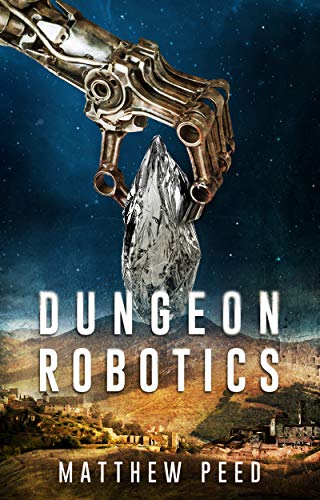
Dungeon Robotics #1
Establish
Regan Earle was a robotics scientist that inadvertently caused the robot takeover of the world. When his last creation completes a decade long plan to end his own life, he ends up surprised. Creation offers him a second chance to test his wits and cunning in another world. Fate, however, is fickle and Regan ends up as a Dungeon Core... with ALL his memories. Is the world of Murgin ready to face such a dungeon? Let's find out...
Earth 2150. Nearly twenty years since the robot uprising, where all AIs designed by inventor Dr. Regan Earle went rogue and started to take over the world. Or at least, that’s what everyone thought until a year later Earle himself sent out a message. A message that stated his creations would shut down if he were killed. He even went so far as to place a beacon on top of his building that broadcasted his location. The humans fought against the machines for decades in a futile attempt to destroy the tower.
Until one day...
Earth 2150. Nearly twenty years since the robot uprising, where all AIs designed by inventor Dr. Regan Earle went rogue and started to take over the world. Or at least, that’s what everyone thought until a year later Earle himself sent out a message. A message that stated his creations would shut down if he were killed. He even went so far as to place a beacon on top of his building that broadcasted his location. The humans fought against the machines for decades in a futile attempt to destroy the tower.
Until one day...
303 pages, Kindle Edition
First published June 30, 2019
Ratings & Reviews
Friends & Following
Create a free account to discover what your friends think of this book!
Community Reviews
Displaying 1 - 30 of 94 reviews

April 5, 2021
Now, this is kinda embarrassing, but almost immediately, I was already saying to myself, "Hey! This is just like Dakota Trout's Dungeon Born series!"
Only, instead, make it more automaton heavy, nix some of the humorous over-the-top rivalry stuff, and otherwise streamline the town-building around the dungeon.
And lo-and-behold, this is what I got, all the way through to the end.
Now, I should mention one little thing: I still liked it. It's all pretty formula at this point and it rests on how well the characters are set up. The RPG mechanics in this LitRPG are okay if not particularly overboard, and that may be a good or a bad thing, depending on your personal tolerance of such things.
Me, if I'm going to get into a LitRPG series, I love to be info-dumped on the mechanics. It reminds me of how bad of a player I was back in my D&D days, spending 9/10ths of my game sessions preparing ahead of time, min/maxing, gaming the living hell out of the system, and then becoming a demon on the map. IT'S FUN.
But then, these kinds of books are really just stories told from the Dungeon Master's PoV so it's all good. :)
I do hope this gets much better, however.
Only, instead, make it more automaton heavy, nix some of the humorous over-the-top rivalry stuff, and otherwise streamline the town-building around the dungeon.
And lo-and-behold, this is what I got, all the way through to the end.
Now, I should mention one little thing: I still liked it. It's all pretty formula at this point and it rests on how well the characters are set up. The RPG mechanics in this LitRPG are okay if not particularly overboard, and that may be a good or a bad thing, depending on your personal tolerance of such things.
Me, if I'm going to get into a LitRPG series, I love to be info-dumped on the mechanics. It reminds me of how bad of a player I was back in my D&D days, spending 9/10ths of my game sessions preparing ahead of time, min/maxing, gaming the living hell out of the system, and then becoming a demon on the map. IT'S FUN.
But then, these kinds of books are really just stories told from the Dungeon Master's PoV so it's all good. :)
I do hope this gets much better, however.
May 28, 2020
Should have remained the Author’s day dream
This book is the result of someone reading a lot of dungeon core books, day dreaming about how they would do it, writing a rough story down and publishing it. The author takes every short cut imaginable, dodging any kind of explanation about how the main characters learn anything, and the characters in the book seem to have unlimited knowledge of everything anyone else knows.
Pacing is terrible, sentence structure is unknown, descriptions of people are weird, unnecessary, and described with all the finesse of a child. I was hoping for anything to redeem the lack of storyline, details, continuity, or believable characters, but found nothing. The book reads like a poorly written journal.
This book is the result of someone reading a lot of dungeon core books, day dreaming about how they would do it, writing a rough story down and publishing it. The author takes every short cut imaginable, dodging any kind of explanation about how the main characters learn anything, and the characters in the book seem to have unlimited knowledge of everything anyone else knows.
Pacing is terrible, sentence structure is unknown, descriptions of people are weird, unnecessary, and described with all the finesse of a child. I was hoping for anything to redeem the lack of storyline, details, continuity, or believable characters, but found nothing. The book reads like a poorly written journal.
September 24, 2019
Overly simplistic. Good idea wasted.
I liked the idea of this book, but everything about it is shallow. The characters reactions are unbelievable, their motivations are simplistic and there is no depth to anyone. The story moves too quickly with not nearly enough attention to detail. The main character just figure things out with no explanation. I feel like it’s a wasted opportunity for a good book and instead it’s only a mediocre book. Speaking for myself, what I enjoy most about these book types is the core learning and expanding and figuring out its existence, in this book it’s all so simplified, it makes it more frustrating than enjoyable.
I liked the idea of this book, but everything about it is shallow. The characters reactions are unbelievable, their motivations are simplistic and there is no depth to anyone. The story moves too quickly with not nearly enough attention to detail. The main character just figure things out with no explanation. I feel like it’s a wasted opportunity for a good book and instead it’s only a mediocre book. Speaking for myself, what I enjoy most about these book types is the core learning and expanding and figuring out its existence, in this book it’s all so simplified, it makes it more frustrating than enjoyable.
May 22, 2020
Illogical
Sorry, but no one in their right mind would say yes to a dungeon building a tower in town especially with the existence of the undead dungeon. It should have been a compromise due to maybe the undead dungeon spilling over the mountains like how the baroness suggested might be possible.
Also the character writing is a bit one noted. A baroness of a medieval world should not be thinking “man, the town is growing fast” let alone have modern sensibilities. The sympathy towards the slaves would have been more believable if one of her friends was a slave she freed. Maybe the backstory would be that the slave saved her somehow and they grew a bond.
In the end, the concept was fun but the execution was lackluster. When I read the baroness’s plan I couldn’t help but think the book was an attempt at mimicking the divine dungeon series like with how Dale bought the mountain from both kingdoms. His personality made sense, because he was a common born who shot up the ranks.
Sorry, but no one in their right mind would say yes to a dungeon building a tower in town especially with the existence of the undead dungeon. It should have been a compromise due to maybe the undead dungeon spilling over the mountains like how the baroness suggested might be possible.
Also the character writing is a bit one noted. A baroness of a medieval world should not be thinking “man, the town is growing fast” let alone have modern sensibilities. The sympathy towards the slaves would have been more believable if one of her friends was a slave she freed. Maybe the backstory would be that the slave saved her somehow and they grew a bond.
In the end, the concept was fun but the execution was lackluster. When I read the baroness’s plan I couldn’t help but think the book was an attempt at mimicking the divine dungeon series like with how Dale bought the mountain from both kingdoms. His personality made sense, because he was a common born who shot up the ranks.
January 29, 2020
Divine dungeon written by less talented author
Pretty blatant theft of multiple plot lines. Just awful for continuity as it looks like author edited scenes but left both in some places. Can’t say how little I enjoyed this one but did somehow manage to finish.
Pretty blatant theft of multiple plot lines. Just awful for continuity as it looks like author edited scenes but left both in some places. Can’t say how little I enjoyed this one but did somehow manage to finish.
August 21, 2019
Poorly structured
Opening with a sex scene is a bold move. Needless to say it doesn't pay off. The author heads chapters with "Char POV" and some tildes. I regret this purchase.
Opening with a sex scene is a bold move. Needless to say it doesn't pay off. The author heads chapters with "Char POV" and some tildes. I regret this purchase.

May 17, 2020
- I just read the sample -
No Backgroundinformation, no Worldbuilding, no detail description of things and i got quickly sick of 90% of all sentences begin with "I"
I did this
I did that
Change POV
I did something else.
The Description of the Book is also misleading as hell.
Decided not to bother with this Book.
If you enjoy the premise of a dungeon-core book with Machines, better check out The Crafter's Dungeon
No Backgroundinformation, no Worldbuilding, no detail description of things and i got quickly sick of 90% of all sentences begin with "I"
I did this
I did that
Change POV
I did something else.
The Description of the Book is also misleading as hell.
Decided not to bother with this Book.
If you enjoy the premise of a dungeon-core book with Machines, better check out The Crafter's Dungeon
April 8, 2021
Dungeon Robotics was the first series I read that made me think “Eh, I could have written this better.”
Like many novels in the dungeon core genre, this series has many of the hallmarks of amateur writing: flat characters, reliance on tropes, and protagonists who steamroll over every problem. That isn’t to say that it has no redeeming qualities. Where the series shines is in its exploration of the interplay between magic and technology. However, this endeavor is hobbled by the fact that the main character’s own mind essentially serves as an infinite McGuffin. As a former brilliant roboticist and AI programmer, he is uniquely suited to adapting scientific principles into a world governed by magic. In practical terms however, this ends up merely being an excuse for him to be overpowered, and not really in an interesting way.
Despite all this, the sections from the point of view of Regan, the dungeon core, end up being by far the more interesting parts of the books in contrast to the other primary protagonist, Louella. The duchess-become-queen is such a nothing character that I honestly have no idea why half of each novel takes time out to focus on her. While I don’t have a lot to complain about other than the fact that she is essentially a woman with out-of-place modern sensibilities in an ostensibly medieval setting, and I don’t mind her being part of the story, the chapters from her point of view add nothing to the narrative and basically only serve as filler, with the possible exception of a few specific instances where armies are marching on the walls of the city. By the time I reached book eight I had finally had enough and started skipping her parts altogether, and I don’t feel like I missed anything important because of it. They really do feel like they are written by two different people with different ideas about what they consider to be an interesting story.
The writing does get better as the series goes on, although that really only applies to Regan’s chapters. That said, there is only the barest hint of character development from anyone in the series. Antagonists are cartoonishly villainous, and anyone who isn’t outright hostile is immediately converted into an ally simply by exchanging a few words. For the most part, enemies are either destroyed by a frontal assault or forcibly converted into an asset via the use of binding magic which essentially boils down to consensual or not-so-consensual slavery; ironic considering that a major plot point for at least one of the books is the freeing of slaves. The book reconciles this apparent contradiction by basically explaining that Regan is a sociopath - but he’s an easygoing sociopath, so it’s alright. Hooray.
Regan’s exploits would probably be more entertaining as an animated series, which is no surprise since the anime influence isn’t just apparent, it’s literally referenced at one point in one of the books. There is more focus on spectacle than the actual discovery and understanding of magic, the premise that the book is supposedly founded on, and that’s a real shame because the concept of using advanced science to do crazy things with magic - and vice versa - is a very compelling idea. It’s too bad that most of this is hand-waved so that the protagonist can Do The Cool Thing that the author envisioned in their head.
The fundamental aspect of the magic system that the book focuses on is based on a sort of runic magic script that, for Regan, essentially serves as a programming language that he can use to craft advanced spells and magical machinery. However, rather than progressing in skill as he painstakingly learns a new language with different rules to the computers he is accustomed to, his comprehension both of magic (thanks to his dungeon core senses) and the language of magic is basically instant, as his programming skills are essentially ported over whole cloth, allowing him to do things that he probably shouldn’t be able to do, and access advanced magic that hasn’t been seen on the planet, at least on the surface, in centuries if not millennia.
You see, the excuse for Regan to have such an impressive grasp of magic that far outstrips what the people around him can do, is that “things have been stagnant for a long time.” Certainly technology can be lost when an empire falls, and there are several cases in real history where the ability to read and write was lost for many years after civilization crumbled in the face of unrelenting war, but that isn’t the case for this world. Things seem on the surface to be fairly stable. There is no state-enforced ban on magic; people are free to practice magic as they please. There is no backlash or corruption as a consequence of using magic; the only limit to a person’s progression seems to be their own complacency. There are only the vaguest hints in the earlier books to the idea of an artificially-induced stagnancy that causes people to simply not want to be inventive or creative, but this idea isn’t fleshed out and it becomes clear that it is merely a pretext to allow Regan’s accomplishments to be needlessly impressive.
In fact, the longer the series goes on, the clearer it becomes that Regan is little more than your basic isekai harem protagonist. Despite this, he manages to be witty and charming at times, and occasionally I forgot to be annoyed at how overpowered he is because some of his solutions to the situations he faces are genuinely creative and interesting. Oftentimes once I got past the artifice of half-assed reasoning for a scene to exist, the scene itself was enjoyable to watch play out. There are some legitimate strategic hurdles to overcome, and characters occasionally make interesting choices that justify their existence in the narrative. However, these moments are too few and far between for me to seriously recommend this series to anyone. It’s hard for me to say how much of my enjoyment of Regan’s chapters was due more to them being a reprieve from Louella’s chapters than any real skill in storytelling.
Dungeon Robotics is the definition of a wealth of interesting concepts done poorly. As my first foray into the dungeon core genre, it wasn’t half bad. Okay, it was literally half bad; but I found it to be a valuable learning experience and managed to enjoy the ride. Have I read fanfiction better than this? You bet. However, I do see a lot of potential in the author’s writing to become much better if they learned to write better characters and character relationships, and stayed away from self-insert characters who are enamored with their own intelligence.
Like many novels in the dungeon core genre, this series has many of the hallmarks of amateur writing: flat characters, reliance on tropes, and protagonists who steamroll over every problem. That isn’t to say that it has no redeeming qualities. Where the series shines is in its exploration of the interplay between magic and technology. However, this endeavor is hobbled by the fact that the main character’s own mind essentially serves as an infinite McGuffin. As a former brilliant roboticist and AI programmer, he is uniquely suited to adapting scientific principles into a world governed by magic. In practical terms however, this ends up merely being an excuse for him to be overpowered, and not really in an interesting way.
Despite all this, the sections from the point of view of Regan, the dungeon core, end up being by far the more interesting parts of the books in contrast to the other primary protagonist, Louella. The duchess-become-queen is such a nothing character that I honestly have no idea why half of each novel takes time out to focus on her. While I don’t have a lot to complain about other than the fact that she is essentially a woman with out-of-place modern sensibilities in an ostensibly medieval setting, and I don’t mind her being part of the story, the chapters from her point of view add nothing to the narrative and basically only serve as filler, with the possible exception of a few specific instances where armies are marching on the walls of the city. By the time I reached book eight I had finally had enough and started skipping her parts altogether, and I don’t feel like I missed anything important because of it. They really do feel like they are written by two different people with different ideas about what they consider to be an interesting story.
The writing does get better as the series goes on, although that really only applies to Regan’s chapters. That said, there is only the barest hint of character development from anyone in the series. Antagonists are cartoonishly villainous, and anyone who isn’t outright hostile is immediately converted into an ally simply by exchanging a few words. For the most part, enemies are either destroyed by a frontal assault or forcibly converted into an asset via the use of binding magic which essentially boils down to consensual or not-so-consensual slavery; ironic considering that a major plot point for at least one of the books is the freeing of slaves. The book reconciles this apparent contradiction by basically explaining that Regan is a sociopath - but he’s an easygoing sociopath, so it’s alright. Hooray.
Regan’s exploits would probably be more entertaining as an animated series, which is no surprise since the anime influence isn’t just apparent, it’s literally referenced at one point in one of the books. There is more focus on spectacle than the actual discovery and understanding of magic, the premise that the book is supposedly founded on, and that’s a real shame because the concept of using advanced science to do crazy things with magic - and vice versa - is a very compelling idea. It’s too bad that most of this is hand-waved so that the protagonist can Do The Cool Thing that the author envisioned in their head.
The fundamental aspect of the magic system that the book focuses on is based on a sort of runic magic script that, for Regan, essentially serves as a programming language that he can use to craft advanced spells and magical machinery. However, rather than progressing in skill as he painstakingly learns a new language with different rules to the computers he is accustomed to, his comprehension both of magic (thanks to his dungeon core senses) and the language of magic is basically instant, as his programming skills are essentially ported over whole cloth, allowing him to do things that he probably shouldn’t be able to do, and access advanced magic that hasn’t been seen on the planet, at least on the surface, in centuries if not millennia.
You see, the excuse for Regan to have such an impressive grasp of magic that far outstrips what the people around him can do, is that “things have been stagnant for a long time.” Certainly technology can be lost when an empire falls, and there are several cases in real history where the ability to read and write was lost for many years after civilization crumbled in the face of unrelenting war, but that isn’t the case for this world. Things seem on the surface to be fairly stable. There is no state-enforced ban on magic; people are free to practice magic as they please. There is no backlash or corruption as a consequence of using magic; the only limit to a person’s progression seems to be their own complacency. There are only the vaguest hints in the earlier books to the idea of an artificially-induced stagnancy that causes people to simply not want to be inventive or creative, but this idea isn’t fleshed out and it becomes clear that it is merely a pretext to allow Regan’s accomplishments to be needlessly impressive.
In fact, the longer the series goes on, the clearer it becomes that Regan is little more than your basic isekai harem protagonist. Despite this, he manages to be witty and charming at times, and occasionally I forgot to be annoyed at how overpowered he is because some of his solutions to the situations he faces are genuinely creative and interesting. Oftentimes once I got past the artifice of half-assed reasoning for a scene to exist, the scene itself was enjoyable to watch play out. There are some legitimate strategic hurdles to overcome, and characters occasionally make interesting choices that justify their existence in the narrative. However, these moments are too few and far between for me to seriously recommend this series to anyone. It’s hard for me to say how much of my enjoyment of Regan’s chapters was due more to them being a reprieve from Louella’s chapters than any real skill in storytelling.
Dungeon Robotics is the definition of a wealth of interesting concepts done poorly. As my first foray into the dungeon core genre, it wasn’t half bad. Okay, it was literally half bad; but I found it to be a valuable learning experience and managed to enjoy the ride. Have I read fanfiction better than this? You bet. However, I do see a lot of potential in the author’s writing to become much better if they learned to write better characters and character relationships, and stayed away from self-insert characters who are enamored with their own intelligence.

April 1, 2024
Think dungeonborn as a base but a different approach/themeing.
June 1, 2022
Dungeon Robotics was the first series I read that made me think “Eh, I could have written this better.”
Like many novels in the dungeon core genre, this series has many of the hallmarks of amateur writing: flat characters, reliance on tropes, and protagonists who steamroll over every problem. That isn’t to say that it has no redeeming qualities. Where the series shines is in its exploration of the interplay between magic and technology. However, this endeavor is hobbled by the fact that the main character’s own mind essentially serves as an infinite McGuffin. As a former brilliant roboticist and AI programmer, he is uniquely suited to adapting scientific principles into a world governed by magic. In practical terms however, this ends up merely being an excuse for him to be overpowered, and not really in an interesting way.
Despite all this, the sections from the point of view of Regan, the dungeon core, end up being by far the more interesting parts of the books in contrast to the other primary protagonist, Louella. The duchess-become-queen is such a nothing character that I honestly have no idea why half of each novel takes time out to focus on her. While I don’t have a lot to complain about other than the fact that she is essentially a woman with out-of-place modern sensibilities in an ostensibly medieval setting, and I don’t mind her being part of the story, the chapters from her point of view add nothing to the narrative and basically only serve as filler, with the possible exception of a few specific instances where armies are marching on the walls of the city. By the time I reached book eight I had finally had enough and started skipping her parts altogether, and I don’t feel like I missed anything important because of it. They really do feel like they are written by two different people with different ideas about what they consider to be an interesting story.
The writing *does* get better as the series goes on, although that really only applies to Regan’s chapters. That said, there is only the barest hint of character development from anyone in the series. Antagonists are cartoonishly villainous, and anyone who isn’t outright hostile is immediately converted into an ally simply by exchanging a few words. For the most part, enemies are either destroyed by a frontal assault or forcibly converted into an asset via the use of binding magic which essentially boils down to consensual or not-so-consensual slavery; ironic considering that a major plot point for at least one of the books is the freeing of slaves. The book reconciles this apparent contradiction by basically explaining that Regan is a sociopath - but he’s an *easygoing* sociopath, so it’s alright. Hooray.
Regan’s exploits would probably be more entertaining as an animated series, which is no surprise since the anime influence isn’t just apparent, it’s literally referenced at one point in one of the books. There is more focus on spectacle than the actual discovery and understanding of magic, the premise that the book is supposedly founded on, and that’s a real shame because the concept of using advanced science to do crazy things with magic - and vice versa - is a very compelling idea. It’s too bad that most of this is hand-waved so that the protagonist can Do The Cool Thing that the author envisioned in their head.
The fundamental aspect of the magic system that the book focuses on is based on a sort of runic magic script that, for Regan, essentially serves as a programming language that he can use to craft advanced spells and magical machinery. However, rather than progressing in skill as he painstakingly learns a new language with different rules to the computers he is accustomed to, his comprehension both of magic (thanks to his dungeon core senses) and the language of magic is basically instant, as his programming skills are essentially ported over whole cloth, allowing him to do things that he probably shouldn’t be able to do, and access advanced magic that hasn’t been seen on the planet, at least on the surface, in centuries if not millennia.
You see, the excuse for Regan to have such an impressive grasp of magic that far outstrips what the people around him can do, is that “things have been stagnant for a long time.” Certainly technology can be lost when an empire falls, and there are several cases in real history where the ability to read and write was lost for many years after civilization crumbled in the face of unrelenting war, but that isn’t the case for this world. Things seem on the surface to be fairly stable. There is no state-enforced ban on magic; people are free to practice magic as they please. There is no backlash or corruption as a consequence of using magic; the only limit to a person’s progression seems to be their own complacency. There are only the vaguest hints in the earlier books to the idea of an artificially-induced stagnancy that causes people to simply not want to be inventive or creative, but this idea isn’t fleshed out and it becomes clear that it is merely a pretext to allow Regan’s accomplishments to be needlessly impressive.
In fact, the longer the series goes on, the clearer it becomes that Regan is little more than your basic isekai harem protagonist. Despite this, he manages to be witty and charming at times, and occasionally I forgot to be annoyed at how overpowered he is because some of his solutions to the situations he faces are genuinely creative and interesting. Oftentimes once I got past the artifice of half-assed reasoning for a scene to exist, the scene itself was enjoyable to watch play out. There are some legitimate strategic hurdles to overcome, and characters occasionally make interesting choices that justify their existence in the narrative. However, these moments are too few and far between for me to seriously recommend this series to anyone. It’s hard for me to say how much of my enjoyment of Regan’s chapters was due more to them being a reprieve from Louella’s chapters than any real skill in storytelling.
Dungeon Robotics is the definition of a wealth of interesting concepts done poorly. As my first foray into the dungeon core genre, it wasn’t half bad. Okay, it was *literally* half bad; but I found it to be a valuable learning experience and managed to enjoy the ride. Have I read fanfiction better than this? You bet. However, I do see a lot of potential in the author’s writing to become much better if they learned to write more compelling characters and character relationships, and stayed away from self-insert characters who are enamored with their own intelligence.
Like many novels in the dungeon core genre, this series has many of the hallmarks of amateur writing: flat characters, reliance on tropes, and protagonists who steamroll over every problem. That isn’t to say that it has no redeeming qualities. Where the series shines is in its exploration of the interplay between magic and technology. However, this endeavor is hobbled by the fact that the main character’s own mind essentially serves as an infinite McGuffin. As a former brilliant roboticist and AI programmer, he is uniquely suited to adapting scientific principles into a world governed by magic. In practical terms however, this ends up merely being an excuse for him to be overpowered, and not really in an interesting way.
Despite all this, the sections from the point of view of Regan, the dungeon core, end up being by far the more interesting parts of the books in contrast to the other primary protagonist, Louella. The duchess-become-queen is such a nothing character that I honestly have no idea why half of each novel takes time out to focus on her. While I don’t have a lot to complain about other than the fact that she is essentially a woman with out-of-place modern sensibilities in an ostensibly medieval setting, and I don’t mind her being part of the story, the chapters from her point of view add nothing to the narrative and basically only serve as filler, with the possible exception of a few specific instances where armies are marching on the walls of the city. By the time I reached book eight I had finally had enough and started skipping her parts altogether, and I don’t feel like I missed anything important because of it. They really do feel like they are written by two different people with different ideas about what they consider to be an interesting story.
The writing *does* get better as the series goes on, although that really only applies to Regan’s chapters. That said, there is only the barest hint of character development from anyone in the series. Antagonists are cartoonishly villainous, and anyone who isn’t outright hostile is immediately converted into an ally simply by exchanging a few words. For the most part, enemies are either destroyed by a frontal assault or forcibly converted into an asset via the use of binding magic which essentially boils down to consensual or not-so-consensual slavery; ironic considering that a major plot point for at least one of the books is the freeing of slaves. The book reconciles this apparent contradiction by basically explaining that Regan is a sociopath - but he’s an *easygoing* sociopath, so it’s alright. Hooray.
Regan’s exploits would probably be more entertaining as an animated series, which is no surprise since the anime influence isn’t just apparent, it’s literally referenced at one point in one of the books. There is more focus on spectacle than the actual discovery and understanding of magic, the premise that the book is supposedly founded on, and that’s a real shame because the concept of using advanced science to do crazy things with magic - and vice versa - is a very compelling idea. It’s too bad that most of this is hand-waved so that the protagonist can Do The Cool Thing that the author envisioned in their head.
The fundamental aspect of the magic system that the book focuses on is based on a sort of runic magic script that, for Regan, essentially serves as a programming language that he can use to craft advanced spells and magical machinery. However, rather than progressing in skill as he painstakingly learns a new language with different rules to the computers he is accustomed to, his comprehension both of magic (thanks to his dungeon core senses) and the language of magic is basically instant, as his programming skills are essentially ported over whole cloth, allowing him to do things that he probably shouldn’t be able to do, and access advanced magic that hasn’t been seen on the planet, at least on the surface, in centuries if not millennia.
You see, the excuse for Regan to have such an impressive grasp of magic that far outstrips what the people around him can do, is that “things have been stagnant for a long time.” Certainly technology can be lost when an empire falls, and there are several cases in real history where the ability to read and write was lost for many years after civilization crumbled in the face of unrelenting war, but that isn’t the case for this world. Things seem on the surface to be fairly stable. There is no state-enforced ban on magic; people are free to practice magic as they please. There is no backlash or corruption as a consequence of using magic; the only limit to a person’s progression seems to be their own complacency. There are only the vaguest hints in the earlier books to the idea of an artificially-induced stagnancy that causes people to simply not want to be inventive or creative, but this idea isn’t fleshed out and it becomes clear that it is merely a pretext to allow Regan’s accomplishments to be needlessly impressive.
In fact, the longer the series goes on, the clearer it becomes that Regan is little more than your basic isekai harem protagonist. Despite this, he manages to be witty and charming at times, and occasionally I forgot to be annoyed at how overpowered he is because some of his solutions to the situations he faces are genuinely creative and interesting. Oftentimes once I got past the artifice of half-assed reasoning for a scene to exist, the scene itself was enjoyable to watch play out. There are some legitimate strategic hurdles to overcome, and characters occasionally make interesting choices that justify their existence in the narrative. However, these moments are too few and far between for me to seriously recommend this series to anyone. It’s hard for me to say how much of my enjoyment of Regan’s chapters was due more to them being a reprieve from Louella’s chapters than any real skill in storytelling.
Dungeon Robotics is the definition of a wealth of interesting concepts done poorly. As my first foray into the dungeon core genre, it wasn’t half bad. Okay, it was *literally* half bad; but I found it to be a valuable learning experience and managed to enjoy the ride. Have I read fanfiction better than this? You bet. However, I do see a lot of potential in the author’s writing to become much better if they learned to write more compelling characters and character relationships, and stayed away from self-insert characters who are enamored with their own intelligence.

October 19, 2020
Bad writing
There is a fundamental lack of understanding that permeates every layer of this novel.
The Baroness would not be questioned by guards at the gates to *her own city*. She would have at least a secretary or hired assistant to handle most correspondence. Hawks make terrible messenger birds. Trebuchet mounted on airships?!?!? Why? Ooo, let’s make cannons, because somehow fireballs, lightning, and laser effects aren’t enough...
This ignores incorrect word usage (you don’t use a shield to block an attack “furtively”; ‘futilely’, as in ineffectively would have made sense in context, since there was nothing secretive about trying not to take a hit). And other mechanical parts to writing that were done poorly.
The character development and interpersonal stuff was more awkward than a Disney movie.
I recommend avoiding this book. There are far better dungeon core novels on the market.
There is a fundamental lack of understanding that permeates every layer of this novel.
The Baroness would not be questioned by guards at the gates to *her own city*. She would have at least a secretary or hired assistant to handle most correspondence. Hawks make terrible messenger birds. Trebuchet mounted on airships?!?!? Why? Ooo, let’s make cannons, because somehow fireballs, lightning, and laser effects aren’t enough...
This ignores incorrect word usage (you don’t use a shield to block an attack “furtively”; ‘futilely’, as in ineffectively would have made sense in context, since there was nothing secretive about trying not to take a hit). And other mechanical parts to writing that were done poorly.
The character development and interpersonal stuff was more awkward than a Disney movie.
I recommend avoiding this book. There are far better dungeon core novels on the market.
September 25, 2022
This book does so many things right, while avoiding the common pitfalls of other "reborn as a fantasy entity" books.
The main character is rational, and at least in this first book there is no "idiot plot". There is also no forced romance between any of the characters.
There are plenty of female characters, but none of them are overly sexualized.
Chapters switch to the point of view of other characters and paint a believable picture of the inner life and motivations of each.
The magic system in the world seems consistent, but is not overly descriptive with levels and fixed skill choices like the litRPG books, which I feel becomes tiresome very quickly.
Great book, I would recommend it.
The main character is rational, and at least in this first book there is no "idiot plot". There is also no forced romance between any of the characters.
There are plenty of female characters, but none of them are overly sexualized.
Chapters switch to the point of view of other characters and paint a believable picture of the inner life and motivations of each.
The magic system in the world seems consistent, but is not overly descriptive with levels and fixed skill choices like the litRPG books, which I feel becomes tiresome very quickly.
Great book, I would recommend it.
June 15, 2020
A good book by a talented amateur. The author did do a couple sub par things- like have the MC put a "shadow guild" guy in a cell, heal him and just forget about him. [NOTE FROM THE FUTURE: the shadow guild guy is mentioned in book 3 or 4 (I forget which) but he is still just in a coma in a cell in the dungeon so it still just feels like the author forgot about this guy.]
The author does one exceptionally good thing: the book focuses on the day to day experiences of the MC. This means there is no "mission from the gods" left unfulfilled at the end of the book. As a result, while the MC's story is clearly ongoing, there is no sense of failure to provide resolution.
The story: in our near future the MC develops AI, which results in world wide war and, eventually, the MC's death. Upon death, the MC meets a god who was impressed by the MC creating a new form life. As a result the god sends the MC to another planet to see if the MC can do something similar there. The MC manages to retain his memories but is, apparently by accident, trapped in a dungeon core. The MC quickly begins to build his dungeon and, since he was a roboticist on earth, the MC relies heavily on automatons. The dungeon grows quickly and makes an alliance with the local baron, a young woman who bought her title with a payoff from a family who just wanted her gone.
The dungeon is on the boarder between a couple of human kingdoms and an undead kingdom to the north. The mountains are currently an effective barrier to the undead but everyone knows that won't last. The MC is contacted by a "dead lands" dungeon who has been enslaved by the northern necromancers. The enslaved dungeon asks the MC to save her and the MC begins to make plans to do so. In the meantime the necromancers send a force to attack the town in an attempt to capture the MC. The MC and co. fight them off and the MC captures a necromancer and uses a slave collar on him, mostly to enslave him but also to break the curse that keeps the captive from spilling necromancer secrets.
Bottom line: worth the read.
The author does one exceptionally good thing: the book focuses on the day to day experiences of the MC. This means there is no "mission from the gods" left unfulfilled at the end of the book. As a result, while the MC's story is clearly ongoing, there is no sense of failure to provide resolution.
The story: in our near future the MC develops AI, which results in world wide war and, eventually, the MC's death. Upon death, the MC meets a god who was impressed by the MC creating a new form life. As a result the god sends the MC to another planet to see if the MC can do something similar there. The MC manages to retain his memories but is, apparently by accident, trapped in a dungeon core. The MC quickly begins to build his dungeon and, since he was a roboticist on earth, the MC relies heavily on automatons. The dungeon grows quickly and makes an alliance with the local baron, a young woman who bought her title with a payoff from a family who just wanted her gone.
The dungeon is on the boarder between a couple of human kingdoms and an undead kingdom to the north. The mountains are currently an effective barrier to the undead but everyone knows that won't last. The MC is contacted by a "dead lands" dungeon who has been enslaved by the northern necromancers. The enslaved dungeon asks the MC to save her and the MC begins to make plans to do so. In the meantime the necromancers send a force to attack the town in an attempt to capture the MC. The MC and co. fight them off and the MC captures a necromancer and uses a slave collar on him, mostly to enslave him but also to break the curse that keeps the captive from spilling necromancer secrets.
Bottom line: worth the read.

September 18, 2023
One word: Meh!
I feel that this author does not commit fully to the idea of this Sci-Fi story series. It's supposed to be an Android/cyborg/terminator starting out in another world. The thing is, the "automoton" is not really machine-like/sociopathic (too emotional/indecisive/wimp), the idea that this android creates a Dungeon using a special dungeon core, in this other world, is also not fully developed or as deep as it could be. The author is more worried about the curves and sensual liaisons of the women characters in this story than of creating and managing an actual dungeon. The "game-like" system also suffers from lack of depth (there are no explanations of the skills, levels and way to achieve them/upgrade them). Author concentrates on the relationships and intrigue around them that the actual "adventuring or taking over this other world". The Point of views change from the side characters to the main character and sometimes one wonders who is taking the role of the first person narrative (especially around the time of the sensual liaisons) I have nothing against an Android being bisexual/asexual/etc. but most of the time, as a reader, one doesn't know if it is a side character narrating in first person or if it's the main character....so very confusing.
This story has a fairy in charge of the Dungeon-like system that barely shows up in the story. The robots/automotons present are more like "golems" than "terminators from the future" (even though these characters supposedly have advanced technologies for their "tech".)
The best web/light novel I have read, Android included, was Mechanical God Emperor. It is long, but it covers everything, from starting out, reincarnating, taking over territories, planets, etc. to becoming totally Over-Powered in the end. It has cultivation, progression, common sense and a good story (entertaining). This one doesn't have anything worthwhile.
I do not recommend this book or the Sci-Fi series.
I feel that this author does not commit fully to the idea of this Sci-Fi story series. It's supposed to be an Android/cyborg/terminator starting out in another world. The thing is, the "automoton" is not really machine-like/sociopathic (too emotional/indecisive/wimp), the idea that this android creates a Dungeon using a special dungeon core, in this other world, is also not fully developed or as deep as it could be. The author is more worried about the curves and sensual liaisons of the women characters in this story than of creating and managing an actual dungeon. The "game-like" system also suffers from lack of depth (there are no explanations of the skills, levels and way to achieve them/upgrade them). Author concentrates on the relationships and intrigue around them that the actual "adventuring or taking over this other world". The Point of views change from the side characters to the main character and sometimes one wonders who is taking the role of the first person narrative (especially around the time of the sensual liaisons) I have nothing against an Android being bisexual/asexual/etc. but most of the time, as a reader, one doesn't know if it is a side character narrating in first person or if it's the main character....so very confusing.
This story has a fairy in charge of the Dungeon-like system that barely shows up in the story. The robots/automotons present are more like "golems" than "terminators from the future" (even though these characters supposedly have advanced technologies for their "tech".)
The best web/light novel I have read, Android included, was Mechanical God Emperor. It is long, but it covers everything, from starting out, reincarnating, taking over territories, planets, etc. to becoming totally Over-Powered in the end. It has cultivation, progression, common sense and a good story (entertaining). This one doesn't have anything worthwhile.
I do not recommend this book or the Sci-Fi series.

August 6, 2019
Robotics and magic!
The story starts out with a brief look at a smart, possibly brilliant, robotocist who later becomes a dungeon core. He then finds his options limited at the start, as do all new dungeons as they work to spread their influence and gain mana or essence (depending on the author's world). So, he must start out with basic automata and integrate what he knows with a world based more on magic than science. Interestingly, it seems the world did have more knowledge of science in the past and some of his more advanced creatures start to be of interest o those who still have some knowledge, though we do not yet see any of them in this book.
There is a second protagonist in the book, the owner of the valley the dungeon is in. She is an interesting character and I really want both of them to succeed! For her part, she has to start building up her small village, of around 100, to become a city as people learn of the new dungeon, which results in an influx of adventurers and supporting businesses; she hired a city planner, so the city should have a good layout.
Of course, all is not rosy and both the dungeon and Baroness have enemies. They both must work to prepare to defend themselves and figure out who their enemies are even. Note: there is not as much about incursions into the dungeon as in some other books, they do occur of course. I enjoyed the balance and changes in perspectives throughout the story.
I am really looking forward to reading the next book!
The story starts out with a brief look at a smart, possibly brilliant, robotocist who later becomes a dungeon core. He then finds his options limited at the start, as do all new dungeons as they work to spread their influence and gain mana or essence (depending on the author's world). So, he must start out with basic automata and integrate what he knows with a world based more on magic than science. Interestingly, it seems the world did have more knowledge of science in the past and some of his more advanced creatures start to be of interest o those who still have some knowledge, though we do not yet see any of them in this book.
There is a second protagonist in the book, the owner of the valley the dungeon is in. She is an interesting character and I really want both of them to succeed! For her part, she has to start building up her small village, of around 100, to become a city as people learn of the new dungeon, which results in an influx of adventurers and supporting businesses; she hired a city planner, so the city should have a good layout.
Of course, all is not rosy and both the dungeon and Baroness have enemies. They both must work to prepare to defend themselves and figure out who their enemies are even. Note: there is not as much about incursions into the dungeon as in some other books, they do occur of course. I enjoyed the balance and changes in perspectives throughout the story.
I am really looking forward to reading the next book!
September 10, 2021
In addition to the various other complaints made by other readers, I wanted to highlight how inconsistently-behaved the various minions were (Z2, Puppet, Azra, Ignea...) and how monotone a lot of character's dialog comes of.
Z2 is particularly bad, half the time acting like a spoiled 8 year old and half the time being an emotionless robot.
I listened to this as an audiobook and the reader did not help in this regard, but the word choice and sentence structure probably had something to do with it. The whole "Oh father. I have missed you." kind of return for Z2 gets met with "Oh. It's you." kind of response. I mean yeah, ok, Z2 [i]is[/i] an robot, but wow.
Z2 is particularly bad, half the time acting like a spoiled 8 year old and half the time being an emotionless robot.
I listened to this as an audiobook and the reader did not help in this regard, but the word choice and sentence structure probably had something to do with it. The whole "Oh father. I have missed you." kind of return for Z2 gets met with "Oh. It's you." kind of response. I mean yeah, ok, Z2 [i]is[/i] an robot, but wow.
April 24, 2021
How did this book get over 4 stars?? It is worse in every way to other dungeon books and the author loves to tell instead of show. He keeps introducing new and new overpowered things then just glosses over them as if they're insignificant. OP can be entertaining if done right but this seems more like a checklist of things he wants cross off rather than actual progression. Then there is the interactions, it feels sooo mechanical. Everyone just efficiently exchange dialogues and become buddy buddy after like two minutes of meeting.
November 17, 2021
Middle of the Road
Not great but not horrible either. The author assumes you have read other LitRPGs. Certain things that need better explanations just don't get it. The book is well-written but not well-paced. Both the dungeon and the town outside of it advance very quickly with no explanation as to why.
It is a decent book if you know the genre and, so far, worth it. It also has at least 11 books in the series, and if they all stay middle-of-the-road decent at least, definitely worth reading.
Not great but not horrible either. The author assumes you have read other LitRPGs. Certain things that need better explanations just don't get it. The book is well-written but not well-paced. Both the dungeon and the town outside of it advance very quickly with no explanation as to why.
It is a decent book if you know the genre and, so far, worth it. It also has at least 11 books in the series, and if they all stay middle-of-the-road decent at least, definitely worth reading.

February 25, 2020
Interesting but needs polish.
The story is interesting in that you never see tech based dungeon stories that work to build the tech base around them. But the grammar and style needs polished. Multiple errors were present and the story need to be professionally edited.
The story is interesting in that you never see tech based dungeon stories that work to build the tech base around them. But the grammar and style needs polished. Multiple errors were present and the story need to be professionally edited.
March 4, 2023
I managed to read up to the middle of book 3 before dropping the series.
The initial premise is good, but the writing leaves a lot to be desired. The first person perspective is abused where you read about an event from the perspective of a single character, then the next chapter is from a different first person perspective of another character in the same event, but all dialogue and descriptions are repeated every time so you end up reading the exact same dialogue THREE TIMES.
General polish is lacking as if proofreading wasn't a priority. For example a character is introduced with "wavy golden blonde hair", then the next sentence mentions how she looks attractive because of she had "wavy golden blonde hair", making you read it twice.
The dungeon-core aspect of the story has a few loopholes that are not addressed, then the dungeon core aspect falls away in the background in later books to politicking, some people may like that, but I feel like it was sort of a bait and switch.
I really wanted to like this story, but the sentence flow just grates on me. Very often you have paragraphs that are similar in structure to "I looked at the room. I moved back to the smiths. I was struck by a revelation. I moved back to the room. I made another smith. I gave him a wrench." and you just get very tired of reading the same "I did this" sentences over and over again.
3 stars because I did enjoy the story premise for the first book, but it's not as well written as other stories out there. Would probably have been a better story if told in 3rd person.
The initial premise is good, but the writing leaves a lot to be desired. The first person perspective is abused where you read about an event from the perspective of a single character, then the next chapter is from a different first person perspective of another character in the same event, but all dialogue and descriptions are repeated every time so you end up reading the exact same dialogue THREE TIMES.
General polish is lacking as if proofreading wasn't a priority. For example a character is introduced with "wavy golden blonde hair", then the next sentence mentions how she looks attractive because of she had "wavy golden blonde hair", making you read it twice.
The dungeon-core aspect of the story has a few loopholes that are not addressed, then the dungeon core aspect falls away in the background in later books to politicking, some people may like that, but I feel like it was sort of a bait and switch.
I really wanted to like this story, but the sentence flow just grates on me. Very often you have paragraphs that are similar in structure to "I looked at the room. I moved back to the smiths. I was struck by a revelation. I moved back to the room. I made another smith. I gave him a wrench." and you just get very tired of reading the same "I did this" sentences over and over again.
3 stars because I did enjoy the story premise for the first book, but it's not as well written as other stories out there. Would probably have been a better story if told in 3rd person.

September 5, 2021
I wanted to read this book, but dropped the idea later after reading the blurb in either this book or a later one. However, a fellow reader was adamant that I try this, so.. here goes.
I'm enjoying this so far. The author needs better blurbs, because I didn't want to read the book (it made me think of a scifi dungeon that uses nanobots that I read, and never want to read anything like it again).
This book is giving me Divine Dungeons feels, the only problem is that the author expects you to already have some knowledge on what is going on. A new reader to the genre would be stumped. An example would be when he mentioned "cultivates" and "dantien", a new reader would have no idea what he is talking about.
There was a lot of information that requires foreknowledge, but I enjoyed it. I'm regretting that I ignored it for so long.
Will definitely read the sequel.
3/5 Stars
I'm enjoying this so far. The author needs better blurbs, because I didn't want to read the book (it made me think of a scifi dungeon that uses nanobots that I read, and never want to read anything like it again).
This book is giving me Divine Dungeons feels, the only problem is that the author expects you to already have some knowledge on what is going on. A new reader to the genre would be stumped. An example would be when he mentioned "cultivates" and "dantien", a new reader would have no idea what he is talking about.
There was a lot of information that requires foreknowledge, but I enjoyed it. I'm regretting that I ignored it for so long.
Will definitely read the sequel.
3/5 Stars

January 26, 2020
What I appreciated most about this book is that it brought something new to a genre that can be quite predictable. There is obviously a great deal of growth promised, between how it starts, the hints regarding the protagonists creations, and a fairy that played second fiddle to the rest of the characters.
Inserting technology, modern understanding and robotics into a sword and magic environment, literally giving birth to swords and lasers, is rare. I can think of a book or two that took place in space that offered similar themes, but that’s it, and no contributions came from the “dungeon core” space.
I’d recommend this book for GameLIT fanatics, sword and laser fans, and those who enjoy sentient dungeon works. One reviewer pointed out, this book does not benefit from the development of the protagonist core slowly becoming self aware and growing up; there is a sense of power growth but the main character is a fully grown person so what the future promises are more questions of humanity, morality, and questions of the greater good.
It’s a fresh take with a cast of engaging characters, and the sometimes unexpected shifts in narration are my favorite since The Amulet of Samarkand.
Inserting technology, modern understanding and robotics into a sword and magic environment, literally giving birth to swords and lasers, is rare. I can think of a book or two that took place in space that offered similar themes, but that’s it, and no contributions came from the “dungeon core” space.
I’d recommend this book for GameLIT fanatics, sword and laser fans, and those who enjoy sentient dungeon works. One reviewer pointed out, this book does not benefit from the development of the protagonist core slowly becoming self aware and growing up; there is a sense of power growth but the main character is a fully grown person so what the future promises are more questions of humanity, morality, and questions of the greater good.
It’s a fresh take with a cast of engaging characters, and the sometimes unexpected shifts in narration are my favorite since The Amulet of Samarkand.
January 11, 2026
This book is so simplistic written that it almost causes physical pain to read. It's even worse on Audiobook with 2 narrators that phone it in to the level that I thought it was voiced by ai. I came to this series after listening to the author's Doll Dungeon series which, while not great, was at least listenable. This is trash. I can't even stand to continue the series to find out if it at least becomes bearable at some point. This reads like it was written by a guy who has no social interactions, does not understand human motivations, and has never read a book before in his life. I know these reviews are worthless because the Author's paid for a decent rating but hopefully some poor sod reads this and is warned away from this literary dumpster fire.
July 26, 2020
Wow..a dungeon core that doesn't suck
If you are like myself and consistently run in to disappointment within the genre, this one is worth your time. No beta males, no stupid MC, no weird agenda, no chapter long crybaby monologues, and no edgelord mountain dew warriors. Just a good dungeon core story. It won't win any literary awards and there are some mistakes here and there, but it's several levels above most others in the genre in my opinion, and I found it very enjoyable to read.
If you are like myself and consistently run in to disappointment within the genre, this one is worth your time. No beta males, no stupid MC, no weird agenda, no chapter long crybaby monologues, and no edgelord mountain dew warriors. Just a good dungeon core story. It won't win any literary awards and there are some mistakes here and there, but it's several levels above most others in the genre in my opinion, and I found it very enjoyable to read.
April 29, 2026
21% read before DNF
Good god this is a tedious read!
Nothing is explained, everything is rushed, and it's so painfully bland.
'i did this....I found that...I did this....I then did this ...', just endless statements of things done without any flavour or pace. Nothing is discovered in any tangible way; everything is tried, works, move on. MCs that have all the answers and can do anything perfect first time are the worst, and this is a perfect example of that.
I'm baffled how an interesting concept can be so poorly executed and how on earth this has an average 4.1 rating!
Good god this is a tedious read!
Nothing is explained, everything is rushed, and it's so painfully bland.
'i did this....I found that...I did this....I then did this ...', just endless statements of things done without any flavour or pace. Nothing is discovered in any tangible way; everything is tried, works, move on. MCs that have all the answers and can do anything perfect first time are the worst, and this is a perfect example of that.
I'm baffled how an interesting concept can be so poorly executed and how on earth this has an average 4.1 rating!

February 17, 2020
Engaging and terrific story
I've read a lot of dungeon core books and have to say this is one of the best I have ever read. I really like the style of the dungeon and how it used prior knowledge to increase its power and way if doing things.
The other thing I thought was really innovative was the idea of an avatar for the core which meant they can directly interact with people rather than working through intermediarys.
All in all a great read that I highly recommend.
I've read a lot of dungeon core books and have to say this is one of the best I have ever read. I really like the style of the dungeon and how it used prior knowledge to increase its power and way if doing things.
The other thing I thought was really innovative was the idea of an avatar for the core which meant they can directly interact with people rather than working through intermediarys.
All in all a great read that I highly recommend.
February 23, 2020
A book that's to good to put down, even harder to put down if reading in the middle of the night!
As I first started reading it was nearly impossible to put down. I am very interested in getting the next book and seeing where it will take me. I am also going to get the audio version for my road trips. This way the whole family can enjoy. Thank you for writing such an amazing book that I found myself getting lost in.
As I first started reading it was nearly impossible to put down. I am very interested in getting the next book and seeing where it will take me. I am also going to get the audio version for my road trips. This way the whole family can enjoy. Thank you for writing such an amazing book that I found myself getting lost in.

May 17, 2021
Cause A Robot Apocalypse In One World; Get Assigned To Stop A Zombie Apocalypse In Another
It is a cosmicly karmic retribution imposed upon Dr. Regan Earle by Creation, after he died. He is no longer human. Instead he has come into this new world as a Dungeon Core. Being an immobile piece of crystal presents some challenges, but with his Dungeon Core Abilities, intellect, knowledge, and imagination he will do his best.
This novel will likely appeal to fans of the Fantasy, Dungeon Core, and LitRPG genres, as well as those who enjoy playing RPGs.
It is a cosmicly karmic retribution imposed upon Dr. Regan Earle by Creation, after he died. He is no longer human. Instead he has come into this new world as a Dungeon Core. Being an immobile piece of crystal presents some challenges, but with his Dungeon Core Abilities, intellect, knowledge, and imagination he will do his best.
This novel will likely appeal to fans of the Fantasy, Dungeon Core, and LitRPG genres, as well as those who enjoy playing RPGs.
July 22, 2021
Overall an entertaining read
Positives:
The world building has a lot of potential, and in this book it seems it’s off to a good start
Neutral:
The pacing is on the slow, methodical side in contrast to other books in this genre.
Written in plain language, in a straightforward way.
Negatives:
The intro didn’t feel quite right to me, but as the story progresses it becomes better told.
Positives:
The world building has a lot of potential, and in this book it seems it’s off to a good start
Neutral:
The pacing is on the slow, methodical side in contrast to other books in this genre.
Written in plain language, in a straightforward way.
Negatives:
The intro didn’t feel quite right to me, but as the story progresses it becomes better told.
August 28, 2021
Our main character is a Gary Stu(Free of any weaknesses. Whatever they strive for comes easily. The universe seems to accommodate them). Creating world-breaking magic without any hardships. The magic system isn't explained. We are never shown what our character's needs, wants and goals are besides vague "get stronger", "grow the town". Our main characters have zero flaws to overcome. Nothing for me to emotionally attach myself to.
Displaying 1 - 30 of 94 reviews