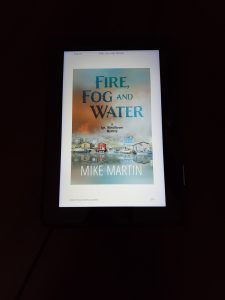
Sergeant Winston Windflower is the ranking officer in an RCMP detachment based in Grand Bank, a small village located on the south coast of Newfoundland. Like other such villages it is changing, experiencing crimes like drugs and murder, that locals haven’t often seen in their communities. The shift threatens Newfoundland’s traditional ways, a lifestyle that attracted Windflower to the province in the first place. It is a small posting, with a handful of junior officers and one civilian staff member, all of whom have formed tight bonds among themselves and with the community. But lately those bonds have become stressed: a recently-appointed senior officer in Marystown, Acting Inspector Richard Raymond, is ruling with a heavy hand. Constable Carrie Evanchuk has complained privately to Windlfower that Raymond has bullied her, and it’s not long before other, even more disturbing allegations surface. Things come to a boil when Evanchuk’s fiancée, Corporal Eddiie Tizzard, physically attacks the senior officer. Normally a career-ending move, Windflower must find a way to ensure that justice is done while ensuring that any collateral damage is kept to a minimum.
Meanwhile, life goes on. Windflower is out walking with his dog Lady on the edge of town when he – or rather his dog – makes a gruesome discovery: a body, frozen and matted with blood, has been wrapped up in an old carpet and buried in the bush. Before the victim can be thawed and identified another incident occurs just outside the village, a hit-and-run that leaves a woman badly injured and in hospital. It is not long before other events call on Windflower’s investigative powers: a body is found in a nearly-abandoned trailer in the woods, and a house in the village goes up in flames, looking all the world like an intentional blaze started to conceal some crucial evidence. For a small village on the fringe of the island, Grand Bank seems to have become a veritable hotbed of criminal activity. And faced with the prospect of substantial repairs needed to his fledgling B&B business, Windflower is forced to consider whether he wants to remains in the RCMP or retire and focus his time on the B&B and his much-loved family.
Windflower is of First Nations heritage, and frequently draws upon his native cultural practices, such as smudging and interpreting his dreams, to make sense of the events occurring in his life. Frequently these bring clarity to the chaos, but only after he has come to appreciate the larger significance of the details. This process helps the reader to gain an appreciation of an often-neglected dimension of Windflower’s nuanced personality. Before the tale has ended Windflower must situate himself in the complex world in which he lives, and come to terms with its varied, often conflicting, forces. It forms an added dimension to author Mike Martin’s layered and insightful narrative of life in rural Newfoundland, one that his many readers have come to appreciate. Like its setting, Fire, Fog and Water is deceptive: on one level it is a tale of crime and violence all too familiar in large cities everywhere; on another, more personal level it is the revealing story of a man – and those close to him – faced with the pull of conflicting pressures, and struggling to deal with them in a way that takes into account the concerns of others and also allows him to be at peace with himself, surely a story that will appeal to readers faced who find themselves in similar situations. The eighth novel in the Sergeant Windflower series, Fire Fog and Water is a good read for our complex and troubled times.
_______
Jim Napier is a professional crime-fiction reviewer based in Canada. Since 2005 his book reviews and author interviews have been featured in several Canadian newspapers and on multiple websites. His crime novel Legacy was published in April of 2017, and the next in the series, Ridley’s War, is scheduled for release in the summer of 2020.


 Things that I didn't like:


