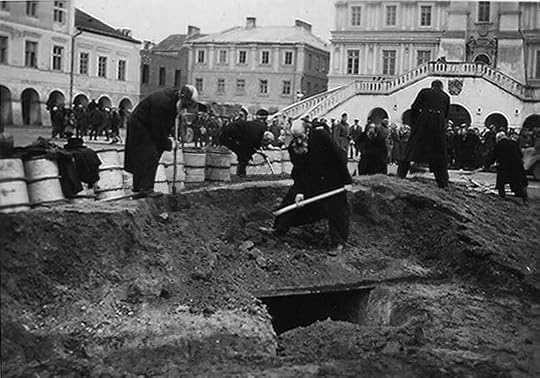
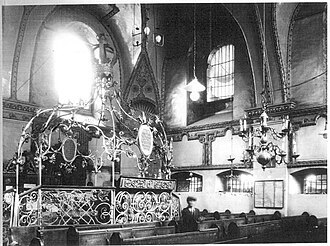
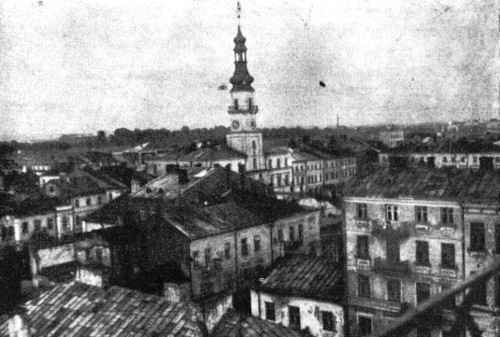
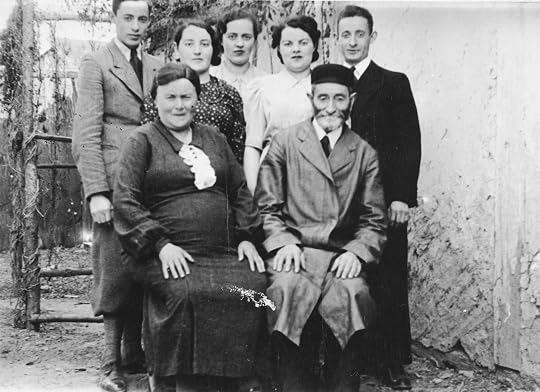
Annihilation is about a day in the life of a Polish-Jewish town shortly before World War II and the Holocaust, a town that soon will be annihilated by Nazi atrocities. With grace, wit, and love for the people and place that will be destroyed, Piotr Szewc creates a hymn to the victims of the Holocaust, as well as a literary masterpiece whose brilliance is evidenced on every page.
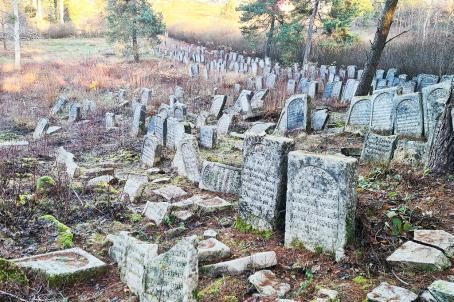
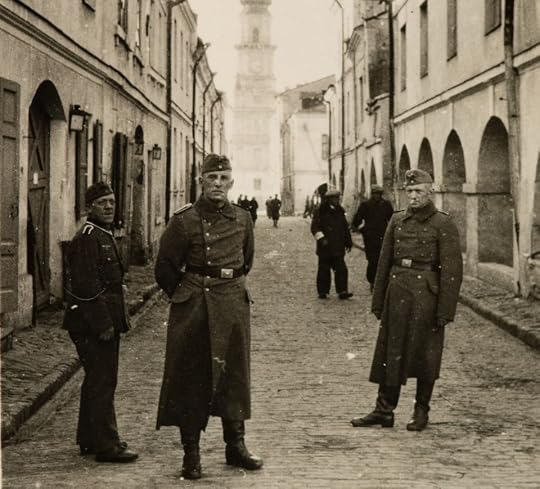
Annihilation, Piotr Szewc's first novel, was published in 1987 in Polish. It follows one July day in 1934 in an eastern Polish town modeled on his birthplace, Zamość. A Jewish fabric merchant, Hershe Baum, feeds pigeons known locally as Persian butterflies. A courtesan empties a chamber pot onto hens. A Catholic attorney sucks mint drops on the way to his office. Two policemen drink beer after night duty, then spit cherry pits in the grass. Hasidic Jews dance at noon. A plural narrator photographs the hours until the stars come out. The year foreshadows. So does the title. Five years after 1934 the Second World War begins. Within a decade the Nazis will annihilate the town's Jewish community, the event the title names. Szewc keeps the market square in focus, the catastrophe out of frame. The narrator's creed exceeds the narrator's camera. "To see. To be. To remember. To record scrupulously." The camera misses details. In one photograph of the market square, an album viewer half a century later will see only a grey spot in one corner. The narrator knows the spot is a black-haired girl. Steadier witnesses are a dome and a herring. The dome of the Town Hall, called the Eye of the Town, shines as a second sun at noon. A herring in tavern keeper Rosenzweig's marinade jar keeps its eye open until a bay leaf blocks the view. Warnings stay small. Baum dreams of a flooded town with floating heads, his family's among them. A painting in Rosenzweig's tavern shows a fiery ball rolling down a street. The narrator predicts Baum will forget the dream within a month. Photography outlasts the shop. Baum padlocks his shutters at closing time. The narrator's shutter keeps clicking. By evening the narrator reports the policemen's walk in the future tense, ahead of their feet. The attorney pins a bee with a fountain pen, pulls off its wings, then its legs. The morning, he decides, has been used well. As a boy named Walek he took bees apart for the pollen. Boyhood surfaces through the tongue. A mint drop sends the attorney back to a winter yard outside a tavern. Chewed rose petals return him to a garden, where Walek pries peony buds open, telling a questioner he is blooming. Dread perches on an alder in another memory, a winter hunt for siskins, small songbirds. The narrator suspects nine siskins sense the annihilation ahead as boys raise a glue-smeared pole. One is caught. The eight left stay put, waiting for something. Walek shakes the alder, frees the captive, scatters the flock. The older boys curse him. The narrator's certainty gives out among Jewish graves. After dinner the Hasidim walk to the town's Jewish cemetery. In the tall grass they vanish. The narrator then wonders whether they were ever in town. Piotr Szewc was born in 1961 in the same Polish town he describes, after the Annihilation and after the July day in 1934 he imagines. He paints a still life. The life is still in it. Memorials need reverence. Novels need friction. This book delivers a memorial. The Nazis stay offstage. A memorial can afford that. A history needs their names. The book closes on its opening words. A day can loop. History runs one way. Statistics anesthetize. A single hour in detail restores a pulse. Those old enough to remember Europe's 1940s are in their eighties or older. Archives keep dates. Attention keeps the rest. This is a brave, sad, and gorgeous book that brings to life a moment of sheer beauty that was erased by the ancestors of the locals, and, in 1987, when the book was published in Polish, by some of the patrons of the village bookstore and library. As this book goes out of print, all that remains of that glory are Candace Owens rants, woke chants, Mamdanistani posts, and Jihadi blood libels. How the world turns. אין חדש תחת השמש, מה שהיה הוא שיהיה.
120+ сторінковий роман, в якому відбуваються дрібні події і переміщення, але принципово нічого сюжетотворчого. (Єдиний раз, коли в тексті виникає якась подібність потенційно сюжетотворчого конфлікту, його деталі від нас приховують.) Це, звісно, не "погане письмо", а цілеспрямована стратегія: відтворити один день в житті значною мірою єврейського району Замості в 1934 році, смакувати чудовий літній день, повноту буття, ще не втрачену мультикультурність, тривожитися від передчуття катастрофи.
Читаю вже втретє, захопливої подієвості у тексті від перечитувань не додається, але все одно відкриваю нове. Наприклад, до свого сорому, я щойно цього разу зрозуміла, що йдеться не про Ринок старого міста, а про Нове місто Замості, і перечитала з картою.
Nagyon tetszett ez a kisregény (111 oldal mindössze) , habár a cselekményben látszólag nem sok minden történt, sőt, nagyjából semmi... Olyan volt mint egy uvegbúra alatt fotomontázs... Védett területű búra alatt vizsgáljuk a különböző képeket, arcokat, az idő megáll... És mi csak abrandozunk. Gyönyörű nyelvezet, érdekes módon a nappor az utolsó 30 oldalon vagy 10-szer szerepelt, de milyen szép szó ez, már -már elfeledtem.
Bardzo doceniam koncepcję utworu - jest w niej coś magicznego, wiecznego, a zarazem boleśnie melancholijnego. Przeżywamy cały dzień w życiu pewnego miasteczka (Zamościa) razem z ruchem słońca. Narracja przeprowadza nas przez ślady istnienia, które zatracją się już w momencie ich zauważenia. Czy chasydzi naprawdę kiedyś tam mieszkali? Kto jest widoczny na fotografii? Przepiękne opisy przyrody i jej, notabene, zagłady ewokują we mnie bliżej niesprecyzowane wspomienia miononych lat.
Piotr Szewc’s Annihilation, translated by Ewa Hryniewicz-Yarbrough, is a novel set in 1934, Poland. The novel’s narrator, The Eye of the Town tells the reader about one day in the town, selecting a few characters to follow as they go about their day. The goal of the novel is not to tell a story but to “[…]painstakingly record everything so that nothing is missing from the Book[ of the Day]” (p. 65). This is a work about the people who will become victims by Nazi atrocities. Instead of on the Holocaust, Szewc chose to write about the people. The novel tells you who they are from their habits to their jobs, which the people in the novel treat as being boring and uneventful.
Not to be rude about the book or its topic, boring and uneventful is a good description for the book Annihilation. It is important to remember that the novel’s purpose is not to entertain its readers but to show the reader the lives stolen by the Nazis. This book does not portray the people of the town as either saints or caricatures, instead as regular people.
The audience that would best appreciate this novel would be people who read a lot about the Holocaust. Just remember this book will not provide you data or statistics. If you are interested in poetry or Literature, the language of the book is very poetic and beautiful. Finally, people looking for plot or character development would do themselves a favor by avoiding the book because you will not enjoy it.
Szewc wants to be philosophically deep and morally acute like Conrad, Joyce or Weisenthal by focusing on a single uneventful day in a pre-war Polish village. Unfortunately it comes of flat and pretentious. Could possibly be the translation, but it doesn't feel that way.
Various reviewers describe Annihilation as "a compelling, elegant and existential story.."; or "successfully creepy, an old-style gothic horror novel set in a not-too-distant future." Sounds interesting. Unfortunately, it may be existential in its 'we are all alone here' aspect, and it may be gothic, as in ridiculously wordy, but it's far from compelling or creepy. It's incomprehensible. And bad.
This book starts out with very concrete descriptions of a female team exploring a strange region known as "Area X." The story becomes more abstract as it goes along. The "Area" in question seems to transform those who enter it. If you like enigmatic stories along the lines of the "Lost" TV series, you may like this novel.
I picked this up after reading about it in Context: http://dalkeyarchive.com/context/131/... The book describes, in minute detail a day in the life of a town in pre-World War II Poland. I highly recommend it. Read the Context review for more info.