

What do you think?

City on Fire: The Fight for Hong Kong
A long-term resident and expert observer of dissent in Hong Kong takes readers to the front lines of Hong Kong’s revolution.
Through the long, hot summer of 2019, Hong Kong burned. Anti-government protests, sparked by a government proposal to introduce a controversial extradition law, grew into a pro-democracy movement that engulfed the city for months. Protesters fought street battles with police, and the unrest brought the People’s Liberation Army to the very doorstep of Hong Kong. Driven primarily by students and youth protesters with their ‘Be Water!’ philosophy, borrowed from hometown hero Bruce Lee, this leaderless, technology-driven protest movement defied a global superpower and changed Hong Kong, perhaps forever. But it also changed China, and challenged China’s global standing.
Antony Dapiran provides the first detailed account of the protests, reveals the activists’ unique tactics, and explains how the movement fits into the city’s long history of dissent. City on Fire explores what the protests will mean for the future of Hong Kong, China, and China’s place in the world.
Through the long, hot summer of 2019, Hong Kong burned. Anti-government protests, sparked by a government proposal to introduce a controversial extradition law, grew into a pro-democracy movement that engulfed the city for months. Protesters fought street battles with police, and the unrest brought the People’s Liberation Army to the very doorstep of Hong Kong. Driven primarily by students and youth protesters with their ‘Be Water!’ philosophy, borrowed from hometown hero Bruce Lee, this leaderless, technology-driven protest movement defied a global superpower and changed Hong Kong, perhaps forever. But it also changed China, and challenged China’s global standing.
Antony Dapiran provides the first detailed account of the protests, reveals the activists’ unique tactics, and explains how the movement fits into the city’s long history of dissent. City on Fire explores what the protests will mean for the future of Hong Kong, China, and China’s place in the world.
320 pages, Paperback
First published March 16, 2020
About the author
Antony Dapiran
3 books31 followersAntony Dapiran is a Hong Kong-based writer and lawyer, and the author of two books on Hong Kong including his latest, "City on Fire: The Fight for Hong Kong”, published by Scribe. Antony has written and presented extensively on Hong Kong and Chinese politics, culture and business, with his writing appearing in The Atlantic, New Statesman, Foreign Policy, Quartz, Art Asia Pacific, Mekong Review and The Guardian, among many others. A fluent Mandarin speaker, Antony has resided between Hong Kong and Beijing for over twenty years.
Ratings & Reviews
Friends & Following
Create a free account to discover what your friends think of this book!
Community Reviews
Displaying 1 - 30 of 52 reviews

October 19, 2019
Pre-review:
Can we have this book now instead of next year?
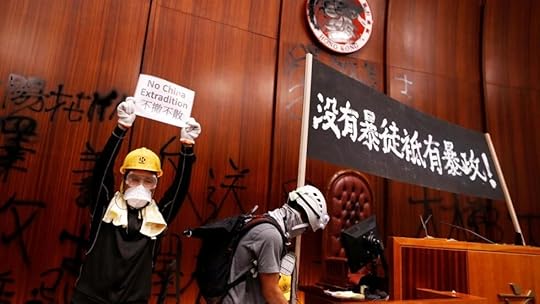
(Link: https://www.rfi.fr/tw/%E4%B8%AD%E5%9C...)
Note@11/06/2023
That is pretty much the problem in a nutshell.
I am reading it very slowly because reading about 2019 is still upsetting enough for me. Still, it is a very important book to me and fellow HongKongers.
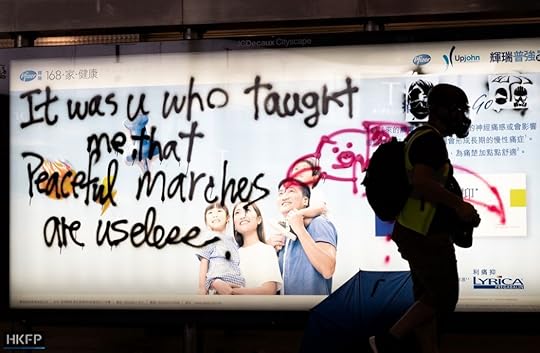
(Article: https://hongkongfp.com/2020/02/16/hon...)
Article: https://hongkongfp.com/2019/07/04/wri...
Here I go again, to try finish reading a book about the 2019 Anti Extradition Bill Protest.
Goddamn it, this author is so spot-on, and I hate those police mother fuckers so much.
(1) Tear gas was used on British civilians for the first time at the start of the Northern Ireland Troubles? Not a surprise.
(2) The greatest crisis since the Tiananmen Square Crackdown? Huh huh huh yes..........and it's almost certain there be more crisis to come.
(3) The contribution of Prof. Benny Tai Yiu-ting, Reverend Chu Yiu-ming and Prof. Chan Kin-man from 2014 is mentioned, I am glad.
(4) "In the absence of meaningful democracy provided by Beijing and the Hong Kong governance system, the Hong Kong people improved their own democratic institutions."
Okay, referendum and online voting can do part of it, but don't forget the other democratic infrastructure~
(5) The author is so freaking knowledgeable that he can link the 2014 to 2019 Lenon Walls to the 1989 Democracy Wall in Beijing. Plus he has a good grip on all the English-Cantonese-Chinese translation as well.
(6)
(7)
(8) I think the author really did an excellent job of illustrating how and why the whole Movement would emerge, listed out its historical root causes, how unjust the system really is, and his understanding of both Cantonese and Chinese is awesome! Such understanding can only come from a long-time resident who lives and breathes together with the city and its ordinary people.
(9) Chapter 19: The Silent Majority (p. 264-274)
When the pan-democrat camp won most of the seats in the Hong Kong district councils dispite all the violence in the protests, it's proof that most of the people have turned against the shitty government.
(10) I am glad that the author is talking about all the political and historical root causes of the Hong Kong autonomy (or the lack of it) issues at p. 296-289.
(11) I can't stress this enough, I am very impressed by the author's well of knowledge and understanding on Hong Kong's society, its history, the complicated political and social contexts surrounding the whole conflicts and how he managed to present all these to the readers in an understandable, easy-to-read way. The way he captures the moods of the locals and their thoughts, such understanding can only come with decades of living and breathing with the local community, befriending the locals and understanding their concerns, learning and practicing the local cultures
(12) If you asked me, the murdered girl's parents are also responsible for asking the wrong bunch of people for 'help', in fact they had found the worst people they could ever find to 'help' them, so there is a no-brainer that their daughter's murderer is still a free man even to this day!
(13) The girl's parents' foolish actions eventually sent all these innocent HongKongers into a fucking world of trouble. How many lives have been destroyed and families have been separated because of it!? So I have no sympathy for this pair of parents, I would rather use my sympathy on the poor jailed protesters instead.
Hong Kong 2019 Protests Books List: https://www.goodreads.com/list/show/1...
Can we have this book now instead of next year?
'There are no rioters, only tyranny.'
(Link: https://www.rfi.fr/tw/%E4%B8%AD%E5%9C...)
Note@11/06/2023
' Nobody who knows about the PRC legal system wants to be exposed to it'
( from: Jerome Cohen, China legal expert) p.24
That is pretty much the problem in a nutshell.
I am reading it very slowly because reading about 2019 is still upsetting enough for me. Still, it is a very important book to me and fellow HongKongers.
'It was you who taught me that peaceful marches are useless.'
p.97
(Article: https://hongkongfp.com/2020/02/16/hon...)
Article: https://hongkongfp.com/2019/07/04/wri...
'I want them to see this, and remember it, so they know what Hong Kongers are capable of'
( a parent on bringing their children to the site of the Umbrella Movement, 2014) p.49
'Empty your mind. Be formless, shapeless: like water...Water can flow or it can crash. Be water, my friend.'
---quote from Bruce Lee, p.70
Here I go again, to try finish reading a book about the 2019 Anti Extradition Bill Protest.
By creating a scene of violence and chaos, tear gas works to objectify the crowd, turning it from a group of human beings into a seething, writhing mass. Tear gas also helps to turn a protest into a riot---and therefore makes it a legitimate target for further state violence.
Goddamn it, this author is so spot-on, and I hate those police mother fuckers so much.
(1) Tear gas was used on British civilians for the first time at the start of the Northern Ireland Troubles? Not a surprise.
(2) The greatest crisis since the Tiananmen Square Crackdown? Huh huh huh yes..........and it's almost certain there be more crisis to come.
(3) The contribution of Prof. Benny Tai Yiu-ting, Reverend Chu Yiu-ming and Prof. Chan Kin-man from 2014 is mentioned, I am glad.
(4) "In the absence of meaningful democracy provided by Beijing and the Hong Kong governance system, the Hong Kong people improved their own democratic institutions."
Okay, referendum and online voting can do part of it, but don't forget the other democratic infrastructure~
(5) The author is so freaking knowledgeable that he can link the 2014 to 2019 Lenon Walls to the 1989 Democracy Wall in Beijing. Plus he has a good grip on all the English-Cantonese-Chinese translation as well.
(6)
' Their attack was not an attack on a building: it was an attack on a system. If it was an act of violence, it was an act of retaliatory violence against the continuous acts of systemic violence to which these protesters felt they had been subjected'
p.92
(7)
'It's sad for me to witness these good people and this great community being destroyed. I can't stay silent in the face of that.'
( artist Badiucao on the people of Hong Kong) p.129
(8) I think the author really did an excellent job of illustrating how and why the whole Movement would emerge, listed out its historical root causes, how unjust the system really is, and his understanding of both Cantonese and Chinese is awesome! Such understanding can only come from a long-time resident who lives and breathes together with the city and its ordinary people.
(9) Chapter 19: The Silent Majority (p. 264-274)
When the pan-democrat camp won most of the seats in the Hong Kong district councils dispite all the violence in the protests, it's proof that most of the people have turned against the shitty government.
(10) I am glad that the author is talking about all the political and historical root causes of the Hong Kong autonomy (or the lack of it) issues at p. 296-289.
(11) I can't stress this enough, I am very impressed by the author's well of knowledge and understanding on Hong Kong's society, its history, the complicated political and social contexts surrounding the whole conflicts and how he managed to present all these to the readers in an understandable, easy-to-read way. The way he captures the moods of the locals and their thoughts, such understanding can only come with decades of living and breathing with the local community, befriending the locals and understanding their concerns, learning and practicing the local cultures
(12) If you asked me, the murdered girl's parents are also responsible for asking the wrong bunch of people for 'help', in fact they had found the worst people they could ever find to 'help' them, so there is a no-brainer that their daughter's murderer is still a free man even to this day!
(13) The girl's parents' foolish actions eventually sent all these innocent HongKongers into a fucking world of trouble. How many lives have been destroyed and families have been separated because of it!? So I have no sympathy for this pair of parents, I would rather use my sympathy on the poor jailed protesters instead.
Hong Kong 2019 Protests Books List: https://www.goodreads.com/list/show/1...

August 15, 2023
A few weeks ago, I had to decide where to travel to in Asia. I spent weeks agonizing over this decision and finally, picked Hong Kong. For many, this is not an obvious decision, especially when I could have gone to surf in the Philippines.
In the midst of my indecisive haze, I had remembered the protests. As Israel's streets become crammed with chants and flags, I felt a deep urge to meet Hong Kong, perhaps the international capital of protesting. I started reading this book right after booking my tickets.
In professional and passionate prose, Dapiran describes the protest movement, starting from the Umbrella movement and working his way to 2019. This book was easy to read, even if it took me a while to do so. It does a fine job of telling about individuals as well as the broader context. Occasionally, there's some theory, which I really appreciated. As a longtime Hong Kong resident, Dapiran feels like the right candidate to tell this story- it is clear how much he loves the city.
When I got to Hong Kong, staying at Tsim Sha Tsui, I quickly learned that 2023 Hong Kong is not 2019 Hong Kong. I was greeted by so many Chinese flags, so many little signs implying that it is China. The security law was ever present in every corner. Having spoken about politics with Palestinians and Russians, I thought I was used to seeing repressed freedom of speech but in Hong Kong, it was an entirely different level.
I wanted to love Hong Kong yet I felt a deep sense of unease and eeriness throughout my entire time. I kept thinking of how it is essentially an endangered city, so unstable on a political level. Every time I saw children (and compared to Tokyo and Seoul, I saw many), I found myself wondering in which country will they grow up in. What will Hong Kong look like in the future?
Who is Hong Kong, really? Dapiran writes that the protests had created the Hong Konger identity, perhaps for the first time ("Hong Kongers, add oil"). When you walk through the narrow streets, it is so vivid: Hong Kong has been a tool for colonialism, utilized for its harbors and passage to China. Hong Kongers have never been given a chance to tell their own political story, to forge their society.
For example, Hong Kong is not a merge of British and Chinese culture, as it is often described. Instead, it's parallels worlds. It's cafes with fantastic vegan food (and the best avocado toast I ever had) next to little hole in the wall restaurants offering dumplings. The worlds do not mix: English is either spoken by all or by none. The dissonance screams. Who is Hong Kong, really? What could it be? What does Hong Kong mean?
In other times, I felt as though Hong Kong was simply something else entirely: the Hong Kong sense of style, so put together, kings of the passive aggressive stare, skyscrapers and old men climbing on unstable ladders to fix their roofs. On my second night, someone explained how they know who's from the mainland and really, in the coming days, I could see it. Immigrant city, safe space, Tokyo envy, film empire, Hong Kong is its own story.
Dapiran concludes the book on a positive note- the victorious elections, the US paying attention to their independence movement, geopolitics perhaps playing into their favor, the rise of the identity. Nevertheless, this optimism felt almost out of place with my own experiences (the heartbreak in their voice, the flash of fury, the mocking of mainland people, silent yet every present). She said, "Hong Kongers have spirit. Sometimes, on the MTR, I see people wearing yellow socks, even now. They have style- they apologized each time the blue paint impacted the neighborhoods," but what can socks possibly mean when the community is refugees and prisoners?
Even though it was published a mere three years ago, this book feels like a relic from a different time. It gave me a taste of the protest days which clashed deeply with what modern day Hong Kong looks like.
What I'm Taking With Me
- Near the end, it's suggested that only a tiny minority seek true independence. This is fascinating- what sort of autonomy could work? It's said that the 50 years deal also forces HK into political stagnation, 50 years frozen in time, it cannot hold. Colonialist paradigms, limiting natural growth.
- I thought it was a baffling idea that Hong Kong just shifts ownership but the argument that people had expected China to also change is interesting, as if the British were placing bets on modernization, everyone thought it could be different.
- And I do want to say that I don't feel that I'm wildly anti-China in this American sort of way- it is the lack of choice, above all, that haunts me.
And now, cause obviously everyone wants more of my HK experiences, here's some more moments:
- Hong Kong is an empire of overpasses. You never really know where solid ground is. The amount of times that I thought I was on the first floor but actually, I was on the third floor, or the entire ground was a bridge. Architecture wonder, Hong Kong is an island of manmade capitalism.
- Modeling for the art group and being able to see it as a meditation. Being given 9 drawings of myself, looking so serene and yes, I could be upset about my body but no, I see beauty. I look calm. Happy. Within my body. I can love that person.
- I'm sorry but I spent 6 months in Korea and only got the public transportation wrong once, I spent one week in Hong Kong and got it wrong four times. HK is hostile to pedestrians, with its traffic laws and endless highways.
- And Chinese flags are everywhere. She said, "they're fucking cowards, they want to take over and for us to pretend to be happy about it", and the Chinese place the flags always higher, often bigger.
- Barbie! I can't think critically about it because rushing in the rain to the theater, nearly getting run over (again, fuck you, HK traffic laws), soaking wet, walking through the theater to help a friend who had forgot her phone.
- I wish I could tell 10 yo me that one day we'll go alone to Disneyland and it will be phenomenal. I spoiled myself, with absolutely disgusting coffee and vegan chicken, with my favorite rides, zero consideration for other people's feelings.
- I booked the dorm rooms and yet, somehow got a tiny room with a bunk bed. For my first night, a Chinese dude. We were absolutely mutually fascinated by each other's lives ("you've been to Taiwan?" "You live in Beijing?"). For my second roommate, a British dude who literally did not speak to me at all. For my third roommate, a bubbly and cheerful outgoing Argentinian. We stayed up too late each night chatting and the minute we learned we're both queer, the entire room atmosphere shifted. How beautiful.
-Feeling alienated in the immigrant spaces of HK. I was struck by an urge to say, "see, I look white but my country is a mess. We're fighting an impending theocracy, don't be fooled by my accent, I can barter like the best of them".
- Chatting about how the UK screwed over our countries like no, you can't just leave.
- In a gallery in which we could create our own poetry, "Change" kept slipping, sliding down the wall. I added "think free" because this is what I wish for us all.
- Being questioned three times in the synagogue like come on, my middle name is literally Jewish. At the end, I got annoyed and when asked where I'm from, pulled out my inner Israeli and condescendingly asked, "tell me, how familiar are you with Israeli geography". That's when they believed me that yes, I am, in fact, Jewish.
-The look in my friend's eyes as she said "I'm sorry but I can't talk to you about this. I'm scared for my family," and this is why I want to study politics, for a few minutes, my friend became an object of the state, controlled by their ideologies and we are never free from our nationalities.
- Celebrating Peru's independence in a small Peruvian bar, fantastic alcohol and great vibes
In the midst of my indecisive haze, I had remembered the protests. As Israel's streets become crammed with chants and flags, I felt a deep urge to meet Hong Kong, perhaps the international capital of protesting. I started reading this book right after booking my tickets.
In professional and passionate prose, Dapiran describes the protest movement, starting from the Umbrella movement and working his way to 2019. This book was easy to read, even if it took me a while to do so. It does a fine job of telling about individuals as well as the broader context. Occasionally, there's some theory, which I really appreciated. As a longtime Hong Kong resident, Dapiran feels like the right candidate to tell this story- it is clear how much he loves the city.
When I got to Hong Kong, staying at Tsim Sha Tsui, I quickly learned that 2023 Hong Kong is not 2019 Hong Kong. I was greeted by so many Chinese flags, so many little signs implying that it is China. The security law was ever present in every corner. Having spoken about politics with Palestinians and Russians, I thought I was used to seeing repressed freedom of speech but in Hong Kong, it was an entirely different level.
I wanted to love Hong Kong yet I felt a deep sense of unease and eeriness throughout my entire time. I kept thinking of how it is essentially an endangered city, so unstable on a political level. Every time I saw children (and compared to Tokyo and Seoul, I saw many), I found myself wondering in which country will they grow up in. What will Hong Kong look like in the future?
Who is Hong Kong, really? Dapiran writes that the protests had created the Hong Konger identity, perhaps for the first time ("Hong Kongers, add oil"). When you walk through the narrow streets, it is so vivid: Hong Kong has been a tool for colonialism, utilized for its harbors and passage to China. Hong Kongers have never been given a chance to tell their own political story, to forge their society.
For example, Hong Kong is not a merge of British and Chinese culture, as it is often described. Instead, it's parallels worlds. It's cafes with fantastic vegan food (and the best avocado toast I ever had) next to little hole in the wall restaurants offering dumplings. The worlds do not mix: English is either spoken by all or by none. The dissonance screams. Who is Hong Kong, really? What could it be? What does Hong Kong mean?
In other times, I felt as though Hong Kong was simply something else entirely: the Hong Kong sense of style, so put together, kings of the passive aggressive stare, skyscrapers and old men climbing on unstable ladders to fix their roofs. On my second night, someone explained how they know who's from the mainland and really, in the coming days, I could see it. Immigrant city, safe space, Tokyo envy, film empire, Hong Kong is its own story.
Dapiran concludes the book on a positive note- the victorious elections, the US paying attention to their independence movement, geopolitics perhaps playing into their favor, the rise of the identity. Nevertheless, this optimism felt almost out of place with my own experiences (the heartbreak in their voice, the flash of fury, the mocking of mainland people, silent yet every present). She said, "Hong Kongers have spirit. Sometimes, on the MTR, I see people wearing yellow socks, even now. They have style- they apologized each time the blue paint impacted the neighborhoods," but what can socks possibly mean when the community is refugees and prisoners?
Even though it was published a mere three years ago, this book feels like a relic from a different time. It gave me a taste of the protest days which clashed deeply with what modern day Hong Kong looks like.
What I'm Taking With Me
- Near the end, it's suggested that only a tiny minority seek true independence. This is fascinating- what sort of autonomy could work? It's said that the 50 years deal also forces HK into political stagnation, 50 years frozen in time, it cannot hold. Colonialist paradigms, limiting natural growth.
- I thought it was a baffling idea that Hong Kong just shifts ownership but the argument that people had expected China to also change is interesting, as if the British were placing bets on modernization, everyone thought it could be different.
- And I do want to say that I don't feel that I'm wildly anti-China in this American sort of way- it is the lack of choice, above all, that haunts me.
And now, cause obviously everyone wants more of my HK experiences, here's some more moments:
- Hong Kong is an empire of overpasses. You never really know where solid ground is. The amount of times that I thought I was on the first floor but actually, I was on the third floor, or the entire ground was a bridge. Architecture wonder, Hong Kong is an island of manmade capitalism.
- Modeling for the art group and being able to see it as a meditation. Being given 9 drawings of myself, looking so serene and yes, I could be upset about my body but no, I see beauty. I look calm. Happy. Within my body. I can love that person.
- I'm sorry but I spent 6 months in Korea and only got the public transportation wrong once, I spent one week in Hong Kong and got it wrong four times. HK is hostile to pedestrians, with its traffic laws and endless highways.
- And Chinese flags are everywhere. She said, "they're fucking cowards, they want to take over and for us to pretend to be happy about it", and the Chinese place the flags always higher, often bigger.
- Barbie! I can't think critically about it because rushing in the rain to the theater, nearly getting run over (again, fuck you, HK traffic laws), soaking wet, walking through the theater to help a friend who had forgot her phone.
- I wish I could tell 10 yo me that one day we'll go alone to Disneyland and it will be phenomenal. I spoiled myself, with absolutely disgusting coffee and vegan chicken, with my favorite rides, zero consideration for other people's feelings.
- I booked the dorm rooms and yet, somehow got a tiny room with a bunk bed. For my first night, a Chinese dude. We were absolutely mutually fascinated by each other's lives ("you've been to Taiwan?" "You live in Beijing?"). For my second roommate, a British dude who literally did not speak to me at all. For my third roommate, a bubbly and cheerful outgoing Argentinian. We stayed up too late each night chatting and the minute we learned we're both queer, the entire room atmosphere shifted. How beautiful.
-Feeling alienated in the immigrant spaces of HK. I was struck by an urge to say, "see, I look white but my country is a mess. We're fighting an impending theocracy, don't be fooled by my accent, I can barter like the best of them".
- Chatting about how the UK screwed over our countries like no, you can't just leave.
- In a gallery in which we could create our own poetry, "Change" kept slipping, sliding down the wall. I added "think free" because this is what I wish for us all.
- Being questioned three times in the synagogue like come on, my middle name is literally Jewish. At the end, I got annoyed and when asked where I'm from, pulled out my inner Israeli and condescendingly asked, "tell me, how familiar are you with Israeli geography". That's when they believed me that yes, I am, in fact, Jewish.
-The look in my friend's eyes as she said "I'm sorry but I can't talk to you about this. I'm scared for my family," and this is why I want to study politics, for a few minutes, my friend became an object of the state, controlled by their ideologies and we are never free from our nationalities.
- Celebrating Peru's independence in a small Peruvian bar, fantastic alcohol and great vibes

March 18, 2021
4.5 stars rounded up. Brilliantly written by someone who was not reporting on from the outside, but keeps the memory of being teargassed in various places. It took me two months to finish it, as there are lots of information to digest and ponder.
Might write longer review when I have the energy but let me say if you want to read about Hong Kong's 2019 anti government protests but could not follow every news, this is highly recommended. Its somber end note was rather troubling, but I guess we'll see later since it's too early to tell the impact.
Might write longer review when I have the energy but let me say if you want to read about Hong Kong's 2019 anti government protests but could not follow every news, this is highly recommended. Its somber end note was rather troubling, but I guess we'll see later since it's too early to tell the impact.

April 20, 2020
This is essential reading on the subject of Hong Kong and the protests of 2019. Dapiran is uniquely positioned to tell the story as a lawyer and journalist with some twenty years experience (and residence) in the territory. I've reviewed this in the Sydney Review of Books online at https://sydneyreviewofbooks.com/revie...

April 17, 2020
A detailed record with analysis of the 2019 protests of Hong Kong, with bits of Hong Kong history and socio-political context scattered throughout the book. The author has a very deep understanding about Hong Kong’s history and socio-political circumstances. That’s why he can explain the cause of events very well. At the same time, he provides a perspective of an English speaker who understands the sentiments of Hong Kong people, providing a more in-depth analysis rather than just looking at the incidents by themselves. Kudos to using jyutping as well.
By analysing the protest in terms of space, the author mentioned a very interesting concept: "deconstructing" the city. Throughout this protest, traditional concepts regarding political and personal life were separated, that they were happening in different "space". Comparing the 2014 and 2019 protests is very helpful in understanding the nature of the protests. As the author mentioned, back in 2014, protests happen in occupied zones. In those zones, new communities are created, but it exists like a bubble full of utopian ideals. Once you get out of the occupied zones, daily life continues in the normal sense. This creates a split between political and personal lives, and is one of the reasons why the 2014 Umbrella Movement is somehow doomed to fail.
But in the 2019 protests, especially in July, protesters organize rallies in new routes, bringing protests to each district. Traditionally, marches are held on Hong Kong Island, always following the same route from Victoria Park to Admiralty. Throughout June, most events also happened on Hong Kong Island. This geographical separation of Hong Kong Island as "where the politics happen" (partly due to historical reasons) is also strengthened by the location of the Government Office, the Legislative Council Building, the Court of Final Appeal and Liason Office of the Central People's Government. All located on Hong Kong Island.
It is interesting that when in June we are struggling with a city-wide depression and loss of direction, in July we are attempting to break the line between protest and daily lives, by bringing protests to the neighbourhood. July 7 march is significant in this sense, it is the first time a large-scale rally happened outside Hong Kong Island, on the other side of the Victoria Harbour (literally). Throughout July, different organizers negotiated and organized weekly rallies in every district, this is the beginning of Pindei hoifaa (遍地開花).
It was after the success of bringing protests to the neighbourhoods that protesters start to bring protests into malls. Malls, as the author has explained, is a very communal space where daily life happens. With incidents like July 14, where the police barge into shopping malls and even residential buildings, we start to question, "whose rights and whose city?"
Marxist geographer David Harvey has argued that the more important aspect of the right to the city is not merely a physical right of access but a collective right to participate in the continuing production of the urban space, a right to 'reinvent the city more after our hearts' desire'. To see the right to the city in this way neutralizes the question of mutually conflicting claims of right of access to the city's spaces, and gives way to an expression of desire rather than a territorial claim, a right of democratic participation. In Hong Kong, a city ruled in effect by an alliance between the local government, the Beijing authorities, and the city's all-powerful real estate tycoons, the system by its very design excludes the people from participating in the production of their urban space.
Throughout the months of protests, HongKongers start to think about our role and our place in the city, an emerging sense of community and civic duty. Prior to 2019, partly due to the 'failure' of the 2014 Umbrella Movement, many youngsters claim to be politically apathetic, because there is a strong sense of hopelessness. Life and politics were separated and many don't want to care about 'politics'. But after participating in these months of protests, we understand that politics and daily life cannot be separated. Life is full of politics and politics will affect every facet of our lives. By bringing protests to the community and into the communal spaces, with the involvement of "gaai fong" (街坊), we put this idea into reality, we successfully blend our political lives with our daily lives both virtually and in reality.
In the process of "deconstructing" the city, we invented new meanings for places that used to be only passages between places, for example footbridges and subways. By turning these communal spaces into Lennon walls, we successfully created a bond in the community, a common place where people's voices can be seen, breaking through the echo chambers of the internet and respective social circles. This is supposed to be an improvement, however, the government and pro-government people do not welcome this community-bonding. They view this as destroying social harmony (ironically), and a threat to the government authority. Thus, these communal Lennon Walls became the battleground between protesters and pro-government supporters. Protesters posting propaganda or messages on Lennon Walls may be under the threat of attack from pro-government supporters, or being arrested by the police. Even after the landslide victory in the District Council, when councillors proposed to set up permanent Lennon Walls in the community, they are faced with strong opposition from the Home Affairs Department. The struggle of Hong Kong is still an uphill battle.
Moving on to September, October and November, protests continued to escalate and the government used all tactics to try to suppress the community. Utilizing every way they could get their hands on, including colonial laws, the government proved itself to be no different from a colonial government, one that pays no attention to the people's voices. From January, protests stalled due to the outbreak of the Wuhan Coronavirus. But it is unquestionable that as soon as the pandemic is curbed, protests will start again.
Recently, we have been starting to see the effects of the 2019 protests. From the landslide victory of Independence-leaning Tsai Ing-wen in the Taiwan Presidential Election, to the adoption of HK protests tactics around the world, to the growing suspicion towards China in the international community... The recent controversy of Chinese targeting Africans, the Mekong River controversy with ASEAN countries, the WHO controversy... China's efforts to global dominion are starting to backfire. I wouldn't relate these directly to Hong Kong protests, but the 2019 protests have certainly revealed how authoritative and controlling China is, and I think that will spark a huge change towards global perception and attitude towards China.
The future of Hong Kong is still unknown, but as many Hongkongers didn't expect the Chan Tong-kai murder case will lead to such far-reaching consequences (which we sardonically call the "butterfly effect" of Chan Tong-kai's tragic love story), no one can predict how the future would be like. One thing that Hongkongers learnt from these past months, is that we have to act to write our own future. If we do nothing, the world will never become what we envisioned it to be. But if we take action, we may bring about change. We must take matters into our own hands in order to make the world a better place.
各位手足,共勉之。
By analysing the protest in terms of space, the author mentioned a very interesting concept: "deconstructing" the city. Throughout this protest, traditional concepts regarding political and personal life were separated, that they were happening in different "space". Comparing the 2014 and 2019 protests is very helpful in understanding the nature of the protests. As the author mentioned, back in 2014, protests happen in occupied zones. In those zones, new communities are created, but it exists like a bubble full of utopian ideals. Once you get out of the occupied zones, daily life continues in the normal sense. This creates a split between political and personal lives, and is one of the reasons why the 2014 Umbrella Movement is somehow doomed to fail.
But in the 2019 protests, especially in July, protesters organize rallies in new routes, bringing protests to each district. Traditionally, marches are held on Hong Kong Island, always following the same route from Victoria Park to Admiralty. Throughout June, most events also happened on Hong Kong Island. This geographical separation of Hong Kong Island as "where the politics happen" (partly due to historical reasons) is also strengthened by the location of the Government Office, the Legislative Council Building, the Court of Final Appeal and Liason Office of the Central People's Government. All located on Hong Kong Island.
It is interesting that when in June we are struggling with a city-wide depression and loss of direction, in July we are attempting to break the line between protest and daily lives, by bringing protests to the neighbourhood. July 7 march is significant in this sense, it is the first time a large-scale rally happened outside Hong Kong Island, on the other side of the Victoria Harbour (literally). Throughout July, different organizers negotiated and organized weekly rallies in every district, this is the beginning of Pindei hoifaa (遍地開花).
It was after the success of bringing protests to the neighbourhoods that protesters start to bring protests into malls. Malls, as the author has explained, is a very communal space where daily life happens. With incidents like July 14, where the police barge into shopping malls and even residential buildings, we start to question, "whose rights and whose city?"
Marxist geographer David Harvey has argued that the more important aspect of the right to the city is not merely a physical right of access but a collective right to participate in the continuing production of the urban space, a right to 'reinvent the city more after our hearts' desire'. To see the right to the city in this way neutralizes the question of mutually conflicting claims of right of access to the city's spaces, and gives way to an expression of desire rather than a territorial claim, a right of democratic participation. In Hong Kong, a city ruled in effect by an alliance between the local government, the Beijing authorities, and the city's all-powerful real estate tycoons, the system by its very design excludes the people from participating in the production of their urban space.
Throughout the months of protests, HongKongers start to think about our role and our place in the city, an emerging sense of community and civic duty. Prior to 2019, partly due to the 'failure' of the 2014 Umbrella Movement, many youngsters claim to be politically apathetic, because there is a strong sense of hopelessness. Life and politics were separated and many don't want to care about 'politics'. But after participating in these months of protests, we understand that politics and daily life cannot be separated. Life is full of politics and politics will affect every facet of our lives. By bringing protests to the community and into the communal spaces, with the involvement of "gaai fong" (街坊), we put this idea into reality, we successfully blend our political lives with our daily lives both virtually and in reality.
In the process of "deconstructing" the city, we invented new meanings for places that used to be only passages between places, for example footbridges and subways. By turning these communal spaces into Lennon walls, we successfully created a bond in the community, a common place where people's voices can be seen, breaking through the echo chambers of the internet and respective social circles. This is supposed to be an improvement, however, the government and pro-government people do not welcome this community-bonding. They view this as destroying social harmony (ironically), and a threat to the government authority. Thus, these communal Lennon Walls became the battleground between protesters and pro-government supporters. Protesters posting propaganda or messages on Lennon Walls may be under the threat of attack from pro-government supporters, or being arrested by the police. Even after the landslide victory in the District Council, when councillors proposed to set up permanent Lennon Walls in the community, they are faced with strong opposition from the Home Affairs Department. The struggle of Hong Kong is still an uphill battle.
Moving on to September, October and November, protests continued to escalate and the government used all tactics to try to suppress the community. Utilizing every way they could get their hands on, including colonial laws, the government proved itself to be no different from a colonial government, one that pays no attention to the people's voices. From January, protests stalled due to the outbreak of the Wuhan Coronavirus. But it is unquestionable that as soon as the pandemic is curbed, protests will start again.
Recently, we have been starting to see the effects of the 2019 protests. From the landslide victory of Independence-leaning Tsai Ing-wen in the Taiwan Presidential Election, to the adoption of HK protests tactics around the world, to the growing suspicion towards China in the international community... The recent controversy of Chinese targeting Africans, the Mekong River controversy with ASEAN countries, the WHO controversy... China's efforts to global dominion are starting to backfire. I wouldn't relate these directly to Hong Kong protests, but the 2019 protests have certainly revealed how authoritative and controlling China is, and I think that will spark a huge change towards global perception and attitude towards China.
The future of Hong Kong is still unknown, but as many Hongkongers didn't expect the Chan Tong-kai murder case will lead to such far-reaching consequences (which we sardonically call the "butterfly effect" of Chan Tong-kai's tragic love story), no one can predict how the future would be like. One thing that Hongkongers learnt from these past months, is that we have to act to write our own future. If we do nothing, the world will never become what we envisioned it to be. But if we take action, we may bring about change. We must take matters into our own hands in order to make the world a better place.
各位手足,共勉之。

Read
March 25, 2020City on Fire by Antony Dapiran, a lawyer and writer, offers a firsthand analysis and description of one of the 21st century's most significant struggles. China's authoritarian interference in Hong Kong was met by a unique and unprecedented popular uprising. This book provides a clear narrative and frontline perspective of a complex issue. It is the most comprehensive book about the Hong Kong protests from a professional observer.
Ai Weiwei
The events that have rocked Hong Kong over 2019 have bewildered and surprised people inside and outside the city. This is a timely, well-informed attempt to make sense of everything that has happened - critically important in view of the confusion, and contention, that this event has caused.
Professor Kerry Brown, Director, Lau China Institute, King’s College London
Illuminates every phase, trigger and turning point, skirmish and tactic in what became ‘a fight for the very soul of the city’.
Bron Sibree, South China Morning Post
His scrupulous account looks at the history, the legal dimensions and the likely future for the region under Beijing. FIVE STARS
Robyn Douglass, The Advertiser
Excellent reportage that is of critical importance in understanding contemporary Chinese politics. STARRED REVIEW
Kirkus Reviews
[A]n engaged and authoritative account of the movement.
Linda Jaivin, Sydney Review of Books
It gives a sense of immediacy and lived experience which is powerful and compelling; there is a rawness to passages of the book, and a sense of the unresolved trauma that last summer marked.
Asian Review of Books
Dapiran shows how the protests brought worldwide attention to Hong Kong and civil liberties in an autonomous region. Readers will appreciate how the author places the events of 2019 in the context of earlier episodes in Hong Kong’s history such as the 2014 Umbrella Movement and the 1967 riots. This fascinating read is essential for anyone interested in the current affairs of Hong Kong, specifically, and China, generally. STARRED REVIEW
Library Journal
City on Fire is Dapiran's follow-up to his earlier book about the Umbrella Movement in 2014. The much-longer sequel is deeply personal, based on riveting first-hand accounts and historical insights on the turmoil that erupted last summer. It is helpful that Dapiran, who is impressively versed in the nuances of Hong Kong's local dialect and culture, was present at both watershed moments.
Reuters, BreakingViews
[M]agnificent … [A] gifted writer who tells a compelling story of what the protesters have been up against, what they are fighting for, and how their tactics and goals have evolved over time … In addition to his strong descriptive powers, the author shows a keen understanding of human psychology and sociology, which adds another layer of depth to the reader’s understanding of the urgency of the demonstrations.
National Review
City on Fire provides a clear and authoritative account of the unfolding events, well-seated in Hong Kongese history, culture, and politics.
David Ferrell, The Canberra Times
Readers interested in Hong Kong’s history and politics and the history of social movements will find this engaging, engrossing book to be crucial in understanding the role of political demonstration in contemporary Hong Kong.
Booklist
In smooth, heady prose that blends legal scholarship with the romanticism of a battle for independence, Dapiran shows … a city unhinged, on the verge of breakdown.
Japan Times
Antony Dapiran’s City on Fire combines relentless on-the-ground reporting with a deep understanding of the city’s political, economic and social undercurrents … Dapiran’s style is energetic and vivid, transporting the reader to the middle of a riot police baton charge or a panicked, tear-gassed crowd capturing the broad community support and new-found solidarity of the movement in a city that had a reputation for being cold and distant.
Sue-Lin Wong, Financial Times
Dapiran goes right to the frontline to capture the unrest that plagued Hong Kong in 2019. He writes with journalistic prowess of what he witnessed among protestors and police, the tension mounting in each chapter.
Will Higginbotham, Australian Book Review
In City on Fire, Antony Dapiran gives a rousing account of the protest movement from its beginnings in 2014 to the long showdowns in 2019 … Dapiran takes readers through the streets, alleyways, and subways of the city alongside the black-clad, yellow-hardhat-wearing, gas-masked protesters. He gets inside their skin, signing in to Telegram, an online social network used by the protesters to organise. Because Dapiran is with the crowds, he describes with great verve how the protesters operate without leaders, instead moving ‘like water’ to pop up and then evade the police.
Jane Perlez, Foreign Affairs
What sets City on Fire apart most from books on both Beijing’s 1989 and Hong Kong’s 2019 is the unique mix of skills and experiences of its author. To say that Dapiran was well positioned to write City on Fire is the height of understatement — and not just because he did graduate work in Chinese cultural studies and wrote City of Protest. He spent day after day on the streets between June and November of 2019, a constant observer of everything from a vigil-like march by lawyers clad in black on 6 June (held to symbolise the idea that the extradition bill’s implementation would sound the death knell of judicial independence and true rule of law), to clashes months later between frustrated protesters and police itching for confrontation.
Jeffrey Wasserstrom, Mekong Review
[A]n eloquent close-up account.
Barbara Demick, The New York Review
In his book City on Fire, an eloquent up-close account, Antony Dapiran is as focused on the aesthetics of the protests as on their political meaning. Hong Kong protesters, he observes admiringly, come up with the cleverest puns and make brilliant use of lanterns, candles, laser pointers, and Post-it Notes … He sees in the exceptionally rich protest culture a mash-up of themes from Hollywood action movies, Cantonese pop music, Japanese anime, and classical Chinese mythology.
Barbara Demick, New York Review of Books
Ai Weiwei
The events that have rocked Hong Kong over 2019 have bewildered and surprised people inside and outside the city. This is a timely, well-informed attempt to make sense of everything that has happened - critically important in view of the confusion, and contention, that this event has caused.
Professor Kerry Brown, Director, Lau China Institute, King’s College London
Illuminates every phase, trigger and turning point, skirmish and tactic in what became ‘a fight for the very soul of the city’.
Bron Sibree, South China Morning Post
His scrupulous account looks at the history, the legal dimensions and the likely future for the region under Beijing. FIVE STARS
Robyn Douglass, The Advertiser
Excellent reportage that is of critical importance in understanding contemporary Chinese politics. STARRED REVIEW
Kirkus Reviews
[A]n engaged and authoritative account of the movement.
Linda Jaivin, Sydney Review of Books
It gives a sense of immediacy and lived experience which is powerful and compelling; there is a rawness to passages of the book, and a sense of the unresolved trauma that last summer marked.
Asian Review of Books
Dapiran shows how the protests brought worldwide attention to Hong Kong and civil liberties in an autonomous region. Readers will appreciate how the author places the events of 2019 in the context of earlier episodes in Hong Kong’s history such as the 2014 Umbrella Movement and the 1967 riots. This fascinating read is essential for anyone interested in the current affairs of Hong Kong, specifically, and China, generally. STARRED REVIEW
Library Journal
City on Fire is Dapiran's follow-up to his earlier book about the Umbrella Movement in 2014. The much-longer sequel is deeply personal, based on riveting first-hand accounts and historical insights on the turmoil that erupted last summer. It is helpful that Dapiran, who is impressively versed in the nuances of Hong Kong's local dialect and culture, was present at both watershed moments.
Reuters, BreakingViews
[M]agnificent … [A] gifted writer who tells a compelling story of what the protesters have been up against, what they are fighting for, and how their tactics and goals have evolved over time … In addition to his strong descriptive powers, the author shows a keen understanding of human psychology and sociology, which adds another layer of depth to the reader’s understanding of the urgency of the demonstrations.
National Review
City on Fire provides a clear and authoritative account of the unfolding events, well-seated in Hong Kongese history, culture, and politics.
David Ferrell, The Canberra Times
Readers interested in Hong Kong’s history and politics and the history of social movements will find this engaging, engrossing book to be crucial in understanding the role of political demonstration in contemporary Hong Kong.
Booklist
In smooth, heady prose that blends legal scholarship with the romanticism of a battle for independence, Dapiran shows … a city unhinged, on the verge of breakdown.
Japan Times
Antony Dapiran’s City on Fire combines relentless on-the-ground reporting with a deep understanding of the city’s political, economic and social undercurrents … Dapiran’s style is energetic and vivid, transporting the reader to the middle of a riot police baton charge or a panicked, tear-gassed crowd capturing the broad community support and new-found solidarity of the movement in a city that had a reputation for being cold and distant.
Sue-Lin Wong, Financial Times
Dapiran goes right to the frontline to capture the unrest that plagued Hong Kong in 2019. He writes with journalistic prowess of what he witnessed among protestors and police, the tension mounting in each chapter.
Will Higginbotham, Australian Book Review
In City on Fire, Antony Dapiran gives a rousing account of the protest movement from its beginnings in 2014 to the long showdowns in 2019 … Dapiran takes readers through the streets, alleyways, and subways of the city alongside the black-clad, yellow-hardhat-wearing, gas-masked protesters. He gets inside their skin, signing in to Telegram, an online social network used by the protesters to organise. Because Dapiran is with the crowds, he describes with great verve how the protesters operate without leaders, instead moving ‘like water’ to pop up and then evade the police.
Jane Perlez, Foreign Affairs
What sets City on Fire apart most from books on both Beijing’s 1989 and Hong Kong’s 2019 is the unique mix of skills and experiences of its author. To say that Dapiran was well positioned to write City on Fire is the height of understatement — and not just because he did graduate work in Chinese cultural studies and wrote City of Protest. He spent day after day on the streets between June and November of 2019, a constant observer of everything from a vigil-like march by lawyers clad in black on 6 June (held to symbolise the idea that the extradition bill’s implementation would sound the death knell of judicial independence and true rule of law), to clashes months later between frustrated protesters and police itching for confrontation.
Jeffrey Wasserstrom, Mekong Review
[A]n eloquent close-up account.
Barbara Demick, The New York Review
In his book City on Fire, an eloquent up-close account, Antony Dapiran is as focused on the aesthetics of the protests as on their political meaning. Hong Kong protesters, he observes admiringly, come up with the cleverest puns and make brilliant use of lanterns, candles, laser pointers, and Post-it Notes … He sees in the exceptionally rich protest culture a mash-up of themes from Hollywood action movies, Cantonese pop music, Japanese anime, and classical Chinese mythology.
Barbara Demick, New York Review of Books

August 22, 2020
Several books have already been written about the 2019 Hong Kong protests, covering different angles. This one from longtime HK resident Antony Dapiran – a journalist and lawyer who spent a lot of time covering the front lines – is an eyewitness chronicle of the protests, from the introduction of the extradition bill that started it to the Battle of PolyU and the District Council elections.
If you’re looking for in-depth interviews and analysis of what happened and why, this is not that book – and in fairness, it’s too soon for that. But Dapiran did speak to some protesters and experts, and he does offer a critical eye to both the protests and the government/police response, as well as the sociopolitical impact on Hong Kong society. He also connects the dots between the 2019 protests and the 2014 Umbrella Movement. His particular strength is in the legal analysis of the extradition issue and the government’s legal justifications for its actions under the Basic Law. Some his speculation on ‘what happens next’ has not aged well, but some of it has, and no one saw COVID-19 or the National Security Law coming (at least not in the way it actually happened), so it’s unfair to be too critical.
It’s kind of a strange feeling to read a book covering events that you’ve lived through just six months ago, and are still dealing with the repercussions. But it’s a different experience to live it in real time, where daily events flash by and you have no idea what’s coming next vs reading about it with all the information in one place. That alone made it a worthwhile read for me – that and Dapiran tells the story well. Whether it works for others, it’s hard to say – Dapiran tends to make references to incidents that happened earlier chronologically that he didn’t mention previously, which I can follow easily because I remember both the incident and the context, but I’m not sure if people hearing this for the first time might find it confusing. But no matter. If you want to know what happened in HK in 2019, this is an essential starting point.
If you’re looking for in-depth interviews and analysis of what happened and why, this is not that book – and in fairness, it’s too soon for that. But Dapiran did speak to some protesters and experts, and he does offer a critical eye to both the protests and the government/police response, as well as the sociopolitical impact on Hong Kong society. He also connects the dots between the 2019 protests and the 2014 Umbrella Movement. His particular strength is in the legal analysis of the extradition issue and the government’s legal justifications for its actions under the Basic Law. Some his speculation on ‘what happens next’ has not aged well, but some of it has, and no one saw COVID-19 or the National Security Law coming (at least not in the way it actually happened), so it’s unfair to be too critical.
It’s kind of a strange feeling to read a book covering events that you’ve lived through just six months ago, and are still dealing with the repercussions. But it’s a different experience to live it in real time, where daily events flash by and you have no idea what’s coming next vs reading about it with all the information in one place. That alone made it a worthwhile read for me – that and Dapiran tells the story well. Whether it works for others, it’s hard to say – Dapiran tends to make references to incidents that happened earlier chronologically that he didn’t mention previously, which I can follow easily because I remember both the incident and the context, but I’m not sure if people hearing this for the first time might find it confusing. But no matter. If you want to know what happened in HK in 2019, this is an essential starting point.

February 5, 2022
This was a very good book.
Important and interesting read on the Hong Kong protests and the story behind the clash.
Fascinating, I highly recommend.
4.8/5
Important and interesting read on the Hong Kong protests and the story behind the clash.
Fascinating, I highly recommend.
4.8/5
Read
February 13, 2020City on Fire by Antony Dapiran, a lawyer and writer, offers a firsthand analysis and description of one of the 21st century's most significant struggles. China's authoritarian interference in Hong Kong was met by a unique and unprecedented popular uprising. This book provides a clear narrative and frontline perspective of a complex issue. It is the most comprehensive book about the Hong Kong protests from a professional observer.
Ai Weiwei
The events that have rocked Hong Kong over 2019 have bewildered and surprised people inside and outside the city. This is a timely, well-informed attempt to make sense of everything that has happened - critically important in view of the confusion, and contention, that this event has caused.
Professor Kerry Brown, Director, Lau China Institute, King’s College London
Illuminates every phase, trigger and turning point, skirmish and tactic in what became ‘a fight for the very soul of the city’.
Bron Sibree, South China Morning Post
His scrupulous account looks at the history, the legal dimensions and the likely future for the region under Beijing. FIVE STARS
Robyn Douglass, The Advertiser
Excellent reportage that is of critical importance in understanding contemporary Chinese politics. STARRED REVIEW
Kirkus Reviews
[A]n engaged and authoritative account of the movement.
Linda Jaivin, Sydney Review of Books
It gives a sense of immediacy and lived experience which is powerful and compelling; there is a rawness to passages of the book, and a sense of the unresolved trauma that last summer marked.
Asian Review of Books
Dapiran shows how the protests brought worldwide attention to Hong Kong and civil liberties in an autonomous region. Readers will appreciate how the author places the events of 2019 in the context of earlier episodes in Hong Kong’s history such as the 2014 Umbrella Movement and the 1967 riots. This fascinating read is essential for anyone interested in the current affairs of Hong Kong, specifically, and China, generally. STARRED REVIEW
Library Journal
City on Fire is Dapiran's follow-up to his earlier book about the Umbrella Movement in 2014. The much-longer sequel is deeply personal, based on riveting first-hand accounts and historical insights on the turmoil that erupted last summer. It is helpful that Dapiran, who is impressively versed in the nuances of Hong Kong's local dialect and culture, was present at both watershed moments.
Reuters, BreakingViews
[M]agnificent … [A] gifted writer who tells a compelling story of what the protesters have been up against, what they are fighting for, and how their tactics and goals have evolved over time … In addition to his strong descriptive powers, the author shows a keen understanding of human psychology and sociology, which adds another layer of depth to the reader’s understanding of the urgency of the demonstrations.
National Review
City on Fire provides a clear and authoritative account of the unfolding events, well-seated in Hong Kongese history, culture, and politics.
David Ferrell, The Canberra Times
Readers interested in Hong Kong’s history and politics and the history of social movements will find this engaging, engrossing book to be crucial in understanding the role of political demonstration in contemporary Hong Kong.
Booklist
In smooth, heady prose that blends legal scholarship with the romanticism of a battle for independence, Dapiran shows … a city unhinged, on the verge of breakdown.
Japan Times
Antony Dapiran’s City on Fire combines relentless on-the-ground reporting with a deep understanding of the city’s political, economic and social undercurrents … Dapiran’s style is energetic and vivid, transporting the reader to the middle of a riot police baton charge or a panicked, tear-gassed crowd capturing the broad community support and new-found solidarity of the movement in a city that had a reputation for being cold and distant.
Sue-Lin Wong, Financial Times
Dapiran goes right to the frontline to capture the unrest that plagued Hong Kong in 2019. He writes with journalistic prowess of what he witnessed among protestors and police, the tension mounting in each chapter.
Will Higginbotham, Australian Book Review
In City on Fire, Antony Dapiran gives a rousing account of the protest movement from its beginnings in 2014 to the long showdowns in 2019 … Dapiran takes readers through the streets, alleyways, and subways of the city alongside the black-clad, yellow-hardhat-wearing, gas-masked protesters. He gets inside their skin, signing in to Telegram, an online social network used by the protesters to organise. Because Dapiran is with the crowds, he describes with great verve how the protesters operate without leaders, instead moving ‘like water’ to pop up and then evade the police.
Jane Perlez, Foreign Affairs
What sets City on Fire apart most from books on both Beijing’s 1989 and Hong Kong’s 2019 is the unique mix of skills and experiences of its author. To say that Dapiran was well positioned to write City on Fire is the height of understatement — and not just because he did graduate work in Chinese cultural studies and wrote City of Protest. He spent day after day on the streets between June and November of 2019, a constant observer of everything from a vigil-like march by lawyers clad in black on 6 June (held to symbolise the idea that the extradition bill’s implementation would sound the death knell of judicial independence and true rule of law), to clashes months later between frustrated protesters and police itching for confrontation.
Jeffrey Wasserstrom, Mekong Review
In his book City on Fire, an eloquent up-close account, Antony Dapiran is as focused on the aesthetics of the protests as on their political meaning. Hong Kong protesters, he observes admiringly, come up with the cleverest puns and make brilliant use of lanterns, candles, laser pointers, and Post-it Notes … He sees in the exceptionally rich protest culture a mash-up of themes from Hollywood action movies, Cantonese pop music, Japanese anime, and classical Chinese mythology.
Barbara Demick, New York Review of Books
Ai Weiwei
The events that have rocked Hong Kong over 2019 have bewildered and surprised people inside and outside the city. This is a timely, well-informed attempt to make sense of everything that has happened - critically important in view of the confusion, and contention, that this event has caused.
Professor Kerry Brown, Director, Lau China Institute, King’s College London
Illuminates every phase, trigger and turning point, skirmish and tactic in what became ‘a fight for the very soul of the city’.
Bron Sibree, South China Morning Post
His scrupulous account looks at the history, the legal dimensions and the likely future for the region under Beijing. FIVE STARS
Robyn Douglass, The Advertiser
Excellent reportage that is of critical importance in understanding contemporary Chinese politics. STARRED REVIEW
Kirkus Reviews
[A]n engaged and authoritative account of the movement.
Linda Jaivin, Sydney Review of Books
It gives a sense of immediacy and lived experience which is powerful and compelling; there is a rawness to passages of the book, and a sense of the unresolved trauma that last summer marked.
Asian Review of Books
Dapiran shows how the protests brought worldwide attention to Hong Kong and civil liberties in an autonomous region. Readers will appreciate how the author places the events of 2019 in the context of earlier episodes in Hong Kong’s history such as the 2014 Umbrella Movement and the 1967 riots. This fascinating read is essential for anyone interested in the current affairs of Hong Kong, specifically, and China, generally. STARRED REVIEW
Library Journal
City on Fire is Dapiran's follow-up to his earlier book about the Umbrella Movement in 2014. The much-longer sequel is deeply personal, based on riveting first-hand accounts and historical insights on the turmoil that erupted last summer. It is helpful that Dapiran, who is impressively versed in the nuances of Hong Kong's local dialect and culture, was present at both watershed moments.
Reuters, BreakingViews
[M]agnificent … [A] gifted writer who tells a compelling story of what the protesters have been up against, what they are fighting for, and how their tactics and goals have evolved over time … In addition to his strong descriptive powers, the author shows a keen understanding of human psychology and sociology, which adds another layer of depth to the reader’s understanding of the urgency of the demonstrations.
National Review
City on Fire provides a clear and authoritative account of the unfolding events, well-seated in Hong Kongese history, culture, and politics.
David Ferrell, The Canberra Times
Readers interested in Hong Kong’s history and politics and the history of social movements will find this engaging, engrossing book to be crucial in understanding the role of political demonstration in contemporary Hong Kong.
Booklist
In smooth, heady prose that blends legal scholarship with the romanticism of a battle for independence, Dapiran shows … a city unhinged, on the verge of breakdown.
Japan Times
Antony Dapiran’s City on Fire combines relentless on-the-ground reporting with a deep understanding of the city’s political, economic and social undercurrents … Dapiran’s style is energetic and vivid, transporting the reader to the middle of a riot police baton charge or a panicked, tear-gassed crowd capturing the broad community support and new-found solidarity of the movement in a city that had a reputation for being cold and distant.
Sue-Lin Wong, Financial Times
Dapiran goes right to the frontline to capture the unrest that plagued Hong Kong in 2019. He writes with journalistic prowess of what he witnessed among protestors and police, the tension mounting in each chapter.
Will Higginbotham, Australian Book Review
In City on Fire, Antony Dapiran gives a rousing account of the protest movement from its beginnings in 2014 to the long showdowns in 2019 … Dapiran takes readers through the streets, alleyways, and subways of the city alongside the black-clad, yellow-hardhat-wearing, gas-masked protesters. He gets inside their skin, signing in to Telegram, an online social network used by the protesters to organise. Because Dapiran is with the crowds, he describes with great verve how the protesters operate without leaders, instead moving ‘like water’ to pop up and then evade the police.
Jane Perlez, Foreign Affairs
What sets City on Fire apart most from books on both Beijing’s 1989 and Hong Kong’s 2019 is the unique mix of skills and experiences of its author. To say that Dapiran was well positioned to write City on Fire is the height of understatement — and not just because he did graduate work in Chinese cultural studies and wrote City of Protest. He spent day after day on the streets between June and November of 2019, a constant observer of everything from a vigil-like march by lawyers clad in black on 6 June (held to symbolise the idea that the extradition bill’s implementation would sound the death knell of judicial independence and true rule of law), to clashes months later between frustrated protesters and police itching for confrontation.
Jeffrey Wasserstrom, Mekong Review
In his book City on Fire, an eloquent up-close account, Antony Dapiran is as focused on the aesthetics of the protests as on their political meaning. Hong Kong protesters, he observes admiringly, come up with the cleverest puns and make brilliant use of lanterns, candles, laser pointers, and Post-it Notes … He sees in the exceptionally rich protest culture a mash-up of themes from Hollywood action movies, Cantonese pop music, Japanese anime, and classical Chinese mythology.
Barbara Demick, New York Review of Books

July 9, 2021
City on Fire: the Fight for Hong Kong is a book by Hong Kong-based writer and lawyer Antony Dapiran. It gives a detailed account of protests in Hong Kong during 2019 along with very thorough analysis on actions and reactions between people and their government as well as the history of events that lead to this revolution. The ebook is available on @scribd.
In the early June of 2019, million of people in HK protested the extradition law proposed by the government. Lasted over seven months, streets were engulfed with people, mainly with youths. There were fights between police force and civilians. Peaceful rallies and protests were incapacitated by the police with teargas and rubber bullets. The brutality of police handling the situation, thug-like gangs attacking the protesters, and the government's failure to control situation are well presented and properly analysed. In order to continue fighting for their rights, the tactics used by the people evolved with the situations they encountered. Whether it was in streets or over the internet, there were many ways to express their opinions.
I read Joshua Wong's Unfree Speech back in February and it was a very spirited book. As a key person who involved in 2014's Umbrella Movement, Wong told his riveting experiences during the protests as well as his time in prison. Antony Dapiran wrote a different book which focused mainly on 2019 protests. He shared his first hand encounters while he was in the street protests and in the park rallies. If Wong's book gives a front row seat of the protests, Dapiran gives a step-back yet insightful analysis on these political movements. Being a long-term HK resident, Dapiran seems to understand the concerns of HK people and their distrust in their government and Beijing government.
The 2019 protest movement was a transitional period for HK society: a rite of passage for youths involved in the protests resulting a generational consciousness, a social division amongst individuals, schools and businesses, a massive collective trauma experienced by the people, and an identity-forming process. Comprised with twenty engrossing chapters, it was an unstoppable read. The narrative is crisp and emphatic which makes it more absorbing.
As a Burmese who took part in recent protests, this is also a very relatable with several similar situations. I'd like to talk more about the similarities but this book is more about the people of Hong Kong and this post should be about their fight.
In the early June of 2019, million of people in HK protested the extradition law proposed by the government. Lasted over seven months, streets were engulfed with people, mainly with youths. There were fights between police force and civilians. Peaceful rallies and protests were incapacitated by the police with teargas and rubber bullets. The brutality of police handling the situation, thug-like gangs attacking the protesters, and the government's failure to control situation are well presented and properly analysed. In order to continue fighting for their rights, the tactics used by the people evolved with the situations they encountered. Whether it was in streets or over the internet, there were many ways to express their opinions.
I read Joshua Wong's Unfree Speech back in February and it was a very spirited book. As a key person who involved in 2014's Umbrella Movement, Wong told his riveting experiences during the protests as well as his time in prison. Antony Dapiran wrote a different book which focused mainly on 2019 protests. He shared his first hand encounters while he was in the street protests and in the park rallies. If Wong's book gives a front row seat of the protests, Dapiran gives a step-back yet insightful analysis on these political movements. Being a long-term HK resident, Dapiran seems to understand the concerns of HK people and their distrust in their government and Beijing government.
The 2019 protest movement was a transitional period for HK society: a rite of passage for youths involved in the protests resulting a generational consciousness, a social division amongst individuals, schools and businesses, a massive collective trauma experienced by the people, and an identity-forming process. Comprised with twenty engrossing chapters, it was an unstoppable read. The narrative is crisp and emphatic which makes it more absorbing.
As a Burmese who took part in recent protests, this is also a very relatable with several similar situations. I'd like to talk more about the similarities but this book is more about the people of Hong Kong and this post should be about their fight.

January 20, 2021
In December 2018, my partner and I booked flights to visit Hong Kong - the dates we booked, 13th-24th November 2019, seemed sensibly far in the future. Plenty of time to save, plan, and get excited.
So it was with a slow creeping apprehension that we watched as the unrest unfolded in the city throughout the year leading up to our holiday - protesting, rioting, tear gas and rubber bullets. Nevertheless, we went on with our trip - and had an absolutely wonderful time.
Although we didn't run across any protest action in person, there was a general pervasive feeling that even we, as tourists, felt that we were in a place that was creating its history - speaking to locals and other tourists, there was a very strange combination of excitement and resignation.
Things were happening! But would it mean anything in the end?
In CITY ON FIRE, Dapiran does an excellent job of capturing that strange bittersweet dissonance.
CITY ON FIRE covers not only the 2019 protests, which are the main focus, but also provide a very good overview of the history of dissent in Hong Kong (somewhat cribbing from the notes of his previous short book, CITY OF PROTEST), particularly the Umbrella Movement of 2014 and how it relates to the 2019-2020 unrest.
In essense the book is a series of essays written by a very knowledgeable resident and professional of Hong Kong, interspersed with his anecdotes from Dapiran's own participation in the protests and marches. It provides detailed analysis of the protests from March through December 2019, as well as a lot of useful background on Hong Kong's sociopolitical landscape and history.
CITY ON FIRE was also rather useful for me personally in finally processing my feelings on the entire situation. My partner and I spent a lot of time keeping an eye on our HKMaps app which tracked locations of police and protest action in just one example of how the Hong Kongers adapted and innovated modern technology to civil disobedience.
Dapiran discusses the 'Be Water' strategy which would later go on to be adopted by other protesters the world over, as well as the way that technology and the internet became important tools to spread the movement and coordinate across the millions of people who would, over the several months, take part in various protests or marches.
On the other hand, significant pagecount is dedicated to the way that the Hong Kong government and the Hong Kong Police Force responded to the growing and seemingly neverending unrest - from the early calm response which saw the protesters being able to enter the LegCo building and deface it to their heart's content, through the slow ramping up of pressure from both the government and Beijiing's leaning, to the later months of desperate and savage reprisals as the wheels came off, finalising with the real threat of armed police storming PolyU with live ammunition.
In spite of this, Dapiran recognises the unfortunate place that the Police were placed - and as much as he is critical of the government and police, he doesn't shy from holding the protest movement accountable for some of the more violent, radical and extreme acts committed.
Since 2019, things have gotten worse for Hong Kong, not better - Beijiing has cracked down with a new vague 'national security' law that has brought international condemnation and have stamped their authority on Hong Kong with various sweeping harsh measures, especially in regards to education.
From the Article 23 protests in 2003, to the Umbrella Movement in 2014, to the Extradition Law protests of 2019-2020 - Hong Kong unrest has been growing more harsh and desperate with each iteration.
Dapiran refers in his last lines to the next protest movement, and the next after that - and looking at Hong Kong as it stands in January 2021, with dozens of political candidates being arrested for 'subverting state power', in a world where China appears to be more and more concerned with stamping their authority on the international stage, I can only wonder how and where a new protest movement will be able to grow.
But if there's a place and a people who are capable of it, it is Hong Kong and its people.
So it was with a slow creeping apprehension that we watched as the unrest unfolded in the city throughout the year leading up to our holiday - protesting, rioting, tear gas and rubber bullets. Nevertheless, we went on with our trip - and had an absolutely wonderful time.
Although we didn't run across any protest action in person, there was a general pervasive feeling that even we, as tourists, felt that we were in a place that was creating its history - speaking to locals and other tourists, there was a very strange combination of excitement and resignation.
Things were happening! But would it mean anything in the end?
In CITY ON FIRE, Dapiran does an excellent job of capturing that strange bittersweet dissonance.
'Look at what's happened to our beautiful Hong Kong.' p259
CITY ON FIRE covers not only the 2019 protests, which are the main focus, but also provide a very good overview of the history of dissent in Hong Kong (somewhat cribbing from the notes of his previous short book, CITY OF PROTEST), particularly the Umbrella Movement of 2014 and how it relates to the 2019-2020 unrest.
In essense the book is a series of essays written by a very knowledgeable resident and professional of Hong Kong, interspersed with his anecdotes from Dapiran's own participation in the protests and marches. It provides detailed analysis of the protests from March through December 2019, as well as a lot of useful background on Hong Kong's sociopolitical landscape and history.
This was violence as a cry for attention, an escalation of violence in response to a government that did not listen to the people or acknowledge their demands. p244
CITY ON FIRE was also rather useful for me personally in finally processing my feelings on the entire situation. My partner and I spent a lot of time keeping an eye on our HKMaps app which tracked locations of police and protest action in just one example of how the Hong Kongers adapted and innovated modern technology to civil disobedience.
Dapiran discusses the 'Be Water' strategy which would later go on to be adopted by other protesters the world over, as well as the way that technology and the internet became important tools to spread the movement and coordinate across the millions of people who would, over the several months, take part in various protests or marches.
On the other hand, significant pagecount is dedicated to the way that the Hong Kong government and the Hong Kong Police Force responded to the growing and seemingly neverending unrest - from the early calm response which saw the protesters being able to enter the LegCo building and deface it to their heart's content, through the slow ramping up of pressure from both the government and Beijiing's leaning, to the later months of desperate and savage reprisals as the wheels came off, finalising with the real threat of armed police storming PolyU with live ammunition.
In spite of this, Dapiran recognises the unfortunate place that the Police were placed - and as much as he is critical of the government and police, he doesn't shy from holding the protest movement accountable for some of the more violent, radical and extreme acts committed.
[In] the vacuum of governance that ensued as Lam and her colleagues disappeared from the public view, the Police were pushed into a role as the only direct interface between the public and the state. This was a role they never should have been called upon to play, a role they were equipped to handle in only one way: using the coercive tools of police power. p200
Since 2019, things have gotten worse for Hong Kong, not better - Beijiing has cracked down with a new vague 'national security' law that has brought international condemnation and have stamped their authority on Hong Kong with various sweeping harsh measures, especially in regards to education.
From the Article 23 protests in 2003, to the Umbrella Movement in 2014, to the Extradition Law protests of 2019-2020 - Hong Kong unrest has been growing more harsh and desperate with each iteration.
Dapiran refers in his last lines to the next protest movement, and the next after that - and looking at Hong Kong as it stands in January 2021, with dozens of political candidates being arrested for 'subverting state power', in a world where China appears to be more and more concerned with stamping their authority on the international stage, I can only wonder how and where a new protest movement will be able to grow.
But if there's a place and a people who are capable of it, it is Hong Kong and its people.


August 27, 2021
When news of the protests which literally set HK on fire was being reported… I really wanted to understand what was going on, but at the time found it hard to piece it all together. When I heard about this book I was really keen to get into it all - the history of the movement, what they were fighting for, and the relationship between mainland China & HK. This book did not disappoint, it was a very detailed look at everything that happened in 2019, I feel like I have a good understanding now. Plus the author didn’t write in a purely “fact by fact” way, he told the human side of it as well & it was all the richer from him actually being there on the ground during those months.

November 16, 2020
Finished: 16.11.2020
Genre: non-fiction
Rating: A++++++++++
#AusReadingMonth2020
#NonficNov
Conclusion:
Excellent.....book to get you up to speed
about the evolving situation in Hong Kong!
#ThisProblemIsNotOverYet
Genre: non-fiction
Rating: A++++++++++
#AusReadingMonth2020
#NonficNov
Conclusion:
Excellent.....book to get you up to speed
about the evolving situation in Hong Kong!
#ThisProblemIsNotOverYet

September 18, 2024
Mixing narrative and history, City on Fire offers a primer into key figures of the HK pro-democracy movement, the biased composition of the HK legislature, and HK's liminal status between Britain, China, and itself.
Dapiran also imparts the lesson that explosive events don’t happen in vacuums; rather, they’re the culmination of decades of stewing discontent and gradual encroachment. The 2019 protests emerged from the murder of Poon Hiu-wing [in Taiwan] which then led to the proposed extradition bill, but this was all in the context of increasing mainland Chinese presence in HK and in the shadow of the Umbrella Protests, which had happened a few years prior.
There's a liberal bias in City on Fire, but that doesn't discount the strong impression this book made, in terms of how brutal protests can become, how quickly freedoms disappear, and how courageously these young (!!) protestors fought for their rights. The epilogue felt foreboding in its mention of reduced commercial and press freedom, and it is difficult to envision HK retaining its autonomy by the expiration of the Sino-British Joint Declaration in 2047. Nonetheless, HK has laid the groundwork for so many other protests ("be like water" methods, use of masks, etc.), and it's an impressive feat to have created such a widespread impact from a small, but mighty territory. Hong Kong’s elevation to a global stage is a warning to us all and a stark reminder for how precious democracy can be.
Dapiran also imparts the lesson that explosive events don’t happen in vacuums; rather, they’re the culmination of decades of stewing discontent and gradual encroachment. The 2019 protests emerged from the murder of Poon Hiu-wing [in Taiwan] which then led to the proposed extradition bill, but this was all in the context of increasing mainland Chinese presence in HK and in the shadow of the Umbrella Protests, which had happened a few years prior.
There's a liberal bias in City on Fire, but that doesn't discount the strong impression this book made, in terms of how brutal protests can become, how quickly freedoms disappear, and how courageously these young (!!) protestors fought for their rights. The epilogue felt foreboding in its mention of reduced commercial and press freedom, and it is difficult to envision HK retaining its autonomy by the expiration of the Sino-British Joint Declaration in 2047. Nonetheless, HK has laid the groundwork for so many other protests ("be like water" methods, use of masks, etc.), and it's an impressive feat to have created such a widespread impact from a small, but mighty territory. Hong Kong’s elevation to a global stage is a warning to us all and a stark reminder for how precious democracy can be.

June 16, 2026
What a charity shop find this turned out to be. A real, first-hand account of the Hong Kong protests which tells the story of their rise, and sadly goes through the reasons why they failed.
I think it was really interesting to read about this as it captured a mood of change before Covid that sadly the benefit of hindsight shows was inevitably futile. I really learned a lot despite thinking I knew a fair amount about what had been going on over there in 2019 beforehand.
Overall, a good account of the protests and part of my long-running goal of learning more about the story of China.
I think it was really interesting to read about this as it captured a mood of change before Covid that sadly the benefit of hindsight shows was inevitably futile. I really learned a lot despite thinking I knew a fair amount about what had been going on over there in 2019 beforehand.
Overall, a good account of the protests and part of my long-running goal of learning more about the story of China.
November 17, 2020
Very informative, although one cannot help but feel it's a little biased.

September 1, 2020
"City on Fire: The Fight for Hong Kong" is by far the most detailed book that I have read on the 2019 HK protests.
The flow of the book is largely chronological but also thematic at the same time (with flashbacks to earlier events for context or comparisons). At times, the author also offers his first-hand accounts at protest sites, starting as far back as the HK legal profession's march in 1999.
The book is comprehensive, documenting not just the major protests, but also other peaceful protest actions - The Hong Kong Way, the "Ten O'clock Calling", protesters attempting to climb Lion Rock on the night of the Moon Festival, etc.
Like "Vigil: Hong Kong on the Brink" by @, the book analyses the vast cultural output of the movement, including our protest-music repertoire and numerous artworks and posters.
I would highly recommend it to everyone.
The flow of the book is largely chronological but also thematic at the same time (with flashbacks to earlier events for context or comparisons). At times, the author also offers his first-hand accounts at protest sites, starting as far back as the HK legal profession's march in 1999.
The book is comprehensive, documenting not just the major protests, but also other peaceful protest actions - The Hong Kong Way, the "Ten O'clock Calling", protesters attempting to climb Lion Rock on the night of the Moon Festival, etc.
Like "Vigil: Hong Kong on the Brink" by @, the book analyses the vast cultural output of the movement, including our protest-music repertoire and numerous artworks and posters.
I would highly recommend it to everyone.
September 24, 2020
5 Stars, even though it has some flaws.
This account of the protests in HK in 2019 is very interesting and a good comprehensive read if you are interested in the protest movement (and it's perspective).
You should not read it as a history book or a political analyses (although it has some aspects of both within it). If you read it as a long journalistic text that gives you the side of the protesters and to a smaller part the side of the HK-government, you will appreciate this condensed summary a lot more.
If you followed the news about the protest you might only get some new information about what happened, but Dapiran manages to get you a timeline and an impression of what has been going on. It also reads as an extension to his earlier book that was released in the Penguin HK series.
As it stops at the beginning of 2020, considering how this year has been going so far, I hope there will be a "sequel" or updated version in the future to get a more complete view on what is going in HK, esp. after the National Security Law and how this is and will influence the protests.
This account of the protests in HK in 2019 is very interesting and a good comprehensive read if you are interested in the protest movement (and it's perspective).
You should not read it as a history book or a political analyses (although it has some aspects of both within it). If you read it as a long journalistic text that gives you the side of the protesters and to a smaller part the side of the HK-government, you will appreciate this condensed summary a lot more.
If you followed the news about the protest you might only get some new information about what happened, but Dapiran manages to get you a timeline and an impression of what has been going on. It also reads as an extension to his earlier book that was released in the Penguin HK series.
As it stops at the beginning of 2020, considering how this year has been going so far, I hope there will be a "sequel" or updated version in the future to get a more complete view on what is going in HK, esp. after the National Security Law and how this is and will influence the protests.

August 1, 2020
Well written record of modern demonstration history of Hong Kong. Thank you!
We shall prevail at the end!
We shall prevail at the end!

May 9, 2020
Walking through Tsim Sha Tsui in Hong Kong, a bookstore caught my eye, this book proudly displayed as the centerpiece. This book was written by a foreigner, but qualifies as a book that is homegrown capturing the angst and the longstanding anxiety of the Hong Kongers, culminating in the ongoing series of protests.
The book follows a logical progression, from the spark of the Taiwan murders all the way to questioning what Hong Kong was going to become in the end. He brilliantly draws on different cases to provide a logical foundation for the protesters' five demands pertaining to unprovoked tear gas from the police at the beginning, all the way towards outlining the importance of Hong Kong --- A place with the strategic location of Berlin during the Cold War with strong comparisons to Belfast during The Troubles.
Throughout the entire book, Daprian dissects the protesters' tactics, effectively drawing the conclusion that the 2014 Occupy Movement never ended, but this was a continuation and development of it.
A lot of critics on Amazon argued that the constant delving into history was unnecessary, but I disagree. To understand modern-day Hong Kong, you need to understand the differences between Chinese and British rule, erstwhile understanding the 1967 Maoist uprising in Hong Kong and the Emergency Ordinances drawn by the British which were used to provide legal cover for the actions against the protesters and the curfews in Hong Kong.
The reason I gave it 4* instead of 5 was that I felt Daprian didn't provide enough of an analysis of the excesses of the movement. Setting a counter-protester on fire and punching a Mainland JP Morgan employee for shouting 'We are all Chinese' in Mandarin turned a lot of people against the protests, in China and overseas, but I felt they got only a cursory mention rather than a greater analysis.
Overall, great book, which I'm sure there will be a second edition of after a number of months or after a year.
The book follows a logical progression, from the spark of the Taiwan murders all the way to questioning what Hong Kong was going to become in the end. He brilliantly draws on different cases to provide a logical foundation for the protesters' five demands pertaining to unprovoked tear gas from the police at the beginning, all the way towards outlining the importance of Hong Kong --- A place with the strategic location of Berlin during the Cold War with strong comparisons to Belfast during The Troubles.
Throughout the entire book, Daprian dissects the protesters' tactics, effectively drawing the conclusion that the 2014 Occupy Movement never ended, but this was a continuation and development of it.
A lot of critics on Amazon argued that the constant delving into history was unnecessary, but I disagree. To understand modern-day Hong Kong, you need to understand the differences between Chinese and British rule, erstwhile understanding the 1967 Maoist uprising in Hong Kong and the Emergency Ordinances drawn by the British which were used to provide legal cover for the actions against the protesters and the curfews in Hong Kong.
The reason I gave it 4* instead of 5 was that I felt Daprian didn't provide enough of an analysis of the excesses of the movement. Setting a counter-protester on fire and punching a Mainland JP Morgan employee for shouting 'We are all Chinese' in Mandarin turned a lot of people against the protests, in China and overseas, but I felt they got only a cursory mention rather than a greater analysis.
Overall, great book, which I'm sure there will be a second edition of after a number of months or after a year.

June 24, 2020
This book was an instant 5 stars from me. I've read one of Antony Dapiran's books: "City of Protest" earlier in the year and jumped to my excitement when I found out that he had published a book on the 2019 protests. As with everything that I read which involves Hong Kong always feels like a raw, sentimental, bittersweet and confronting piece of work that speaks to my core and my being. Dapiran writes an exceptional account on the history of protests in Hong Kong and into the 2019 protests surrounding the extradition bill. As he aptly puts it, Hong Kong became a city of tears to a city on fire to a map of tears that will forever haunt the city spaces of Hong Kong - the fight and the resilience of the generation of young protestors, which will continue to speak to the identity, culture, history and the collective memory of Hong Kongers and their communities for years to come. Dapiran also focuses on the background of the protests ranging from the Umbrella Movement, the 1967 riots and the 2003 protests against the implementation of Article 23 laws among the few (which is a stark echo of the current political, social and cultural climate in Hong Kong at the moment). He also delves into the political system and the way elections are held and how members of the Legislative Council are selected. All in all - it was an informative, chilling and beautiful read. I think in my own experiences as a young woman who's heritage is from Hong Kong, it altered the many perspectives of the protests in terms of the cultural and national identity of Hong Kong people and their lives under the One Country, Two Systems principle. Absolute astounding and extraordinary read. HIGHLY recommend! It would do us a world of good if everyone tried to read this and keep up to date with the influence of China on Hong Kong currently.

January 1, 2021
"Out the back of the building, five students sat chatting cheerfully at a picnic table in the sunshine as they assembled Molotov cocktails. The nearby swimming pool was empty, and had been used for Molotov cocktail practice: the pool floor was scarred with black burn marks and covered in shattered glass bottles."
Anthony Dapiran did an incredible job with this account of the 2019 protests and exceeded my expectations.
This is a incredibly detailed overview of what transpired during the 2019 protests sprinkled with personal stories, as the author himself was often live at the scene. Beyond the actual actions taken by the people and the police, you will also find explanations of how the protests where democratically organised online, what kind of art was created as a result of the violence, and how the ordinary citizens went out of their way to help the frontliners.
I really appreciated how Anthony Dapiran gave extensive historic context to past civil unrest in Hong Kong, from colonial times to the Umbrella Movement in 2014. While I felt informed about current events, the history of the city really helped me understand how Hong Kongs own identity was formed and reformed in spite of outside forces.
The only thing that could have made this book better is a map of the city and a timeline of the year at the end.

April 23, 2020
This book has been published so quickly and the dust yet settled. The recent memories of the 2019 continuing political and protests landscape still very much in a state of flux.
The memories of the previous year still very much fresh in my mind, still hauntingly part of our psyche and worries over our future. Still very tenuous and fragile.
The author makes for a brilliant account of the events. Told in a chronological and event based account, it gives a wonderful account of the struggles encountered by HK people and the climate from which the protests erupted.
Those of us who live in HK were glued to our TV, YouTube and other media outlets for our daily fix. The author not only brilliantly relives these moments, but also gives us a much deeper insight on the events, some of which were not obvious the first time around.
HK's political and economic landscape has changed permanently. There will be much more an exertion of influence by Beijing and an increasing resistance by those who are repugnant by such hegemony.
The author is brave to write this book in at this particular time since the events are fresh in our memories and could cause more uneasiness should the book rise in popularity (which it should).
Thank you for this a wonderful read.
The memories of the previous year still very much fresh in my mind, still hauntingly part of our psyche and worries over our future. Still very tenuous and fragile.
The author makes for a brilliant account of the events. Told in a chronological and event based account, it gives a wonderful account of the struggles encountered by HK people and the climate from which the protests erupted.
Those of us who live in HK were glued to our TV, YouTube and other media outlets for our daily fix. The author not only brilliantly relives these moments, but also gives us a much deeper insight on the events, some of which were not obvious the first time around.
HK's political and economic landscape has changed permanently. There will be much more an exertion of influence by Beijing and an increasing resistance by those who are repugnant by such hegemony.
The author is brave to write this book in at this particular time since the events are fresh in our memories and could cause more uneasiness should the book rise in popularity (which it should).
Thank you for this a wonderful read.

February 8, 2025
A deeply immersive account of the 2019 protests. Gave context to sensationalist/demonizing headlines and instilled empathy and understanding. As someone who has done a lot of research on this movement, I really enjoyed this book as it throws you straight into the frontlines, giving you the full experience of what an activist in 2019-2020 looked like. But having an understanding of Hong Kong’s colonial past, history with social movements, government structure, relationship to Mainland, and culture as a whole is definitely extremely helpful in being able to get the most out of this book. But the author does a good job of balancing historical context, events, and analysis (which I especially enjoyed).
I wonder what this authors thoughts are after the NSL 2020 got passed, especially with respect to their argument that Hong Kong is moving towards integration.
I wonder what this authors thoughts are after the NSL 2020 got passed, especially with respect to their argument that Hong Kong is moving towards integration.
February 11, 2022
A great book deep diving into a lot of detail on a near protest-by-protest basis. The author spent a lot of time observing the protests of 2019, and it is clear that the author is writing their account in support of the protester's cause. So with that, if you're looking an objective and impartial account of the protests then this may not be for you. However, it doesn't take away from the fact it is a well written chronology filled with detail and added context. It would have been good if there were more first-hand accounts, references and citations from the protesters themselves to convey thoughts, anxieties etc however, that may have tilted the bias more. The blurb is right in what it says - this book is the definitive account of this moment in Hong Kong's history. Worth a read.
April 14, 2020
The Hong Kong protests convulsed the territory for much of last year. For much of that time it also held the world spellbound as a group of young, idealistic Hong Kongers took their struggle for a better, more democratic home to the authorities and the police fought back. This is a vivid, first-hand account from a locally-based writer, who brings the whole period to life and analyses what the future holds for Hong Kong as it gets closer to 2047, when its guarantee of certain freedoms is due to expire.
May 23, 2020
A timely book to read. With Beijing on the prowl, China will once again attempt to chip slowly at the freedoms enjoyed by Hong Kongers. But one must know that the 2019 protests are "far from the end of Hong Kong’s discontent." Anthony Dapira was right when he described Hong Kong as a "tightly coiled spring, being compressed once more, until it bursts out once again." Reclaim Hong Kong! Revolution of our times!

July 31, 2020
A very clear and well presented recounting of the tumultuous year of protest in Hong Kong 2019.
For someone living outside of Hong Kong the events and news coverage could blur, it did for me. This book helped me put all that information and remembered images into context. The author gave great background info to many of the side issues that contributed to the various ‘main’ events. Excellent notes and bibliography for further reading.
For someone living outside of Hong Kong the events and news coverage could blur, it did for me. This book helped me put all that information and remembered images into context. The author gave great background info to many of the side issues that contributed to the various ‘main’ events. Excellent notes and bibliography for further reading.

January 31, 2021
I knew nothing about the Hong Kong uprisings in 2019, and Dapiran provides a gripping account of the movement’s origins, the historical context, and the significance for HK moving forward. Reading as an American in the days before Biden’s inauguration, this book’s framing of dissent, political power, and consequences of lost institutional trust and accountability resonated in an unsettling way.

May 20, 2021
An excellent and accurate account of the events in Hong Kong, but a little too dense for my tastes. This would make a great history textbook, but when it comes to bedtime reading - a little too many names and dates, not enough of the motivations, barriers and philosophy of the people behind this fight.
Displaying 1 - 30 of 52 reviews