Montana, 1968: The small town of Paradise Valley is ripped open when popular rancher and notorious bachelor Tom Butcher is found murdered one morning, beaten to death by a baseball bat. Suspicion among the tight-knit community immediately falls on the outsider, Carl Logan, who recently moved in with his family and his troubled son Roger. What Carl doesn't realize is that there are plenty of people in Paradise Valley who have reason to kill Tom Butcher. Complications arise when the investigating officers discover that Tom Butcher had a secret―a secret he kept even from Junior Kirby, a lifelong rancher and Butcher’s best friend. As accusations fly and secrets are revealed one after another, the people of Paradise Valley learn how deeply Tom Butcher was embedded in their lives and that they may not have known him at all. With familiar mastery, Russell Rowland, the author of In Open Spaces and Fifty-Six Counties, returns to rural Montana to explore a small town torn apart by secrets and suspicions and to explore how the tenuous bonds of friendship struggle to hold against the differences that would sever us.
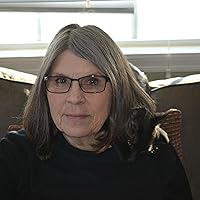
I'm a Montana native, and I returned home in 2007. My first novel, In Open Spaces, made the San Francisco Chronicle's bestseller list. I got my MA in Creative Writing from Boston University in 1991, and have been a MacDowell fellow and a fortune cookie writer. The Watershed Years, the sequel to number one, was published in 2007 and was a finalist for the High Plains Book Award. In 2012, WEST OF 98, an anthology I edited with Lynn Stegner, was released by the University of Texas Press. And in 2012r, my third novel, High and Inside, was released by Bangtail Press and was also named a finalist for the High Plains Book Award. In April 2016, Fifty-Six Counties: A Montana Journey came out. This is my first non-fiction effort, about my travels to every county in Montana and what I learned from this journey.
Quite a stunning little shocker! I'll be reading others of his FOR SURE, have one already on hold.
This is Montana rancher community of decades and legacy history carved into a complex, elaborate, icy, vast and homo sapiens essential. Steers themselves also become word sculpted in nearly all phases of their lifespans.
It's not just about the adults. Nor do we see the entire from one or two sets of "eyes". The overlook isn't as vast as the landscape but it's at least as deep as the height of the foothills to the surrounding mountain ranges both east and west.
"New" people! How do they fit? If at all. And when work is endless and daily contact in some cases so hours after hours after hours encompassing? When does the hierarchy fail and when does it thrive, and how does it explode. And what role do women hold in the endless tasking and/or arm wrestling "rules".
Most people reading this will be embedded in the school house and children's tale first. It was excellent, far above average. But I was far more intrigued by the "pecking" order of the men. Especially with the new millionaire who has the ranch for its stunning views and "cool" intrepid art forms within the slick decor.
Yes, it's also a who-dun-it. But not so much any faction of procedural. NO, these people themselves are the inspector, detectors, smelling the ambiance of what is "in the wind" for their neighbors AND themselves.
About 4 times a year I pick up a book totally serendipity without knowing one thing about it but a quick read of the flyleaf. This was the second BIG winner for this process this year.
The writing about children's nature and understanding too was 5 star. Boys will be boys? Bullying bursts from what fonts?
Rowland is comparable to William Kent Kruger. But I can't believe I'm writing this- I think Rowland is BETTER. He's not as precious in effusion. Rowland is tighter, far more realistic, cuts much closer to the core human anger or resentments, and sure knows more about physical labor.
There is a scene for chapter plus length in this book that is one of the best I think I've ever read. Between 4 to 5 grown men (one leaves as he can't tolerate the tension) who are doing "en group" a humongous task of branding, neutering, sorting, resettling the herds of the murdered man. The calves are 4 months old and bigger and more difficult to toss and bar than for this normal process because of the death, sales, etc. time that has elapsed. And they all have MIGHTY baggage, history, cultural crux etc. against, with, for each other. And the conversations during these long hours of endless work are some of the best conversational copy that I have ever read. Muscles screaming as much as feelings. But all held tight and used for "purpose".
Read it. STRONGLY recommend. It's a keeper I will remember MORE even than Ordinary Grace.
It lost only a 1/2 star in the switching and time lapse "holes". But others will love that uncertainty. It's 4.5 stars- nearly perfect. I've saving the 5 stars for one of his others?
And it also gives you an "afterwards" for those who need their conclusions of detail. Fiction of this quality rarely does any longer, IMHO. You know who has stuck and who hasn't. And where the nay sayer's fates have advanced to more of the same or not at all.
Realistic fiction. The delicate of every ilk- they need not apply.
By the strictest definition you could call COLD COUNTRY a murder mystery, but this latest novel by Russell Rowland is much more concerned with the effect that Tom Butcher, alive and dead, had on his fellow ranchers and ranch workers — and their wives and children — in Paradise Valley, Montana, in the winter of 1968. Butcher's aggressive gregariousness with this friends and neighbors apparently masked a secret that the single man — a rarity in this time and place — had no longer been able to keep, and it may have gotten him killed. Or perhaps it was his growing opposition to the growing property holdings of the valley's richest landowner. Or perhaps it had something to do his rumored dalliance with the wife of a local ranch worker. Or ....
At any rate, it's all the survivors of Paradise Valley can chew on — not just because of the horror of the murder, but the fact that the murderer is almost certainly one of them. And beyond that, there's what COLD COUNTRY is really interested in solving: "After a while, the thought that they had a murderer living among them became a lot less frightening than the idea that they were living with someone who was capable of keeping such an astonishing secret to themselves without cracking, without showing any sign at all that they weren’t like the rest."
As such, COLD COUNTRY is a novel of character, and there are characters to spare within its pages: key among them, Carl Logan, the frustrated schoolteacher-turned-rancher whose citified wife can't make the transition; Junior Kirby, the easygoing rancher everybody seems to depend on, even as he comes to harbor a secret of his own; Lester Ruth, the abused ranch hand for wealthy Peter Kenwood, and his promiscuous, pill-popping wife, Babe; and Kenwood himself, who seems to want to be both a just-folks neighbor and also the valley's dominant presence. All had their issues with Tom Butcher, and all called him a friend.
COLD COUNTRY unpacks this with lean country-paced leisure, never getting too ponderous or poetic, letting the characters and the country speak for themselves with the spareness and reserve the land and its management have made of their personalities. Together, they might find a way into the wild world of 1969; apart, they might dissolve into paranoid suspicion and sudden explosions of new violence. And Rowland offers a glimmer of hope amid the grimness of a calf-cutting winter. As one character puts it: “We need to gather, you know. It’s what country people do.”
This wasn’t my type of mystery, it was set in ranching country around a family who moves there. The wife grew up on a ranch and is unhappy that here teacher husband left his job and started working at a ranch.A murder happens and as newcomers they are the first suspect.
Enjoyed the characters and sense of place. Really felt like I got to know and like the people in this town. I will admit though that the non-linear timeline made me confused more than once. While I understand the way it helped keep the suspense going I wonder if a few less back and forth could have lessened some of this confusion. All in all I would recommend this one.
Cold Country by Russell Rowland is a very highly recommended character study wrapped around a murder mystery.
In 1968 Tom Butcher is found murdered one morning in the ranching community of Paradise Valley, Montana. By all public accounts, Butcher was a boisterous, popular man, although it seems more than one person may have had a reason to kill him. Blame falls quickly on the new man, Carl Logan, who recently moved with his family to the area to manage wealthy Peter Kenwood’s ranch. The community is upset that long-time ranch hand Lester Ruth wasn't given the job. It doesn't help that Carl's ten-year-old son, Roger, is causing waves by standing up to the local school bully. The investigation becomes even more complicated when it is revealed to Junior Kirby, a lifelong rancher and Butcher’s best friend, that Butcher had a secret he had been hiding.
The writing is excellent. Rowland expertly captures the small town, hard-working atmosphere of this ranching community, where everyone seems to know everything about everyone else, and all the many grievances and failings of others are not really forgotten. Lifelong friendships can be a struggle at best when you have to trust your neighbors, even amid the many reasons they might not be trustworthy. And that doesn't even include the secrets people hide.
The murder mystery keeps the narrative moving along, but the real exploration is the examination of the heart of the characters. Rowland quickly establishes his characters in the setting and shows their actions and inner thoughts, including members of the same family. The people in Paradise Valley all have many differences that should pull them apart, but they have learned to try and keep their mouths shut and work together. Butcher was not as well-liked as it seems, but it is a universal truth that it is easier for residents to point blame at the new guy rather than examine their life-long neighbors. The murder mystery is solved at the end, but the pleasure is in the journey.
Small towns don’t take to change very well. In 1968 Montana, Paradise Valley is about to be challenged by an unexpected murder – one that takes the life of rancher Tom Butcher. Tom’s popular but he’s also got secrets, and the people of Paradise Valley are about to find out how deeply those secrets cut into their own lives. This is not his first novel but it’s easy to see why he continues to be published. I think it’s a good one for book groups, whether or not they are centered on mysteries. The characters are vivid and real, the story line is intriguing, and the writing is superb.
I met this book at Auntie's Bookstore in Spokane, WA
Good "modern" (late 1960s) Western mystery that is strong on characterization and familiarity with ranching. Carl Logan has moved his wife and three young children from a town where he had a teaching job to a ranch were he will manage the ranch for the wealthy, mostly absent owner. Nine year old Roger is the "new kid" in the small country school, and soon is fighting the resident bully. Carl has his hands full with two ranch hands who resent him, stall the work and are at odds with each other. He finds only one ally in the community, neighbor Junior Kirby and his family, who try to introduce Tom and Laurie to the local rural social life. Then wealthy bachelor ranch neighbor Tom Butcher is found murdered, and the rumors, gossip and splits in the close-knit community are wide open. Several people could have motives for murder, but many suspect Carl. I've enjoyed Russell's previous book about homesteading in eastern Montana where his roots are. This one depicts Paradise Valley south of Livingston just before movie stars and celebrities began buying properties and moving there, when it was still "real" ranch country and had a feeling of remote isolation.
I was captivated from the beginning, by the time and setting alone. The reader is immediately thrown in the drama of a cow giving birth. The next scene, 12 weeks earlier, is in a 2 room "1 room" country school, which is close to my personal life and time many miles apart. The setting is Montana, and the multi-generation plot ravels and unravels among the ranchers living there, both the rich owners and the ranch hands & managers who run their lands from barn to pasture and all the livestock. It is a world different from my own that Rowland weaves into a tapestry held together by the demands of the job, nature and human nature. The emotional and plot development is wrapped into the fabric of society, from the children to the adults who live in this community. It is the lure and genius of the mystery of who killed the man who from the beginning captures all, including the reader, who come into his large living room--like himself, larger than life. I stayed up well past bedtime to finish it . . .
Above average mystery that is truly well written. Taking place in a sparsely populated ranching community in Montana where everyone knows everyone, sometimes for generations, a prominent rancher is brutally murdered, the first such violent crime in decades. We soon know many of these people, including a newcomer family on which suspicion immediately falls. And we know their secrets, many of them ugly, from child abuse to alcoholism, and all the hatreds centered on the deceased rancher, hatreds that are never previously on the surface. This is also a time of change in Montana as rich people are buying up ranches for whatever reason, ranches which previously only represented a very hard life for these people but one that they loved and stuck with. The descriptions of their lives and the hardships of that life are vividly portrayed. Nothing much that attracts me certainly. Recommended.
Fitting into a small town's culture is difficult even in the best of times, but when a murder occurs all eyes turn towards the newcomer in town. This what happens to Carl Logan, a newcomer to Paradise Valley, Montana. The year is 1968, and Carl is hired as a ranch manager for a wealthy landowner. After only a couple of weeks another wealthy landowner, Tom Butcher, is murdered and suspicion is placed on Carl. Using flashbacks and multiple points of view Rowland delves into small town friendships and enmities. These intricate relationships give the story its flavor. Rowland's details of the land and its people definitely convey the feelings in a small town. Regrettably, the suspense needs to be developed. The mystery is more of an afterthought to the story rather than the event that propels the story forward.
This book started out quite slow unlike the previous trilogy books I read first by Rowland. Even so, it catches up to quite a mystery and keeps you intrigued to the end. I graduated high school in 1968 and the setting of this book is 1968 so was quite interesting to me. It takes place in a small ranching community where everyone knows everyone. And, knows their business.
One of the characters dies and we spend the rest of the book trying to figure out why. The daily personal lives of the people are very important in the character assessment. Rowland is great with his descriptive verse. The verse goes to great lengths to involve the reader in guesswork leading up to the unfolding plot. A New Year’s party takes place at the conclusion and all hell breaks loose. Enjoy the ride! I sure did! Suzie Hamburg Davis
I think what Rowland does particularly well in this book is world building, both in terms of place (Montana, the west) and time (the 60s). The people dropping in on each other--this is something that definitely happened in my youth in rural Vermont, but I didn't see it as an adult in a more suburban situation. (Though I may not have been inviting people in, assuming they were just dropping something off. After reading this book, I now wonder about that.) The casual offering of alcohol to drop-ins seems of another time and place, as well.
I am definitely more interested in regional literature as a result of reading this book.
Half way through the book I still couldn't make heads or tails with the many characters: who's married to who, which kids are whose children, who's working for who. There's virtually no character development of the women and children in the story, and only a few of the males. The author probably should have cut out many of the secondary characters, and spent some ink developing a few of the more important female characters. The one male who does get some ink is this paragon of a husband: loving, devoted to his wife, kind, energetic, empathetic. . . you get the point, just the sort of fictional character you don't want to read about. No, I was not impressed with Cold Country.
Once I started reading, I couldn’t stop. I wanted to be a part of this community and find out where they would end up. The scenes of farm and ranch life are exquisitely described and I will never forget some of them. A beautiful tribute to Montana but also suspenseful and compelling. I really care about these families and their struggles. Can’t wait to read another Rowland book.
This is a superb novel, as I would expect from Russ Rowland. It's a well-crafted mystery, but more than a mystery—it's a portrait of a region and a way of life that now only a small minority of Americans are living but that resonates even with us city slickers. As usual, Rowland's characterizations are dead on, and the ending will leave you with lots to think about.
A good read - a Western murder mystery, not a genre I read a lot of. My husband bought this book for himself and I decided to read it too and am glad I did. A year in the life of a small MT community with brooding neighbors planting the seeds of distrust and families trying to survive the doubts those seeds have wrought.
Reminded me of Jane Harper which is high praise. The story is pretty straightforward but the characters are well-developed and the depiction of farm life in Montana stark and beautiful. My only complaint is it was hard to keep the characters straight at the beginning (a number of couples and hard to remember which kids belonged to which parents)
Recommended by Sara. Montana country - good reckoning of ranch life in a small community of folks who have lived there their entire lives - captured each of the characters well. Remembered how wonderful, yet complex and enclosing life in the country can be -- not for me but I understood the characters. Want to read more of his books.
Wow. What a terrific book. A mystery, but solving the murder is not what drove this book. The characters did —- they were fantastic. The sense of place was also wonderful.
Having grown up in rural Montana, I'm a sucker for isolation stories and what happens to people who must grapple with that way of life. This satisfying book was filled with suspense and well-drawn characters. A big-hearted and atmospheric read!
Very authentic. Time and place represent a slower pace lifestyle in this portrait of Americana. I'm an extremely impatient reader who likes fast paced thrillers. This story forced me to slow down and chew.
Never rated a book 1 star before. Maybe there is a Montana market for this? That is where the book is set but the story just seemed scattershot, requiring the author to use the last 3 chapters as epilogue to try and make sense of things. No thank you.
I enjoyed the Montana setting and the detailed descriptions of the realities of ranch work. I thought the characters rang true but that some of their interactions and some parts of the story were melodramatic.
There were definitely some parts of this that made it uncomfy but overall, a decent read. The ending was a little predictable in my opinion. Just old fashioned country drama. I loved Carl, Angie, and Junior’s characters though.
I really enjoyed the story. The in depth build up of the people involved and their relationships was fantastic. I look forward to reading more of Russell's books.