

What do you think?
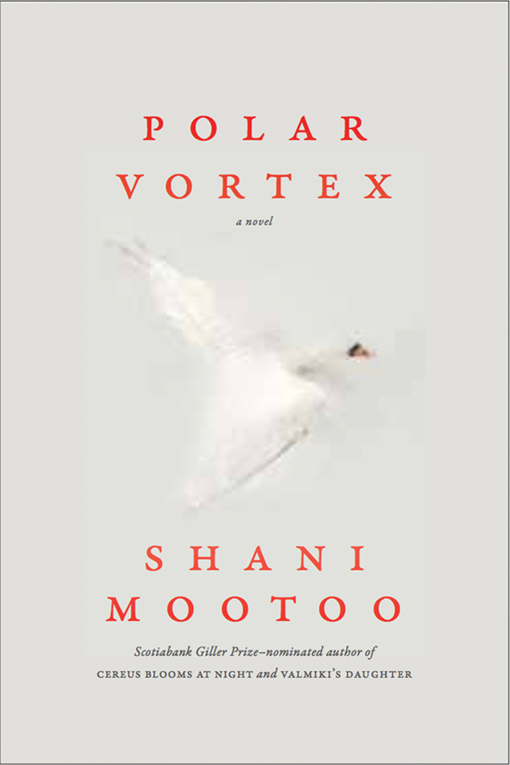
Polar Vortex
Some secrets never die…
Priya and Alexandra have moved from the city to a picturesque countryside town. What Alex doesn’t know is that in moving, Priya is running from her past—from a fraught relationship with an old friend, Prakash, who pursued her for many years, both online and off. Time has passed, however, and Priya, confident that her ties to Prakash have been successfully severed, decides it’s once more safe to establish an online presence. In no time, Prakash discovers Priya online and contacts her. Impulsively, inexplicably, Priya invites him to visit her and Alex in the country, without ever having come clean with Alex about their relationship— or its tumultuous end. Prakash’s sudden arrival at their home reveals cracks in Priya and Alex’s relationship and brings into question Priya’s true intentions.
Seductive and tension-filled, Polar Vortex is a story of secrets, deceptions, and revenge. It asks readers: Are we ever free from our pasts? Do we deserve to be?
Priya and Alexandra have moved from the city to a picturesque countryside town. What Alex doesn’t know is that in moving, Priya is running from her past—from a fraught relationship with an old friend, Prakash, who pursued her for many years, both online and off. Time has passed, however, and Priya, confident that her ties to Prakash have been successfully severed, decides it’s once more safe to establish an online presence. In no time, Prakash discovers Priya online and contacts her. Impulsively, inexplicably, Priya invites him to visit her and Alex in the country, without ever having come clean with Alex about their relationship— or its tumultuous end. Prakash’s sudden arrival at their home reveals cracks in Priya and Alex’s relationship and brings into question Priya’s true intentions.
Seductive and tension-filled, Polar Vortex is a story of secrets, deceptions, and revenge. It asks readers: Are we ever free from our pasts? Do we deserve to be?
283 pages, Paperback
First published March 3, 2020
About the author
Shani Mootoo
19 books203 followersShani Mootoo, writer, visual artist and video maker, was born in Dublin, Ireland in 1957 to Trinidadian parents. She grew up in Trinidad and relocated at age 24 to Vancouver, British Columbia, Canada. She currently lives in Toronto, Canada.
Ratings & Reviews
Friends & Following
Create a free account to discover what your friends think of this book!
Community Reviews
Displaying 1 - 30 of 247 reviews

August 9, 2020
This book! Lindy talked about it on episode 196 of the Reading Envy podcast and I ended up reading it right away. It's about Priya and Alex, a lesbian couple who have moved to a rural "island" in South Ontario. When Alex invites an old friend for a visit, her relationship with Priya starts unraveling. Slowly the reasons are revealed.
What I loved is that the couple is older, and are established in who they are and how they relate to one another. Because of this they know when the other person is not telling the whole truth, or even just holding something back, and it is these unspoken tensions that are captured so brilliantly by the author, I was totally wrapped up in what would happen. There is a lot more going on due to cultural backgrounds and other friendships and how social media is used or abandoned, and these factors are interestingly explored as well. There are moments of realization that are so powerful, I was feeling them too! I love when an author can bring the reader into the emotional experiences of the characters and I was so impressed by Shani Mootoo's ability to do so. I will be tracking down her previous books for sure.
ETA: I read this close to when I read Fair Play by Tove Jansson and there are some overlapping themes. If you like novels about relationships between two grownup women who have their own lives and interests as well, I can recommend both!
I had a review copy earlier than it comes out in the states but look for it in September!
What I loved is that the couple is older, and are established in who they are and how they relate to one another. Because of this they know when the other person is not telling the whole truth, or even just holding something back, and it is these unspoken tensions that are captured so brilliantly by the author, I was totally wrapped up in what would happen. There is a lot more going on due to cultural backgrounds and other friendships and how social media is used or abandoned, and these factors are interestingly explored as well. There are moments of realization that are so powerful, I was feeling them too! I love when an author can bring the reader into the emotional experiences of the characters and I was so impressed by Shani Mootoo's ability to do so. I will be tracking down her previous books for sure.
ETA: I read this close to when I read Fair Play by Tove Jansson and there are some overlapping themes. If you like novels about relationships between two grownup women who have their own lives and interests as well, I can recommend both!
I had a review copy earlier than it comes out in the states but look for it in September!

January 26, 2024
Honestly this book gave queer mess and not in a great way. It revolves around Priya, a woman from Trinidad, who’s dating Alex, a white woman. When Priya’s friend Prakash, an Indian Ugandan, comes to visit them, Alex gets really jealous, while Priya becomes on edge and defensive. The book concludes with Prakash’s visit and the emotional chaos it elicits.
To me, this book came across as being angsty for the sake of being angsty. There’s a lot of Alex being jealous of Prakash and suspicious of Priya, and then a lot of Priya trying to soothe and react to Alex’s jealousy. Which I suppose is an understandable dynamic, though it’s played out for hundreds of pages in a repetitive way. The novel feels claustrophobic, which I suspect is intentional, though it was also annoying because the characters didn’t feel fully realized or three-dimensional by the end of the novel.
I was also annoyed by Alex as a character and Priya’s affection for Alex. Alex makes a comment that is racially insensitive (at best) and a direct racial microaggression (at worst), Priya calls her out on it, then Priya apologizes to Alex when Alex basically says “well I live in this house so I can say what I want” and I was like?? Like I understand that there are queer white people and queer white women who enact racism, though I didn’t find the way it was written about in this book compelling or in service of a greater point. Also, the way this book ended and Priya liking/wanting Alex in general despite Alex’s lack of work on her own white fragility and whiteness… mess. If I’m being generous I could assume that the author was intentionally highlighting how people of color sometimes settle for white people out of unresolved internal issues related to their race. Anyway, I wouldn’t recommend this novel and hope people can read other more fulfilling books!
To me, this book came across as being angsty for the sake of being angsty. There’s a lot of Alex being jealous of Prakash and suspicious of Priya, and then a lot of Priya trying to soothe and react to Alex’s jealousy. Which I suppose is an understandable dynamic, though it’s played out for hundreds of pages in a repetitive way. The novel feels claustrophobic, which I suspect is intentional, though it was also annoying because the characters didn’t feel fully realized or three-dimensional by the end of the novel.
I was also annoyed by Alex as a character and Priya’s affection for Alex. Alex makes a comment that is racially insensitive (at best) and a direct racial microaggression (at worst), Priya calls her out on it, then Priya apologizes to Alex when Alex basically says “well I live in this house so I can say what I want” and I was like?? Like I understand that there are queer white people and queer white women who enact racism, though I didn’t find the way it was written about in this book compelling or in service of a greater point. Also, the way this book ended and Priya liking/wanting Alex in general despite Alex’s lack of work on her own white fragility and whiteness… mess. If I’m being generous I could assume that the author was intentionally highlighting how people of color sometimes settle for white people out of unresolved internal issues related to their race. Anyway, I wouldn’t recommend this novel and hope people can read other more fulfilling books!

August 16, 2020
WOW! Shani Mootoo writes a book that grabs you from the starts, grips you hard and doesn’t release you, even after finishing the book… WOW!
Set in a small town countryside of Ontario, we meet lesbian couple Priya and Alex who have been together for a long time. Priya is from Trinidad and Tobago but left to study in college and ended up in Ontario to pursue a career as an artist. During her time in Ontario she met and fell in love with her partner Alex who is a writer. Priya hatches a plan for her and Alex to leave it all behind, move to a countryside, come off social media, get rid of all their contacts/acquaintances and move forward in this “new life” with just close friends and family.
For the most part their plan works, and they live comfortably together forging a life that is beneficial to both of them. This plan comes to a halt when Priya’s long forgotten university “friend” Prakash finds and messages her on Twitter. For some reason Priya invites him to come visit her and Alex in the countryside. What was supposed to be a “you should come visit!”, but I don’t mean in, turns into Prakash actually deciding to come visit…alone.
Alex and Priya relationship starts to unravel because there are questions and concerns that Priya is being evasive about. Who is Prakash? Why is he visiting you without his wife? Didn’t you say he had a crush on you? Priya is conflicted and wants to call off the visit. Alex is angry, insecure and feels she doesn’t really know who Priya really is. This couple is unravelling and fast….
This is my first book by Shani Mootoo and I was not prepared for this amount of brilliance! When I tell you Mootoo writes a book wrought with tension, believe me. For the entire book I kept waiting for the next shoes to drop. Usually I would get annoyed with the author feeding me bits and pieces of information, but Mootoo did such a spectacular job of knowing when to ease up the tension and when to pull it in. I generally do not like books set in secluded settings with less than 4 characters but Mootoo executed beautifully on this I could not complain.
I spent a whole day reading this book because I just HAD to know what happens and what this visit will lead to. Also the ending. THE. ENDING!.... WHY?!!!
Overall this book is well written, well crafted and truly will not leave you be, even after closing the book. An absolute must read!
Thanks so much Akashi Books for this ARC.
Set in a small town countryside of Ontario, we meet lesbian couple Priya and Alex who have been together for a long time. Priya is from Trinidad and Tobago but left to study in college and ended up in Ontario to pursue a career as an artist. During her time in Ontario she met and fell in love with her partner Alex who is a writer. Priya hatches a plan for her and Alex to leave it all behind, move to a countryside, come off social media, get rid of all their contacts/acquaintances and move forward in this “new life” with just close friends and family.
For the most part their plan works, and they live comfortably together forging a life that is beneficial to both of them. This plan comes to a halt when Priya’s long forgotten university “friend” Prakash finds and messages her on Twitter. For some reason Priya invites him to come visit her and Alex in the countryside. What was supposed to be a “you should come visit!”, but I don’t mean in, turns into Prakash actually deciding to come visit…alone.
Alex and Priya relationship starts to unravel because there are questions and concerns that Priya is being evasive about. Who is Prakash? Why is he visiting you without his wife? Didn’t you say he had a crush on you? Priya is conflicted and wants to call off the visit. Alex is angry, insecure and feels she doesn’t really know who Priya really is. This couple is unravelling and fast….
This is my first book by Shani Mootoo and I was not prepared for this amount of brilliance! When I tell you Mootoo writes a book wrought with tension, believe me. For the entire book I kept waiting for the next shoes to drop. Usually I would get annoyed with the author feeding me bits and pieces of information, but Mootoo did such a spectacular job of knowing when to ease up the tension and when to pull it in. I generally do not like books set in secluded settings with less than 4 characters but Mootoo executed beautifully on this I could not complain.
I spent a whole day reading this book because I just HAD to know what happens and what this visit will lead to. Also the ending. THE. ENDING!.... WHY?!!!
Overall this book is well written, well crafted and truly will not leave you be, even after closing the book. An absolute must read!
Thanks so much Akashi Books for this ARC.

May 3, 2020
A strange, dark, fascinating, and thought provoking novel. Priya is in her 50s and lives with her partner Alex in an Ontario small town. Out of the blue she gets a message from an old university friend Prakash, with whom she had a complicated and fraught relationship.
Her invitation for him to visit brings up longstanding insecurities and issues in Priya and Alex's relationship. Themes include mainstream (white) discourse about queer sexuality and identity, refugee experiences, difficulties of intimacy and communication in relationships, and the triple effects of sexism, racism, and homophobia on queer women of colour.
The deep dive into longterm queer relationships really reminded me of Jane Eaton Hamilton's book Weekend. Mootoo adds to that with a somewhat unreliable narrator and multiple points of view.
I really mean it when I say this novel was thought provoking! I have notes written all over the margins of this book and in the notes on my phone. Full review on my blog here!
Her invitation for him to visit brings up longstanding insecurities and issues in Priya and Alex's relationship. Themes include mainstream (white) discourse about queer sexuality and identity, refugee experiences, difficulties of intimacy and communication in relationships, and the triple effects of sexism, racism, and homophobia on queer women of colour.
The deep dive into longterm queer relationships really reminded me of Jane Eaton Hamilton's book Weekend. Mootoo adds to that with a somewhat unreliable narrator and multiple points of view.
I really mean it when I say this novel was thought provoking! I have notes written all over the margins of this book and in the notes on my phone. Full review on my blog here!
September 25, 2020
I stayed up all night reading this book because the media blurbs for it called it a “thrilling, tension-filled, part psychological thriller”, and I was waiting for the book to evolve into this, but instead it was just mind-numbing page after mind-numbing page of the narrator hinting about how she might cheat on her wife with her male friend who’s coming to visit.
I expected drama and a twist ending and was severely disappointed.
The “twists” in the book include:
-the narrator revealing she was unreliable the whole time because *gasp* she actually slept with the male friend years ago but she blocked out the memory
-a recounting of them sleeping together that makes it seem like it was actually coercion/rape perpetrated by the male friend
-a quick clarification by the narrator that it wasn’t rape
-like 50 pages where it seems like male friend might actually murder the narrator because you’re nearing the end of the book, and the dramatic ending promised by reviews you read hasn’t happened, and also this man is increasingly scary
-a page where it seems like the dramatic ending might just be the narrator and the male friend getting bit by a rabid raccoon
-the male friend just leaving without murdering anyone
And then the real, actual, twist ending (??) where you find out that the narrator’s wife is cheating on her with their super hot lesbian friend who
1. Is in a troubled long-distance relationship
2. Knows many, many details about the narrator’s wife’s art forgery research and book draft
3. Is seen HOLDING HER AND RUBBING HER THUMB ON HER NECK like 100 pages ago
I was not surprised by the dramatic reveal, to say the least.
I also have zero sympathy for the main character’s *betrayal* over seeing that her wife is cheating on her, because the vast majority of the book before that is her thinking about how she might cheat on her wife.
I was also very confused by the tone of the entire drive chapter at the end.
Was the panic and fear felt by the narrator caused by the fact that she might cheat on her wife or her wife might think she cheated on her; OR was it because her male friend was acting straight up crazy and like he might murder her?
I thought it was because he was acting crazy, and when he blocked her car in with his and disappeared into the guest room I thought that some kind of murder or murder-suicide was about to take place, but then he just left and the narrator didn’t seem flustered or like relieved to be alive or anything, which was very confusing.
Was his behavior just supposed to be upsetting and not super super scary?
Because I would be extremely scared if I had no cell phone, was in the passenger seat of a car that locked automatically while driving, was in the Canadian wilderness with almost no one around and no one aware of my physical location, and my male friend touched my knee while describing sexual experiences he had at 10 years old and then gripped me tightly over a several-meter-high cliff while I beat him with my fists and growled and tried to get away.
I really wish the author had spent more time on the aftermath of this scene and the narrator’s reaction, because the narrator just offers the man a cheese sandwich and goes back to worrying about her marriage.
Is this behavior disturbing but something the narrator is used to?
Is she in shock?
If she is, I wish the author had just spent 1 or 2 sentences describing some physical symptoms of shock, so that the reader could understand that while the narrator remained unaware of her condition.
But again, the ending of the book had almost nothing to do with the male friend or the drive, the focus was on how the narrator’s wife was cheating on her.
I expected drama and a twist ending and was severely disappointed.
The “twists” in the book include:
-the narrator revealing she was unreliable the whole time because *gasp* she actually slept with the male friend years ago but she blocked out the memory
-a recounting of them sleeping together that makes it seem like it was actually coercion/rape perpetrated by the male friend
-a quick clarification by the narrator that it wasn’t rape
-like 50 pages where it seems like male friend might actually murder the narrator because you’re nearing the end of the book, and the dramatic ending promised by reviews you read hasn’t happened, and also this man is increasingly scary
-a page where it seems like the dramatic ending might just be the narrator and the male friend getting bit by a rabid raccoon
-the male friend just leaving without murdering anyone
And then the real, actual, twist ending (??) where you find out that the narrator’s wife is cheating on her with their super hot lesbian friend who
1. Is in a troubled long-distance relationship
2. Knows many, many details about the narrator’s wife’s art forgery research and book draft
3. Is seen HOLDING HER AND RUBBING HER THUMB ON HER NECK like 100 pages ago
I was not surprised by the dramatic reveal, to say the least.
I also have zero sympathy for the main character’s *betrayal* over seeing that her wife is cheating on her, because the vast majority of the book before that is her thinking about how she might cheat on her wife.
I was also very confused by the tone of the entire drive chapter at the end.
Was the panic and fear felt by the narrator caused by the fact that she might cheat on her wife or her wife might think she cheated on her; OR was it because her male friend was acting straight up crazy and like he might murder her?
I thought it was because he was acting crazy, and when he blocked her car in with his and disappeared into the guest room I thought that some kind of murder or murder-suicide was about to take place, but then he just left and the narrator didn’t seem flustered or like relieved to be alive or anything, which was very confusing.
Was his behavior just supposed to be upsetting and not super super scary?
Because I would be extremely scared if I had no cell phone, was in the passenger seat of a car that locked automatically while driving, was in the Canadian wilderness with almost no one around and no one aware of my physical location, and my male friend touched my knee while describing sexual experiences he had at 10 years old and then gripped me tightly over a several-meter-high cliff while I beat him with my fists and growled and tried to get away.
I really wish the author had spent more time on the aftermath of this scene and the narrator’s reaction, because the narrator just offers the man a cheese sandwich and goes back to worrying about her marriage.
Is this behavior disturbing but something the narrator is used to?
Is she in shock?
If she is, I wish the author had just spent 1 or 2 sentences describing some physical symptoms of shock, so that the reader could understand that while the narrator remained unaware of her condition.
But again, the ending of the book had almost nothing to do with the male friend or the drive, the focus was on how the narrator’s wife was cheating on her.
This entire review has been hidden because of spoilers.

October 9, 2020
FINAL REVIEW: Easily one of my favorite books of the year!!
It's intimate, possessive, claustrophobic, sensual, seductive, emotionally (sometimes physically) violent, and very queer. It's one of the best “relationship dramas” I've ever read. It's one of those books where you're so deep into this character's (Priya) head. You get all her thoughts: her rationalizations, her confusion, her defensiveness, her innermost desires; and it’s all so feverish. It also plays with memory. How well do we remember events from our own pasts?
There is a lot of jealousy + insecurity in this book. And I’m not going to lie, it’s delicious (and rewarding) being a part of this world. You just want to know what the hell is going on, but you don’t at the same time. It’s strange how both of those things ring true. You’ll enjoy the push and pull this narrative offers. What is the root of all this tension? What are you hiding? What is she hiding? What is he hiding? Why is Prakash coming over? Who is Prakash? Who are any of these people really?
The book opens with an intensely provocative dream and the text just soars from there. The language is taut with a whirlwind of emotions, bubbling feelings lapping over one another. What I love the most about this book is that it is really only about three individuals and their connection to one another. It’s a long time before Prakash even enters the present story, yet his presence haunts the text right from the start. Also by having these characters be older, there is so much explosive history for us to explore.
Not only is this novel a deeply intimate character study, it also manages to seamlessly weave in the vastly different immigrant experiences for Trinidadians, Ugandans, Indians, and Syrians. There is a particularly electrifying conversation involving one of the characters addressing this very subject.
Ah, this book. Read about the complex personalities of Priya, Alexandra, and Prakash. That's how you do a "love triangle." This book is fkn amazing. Canadian Literature is kicking ass these days.
https://www.instagram.com/p/CGIYBpMgJ...
It's intimate, possessive, claustrophobic, sensual, seductive, emotionally (sometimes physically) violent, and very queer. It's one of the best “relationship dramas” I've ever read. It's one of those books where you're so deep into this character's (Priya) head. You get all her thoughts: her rationalizations, her confusion, her defensiveness, her innermost desires; and it’s all so feverish. It also plays with memory. How well do we remember events from our own pasts?
There is a lot of jealousy + insecurity in this book. And I’m not going to lie, it’s delicious (and rewarding) being a part of this world. You just want to know what the hell is going on, but you don’t at the same time. It’s strange how both of those things ring true. You’ll enjoy the push and pull this narrative offers. What is the root of all this tension? What are you hiding? What is she hiding? What is he hiding? Why is Prakash coming over? Who is Prakash? Who are any of these people really?
The book opens with an intensely provocative dream and the text just soars from there. The language is taut with a whirlwind of emotions, bubbling feelings lapping over one another. What I love the most about this book is that it is really only about three individuals and their connection to one another. It’s a long time before Prakash even enters the present story, yet his presence haunts the text right from the start. Also by having these characters be older, there is so much explosive history for us to explore.
Not only is this novel a deeply intimate character study, it also manages to seamlessly weave in the vastly different immigrant experiences for Trinidadians, Ugandans, Indians, and Syrians. There is a particularly electrifying conversation involving one of the characters addressing this very subject.
Ah, this book. Read about the complex personalities of Priya, Alexandra, and Prakash. That's how you do a "love triangle." This book is fkn amazing. Canadian Literature is kicking ass these days.
https://www.instagram.com/p/CGIYBpMgJ...


September 17, 2020
The ending to this book is quite strong, it was where I knew it was headed, and it was the strongest part of the book for me. However, it was not enough to see me rate it higher than I have.
I kept notes throughout my read, and I also kept returning to reviews of this one to read over and over, because I didn't seem to be reading the same book as others since they have rated it very highly. What was I missing? I am quite conflicted (and was sometimes bored) by this read and I think there were too many narrative styles or techniques and threads introduced that didn't fully come together for me. Mootoo tries to create an unreliable narrator and then switches the points of view half way through (I thought that might pick this one up for me, but it just continued to not pull it all together enough) - leading me to believe she was trying to build a suspense-styled story but I don't think it took us all the way there. Was this then to be an exploration of race and sexuality? Because that wasn't strongly threaded together enough for me either. I'm probably not articulating my points clearly here either. But if this was to be the reason, the primary reason, for the breakdown of Priya and Alex's relationship, I don't think that was coming through enough for me. And, at one point and during the flipped perspective, we have a soliloquy of sorts dumped in about Prakash's family's arrival as refugees in Canada that simply didn't fit where it was inserted (in my opinion).
Therefore, I struggled with where my focus was meant to be drawn towards. I found Mootoo's Moving Forward Sideways Like a Crab to be a far more moving story about many of the topics she writes about here in Polar Vortex.
If we are to choose 5 or 6 books for the shortlist from the 14 longlisted for the Giller Prize, this would not be one I want to see moving into that small grouping. * shrugs * * sorry *
I kept notes throughout my read, and I also kept returning to reviews of this one to read over and over, because I didn't seem to be reading the same book as others since they have rated it very highly. What was I missing? I am quite conflicted (and was sometimes bored) by this read and I think there were too many narrative styles or techniques and threads introduced that didn't fully come together for me. Mootoo tries to create an unreliable narrator and then switches the points of view half way through (I thought that might pick this one up for me, but it just continued to not pull it all together enough) - leading me to believe she was trying to build a suspense-styled story but I don't think it took us all the way there. Was this then to be an exploration of race and sexuality? Because that wasn't strongly threaded together enough for me either. I'm probably not articulating my points clearly here either. But if this was to be the reason, the primary reason, for the breakdown of Priya and Alex's relationship, I don't think that was coming through enough for me. And, at one point and during the flipped perspective, we have a soliloquy of sorts dumped in about Prakash's family's arrival as refugees in Canada that simply didn't fit where it was inserted (in my opinion).
Therefore, I struggled with where my focus was meant to be drawn towards. I found Mootoo's Moving Forward Sideways Like a Crab to be a far more moving story about many of the topics she writes about here in Polar Vortex.
If we are to choose 5 or 6 books for the shortlist from the 14 longlisted for the Giller Prize, this would not be one I want to see moving into that small grouping. * shrugs * * sorry *

September 19, 2020
Update, September 25, 2020:
Shani Mootoo's 5th novel shows no signs of flagging power as she propels through the fraught journeys and twisty, malleable, subjective memories of three characters over the course of a single day. Priya and Alex, both in their 50s, wait on Priya's old friend Prakash to visit their Lake Ontario island home for a day and a night. Their relationship already on tremulous ground, Priya's unilaterally extended invite draws out all of Alex's doubts and accusations about Priya's past and perhaps present attachment to a man that could intrude and perhaps had always encroached on their lesbian relationship.
The media heralds this as a "lesbian novel" and while that's not incorrect per se, POLAR VORTEX seeks to trouble the rigid lines Western queerness carried over from heteronormative understandings of self to delimit its membership and demand its members act accordingly. It's in the lines that push them to argue and brandish their "women only" bonafides, to mark any departure as a betrayal. A particular white liberal lesbian queerness that others Brown bodies and cultures which they view as more naturally falling into a cis het norm in comparison to their hippie freedom. (What disgusting irony, tbh.) It's there in the pleasure Priya garners from being described as looking like a boy.
Perspective is all in a novel in which Mootoo charts in varying detail the journey Priya makes from 70s Trinidad to Canada as an emigrant (never does the word "immigrant" appear in relation to her) and Prakash, expelled from Idi Aman's Uganda. References to the sponsored Syrian refugees from a newer conflict, with Alex (who sees herself as) the stable settler point, Mootoo explores fixed notions of identity tied to nation states, skin colour, food, and language.
Patriarchy bounds across cultures uninhibited as we see how it shaped a found family in which a man's supportive actions to his woman friend are the preliminary steps to repeated coercive violations, in men that use their trauma (if they even see it as such) as a way to score.
The path the book takes us on this exploration and excavation of body and memory is landmarked with secrets, with experiences the holders are made to feel should be secret, secrets that only seem so until unveiled by another's single glance, contradictions, inconsistencies, performative kisses and askance eyes guarding minds that are churning, churning, churning every gesture, expression and tone. In this book set in a December of mildest winter, the January's polar vortex, all three characters still caught in its spin. Where will they land at the end?
Bookstagram | Twitter | The Book Slut______
September 18, 2020Woooooooooooooiiiiiii!
4.5 ⭐
Gimme time fi process dis yah book YAH.
Shani Mootoo's 5th novel shows no signs of flagging power as she propels through the fraught journeys and twisty, malleable, subjective memories of three characters over the course of a single day. Priya and Alex, both in their 50s, wait on Priya's old friend Prakash to visit their Lake Ontario island home for a day and a night. Their relationship already on tremulous ground, Priya's unilaterally extended invite draws out all of Alex's doubts and accusations about Priya's past and perhaps present attachment to a man that could intrude and perhaps had always encroached on their lesbian relationship.
The media heralds this as a "lesbian novel" and while that's not incorrect per se, POLAR VORTEX seeks to trouble the rigid lines Western queerness carried over from heteronormative understandings of self to delimit its membership and demand its members act accordingly. It's in the lines that push them to argue and brandish their "women only" bonafides, to mark any departure as a betrayal. A particular white liberal lesbian queerness that others Brown bodies and cultures which they view as more naturally falling into a cis het norm in comparison to their hippie freedom. (What disgusting irony, tbh.) It's there in the pleasure Priya garners from being described as looking like a boy.
Perspective is all in a novel in which Mootoo charts in varying detail the journey Priya makes from 70s Trinidad to Canada as an emigrant (never does the word "immigrant" appear in relation to her) and Prakash, expelled from Idi Aman's Uganda. References to the sponsored Syrian refugees from a newer conflict, with Alex (who sees herself as) the stable settler point, Mootoo explores fixed notions of identity tied to nation states, skin colour, food, and language.
Patriarchy bounds across cultures uninhibited as we see how it shaped a found family in which a man's supportive actions to his woman friend are the preliminary steps to repeated coercive violations, in men that use their trauma (if they even see it as such) as a way to score.
The path the book takes us on this exploration and excavation of body and memory is landmarked with secrets, with experiences the holders are made to feel should be secret, secrets that only seem so until unveiled by another's single glance, contradictions, inconsistencies, performative kisses and askance eyes guarding minds that are churning, churning, churning every gesture, expression and tone. In this book set in a December of mildest winter, the January's polar vortex, all three characters still caught in its spin. Where will they land at the end?
Bookstagram | Twitter | The Book Slut______
September 18, 2020Woooooooooooooiiiiiii!
4.5 ⭐
Gimme time fi process dis yah book YAH.

October 23, 2020
I'll put together a more thoughtful review later. Probably a 4.5 rounded up. Some quips but also some really brilliant story telling. Amazingly tense.

May 2, 2022
Intimate messy queers complicated relationships immigration and assimilation unreliable narrators and narratives beautiful writing dual pov but in looooooong chunks, im blown away more coherent thoughts will happen later

Read
July 27, 2024jesus. you can cut the tension in this book with a knife the whole way through. despite how little actually happens for most of this book, i found it consistently hard to put down — just because of how tense it was, just because of how much i craved a moment of kindness or intimacy or love between literally any two people. but it was just cold! absolutely cold! polar vortex moment, i guess. the promise of some sort of break in the tension, some sort of warmth, was what kept me turning pages. sometimes i got glimmers, but it never really came.
the tension, the coldness, the detachment, it all really worked. the narrative voices were great, and i was surprised and thrilled to get alex’s perspective for a bit. the unreliability and forgetfulness and secrecy in both of their narrative voices…so good.
i also really enjoyed the racial and cultural dynamics to this book — the kind of well-meaning racism that priya experiences, including from her own partner; the classically canadian line-blurring that we see from alex and skye between race and its nebulous and all-encompassing cousin “culture”; and, of course, the dynamics of prakash being a refugee.
re that last point — i really enjoyed that prakash was a ugandan asian refugee. the history was well-researched and i liked hearing his story. i’d like to see more characters with stories like his in canlit.
the book also made me think a lot about harm and violence. there are moments of sexual encounter between people in this book that maybe cannot be easily categorized as violent or benign. i think the characters struggle with what makes an encounter violent—is it always something absolute about the encounter, or is it more about you and about the context? and if violence is hard to pin down, the idea of harm and of what kinds of behaviours are harmful is even vaguer. certainly though this book depicts many instances of harm.
featuring a relatively small cast of characters, taking place in a narrow moment in time, and with a tiny isolated island as a setting, this book does a lot with a little. its ability to zero in on people and their feelings — and its command of tension — made it a very worthwhile read for me. wonderful.
the tension, the coldness, the detachment, it all really worked. the narrative voices were great, and i was surprised and thrilled to get alex’s perspective for a bit. the unreliability and forgetfulness and secrecy in both of their narrative voices…so good.
i also really enjoyed the racial and cultural dynamics to this book — the kind of well-meaning racism that priya experiences, including from her own partner; the classically canadian line-blurring that we see from alex and skye between race and its nebulous and all-encompassing cousin “culture”; and, of course, the dynamics of prakash being a refugee.
re that last point — i really enjoyed that prakash was a ugandan asian refugee. the history was well-researched and i liked hearing his story. i’d like to see more characters with stories like his in canlit.
the book also made me think a lot about harm and violence. there are moments of sexual encounter between people in this book that maybe cannot be easily categorized as violent or benign. i think the characters struggle with what makes an encounter violent—is it always something absolute about the encounter, or is it more about you and about the context? and if violence is hard to pin down, the idea of harm and of what kinds of behaviours are harmful is even vaguer. certainly though this book depicts many instances of harm.
featuring a relatively small cast of characters, taking place in a narrow moment in time, and with a tiny isolated island as a setting, this book does a lot with a little. its ability to zero in on people and their feelings — and its command of tension — made it a very worthwhile read for me. wonderful.

November 2, 2020
I picked this up because it is on the Giller 2020 shortlist, and reading other reviews, lots of people love it. I... did not.
I like character driven books where not a lot happens plot wise. I like books with a very tight character focus with stream of consciousness, introspection and self doubt (see A Jest of God by Margaret Laurence). I like books about the immigrant experience in Canada (see Immigrant City by David Bezmozgazis). I like books that take a deep dive into two or three pivotal days in a characters life (see The Pull of the Stars by Emma Donoghue). But this just missed the mark for me. Rather than introspection, I felt like I was reading claustrophobic navel gazing. Certainly there was immigrant and refugee experience, and while these parts were probably my favourite of the book, I'm not exactly sure what Mootoo was trying to tell me. And the pivotal days just didn't seem all that compelling to me. Like, maybe just too much time spent on deciding whether to make bread pudding or granola for breakfast, and not enough time on the things that make the day pivotal. I mean, I know people repress thoughts, and that avoidance is a real thing, but it doesn't exactly make for a compelling narrative. I suppose this was also about trauma, and whether or not we can really know another person. But, again, Mootoo just failed to catch me.
Anyway, I suppose you should read the other reviews and see if there's something that sticks out to you and seems like it would capture your imagination. Because I'm having a hard time thinking of who I would recommend this to.
I like character driven books where not a lot happens plot wise. I like books with a very tight character focus with stream of consciousness, introspection and self doubt (see A Jest of God by Margaret Laurence). I like books about the immigrant experience in Canada (see Immigrant City by David Bezmozgazis). I like books that take a deep dive into two or three pivotal days in a characters life (see The Pull of the Stars by Emma Donoghue). But this just missed the mark for me. Rather than introspection, I felt like I was reading claustrophobic navel gazing. Certainly there was immigrant and refugee experience, and while these parts were probably my favourite of the book, I'm not exactly sure what Mootoo was trying to tell me. And the pivotal days just didn't seem all that compelling to me. Like, maybe just too much time spent on deciding whether to make bread pudding or granola for breakfast, and not enough time on the things that make the day pivotal. I mean, I know people repress thoughts, and that avoidance is a real thing, but it doesn't exactly make for a compelling narrative. I suppose this was also about trauma, and whether or not we can really know another person. But, again, Mootoo just failed to catch me.
Anyway, I suppose you should read the other reviews and see if there's something that sticks out to you and seems like it would capture your imagination. Because I'm having a hard time thinking of who I would recommend this to.

August 21, 2024
Both the writing and the exploration of ideas in this book are well-executed. SM’s narrative control is super impressive: despite a minimalist plot and few characters, she manages to generate a sense of ongoing tension and momentum. She also vividly evokes the endless cycles, fixations, and claustrophobia of the anxious mind. Much of the book reads like Priya’s stream of consciousness, and really gives the reader the sense of being trapped in her head. The book is also just really interesting.
One of the things that repeatedly struck me while I read was how old the characters are. Priya, Alex, and Prakash are all well into middle age. And it often felt absurd that they hadn’t sorted out their relationships by this point in their lives.
Perhaps this response reflects a silly attachment, on my part, to the conviction kids have that their parents have the world figured out, and that it’s only a matter of time before they do too. But in addition to reminding me that adults (the real ones) are also living life for the first time, the characters’ age, and the nature of their relationships, felt like a testament to how hard it is to forge new patterns — to how persistently our past lives hang over our present. Decades into their friendship, Priya still turns to Prakash in moments of excite need and insecurity; Prakash still can’t seem to kill the hope that he’ll be as important to her one day, as she is to him.
These hard-to-escape patterns also manifest in Alex and Priya’s relationship. Persistent imbalances shape the course of their relationship and eventually seem to bring it to an end. One element of this imbalance is that Alex has considerable social power on account of being white, and fully fitting into their rural friend group. And even while she seeks to protect Priya from exclusion, or to comfort her in the face of it, she also certainly takes some degree of satisfaction in it. She wants to help and support Priya, but is committed to maintaining the privileged position that allows her to do so. Her love for Priya seems to get caught on her ego and her desire for security.
The other clear systemic imbalance in their relationship is that Alex acts as an agent, and expects Priya to do the same. But Priya is always responding to Alex. As Navya put it, Alex’s behaviour is a reflection of her authentic herself. But Priya’s behaviour is also a reflection — maybe once refracted — of Alex’s authentic self. This results in an inability for either to really see the other. As well as a failure to properly account for their respective roles in the demise of the relationship.
In really reckoning with the longstanding imbalances in each of Priya’s relationships, SM is able to do interesting things with the idea of harm. Seemingly innocuous events send Priya spiralling. Yet, in moments of conflict that seem to border on assault, she explains the harm away. These confusing readings, I think, follow from the ldeeply entrenched imbalances of her relationships, and her own, often-flawed understandings of them.
Okay that’s it for now. Overall an interesting read, compelling writing.
One of the things that repeatedly struck me while I read was how old the characters are. Priya, Alex, and Prakash are all well into middle age. And it often felt absurd that they hadn’t sorted out their relationships by this point in their lives.
Perhaps this response reflects a silly attachment, on my part, to the conviction kids have that their parents have the world figured out, and that it’s only a matter of time before they do too. But in addition to reminding me that adults (the real ones) are also living life for the first time, the characters’ age, and the nature of their relationships, felt like a testament to how hard it is to forge new patterns — to how persistently our past lives hang over our present. Decades into their friendship, Priya still turns to Prakash in moments of excite need and insecurity; Prakash still can’t seem to kill the hope that he’ll be as important to her one day, as she is to him.
These hard-to-escape patterns also manifest in Alex and Priya’s relationship. Persistent imbalances shape the course of their relationship and eventually seem to bring it to an end. One element of this imbalance is that Alex has considerable social power on account of being white, and fully fitting into their rural friend group. And even while she seeks to protect Priya from exclusion, or to comfort her in the face of it, she also certainly takes some degree of satisfaction in it. She wants to help and support Priya, but is committed to maintaining the privileged position that allows her to do so. Her love for Priya seems to get caught on her ego and her desire for security.
The other clear systemic imbalance in their relationship is that Alex acts as an agent, and expects Priya to do the same. But Priya is always responding to Alex. As Navya put it, Alex’s behaviour is a reflection of her authentic herself. But Priya’s behaviour is also a reflection — maybe once refracted — of Alex’s authentic self. This results in an inability for either to really see the other. As well as a failure to properly account for their respective roles in the demise of the relationship.
In really reckoning with the longstanding imbalances in each of Priya’s relationships, SM is able to do interesting things with the idea of harm. Seemingly innocuous events send Priya spiralling. Yet, in moments of conflict that seem to border on assault, she explains the harm away. These confusing readings, I think, follow from the ldeeply entrenched imbalances of her relationships, and her own, often-flawed understandings of them.
Okay that’s it for now. Overall an interesting read, compelling writing.
December 21, 2023
the book touched on a lot of topics such as heteronormativity, displacement, migration, climate change, alienation, intimacy, sexuality, and patriarchy. yet it was evident as i read more that the author struggled to provide new insights or anything substantial to the issues raised. i would have appreciated a more meaningful deep dive into one or two topics rather than this lacking presentation of issues. i had the impression that the author was struggling to squeeze in all these points while attempting a deep character study and an unreliable narrator.
the deep character study that was promised failed to deliver because while the characters grappled with their personal issues, they remained one-dimensional and did not significantly develop in any way that felt real. for example, the ending did not feel real at all because the author did not confront the aftermath of what happened. we do not see how those events affected the character and so failed to connect with her because of the sense of detachment. a line or two about what happened, perhaps how she felt scared or shocked, would have sufficed. i do not ask for much, really, but there was no acknowledgement nor closure for that, which was a missed opportunity for character depth and development. as a result, the characters were not compelling and i failed to be invested in their stories. the unreliable narrator could have been good had it been done well, but here it felt more like a silly attempt at literary experimentation rather than a deliberate narrative choice. the writing style was honestly good, but it quickly became tedious for me due to the repetitive nature of ideas presented. the pacing was obviously slow because the characters dwelled too much on their own thoughts. and while i usually appreciate these kinds of narrations, here it was too circular and repetitive. the same realizations were gone over again, the same things happening that reveal similar things about their relationships over and over again. there was nothing new with these observations so this, along with the poor attempt at a character study and unreliable narrator, added to my frustrations.
there was one point wherein a character went on a monologue about how he became a refugee. the entire chapter was just him telling his story, which i would have appreciated more had it been better placed. i think the timing was just off and reading all that felt out of place with the rest of the story. i did not know what the author was trying to do. it seemed like the author lost the story's actual plot on the way and so wrote that entire soliloquy, but then decided to keep it in the final draft in an attempt to provide more depth to the character, when really what it did was add to my frustration and made me feel confused, too. anyway, this might all appeal to some readers but to me it was a tedious reading experience that left me wanting for a more skillful author to write this one, sorry.
the deep character study that was promised failed to deliver because while the characters grappled with their personal issues, they remained one-dimensional and did not significantly develop in any way that felt real. for example, the ending did not feel real at all because the author did not confront the aftermath of what happened. we do not see how those events affected the character and so failed to connect with her because of the sense of detachment. a line or two about what happened, perhaps how she felt scared or shocked, would have sufficed. i do not ask for much, really, but there was no acknowledgement nor closure for that, which was a missed opportunity for character depth and development. as a result, the characters were not compelling and i failed to be invested in their stories. the unreliable narrator could have been good had it been done well, but here it felt more like a silly attempt at literary experimentation rather than a deliberate narrative choice. the writing style was honestly good, but it quickly became tedious for me due to the repetitive nature of ideas presented. the pacing was obviously slow because the characters dwelled too much on their own thoughts. and while i usually appreciate these kinds of narrations, here it was too circular and repetitive. the same realizations were gone over again, the same things happening that reveal similar things about their relationships over and over again. there was nothing new with these observations so this, along with the poor attempt at a character study and unreliable narrator, added to my frustrations.
there was one point wherein a character went on a monologue about how he became a refugee. the entire chapter was just him telling his story, which i would have appreciated more had it been better placed. i think the timing was just off and reading all that felt out of place with the rest of the story. i did not know what the author was trying to do. it seemed like the author lost the story's actual plot on the way and so wrote that entire soliloquy, but then decided to keep it in the final draft in an attempt to provide more depth to the character, when really what it did was add to my frustration and made me feel confused, too. anyway, this might all appeal to some readers but to me it was a tedious reading experience that left me wanting for a more skillful author to write this one, sorry.

May 18, 2022
4.75, I think.
For those who are looking for a plot-driven book, this isn’t one you’ll enjoy. If you’re a fan of character-driven books, though, this one might be for you.
Mootoo does a phenomenal job diving deep into the complexities of relationships, particularly unhealthy ones, and peeling away the layers to reveal the true nature of these characters. It’s rather hard to like these characters, including Priya, the protagonist, considering that their flaws are prominently on display throughout the book. However, these aspects are so well-developed and reveal that sometimes, we hold onto unhealthy relationships (platonic or otherwise) longer than we should. Polar Vortex really makes you think about your own relationships, past and present, and the dynamics of each one. Is there a power imbalance? Is there strong and honest communication? What are you contributing to the relationship, and how much are you taking from it?
Speaking of relationships, this is somewhat of an aside, but I really appreciated that one of the relationships that Mootoo explored was of the marriage of two women in their fifties. It added so much dimension to the story that also reflected on other relationships spanning decades.
I think my one (rather minor) criticism is that I felt more could have been done to address the role of one’s positionality in society and how this reflects in relationships. Mootoo does some exploring of this (particularly through racism and nationhood), but it occasionally felt out-of-place or unbalanced with what was happening in the story. That said, I can see why she didn’t go in-depth at every opportunity, considering how complex they are and there’s enough complexity as is.
A bit of a challenging read given the tone of the book (and I imagine for some readers, the absence of likeable characters could make this particularly challenging), but it was a really refreshing approach to aspects of relationships that I think is underexplored in literature.
For those who are looking for a plot-driven book, this isn’t one you’ll enjoy. If you’re a fan of character-driven books, though, this one might be for you.
Mootoo does a phenomenal job diving deep into the complexities of relationships, particularly unhealthy ones, and peeling away the layers to reveal the true nature of these characters. It’s rather hard to like these characters, including Priya, the protagonist, considering that their flaws are prominently on display throughout the book. However, these aspects are so well-developed and reveal that sometimes, we hold onto unhealthy relationships (platonic or otherwise) longer than we should. Polar Vortex really makes you think about your own relationships, past and present, and the dynamics of each one. Is there a power imbalance? Is there strong and honest communication? What are you contributing to the relationship, and how much are you taking from it?
Speaking of relationships, this is somewhat of an aside, but I really appreciated that one of the relationships that Mootoo explored was of the marriage of two women in their fifties. It added so much dimension to the story that also reflected on other relationships spanning decades.
I think my one (rather minor) criticism is that I felt more could have been done to address the role of one’s positionality in society and how this reflects in relationships. Mootoo does some exploring of this (particularly through racism and nationhood), but it occasionally felt out-of-place or unbalanced with what was happening in the story. That said, I can see why she didn’t go in-depth at every opportunity, considering how complex they are and there’s enough complexity as is.
A bit of a challenging read given the tone of the book (and I imagine for some readers, the absence of likeable characters could make this particularly challenging), but it was a really refreshing approach to aspects of relationships that I think is underexplored in literature.

March 16, 2021
I decided to give Polar Vortex a try because it was nominated for the Giller Prize, since I am always trying to read more Canadian literature, but this just was not for me. I found the premise much more interesting than the execution, and it was a bit of a drag to get through. In its attempt to be eerie and tense, the storytelling came off overly restrained. Much too restrained for me to connect with emotionally, and the writing and characters felt quite clinical and cold to me. Being in the narrator's head felt incredibly claustrophobic and I genuinely couldn’t wait to get out of there. I also thought that while the author did a fantastic job with building tension, the climax of the story was pretty mild, and the ending was a bit of a weird choice. Bummed this one didn’t work for me.

October 23, 2020
On the surface, this book is about interpersonal relationships, specifically those between lesbian couple Priya and Alex and between old friends Priya and Prakash, but it’s really all about Priya. What makes her tick, why she is sabotaging her relationship with Alex, and why she has always been so intent on pushing Prakash away. I briefly wondered if she was a closet heterosexual feigning attraction to women for some undisclosed reason. The book held my interest and I would have rated it higher except the ending felt so unresolved.

November 9, 2020
It dragged a bit in the middle but strong start and finish.

March 26, 2021
"everything is red. his tongue. his penis. the palms of my hands. red red red."
❄️
Polar Vortex begins with Priya, a lesbian, having a sexual dream about her oldest friend, Prakash. Priya and Prakash became close in their university days in Canada. They were two outsiders, she from Trinidad and he from Uganda, who leaned on one another in a strange, new country. However, their relationship is deeply complicated. As the story unfolds, we learn more about the two of them, including Prakash's romantic interest in Priya and her ambiguous feelings about him.
❄️
Priya admits that there were times when she played the Indian woman to Prakash's Indian man. And, although she is a lesbian, there is the pull of a more socially acceptable life as Prakash's romantic partner.
❄️
However, Priya has forged a new path away from Prakash. She is married to Alex and living in a seemingly idealised countryside community. She hasn't seen Prakash for six years and his upcoming visit unsettles Alex as well as Priya herself.
❄️
This novel is focused on relationships and domestic life but it is a compulsive read as Shani Mootoo builds tension out of even the most mundane domestic interactions.
❄️
The issue of race winds its way into the book. At one point, Alex laments that, 'When you live with a person of color, never-ending problems that center on how the world treats one of you and not the other enter your house.' I honestly found Alex unsympathetic to issues that Priya and Prakash faced as people of colour and, in Prakash's instance, as a refugee. The book featured a surprise switch to Alex's point of view and - although this technique usually engenders interest in the narrator - this actually made me dislike Alex more.
❄️
But then, all characters here are complicated and carefully wrought. Polar Vortex is unsettling but I was thankful to be unsettled by so thoughtful and nuanced a writer.
❄️
Polar Vortex begins with Priya, a lesbian, having a sexual dream about her oldest friend, Prakash. Priya and Prakash became close in their university days in Canada. They were two outsiders, she from Trinidad and he from Uganda, who leaned on one another in a strange, new country. However, their relationship is deeply complicated. As the story unfolds, we learn more about the two of them, including Prakash's romantic interest in Priya and her ambiguous feelings about him.
❄️
Priya admits that there were times when she played the Indian woman to Prakash's Indian man. And, although she is a lesbian, there is the pull of a more socially acceptable life as Prakash's romantic partner.
❄️
However, Priya has forged a new path away from Prakash. She is married to Alex and living in a seemingly idealised countryside community. She hasn't seen Prakash for six years and his upcoming visit unsettles Alex as well as Priya herself.
❄️
This novel is focused on relationships and domestic life but it is a compulsive read as Shani Mootoo builds tension out of even the most mundane domestic interactions.
❄️
The issue of race winds its way into the book. At one point, Alex laments that, 'When you live with a person of color, never-ending problems that center on how the world treats one of you and not the other enter your house.' I honestly found Alex unsympathetic to issues that Priya and Prakash faced as people of colour and, in Prakash's instance, as a refugee. The book featured a surprise switch to Alex's point of view and - although this technique usually engenders interest in the narrator - this actually made me dislike Alex more.
❄️
But then, all characters here are complicated and carefully wrought. Polar Vortex is unsettling but I was thankful to be unsettled by so thoughtful and nuanced a writer.

November 22, 2023
Shani Mootoo is not well known in the book world but she should be. Polar Vortex is a fascinating novel about relationships and a lesbian must read. Why is she not better known? Do not be put off by the title. It does not do it justice. I was enthralled by this novel.
Born in Dublin to Trinidadian parents, Shani Mootoo grew up in Trinidad and then emigrated to Canada. Although she brands herself a visual artist, she is also a fabulous writer. I have to agree with Julie R Enszer when she says in Autostraddle that Mootoo is “one of the towering lesbian novelists of our time.” I was captivated by one of her first novels, Cereus Blooms at Night (1996) as well. It too is a great novel.
In Polar Vortex, the problem of lesbian existence, of our relationships, of what it means to be a lesbian, is brought into relief by a visit from Prakash, a male friend, to the country home in Canada of a lesbian couple, Priya (the narrator) and Alex (with one chapter of first person narration). The story of early days of lesbian openness and issues of immigration is told in an almost eerie way, full of foreboding and through the anticipation of this male visitor.
As Priya says to Prakash: “I would not be happy with a man. And [that] a man therefore wouldn't be happy with me. But in those days a life with another woman was not easy. We could not be out and open with each other in the world. And by the time it became easier in public, it was ingrained in me – that we needed to be careful and to be fearful. These were not conditions conducive to healthy happy relationships, even between women who loved one another deeply.”
This is truly a profound statement about lesbian older generation. There is also the issue of patriarchy—that a man should get what he wants, that being with him and under him is very important in our society—listening to men, making room for men, their privilege. Being a lesbian is not about manhating and her friendship with Prakash attests to this, even if it crosses over into the sexual. It’s complicated but the bottom line is that there is so little support for women-loving women. In the end, we all want to belong. We want so much to belong.
I hope more people read Shani Mootoo’s work. I found her work very intriguing. Both of these novels were full of complexities and tension and they were compelling to read. The idea that one can cover up things one has done and hide what happened in the past to the point of forgetting and lying. The idea that thoughts may be real, and that dreams can also be reality. And don’t immigrants have similar realities, no matter how difficult their circumstances or travels have been? And then there is the dark icky stuff of life. Everyone has secrets and so many are never talked about. Mootoo includes this so masterfully. The mystery is natural.
Mootoo’s visual nature writing runs throughout the book: “The boat pulls out of the dock and we get out of the car into the cold wind. My hair is whipped in every direction. I clutch the railing and looked down at the water like black oil sliding fast behind the ferry. Last year this time the ferry had to traverse a straight path that had been cut through deep ice. Dead ducks and gulls lay on the frozen edges of the path. It was a strange, sad site. Looking over the edge of the ferry you could see how thick the ice was, then. There were layers of it like shelves and varying shades of turquoise. The vast sheet that covered the rest of the lake was as smooth as glass, parts of it cloudy like menthol candy, with hairline cracks weaving across the surface. It was eerie moving through that narrow channel of black water.” We feel Priya’s interior darkness in a palpable way.
The discomfort the characters feel, so well described and voiced, is what makes this novel compelling. I yearned to know what would happen in the end. Thanks you for this wonderful experience, and this gift to our community, Shani Mootoo. So many things you touch on have also touched me, and I’m sure many others.
Born in Dublin to Trinidadian parents, Shani Mootoo grew up in Trinidad and then emigrated to Canada. Although she brands herself a visual artist, she is also a fabulous writer. I have to agree with Julie R Enszer when she says in Autostraddle that Mootoo is “one of the towering lesbian novelists of our time.” I was captivated by one of her first novels, Cereus Blooms at Night (1996) as well. It too is a great novel.
In Polar Vortex, the problem of lesbian existence, of our relationships, of what it means to be a lesbian, is brought into relief by a visit from Prakash, a male friend, to the country home in Canada of a lesbian couple, Priya (the narrator) and Alex (with one chapter of first person narration). The story of early days of lesbian openness and issues of immigration is told in an almost eerie way, full of foreboding and through the anticipation of this male visitor.
As Priya says to Prakash: “I would not be happy with a man. And [that] a man therefore wouldn't be happy with me. But in those days a life with another woman was not easy. We could not be out and open with each other in the world. And by the time it became easier in public, it was ingrained in me – that we needed to be careful and to be fearful. These were not conditions conducive to healthy happy relationships, even between women who loved one another deeply.”
This is truly a profound statement about lesbian older generation. There is also the issue of patriarchy—that a man should get what he wants, that being with him and under him is very important in our society—listening to men, making room for men, their privilege. Being a lesbian is not about manhating and her friendship with Prakash attests to this, even if it crosses over into the sexual. It’s complicated but the bottom line is that there is so little support for women-loving women. In the end, we all want to belong. We want so much to belong.
I hope more people read Shani Mootoo’s work. I found her work very intriguing. Both of these novels were full of complexities and tension and they were compelling to read. The idea that one can cover up things one has done and hide what happened in the past to the point of forgetting and lying. The idea that thoughts may be real, and that dreams can also be reality. And don’t immigrants have similar realities, no matter how difficult their circumstances or travels have been? And then there is the dark icky stuff of life. Everyone has secrets and so many are never talked about. Mootoo includes this so masterfully. The mystery is natural.
Mootoo’s visual nature writing runs throughout the book: “The boat pulls out of the dock and we get out of the car into the cold wind. My hair is whipped in every direction. I clutch the railing and looked down at the water like black oil sliding fast behind the ferry. Last year this time the ferry had to traverse a straight path that had been cut through deep ice. Dead ducks and gulls lay on the frozen edges of the path. It was a strange, sad site. Looking over the edge of the ferry you could see how thick the ice was, then. There were layers of it like shelves and varying shades of turquoise. The vast sheet that covered the rest of the lake was as smooth as glass, parts of it cloudy like menthol candy, with hairline cracks weaving across the surface. It was eerie moving through that narrow channel of black water.” We feel Priya’s interior darkness in a palpable way.
The discomfort the characters feel, so well described and voiced, is what makes this novel compelling. I yearned to know what would happen in the end. Thanks you for this wonderful experience, and this gift to our community, Shani Mootoo. So many things you touch on have also touched me, and I’m sure many others.

December 25, 2020
I was actually looking for wintery, season appropriate fiction. The title alone might have done it, but the context intrigued also. Now that our library system has finally discovered diversity, it actually has some interesting books or at the very least different. This was both, different and interesting, and not just because of the diversity factors, though it has plenty of that.
A Trinidadian Indian lesbian Canadian citizen protagonist is about as diverse as you can make a protagonist. Priya is an artist who has, at last, found real love and settled down happily with her wife, Alex, on a small island in Lake Ontario. A quiet life by design, a chance to start fresh, and to this end Priya has severed most of her ties to social life and social media, though she only really ever met to get away from one person. Prakash. And old friend and confidant, a man who has always wanted more and begrudgingly settled for less, a comfort blanket of a friend, accommodating, generous, supportive. Prakash has always been a road untaken for Priya, a life of great convenience and stability she might have had with a fellow Indian, a man with money, someone her family would have approved off, someone society at large would have approved of…and yet, someone who was fundamentally biologically wrong for her.
For Prakash, Priya was the exciting choice, an Indian girl who didn’t conform, didn’t have a traditional lifestyle or values. Someone he was perfectly willing to chase after, if only for the thrill of it, hoping against all odds that maybe someday…
Six years into Priya’s happy exile from civilization with Alex and she can no longer resist the siren call of social media, so she joins Twitter, Prakash finds her and before she knows it, she’s inviting him to visit. Without so much as discussing it with her wife. And this seemingly innocuous overnight visit from an old friend turns her entire safe and cozy life upside down, like a vortex might.
Basically the plot of this book can be summed up in that one sentence. It’s a very simple thing, deceptively so. Because when you really get into it, there’s so much going on, from immigrant experience to sexual orientation to love to the very nature of desire, the book covers a lot of territory. It’s very well done thematically, strung together with intensity born out of exceptional emotional intelligence. It’s strikingly honest when discussing choices gay people had to make, especially back in the day, between the convenience of social acceptance and the tough road of authenticity. The novel does all this at the risk of making the characters not cute or easy to like, but it’s a gamble that definitely pays off. Yes, Prakash is positively creepy and Priya can be emotionally manipulative or withholding or both, but they are very realistic in their private desperations. And that’s what makes this book such a compelling read. Not an easy read by any means, quite difficult in fact, bleak, disturbing, depressing even, but a very good one.
Every so often a book just shines the light on the very nature of being a person, being different, being a minority in this world and it doesn’t make for a very pretty picture, but it’s impossible to look away. This is that kind of a book. It isn’t for everyone, some may find it slow, dislike protagonists, etc. but for me it really worked. I found myself staying up really late to finish it, the emotional drama was too much to walk away from. This book just had so many poignant things to say about relationships, be it friendship, courtship or marriage. The way there are many aspects to every story, many perspectives, many interpretations. So yeah, really good, for the right audience. Recommended.
A Trinidadian Indian lesbian Canadian citizen protagonist is about as diverse as you can make a protagonist. Priya is an artist who has, at last, found real love and settled down happily with her wife, Alex, on a small island in Lake Ontario. A quiet life by design, a chance to start fresh, and to this end Priya has severed most of her ties to social life and social media, though she only really ever met to get away from one person. Prakash. And old friend and confidant, a man who has always wanted more and begrudgingly settled for less, a comfort blanket of a friend, accommodating, generous, supportive. Prakash has always been a road untaken for Priya, a life of great convenience and stability she might have had with a fellow Indian, a man with money, someone her family would have approved off, someone society at large would have approved of…and yet, someone who was fundamentally biologically wrong for her.
For Prakash, Priya was the exciting choice, an Indian girl who didn’t conform, didn’t have a traditional lifestyle or values. Someone he was perfectly willing to chase after, if only for the thrill of it, hoping against all odds that maybe someday…
Six years into Priya’s happy exile from civilization with Alex and she can no longer resist the siren call of social media, so she joins Twitter, Prakash finds her and before she knows it, she’s inviting him to visit. Without so much as discussing it with her wife. And this seemingly innocuous overnight visit from an old friend turns her entire safe and cozy life upside down, like a vortex might.
Basically the plot of this book can be summed up in that one sentence. It’s a very simple thing, deceptively so. Because when you really get into it, there’s so much going on, from immigrant experience to sexual orientation to love to the very nature of desire, the book covers a lot of territory. It’s very well done thematically, strung together with intensity born out of exceptional emotional intelligence. It’s strikingly honest when discussing choices gay people had to make, especially back in the day, between the convenience of social acceptance and the tough road of authenticity. The novel does all this at the risk of making the characters not cute or easy to like, but it’s a gamble that definitely pays off. Yes, Prakash is positively creepy and Priya can be emotionally manipulative or withholding or both, but they are very realistic in their private desperations. And that’s what makes this book such a compelling read. Not an easy read by any means, quite difficult in fact, bleak, disturbing, depressing even, but a very good one.
Every so often a book just shines the light on the very nature of being a person, being different, being a minority in this world and it doesn’t make for a very pretty picture, but it’s impossible to look away. This is that kind of a book. It isn’t for everyone, some may find it slow, dislike protagonists, etc. but for me it really worked. I found myself staying up really late to finish it, the emotional drama was too much to walk away from. This book just had so many poignant things to say about relationships, be it friendship, courtship or marriage. The way there are many aspects to every story, many perspectives, many interpretations. So yeah, really good, for the right audience. Recommended.

November 26, 2020
Rass brilliant!!!! Mootoo kept me hooked as she spiralled this story from crescendo to crescendo. And that ending...what!!!! This book deserves all the talk.
Shani Mootoo lick it fi six wid Polar Vortex, a tightly wound story of the past and present that kept me tautly strung from beginning to end.
A stunning opening that is drenched in sensuality, charged desire, and the unknown which Mootoo keeps building on throughout her story.
Mootoo launches us into Priya and Alex's relationship, seeking, exposing, and highlighting the cracks that have formed between, around, and above them and how easy it is for partners to spiral into doubt and icy exchanges instead of tackling the Prakash in the room.
Raising questions about the way they communicate or don't, what has changed, who they are to themselves and to each other, and how the imminent arrival of Prakash hovers over them, taunting and tainting their love.
But it's really the individual self that is to be examined here: how we grow, change, and interact with ourselves and the image of us; whether it is the image we hold of ourselves or what someone else sees.
The tension, avoidance, and lack of laying-it-all-bare communication is palpable as we watch this dance between Priya and Alex, as they both, equally, refuse to be the first one to reveal their vulnerability. The prose is tight and weaves such a realistic look into an intimate relationship where both partners are floundering in a sea of misgivings, misunderstandings, and a lack of contemplative reflection of what is actually the root of their friction.
I also appreciated the way Mootoo weaves in perceptions of POC to lovers and friends, that no matter how enlightened, their privilege will always come through; how refugees are welcomed or not, how different cultural behaviours become stark in certain settings and with certain groups.
This novel was such a human story, realistic in the partnership it portrayed and in the non-threat threat that our MCs have to face whether conjured or real.
Now as for this man Prakash. I am going to need him to take several seats; the way in which he positioned himself as the victim of some insurmountable slight, insinuating acts that either didn't happen or were far from what he described erased any feeling of consideration that I had begun to extend to him. Sir please go and purchase some objectivity and a treatise on the manifestations of toxic masculinity.
Shani Mootoo lick it fi six wid Polar Vortex, a tightly wound story of the past and present that kept me tautly strung from beginning to end.
A stunning opening that is drenched in sensuality, charged desire, and the unknown which Mootoo keeps building on throughout her story.
Mootoo launches us into Priya and Alex's relationship, seeking, exposing, and highlighting the cracks that have formed between, around, and above them and how easy it is for partners to spiral into doubt and icy exchanges instead of tackling the Prakash in the room.
Raising questions about the way they communicate or don't, what has changed, who they are to themselves and to each other, and how the imminent arrival of Prakash hovers over them, taunting and tainting their love.
But it's really the individual self that is to be examined here: how we grow, change, and interact with ourselves and the image of us; whether it is the image we hold of ourselves or what someone else sees.
The tension, avoidance, and lack of laying-it-all-bare communication is palpable as we watch this dance between Priya and Alex, as they both, equally, refuse to be the first one to reveal their vulnerability. The prose is tight and weaves such a realistic look into an intimate relationship where both partners are floundering in a sea of misgivings, misunderstandings, and a lack of contemplative reflection of what is actually the root of their friction.
I also appreciated the way Mootoo weaves in perceptions of POC to lovers and friends, that no matter how enlightened, their privilege will always come through; how refugees are welcomed or not, how different cultural behaviours become stark in certain settings and with certain groups.
This novel was such a human story, realistic in the partnership it portrayed and in the non-threat threat that our MCs have to face whether conjured or real.
Now as for this man Prakash. I am going to need him to take several seats; the way in which he positioned himself as the victim of some insurmountable slight, insinuating acts that either didn't happen or were far from what he described erased any feeling of consideration that I had begun to extend to him. Sir please go and purchase some objectivity and a treatise on the manifestations of toxic masculinity.
January 16, 2021
I had heard great things about this one and was excited to read it. Almost immediately I could tell that there was something off about Priya and Alexandra's relationship (and I fairly quickly guessed one of the reasons their relationship was so frayed). The strain in their relationship is compounded by an upcoming visitor: Prakash. Prakash was Priya's friend and school companion. As the plot unfolds readers learn how smarmy and predatory Prakash acted, how uncomfortable he made Priya feel, and how he continued to push for a sexual relationship even after Priya's repeated objections. We learn all of this from Priyah's own narration. Then we get to see see things from Alexandra's point of view.
Prakash made me physically ill. Nauseous, I had to set the book aside several times. I could not handle how Prakash's machismo empowered him to abuse Priya. When Prakash finally arrived I was afraid. When he and Priya get on a car to go for a drive in the isolated setting, I was sick again... and then we learn why Prakash is there. We get to hear Prakash's side of the story. We get to see Priya fill gaps in her memory... and it's supposed to make everything okay? Sorry, but no.
Prakash is not a victim. I don't think he was gaslighting Priya, but, as an adult, he should have understood what it meant that Priya cut all possible ties. He should not have pursued her the second he found her online presence. Regardless of the past. Regardless of the stories Priya had told herself versus what actually happened: His behavior continues to be predatory.
Prakash made me physically ill. Nauseous, I had to set the book aside several times. I could not handle how Prakash's machismo empowered him to abuse Priya. When Prakash finally arrived I was afraid. When he and Priya get on a car to go for a drive in the isolated setting, I was sick again... and then we learn why Prakash is there. We get to hear Prakash's side of the story. We get to see Priya fill gaps in her memory... and it's supposed to make everything okay? Sorry, but no.
Prakash is not a victim. I don't think he was gaslighting Priya, but, as an adult, he should have understood what it meant that Priya cut all possible ties. He should not have pursued her the second he found her online presence. Regardless of the past. Regardless of the stories Priya had told herself versus what actually happened: His behavior continues to be predatory.

January 9, 2025
Completely enthralling and completely disturbing. That’s all I can say.
August 17, 2020
I got this book free from Library Thing's early reviewers program. I read it in an afternoon, but really liked it. It's a story about a lesbian couple living on a rather remote island, and one of them has an old (male) friend come to visit for a day. The book takes place all on the same day; the characters were great, plus I learned a lot about Idi Amin and what happened in Uganda in the 70's.

May 10, 2020
"You can't know everything about a person, can you, even if you think you're close to them?" Page 120
I really enjoyed the local references to Toronto and Prince Edward County, both of which I could relate to. I knew of the places she talked about, and could visualize the roads as she was driving along.
I might have even been in Lily's Cafe at the same time the author was writing this novel and not even noticed her there.
The one pitfall I have with this story is the age of the main characters. To me, by the time you are 70, I wouldn't think you would have to worry about an old friend from University disrupting an otherwise solid marriage.
Kudos to Ramesh on his well-deserved honorary mention; great picture!!
I really enjoyed the local references to Toronto and Prince Edward County, both of which I could relate to. I knew of the places she talked about, and could visualize the roads as she was driving along.
I might have even been in Lily's Cafe at the same time the author was writing this novel and not even noticed her there.
The one pitfall I have with this story is the age of the main characters. To me, by the time you are 70, I wouldn't think you would have to worry about an old friend from University disrupting an otherwise solid marriage.
Kudos to Ramesh on his well-deserved honorary mention; great picture!!

April 11, 2021
Shani Mootoo’s latest is a tension filled, psychological and provocative read. The inner workings of this lesbian couple's relationship is examined within the span of a weekend when a straight friend comes to visit. I enjoyed the way it explored and threw up questions about various complexities including sexual identity, ethnicity, race, culture as well as consent and ethics. Not everyone or everything as it seems which makes for a circular doubtful but thrilling experience nonetheless and the shock of the end is satisfying for the reader
May 17, 2020
3.5 Frustrating and enveloping at the same time. The conflict is bewildering and the author slides in a few questionable ideas, but her writing and the way she builds the story draws you in—she writes male entitlement and whiteness cracklingly.

June 21, 2022
"Whatever had happened to us? Perhaps it is more common than not that things break down in slow motion rather than with a single grand gesture, and you can get so inured by the slow demise, even as it happens and happens and happens right before your eyes, that you don't notice the approach of the point of no return."
I read Cereus Blooms at Night, my first Mootoo, last year and absolutely loved so I decided that this was next from her oeuvre. They both could not be more different. At first, I dismissed Polar Vortex as it seemed like a frivolous relationship novel. Its language is also a departure from the lyrical prose of Cereus; Mootoo goes for sharp and crisp here. Soon enough, I was rocked out of my assumptions. This is a quiet novel about inconsequential things, but only on the surface. Through small details and big revelations, it's a stunning exploration of the pitfalls of memory.
It's actually ingenious how the narrative slowly builds up claustrophobia, whether it be that of a relationship that is slowly disintegrating even if both individuals are in denial or towards the end when Prakash and Priya are alone. There's intimacy and sensuality, both often veering into cloying artificiality. Three sections from Priya's point of view and one from Alex's makes us all realize that none of them are perfect. Over the course of the novel, the rationalizations fall apart and the truth tensely comes bubbling up, contradictions query the past, identity, and love.
Displaying 1 - 30 of 247 reviews