

What do you think?
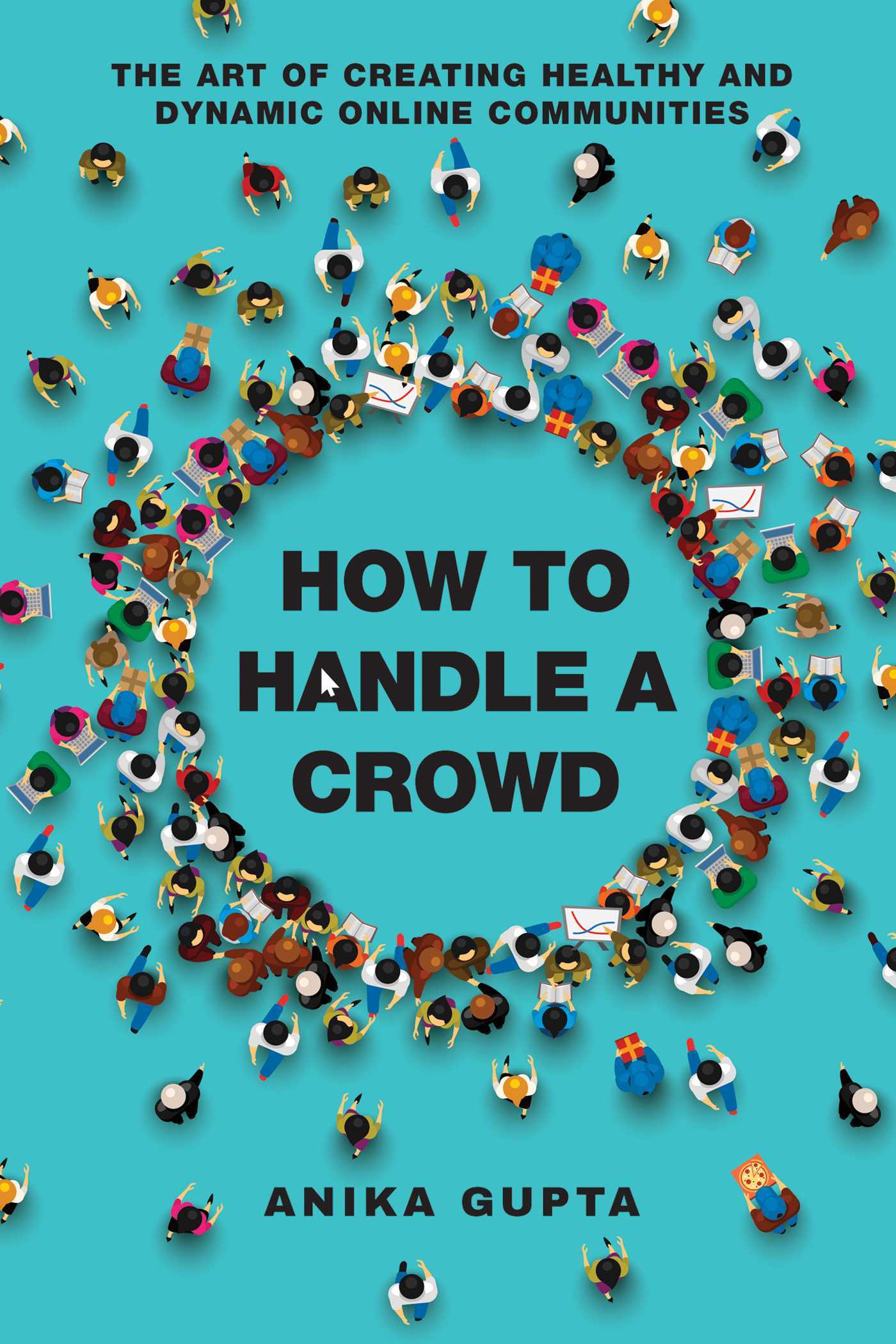
How to Handle a Crowd: The Art of Creating Healthy and Dynamic Online Communities
In this guide to successful community moderation, a former tech journalist and current product manager explores everything from the trenches of Reddit to your neighborhood Facebook page.
Don’t read the comments. It’s advice that feels as old as the internet, yet more relevant than ever. The tools we once hailed for their power to connect people and spark creativity can also be hotbeds of hate and harassment, and platforms like Facebook and YouTube are under fire for either too much or too little moderation—even though most people aren’t even sure what moderation means. What we do know is that creating and maintaining healthy online communities isn’t easy. Luckily, Anika Gupta is here to explain what makes some online communities tick—and others explode.
Over the course of two years of graduate research at MIT, Gupta interviewed moderators who’d worked on the sidelines of gamer forums and in the trenches of online news comments sections. She spoke with professional and volunteer moderators. Some of these moderators were known to their communities, while others were entirely anonymous. In How to Handle a Crowd, she builds on that initial fascination and connects it to new and important issues around how we use the internet to create community.
She interviews people who have built and sustained fascinating online communities in our unpredictable digital climate, and dives deep with activists, organizers, journalists, and executives to find out what strategies work best for them. Is there really such a thing as a recipe for success? And how does the complex labor of online moderation shape our world—and the people who do it?
Don’t read the comments. It’s advice that feels as old as the internet, yet more relevant than ever. The tools we once hailed for their power to connect people and spark creativity can also be hotbeds of hate and harassment, and platforms like Facebook and YouTube are under fire for either too much or too little moderation—even though most people aren’t even sure what moderation means. What we do know is that creating and maintaining healthy online communities isn’t easy. Luckily, Anika Gupta is here to explain what makes some online communities tick—and others explode.
Over the course of two years of graduate research at MIT, Gupta interviewed moderators who’d worked on the sidelines of gamer forums and in the trenches of online news comments sections. She spoke with professional and volunteer moderators. Some of these moderators were known to their communities, while others were entirely anonymous. In How to Handle a Crowd, she builds on that initial fascination and connects it to new and important issues around how we use the internet to create community.
She interviews people who have built and sustained fascinating online communities in our unpredictable digital climate, and dives deep with activists, organizers, journalists, and executives to find out what strategies work best for them. Is there really such a thing as a recipe for success? And how does the complex labor of online moderation shape our world—and the people who do it?
- GenresNonfiction
240 pages, Paperback
First published May 26, 2020
Ratings & Reviews
Friends & Following
Create a free account to discover what your friends think of this book!
Community Reviews
Displaying 1 - 13 of 13 reviews

June 30, 2020
This isn't a how-to book guiding you to create your perfect online community. Instead, it takes different, mostly unique, corners of the internet and tells their stories through the eyes of their respective moderators. Each chapter is dedicated to a different online platform or medium, and for the most part the stories told are unique, interesting, and engaging. I especially enjoyed the chapter dedicated to online gaming communities, as well as the chapter about Reddit moderation. These are two communities I'm fairly active in, and it was interesting to see what others had to say about it.
I think my biggest takeaway from this book about various online communities and the difficulties each face is that moderators are the unsung heroes of the digital age. Maybe that sounds grandiose, but seriously, without their unpaid, sometimes silent, unsung work, the majority of the digital communities we participate in would be significantly worse off.
I was expecting a bit more about tools these moderators use in their respective communities to keep order, or some tricks of the trade or something, but only vague mentions were given in some places. I suppose at the end of the day the only real tool a moderator has in their toolbox for moderating is a wellspring of patience.
Thanks to NetGalley and the publisher for providing me a digital copy of this novel in exchange for an honest review.
I think my biggest takeaway from this book about various online communities and the difficulties each face is that moderators are the unsung heroes of the digital age. Maybe that sounds grandiose, but seriously, without their unpaid, sometimes silent, unsung work, the majority of the digital communities we participate in would be significantly worse off.
I was expecting a bit more about tools these moderators use in their respective communities to keep order, or some tricks of the trade or something, but only vague mentions were given in some places. I suppose at the end of the day the only real tool a moderator has in their toolbox for moderating is a wellspring of patience.
Thanks to NetGalley and the publisher for providing me a digital copy of this novel in exchange for an honest review.

May 10, 2021
This is a collection of case studies of online community moderators. Whether you are a moderator or not, it's an interesting insight into some these newly emerged roles that accompany social media. I read a few of the chapters in full and skimmed others I was less interested in. If you are a heavy social media user, active in online communities, work for a social media company, or are a community organizer then this might be worth taking a look at.
Why am I not rating this higher? Each case study is based on an interview with usually 1-3 people and so it's not quite as as rigorous as the reader might wish—as a result it is prone to have some bias or a less complete perspective. In fact, maybe calling these case studies is too generous, but there is definitely more context and synthesis here than in a mere interview.
Why am I not rating this higher? Each case study is based on an interview with usually 1-3 people and so it's not quite as as rigorous as the reader might wish—as a result it is prone to have some bias or a less complete perspective. In fact, maybe calling these case studies is too generous, but there is definitely more context and synthesis here than in a mere interview.

September 3, 2020
When I first picked up this book, I thought I would mostly be reading about other people's experiences. Although I lurked on some forums back in the day, I now spend most of my internet time in group chats and on social media. Facebook and Twitter are wide open, so community moderation doesn't really affect my life, right? Once I started reading, I was surprised by how much of it resonated with me after all. I came away thinking that moderation plays a big role in how we talk to each other, including in ways that aren't so obvious.
The big thing I learned in this book is that most of the work in community moderation is invisible to those of us who aren't looking for it. Moderators don't just block content after the fact: they do something much harder, which is to build consensus around group norms, articulate them, and reinforce them over time. How this actually plays out depends on a lot of factors, including the prevailing culture (gamers have different expectations than political activists) and the tools of the platform (reddit provides moderators many more tools than Facebook). Formal moderation on the platform level is also a factor, but there's a whole lot of room between what Facebook will allow to stay up and what a specific group of people considers acceptable behavior.
As noted in the introduction, these chapters are largely independent from each other, and you can skip straight to a chapter that you're especially curious about. The book isn't a comprehensive survey of everywhere we talk online, but it covers a wide variety of communities, large and small, discussing serious and lighthearted topics. One thing I found intriguing is that I had expected an online-only vs offline meetup dichotomy, but the lines are actually blurry, since NextDoor and other neighborhood listservs can bring people online who may already know each other socially, while NUMTOT members have organized meetups after having met online via common interests. The distinction between professional and volunteer is also an ambiguous one. Paid moderators are often not part of a community, so they may overlook details because they aren't tuned in to nuances. Meanwhile, volunteer moderators on subreddits and in Facebook groups can take the role very seriously, with application processes and clearly outlined expectations for how responsive they must be, sometimes significantly encroaching on their personal time.
One thing I really appreciated was how well we get to know the example moderators who were interviewed for the book. I found the dinner club chapter to be a tough read at times because I disagree with the entire premise of their mission. I don't think racial injustice comes from personal disdain; I think it comes from self-interest and power structures, and I think it's misguided to work exclusively on the former. It was depressing to read about how much work the moderators put into running that group because I personally thought that their work was futile. But that's my criticism of the subjects being profiled, not the chapter itself; what I find so powerful about this book is how it paints a picture of the regular people, often only a few of them, who are pouring their hearts into holding these communities together.
I had a lot of fun reading this book, and I think it's an informative read for those of us who just participate in or even lurk in communities. It certainly made me grateful for people who curate the spaces I enjoy on the internet.
The big thing I learned in this book is that most of the work in community moderation is invisible to those of us who aren't looking for it. Moderators don't just block content after the fact: they do something much harder, which is to build consensus around group norms, articulate them, and reinforce them over time. How this actually plays out depends on a lot of factors, including the prevailing culture (gamers have different expectations than political activists) and the tools of the platform (reddit provides moderators many more tools than Facebook). Formal moderation on the platform level is also a factor, but there's a whole lot of room between what Facebook will allow to stay up and what a specific group of people considers acceptable behavior.
As noted in the introduction, these chapters are largely independent from each other, and you can skip straight to a chapter that you're especially curious about. The book isn't a comprehensive survey of everywhere we talk online, but it covers a wide variety of communities, large and small, discussing serious and lighthearted topics. One thing I found intriguing is that I had expected an online-only vs offline meetup dichotomy, but the lines are actually blurry, since NextDoor and other neighborhood listservs can bring people online who may already know each other socially, while NUMTOT members have organized meetups after having met online via common interests. The distinction between professional and volunteer is also an ambiguous one. Paid moderators are often not part of a community, so they may overlook details because they aren't tuned in to nuances. Meanwhile, volunteer moderators on subreddits and in Facebook groups can take the role very seriously, with application processes and clearly outlined expectations for how responsive they must be, sometimes significantly encroaching on their personal time.
One thing I really appreciated was how well we get to know the example moderators who were interviewed for the book. I found the dinner club chapter to be a tough read at times because I disagree with the entire premise of their mission. I don't think racial injustice comes from personal disdain; I think it comes from self-interest and power structures, and I think it's misguided to work exclusively on the former. It was depressing to read about how much work the moderators put into running that group because I personally thought that their work was futile. But that's my criticism of the subjects being profiled, not the chapter itself; what I find so powerful about this book is how it paints a picture of the regular people, often only a few of them, who are pouring their hearts into holding these communities together.
I had a lot of fun reading this book, and I think it's an informative read for those of us who just participate in or even lurk in communities. It certainly made me grateful for people who curate the spaces I enjoy on the internet.

June 25, 2023
"How to Handle a Crowd" isn’t a guidebook, but rather a collection of case studies across a variety of internet communities. The author's intention seems to be to provide a broad overview of how communities of various enact rules and standards to preserve order in their growing communities. Since this collection of communities doesn’t have much in common with each other, offering a broad scope, most of the chapters can be read independently or out of order.
The most interesting takeaway from the book is a true understanding of the value moderators bring to their communities. From managing expectations to keeping the peace, they actively work to cultivate discussions and keep members engaged.
If you’ve ever lurked in a forum or been the main character of your own Facebook ground, you’ll find something to appreciate about these examples of communities and how they’re curated and managed.
The most interesting takeaway from the book is a true understanding of the value moderators bring to their communities. From managing expectations to keeping the peace, they actively work to cultivate discussions and keep members engaged.
If you’ve ever lurked in a forum or been the main character of your own Facebook ground, you’ll find something to appreciate about these examples of communities and how they’re curated and managed.

December 13, 2020
I received a copy of this book free from Goodreads Giveaways and am voluntarily leaving a review.
This book was enjoyable but, in my opinion, misnamed. Rather than a “how to” with tips and tricks on good moderation, this is a series of profiles of very specific online groups and how they are moderated. It was interesting and I enjoyed reading it a lot, but it wasn’t very helpful for me, a person who informally does social media for my job and wanted some help to do it better. Perhaps I could parse some of that from this after multiple reads, and perhaps what I’m looking for can’t really exist because online communities are so varied, but I feel like the title led me to believe that not only was it possible but that this book attempted it. Enjoyable but not as helpful as I’d hoped.
This book was enjoyable but, in my opinion, misnamed. Rather than a “how to” with tips and tricks on good moderation, this is a series of profiles of very specific online groups and how they are moderated. It was interesting and I enjoyed reading it a lot, but it wasn’t very helpful for me, a person who informally does social media for my job and wanted some help to do it better. Perhaps I could parse some of that from this after multiple reads, and perhaps what I’m looking for can’t really exist because online communities are so varied, but I feel like the title led me to believe that not only was it possible but that this book attempted it. Enjoyable but not as helpful as I’d hoped.
January 13, 2021
I received a copy of this book through a Goodreads Giveaway.
This is a fascinating read!
A variety of online communities are examined to understand their approach to moderating groups. From MMOs to listservs there's a lot of overlap in what a good moderator looks for and how much work it is.
The book opened strong by examining Facebook groups through an equity lens and highlighting the struggles that some groups have in protecting the voices of people of color. I was surprised that marginalized groups weren't really brought up in other examples. I wanted to hear more about how groups foster inclusivity. The look at Fetlife and conversations about consent were also very interesting.
Overall it's an exploration into how communities set and enforce their guidelines.
This is a fascinating read!
A variety of online communities are examined to understand their approach to moderating groups. From MMOs to listservs there's a lot of overlap in what a good moderator looks for and how much work it is.
The book opened strong by examining Facebook groups through an equity lens and highlighting the struggles that some groups have in protecting the voices of people of color. I was surprised that marginalized groups weren't really brought up in other examples. I wanted to hear more about how groups foster inclusivity. The look at Fetlife and conversations about consent were also very interesting.
Overall it's an exploration into how communities set and enforce their guidelines.

October 5, 2021
I won this book through a Goodreads Giveaway and prior to opening it up and starting the first chapter, I had little interest as well as little knowledge about online communities (& the roles of moderators). I have to say that I found this book to be very interesting, even when chapters covered content that I have zero interest in (such a online role-playing games). I found the book to be to the point and informational while also managing to stay interesting! A great read for anyone trying to learn more!

May 24, 2023
A series of interesting case studies that look at various moderators across various social media, like Twitter and forum boards. I read the book because a couple of jobs and hobbies I've had over the years have asked me to do some sort of online component, and this book did offer some helpful advice. It talked about the troubles and successes of each team and went through how that particular group overcame. The audio version I listened to had some audio glitches, so a star off for that.

July 31, 2021
How To Handle A Crowd... the title is a bit misleading. It's all about moderators of online communities, not regular contributors/ viewers. Focused on providing online moderators insight on how to handle difficult situations but mostly commiserating with others how social media in many forms fail the users and offer challenges and stress including work overload to mods.
November 9, 2020
A deep and thoughtful dive into online culture, buoyed by great interviews and sharp, philosophical writing. Great insights into moderation from Facebook to Twitter to Reddit to Discord and beyond.

March 18, 2023
Zero. The book has a misleading title and brings zero information about How to actually handle a crowd and build a healthy community.

November 8, 2023
I remember this book was interesting but accidentally deleted this book and lost my rating and the review I wrote!

August 14, 2024
Excellent insight into online communities and effective moderation, told through stories/interviews to make it more interesting. I thought it had very practical advice.
Displaying 1 - 13 of 13 reviews