Master sculptor Auguste Rodin’s illuminating writings on cathedrals in France are especially relevant and significant following the recent fire at Notre Dame.
In this volume, the writer and Rodin scholar Rachel Corbett selects excerpts from the famous sculptor’s book Cathedrals of France , first published in 1914, just before the outbreak of World War I. Cathedrals were central to the way Rodin thought about his he saw them as visual metaphors for the human figure, among the finest examples of craftsmanship known to modern man, and as a model for how to live and work—slowly, brick by brick.
Here, Corbett takes the fire at Notre Dame and the concerns over its restoration as an entry point in an exploration of Rodin's cathedrals. Rodin adamantly opposed restoration, as he felt it often did more damage than the original injury. (Many of the cathedrals that Rodin looks at in his texts were, in fact, bombed during the war.) But while he rails against various restoration efforts as evidence that “we are letting our cathedrals die,” the book, with its tenderly rendered sketches and written portraits, is itself an attempt to preserve these cathedrals. The selection of texts in this volume is a reminder—as is the tragedy of Notre Dame—of why we ought to appreciate these feats of architecture, whether or not they are still standing today.
Auguste Rodin (born François-Auguste-René Rodin) was a French artist, most famous as a sculptor. He was the preeminent French sculptor of his time, and remains one of the few sculptors widely recognized outside the visual arts community.
Although Rodin is generally considered the progenitor of modern sculpture, he did not set out to rebel against the past. He was schooled traditionally, took a craftsman-like approach to his work, and desired academic recognition, although he was never accepted into Paris's foremost school of art. Sculpturally, he possessed a unique ability to model a complex, turbulent, deeply pocketed surface in clay.
Many of Rodin's most notable sculptures were roundly criticized during his lifetime. They clashed with the predominant figure sculpture tradition, in which works were decorative, formulaic, or highly thematic. Rodin's most original work departed from traditional themes of mythology and allegory, modeled the human body with realism, and celebrated individual character and physicality. Rodin was sensitive to the controversy about his work, but did not change his style, and successive works brought increasing favor from the government and the artistic community.
From the unexpected realism of his first major figure—inspired by his 1875 trip to Italy—to the unconventional memorials whose commissions he later sought, Rodin's reputation grew. By 1900, he was a world-renowned artist. Wealthy private clients sought Rodin's work after his World's Fair exhibit, and he kept company with a variety of high-profile intellectuals and artists. He married his life-long companion, Rose Beuret, in the last year of both their lives. His sculpture suffered a decline in popularity after his death in 1917, but within a few decades his legacy solidified.
I agree that modern restorations compromise the integrity of gothic cathedrals, but not for the main reason Rodin argues: that restorations are copies, which are damned in advance because artists must not copy with the passion of fidelity anything other than nature and that copying works of art is forbidden by the very principle of art. Instead, I think it’s because even when the restoration erodes and patinas, there is an age imbalance that makes the restorative gesture visually awkward and obtrusive.
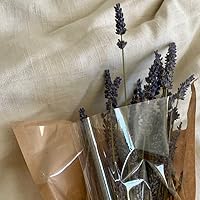
I enjoyed the last chapter about descriptions of flowers, especially from a sculptor’s perspective. He writes that flowers inspired detail for the relief in gothic cathedrals and the color for stained glass windows. He pays great attention to dying red tulips, which he compares to coagulated blood and morsels of carrions — a sacrificial transformation he describes as necessary for fructification, a reincarnation elsewhere. He even writes that in between the petals of a tulip, you can see a bloody crucifix, but I don’t have the capacity to imagine this.
« Romanesque, Gothic, Renaissance! I know now that several long lives would not suffice to exhaust the treasures of happiness that our monuments of the past réserve for the sincere lover of beauty. » (35)
« Through my open window thé great voice of the bells reaches me. I listen attentively to this music, as monotonous as it’s friend the wind that brings it to me. I seem to hear in it at once echoes from the past, from my youth, and the answers to all the questions that I never cease to ask myself, questions which throughout my life I have sought to resolve. » (45)
« Oh, I beg of you, in the name of our ancestors and for the sake of our children, break no more, restore no more! » (49)
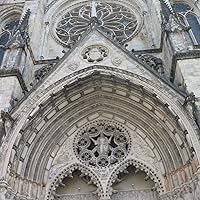
This was a really interesting short read! I thought it would be a little more about Architecture, but the different add-ins with nature and its prose were a beautiful touch! I adored the pictures of the architectural buildings throughout as well!
This book is essentially several of Rodin’s diatribes against what he saw as flawed renovations of French cathedrals, which I initially approached with a kind of gleeful pettiness, but actually he’s right. We should take art seriously, and it should not be funny when it’s destroyed or devalued.
Interesting and quick read. Pick up this book if either (1) you care about how great artists think about their art or (2) you want to read some poetic musings on the connections between sculpture, architecture, painting, and nature. Personally, I'm a reader in category (2). I can put aside the nationalist and somewhat ahistorical takes [I wonder if Rodin would also hate contemporary restorations, which are often more cognizant of original methods and historical practices] and found some compelling thoughts and juxtapositions, as evidenced by many underlined sentences.
For example, Rodin changed the way I'll look at architecture - as analogous to painting, with planes and color and shadow being critical considerations. Similarly, I will look at his sculpture differently. I'll also wonder what it would be like to experience a cathedral in true night- today they'd be lit and so we can't possibly experience the true depth of shadow that Rodin writes about.
“ Elements which your attention at first separates in order to analyze them will unite to compose the whole.” 25
“The burden of old age crushes them, and under the pretext of curing them, of restoring what he should only uphold, the architect changes their features.” 30
“ but the part which still remains intact, retains the life of the work as a whole and defends our souls. In this ruins, we have our last sanctuary. In the same way, the Parthenon has defended Greece better than the shrewdest politicians could. It continues to be the living soul of banished people, and the least of its fragments is the Parthenon as a whole.” 43
“ oh I beg of you in the name of our ancestors and for the sake of our children, break no more, restore no more!” 49
“ how strange that a tiny candle flame should be able, as it vacillates, to make the monster palpitate, should move architectures with at this moment are immobile! A slight variation of light, and all this will move.” 68
not actually a hard or long read i just spent so long googling the cathedrals he visited that i took a whole year. forever changed the way i view architecture, sculpture, form, negative space, shadow... ppl will say he’s all over the place, i say he’s just like me tbh. i still have some notes but i don’t think it makes sense to be too critical of writing that was initally meant to be kept to oneself.
at the Rodin Museum in Pennsylvania there is a sculpture of two right hands nearly touching, titled “The Cathedral”. it’s one of the only sculptures i remembered the name of by the time i exited through the gift shop, where i picked up this book. having observed and researched the relationships between his sculptures made his writing so much more intriguing. i’m glad i impulse bought the book when i did.
This is a meandering unfocused plea to save and preserve gothic cathedrals and restore them to their original glory by adopting the plans and methodologies of their original architects and builders. It is a protest against renovating and modernizing churches, which results in the creation of a sterile, joyless building devoid of the beauty of the original cathedral.
Rodin’s view of nature being represented through arts and humans being represented through nature is very beautifully presented in this book. Albeit, occasionally hard to parse, he continued to make me smile through his true child like appreciation of nature and his imaginings of their personalities.
Bought this mainly for sketches. Both the sketches and the writing are very beautiful. I don't agree with his main point and found it poorly argued, but the descriptive writing is very pretty. In fact, I loved the sketches and writing so much that I put them up on my wall.
this is very dramatic and pretentious. it is also very romantic, even almost to a fault. but i love reading artists' thoughts about art!!! rodin had so much passion and his writing is gorgeous - especially the last part about tulips and other flowers.