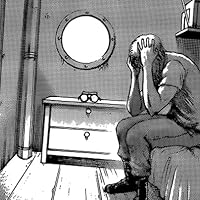
Un uomo si sveglia in una casa che non conosce. Una donna che non conosce lo chiama «amore », gli dà un bacio, esce. I mobili, le tende, i tappeti, i libri sugli scaffali, il giardino, la strada che si snoda fuori dalla finestra, gli aceri in ore: tutto gli è straniero, alieno. Non è mai stato qui. C’è una scrivania, un computer, una sedia gialla. Si siede, preme spazio: sullo schermo appare un documento fatto di una sola pagina vuota. Il documento si chiama ilmistero.doc.
È l’inizio di un’opera che definire mondo è riduttivo, un’opera-galassia, un’opera-universo che contiene centinaia di romanzi diversi; un’opera-babele, un’opera-babilonia, un’opera-biblioteca; un’opera-enigma, il giallo dei gialli, che può essere svelato solo da chi non cerca di risolverlo; un’opera che, nel suo negare la forma romanzo, ne invera la forza originaria, dirompente, carnevalesca, come – a suo tempo – avevano fatto Casa di foglie di Mark Z. Danielewski e Infinite Jest di David Foster Wallace, coi quali ilMistero.doc condivide un’ideale continuità, non solo per la frammentarietà della struttura o per l’eterogeneità dei materiali narrativi impiegati, ma anche, e soprattutto, per l’intento epico: raccontare, in una singola vita, ogni altra possibile vita umana.
Matthew McIntosh (b. 1977) is an American writer best known for his 2003 novel Well. He graduated from the creative writing program at the University of Washington after years of being enrolled on-and-off, during which time he held numerous menial jobs. He also attended the Iowa Writers' Workshop at the University of Iowa. As a second-year workshop student, he won Playboy magazine's short story contest for university students for his story “Fishboy.”
Librarian note: There is more than one author in the Goodreads database with this name.
One of the good things about this monster novel is that you can read a 1660 page book in three days and really impress your impressionable friends. The more sceptical amongst them will flip through your copy and say Hey, wait a minute, half of this book is either blank pages or photographs or pages filled up with
for no damned apparent reason. (I really could never figure out why every so often Matthew McIntosh felt the need for five pages of asterisks. And the effect of printing many pages with all the text blacked out like this
is just to aggravate the reader. This reader anyhow.) Your sceptical friend will be quite correct to point out (haughtily) that what with all of that going on, this is really a 300 page book that’s bigging itself up like a postmodern literary pufferfish.
What you get in TheMystery.doc is a collage of what appears to be mostly autobiographical material – a lot about the death of his father, a lot about a premature baby, and an OUTRAGEOUS lot of what seem to be transcribed real conversations all of which are of the vapid banal type filled with uh uhs and likes and very – very - little wit.
No this is fine…and uh – but this was, not inland, but on the coast – on th coast. And, uh, that whole area now is called La Costa Azul. The Blue Coast. And it’s all full of tourist – tourism. We had gone for a looksee… driving around… and there was a uh.. it was a rock, that lay less than half a mile off the coast…Uh and she says, you know if I, if I I I had the ability, she says, I’d put steps, leadin’ up to the top… and back. Oh, and I need some tissues… and thank you.
Then, you get the only teeny bit of narrative thread in the whole 1660 pages which is where the author Matthew McIntosh (or is he??) wakes up one morning with TOTAL AMNESIA and then tries to figure out who he is (can it be possible you have come across this idea before in a previous novel or film? It’s possible.) This tiresome idea pops up here and there but never gets anywhere, because this is a giant book the point of which is that NOTHING ever gets ANYWHERE, all of human life is kind of vaguely pointless with agonising bits shoved in at random.
(The author quotes transcripts of phone calls from the twin towers on 9/11 here and there. This was a low point for me, I do not think this novel earns the right to use such wrenching material.)
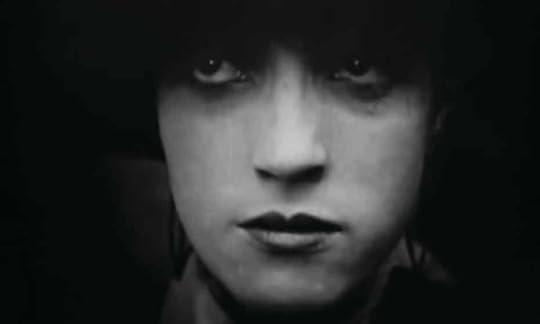
What is good about theMystery.doc? Well, rattling through the pages at colossal speed is quite pleasant. It gives you an almost giddy feeling like that of a young horse galloping about in a field in the springtime of the year. Cloppety clop, clippety clop. It’s all slightly interesting – you never know what the next page will be filled with – asterisks? (Yummy!) or a photo of the young Elizabeth Taylor from A Place the Sun (lovely!) or a fuzzy pic of a snail on a china saint (weird!).
But come on, QUITE PLEASANT and SLIGHTLY INTERESTING for 1660 PAGES? I think each and every one of you could have put together a better book than this one in nine months (Mr McIntosh famously took 11 years over this one). You would just need to exhume all your family photos, and your old diaries and emails, interview your family about any dramatic incidents, deaths, accidents, bereavements, transcribe all the tapes, throw in scattershot quotes from some romantic poets or any top calibre literary stuff, grab some screenshots from some obscure silent movies from google images and you’re ALL SET.
This kind of novel-as-collage, as far as I know, was originated by John Dos Passos in his USA trilogy in 1930-36. So it’s not a new idea. 25 consecutive blank pages and 5 pages of nothing but asterisks is, however, original to Mr McIntosh, as far as I know.
Just to put the boot in a little bit more, Mark Danielewski’s design and typographical madness in House of Leaves and The Familiar knock the spots off theMystery.doc and you can make this comparison in any decent bookshop, lay them side by side. (I’m gonna get The Familiar vol 4 soon, just for the sheer beauty of the effervescent pages. )
At many times during the 11 years it took, Matthew McIntosh agonised over what the hell this massive book was all about, and he includes some of his musings, very helpful. Someone is talking to the author:
We’ve heard that …You don’t talk to your agent or publisher or anyone who knew you, and that you dropped out of society and ran off to the boonies to write mankind’s next immortal masterpiece. The next Divine Comedy or Moby-Dick. (p711)
And later
I know you’re working on some big book. Some big story that’s gonna make sense of life and why we’re here and answer all the mysteries of the universe.
This resulting almost-but-not-quite-complete turkey is, then, an elaborate sigh of disappointment. It’s a chess player overturning the pieces on finding the problem to be too difficult. I don’t blame the author for not being able to write a big book that would make sense of life. It was slightly interesting and vaguely pleasant to see his failure spread out so sumptuously before me.
The novel-est novel I've read in a while. Its formal fragmentation seemed to mirror the formal fragmentation of life so often spent looking at phones, switching between apps, unexpected text-message incursions of images from friends or concerns from Mom, and then you look up and see something and fall into a dream before returning to a memory of being on the phone with tech support at work while reading an article about the inevitable end of the world or scrolling through endless tweets of doom. Formally, the quick, addictive, effortless, aerated movement through the box-like book (when it arrived at my office I wondered what it could be, what had I ordered that was so damn heavy?) becomes at best a sort of flip book, a shifting foundation for readerly associations. Readers who come to this with their Associative Intelligence (holy ghost in the sacred trinity of Emotional Intelligence and old-fashioned IQ) revved up as though reading a poem or watching an abstract film will be more than pleased since the novel presents a system of associations. There are pages throughout or sometimes only paragraphs of asterisks and colons that shift in significance from stars after being knocked out to digital code to radiation to a sense of oblivion after learning crushing news of a loved one's death to snow etc. My reading experience was novel, too, in that I read maybe half of this 1600+ page book in print on my phone thanks to the free download that comes with the book if you go to the book's site and enter a keyword related to sacrifice found in a footnote on a certain page. The ebook had 13K+ "locations" and the format isn't quite the same as in the print book, but when I read the ebook I sensed the physical print book somehow in my palm, invisible, extending down through my hand and to the floor of the subway or the concrete of the sidewalk below as I walked to work -- more fragmentation, more of a sense of verticality, an unseen tower of text like the fallen World Trade Center towers. The overall sense, the single lingering impression, is internal collapse, implosion, the way the Twin Towers fell straight down with their innards burned out instead of tipping over, a sort of anguish like that, straight down inside instead of falling over. For all the fragmentation and formal unconventionality, the effect toward the end, ultimately, is overwhelmingly emotional. On the ebook, soon after the author's father with cancer dies and then a premature infant dies, there are images of her burial and then old stills from a film of a woman in white diving into an open grave, and then single rows of asterisks and colons, with slight variations, across what felt like hundreds of ebook swipes to the right (like a very literary dating app on which books try to hook up with their ideal readers), creating a progression of downward flushing typography over a few minutes as I leaned against the subway doors on the way to my kid's daycare on a dark early November day a year and a day after Trump's election -- the effect approached catharsis when finally there appeared an image of a barn door cracked open letting in light. Funny that the first word of the summary is "funny," since I didn't really LOL once, although there was some humor, particularly with the website-greeter transcripts that may or may not have been human and/or based in Pakistan. Generally, though, "funny" doesn't really describe this and seems a semi-disservice in the official summary. I would also like to point out that this is another example of a writer who received an MFA from the Iowa Writers' Workshop who doesn't write so-called Iowa Fiction. Not everyone who went there apes Yates and Cheever. Ahem. Anyway, I liked the meta-fictional and autobiographical/memoirish bits, but not as much as the urgent, excruciating emergency call transcript of the woman on the smoke-filled 86th floor of the WTC on 9/11, with pages of [deleted] and one stranger calling out to another interspersed with prayers and curses. Also loved the bit about the couple who drowned, the woman lost somewhere between the surface and the floor, like the cover image. It's not really a 1600-page book -- it's nowhere near as dense as the merely 1492-page Joseph and His Brothers, the longest book I'd previously read. The estimated overall word count probably doesn't exceed 100K, my guess. But none of that really matters when you're reading on your phone, swiping along, engaged, associative intelligence doing some light pleasurable lifting, even scrolling through Instagram and refreshing Twitter, feeling like what you see on the socials is intended to be part of it too (the best art charges perception so everything seen seems like art too), before returning to the proper massive print book to read 100+ pages in less than an hour in bed at home, coming away with a soulful sense of loss and anguish but also hope, presented in an almost sentimental, innocuous, non-fascist #MAGA way, although it seems initially composed during the comparatively rosy GWB years (the oughts). Read it during the major pre-taper weeks of marathon training and its length synched with the slow and somehow feasible 20-mile training runs. It also made me want to write, generally, and read a few more of the longer major novels I've so far missed (the highest accolade in a way). Anyway, highly recommended to readers who like to make connections and realize from the start that the solution to literary mystery is always mystery itself (a less potentially schmaltzy way of saying "the soul" or geist as the Germans say). Seekers of plot and stubborn lovers of conventional narrative should still probably take a chance on this if only to flex and develop their atrophied muscles of associative intelligence.
An interesting interview with Michael Silverblatt about Quixote, the Bhagavad Gita, salvation through literature, and the book's reception: https://www.kcrw.com/news-culture/sho...
Worth every single one of its 1664 pages. If you want to know what fiction can do and what fiction does in 2017 this is absolutely required reading. It doesn't matter if you read 1664 pages in two days or two months or whether you have to read it a dozen times, this is the kind of ballsy brutal human fiction the post-postmodernists and the new sincerities and the new sentimentalists all want. And in truth it is hysterical--in both Woods' and Freuds' sense....
In his review, Steve Moore calls this stunning novel a “gigantic art installation”, which is the most accurate summation imaginable. You walk around this epic production with the turn of each page, pausing to reflect on the movie stills, home photographs, and puzzle the short fragments of text in their carefully honed typographical configurations. The novel is comfortable taking up room, wasting oodles of verso pages, creating mini-flipbook scenes from 1930s RKOs, and splashing its large-fonted text across the capacious white spaces, often consisting of one or two words per side. The titular ‘mystery’ is the book itself, with its recurring fragments including IM chats with a Website Greeter service, recordings with the author’s father (whose passing forms an emotional kernel of the book), and a plot of sorts featuring an amnesiac author struggling to dispose of a neighbour’s cat. The novel attempts to wed the personal (father’s passing) with the tumult of modern America (transcripts from 9/11 callers are the most harrowing inclusion here, as are the stills of the falling Twin Towers), and McIntosh’s cracked mosaic form allows for these two parallel tragedies to occupy the same space. The longer prose sections are perhaps the weakest—McIntosh triumphs more with his short lyrical fragments—although the rhythm of his sentences makes up for their unremarkable style. The intricacies of this novel are enormous, and themystery.doc should attain a fierce cult following for years to come.
"Hello...hello...hello...two sides to every story..." (PiL)
WATER ABOVE
How to Throw a Vision Board Party
Matthew McIntosh yearns “to write mankind’s next immortal masterpiece. The next ‘Divine Comedy’ or ‘Aeneid’ or ‘Moby-Dick’ or ‘Thousand and One Nights.’ ”
And he almost succeeds...This 1,666 page novel tops everything written by William T. Vollmann, William H. Gass, Jim Gauer and Joseph McElroy in the last two centuries.
"That, for instance, [certain books] can be considered "masterpieces" or at least what journalists term "great books," is to me the [same] sort of absurd delusion as when a hypnotized person makes love to a chair."
Ambitious But Rubbish
Fans of white male North American post-modernism are content with both too little experimentalism and too much .
Apparently, Matthew McIintosh's publisher dared him to write a book this long in the hope that Steven Moore would review it in the Washington Post.
It also guaranteed that I would have to review it as a corrective service to the innocent!
The McDonaldization of White Male American Post-Modernism
Would you like fries with that? Why not? Upsize me all you like! I can take it. And while you're at it, I want a row of big fat books for the shelves in my McMansion:
"In suburban communities, McMansion is a pejorative term for a large 'mass-produced' dwelling, constructed with low-quality materials and craftsmanship, using a mishmash of architectural symbols to invoke connotations of wealth or taste, executed via poorly thought-out exterior and interior design." (Wikipedia)
The Tallest Building in the World Syndrome
In response to critical demand, the "is long, is good" school of literature is currently engaged in a struggle to the death over the writing and publication of the longest English language novel in the world.
As futile as this quest is, I personally think there should be a level playing field, or at least some guidance about what constitutes a page for the purposes of the count.
The quest parallels the edifice complex that resulted in disputes over the tallest building in the world.
In 1969, the Council on Tall Buildings and Urban Habitat was formed to announce the title of "The World's Tallest Building" and set the standards by which buildings are measured.
In 1996, the Council had to resolve a dispute between the Petronas Towers and the Sears Tower.
According to Wikipedia, in 1996, the council decided to list and rank buildings in four categories:
* height to structural or architectural top; * height to floor of highest occupied floor; * height to top of roof (removed as category in November 2009); and * height to top of any part of the building.
Until then, the world's tallest building was defined by the height to the top of the tallest architectural element, including spires but not antennae.
Antenna Gain
This issue is relevant to the claims on behalf of "theMystery.doc", because, in effect, it's a building which seeks to have its antenna considered.
What does this mean? Well, the question is whether blank pages should be considered in the page count. The novel contains numerous blank pages, including not ten, not a dozen, but 26 in a row (not to mention pages of asterisks) (presumably sophisticated metaphors for the nothingness or blandness of contemporary life, or digital life (as it is "lived" by its readers: "Zero lines, zero words. Zero characters. Zero zero zero"). Are 26 blank pages in a row just like sticking an antenna on a building that might not otherwise meet the size (height or length) requirement?
The Banality of the Quotidian
Of course, as has been pointed out by Paul Bryant in his superlative review of the novel, blank pages make for a rapid and pleasurable reading experience, especially when the alternative might have been tedious post-modern prose. So, ironically, Matthew McIntosh is seeking to have his cake and eat it too.
This antenna problem has been around literally since (at least) Joseph McElroy's massive, 1192 page long "Women and Men". The author adds to this quasi-realistic tale about the relationships between women and men totally spurious, almost sci-fi interludes about radio signals or some other unmemorable hi-tech or alien shit that I've dutifully forgotten, but seems to appeal to fans of Heideggerian "enframing" and the concealment of truth (of which Heidegger was the avowed master). I can't be bothered counting for the purposes of this treatise, but let's say that McElroy's book might have been reduced to 700 pages if this excess had been omitted (and an essay devoted to its subject matter for research and self-abuse purposes).
So where does that leave the abundance of nothingness in "theMystery.doc". Are the 26 blank pages just filler or, more precisely, emptier?
Leave the Reader Wanting Moore
When all is said and done at enormous length (if not height), deep down within this 1,666 page brick, there is a modest 300 page novel yearning to escape and make its way into (and within) the real world of literature.
I guess that means it's not such a tall building after all.
Delete Alt Control
A man walks into a room...full of fat books...
In late capitalism, everything that is fluid turns to stone or ossifies into excessivism.
Some pseudo-academic will make a career out of orchestrating the reception of this .doc:
Official: the next FAT hyped brick.
Defy convention...Try to read it in under two days. Paul did it in three. The challenge is on!
To defend charges of derivatism, clear your browsing history, back up and back off.
Forget amnesia. Do the unexpected. Forge the author's signature. Erase the entire document. Take a photo. Place the photo on your shelf. Tell your friends about it.
Insert Devastating Filler Below
> > > > > > > > > > >
"It Was One of Those Plots Where You Wake Up and You Don’t Know Who You Are."
"Or you think you’re somewhere other than [where - sic] you are."
"The universe is a big puzzle and needs to be put back together again."
"Don’t try to analyse it...just report it."
"It's Going to Be the Biggest Thing in the World." (p. 731)
"When the euphoria wore off, I felt I was missing something important. As if a joke had been told and the punchline not delivered, or a message had come for me in a language I did not understand. (p. 156)"
"Once You Called It a Post-Post-Neo-Modern Mystery Story"
"But I don't know if you were just feeding me more Corky."
"Perception of Reality, His Fantasy is Far from TRUTH" (p. 883)
"headache gets worse as the book progresses" (p. 883)
"Is There Something Wrong?"
"I promise you I’m going to get to the bottom of this."
What Would a Girl Like That Be Doing with a Book Like This?
"I suppose it really takes all kinds."
"That Was Finally Interesting!" (p. 1032)
"Much more so than my everyday non-quantum life, which I found crammed to the gills with gravity, guilt, and sorrow." (p. 1032)
Fino a qualche giorno fa non sapevo nemmeno cosa fosse ed invece oggi ne sono riemerso dopo quasi una settimana di immersione totale, sto parlando della: letteratura ergodica. Parola affascinante ergodica, che significa letteralmente: lavoro-percorso. Così ecco che mi appresto a iniziare questo percorso, con la parola lavoro che mi aleggia sopra, come a dirmi: "Guarda coraggioso Lettore, che qui ci devi mettere del tuo... lavoro!" Insomma, parliamo di un libro sperimentale, dove la linearità non esiste, dove le convenzioni sono stracciate a favore dell'improvvisazione, del mistero, della caccia al significato, alla ricerca dell'ignoto. Quanto di più allettante e curioso, non potevo aspettarmi, sinceramente non me lo aspettavo proprio così come si è rivelato: un'Esperienza totale. Esperienza con la maiuscola, perchè la si potrebbe definire un'esperienza nell'esperienza, nell'esperienza ecc... all'infinito. Come una matrioska, però con la fisionomia della Statua della Libertà, la apri e ce n'è un'altra e poi un'altra ancora ed ancora ed ancora ed ancora ed ancora...
Matthew McIntosh's "theMystery.doc" is an astounding tour-de-force. It's goal is nothing less than to catalog, diagnose, and explor the fragmented chaos of modern life, and, with scraps of emails, chat logs, and family photos, do for the 21st century what "The Recognitions" did for the 20th: examine authenticity and anonymity, and moreover lay the cornerstone to what might become an entirely new genre. Just as Gaddis anticipated Pynchon and Wallace and DeLillo, so McIntosh may be remembered as the the founder of the 21st century novel. (Don't take my word for it though, prophecy is a dangerous business). The critical reaction to this novel is an eerie twin of the reaction that greeted Gaddis's juggernaut: disappointment, confusion, accusations of self-indulgence... and a few who think they have found something new and original.
I don't mean to be pretentious. Those who dislike McIntosh's novel aren't wrong any more than any opinion can be wrong. However, I do think this novel is, like it or not, doing something that has never been done before. I think this is the first book I have read that really manages to deal with and examine the Internet in a natural manner. There's a certain feeling of pandering when most novels address the internet. Amongst the prose style that has served as standard for hundreds of years, intrusions of text messages and hyperlinks seem link the stiff, awkward spectacle of grandparents trying to act hip on social media. I don't know if traditional novels are capable of examining the internet. Traditional novels with their linear control of information, plots rising piece by piece in orderly fashion, do not capture the chaotic, fragmented world in which the Internet is situated. In order to deal with the Internet, McIntosh has to invent a new structure, a new form. Which of course he does with flying colors.
The best way to view "theMystery.doc" (aside from the metaphor McIntosh gives us: a castle), is the connect the dots challenge, or maybe even the Rorschach Blot. McIntosh gives us fixed points: characters, events, ideas, meditations, photos. He leaves the task of connecting them to us. In a way, "theMystery.doc" might be viewed as a practice exercise -- or microcosm -- of modern life and the challenges it presents. As postmodern authors like Pynchon so deftly demonstrate, life today is composed of a dozen different worlds that we plunge in and out of, constantly: in addition to the drama-romance-supsense-action story of our lives, we move in and out of the worlds of complicated TV-shows whose cast and myriad subplots we have to memorize for discussion over the cafeteria with coworkers, required reading for school, we haven't even mentioned the biggie: social media and the Internet. One could be juggling a dozen worlds in their smartphone: the Twitter lynchmob, the perpetual Instagram beauty pageant, the Tumblr court of political correctness, the Facebook hive of endless chatter, etc. We cycle through possibly dozens of different worlds, each with their rules, their casts, their hidden codes. "theMystery.doc" dramatizes this by doing the same thing. McIntosh blasts us with movie stills, family photos, forgotten e-mails, redacted texts, multiple timelines, chat logs (more on those later), graphs, metafiction, meta-meta-fiction, threads and more threads, subplots built in subplots. I feel as though he took 10 novels, a book of poetry, a photograph selection, and the transcripts of every online interaction he'd had in the past 14 years, blew them up with a bazooka, then pieced together the fragments into this wild laboratory experiment.
And it works.
So far I've just discussed form: it's time to move to the content of the novel. My goodness, if you thought the form was good, you ain't seen nothin' yet...
My favorite part of the novel were the hilarious, dramatic, suspenseful and sad chat logs from WebsiteGreeter, a site offering to connect customers to experts in any field they want. McIntosh perfectly captures the bizarre dynamic of strained professionality battling against a desire for friendship. For some reason, this tenuous connection to an unnamed person somewhere around the globe always has a strange emotional tinge to it, at least for me. These sections are absolutely hilarious at times, as the customer pokes and prods to discover if the agent is who he/she claims to be. All sorts of fun to be had.
I haven't mentioned the photographs yet. They are excellent, and when McIntosh occasionally contrasts raw family photos to slick hollywood movie stills, the effects are devastating. One sequence, integrating stills from a silver-screen romantic dance with real photographs of an almost immobile elderly couple in a bright classroom, swaying to the music, was almost unbearably emotional. When McIntosh brings the emotion, its a walloping kick to the gut: but it always requires reader participation. He wants you to think, he wants to participate with you.
Whereas Gaddis wanted you to track down allusions as part of his "collaboration" with the reader, McIntosh wants you to be a detective. He invites you to solve THE MYSTERY: the mystery of how everything fits together. How do chat logs and meditations on science and stories about snails and baby talk and gunfights fit? Is there an Omega Point?
(Oh, I almost forgot to mention, this has all the regular stuff you guys want from novels as well. There's good writing. There's interesting characters. There's a plot, occasionally.)
McIntosh uses contrast to further his world. He's unafraid to cut from banal e-mails to transcripts from 9/11. He'll lull you for a period of time, then jolt you back awake, order you to pay attention. These scraps of dialogue and fragments of e-mails and text messages aren't filler, he says. We must pay attention to all of them. They could all be important.
Which is, by the way, the truth, not just a fun idea. Every message you receive, on Facebook, on goodreads, anywhere: could be critical. We must pay attention.
"theMystery.doc" might be long, it might be chock full of information, but it is incomplete. It almost feels too short. Maybe this is a fact of long novels. A short novel can provide an encompassing overview/summary of something, but a long novel must, having exhausted the summary, delve into the details, and in nearly every subject, the details are infinite. McIntosh's fragments are judged carefully to spur thought, to suggest more than they show. (When the details start to get overwhelming, don't worry, he'll probably redact them anyway).
Gaddis, Pynchon, and the rest of the gang pioneered the literature of exhaustion in the 20th century. Baroque literature that sought to find and catalog every possibility.
McIntosh is pioneering the literature of suggestion.
I am reminded of those modern art exhibits - the worst kind - those that seem to require almost no effort on the part of the artist– say, a giant, loose pile of Bic pens, or a sculpture comprised of random household items suspended from coat-hangers – the kinds of works that make you reflexively think, “my toddler could have put this together”. Aside from the execution, the artistic merit of such works is also questionable, the conceit being either an overly obvious and trite metaphor, or so abstract as to be meaningless (critics of themystery.doc will be with me so far). And yet, sometimes such a loose and abstract work can draw together just the right combination of elements to trigger something in the mind of beholder - something of an entirely different character to the experience created by more linear forms of art. To grossly oversimplify what I'm getting at: there is art that is, i.e.: art that is inherently beautiful and masterful in its execution, and there is art that does, i.e: art that has little aesthetic value, but has the capacity to manifest something powerful and surprising in the mind of the beholder.
I place themystery.doc in the latter category. And so there is little point writing about what the novel is, because what it is, is not that impressive, per se. In terms of form, style, structure, plot and character, it is a mess. But personally, I enjoyed the wonderfully unique experience of reading the novel. I enjoyed the ambiguity, the randomness, the juxtaposed elements, the puzzle of the thing. Even the ostentatious use of 1650 printed pages, many of which are blank or filled with a single image, or gibberish - yet there is no denying that the experience of hurtling through this mass of pages at such speed, being inundated with loose images and fragments, being required as a reader to actually generate a narrative - this creates a valuable and unique sensation, and one that shares many parallels with the way we experience the world.
This is in no way a guarantee that your experience will be the same as mine (refer to the many other reviews for evidence). The novel is not really about the dozen or so little stories, snippets of which are woven throughout, nor is it about the brief scenes created by still images - rather it’s about the experience of the novel itself, the drawing together the sum total of its implications. But experiences are personal, and either the experience of themystery.doc will captivate you, or the novel won’t make a whole lot of sense.
They all want to write one. McIntosh wrote one. And he made sure it was something different. Much different
A Comedy
Don't be afraid to laugh along the ride this big bookish blessing takes us on. There is humor everywhere. Some of it is dark, some is quirky...there are witty exchanges and awkward encounters and descriptions of events and characters and places that are so damn absurd the only appropriate response is some mighty roar or mild hum of amusement.
A Tragedy
Almost every few pages you'll come across a passage or a picture that communicates to me some sort of "existentialist dread." Think and feel...and the tragedy will straighten you up and knock you down. I cried at the end of this book and I had good reason to. Some of the tragedy is found in the oddest of unresolved fictional situations, some of it is found in real life incidents such as, most infamously and prominently, the September 11th attacks.
A Masterpiece
What is this book about? It's about Matthew McIntosh and post-9/11 America and innocence and distrust and technology and amnesia and romance and sex and true unbreakable love, but most most importantly it is about life and the way it flows and moves and bounces up, down, all around. It is about holding a baby in your arms and feeling the bony trembling fingers of your dying grampa all at once. It takes place over centuries, perhaps even millenniums to some strange extent. But it also may take place all in one day. It is the story of tons of characters, some who are totally disconnected from everyone else while also being connected to all who surround them, but it is also the story of one character. Who is that character? He, she, it, they may be you or me or her or he or McIntosh himself...
I considered affording this bulk of paper two stars but couldn't merit the charity.
I did not care for this.
The size of it wasn't a factor. Nor were the hundreds of photographs and near empty pages. If we pause and say that the book was instead an installation reflecting our fragmented reality, our need to occupy virtual worlds and conduct our affairs through small screens--then this is still a failure. The language is deplorable. The novel meditates on mortality but uses the plotlines of an after school special. Things are bad when one skips 400 pages ahead to read fifty pages with the idea that if captivated one could circle back.
Within my copy I found a letter from the publisher to Julie Orringer. I feel that the letter is almost an integral part of the experience.
"its like if House of Leaves drank a few more beers and decided it would be a good idea to find someone's car and hide in the trunk until the people driving it found out"
My apologies to readers on here that I greatly respect, some of whom have written glowing reviews of this. You know who you are. I wanted to like this. It just didn’t move me. And the prose, which often reads the way unremarkable people talk and type—there are tons of purposeful typos—is the culprit.
Now, to the positive: I certainly recognize that what’s going on with form is impressively constructed and mostly new. You feel like you’re scrolling through a typical day in some ways. The emergent effect of the collage technique is a multiplicity of voices and experiences collapsing into one. You end up reading super fast (which is by design) and that enables an associative reading experience, as opposed to a linear one, where, I’m assuming, the force of the book is supposed to come from.
But I couldn’t help feeling that all the redacted material and walls of asterisks and colons were just gimmicky. The pictures made me want to read Sebald. The self-reference of a writer writing the book he’s currently writing. Ok. Fine.
With the view of the history of being in mind, the contemporary moment is a massive shift: more lived time than ever before is spent staring at screens. The technological mode of being is frightening and alienating. This should be captured. McIntosh does this, I guess.
Which reminds me that I need to stop writing this review on my phone and start another stack of wood pulp and ink.
Time and Space. And Memory. What? Are they? theMystery.doc: a document from the future, written in the pure flux of the full and empty present detailing the gap in time between conception and realization, which opens gaps here gaps there, and so on down the rabbit hole of the mystery of existence to a perennial awareness of the NOW, the present, the Castle, in an ever-expanding Space that includes all Time (I am Here! Where?), neither of which is what we think it is (so stop thinking! no don’t! keep thinking through the emptiness… keep FEELING through the emptiness…). Dear Memories, who was I? Dear Book,, who am I?
The book itself, and the reading of it, is as close an embodiment of this experience as possible (and willing to die trying (Saint!)); both melded into an experiential body, held in the hands, moving, via the eye the mind the heart, through the mysteries of Time and Space and Memory. Reading IS Experience.
Where was I? Where AM I? I am in the Castle, the heart of the mystery, falling, still Reading, and I (We) sill have a chance to survive the Fall…
Che dire... mi sa che non l'ho capito. Mi sembra un'accozzaglia di raccontini, frasette e riflessioni senza senso e/o filo logico, tutte scollegate fra loro. Non ha trama.
Self indulgent. Why did I read the entire thing? To prove something to myself and also about 200 pages were actually very good. It would have been better had the 200 pages actually been grouped together.
A writer called Daniel wakes up one morning and discovers he has complete amnesia. He feels his way into the day, saying goodbye to a woman who, apparently, is his wife, to encounter a neighbour and learn that he is, or so she says, an author who has spent eleven years working on his second book, called, of course, theMystery.doc. But the trouble is the file on his computer is, like his mind, completely blank. (At several points, the novel acknowledges its own cliches - these are deliberate choices).
Daniel’s story is perhaps the central narrative to this 1600+ page novel, but after the introduction described above, the novel heads off into very unusual territory. The narrative splits into a large number of different stories whose connections, if they are there, are not immediately obvious. At the same time, the novel itself starts to mutate into several different forms: we see sequences of stills taken from movies, email exchanges, pages that are blank, pages that are filled with *s and :s, text that dances around on the page etc.. This is not a novel that you read as much as it is something you experience. I have read some reviews where people say you can show off to your friends at the end because you can read a 1600 page novel in 2 days, but I found that I wanted to take my time even with the pages that consist of a single image in a long sequence of similar images, and it doesn’t do the book any favours if you rush over the blank pages (it feels to me that they are blank to make you pause and you get the best effect from them by letting the pause be of a decent length rather than by rushing through to the next bit of text).
On the surface, it looks like the book might be related to Danielewski’s The Familiar, with all its experimental typesetting and imagery, but, in fact, it is very different. In one review (https://www.zyzzyva.org/2017/11/21/th...) I read …imagine W.G. Sebald doing his best T.S. Eliot impression…. The same review goes on to suggest that the purpose of the novel is…
…to evoke fragments of the whole universe and set them swirling around some unifying core. These fragments include a brief history of the cosmos, finally zooming into Seattle circa 2003, as well as a fascinating piece of speculative pseudoscience predicting the discovery of a mysterious “{ } particle,” the quantum foundation of “memory… perception… consciousness”—of all human meaning and of the experience of time. Interspersed with such richly imagined concepts are a deluge of documents—transcripts of conversations with family and friends, pages from Cervantes and Joyce and Ovid and the Book of Job, internet search results for missing persons, photos and screenshots, emails, letters, and hospital records.
It is not an easy book to read as themes or stories often disappear for several hundred pages before returning again. There were a few times when I would have liked to have an ebook available so that I could search back. Or maybe I should have taken notes. This is very definitely a “show not tell” book that leaves the reader to experience the book and draw their own connections. A lot of what we learn, we learn indirectly. A lot of what the book is about is how we respond to the impression it leaves.
In the end, I think the impression the book leaves is the important thing. There is a lot about missing/lost people, about the death of family members. There is much that makes the reader think about what it is to be human.
I can’t do justice to a 1600 page book in a short review. Along with the review linked above, there are others that might help give a feel for what this novel is attempting to do. Here’s a selection:
This is not a novel for lovers of “traditional” books i.e. books with pages of text that tell a story in words. To borrow from lithub.com:
When we think of media in our modern age, print books fall low on the list. Digital media is much more prevalent, with social media, blogs, and video becoming the main way people communicate not only their everyday events, but also their stories. But it’s not just the media that is changing. People’s minds are changing right along with it. . . . When we think about the tellability of McIntosh’s novel, it is not actually the story itself that makes the novel “tellable.” The mixing of so many stories and snippets of characters and plots make it difficult to figure out what it is all supposed to mean. While it might be worth it to examine the different plot lines and stories—and how they are connected—for those readers who do not have an excessive amount of time on their hands, the content is not what makes McIntosh’s story worth telling (or reading). * Instead, the form and structure of his novel answer questions of “So what?” * We read through all 1,653 pages of McIntosh’s book because he is telling a story with a form and structure that is foreign to us novel-readers. It’s something that a literary novel hasn’t done before; it looks more like storytelling we encounter in our media-rich lives.
It’s not for everyone, I know, but I enjoyed reading it a lot. Whether you give it a lot of stars or very few will really depend on how you respond to this confusing mishmash of styles, stories and ideas. For some, it will be messy and, dare I say it, pointless - I can sympathise with that. But I enjoyed living with it for a few days: I have said many times before that my preference is for books that work by impression rather than by plot and this is definitely one of those.
It's an unusual book of which it may be said: "there were several two-or-three-hundred-page stretches that were great, but much of it didn't really work that well for me." I admire the ambition, the scope, the vision. I enjoyed the form and formatting, the way words and images moved on the page. I loved several stretches: Kansas is astounding, My Robot (Rebuilt) very good, each an effective act of interwoven polyphonic narrative, wherein the meaning that arises is more than the sum of its strands. This, I gather, was the goal of the work as a whole, of this maximal form. But much, sadly, to me, falls aside as mere generative technique: transcript, spurious narrative, pages of film stills or redactions that seem intended to create mood or pacing, and often do, but otherwise seem to point to nothing beyond the spaces they occupy. This ambitious novel of vast scope is intermittently impressive, but lacks, I fear, quite the touch needed to pull it all together into something which would fully earn the shape it strives to fill. But the shape it strives to fill is immeasurable, filling even part of it makes for something worth a look. As one of the naysayers of this one, even if my rating really does denote "I Liked It", I should specify that this is not a difficult or impervious work. Rather it is open, enjoyable, readable, and the pages flip rapidly even where filled with text and not supporting apparatus. If it sounds like it would intrigue you, it probably will. It just leaves open much space still to be filled by other formal/conceptual innovators to follow.
I gave it a shot, but to be honest, the reviews here were more interesting and distracting than the actual book. Where the novel lacked in an overall ability to grasp my attention, my search through the reviews to find someone- anyone- that could actually explain what this book is about (without using the words they learned in a Graduate philosophy pass-fail course they took at their tiny liberal arts college) was a much more entertaining use of my time.
It seems to me as if the reputation of McIntosh, and a certain sympathy from people for how much time and effort he put into this novel is the overlying reason as to why everyone should love it. It’s fresh! Bold! Completely extraordinary and one-of-a-kind! You should love it because he worked long and hard. You’re a monster for not showing compassion; He gave it his best!
Without diminishing the accomplishments of McIntosh, for I have not read anything else by him, one can still reasonably say that this book, while maybe a step off the preverbal cliff, is not attractive to everyone. Without going into the whole basic idea that we don’t all love the same things (a tough concept for some to grasp), I am under the opinion that it is choppy. Disheveled. Lacks a flow. It skips and jumps more than an elementary school recess and it’s size, while daunting, is inundated with written attempts to explain a distracted and everyday life (from what I’ve gathered, at least) but comes across more like McIntosh can’t seem to keep a solid, single thought in his head for more than 10 seconds at a time.
It drolls, whether from the hopscotch-style writing from one thing to the next, or the asterisks-filled pages, or the blacked-out sentences (what’s black, white, and red all over? theMystery.doc after I’m done bashing my forehead in with it). Readers who don’t have a full grasp on the idea of reading beyond enjoyment will think that this book is a style of abstract art and they’re missing the point.
And there is a point I, along with many others, are missing, I’m positive of it. However, after reading other reviews and seeing the conversations and debates that followed that use words like “ergodic”, or “post-post modernism”, I found my mental state regarding this novel in a kind of purgatory; I would love to have the patience to try again. But then I remind myself that I knew how to approach it the first time and I didn’t get it, and that’s ok with me. Apparently it’s over my head (if only the pictures were pop-up, I might have been better off).
Woosah. I sit here and stare at the spine of this behemoth as it settles onto the top of my “back to the library” pile, and a sense of accomplishment washes over me. If theMystery.doc was actually representing a day-in-the-life, a timeline of routine interrupted by technology and random thoughts and whatever else it’s said to represent, it forgot the part that it’s ok to feel fine when you don’t win, when you don’t finish first, when you understand that there are levels of importance assigned to the tasks of the day, year, life. And so I’m kind of relieved that I can take this cinder block of a book back- because I have other things to read, do, and accomplish, and so it’s not important to me anymore.
And, more so than anything else, it was getting tiresome to hold up while reading in bed at night.
"This is what it looks like from the perspective of madness"
While I like most of the story: I can't say I'm a fan of the style. I think if this was just a 300 or 400 page sensible novel, I would have enjoyed it more. I felt cheated that I had to work so hard for an at best agave story.
Hmm... Not sure about this one. Smashed through it in two days. Enjoyable. Not frustrating. Evocative. All sorts of stuff laps over your mind and clearly aims to strike at a deeply emotional level.
I have no complaints whatsoever about the size or style of this book, which has inevitably consumed much prior discussion... I won't get into such things here.
The content raised a few questions for me.
Clear, pervasive theme of loss, at personal, historical, environmental and cultural levels. Painful, moving and compelling.
Question: Has anyone worked out if the content is autobiographical, factual or fictional? This question actually forms a specific dialogue in the book, which raises its complexity but I still think it would be good to know. (Or is it? Maybe I'm missing a more sophisticated point...)
Important because a lot of the content is extremely personal and harrowing and I wonder about the ethics of its inclusion if it's real, particularly the transcript of the 9/11 911 call.
I don't mind being moved but being moved in this way (if it's real) I feel is a bit cheap or easy or lazy or a whole bunch of other uncomfortable things... (Maybe this is it's point, which again, I might be missing)
Is this book entirely sincere or is there irony? In particular regarding the religious themes. I'm not religious so these parts lacked any resonance for me. Additionally, the dialogue which discusses America's greatness... Sincere or ironic? For a non-American, this is a bit too much (if it's sincere)...
It would be good to have the meaning of the Pop cult fleshed out a bit. Haven't seen too much discussion about that. The presence of a violent paranoid cult seems like an important and deliberate counter to the seemingly excessive religious and patriotic sentiment. And thus, perhaps undermines it apparent sincerity...
Hmm...
This entire review has been hidden because of spoilers.
Matthew McIntosh's novel theMystery.doc is not for every reader. It is unconventional and on the surface without form. But in the end, I found the experience strangely moving and haunting.
Writers today are pushing the limits of the Novel form, as they were a century ago with James Joyce and The Wasteland by T. S. Eliot. More recently, non-traditional, award-winning novels like Lincoln in the Bardo by George Saunders and The Luminaries by Eleanor Catton are often confusing or off-putting to the general reader.
I was caught by theMystery.doc, enjoying its crazy ride and trusting it would offer me something to grasp onto at the end.
In a series of story clips, we learn about the death of a father who was a pastor, and that of a newborn child. There is a man who has lost his memory, a writer with an unfinished book of eleven years toil, who is captured as a spy. There is a man trying to determine if a customer service helper on the phone is human or computer generated. There is a young couple at a lake. There are photograph clips from old movies. A phone discussion with someone trapped in a burning building on 9-11. The impressions build upon each other.
What I got out of the novel is this: The artist is a spy, observing other's lives, and turning what he sees into words, making symbols that--hopefully-- say something useful about life. The biggest mystery is death and if our lives have any meaning or are part of any higher order.
Kindle told me it would take me 9 hours to read this book, but there are so many photos, lines without words, and dead space that it the book read a lot faster.
I received a free book from the publisher through a direct email.
Six days might seem like a very short time in which to read a 1660-page novel. I'd love to pretend I can actually read that fast, but in fact theMystery.doc is very spaced out. You might have 40 pages featuring a series of photographs, or a few sentences spread across 10 pages, or 4 pages of the same phrase repeated over and over. Towards the end, many pages are wholly blank. If all the blank spaces and images were removed, it'd be no longer than the average novel.
(While reading these bits I kept thinking about the process of printing and binding this book. How many people have come across it randomly and opened it in a weird place and wondered whether it was supposed to be like that. How McIntosh persuaded whoever he needed to persuade to put that amount of white space in and actually publish, in hardback, this gigantic book with so much emptiness in it. It's impressive in itself that such a thing is even possible.)
As you might expect given the length, theMystery.doc is the kind of 'story' (as far as it is a story) that reveals itself gradually, coming together as you read. This means there is much groping around in the dark to be done. A lot of transcripts that seem to have nothing to do with anything and then, 200 or 300 pages later, something clicks. Another advantage of the length: there were stretches of this I absolutely hated, but there's so much other stuff that, within a few hundred pages, my annoyance would wear off.
Running through it is a story in which the author('s alter ego) wakes up with total amnesia. He learns he's supposed to have spent 11 years working on a novel, but the only thing on his laptop is an empty file named, you guessed it, themystery.doc. Despite its meta-ness, and the increasingly trashy twists it takes as it goes on, this is the most conventional narrative in the book. Other segments appear to be autofictional. Others are statements of fact that might be drawn from Wikipedia or a textbook. There are transcripts of online chats: people repeatedly attempting conversation with what initially seems to be an AI pretending to be real people; later it seems possible these are are real people, adopting false personas. Some parts read like science fiction until the context presents itself. There are pages full of the sort of stuff you might note down in your phone: sentences to use later, things to remember, ideas for stories, phrases that make no sense now you've forgotten why you thought of them.
Really it would probably make more sense – or make just as much sense – to read theMystery.doc out of order, to skip bits, to open it wherever you want to. But this is antithetical to the very fact that it comes in the form of a massive hardback. Even an ebook doesn't seem like it would be right – maybe hypertext fiction? Some kind of interactive experience? Like an app that simulates someone else's phone or computer and you get to dig through their documents/voice notes/messages/call logs/internet history...
I like that this exists, as a concept. But I didn't get an awful lot of enjoyment or meaning or feeling or inspiration or anything, really, out of it, and I couldn't shake the idea that a book wasn't the right format for the content.
Because the author agonized over the completion of this novel for over 10 years, I feel pressured to give my thoughts on this book extra consideration. Here follows my attempt to ignore that pressure.
This book has its head so firmly up its own ass that it is literally an autobiographical account of an author with his head up his own ass writing this book. Well, part of it is, at least. The remainder is disjointed (by which I mean "intricately crafted") bits and pieces that alternate between dull drivel, mildly-interesting experiments with no conclusion, and the most egregious: misbegotten tragedy porn.
I'm already done talking about this, but let me tell you about a passage 2/3 of the way through the book that made me want to punch someone (anyone) right in the dick. Like the rest of the novel, this is portrayed in a somewhat dreamlike manner, floating from one impression to the next:
There is a baby born premature and it's gonna die (shit!) but then it is in an incubator and breathing apparatus of sorts so it lives (yay!) so it grows and they take it home and it will be fine BUT THEN it dies (SO TRAGIC! Who is this baby and who is this family? WHO CARES A BABY DIED YOU MONSTER BABY DEATH IS THE SADDEST!) and the machine it is in goes eeeeeeeeeeeeeeeeeeeeeeeeeeeeeeeeeeeeeeeeeeee literally five pages of e's which is followed by a bunch of photos of one of the twin towers collapsing! I am not even kidding, what? Baby death AND 9/11? This guy can really jerk a tear, and then after 10 or so 9/11 stills it switches to a transcript of an emergency operator talking to a woman in one of the towers I guess also the author's dad is dying of cancer maybe at the same time. I can't remember.
Most of the book is merely uninteresting, but this portion was gross.
Steven Moore compared this to walking through a modern multimedia art exhibition, which is accurate. Those things are usually just as terrible.
And spare me the comparisons to the Danielewski oeuvre, particularly House of Leaves. The similarities are no more than aesthetic, though they do lend credence to my "Nothing to see here, move along" summation of this novel, exhibited below:
I'm really sorry to hear I'm really sorry to hear I can see you have a big heart. I can see you're trying to do something new and different. I can see you're trying to reach out and touch that oh-so human part of me that we share. You're trying to get me to feel, and I really appreciate that.
Unfortunately, this book didn't accomplish, for me, what you set out for it to. The writing fell flat. The typography just seemed gimmicky. It didn't work for me. The pictures, once or twice, made me think.
Have you ever seen a David Lynch movie, and at the ending, you were just so angry, because you didn't fucking understand any of it? But then you read online about what everything meant, and you see a purpose and order in the chaos, and you say "OH! I GET IT! AMAZING!!" I don't have that feeling. But I suspect others do. So perhaps I just missed it... you know? Maybe the others that loved this book...maybe they 'get' it.
But I don't.
I'm sorry this book took you so long to write Matt...
ho cominciato da poco, amici mi chiedono un parere sono consapevole che c'è curiosità sul libro, ma anche che il costo induca la prudenza ;-)
al momento mi intriga, sembra ben scritto e potrebbe avere una buona evoluzione, poi metto le mie impressioni a metà lettura
stay tuned
Giorno due della quarantena Quando sarà finito (il libro non la quarantena) scriverò personalmente a Matthew McIntosh per ringraziarlo di avermi fatto compagnia con il suo libro. Non è un libro epocale, ma intriga e svaga la mente, non è poco per questi giorni che stiamo vivendo.
Segue aggiornamento con dettagli
Stay tuned
"La vita è questa. Nasci, muori. E nel frattempo perdi una cosa dopo l'altra."
Okay I'll admit it, I think that I mostly borrowed this book from the library because I didn't think I would like it, and it seemed like a quick read (sure it's like 1700 pages, but a lot of the pages have, like, a single blurry photograph on them. Or the same phrase repeated over and over. Or a bunch of asterisks) and something different and interesting, even if ultimately up its own ass.
Well, I didn't even get 400 pages in. Forget this book. There was an interesting story or two in here, but it was padded out by forty other stories. This seemed pretty clearly to be the work of some dude who has been trying to write a novel for ten years and eventually just throws up his hands and decides to publish all of his notes for all of his ideas. "Screw it," he says. "Screw you," I reply.
There were all sorts of depressing disjointed things happening and I was like "why am I reading this still?" and then he started getting into some lapsed Catholic bullshit and UGH listen, I am so bored with that shit. There is no way for the Catholic apostate to interest me in his story or his feelings or how he relates to God UGH listen dude, you're not the first, I have heard it all before and I cannot relate and I DO NOT CARE. So, you know. There are other books out there. This one goes back to the library.
Here are some other boring bits that were novel at first but went on too long: two seeming chatbots talking at each other; a hospice nurse walking her client through his ablutions. "Let me get this sock off! Perfect! OK! Now I'm gonna come over here -- keep your knees straight! Bring 'em back up! Michael! Stand up straight! Michael! Stand up straight! There you go! OK, now life this knee for me, this leg for me, lift!" Etc etc. For pages. Give me a break.
I was interested in the story about the dude who wakes up and doesn't remember who he is. But I guess I'll never know how that one ended. However I suspect it DOESN'T because if he knew how to end that story, he would have just written it.
Nothing about this novel - if it can rightly be called one - can be adequately reviewed with Goodreads rudimentary star system. Physically imposing, theMystery.doc is a 3-400 page book spread out over 1660 pages, with a thin sliver of narrative found within. There’s countless pages intentionally left blank, with text blacked out as if it were redacted, filled with nothing but asterisks, or showing stills from movies and television and/or photographs. Whether this adds to or detracts from the experience of reading the book depends on the reader. If you pick this up expecting a typical novel you will surely be disappointed and likely won’t make it a quarter of the way through before rolling your eyes and calling it a day. But if you can keep an open mind and try to consider what McIntosh is examining here - life in post 9/11 America and all its influx of information and the blank spots the meaningless overload creates - you might find yourself enjoying the structural circus found inside this massive hardcover. Or just mindlessly flip through 200 pages on your lunch break and pat yourself on the back for a job well done. Quite frankly, I’m not convinced that isn’t the whole point of the book anyway. To take in a mess of various and scattered information and ideas and try to make sense of what it all really means is as 21st century American as it gets in this reader’s opinion.
In closing, Matthew McIntosh’s theMystery.doc has moments of hilarity, immense sadness, and mind numbing boredom. I loved it, I hated it, I felt wholly indifferent to it, it’s possible I’ll never stop thinking about it. I may constantly reread it, or just display it prominently on my shelf to impress anyone out of the loop on this discursive piece of art and never touch it again. I humbly encourage anyone reading this to get your hands on a copy and see if McIntosh’s work has any effect on you.