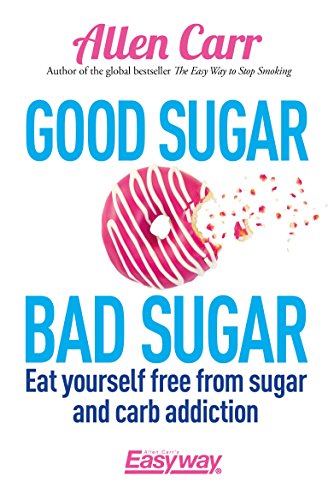
I don't usually vibe with self-help books. This was recommended to me by someone I trust who used the same method to kick alcoholism. So I figured, what have I got to lose?
I have tried REPEATEDLY to kick my addiction to chocolate and bad sugar foods. I felt like I tried everything except for drugs like Contrave (which would be my next stop on the train). Will power, substitutions, target weight goals, even chemotherapy (not by choice, but hey, it did allow me to quit chocolate for a few months). But I was never able to change my lifestyle. I always fell back to the addiction, hating myself for it.
This book is potentially life-changing.
Of course, I am still worried that I will fall back into deadly habits, but this really does give me a new perspective and a new lens on the problem.
Here are some of the lessons I want to internalize, because they’re true and they’re important.
Anything that relies on willpower is doomed to fail. Willpower is not infinite. It will break eventually, and it will always leave me feeling like I am making a huge sacrifice and suffering. I’ve already come to this conclusion on my own: dieting doesn’t work because it’s temporary. I need a lifestyle change. I need to become unaddicted.
All the baggage of my failures left me feeling like a prisoner who kept trying the door and finding it locked and then feeling defeated and miserable and giving up. But what if I am pushing on the wrong part of the door, the part with hinges instead of the part that opens? Well, I am exactly that kind of stubborn overachiever.
Which brings me to another truth this book pointed out: Addicts are the opposite of weak-willed. We are probably the strongest willed people out there. I write books that are cross-genre epics, even when they’re hard to sell, because I’m doing new things as an artist and doing it my own way, looking for success on my own terms.
Well, an addict stubbornly does the harmful thing even when the package says “this will kill you.” We are overachievers refusing to let go of certain illusions and harmful concepts or societal brainwashing.
It’s the same way the people who break away from high demand religions were often the most fervent adherents who followed all the stupid/harmful rules.
Not only does the food industry sell sugary foods as easy, necessary, good, rewarding, etc (all lies, of course), but the medical industry does little to push back on this and even upholds it in many cases, because Type II diabetes is a big industry. We’re all addicted as babies and even in the womb. Parents unwittingly push sugar as a reward. The whole of modern society is aggressively selling bad sugar as worthwhile in some way. We know it’s unhealthy, yet it is excused in a trillion different ways.
So what about people who aren’t addicted? The book had a lot to say about that. I’m not convinced there isn’t a genetic component, aka no such thing as an “addictive personality,” but I can sit with the idea that it’s something very different than I imagined. Instead of a weakness of will, it’s the opposite: the type of person who rigidly trusts societal messaging or an internalized belief. People like me hold our beliefs tightly instead of loosely.
A wishy-washy person might have enjoyed cake or ice cream as a child. Then, once they grew up and their peers were into steak and wine, they were like, “okay, this is what we do now.” They go with the flow and don’t think hard about the weird change in their tastes. They are easily influenced. Their wishy-washy approach to life is a problem in terms of doggedly pursuing a goal or sticking with a personal regime. But it is a benefit when it comes to sidestepping or letting go of addictions. They are guided by their animal instincts, which steers them towards health.
A sugar addict, on the other hand, sticks with the deeply instilled belief they got in childhood. They maintain their childhood love of sweets because they're against the whole wishy-washy changing of rules. They are not easily swayed. Once the addiction sinks its teeth into them, and vice versa, it becomes a massive psychological challenge to let go of it. It seems insurmountable.
The book points out that the addiction is 1% physical. That tiny monster is the trigger that leads the huge monster of the psychological aspect, which is 99% of the addiction. This also resonates. I’ve spent my life believing that I have a terrible craving that cannot be defeated by my undeniably weak willpower, and that it’s probably genetic. But what if this book is right? If so, it’s pretty much all a trick of my mind, all psychological, and my long-held belief is 100% false. The craving I feel is actually brainwashing, aka beliefs that I have internalized and hold way too tightly with my ludicrously strong iron will.
Sugar makes me crave sugar. It isn’t actually pleasurable or tasty. At all. It’s a terribly third rate food with zero nutritional value, and I’ve developed a tolerance because the human body has evolved to cope when first rate foods are unavailable. Acquired tastes are a sign that something is bad.
There is a whole elaborate web of excuses and lies that prop up the belief that chocolate is sexy, naughty, delicious, etc.
Addicts take the addictive substance so they can feel normal, not so they can feel good. The book points out that this is true even of heroin addiction. And sugar is very much like heroin, refined in similar ways, glamorized in similar ways, and even more deadly. Heroin just acts faster and so the detrimental effects are more immediate and obvious.
It is undeniably true. I’ve eaten chocolate to feel good—or so I believed—but in actuality, I was eating it to feel the way I should, to get to a baseline of feeling normal, after a blood sugar crash caused by eating sugar. My habit has been to eat chocolate an hour or so after eating a healthy meal. This was partly as a “reward” (societal brainwashing) for eating healthy, and partly because that is when the craving tends to hit the hardest. Why an hour after a meal? Because my sugar addiction has eroded my ability to achieve a baseline of normalcy from healthy foods. Instead of feeling 100%, I feel 90%, and then I feel like I need bad sugar, and it brings me to 95%, and then I end up crashing even before I finish the snack, so I eat more of it. I am constantly chasing that baseline, that craving to feel 100% normal, and the bad sugar ensures that I never get there.
The fact that it is almost all psychological is undeniable, too. I’ve felt physically healthier during the months when I dieted or otherwise had no chocolate (such as 4 months of chemotherapy). The diets made me feel deprived, and did not stop the food noise, but that’s a mental trick, isn’t it? Chocolate is not making me feel physically better or more normal than I am when I exist without it. Objectively, it makes me feel worse. I’m just stubbornly believing that it has a beneficial effect on me, despite all evidence to the contrary.
This book also puts a massive emphasis on optimism and positive thinking about the change in outlook, as opposed to a grueling ordeal. It should be exciting and wonderful to be healthy permanently! And isn’t that true? Of course it is!
I am cautious of optimism. I find the “it’s easy” claims to be the most unbelievable.
Which means this is the part that I really need to work on internalizing and accepting as true.
I do think this book glosses over the “food noise” aspect of the big monster. Yes, I agree that withdrawal from bad sugar is quick. Anyone who has tried to quit and failed repeatedly knows that. But the psychological noise… oh boy, that is nonstop. I’ve gone through the first few days thinking CONSTANTLY: “I want chocolate—NO, it’s evil. It’s heroin. It’s ruining my life.” Again and again. That monster just won’t shut up. I am trying to undo the brainwashing by using another form of brainwashing, aka repeating a mantra again and again. That repetition is exhausting. The book really doesn’t talk about that.
It does talk about how occasional evil thoughts will show up in the future. We all have bad days, and since we spent our lives addicted, we will naturally think of that substance in our worst moments, because we stupidly believed it gave us pleasure (when it really just robbed us of pleasure).
Being forewarned is being forearmed. I want to be the kind of person who swats away those stupid cravings with a feeling of relief and joy that I am no longer enslaved to my addiction.
I am free. Just threw out all the chocolate in the house. Now, I hope I can keep that outlook and new way of viewing it!