The English version can be found below.
-----------
German Version:
“In tiefen, kalten, hohlen Räumen,
Wo Schatten sich mit Schatten paaren,
Wo alte Bücher Träume träumen,
Von Zeiten, als sie Bäume waren,
Wo Kohle Diamant gebiert,
Man weder Licht noch Gnade kennt,
Dort ist's, wo jener Geist regiert,
Den man den Schattenkönig nennt.” 🖤🖤🖤
Eines meiner absoluten Lieblingsbücher, das ich 2023 für mich entdeckt habe und nun im Rahmen einer Hausarbeit erneut lese! 😍😍😍 Fand den Aspekt der Bearbeitung von Goethes Faust-Stoff wirklich spannend, vor allem in Verbindung mit dem Orm. Allerdings sollte ich an dieser Stelle unbedingt erwähnen, dass Mary Shelleys ‚Frankenstein‘ genauso, wenn nicht sogar stärker gewichtet, von Moers in ‚Die Stadt der Träumenden Bücher‘ kreativ umgesetzt und zamonisiert wurde.
Kurz zum Inhalt: 🦖👣Hildegunsts Reise beginnt mit einem geheimnisvollen Manuskript, das die Vollkommenheit überhaupt verkörpere und durch und durch vom Orm durchdrungen ist. Das „Orm [...] [ist] eine Art mysteriöse Kraft, die manche Dichter in Augenblicken höchster Inspiration durchströmen soll“ (S. 20)🌟✨✒️. Mit diesem Schriftstück macht Hildegunst von Mythenmetz sich auf den Weg nach Buchhaim, um den Verfasser zu finden, und die Geschichte nimmt seinen Lauf. .📜▶️Dabei lernt er im ersten Teil des Buches den oberen Teil von Buchhaim kennen, der eigentlich nur die Spitze des Eisbergs verkörpert, denn der Untergrund von Buchhaim ist ein Labyrinth von überwältigendem Ausmaß. Diesen unteren Teil Buchhaims lernt er dann im Anschluss im zweiten Teil des Buches kennen.
Besonders beeindruckend finde ich Moers Detailverliebtheit, da er in seinem Roman wirklich jeden Aspekt rund um ein Buch einbringt, selbst das Cover besteht aus einem kleinen Ausschnitt einer immensen Bibliothek über und über voll mit wertvollen alten Büchern. Auch die ganze Geschichte ist die Geschichte des Werdegangs eines Dichters, Hildegunst von Mythenmetz, und seine Erfahrungen vereint mit vielen anderer Dichtergeschichten, die darin verwoben sind. Bücher, Schreiben und Autoren stecken tatsächlich in Allem, selbst in den Namen, wie z.B. Hildegunst von Mythenmetz, Danzelot von Silbendrechsler. Bei beiden wird Mittelalter, Heldentum und Schreiben als Handwerksberuf vereint.
Nach nur 200 Seiten tauchen nun endlich auch die 'Schrecklichen' Buchlinge auf, wegen denen ich persönlich die Zamonien-Romane erst lesen wollte! 😍😍😍 Diese bilden meiner Meinung nach das Herz der Geschichte, vor allem ihre Liebe zur Literatur ist einfach hinreißend. Sie entstehen quasi erst durch das Schaffen von Literatur und der Geburt eines neuen Schriftstellers. ☺ Dann leben sie wortwörtlich von Büchern und widmen ihr ganzes Leben einem bestimmten Autor und seinen Werken. Hiermit ehrt Moers auch viele berühmte Schriftsteller wie z.B. Ovid, Johann Wolfgang von Goethe und Gottfried Keller.
Im zweiten Buch in der Unterwelt Buchaims lauern die Schrecken überall in den geheimen Gängen des Labyrinths und man kann mit dem orientierungslosen Hildegunst mitfiebern. Außerdem bringt einen Moers Humor, der sich in ‚Die Stadt der Träumenden Bücher‘ besonders durch Selbstreferentialität zur Literatur auszeichnet, durchweg zum Schmunzeln. Auch Moers sprachliche Formulierungen sind einmalig und geben dem ganzen Buch seine Seele.
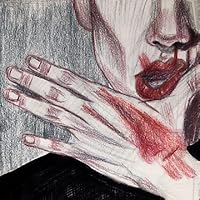
Moers erzeugt ein faszinierendes Wechselspiel von Schönheit und Schrecken, was sich auch im Schattenkönig widerspiegelt.
"Ich habe nie etwas Schöneres, etwas Wilderes, Beängstigenderes und Traurigeres gesehen als den König der Schatten, der zwischen seinen Feuern tanzte. Denn er tanzte, um nicht allein zu sein. Die hohen Flammen, die überall loderten, vervielfachten seinen Schatten, warfen ihn mal hier- mal dorthin, so daß es aussah, als befände sich der Schattenkönig in bester Gesellschaft." (S. 334)
Man kann eigentlich gar nicht alles aufzählen, was diesen Roman so besonders macht. Wenn man einmal damit anfängt das Buch zu analysieren, merkt man sehr schnell, wie viel Raffinesse, Intertextualität und Selbstreferenz in Bezug auf den Umgang mit Literatur und dem Schreibprozess in diesem Buch steckt, wobei man wahrscheinlich eine kleine Bibliothek damit füllen könnte, wenn man dies alles aufschlüsseln will. Allein das Enträtseln der Anagramm-haften darin verarbeiteten Künstlernamen ist eine Aufgabe für sich.
Daher => Gesamt: 5,0 plus⭐
____
Mein persönliches Ranking der Zamonien-Romane:
Platz 1: Die Stadt der Träumenden Bücher (2004) – ⭐5,0+
Platz 2: Die 13 ½ Leben des Käpt’n Blaubär (1999) – ⭐5,0
Platz 3: Rumo & Die Wunder im Dunkeln (2003) – ⭐5,0
Platz 4: Die Insel der 1000 Leuchttürme (2023) – ⭐4,8
Platz 5: Der Schrecksenmeister (2007) – ⭐4,8
Platz 6: Das Labyrinth der Träumenden Bücher (2011) - ⭐4,4
Platz 7: Der Bücherdrache (2019) - ⭐4,3
Platz 8: Ensel und Krete (2000) – ⭐4,0
Platz 9: Das Einhörnchen, das rückwärts leben wollte: Zwanzig zamonische Flabeln (2024) – ⭐3,4
Platz 10: Weihnachten auf der Lindwurmfeste (2018) – ⭐3,3
Platz 11: Prinzessin Insomnia & der alptraumfarbene Nachtmahr (2017) – ⭐1,7
----------
English version:
"In deep, cold, hollow rooms,
Where shadows mingle with shadows,
Where old books dream dreams,
Of times when they were trees,
Where coal gives birth to diamond,
One knows neither light nor mercy,
There is where that spirit reigns,
Which is called the shadow king." (translated by myself) 🖤🖤🖤
One of my absolute favorite books, which I discovered for myself in 2023 and am now re-reading as part of a term paper! 😍😍😍 I was particularly interested in the aspect of the adaptation of Goethe's 'Faust'-material, especially in connection with the Orm. However, I should definitely mention at this point that Mary Shelley's 'Frankenstein' was just as - if not weighted more heavily - creatively realized and zamonized by Moers in 'The City of Dreaming Books'.
In brief: 🦖👣 Optimus Yarnspinner's journey begins with a mysterious manuscript that embodies perfection in general and is permeated through and through by the Orm. The "Orm [...] [is] a kind of mysterious force that is said to flow through some poets in moments of supreme inspiration" (p. 20; translated by myself). 🌟✨✒️With this document, Optimus Yarnspinner sets off for Bookholm to find the author, and the story takes its course.📜▶️ In the first part of the book, he gets to know the upper part of Bookholm, which actually only represents the tip of the iceberg, as the underground of Bookholm is a labyrinth of overwhelming extent. He then gets to know this lower part of Bookholm in the second part of the book.
I find Moers's attention to detail particularly impressive, as he really brings every aspect of a book into his novel, even the cover consists of a small section of an immense library full of valuable old books. Also the whole story is the story of the career of a poet, Optimus Yarnspinner, and his experiences interwoven with many other poets' stories. Books, writing and authors are actually in everything, even in the names, such as Optimus Yarnspinner/Hildegunst von Mythenmetz, ?/Danzelot von Silbendrechsler (The English translation isn't so elaborated here.). Both combine the Middle Ages, heroism and writing as a craft.
After only 200 pages, the 'Terrible' Booklings finally make an appearance, which personally made me want to read the Zamonia novels in the first place! 😍😍😍 In my opinion, they form the heart of the story, especially their love of literature is simply adorable. They come into being through the creation of literature and the birth of a new writer. ☺ Then they literally live from books and dedicate their entire lives to a particular author and his works. In this way, Moers also honors many famous writers such as Ovid, Johann Wolfgang von Goethe and Gottfried Keller.
In the second book, set in the underworld of Bookholm, horrors lurk everywhere in the secret passages of the labyrinth and you can sympathize with the disoriented Hildegunst. In addition, Moers' humor, which in 'The City of Dreaming Books' is characterized by its self-referentiality to literature, makes you smile throughout. Moers' linguistic formulations are also unique and give the whole book its soul.
Moers creates a fascinating interplay of beauty and horror, which is also reflected in ‚Der Schattenkönig/The Shadow King‘.
"I have never seen anything more beautiful, more wild, more frightening and more sad than the King of Shadows dancing among his fires. For he danced so as not to be alone. The high flames that blazed everywhere multiplied his shadow, casting it here and there, so that it looked as if the Shadow King was in the best of company." (S. 334; translated by myself)
It is impossible to list everything that makes this novel so special. Once you start analyzing the book, you quickly realize how much there is in it - sophistication, intertextuality and self-reference to literature and the writing process.
You could probably fill a small library with it if you were to break it all down. Just unraveling the anagram-like artist names used in it is a task in itself.
Therefore => Overall: 5.0 plus⭐
____
My personal ranking of the Zamonia-Novels:
Rank 1: The City of Dreaming Books (2004) – ⭐5,0+
Rank 2: The 13 ½ Lives of Captain Bluebear (1999) – ⭐5,0
Rank 3: Rumo & His Miraculous Adventures (2003) – ⭐5,0
Rank 4: Die Insel der 1000 Leuchttürme (My translation: ‚The island of a 1000 lighthouses‘; not translated into English yet) (2023) – ⭐4,8
Rank 5: The Alchemaster’s Apprentice (2007) – ⭐4,8
Rank 6: The Labyrinth of Dreaming Books (2011) – ⭐4,4
Rank 7: Der Bücherdrache (My translation: ‚The Bookdragon‘; not translated into English) (2019) – ⭐4,3
Rank 8: Ensel und Krete (My translation: Ensel and Krete (reference to the fairy tale ‘Hansel and Gretel’ by the Brothers Grimm); not translated into English) (2000) – ⭐4,0
Rank 9: Das Einhörnchen, das rückwärts leben wollte: Zwanzig zamonische Flabeln (My translation: The squirrel with the one horn that wanted to live backwards (sounds strange in English because it's a play on words and squirrel means ‘Eichhörnchen’ in German and Moers then makes it ‘Einhörnchen’ (‘ein’= one; ‘hörnchen’= diminutive of horn), i.e. a squirrel that wears a horn on its head); not translated into English) (2024) – ⭐3,4
Rank 10: Weihnachten auf der Lindwurmfeste (My translation: Christmas at the Lindwurm Fortress; not translated into English) (2018) – ⭐3,3
Platz 11: Prinzessin Insomnia & der alptraumfarbene Nachtmahr (My translation: Princess Insomnia & the nightmare-coloured gnome; not translated into English) (2017) – ⭐1,7