

What do you think?

Posle udarca
Dorte Nors je jedan od najsnažnijih savremenih književnih glasova, a najbolji dokaz za to upravo je njena zbirka kratkih priča Posle udarca. Svaka priča je o udarcu: nevidljivom ili vidljivom, unutrašnjem ili spoljašnjem, psihoemocionalnom ili fizičkom. Udarcu koji nam zadaje drugo biće ili društvo i posle kog dolazi do suštinskih promena u čoveku i nepredvidljivih reakcija: od prezrenja oca do ubistva. Kao kad preciznim i snažnim zahvatom karatista ivicom šake iskrcka naređane predmete, tako i ovaj poseban udarac slomi pršljenove emotivne, duhovne ili moralne kičme bića, pa su naši potonji postupci tek posledica krivog srastanja. Priče počinju običnim događajima: odlaskom kod frizera, na jezero, sedenjem s tetkom u poslastičarnici, gledanjem TV-a. S tog sporednog puta Nors nas lagano vodi na glavni, gde duboka duševna stanja jure poput besnih automobila. Taj put treba preći, tim putem treba voziti, i uz to i preživeti.
Dorte se u svojim pričama kafkijanski ne čudi pred čudnim, kao Mopasan voli šokantne krajeve, harmsovski je duhovita, i cinična na autentičan norsovski način. A sve to skupa obavijeno je plavom danskom tugom i čistotom koja istovremeno dira i uznemiruje.
Dorte se u svojim pričama kafkijanski ne čudi pred čudnim, kao Mopasan voli šokantne krajeve, harmsovski je duhovita, i cinična na autentičan norsovski način. A sve to skupa obavijeno je plavom danskom tugom i čistotom koja istovremeno dira i uznemiruje.
96 pages, Paperback
First published September 25, 2008
About the author
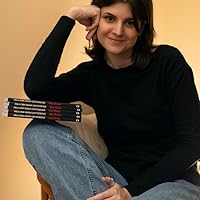
Dorthe Nors
32 books287 followersDorthe Nors is a Danish author and writer. She is the first Danish author to be published in the American magazine The New Yorker. She was born in 1970 and studied literature and art history at the University of Aarhus. After publishing three novels, she wrote Karate Chop, her collection of short stories, in 2008 and Minna Needs Rehearsal Space in 2013. She has seen her short stories in various publications, including The Boston Review, Harpers and The New Yorker, and has contributed to anthologies in Denmark and Germany. Having international acclaim, she lives in rural Jutland, Denmark.
From http://pushkinpress.com/author/dorthe...
From http://pushkinpress.com/author/dorthe...
Ratings & Reviews
Friends & Following
Create a free account to discover what your friends think of this book!
Community Reviews
Displaying 1 - 30 of 213 reviews

August 13, 2013
Oof, these stories are sharp and intelligent and the title story, my goodness, from beginning to end, I held my breath. These stories are reminiscent of Diane Williams or Renata Adler--precise, compact prose, a bit of a fabulist cum realist blend of stories. So much to like here.

Read
October 3, 2020This was the perfect book for me at this time. The stories in this collection moved smoothly from the odd and quirky to the disconcerting or deeply strange, in one or two cases the transition was from the curious to the radiant. And at this time when craziness and uncertainty is the daily reality the uncertainties transforming into strangeness, revealing private desolation or secret joy comforted me. I am not sure how many of the stories here will lodge in my memory but I enjoyed them all.
The overall picture of Denmark arising from these stories had a shabbiness tending towards bleakness. Which is a reality of 21st century life in Europe. That and abusive birdlife.
I was struck by the little detail in "The Heron" of the murdered woman's body being chopped up, put in bags, and loaded into a suitcase before being dumped in a park pond. Which reminded me of the cruel murder of the journalist Kim Wall. Perhaps the chopping up of victims is part of the Danish way of murder as much as in Britain the tendency is to bury victims in one's own back garden, presumably as a form of Blood, fish and bone meal fertiliser.
Still moved by the character who wanders in graveyards and can't explain why to her friends, because of her certainty of love which she finds inexpressible.
As I said a quirky set of stories which spoke very strongly to me at this time.
The overall picture of Denmark arising from these stories had a shabbiness tending towards bleakness. Which is a reality of 21st century life in Europe. That and abusive birdlife.
I was struck by the little detail in "The Heron" of the murdered woman's body being chopped up, put in bags, and loaded into a suitcase before being dumped in a park pond. Which reminded me of the cruel murder of the journalist Kim Wall. Perhaps the chopping up of victims is part of the Danish way of murder as much as in Britain the tendency is to bury victims in one's own back garden, presumably as a form of Blood, fish and bone meal fertiliser.
Still moved by the character who wanders in graveyards and can't explain why to her friends, because of her certainty of love which she finds inexpressible.
As I said a quirky set of stories which spoke very strongly to me at this time.

May 9, 2022
Overall I did not enjoy this short story collection. I am not sure I am going to rush out and read anything else this author publishes in the future. I thought I might like this collection because I like Yiyun Li’s writing, and she had a positive blurb on the back cover of this book, but alas I did not feel the same way as YiYun-Li:
• Reading Dorthe Nor’s work, one is reminded oof the thrills and dangers of living. Memories, laughter, a gesture: everything casts a shadow, meaningful or mysterious. These stories prove that no loss is too small, and each moment counts.
Stories involving killing animals, dismembering bodies, serial killers... and not understanding some of the short stories (they were really short, most about 5 pages) and after a while not caring to. 1.9 stars overall... 😐
1. Do You Know Jussi? [published previous in Ecotone] — 2 stars
2. Mutual Destruction [published previously in FENCE] — 1 star
3. The Buddhist [published previously in Boston Review] — 1 star
4. The Winter Garden [published previously in A Public Space] — 2 stars
5. The Big Tomato — 1.5 stars
6. Duckling [published previously in New Letters] — 1.5 stars
7. Female Killers [published previously in Normal School] — 2 stars
8. Flight [published previously in Harper’s] —3 stars
9. Nat Newsom — 3 stars
10. Hair Salon [published previously in Gulf Coast] — 5 stars
11. The Heron [published previously in The New Yorker] — 1 star
12. Karate Chop [published previously in A Public Space] — 2 star
13. Mother, Grandmother, And Aunt Ellen [published previously in Guernca]— 1 star
14. She Frequented Cemeteries [published previously in New Letters] — 2 stars
15. The Wadden Sea [published previously in AGNI] — 1.5 stars
• Reading Dorthe Nor’s work, one is reminded oof the thrills and dangers of living. Memories, laughter, a gesture: everything casts a shadow, meaningful or mysterious. These stories prove that no loss is too small, and each moment counts.
Stories involving killing animals, dismembering bodies, serial killers... and not understanding some of the short stories (they were really short, most about 5 pages) and after a while not caring to. 1.9 stars overall... 😐
1. Do You Know Jussi? [published previous in Ecotone] — 2 stars
2. Mutual Destruction [published previously in FENCE] — 1 star
3. The Buddhist [published previously in Boston Review] — 1 star
4. The Winter Garden [published previously in A Public Space] — 2 stars
5. The Big Tomato — 1.5 stars
6. Duckling [published previously in New Letters] — 1.5 stars
7. Female Killers [published previously in Normal School] — 2 stars
8. Flight [published previously in Harper’s] —3 stars
9. Nat Newsom — 3 stars
10. Hair Salon [published previously in Gulf Coast] — 5 stars
11. The Heron [published previously in The New Yorker] — 1 star
12. Karate Chop [published previously in A Public Space] — 2 star
13. Mother, Grandmother, And Aunt Ellen [published previously in Guernca]— 1 star
14. She Frequented Cemeteries [published previously in New Letters] — 2 stars
15. The Wadden Sea [published previously in AGNI] — 1.5 stars

May 1, 2021
15 kısa öyküde, şiddetin, cinayetin, yıkımın, nefretin, ruhsal bozulmaların, değişimin ve sevginin muhtelif hallerini gündelik akış ile birleştiriyor. Oldukça huzursuz-rahatsız edici öyküleri, son derece yalın ve mesafeli bir dil ile anlatıyor. Eğer Ağızdaki Kuşlar da yer alan öyküleri sevdiyseniz, bu kitabı da seveceksinizdir. Öykülerin tamamı için mükemmeldi diyemem ama yüne de okunmaya değer.
“Bir şey değil, oğlum! Ama şunu unutma: Dans eden bir yıldız doğurabilmek için kaos gerekir.”
3,5/5
“Bir şey değil, oğlum! Ama şunu unutma: Dans eden bir yıldız doğurabilmek için kaos gerekir.”
3,5/5

November 25, 2017
modern dünyada insan olmanın hâllerine değinen kısa ama farklı öyküler. iskandinav edebiyatının en sevdiğim yönlerinden biri olan çocukluğu hatırlayış, çocukluğa dönüş bu öykülerde de bolca var. baba-kız, anne-oğul ve anne-kız ilişkisinin bambaşka biçimlerde anlatıldığı öyküler çok etkili. ördek palazı, budist ve karate vuruşu en sevdiğim öyküler oldu. karate vuruşu'nda annelise'in çıkışsızlığı ve çaresizliği, kendini suçlaması öyle tanıdık ki, edebiyatın evrenselliğini yine kanıtlıyor.
depresyon, ayrılık acısı, geçmiş, şiddet, hep yanlış yapma duygusu... insana dair ne varsa anlatmış dorthe nors. murat alpar'ın dancadan çevirisi de mükemmel. öykülerin minimalliğini tamamen yansıtıyor.
depresyon, ayrılık acısı, geçmiş, şiddet, hep yanlış yapma duygusu... insana dair ne varsa anlatmış dorthe nors. murat alpar'ın dancadan çevirisi de mükemmel. öykülerin minimalliğini tamamen yansıtıyor.
November 4, 2019
Okej, jedna lekcija koja proizlazi iz ovoga je da mi se baaaaaš, ali baaaaaš ne dopadaju skandinavski pisci.
Izvini Dorte. Nije do tebe, do mene je. (A bogami i do tebe je malo.) (Malo više.)
Izvini Dorte. Nije do tebe, do mene je. (A bogami i do tebe je malo.) (Malo više.)

April 27, 2014
Weird, precise, alternately creepy and sparkling short fiction, almost all narrated by emotionally constipated Danish people. Starts slow, tails off a little toward the end into unrelieved dark territory but the stories in the middle third (it's only 80some pages) are really, really good. Will keep an eye out for Nors' name in future, although I hope she lets a little light in.

September 3, 2022
Son dönemde biraz Danimarka edebiyatına el attım. Ancak şu ana kadar diğer kuzeylilere kıyasla çok dikkat çekici bir şeye rastladığımı söyleyemeyeceğim. Yazarın en öne çıkan kitabı olduğu anlaşılan Karate Vuruşu da öyle. Üzerimde pek bir etki uyandırmadı. Olmasa da olurdu denilebilecek bir kitap oldu benim için.

January 2, 2020
A disappointing collection of insanely short stories. Most made little sense or required combing every finite detail to get something out of it. Sorry, I shouldn't have to pay attention to every microscopic detail for a story to be entertaining; it should be entertaining on its own, discovering extra details should be an added bonus. "Karate Chop" was the only good story out of the 15 presented (that says a lot) but I wouldn't say it's worth seeking out this collection to read. I know the reviews on the back say it was "disturbing" or "each story packs a punch," and maybe they do for others, but just writing about mundane things or serious topics in a morose tone doesn't make them disturbing or pack a punch. I wouldn't recommend this collection, but considering all the glowing reviews it got, I doubt my opinion really matters.

November 5, 2019
Neke fenomenalne priče i neke, eh, ne toliko fenomenalne. Većina je svakako imala neki prijatan, svakodnevni ton koji je meni iz nekog razloga dosta legao. Čak i kad se u pričama nije ništa konkretno dešavalo, svidelo mi se kako Nors piše o nekim trivijalnim dnevnim stvarima. A bilo je i dobrih one liner-a, iskreno.
Idemo redom, samo ocene:
-Poznajete Korija? 2/5
-Uzajamno ubijanje 3/5
-Budista 2/5
- Zimska bašta 5/5
-Veliki paradajz 4/5
-Pače 4/5
- Žene ubice 2/5
- Lebdenje 5/5
- Net Njusom, čovek koji poseže 2/5
- Kod frizera preko puta perionice 4/5
- Čaplja 1/5
- Posle udarca 5/5
- Majka, baba i tetka Elen 2/5
- Tog leta šetala se po grobljima 4/5
-Vadensko more 3/5
Idemo redom, samo ocene:
-Poznajete Korija? 2/5
-Uzajamno ubijanje 3/5
-Budista 2/5
- Zimska bašta 5/5
-Veliki paradajz 4/5
-Pače 4/5
- Žene ubice 2/5
- Lebdenje 5/5
- Net Njusom, čovek koji poseže 2/5
- Kod frizera preko puta perionice 4/5
- Čaplja 1/5
- Posle udarca 5/5
- Majka, baba i tetka Elen 2/5
- Tog leta šetala se po grobljima 4/5
-Vadensko more 3/5

April 26, 2014
Tempted to give five stars just for "The Buddhist" and these bits of sentence: "But she had known many men like that. Many men like those reptiles in the zoo that could puff up their faces with fanciful color and raise themselves up onto thin toes and rattle."
But, unfortunately, my feelings about the collection overall are mixed. I very much admire the writing (and translation) which is sort of eerily--even ominously--beautiful.
But, unfortunately, my feelings about the collection overall are mixed. I very much admire the writing (and translation) which is sort of eerily--even ominously--beautiful.

June 9, 2022
Relatos sobre la cotidianeidad en los que Nors, con su ya consumado tono satírico-irónico-festivo, descuartiza las expectativas sociales y vitales de un buen puñado de personajes tan distantes como emotivos. Es cierto que algunos cuentos son brillantes (tratando temas que duelen bastante), pero en general todos se me han quedado a medio camino de ser algo más. Como si les faltase una última pincelada para redondearse y flotar.

August 18, 2019
ceo prikaz: http://www.bukmarkic.com/dorte-nors-p...
Posle udarca broji svega 90-ak stranica, a sadrži čak 15 kratkih priča. Ove kratke priče su zaista stvarno takve – kratke – i neke sadrže svega dve strane. Svaka zbirka kratkih priča ima neku zajedniču temu ili motiv koji ih sve spaja, a to je u slučaju Dorte Nors upravo udarac. Ipak, ne odnosi se samo na fizičke udarce (iako ima i toga), već i na one emotivne, psihičke i nevidljive. Odnosno udarce koje nam svima zadaje život.
Pisati prikaz za zbirke kratkih priča jeste prilično nezahvalan posao, a isto tako je i ocenjivanje istih. Mi pratimo više različitih ljudi kroz različite životne stadijume i situacije, i zaista je nemoguće ne povezati se sa bar jednom pričom. Naslovna priča, Posle udarca, i jeste možda ona koja je najemotivnija i najteža, i to ne samo čitaocima, već i kritičarima. U središtu ove priče je žena koja nikad nije znala da izabere pravog muškarca za sebe. Ona je jedna individua koja je oličenje svih nas. Sve komentare muškaraca koje upoznaje da su oni eto takvi i da se ne mogu promeniti naivno sluša i tome se prepušta, ne slušajući sebe i ne stavljajući sebe na prvo mesto. Ova priča je previše upečatljiva i kao temu ima nešto što je i dan danas aktuelno (i biće tako sve dok se ne promeni), i iz tog razloga ću ostaviti link ka priči na zvaničnom sajtu izdavačke kuće Štrik. Nemojte da vas mrzi da je pročitate, izuzetno je kratka a zaista bitna.
Svaka priča u ovoj knjizi počinje na jedan naivan način. Gledanjem televizora, odlaskom u prodavnicu, odlaskom kod frizera, dozivanjem psa. I to je ono što Dorte Nors dobro radi – ona nam pokazuje da se isto tako dešava u životu. Svaki dan u kom smo doživeli neki jak udarac, nebitno da li psihički ili fizički, počeo je sasvim obično.
Pomenuo bih i priču Pače, koja na jedan jako dobar način govori o patrijarhatu i načinu na koji se generacije menjaju sa vremenom. Pored te, bitno je pročitati i priče Zimska bašta o tome kako jedan tinejdžer doživljava razvod njegovih roditelja i njihove nove partnere i Žene ubice o tome kako jedan čovek reaguje na članak o ženi ubici.
Posle udarca broji svega 90-ak stranica, a sadrži čak 15 kratkih priča. Ove kratke priče su zaista stvarno takve – kratke – i neke sadrže svega dve strane. Svaka zbirka kratkih priča ima neku zajedniču temu ili motiv koji ih sve spaja, a to je u slučaju Dorte Nors upravo udarac. Ipak, ne odnosi se samo na fizičke udarce (iako ima i toga), već i na one emotivne, psihičke i nevidljive. Odnosno udarce koje nam svima zadaje život.
Pisati prikaz za zbirke kratkih priča jeste prilično nezahvalan posao, a isto tako je i ocenjivanje istih. Mi pratimo više različitih ljudi kroz različite životne stadijume i situacije, i zaista je nemoguće ne povezati se sa bar jednom pričom. Naslovna priča, Posle udarca, i jeste možda ona koja je najemotivnija i najteža, i to ne samo čitaocima, već i kritičarima. U središtu ove priče je žena koja nikad nije znala da izabere pravog muškarca za sebe. Ona je jedna individua koja je oličenje svih nas. Sve komentare muškaraca koje upoznaje da su oni eto takvi i da se ne mogu promeniti naivno sluša i tome se prepušta, ne slušajući sebe i ne stavljajući sebe na prvo mesto. Ova priča je previše upečatljiva i kao temu ima nešto što je i dan danas aktuelno (i biće tako sve dok se ne promeni), i iz tog razloga ću ostaviti link ka priči na zvaničnom sajtu izdavačke kuće Štrik. Nemojte da vas mrzi da je pročitate, izuzetno je kratka a zaista bitna.
Svaka priča u ovoj knjizi počinje na jedan naivan način. Gledanjem televizora, odlaskom u prodavnicu, odlaskom kod frizera, dozivanjem psa. I to je ono što Dorte Nors dobro radi – ona nam pokazuje da se isto tako dešava u životu. Svaki dan u kom smo doživeli neki jak udarac, nebitno da li psihički ili fizički, počeo je sasvim obično.
Pomenuo bih i priču Pače, koja na jedan jako dobar način govori o patrijarhatu i načinu na koji se generacije menjaju sa vremenom. Pored te, bitno je pročitati i priče Zimska bašta o tome kako jedan tinejdžer doživljava razvod njegovih roditelja i njihove nove partnere i Žene ubice o tome kako jedan čovek reaguje na članak o ženi ubici.

May 28, 2020
Sharp, intelligent and dark, these stories could've been everything I adore when it comes to short story collections. However, they didn't impact me as much as I hoped to, and none of them really stood out when compared to the others. Except maybe Karate Chop, I liked that one a bit better than the rest of them.
Despite my complaints, Norse's style is addictive, and I was flipping the pages as fast as I could. I guess I'll give one of her other books a chance in the future, I heard they're a bit more avant-garde.
Despite my complaints, Norse's style is addictive, and I was flipping the pages as fast as I could. I guess I'll give one of her other books a chance in the future, I heard they're a bit more avant-garde.

May 18, 2014
I was 50/50 on these stories. Some I was absolutely absorbed by; others seemed to me to resist being read. Ultimately, I think I'm a reader who does well with narrative storytelling, so stories that lack narratives or whose narratives are unclear are slightly confounding to me. "Female Killers," "Do you know Jussi?," and "Hair Salon" are a few examples of stories that simply did not invite me in. "The Buddhist" was possibly my favorite story in this collection (it was absolutely hysterical), and "The Wadden Sea," "She Frequented Cemeteries," and "Karate Chop" were all beautiful, if a little abstract.

March 11, 2016
First off, I am NOT a great fan of short stories, so this had a bit of prejudice against it going in. Most of these are VERY short ... 5 - 7 pages at most, so lack the depth that I prefer in my reading material. That being said, Nors is definitely sui generis (Kafka would be the closest analogy, but they are not really that similar) - and since this was a quick read, I for the most part enjoyed them; although a few were so subtle - or I am just obtuse - that I wasn't quite sure of the 'point'.

January 2, 2021
Interesting to read but I had no clue what was going on in half of the stories

August 28, 2017
Karate Chop, by Dorthe Nors (translated by Martin Aitken), is a collection of fifteen stories exploring ordinary people and situations they encounter, with incisive wit and perception. The Danish author has been shortlisted for the Man Booker International Prize. This is a rebound edition of a selection of their shorter works.
The snapshots of life offered up are varied, as are the protagonists. All are recognisable and relateable. There is a cogency, a poignancy to the prose. An undercurrent of isolation and the frailty of human interactions pervades.
The Buddhist tells of a man whose job requires him to write speeches for a government minister. When his wife leaves him he decides that he will turn to Buddhism, thereby gaining insight from the pain. He no longer wishes to spread lies so writes an article for a national newspaper exposing the deceits in which he has been complicit. He harbours delusions of grandeur believing his actions, inspired by Buddhist teachings, could change the world. As time passes he becomes increasingly selective in following his ideals. The circle turns.
The Winter Garden is narrated by a young boy caught between divorcing parents. Wanting to please, he lives first with his mother then his father, feeling distanced when they introduce new partners who have their own children. The special regard he felt for each parent is stripped away when he realises he is not uniquely valued. Opinions, once sought, lose their impact.
The Big Tomato offers a story of hope amongst displaced people. This is a gentle tale of burgeoning friendships and appreciation of kindnesses shared.
Duckling is narrated by a young girl facing the hypocrisy of her caring but opinionated father.
“Dad had his boxes and he put things away in them, even things that contradicted each other.”
The smooth surface of family life relies on much being left unsaid.
Female Killers shares the private thoughts of a husband when alone late at night, his wife in bed. The reader may decide if, as no action results, his musings are harmless or grotesque.
Flight is a tale of loss told by a wife whose husband has left her. In trying to deny the hurt she feels, an emptiness is created. Moving on from a situation when change was not desired proves challenging.
The Heron is set in a park and offers glimpses of those passing through. Of note are approaching mothers pushing their baby carriages with intent.
“They always come in flocks, great flocks of mothers, and they stir up bad feelings in one another.”
The storyteller suspects that the stony mothers regard him as they would a sickly heron he has observed – tired and sallow, often in the way. He thinks of showing kindness to their babies but recognises the impossibility of such behaviour given the mothers’ demeanour.
She Frequented Cemeteries tells of a love story that is insular, perhaps unrequited. The protagonist is nevertheless contented but has no wish to share her new formed feelings with friends. She suspects they may demand that she regard her valued happiness differently. As in so many areas, the unusual is treated with suspicion.
These stories are concise, just a few pages each in length. They offer circumstances and concepts that the reader may then interpret. There is much to ponder in the difficulties being faced. An empathetic, rewarding little read.
My copy of this book was provided gratis by the publisher, Pushkin Press.
The snapshots of life offered up are varied, as are the protagonists. All are recognisable and relateable. There is a cogency, a poignancy to the prose. An undercurrent of isolation and the frailty of human interactions pervades.
The Buddhist tells of a man whose job requires him to write speeches for a government minister. When his wife leaves him he decides that he will turn to Buddhism, thereby gaining insight from the pain. He no longer wishes to spread lies so writes an article for a national newspaper exposing the deceits in which he has been complicit. He harbours delusions of grandeur believing his actions, inspired by Buddhist teachings, could change the world. As time passes he becomes increasingly selective in following his ideals. The circle turns.
The Winter Garden is narrated by a young boy caught between divorcing parents. Wanting to please, he lives first with his mother then his father, feeling distanced when they introduce new partners who have their own children. The special regard he felt for each parent is stripped away when he realises he is not uniquely valued. Opinions, once sought, lose their impact.
The Big Tomato offers a story of hope amongst displaced people. This is a gentle tale of burgeoning friendships and appreciation of kindnesses shared.
Duckling is narrated by a young girl facing the hypocrisy of her caring but opinionated father.
“Dad had his boxes and he put things away in them, even things that contradicted each other.”
The smooth surface of family life relies on much being left unsaid.
Female Killers shares the private thoughts of a husband when alone late at night, his wife in bed. The reader may decide if, as no action results, his musings are harmless or grotesque.
Flight is a tale of loss told by a wife whose husband has left her. In trying to deny the hurt she feels, an emptiness is created. Moving on from a situation when change was not desired proves challenging.
The Heron is set in a park and offers glimpses of those passing through. Of note are approaching mothers pushing their baby carriages with intent.
“They always come in flocks, great flocks of mothers, and they stir up bad feelings in one another.”
The storyteller suspects that the stony mothers regard him as they would a sickly heron he has observed – tired and sallow, often in the way. He thinks of showing kindness to their babies but recognises the impossibility of such behaviour given the mothers’ demeanour.
She Frequented Cemeteries tells of a love story that is insular, perhaps unrequited. The protagonist is nevertheless contented but has no wish to share her new formed feelings with friends. She suspects they may demand that she regard her valued happiness differently. As in so many areas, the unusual is treated with suspicion.
These stories are concise, just a few pages each in length. They offer circumstances and concepts that the reader may then interpret. There is much to ponder in the difficulties being faced. An empathetic, rewarding little read.
My copy of this book was provided gratis by the publisher, Pushkin Press.

September 29, 2017
“Annelise çocukların, boyama kitaplarında boyadıkları resimleri nadiren ana babalarına ya da başka yetişkinlere gösterdiklerini gözlemlemişti. Bunun nedeni, büyük bir olasılıkla, çocuğun boyadığı bu resimlerin, onun yaratıcı yeteneğine değil, tam tersine, onun en kötü özelliğine, yani, haylazlığına ve bir şeyde gerçekten derinleşmedeki cesaret eksikliğine tanıklık etmesiydi. Annelise’ nin gözü gene Carl Erik’ e takıldı. Carl Erik gibi biri, yani bir erkek, kadınlar için önceden düşünülmüş bütünün bir parçasıydı. Üstelik, insanın karşılaştığı her birey, bir gizil güç, bir taslak, boyanması gereken bir resimdi; böylece her şeye içerik verme olanağı vardı. Annelise, genç kızların aşırı etkinlik eğilimi, yani değiştirme, kontrol altında tutma ve açıklama gereksinimi ve bunu gerçekleştiremeyince de keçe uçlu kaleme sarılıp çizgi resmin içindeki her şeyi boyamaları bağlamında bir şeyler okumuştu. Belki bu yüzden dövmüştü onu Carl Erik. Annelise’ nin vücudundaki morluklar, çizgilerin dışındaki bölgeyi boyamanın bir biçimiydi belki.”(s.62)

September 29, 2014
Readathon October 2014
Really great collection of short stories!
The story I liked the most, was the story called 'Karate Chops,' it really made an impression of me and I had a hard time shaking it off again.
I also liked the second story a whole lot, I found it rather sarcastic and it made it obvious to me that this is in truth a Danish book! It's kind of hard for me to explain...
Normally when I read a short story collection, there's some of the stories that I don't like. This wasn't the case here. I only found one story who I wasn't too fond of, the rest were really great.
I'm a big fan of the writing in this book. Absolutely perfect!
A really great book!
Really great collection of short stories!
The story I liked the most, was the story called 'Karate Chops,' it really made an impression of me and I had a hard time shaking it off again.
I also liked the second story a whole lot, I found it rather sarcastic and it made it obvious to me that this is in truth a Danish book! It's kind of hard for me to explain...
Normally when I read a short story collection, there's some of the stories that I don't like. This wasn't the case here. I only found one story who I wasn't too fond of, the rest were really great.
I'm a big fan of the writing in this book. Absolutely perfect!
A really great book!

May 17, 2016
Given the positive reviews, I feel like I must be missing something here, but most of these stories failed to grab me. They felt more like vignettes than complete stories, in that I had trouble perceiving a change in the point-of-view character from the beginning of the story to the end. Without that, a story lacks punch.

February 2, 2017
Zatím jedna z nejlepších knih, kterou jsem kdy četla. Je úplně jiná než ostatní. Nikdy jsem se s něčím takovým nesetkala.
Rozhodně doporučuji přečíst!
Rozhodně doporučuji přečíst!

November 9, 2018
Nothing special (or I'm stupid, for not understanding)

April 19, 2020
Razor-sharp and thought-provoking short stories. With this collection Nors showcases the best parts of minimalism.

March 14, 2023
Nijedna kratka priča u ovoj knjizi mi nije bila zanimljiva. Priče su mi bile dosadne i nisam shvatila poentu nijedne od njih.

July 20, 2019
3,5 - 4 stele.
Nu mai știu cum am ajuns la cartea asta. Prin librărie, probabil, povestind despre volume noi de proză scurtă. Am tot ezitat să o citesc din cauza traducerii (Rao și traducerile marca Lingua Connexion), însă totuși traducerea e decentă, cel puțin.
Prozele sunt extrem de diferite, unele violente și întunecate ca romanele polițiste nordice, altele seci, pe care nu știi cum să le interpretezi. Personaje cu probleme psihice, personaje banale cărora viața pare să le pregătească o supriză, un soi de impas fără soluție. Câteva proze excelente pe care mi-aș fi dorit să le văd dezvoltate într-un roman.
Nu cred că o să vedem în traducere prea repede o carte nouă scrisă de Nors, însă eu aș mai citi.
Nu mai știu cum am ajuns la cartea asta. Prin librărie, probabil, povestind despre volume noi de proză scurtă. Am tot ezitat să o citesc din cauza traducerii (Rao și traducerile marca Lingua Connexion), însă totuși traducerea e decentă, cel puțin.
Prozele sunt extrem de diferite, unele violente și întunecate ca romanele polițiste nordice, altele seci, pe care nu știi cum să le interpretezi. Personaje cu probleme psihice, personaje banale cărora viața pare să le pregătească o supriză, un soi de impas fără soluție. Câteva proze excelente pe care mi-aș fi dorit să le văd dezvoltate într-un roman.
Nu cred că o să vedem în traducere prea repede o carte nouă scrisă de Nors, însă eu aș mai citi.

January 8, 2020
Karate Chop may be short, but it is deep and definitely worth rereading. As my wife says, there's a moment in each story where it tilts into something unusual, where the situation reveals itself to be something altogether different than what you thought it was.
I really enjoyed collections of super short stories by Lindsay Hunter and Amelia Gray. Karate Chop is just as evoking, but in a more subtle, simmering way. Really cool to see how different authors work in this form so differently.
I really enjoyed collections of super short stories by Lindsay Hunter and Amelia Gray. Karate Chop is just as evoking, but in a more subtle, simmering way. Really cool to see how different authors work in this form so differently.

March 22, 2025
These strange little stories are filled with odd details and unique insights. A fresh voice.

January 23, 2022
I had a different book by Dorthe Nors lined up to read but then I stumbled on this cute collection by her in a bookstore in Reykjavik and it was on sale, basically a steal by Icelandic price standards and I did not say no to that. I mean, I obviously like short story collections quite a bit but combined with this experience my expectations were shot pretty high, spoiler alert, too high. Overall I this was not my cup of odd tea.
Which is too bad because on paper it sounds like it: Extremely short short stories with either some kind of odd or quirky element that often take a surprisingly dark turn. I should get on with it. Maybe it was the good old problem I have with short stories from the field of literary and/ or realistic fiction. See, I mostly run in the waters of Horror, Speculative, Magical Realism when it comes to short fiction and my attempts with straight up contemporary short fiction have been underwhelming but not completely fruitless. And since these have that off and so slightly disturbing element going on I thought we would get along with each other. Alas, mostly we didn't. So maybe it was the wrong genre but I think it was also Nors writing that didn't do it for me. I found it too flat, straight and boring. I get that it was there to underline the satirical tones that are very present in this collection, to create a certain mood to these stories, to make the often dark turns more surprising. But I didn't like it. If you have to drag yourself through a 5 page story because you kinda hate the writing things are not going according to plan.
A lot of people seem to specifically enjoy the title giving story "Karate Chop" but boy was that ending predictable from the first paragraph to me and with that I honestly didn't get much else out of the story. Which was a recurring problem, there were a few stories in here where I really didn't see the point and they seemed like random bla bla. Sure, I likely missed something in those but result is the same: I did not have a good time. Bottom line is I will not move onto the novel I originally planned to read by Nors since her style and my taste don't seem to match up. Often when I read book I personally don't like I can still picture its audience and even sometimes recommend them, here I am a bit at a loss though.
All that negativity out of my system, I actually really enjoyed the very last story "The Wadden Sea" . Its setting, the way how it talked about depression, the harsh ending, how it was told: this one worked. Why not more of that? Two other stories I found at least entertaining enough were "The Buddhist" and "Female Killers".
Which is too bad because on paper it sounds like it: Extremely short short stories with either some kind of odd or quirky element that often take a surprisingly dark turn. I should get on with it. Maybe it was the good old problem I have with short stories from the field of literary and/ or realistic fiction. See, I mostly run in the waters of Horror, Speculative, Magical Realism when it comes to short fiction and my attempts with straight up contemporary short fiction have been underwhelming but not completely fruitless. And since these have that off and so slightly disturbing element going on I thought we would get along with each other. Alas, mostly we didn't. So maybe it was the wrong genre but I think it was also Nors writing that didn't do it for me. I found it too flat, straight and boring. I get that it was there to underline the satirical tones that are very present in this collection, to create a certain mood to these stories, to make the often dark turns more surprising. But I didn't like it. If you have to drag yourself through a 5 page story because you kinda hate the writing things are not going according to plan.
A lot of people seem to specifically enjoy the title giving story "Karate Chop" but boy was that ending predictable from the first paragraph to me and with that I honestly didn't get much else out of the story. Which was a recurring problem, there were a few stories in here where I really didn't see the point and they seemed like random bla bla. Sure, I likely missed something in those but result is the same: I did not have a good time. Bottom line is I will not move onto the novel I originally planned to read by Nors since her style and my taste don't seem to match up. Often when I read book I personally don't like I can still picture its audience and even sometimes recommend them, here I am a bit at a loss though.
All that negativity out of my system, I actually really enjoyed the very last story "The Wadden Sea" . Its setting, the way how it talked about depression, the harsh ending, how it was told: this one worked. Why not more of that? Two other stories I found at least entertaining enough were "The Buddhist" and "Female Killers".

January 15, 2016
Working in a more design-oriented field now, I admit that I chose this slender and minimal short story collection because of its cover color, which closely resembles Rose Quartz— one of Pantone’s 2016 Colors of the Year— and that color has been so embedded in things I follow on different social media platforms, that I could not help but be drawn to it. (Ha ha, what a trivial method for making reading selections). A color reigning in Scandinavian design, I wasn’t surprised to find out that this is a Danish-to-English translation. This was one of the instances where judging a book by its cover may not have been such an erroneous thing— it was sparse and stoic. That said, I do think much of the collection’s potency may have gotten lost in translation. The stories almost resisted being read— which I, in part, blame on the syntax. I had to reread quite a few of them.
Nors’ stories quietly and economically undertake serious themes of violence, cruelty and fear. But don’t let Nors ‘ subtlety fool you— she has an ability to incorporate sly humor as the satirical story about self-actualization, morality, and non-profits “The Buddhist” exemplifies. I think the piece that will stay with me the longest is the collection’s opener, “Do You Know Jussi?” a quiet story where the protagonist, a young adolescent who just lost her virginity, searches for equilibrium in moments immediately following the loss of her virginity, juxtaposed with reality television, childhood memories, and her parent’s presence downstairs. The most interesting element was the scripted reality television show she was watching— she turns it off just as we as readers were about to find out what happens, and I thinks Nors may have been coyly commenting on a female’s first sexual encounter— over before climax. The protagonist seemed quite distant from the person she just shared an incredibly intimate moment with. I also readily enjoyed “Mother, Grandmother, and Aunt Ellen” In this story, Nors builds suspension from the beginning: “And her hands. Mostly her hands. They were as small as a little girl’s and never at rest. Small and fluttering. How storage to think it was those hands that did it” (70). Throughout the piece, these delicate hands were in the back of my mind, wondering what evil they are capable of. Building suspense in small framework takes skill. I enjoyed this intelligent collection; however, not many of these stories left a lasting impression.
Nors’ stories quietly and economically undertake serious themes of violence, cruelty and fear. But don’t let Nors ‘ subtlety fool you— she has an ability to incorporate sly humor as the satirical story about self-actualization, morality, and non-profits “The Buddhist” exemplifies. I think the piece that will stay with me the longest is the collection’s opener, “Do You Know Jussi?” a quiet story where the protagonist, a young adolescent who just lost her virginity, searches for equilibrium in moments immediately following the loss of her virginity, juxtaposed with reality television, childhood memories, and her parent’s presence downstairs. The most interesting element was the scripted reality television show she was watching— she turns it off just as we as readers were about to find out what happens, and I thinks Nors may have been coyly commenting on a female’s first sexual encounter— over before climax. The protagonist seemed quite distant from the person she just shared an incredibly intimate moment with. I also readily enjoyed “Mother, Grandmother, and Aunt Ellen” In this story, Nors builds suspension from the beginning: “And her hands. Mostly her hands. They were as small as a little girl’s and never at rest. Small and fluttering. How storage to think it was those hands that did it” (70). Throughout the piece, these delicate hands were in the back of my mind, wondering what evil they are capable of. Building suspense in small framework takes skill. I enjoyed this intelligent collection; however, not many of these stories left a lasting impression.
Displaying 1 - 30 of 213 reviews