That is, the Day-Spring or Dawning of the Day in the Orient or Morning Redness in the Rising of the Sun. That is the Root or Mother of Philosophie, Astrologie and Theologie from the true Ground. Or a Description of Nature, I. How All was, and came to be in the Beginning. II. How Nature and the Elements are become Creaturely. III. Also of the Two Qualities Evil and Good. IV. From whence all things had their Original. V. And how all stand and work at present. VI. Also how all will be at the End of the Time. VII. Also what is the Condition of the Kingdom of God, and of the Kingdom of Hell. VIII. And how men work and act creaturely in Each of them. All this set down diligently from a true Ground in the Knowledge of the Spirit, and in the impulse of God.
Jakob Böhme (probably April 24, 1575[1] – November 17, 1624) was a German Christian mystic and theologian. He is considered an original thinker within the Lutheran tradition, and his first book, commonly known as Aurora, caused a great scandal. In contemporary English, his name may be spelled Jacob Boehme; in seventeenth-century England it was also spelled Behmen, approximating the contemporary English pronunciation of the German Böhme.
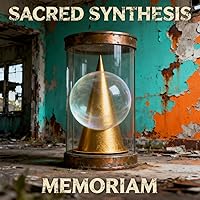
I give it three as it is important to the records we have on the mystical experience. Jacob was an angry, firey spirit, and should probably not have stared into that plate.
A cobbler in Görlitz, 1612. No university education. A vision that convinced him he was seeing the signature of all things — a direct perception of how reality was structured from within. And then he sat down and wrote what he saw, in language that was either visionary or deranged depending on what you brought to it.
I came to Boehme through a note about his influence on Schelling, Hegel, and Blake, expecting something roughly comprehensible. Aurora is not roughly comprehensible on a first reading. It requires that you suspend the expectation of systematic argument and allow yourself to track something more like a sustained metaphor that keeps deepening as you follow it.
The Ungrund — the groundless ground — is the concept I find most useful. Prior to any divine self-manifestation, prior to any division between being and non-being, there is this: pure potentiality that is identical with freedom, that "precedes" creation not temporally but ontologically. Darkness is not evil. Light is not its opposite. Both are phases of a single self-disclosure — the Ungrund expressing itself through the play of contraction and expansion, will and counter-will, depth and height.
What strikes me, having read Eckhart's Grunt (the groundless ground beneath all names), is that Boehme is taking that concept from the Rhineland mystic and transforming it into something more dynamic — a process, not just a ground. The Ungrund becomes the engine of creation. Reading them alongside each other, across three centuries, you see a tradition developing, modifying, deepening. Someone was paying attention.
This text is Book 22 in The Mysterious Thread curriculum. The complete architecture can be found via The Collective Press.
Где грань между мистицизмом и философией? Как личные личные переживания отделить от божественного проведения? Не стоит ждать ответа от Якоба! Только поэзия, добротная поэзия духа!