In Emporium, Aditi Machado investigates transnationalism and translation in poems that follow a merchant woman as she travels a twenty-first century “silk route.” As on the original silk route, this merchant is engaged in economic transactions but also cultural exchanges, un-monetizeable reciprocities, the sensory excesses of the marketplace: coins moving from hand to hand, the smell of food and sweat infusing the air, the “noise” of translation and multilingualism. Is this tradeswoman in control of her “destiny”/business or is she a commodity of impenetrable global forces? Her investigative, digressive travel seems a way to interrogate history and money and her own entanglement in such irresistible threads.
The poet exhibits a high level of skill with experimental free verse and a rich vocabulary, but the volume ultimately reads like academic poetry. There’s nothing raw, compelling, or experiential. It’s an intellectual exercise.
For reading this book, it might first be useful to imagine the order on one of those tapestries you might see at a museum. They should be the tapestries that evoke a broad landscape, a city, a “nature scene” that is more about animals threading their bodies among verdant forest-ish figures. It’s an order that I don’t always do an adequate job reading enough into. Like I’m not a good viewer of tapestries, because I wish I could be more conscious of all the geometries and visual tropes and order. I wish I could grasp the ultimate order of a tapestry, but I’m often thinking about details as decorative touches. Which they are. But there is something more than just decoration happening.
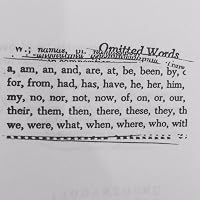
However deficient I am with viewing that kind of art, I read Machado like her poems are assembling a tapestry. Or they’re enacting a tapestry. Or they perform in language how a tapestry seems to exist in a static state on a wall, knowing poems aren’t static. They exist over a time. Even if their time is felt like an aspic congealing on a plate. Think, for instance, how in the book’s opening section a tree line establishes the texture and boundary line of a city. In a subsequent section, crowded wares evoke an emporium. And in still another section (”or”) the meaningfulness of adjacency. Where one idea, or one object, or one experience is placed beside something, there is something to be understood from that. Like if there were pages taken out of an archive (a gesture Machado does in one of the book’s sections), and some text were deleted, there would be the fact that what are now framed as “fragments” appear to be separate from one another (because of what the poet had deleted), but they must be related to one another. Because they are part of the same document. It’s just a few lines of intervening text that have been taken out.
And it’s like OMG that could be what a tapestry is! Or maybe every emporium visit could be read or interpreted or mimetically inscribed as a tapestry. Or what if experience, which poems are so accustomed to relating, could be stuffed into a tapestry’s mold, like what I see in “Meadow Interregnum.” Yes, I’m doing the wrong thing for someone reviewing a book. I’m letting my enthusiasm for this one reading be the reading. But what I hope someone reading this would see is Machado playing with stasis and the unavoidable temporality of language. And you could read every instance of “tapestry” as “descriptive observation.” One where the poet exaggeratedly sees the world around her. And makes a language to accommodate that seeing.
Reading the last few poems of this book in the bath was really a lovely experience so I think i will read again, even though I understood about 1/2 of the words in here
Full disclosure: I was gifted a copy of this book by the author in a time before a billionaire bought Twitter from another set of billionaires and people could have positive parasocial interactions on there.
Folks, the sheer joy of receiving a book from an author whose work I love was overwhelming, so much so that once I had it in hand, it was enough to have it on my shelf and look at it day by day, and say, 'hi, book. One day I will read you, and I will most certainly love your innards as I love you already.'
That feeling sustained me for a full 6 years whenever I passed the book, and I'm still happy to have it in hand across four moves, two major life changes, a near-death experience, and the growth of my family to include three fur babies minus one in 2024 (RIP Niño).
A note on reading: with poetry books, I try to apply self-restraint in my appetites to binge them. These divisions are often very arbitrary. 'Read 2-3 poems a day. Read a section a day.' That sort of thing.
With this book, I read one black page followed by all the poems in that territory a day, skipping perhaps 3 days for a variety of reasons.
So, onto the book, which I knew I would love.
See, Machado's mind works in a way that really tells me that human potential is near infinite. Yes, Machado is brilliant and funny and insightful in Machado's poems, but there is something else here as well. There is magic.
Not magic of spells, but the magic of knowing that rocks have been around a long time and that words only mean things because we've come to some accord about them. Machado's poems are some of my favorites because Machado's poems put words adjacent to each other and ask you to inquire, 'Wait, is that what you mean? Why do I think that I know you? Who are you?'
Maybe that sounds high-falutin or like I'm high [I am not].
I am saying how this poetry reading thing feels to do it when you are engaging with a bodymind that gives you hope.
Not that the world will be better. Probably not. But that there is still a lot more for us to investigate in ourselves and our collective memory that is worth sticking around for. That feels like enough for me right now.
I wrote this next bit in my daily notes after reading the last poem. 'A book of poems that feels like a history book from a fantasy novel, one that gives you the prologue and epilogue to a world you'll never visit but come to know intimately.'
EMPORIUM, by Aditi Machado. (Nightboat, 112 pp., paper, $16.95.) “Wordplay” isn’t quite the term for what’s going on here; it’s more like linguistic athleticism. If you always choose Scrabble over Risk, crosswords over sudoku, you’ll get so much pleasure from the rhymes and slant rhymes (“The body is pronounced bawdy”; “It’s like innocence way off / in the distance”), double and triple meanings, conjugations and declensions, repetitions that evoke a sense of déjà vu — “Fold this” or “Fold it” or “I fold,” etc., occurs as a refrain that seems to half-reset things, like cutting a deck of cards, or twisting them into a Möbius strip. “The camera is deft, so I am dire. / I look into the mounting of desire … surely, the darkness, metonymic, shall / proceed. / I fold this.”
Traducciones de poemas de Aditi Machado. La poesía queda al descubierto. Es un complot internacional. Cada voz se integra en un macrosistema de voces que asedian al lenguaje más allá de cualquier frontera. Los poemas de Aditi Machado suenan tan argentinos como el objetivismo argentino de los noventa en su reedición del siglo XXI. También tienen su saturación neobarroca. Es ecléctica, intensa, fulminante. Una seña particular de Machado es la erudición. Lo coral no sólo es ese canon a mil voces, sino el diálogo vivo con vivos y muertos de la poética universal. Es como si hubiera un universo de voces poéticas sin tiempo ni espacio con el que conversa Machado. Un emporio. Otra marca extraordinaria porque es implícita, no se ve de pleno, pero es eficiente: entre versos Machado te manda a la mierda. Tremenda edición del Taller Chapita. Libro cosido sin lomo, una maravilla.
I got to page 47. And I had to force myself to read up that point. I could not continue. It's very bland and dry. Hard to understand in my personal opinion. Half the page is blank perhaps that's creative who knows. There's a lot of complicated words and I don't feel what I read. There's no emotion to what I'm reading. Because I felt this way up to page 47, I tried to skip ahead and read ahead and I just couldn't complete the book. Perhaps if people are interested in unique, hard to read things they might enjoy this book, but I personally did not.
++ For in the beginning there was a sound and the sound was good. I licked it. It made sense. I milked it. But you see the war unsettled it. A clean historical break right down the landing strip of it. I licked it. Something in the shape of it, something in the touching of it. The music went out of it. And my desire for it, a widening gyre. Lyre? You sense it? We lost our measure. I licked it. This myth. ++
Tomorrow morning, I recover, take dictation from a swallow or whatever passes for it. What does it observe? Saline waters, lines drawn in mud. What do I? I sort the idiolects.
What a ride, dense and vivid. “Fold it.” Still a stranger to the intent of this command from Machado, Whatever kind of processes happened in my mind each time this was sprinkled throughout transformed these poems, originally either too abstract to digest, to a physical form. I’ll pick this up again in 5 years time.
At its finest, some of the most ensorcelling poetry of this century. At its weakest moments, diffuse and discursive. Full of wonderful language, wide vocabulary, fine enjambments, and distinct thrust. Evocative commonalities accrete over the 100 pages, layers of silk, dust, globalism, travel, belonging, nations, and personal identity. I'll be thinking about this one for a long while.
Even though some of this was over my head (or in languages I don’t know), I loved this wild and sensual imaginary romp through the emporium/silk route. The use of language was exquisite and defamiliarizing and playful and still managed to really move me often.
through to through and all inclusive tale of the after beginnings of the white/slim/skin brixton puma roomie who has to blow his deal on his cup so he can get his mpc which in turn where were you in 92 bro??? where u at?