. . . I don’t know. I just don’t know.
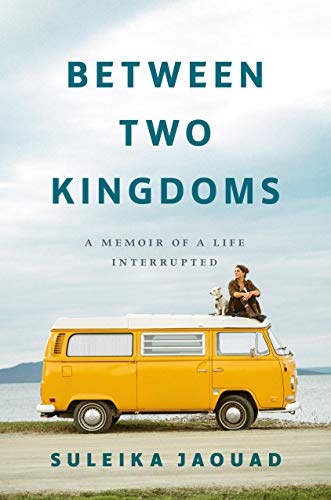
I saw Suleika Jaouad interviewed on CBS Sunday Morning and bought the book, excited to have stumbled upon a read I thought I’d enjoy.
The writing is clean. The diagnosis, devastating. But a book I read in the 1980s—“Thirteen Is Too Young to Die”—had a more profound, lasting impact on me than this did, and the road-trip part of the book is certainly no “Blue Highways” by William Least Heat-Moon.
So, I have complaints, some shallow, some more substantive.
Shallow: Jaouad refers to “Dead Poets Society” as “that sappy Robin Williams movie.” Right then, on page 114, the generational divide between me and the author slapped me in the face. I gave the book the ol’ side eye but read on.
Also shallow: This is a pet peeve of mine, so take it for what it’s worth, but I dislike the way Jaouad describes people with curly hair. On page 27, four-year-old Mila has “a frizzy cloud of brown curls.” On page 241, Jeff has “a greasy mess of curls.” And on page 243, the owner of a campsite has “a permed helmet of white hair.” I gave her a pass for the first mention. After the second and third, though, dislike festered.
More substantial gripes: On page 141, Jaouad bemoans having “attended six schools on three different continents.” She writes, “This is the curse of the mixed child who grows up betwixt cultures and countries, creeds and customs: too white, too brown, too exotically named, too ambiguously other to ever fully belong anywhere.”
I put the book down. I reached for the dust jacket and took a look at the author’s photo. She’s Swiss and Tunisian. She hardly stands out as blatantly mixed race. I’m uncomfortable even writing that. I’ve read about parents of mixed-race children who carry family photos and documentation to prove they are the child’s parent should anyone accuse the parent of having abducted the child, their appearances are so different. It just seems like Jaouad is reaching here, trying to find some flaw in her charmed upbringing. I don’t buy it. Military brats. Foster children. Inner city kids. Immigrants starting from zero. They have difficult childhoods growing up on various continents in various cities and homes.
During her road trip, Jaouad writes, “I’ve been living so long in the constricted world of illness that it’s not just the safety of my body I don’t trust but that of the larger world, too.”
Really? Just a few paragraphs earlier she “snap[ped] off Oscar’s leash to let him run loose” at a campground in Massachusetts, where, presumably there’s unfamiliar wooded land, wildlife. He later darts out of her cabin and into the woods at night.
Further, Jaouad has had cancer and has a compromised immune system. She writes about how difficult it is to live cautiously to protect her health, yet she takes NYC cabs and buses to her medical appointments. Petri dishes on wheels. And she flies to India.
There’s a disconnect that makes Jaouad an unreliable narrator. I feel the need to scour myself clean after taking public transportation, and I’m healthy. I catch a cold when I take a short little flight within the United States. Who flies to India with a compromised immune system?
What made me really raise a eyebrow, though, is a paragraph on page 247. There, Jaouad writes, “We call those who have lost their spouses ‘widows’ and children who have lost their parents ‘orphans,’ but there is no word in the English language to describe a parent who loses a child.”
In 1976—45 years before “Between Two Kingdoms“ was published—Jay Neugeboren wrote in his book, “An Orphan’s Tale”: “A wife who loses a husband is called a widow. A husband who loses a wife is called a widower. A child who loses his parents is called an orphan. There is no word for a parent who loses a child. That’s how awful the loss is.”
The quote is later falsely attributed to former President Ronald Reagan, and it also appears in “The Falcon and the Winter Soldier.” Pinterest is full of memes featuring Neugeboren’s words.
Jaouad includes a variation of it in her book without a nod to anyone. She presents it as her own thought, and that doesn’t sit well with me.
Will I finish the book? I haven’t decided yet. I’m not one to abandon something I’ve started, and I am so close to finishing. I just don’t know if I want to invest my time in it anymore.