Pionnier et figure tutélaire de la Medientheorie allemande, Friedrich Kittler sonde dans ce livre les infrastructures matérielles et techniques de la culture, laissant apparaître, au passage, comment la psychanalyse est couplée à la naissance du gramophone, l'art de la guerre au cinéma et l'émancipation de la femme au développement de la machine à écrire. La première traduction française d'un ouvrage qui a fait date. Prenant la suite d'Aufschreibesysteme 1800-1900 paru un an plus tôt, Gramophone, Film, Typewriter (1986) élargit les ambitions théoriques de celui-ci : le livre sonde les infrastructures matérielles de la culture moderne, montrant au passage comment la psychanalyse est corrélée à la naissance du gramophone, l'art de la guerre au cinéma et l'émancipation de la femme au développement de la machine à écrire. Pour le sujet moderne, c'est le constat d'une énième blessure narcissique : son imaginaire ne lui appartient pas ; les mots, les sons et les couleurs résultent du trafic occulte des appareils. Gramophone, Film, Typewriter a inauguré tout un champ de recherche sur les enjeux en même temps esthétiques, épistémologiques et politiques de ce que Kittler appelle les « Medien ». Après sa lecture, on cessera définitivement de considérer qu'un médium pourrait constituer un moyen de communication neutre.
« Voici enfin traduit le livre majeur d'un des plus originaux théoriciens des médias contemporains. Gramophone, film, typewriter, étude fondatrice parue en 1986, s'intéresse à la révolution des “médias techniques” qui, à la fin du XIXe siècle, consacra en quelques années l'invention de la machine à écrire (1865), du phonographe (1877) et du cinématographe (1895). L'ouvrage, qui a contribué à créer la science des médias allemande, a conféré à Friedrich Kittler une renommée internationale dont les échos, cependant, avaient peu filtré de ce côté-ci du Rhin. » David Zerbib, Le Monde des livres
« Cet ouvrage est un incontournable de l'archéologie des médias et de l'histoire culturelle de la modernité. » Magali Nachtergael, Artpress Un hypertexte théorique (textes, images, sons, liens) formant un commentaire de Gramophone, Film, Typewriter, constituant l'autre « face » de la postface à la traduction française de l'ouvrage, est consultable ici : http://kittlers.media.
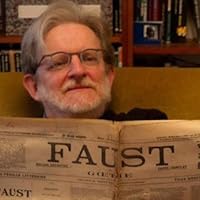
Friedrich Kittler was a literary scholar and a media theorist.
Kittler is influential in the new approach to media theory that grew popular starting in the 1980s Kittler's central project is to "prove to the human sciences [...] their technological-media a priori" (Hartmut Winkler), or in his own words: "Driving the human out of the humanities",[4] a title that he gave a work that he published in 1980.
Kittler sees an autonomy in technology and therefore disagrees with Marshall McLuhan's reading of the media as "extensions of man": "Media are not pseudopods for extending the human body. They follow the logic of escalation that leaves a written history behind it.
Among Kittler's theses was his tendency to argue, with a mixture of polemicism, apocalypticism, erudition, and humor, that technological conditions were closely bound up with epistemology and ontology itself. This claim and his style of argumention is aptly summed up in his dictum "Nur was schaltbar ist, ist überhaupt"—a phrase that could be translated as "Only that which is switchable, exists" or more freely, "Only that which can be switched, can be."
He studied German studies, Romance philology and philosophy at the Albert Ludwigs University of Freiburg in Freiburg im Breisgau. During his studies, he was influenced by Jacques Lacan's, Michel Foucault's and Martin Heidegger's writings.
In 1976, Kittler received his doctorate in philosophy after a thesis on the poet Conrad Ferdinand Meyer. Between 1976 and 1986 he worked as academic assistant at the university's Deutsches Seminar. In 1984, he earned his Habilitation in the field of Modern German Literary History.
He had several stints as a Visiting Assistant Professor or Visiting Professor at universities in the United States, such as the University of California, Berkeley, the University of California, Santa Barbara and Stanford University. He was recognized in 1996 as a Distinguished Scholar at Yale University and in 1997 as a Distinguished Visiting Professor at Columbia University in New York.
Ενα βιβλιο για την εξέλιξη των μέσων ; ναι περίπου , αλλα οχι ακριβως . Ενα βιβλιο για τους ανθρώπους και τις ιστοριες τους , πισω σπο την εξέλιξη των μέσων; μμμμ ούτε. και τα δυο ; Λιγο καλυτερα τωρα.
In Berlin, a boisterous and antagonistic Communist poet told me, "I fucking hate Kittler." But friends in NYC swear by him, so when I got to Lisbon and found a cheap copy at a street stall, I bought it. I wanted to prove the Communist poet wrong; wanted to show him that there's more to theory then Adorno or Benjamin. I also wanted to see why my former girlfriend and another few friends love this guy.
But I hate it.
I dislike it so much that I'm not even going to try and analyze why. I'll just say that Kittler reminds me of sloppy pop "theorists" like Terrence McKenna or Malcolm Gladwell: sloppy thinkers who make HUGE intellectual leaps and blithely toss about loaded words like "soul." If you're going to use words as vague as "soul," you better tell me how you're defining the word. But nope... Kittler can't be bothered.
Gladwell and McKenna are better writers and theorists. At least their ideas are either audacious (mushrooms helped our species develop) or important for our time (can we just agree that the idea of an individual genius is fucking stupid and dangerous and move on?). But Kittler is warmed over McLuhan. Oh, thank you Dr. Kittler, I didn't realize technology effects the way we approach the world.
Anyway, I plodded through the gramophone section, made it half way through the part on film, which is a topic I'm obsessed with, and finally put the book down. At one point Kittler footnotes Pynchon's Gravity's Rainbow as a fucking original source (and not as fiction, but as a source for how WWII German spy busters could recognize the unique ways individual spies would use morse code)! I mean, seriously... Why couldn't Hr. Kittler pick up the Gravity's Rainbow Readers Guide, find the source text, and quote that?
The only great thing about the book are the very long quotes, stories, and essays he pulls from other writers. He has a really wonderful short piece from Rilke, and a couple of great short stories by authors I've never heard of (e.g., a really great science-hero story about a scientist who recreates Goethe's voice). Read the sourced stories—ignore the rest. It speaks poorly of academia that this guy is in vogue.
The best part about this book are the short, fictional interludes. My favorites are the one where a mad scientist exhumes Goethe's corpse in order to attach his larynx to a gramophone and the tale of the Buribunk diary machine which bears an uncanny resemblance to today's social networking and blog websites. Otherwise, this book is as tedious as it is enthralling. It's scary how virtually all emerging technologies within the last 150 years are connected to wars, past, present, and future. Without war, we wouldn't have leisure.
The gramophone, film, and typewriter are storage technologies, ways of recording life that skew increasingly toward the digital, with computing situated at the end of history. History ends because people cease to have an influence over its fate, or so goes the narrow, paranoid argument. Sure, we can all relate to the fact that no one memorizes phone numbers anymore - our phones themselves are surrogate memories - but that doesn't make the technology valueless. It's hard to read the bottom line of the book as being much deeper than Terminator - not that Terminator wasn't deep, but its point was articulated quite a while ago. I guess this book was written around the same time, which makes sense. The cover should have more neon.
In any case, the most compelling parts of the book are: the instances in "Gramophone" where he talks about how then-recent musical technologies (the vocoder etc) were invented for military purposes (encryption, usually). These are just interesting anecdotally; I don't at all buy his insinuation that their historical situation makes human reception irrelevant or even less relevant. AND the other compelling things are the colorful fictions and historical anecdotes he uses (sometimes reprinting them wholesale within the text) to illustrate this or that point.
It's also illuminating to consider modern collections of knowledge as media themselves, particularly in the internet age where the things that make "the media" equivalent to "the message" have as much to do with systems of logic as with the materiality of storage devices, which now and probably for a long time into the future are 1's and 0's. To Kittler, this is the end of the reign of humanity, the point at which the logic of the machine surpasses us, leaving behind any possibility for a Romantic-Classical resurgence. We can certainly see instances of this in things like Spam poetry, whose purpose is wildly abstracted from our lives and essentially makes up one side in an ongoing (probably endless) war between purely computational entities. But we still make determinations. I was happy to read that article in Wired this month about how Second Life isn't working out like the brave new world that some corporations hoped, because its engines are outdated and no one is there. Undoubtedly, Second Life will be replaced by a better metaverse, and it will be abandoned. Don't the 1's and 0's disappear when we pull the plug?
3.5, maybe? I'm completely puzzled about how to rate this one. Kittler's presentation of the development of certain media was really interesting—but he so often makes argumentative leaps that seem to need more support. He might also make too many assumptions about how much a nonspecialist in certain aspects of German history/literature will know about certain individuals, groups, developments, etc. Still: really glad I read the book, and it's provided a good deal of food for further thought.
I'm having that drive to read about the history of machines again. Something related to our digital culture. How we got to where we are now.
This book has a little more history than i like, but is probably good for me. And some good analysis, which is what i do like. and is probably also good for me.
But i'm really looking for my book about the history of ATTENTION. where is it? It is the perfect companion to this book.
Das Buch gliedert sich, wie der Titel schon verrät, in drei Teile: Grammophon, Film, Typewriter. Es beginnt jedoch mit dem Phonographen und endet mit dem Computer, im Buch es geht also im Grunde nicht nur um die Beschreibung dreier Medientechniken, sondern um die Erzählung einer Mediengeschichte. Grammophon, Film und Typewriter werden dabei den drei Kategorien Lacans Reales, Imaginäres und Symbolisches zugeordnet (in dieser Reihenfolge). Kittlers Schreibstil ist gewöhnungsbedürftig und das ist gewollt so, er selbst strich beispielsweise bewusst das Possessivpronomen "sich" aus seinem Wortschatz. Die vielen, vielen Medientechniken und -technologien, die auftauchen, sind teilweise recht kryptisch beschrieben und setzen viel Wissen oder die Geduld voraus, aller paar Seiten etwas nachzugoogeln. Davon abgesehen ist das Buch jedoch hochspannend. Kittlers Stärke liegt vielleicht nicht in verständlichen Erklärungen, aber absolut in einer anregenden Weltsicht und steilen Thesen. Ich persönlich fand den letzten Teil am stärksten, weil eine seiner Kernthesen, nämlich dass Medien an unseren Gedanken mitschreiben/ den Diskurs mitschreiben/ sich in uns einschreiben, dort am deutlichsten zutage tritt: "In der Genealogie der Moral (...) sind Wissen, Sprechen und gutes Handeln keine eingeborenen Attribute des Menschen mehr. Wie seinesgleichen stammt das Tier, das einmal anders heißen wird, aus Vergeßlichkeit und Random Noise, dem Hintergrund aller Medien. (...) Um vergeßliche Tiere zu Menschen zu machen, schlägt eine blinde Gewalt zu, die ihre Körper im Realen zerstückelt und beschriftet, bis durch den Schmerz selber ein Gedächtnis entsteht.", und Nietzsche-Zitat: "Unser Schreibzeug (=Schreibkugel, die Nietzsche benutzte) arbeitet mit an unseren Gedanken". Darüber hinaus beschäftigt sich Kittler mit dem Verhältnis von Frauen und Medien, und dem Verhältnis von Krieg und Medien - beides Themen, die ich gern noch nuancierter und (insbesondere in Bezug auf die Frauenthematik) feinfühliger ausgearbeitet sehen würde, als Kittler es hier tut.
"guns don't kill people, but being hooked to electronic devices will go a long way to ending any attempt to live a human life..."
Perhaps being human isn't all it's cracked up to be. We all hate each other because we realize that virtually no one can actually do anything for anyone else. Like the passengers on a doomed airplane, the pilot (chief, president, leader, cult founder) is going down like all the rest of us. When there are no audiences, there are no movie stars!!! Thank god, praise the Lord. Where there are no voters, there are no politicians!!!! Thank god even more. When the Word of God rules the life of an individual, we don't need "breaking news"!!!! Which is only shards of nonsense in any case.
This is a good way to introduce the idea of the "optical fiber network." It has already happened. We are now constantly hooked, unless we're driving, but even there you might make a case for...Kittler was on to something back in eighties.
Gramophone is the simulation of the primal sound. Film is realer than the reality. Typewriter inverts the gender of writing and thus transform its material basis.
Kittler's amazing book unpacks these assertions in a somewhat old fashioned literary style. The book certainly has its dull moments and unless you are accustomed to long-winded classical rants, its not an easy read. However, having a computational contextual bias, I really enjoyed the overall import as well as choice of included supplementary texts.
Recommended to anyone who has considered Marshall McLuhan the foremost media theorist and decided to stop at that.
Why did the record player (gramophone), a fairly simple mechanism, take so long to be invented? This is one of the curious kinds of questions that Friedrich Kittler will raise and explore over and over again through this book.
My review and explanation for why I think we should read this book now are posted here.
Incisive analysis and critical history tying the differentiation of media in the 20th century to the development of wartime technologies and their convergence in the 21st century driven by the birth of cybernetics. Kittler's thesis explores Lacan's orders of the Real (associated with the gramophone), Imaginary (film), and the Symbolic (typewriter). The text is supplemented by a fantastic array of primary sources and critical perspectives.
Gramophone was pretty over my head, but I liked Film and Typewriter a lot. One of those books that is more suggestive than systematic, but an entertaining read. He's got a wry sense of humor that I found quite enjoyable.
If you want to read something about media theory that is not stupid (cough, cough, neil postman, cough) check this out. Why he is not more of a phenomenon in the academic world is beyond me.
This book is undeniably interesting, but also undeniably dense. Kittler assaults you with theory, technologies as weapons, and cheesy music. This is not something you want to read all in one gulp.
This is a brilliant book. Provides an entertaining, excellently researched insight into how technologies enter the mainstream and the effect they have once there.
it's a bit overblown, and there's a great deal of shouting in it, but it's still a thought provoking classic -you just don't necessarily haveto believe everything old Kittler says
Read for a class. My professor really loved this book, and I thought it as an interesting take one the reconsideration of communication history from another lens.