This brief, accessible invitation to the historic creeds and confessions makes a biblical and historical case for their necessity and shows why they are essential for Christian faith and practice today. J. V. Fesko, a leading Reformed theologian with a broad readership in the academy and the church, demonstrates that creeds are not just any human documents but biblically commended resources for the well-being of the church, as long as they remain subordinate to biblical authority. He also explains how the current skepticism and even hostility toward creeds and confessions came about.
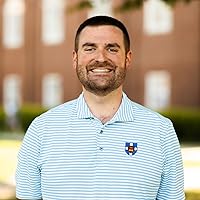
J. V. Fesko graduated from the University of Aberdeen in Scotland, UK, with an earned Ph.D. in theology. Dr. Fesko's interests include systematic theology, applied soteriology (union with Christ, justification and sanctification, and the ordo salutis), sixteenth- and seventeenth-century Reformed dogmatics, as well as the integration of biblical and systematic theology. He was the pastor of Geneva Orthodox Presbyterian church from 1998 to 2009. He is now presently the Academic Dean and Professor of Systematic and Historical Theology at Westminster Seminary California. He is also an ordained minister in the Orthodox Presbyterian Church.
4.5 stars! This is a very good argument for why creeds and confessions are essential for the church now. The strongest chapters were on the Biblical support for confessions and the benefits of confessions.
“Through confessions of faith, we can practice the democracy of the dead and consult the wisdom of ages past as we press forward towards the future—as we embrace the truth in the present and pass it on to our children. Despite the waning influence of confessions of faith in the present, there are brighter days ahead for confessionalism. There is still, therefore, a need for creeds today.”
Really good book! More concise than Trueman’s “The Creedal Imperative.” This book though complements it well. Last chapter was off topic, IMHO. This is a must read for us in our age of anti-confessionalism.
This one was a pleasant surprise! I particularly liked the title - The Need for Creeds and Confessions Today: Confessional Faith in a Faithless Age - The last part of the title is one of the reasons I am leaning confessional. They point us back to what our forebears believed, going back to the apostolic age. With the confessions, you get a historical timeline of doctrine and practice.
I have noticed many cultural trends, as well as my conversations with young people and families in general, that they want old school or old paths church and worship. The Confessions give them a historical anchor point for the faith, which in turn brings them back to the spiritual anchor point, THE BIBLE.
I know some don't like Creeds and Confessions, and others could do without them. No judgment here. Everyman to his work! I have convictions based on my 30-year experience in ministry, and what I am seeing now is a decline in doctrinal integrity and brevity.
Now, to the book, it is well written, not over the top, easy to read, and well-reasoned. It has a helpful subject and scripture index and is only 120 pages.
There are five chapters -
1 - Biblical arguments for Confessions - Imagine having a creed - NO CREED BUT THE BIBLE - and then encountering creeds/confessions throughout the Bible. Here, the author gives scriptural arguments for them.
2- Reformed Confessions (1500-1700)- Here, we learn the historical and doctrinal context of each confession, the challenges met and dealt with, and then written into the Confessions.
3- Causes of Deconfessionalization - He lists several, but the main one, in my opinion, is skepticism, mysticism, and autonomy. The author lays the blame largely on the church for failing. The church getting too complacent has caused an internal falling away, whereas pressure from the outside has caused an external falling away. The two together have brought us to this place today.
4- Benefits of Confessions - He lists three: 1) They distinguish orthodoxy and heterodoxy, 2) they create boundaries that foster a diversified orthodoxy, and 3) they codify the church's witness
5- Confessions and Piety -This chapter took me by surprise, largely in part because I had no idea that two men of God almost dueled to the death because of theological differences.
Yes, I would recommend the book even if you have no interest in being Confessional. There is enough meat to help you better understand the issues at hand.
Admittedly, I skimmed for relevant sections. Chapter four is largely distilled elsewhere, and I personally heard chapter five as a lecture while in seminary. As a Presbyterian who is also a recovering Baptist, his arguments could have been stronger. I also found his historical piece interesting and helpful, but not quite near enough to the present day to be as impactful as it could have been.
This is a great book on the need for confessionalism, yet Fesko takes a random excursus in the final chapter that doesn’t really have anything to do with the main thesis and instead focuses upon the need for charitableness in Christian theological discourses. That said, I would still highly recommend the work.
A short, helpful read. Fesko very helpfully presents a narrow and focused primer on how creeds have always enriched the church and her understanding of God and His Gospel. Would have benefitted from nixing the final chapter and adding a chapter at the beginning on the early creeds.
Three stars seems kinda low, because I did think that this was a good book! It is also a book i would recommend in certain situations, but i did not find it very interesting.
I attribute this mostly to the fact that i was largely in agreement with the other so the arguments were not enticing me towards anything new and for the most part they were arguments i was somewhat familiar with, at least conceptually.
Loved the historical information it provided and it helped me understand the historical creeds better which was awesome! The section on piety at the end was a great pastoral note to close.
Beneficial book that is full of good information, but I am not sure that the people who are picking this book up are the ones that need to read it if that makes sense?
Fesko makes a concise case for treating confessions of faith and catechism, not simply as wise and beneficial tools, but as integral “for both the being (esse) and the well-being (bene esse)” of the church. Confessions are “vital infrastructure” for the covenant people of God, a point that is singularly true in an age of individualism.
I wanted to like this book more. There are certain sections that are so helpful and rich. My biggest critique is that some of the chapters don't seem to fit the intent of the book. Especially the last chapter.
A great little book on the relevancy of confessional Christianity. Easy to read and rooted in scripture. The last chapter was a slight detour from the original purpose but still great.
Fesko, J. V. The Need for Creeds Today. Grand Rapids: Baker Academic, 2020. $21.99 I get commissions for purchases made through links to Amazon in this post. Learn more about it here. For some, confessionalism and the use of creeds creates controversy and supplants the doctrine of sola Scriptura. Many in the Western world distrust tradition. If asked, a large portion of believers could not describe the theological tradition of the church they attend. Dr. Fesko succinctly argues for the continued use of confessions as they are "necessary for both the being and the well-being of the church." Fesko claims Scripture teaches the church to create confessions and argues this in the first chapter. The author details the biblical grounds by surveying Exodus 13:14-15, Deuteronomy 6:4-6, the "trustworthy sayings" of Paul, and Jude 3. Chapter two compares Reformation and Post-Reformation confession. Fesko showing the confessions written following the Reformation, such as the Westminster Confession of Faith, build upon the doctrinal teachings of the Reformation. This is contrary to recent teachings that pit the scholastics against the Reformation and Calvin versus the Calvinist. Responsibility for anticonfessionalism deserves to be spread around, and in chapter 3, Fesko looks specifically at Reformation era skepticism and the Enlightenment. Chapter 4 details the benefits of creeds: they (1) distinguish from orthodoxy and heterodoxy, (2) create a diversified orthodox, and (3) codify the church's historic witness. Chapter 5 concludes the book by telling the story of Franciscus Gomarus challenging Matthias Martinius at the Synod of Dort. Fesko spends some time detailing the background to dueling before drawing out two primary lessons. Christians are to be on guard against worldliness and ground our conduct in our union with Christ. I enjoyed reading this book. Dr. Fesko deserves praise for his clear writing. Each chapter tells you what to expect, provides the details, and then wraps up with a conclusion. Upon encountering the last chapter, I did struggle to follow where the story of the attempted duel was heading; the rest of the book did not employ the use of narrative. In the end, I saw the story as a fascinating bit of history surrounding the Synod of Dort, and the author offers good principles worthy of concluding the book. Seeing this title as an upcoming release, I was intrigued by what Dr. Fesko would offer with other works such as Carl Trueman's The Creedal Imperative. The author argues the same point as Trueman, but picks up on different texts of Scripture and offers an insightful commentary on the declining use of creeds. One of the biggest takeaways is Fekso's argument that our culture is hypermodern and hyperindividualistic. These are terms I have not frequently heard, and provide food for thought to our ever-changing culture. J. V. Fesko suggests our period maintains the elements of modernism but in "exacerbated form." Pastors and seminarians need to wrestle with the underlying forces on our culture to best understand how to continue communicating the doctrinal truths of Scripture. Creeds and confessions are just as useful today as they were hundreds of years ago. I recommend pastors and students get a copy of The Need for Creeds Today. Even if they have read other books on this topic, they will likely benefit from the additional arguments for utilizing confessions. For lay believers, if you are either unconvinced or engage others on this topic, then I would highly recommend picking yourself up a copy. I received a complimentary digital copy of this book from the publisher through Netgalley for review purposes. Comments are my own.
If you are into church history then you will love this book. I actually did find this interesting. I have wondered about the Creeds. We don’t say them in our church but I remember some of them from my younger years. I actually found and app that has creeds and there is power in them. Why have we walked away from these powerful traditions? I know for me I think it because it can be ritualistic but there is something refreshing in going back to these creeds.
It was very interesting to read how these came to be and how they have dissipated through the years.
If you don’t enjoy church history you probably won’t like this book but if that intrigues you it might be right up your ally.
A copy of this book was given to me through Netgalley. All opinions are my own.
Growing up in a non-liturgical church, the Church’s creeds and confessions did not play a role in my faith. As I have grown into Reformed theology, I have come to appreciate the value and significance of creeds and confessions in the rhythm of church life and my own faith. I was pleased to receive a copy of John V. Fesko’s The Need for Creeds Today from Baker Books to explore the role and need for creeds a little bit more.
Fesko is mainly concerned in this book to address those who, under the influence of Western individualism, have dismissed the need or even the propriety of creeds and confessions. His tone and topic suggest that he is writing for a theologically attuned lay audience, although he uses extensive citations and introduces his argument in a formal manner. He writes to defend the thesis, “confessions of faith are therefore necessary for both the being (esse) and the well -being (bene esse) of the church.” The book takes up this task over five chapters. In Chapter 1, Fesko argues that the Bible mandates the creation of confessions of faith. In Chapter 2, Fesko considers the development of confessions in the Reformation and post-Reformation period, elucidating the processes and complexities involved in their creation. Chapter 3 considers several reasons for the apparent decline of confessionalism. These include the association of confessionalism with war, individualism, scepticism, and the Enlightenment with all its social implications. After answering these charges, Fesko then argues for the advantages of confessions in chapter 4: they distinguish heresy from orthodoxy, create room for a diversified orthodoxy, and codify the church’s historical witness. Chapter 5 ends with a story from the Synod of Dort, arguing for the need for piety in the process of the creation of confessions.
I came away from The Need for Creeds Today with mixed feelings. It does several things quite well and others not so well. Chapters 2-4 helpfully illustrate the complexities of historic confession making and will be eye-opening for many readers, serving to tear down caricatures of Reformed confessions. Fesko also shows why many of the common objections to confessions are not persuasive and the genuine good that confessions achieve. For the reader who thinks that confessions are antithetical to evangelical and Biblical faith, this will indeed be helpful. On the other hand, the first chapter does not, in my opinion, demonstrate a Biblical mandate for the creation of confessions. The passages Fesko puts forth are undoubtedly consistent with creed creation, but the Old Testament passages (Exod 13:14-15; Deut 6:4-6) are more relevant for intrafamily discipleship than a formal creedal process. Fesko’s argument from the passages in Paul’s writings where he uses πιστς ο λογος (pistos ho logos, “the statement is trustworthy”; 1 Tim 1:15, 3:1, 4:-9; 2 Tim 2:11-13; Titus 3:4-8) involves a lot of assumptions which are far from self-evident. In short, I don’t think the sayings introduced with pistos ho logos can be used to argue for a creedal mandate. Fesko also takes several shots at one of my favourite theologians, John Frame, which hardly do justice to his thought (see The Doctrine of the Christian Life for an example of his use of the creeds and confessions). Finally, what I perceive to be the biggest issue with creeds and confessions in the contemporary Church is not addressed. Namely, what sort of authority do the creeds possess for those who confess sola Scriptura? An answer to this question is not easy and yet necessary if we are to use confessions in a formal context. Also, chapter 5 felt like an excursus less than a proper contribution to the argument.
For the reader wanting a perspective on the positive value of confessions for the Church, The Need for Creeds Today will be helpful. For those wrestling with the role of creeds and confessions in liturgy, personal faith, and denominational structures, Fesko’s book will not provide much guidance.
Another great book by JV Fesko. This one is a brief introduction to creeds and their importance in the church today. The first chapter gives a biblical case for the creation and use of creeds. Had he stopped here, Fesko would have proved the point. He draws particularly from (1) Deuteronomy’s use of a creedal formula (the Shema) and how it would facilitate instructing children in the faith with extra-biblical answers to their questions and (2) Paul’s repeated appeal to “faithful sayings” which were brief confessional statements of the early church. He the devotes a chapter to the development of reformed confessions, and a following chapter to the historical roots of deconfessionalization. The fourth chapter explains the value of confessions. The historical examples of confessional ambiguity in order to create unity were especially helpful.
The inclusion of the final chapter puzzled me at first. Fesko tells the story of a proposed duel on the floor of the Synod of Dort, and outlines why this was a sinful act. The meaning? Confessions cannot do all the work for Christian’s. Writing the Canons of Dort did not excuse the delegates from the call to holy living.
This is a great introduction to the importance of creeds in the life of the church.
I enjoyed reading this book because I also feel that Creeds are important in todays church. I am not a biblical scholar so there were times where I was a little lost on some of the interpretations of scripture (which could be because I don't know the context of the scripture). I grew up in a church that always declared creeds during the service, since then I have found some of the churches I've been to have less focus on them. I liked the format of the book and made it straight forward and more of a lecture style format. I respect Fesko for writing this book because I know it could lead to some discussions. However, I believe that's a good thing because that is how we grow as Christians by having these conversations and learning why we believe what we believe. Worth the read and definitely give yourself time to study what is being said.
This is a great book - so long as you realise what it is for, and to whom it is written. At first, I expected a book like Carl Trueman's Creedal Imperative - aimed at those who need to be convinced simply, why creeds are necessary.
This is not so simple. It feels aimed at those who are far more well-read, and far more interested in history. Not a problem, as for these readers, it is a convincing and irenic book that is a fine defence of creedal and confessional importance.
It is, however, not for the average UK reader who wants a simple and popular explanation of their value. I suggest this is best aimed at the serious and relatively experienced Christian reader who nevertheless holds to the maxim, 'no creeds but Christ'. They are fewer in number, but will find Fesko's book valuable.
I would direct most readers to Trueman first, then this.
In the running for my favorite book of the year so far (out of 20 or so).
This is a short, well-organized, and thoughtful introduction to the biblical reasoning behind the need of confessions, along with a history of their development in the between the years 1500 and 1700, a word on why they are unpopular in modernity, and an admonition to maintain charity in subscribing to them... It packs a whallop for being less than 125 pages.
My favorite chapter was on the organic development of the post-reformation confessions of faith (1640-1700) out of the period of the Reformation (1500-1562) and the period of early orthodoxy (1563-1640). It really gave me an understanding of the vast differences in how confessions of the time differed in how they came to be.
A 3 star review doesn't exactly explain the book. It's a really good read- and I'd recommend it to others. However, I felt the book could have punched more in some spots. Furthermore, some parts (such as the near duel at Dort) could have been edited out completely. Regardless, creeds and confessions are as the author writes - the spine, or framework, for ensuring the church is looking to Christ and not to its own rugged individualism and cult of personality.
A short book on how creeds are good for today and are needed for the church. It raises some good points as well as discusses why creeds have been downplayed. It is a good addition to the conversation on how and why the modern church needs creeds.
Not really a fan of this book, I think because of the structural flow of Fesko’s argument. Things felt kind of disjointed, and I had trouble getting the gist of the argument in favor of creeds. Also, the last chapter talking about dueling was weird and unnecessary (imo).
Fesko provides a short biblical, historical, and practical argument for the necessity and benefit of creeds and confessions. He also includes a final chapter encouraging Christian tolerance toward those who differ with us.