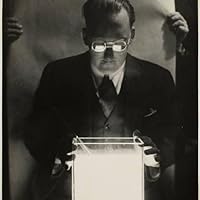
The best brains in the country are being hijacked from London – only the brains, the brutalized bodies being discarded after surgery.
The chase to find the perpetrators takes Holmes and Watson to Scotland, and a factory where they discover invaders that have designs not just on London, but the whole planet.
I'm a Scottish writer, now living in Canada, with more than thirty novels published in the genre press and over 300 short story credits in thirteen countries.
My work has appeared in a number of professional anthologies and I have recent short story sales to NATURE Futures and Galaxy's Edge. When I'm not writing I play guitar, drink beer and dream of fortune and glory.
I’ve enjoyed the author’s military action S-Squad books, so I was curious to see how he’d handle a mystery. This short book was a lot of fun: no enormous twists or surprises, but satisfying combination of investigation and action. As with the original Conan Doyle books, we experience the story through Watson’s eyes rather than Holmes’. The language feels suitably Watson-ish without being obtrusively old-fashioned, and I didn’t feel the author had taken liberties with the period. (Though I’ll note here I’m not a Holmes purist).
Since the reader is probably expecting a weird/eldritch tale, the findings are more of a surprise to our heroes than to us. I had fun wondering just when Holmes would cotton on.
What starts out as a true Holmes mystery, take a turn to the weird and wild. It feels like a natural progression for Sherlock. Easy to read and I loved it.
Meikle gives equal weight to the universes of Doyle and Lovecraft, creating a mystery that does not defy human reason but does challenge human exceptionalism.
When a performer known for his exceptional memory is killed, Holmes’ first suspicion is criminals seeking to silence a witness. However, when the body of the performer turns up with the brain and spine removed, the great detective finds himself on the trail of a much weirder conspiracy.
Meikle takes the Victorian England, police-baffling crimes, exceptional scientific detection, and secret brotherhoods that pervade Doyle’s stories, and adds an utterly non-human part to the whole. As with almost any attempt to fuse two different worlds, Meikle has had to compromise on some aspects of each to accommodate features of the other: thus, although the plot internally adheres with rigour to Holmes’ approach of eliminating things based on their possibility rather than their likeliness, this novella might not suit those who enjoy Holmes stories for the way in which the most strange-seeming events are ultimately shown to be caused entirely by human actions and reactions; equally, despite the presence of beings with abilities well beyond those of humans decisively demonstrating Holmes is not a nigh-unique intellect in the greater scheme, readers who prefer the alien to evoke cosmic dread might find the ending a little too cheerful.
While Holmes starts from a position of events being the result of—albeit perhaps unusual—human action within the physical laws known in England at the time, readers familiar with the works of HP Lovecraft might swiftly realise the most puzzling or abstruse aspects of the case to the protagonists are all consistent with certain beings known for putting brains in jars. These are not red herrings seeded by Meikle to lead the Lovecraftian fan astray but do not illuminate the entirety of the plot or even the aliens’ part in it. Therefore, readers of that ilk are likely to be unsurprised by the big picture when revealed but can still contest against the mystery of the finer details and experience how Holmes/Watson’s uncovering of the alien presence differs from Wilmarth’s.
Although very consistent with Lovecraft’s story, the plot does not assume any knowledge of it; thus readers unfamiliar with it are equally able to both experience the intellectual challenge of trying to beat Holmes to the full picture and enjoy the manner in which Meikle has Holmes respond to evidence of a world larger than that known to Victorian England.
Meikle’s portrayal of Holmes and Watson is nigh-identical to Doyle’s originals: Holmes is exceptional in many intellectual areas and knows it but it is paired with compassion and other normal virtues, and so he does not display the arrogance or social maladaption that some versions possess; similarly, Watson is not the great consulting detective but he is both a skilled professional of good judgement and Holmes’ trusted friend rather than someone for Holmes to prove he is smarter than or a combination muscle/caretaker. Indeed, the investigation advances at a number of points because Holmes accepts that Watson’s instincts can be valuable and is open to what Watson says he saw being exactly what happened.
Those members of the supporting cast who are drawn from this book’s literary parents come solely from the Doyle line and present as Doyle crafted them rather than as merely trappings to paint this story as a Holmes story or convenient opportunities to be shattered by the revelations so Holmes and Watson might remain themselves. Meikle’s own characters are seamlessly woven from varying amounts of each of the threads, echoing both settings while not seeming mere pastiche.
Where Meikle’s characterisation differs—commendably—from his inspirations is in the lack of genetic degeneracy: while he features the rookeries of London, virtue or vice are just as likely in characters of any social or economic position, and there are no poisonous pygmies, mulatto musicians, or otherwise foul foreigners.
Overall, I enjoyed this novella. I recommend it to readers interested in how Holmes might proceed if he discovered his reasoning was based on imperfect understanding of reality.
When a music hall entertainer, whom Holmes had been assisting, is murdered the detective and Watson must track down a very mysterious killer. When Sherlock's brother Mycroft becomes involved it is apparent that there is much more at stake than just a murder.
Holmes and Watson find themselves caught in a mystery that may ultimately effect not only London but the world. Meikle captured the feel of Doyle's characters and adds a nice SF twist. Well done and a quick read.
Someone, or something, is stealing the best brains in Britain. Not the bodies. Just the brains. Holmes and Watson investigate and come face to face with appalling horror.
"The Hackney Horror" is a delicious horror story. I can't give much detail without giving away the plot, but the story fairly rips along from one thrill to the next.
The friendship between Holmes and Watson is solid. And William Meikle gives us a great Lestrade; all sarcasm and snark.
If you like your Holmes a little strange, you will love "The Hackney Horror".
Another will written British 🏰 murder mystery fantasy relationships adventure thriller short story by William Meikle (The London Terrors book 1). Sherlock Holmes and Dr Watson respond to a note from Mr. Green a comedian. They meet at the club where he is playing but he is dead. This leads them to Sci-Fi adventure. I would recommend this novella to anyone who is a Sherlock Holmes fan. It is futuristic but will done ✔. Enjoy the adventure of reading or listening to books 📚. 2022 👑😮👒
A different kind of Holmesian tale, though Holmes works through it in his unique way. Bodies are turning up with weird surgical removals of brains and spinal cords. It seems to be a danger to national security since Mycroft also talks to his brother Sherlock. Though Holmes is only after his murderer with his dogged determination.
Highly recommended, Meikle's Holmes tales are always fun reads. Whether they are normal tales or like this one, a weird horror tale. He seems to always get the right voice to make it feel like original cannon.
Not as weird as I'd thought it'd be, but still weird. Two genres meeting, but not clashing two much. Sherlock Holmes is no stranger to the fantastic, and I like how he immediately calls out the true intentions of the plot, which is basically the same theme of every Sci-fi evil.
The author's style is a bit jerky than I like, and though sci-fi isn't my favorite, I liked the buildup to the end.
I stumbled upon this while looking through Kindle Unlimited. What a fun find! I've read Sherlock Holmes stories before, and I feel like this story follows the sorce material nicely with an added scifi/ Lovecraftian twist.
While missing something of the flavour of Sir Arthur Conan Doyle's classic stories, this blend of Lovecraftian horror with the ultimate consulting detective is a joy.
Meikle is remarkably prolific. He seems to do well working in several different milieu, this one of the Holmes/Watson variety but has also written many stories about Hodgson's Carnacki, in the HP Lovecraft universe and several others. In all he is a fine craftsman, writing stories fairly true to character that hold your attention and are satisfying. Here we combine Holmes in a tale that both seems to hearken to Lovecraft and science fiction.
Inserting twisted horror sci fi into Holmes, and keeping true to Watson's narrative style, yes please. Well done, solid action, and intrigue. I look forward to sampling more.Check it out.