Render (v.tr.): to submit, as for consideration; to give or make available; to give what is due or owed; to give in return, or retribution; to surrender; to yield. To represent; to perform an interpretation of; to arrange. To express in another language or form; to translate. To deliver or pronounce formally; to cause to become; to reduce, convert, or melt down, by heating. br> A recovery narrative has a known what it was like, what happened, and what it’s like today. In a poem, what can be arranged or interpreted with such certainty, by whom, and to what end? What is the relationship of the performance of recovery via a poem to the truth of the experience? Does one deliver the other? Insert into these considerations the experience of traumas. How is trauma converted by post-trauma experiences? What is the retribution of that experience when articulated as poetry? Enter these questions through the dream, with its unrenderable subjects, landscapes, and plots. Where do dreams meet poetry in their spontaneous, opaque, necessary structures? What do such comparisons yield to the waking reader? What can be rendered intelligible in the soup of long-term recovery?br> br> With great ferocity and tenderness, Sachiko Murakami’s poems encounter such questions, and then melt them down, by heating.
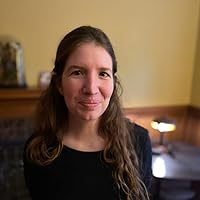
Sachiko Murakami is the author of the poetry collections Render (Arsenal Pulp Press, 2020), Get Me Out Of Here (Talonbooks 2015), Rebuild (Talonbooks, 2011), and The Invisibility Exhibit (Talonbooks, 2008), a finalist for the Governor General’s Literary Award and the Gerald Lampert Memorial Award.
Murakami has been a literary worker for numerous presses, journals, and organizations. She currently lives in Toronto.
In Render, Sachiko Murakami has created a moving collection of intimate and heart-rending poems with imagery and language that is visceral, close-to-the-bone, questioning, apologetic and direct, tackling difficult subjects and experiences with eyes open. Through subtle shifts between memories and dreams, history and story, she continues a body of work that is outward looking as well as inward looking as a way to rebuild, reach out and move forward.
I'm doing an interview with Sachiko in August on my podcast, the Small Machine Talks. Stay tuned for info on date. http://smallmachinetalks.com/
I've read this book twice, once in the comfort of my own home, the second time in an examination room at the dermatologists, waiting for the surgeon to arrive and remove what the doctor referred to as the best kind of cancer.
Both times the distilled nature of the book, the poets gift with words and her tone impressed me. Both times I connected with individual poems on a deep level, but the book as a whole really connected with me - particularly the first half - in the uncomfortable space of the office, mask on, fingers trying not to touch the face.
The language is so finally tuned and yet the nature of addiction is a wild tugging, an unpredictably not of desire but of location and behaviour, and that tension really came through in the second read through.
The most striking element of this book is the structure. I was never quite sure when and where Murakami would end a poem/thought or keep it bleeding through the next page. This meandering form lends an organic quality to the poems, that makes them cut that much closer to the bone.