

What do you think?

Around the World in 80...
Around the World in 80 Plants
Often beautiful, sometimes deadly, but constantly ingenious, plants are the sources of life and delight, myth and mayhem.
In his follow-up to the bestselling Around the World in 80 Trees, Jonathan Drori takes another trip across the globe, bringing to life the science of plants by revealing how their worlds are intricately entwined with our own history, culture and folklore. From the seemingly familiar tomato and dandelion to the eerie mandrake and Spanish 'moss' of Louisiana, each of these stories is full of surprises. Some have a troubling past, while others have ignited human creativity or enabled whole civilizations to flourish. There are parasites and carnivores and even plants that destroy telephone wires.
Drori's curiosity about the plant world is infectious. He wears his scientific knowledge lightly and writes with passion and wry humour, whether about intoxicants such as absinthe, iboga and cannabis; flavourings like misunderstood vanilla and the legendary silphium of Roman cuisine; or the imaginative and unflagging search for aphrodisiacs.
With a colorful cast of characters all brought to life by illustrator Lucille Clerc, this is a botanical journey of beauty and brilliance.
In his follow-up to the bestselling Around the World in 80 Trees, Jonathan Drori takes another trip across the globe, bringing to life the science of plants by revealing how their worlds are intricately entwined with our own history, culture and folklore. From the seemingly familiar tomato and dandelion to the eerie mandrake and Spanish 'moss' of Louisiana, each of these stories is full of surprises. Some have a troubling past, while others have ignited human creativity or enabled whole civilizations to flourish. There are parasites and carnivores and even plants that destroy telephone wires.
Drori's curiosity about the plant world is infectious. He wears his scientific knowledge lightly and writes with passion and wry humour, whether about intoxicants such as absinthe, iboga and cannabis; flavourings like misunderstood vanilla and the legendary silphium of Roman cuisine; or the imaginative and unflagging search for aphrodisiacs.
With a colorful cast of characters all brought to life by illustrator Lucille Clerc, this is a botanical journey of beauty and brilliance.
216 pages, Hardcover
First published April 20, 2021
About the author
Jonathan Drori
7 books88 followersJonathan Drori is a Trustee of The Eden Project,
an Ambassador for the WWF and was for nine
years a Trustee of the Royal Botanic Gardens,
Kew and The Woodland Trust. He is a Fellow of
the Linnean Society and the Zoological Society
of London, and a Member of the Institution
of Engineering and Technology. He is a former
Head of Commissioning for BBC Online and
Executive Producer of more than fifty primetime
BBC TV series on science and technology.
In 2006 he was awarded a CBE.
an Ambassador for the WWF and was for nine
years a Trustee of the Royal Botanic Gardens,
Kew and The Woodland Trust. He is a Fellow of
the Linnean Society and the Zoological Society
of London, and a Member of the Institution
of Engineering and Technology. He is a former
Head of Commissioning for BBC Online and
Executive Producer of more than fifty primetime
BBC TV series on science and technology.
In 2006 he was awarded a CBE.
Ratings & Reviews
Friends & Following
Create a free account to discover what your friends think of this book!
Community Reviews
Displaying 1 - 30 of 172 reviews

May 28, 2023
"... and I have become more conscious than ever of the power of stories that intertwine science with history and culture."
Ain't that the truth!
Plants are fascinating - we get the ones we can eat, the ones that would rather eat us, some that help us "have a good time" (whether legal wherever you live or not), ones we keep as decoration, those that we make clothing out of, some grant shelter / shade, others can heal, all of them produce the oxygen we so need to live.
Interestingly, every plant has its own character: some like to cooperate with animals or other plants to benefit (birds spreading seeds, for example), while others lie and cheat.
I'm aware that some people will say that is anthropomorphization but is it? Just because we don't understand plants fully yet? I remember times when arrogant humans claimed animals couldn't feel like we do or when vegetarians assured everyone else that eating fish is alright since they aren't "real" animals much like vegans still claim that eating insects is alright for the same reason. *snorts*
It's our lack of intelligence and thus understanding that is hindering us, not the plants.
Just look how they can warn one another in case of danger either by producing scent molecules (yeah, sorry, but I have to break it to you that that wonderful smell after mowing the lawn is actually a cry for help and warning to others) or by firing signals through the root network!
Anyway, the author of this book seems just as enthusiastic about plants as I am and is very much involved in trying to save as many as possible despite current challenges such as habitat loss.
As with his previous book, we get chapters dividing the world and this book into the following regions:
1) Northern Europe
2) Southern Europe
3) East Mediterranean & Middle East
4) Africa
5) Central & South Asia
6) East Asia
7) South-East Asia
8) Oceania
9) South America
10) Mexico, Central America & Caribbean
11) North America
12) Global (that one was completely new and tells of marine phytoplankton)
Once again, the production quality of this book is astounding and impressive (immediately noticeable are the thick pages) and wonderful illustrations that show the full plant, details and a bit of its surroundings either on one page or on a double-spread.
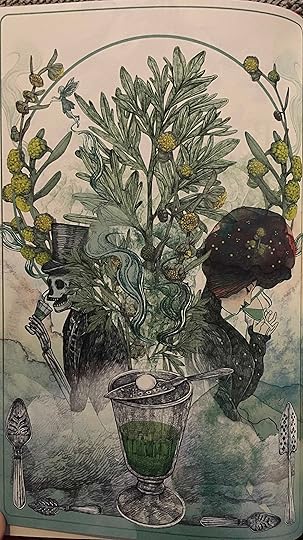
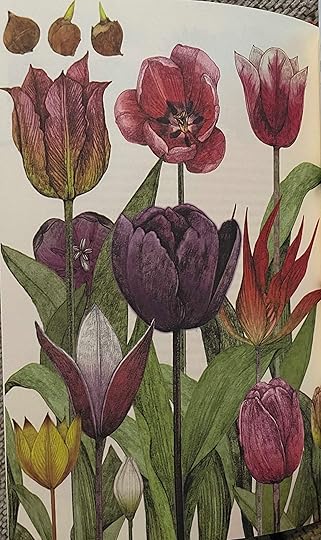
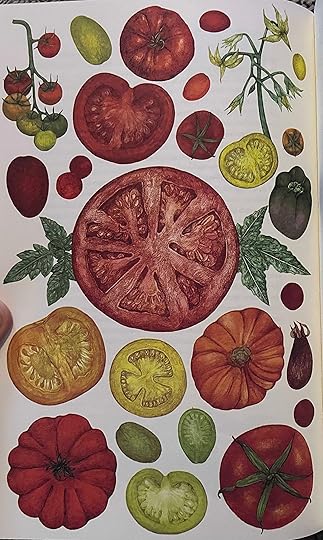
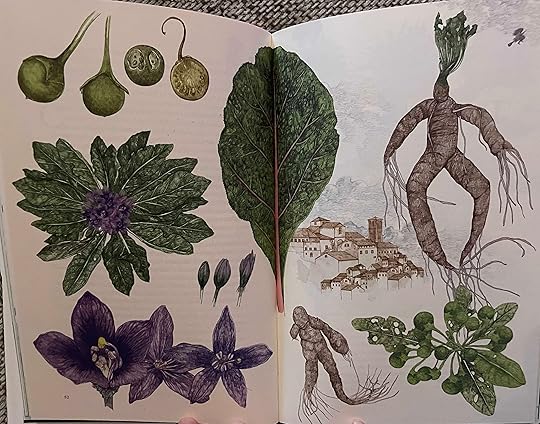
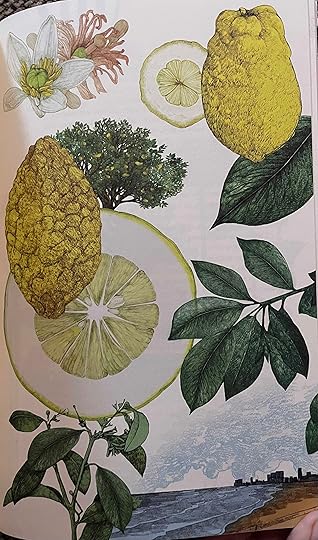
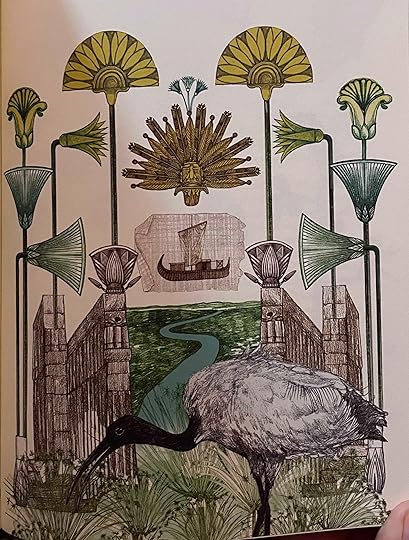
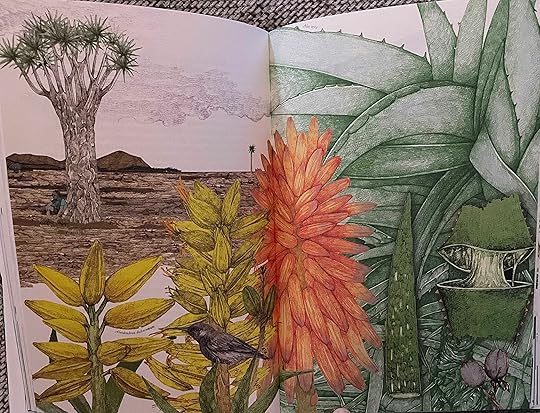
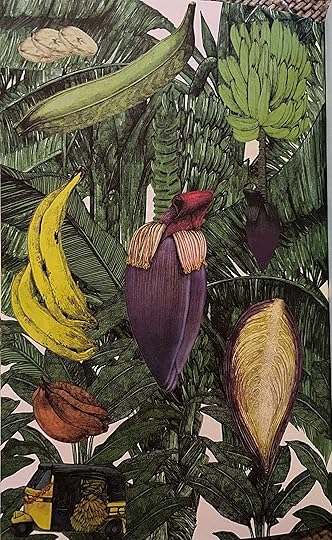
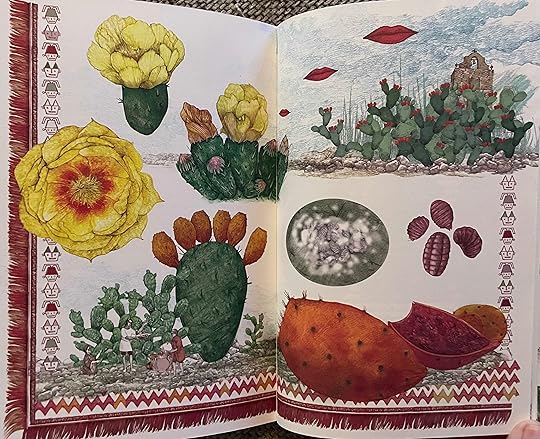
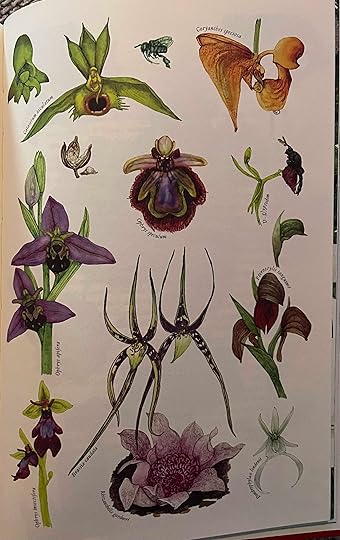
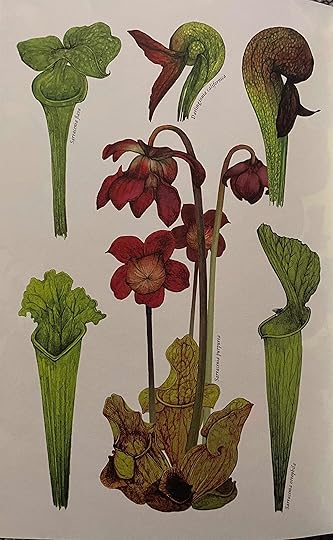
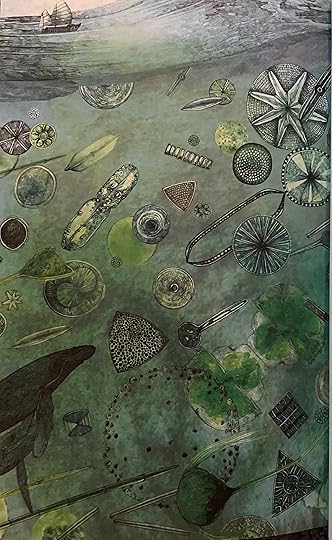
The entries for every plant not only give the general information like the physical description but also historical context and interesting tidbits about each respective plant about its relationship with humans.
I definitely love having these three books in my collection (the 3rd one, the one about birds, wasn't written by this author but was produced in the same way by the publisher so I consider them a series) and hope there will be more (about other animal families, for example). I will definitely use this in the future to look up specific entries.

June 19, 2021
While the pictures in this are utterly beautiful, and the facts are fun, the organization of this book felt scattered and unfocused, and plants were often listed for one country when they were native to another part of the world which irritated the pedantic side of me.
Ultimately, it was informative and fun at times, but I felt it lacked the focus of Around the World in 80 Trees, which I loved. Perhaps Around the World in 80 Flowers? Fruits? Something slightly more contained?
Ultimately, it was informative and fun at times, but I felt it lacked the focus of Around the World in 80 Trees, which I loved. Perhaps Around the World in 80 Flowers? Fruits? Something slightly more contained?

December 4, 2022
I wonder what criteria Drori considered when picking his 80 plants to cover because he certainly covered the world and every continent - including the ocean! I could go into detail about several of them but this is a book in which every page needs to be investigated, read, digested and considered. Most of his choices are two pages - a few are four and those have more illustrations possibly likely due to the diversity (squashes, pumpkins and gourds) or the history (cocoa).
But I will list a couple of the ones that struck me - -
*Dandelion - the latex/white sap has been used to manufacture rubber tires since World War II and a specific variety of Russian dandelion gives high yield. US manufacturers are investigating and apparently there are dandelion latex tires available in Europe.
*Spanish and Italian cheesemakers steep whole flowering artichoke heads in water to extract a enzyme that can coagulate milk to be used instead of rennet in cheese.
*Potato fruits - which are small and similar in appearance to green tomatoes - are toxic. Never even knew what one looked like until the illustration.
Also when your tuber is exposed to light and starts to look a bit green (it's only chlorophyll) but the exposure may have concentrated the toxins in the skin so you really need to cut off the green area or just discard the potato.
And the list ends with the massively diverse and vitally essential marine phytoplankton. Not only a key component in the food chain but also carbon sequestration in amounts far beyond what the land-based plants can provide.
And this would not be a complete review without a mention of the lavish and fabulous illustrations provided by Lucille Clerc. Plant, leaves, flowers, seeds, people using or harvesting - it's all covered and wonderfully done.
2022-267
But I will list a couple of the ones that struck me - -
*Dandelion - the latex/white sap has been used to manufacture rubber tires since World War II and a specific variety of Russian dandelion gives high yield. US manufacturers are investigating and apparently there are dandelion latex tires available in Europe.
*Spanish and Italian cheesemakers steep whole flowering artichoke heads in water to extract a enzyme that can coagulate milk to be used instead of rennet in cheese.
*Potato fruits - which are small and similar in appearance to green tomatoes - are toxic. Never even knew what one looked like until the illustration.
Also when your tuber is exposed to light and starts to look a bit green (it's only chlorophyll) but the exposure may have concentrated the toxins in the skin so you really need to cut off the green area or just discard the potato.
And the list ends with the massively diverse and vitally essential marine phytoplankton. Not only a key component in the food chain but also carbon sequestration in amounts far beyond what the land-based plants can provide.
And this would not be a complete review without a mention of the lavish and fabulous illustrations provided by Lucille Clerc. Plant, leaves, flowers, seeds, people using or harvesting - it's all covered and wonderfully done.
2022-267
August 26, 2022
If you are a botanist, or someone that is interested in the science of botany, then I suggest to pick up a different book. This book, which I admit I didn't finish, is a hodgepodge of variously gathered facts and impressions of plants from around the world. Random facts can be fun, but not when there is a lot of anthropomorphisms going around, misunderstandings of science and especially ecology, biogeography, and morphology. At times the book made me angry and frustrated, and I was ready to pull out the highlighter and mark up botanical inaccuracies in it later (since I listened to the audiobook in the car I couldn't do it in the moment). The plants are not even strongly connected to the countries they are associated with, and sometimes they are invasives. Why talk about Asian Rhododendron in Scotland, when you have the Scottish thistle? Why not use the opportunity to educate people about the amazing and fun real facts about plants, instead of having short 'sound bites' here and there put together, as if the facts came from a quick google search and the top-twenty hits. For the record, I am a professional botanist, but I don't mind a little whimsy, love art and history, but I can't stand scientific inaccuracies (unless it is part of fiction, of course).

November 8, 2025
This was surprisingly fun, insightful and at times snort-out-loud funny. I cared little about plants, but now I care more. Those MoFos really took evolution seriously (or evolution took them seriously?) Anyways, I’m not saying I’m entering my botanical phase, but I’m not saying I’m not.

September 25, 2021
This book is glorious! Every page is beautifully illustrated, with 1-2 pages of text per plant. The descriptions are written with such passion and beauty, brief but densely packed with information about the plant's history, as well as things like relevance to science and art, or just quirky anecdotes. The only negative I have is that there is only a loose organization by region, and no other discernable order, so you would need to reference the index if you were looking for a specific plant, but this isn't really a reference sort of book I would think. This is one that is definitely on my list for gift giving this holiday season.

January 24, 2024
Preface
Around the World in 80 Plants was a botanical fact fest combined with fantastic visuals. With the perfect combination of history, biology and geography; I now feel totally at ease spewing brand new facts about plants I seen all my live but never thought to understand.
————————————————————————————
Ratings
Knowledge: 4 📜📜📜📜 A lot of knowledge.
Complexity: ❎ Not complex. Anyone can understand.
Interest: 4 🧚🏻♀️🧚🏻♀️🧚🏻♀️🧚🏻♀️ A big swimming pool of interest
Overall star rating : 4.5 ⭐️⭐️⭐️⭐️💫 On the edge of glory.
————————————————————————————
🚨🚨🚨MILD SPOILERS 🚨🚨🚨
The Chapters:
▪️ Potato’s being part of the deadly nightshade vegetable family? Shocked (this family also includes cousins tomatoes, and eggplant).
▪️ I don’t know how I feel about orchids anymore. I’m afraid they are the hussies of the flower world and with that information I can no longer look at them without imagining a poor bee thinking it got a mate when instead it got duped. 🐝
————————————————————————————
🚨🚨🚨🚨 SPOILERS 🚨🚨🚨🚨
Some ( Very Random) Moments of Notice Along With (Sometimes) My Very Live Thoughts Straight From My Notes App to You:
📌 “Often called carmine, cochineal dye is widely used in sweets and soft drinks, and especially for the intense come-hither colouring in red lipstick – a glowing reminder of the goddess of the sun.”
I found a reason to like insects now. I love color red 💀
📌 ““Yet tobacco has killed and maimed more people than any other plant, and uses 40,000 square kilometres (15,500 square miles) of the Earth’s surface that could grow food or be set aside to conserve valuable forest habitats. One can only marvel at the mental gymnastics of the men and women who deploy extraordinary wealth and lobbying power to present tobacco companies as model corporate citizens. The draw of tobacco is compelling indeed.”
I deeply appreciate the irascibility.
📌 “Marigolds have an ancient medicinal history, including use as an antiseptic, a treatment for stomach disorders and intestinal parasites, and, externally, to cure ulcers and sores. For the Aztec civilization, medical treatment combined the use of plants with magic and religion; marigolds were part of the decoration and offerings at religious festivals, and deities were decorated with marigold garlands.”
📌 “Soybeans are one of the most nutritious plant foods, rich in edible oil and, even by the standards of legumes, an excellent source of protein, although they are not to be eaten raw, as they contain substances that interfere with our digestion.”
📌 “Applied externally, it has shown promise for treating burns, but eating just a handful of black liquorice a day for a fortnight can interfere with some of the body’s hormone systems and cause high blood pressure, heart arrhythmia and muscle weakness. Sustained liquorice binges have triggered convulsions and temporary blindness… In Finland, pregnant women are advised to steer clear altogether; although the odd sweet is unlikely to be a problem for them, regular intake makes premature birth more likely, and also seems to allow stress hormones to cross the placenta from mother to baby, which affects foetal brain development and is linked with behavioral disorders later in life
I knew my vendetta against Liquorice made sense 😤
Around the World in 80 Plants was a botanical fact fest combined with fantastic visuals. With the perfect combination of history, biology and geography; I now feel totally at ease spewing brand new facts about plants I seen all my live but never thought to understand.
————————————————————————————
Ratings
Knowledge: 4 📜📜📜📜 A lot of knowledge.
Complexity: ❎ Not complex. Anyone can understand.
Interest: 4 🧚🏻♀️🧚🏻♀️🧚🏻♀️🧚🏻♀️ A big swimming pool of interest
Overall star rating : 4.5 ⭐️⭐️⭐️⭐️💫 On the edge of glory.
————————————————————————————
🚨🚨🚨MILD SPOILERS 🚨🚨🚨
The Chapters:
▪️ Potato’s being part of the deadly nightshade vegetable family? Shocked (this family also includes cousins tomatoes, and eggplant).
▪️ I don’t know how I feel about orchids anymore. I’m afraid they are the hussies of the flower world and with that information I can no longer look at them without imagining a poor bee thinking it got a mate when instead it got duped. 🐝
————————————————————————————
🚨🚨🚨🚨 SPOILERS 🚨🚨🚨🚨
Some ( Very Random) Moments of Notice Along With (Sometimes) My Very Live Thoughts Straight From My Notes App to You:
📌 “Often called carmine, cochineal dye is widely used in sweets and soft drinks, and especially for the intense come-hither colouring in red lipstick – a glowing reminder of the goddess of the sun.”
I found a reason to like insects now. I love color red 💀
📌 ““Yet tobacco has killed and maimed more people than any other plant, and uses 40,000 square kilometres (15,500 square miles) of the Earth’s surface that could grow food or be set aside to conserve valuable forest habitats. One can only marvel at the mental gymnastics of the men and women who deploy extraordinary wealth and lobbying power to present tobacco companies as model corporate citizens. The draw of tobacco is compelling indeed.”
I deeply appreciate the irascibility.
📌 “Marigolds have an ancient medicinal history, including use as an antiseptic, a treatment for stomach disorders and intestinal parasites, and, externally, to cure ulcers and sores. For the Aztec civilization, medical treatment combined the use of plants with magic and religion; marigolds were part of the decoration and offerings at religious festivals, and deities were decorated with marigold garlands.”
📌 “Soybeans are one of the most nutritious plant foods, rich in edible oil and, even by the standards of legumes, an excellent source of protein, although they are not to be eaten raw, as they contain substances that interfere with our digestion.”
📌 “Applied externally, it has shown promise for treating burns, but eating just a handful of black liquorice a day for a fortnight can interfere with some of the body’s hormone systems and cause high blood pressure, heart arrhythmia and muscle weakness. Sustained liquorice binges have triggered convulsions and temporary blindness… In Finland, pregnant women are advised to steer clear altogether; although the odd sweet is unlikely to be a problem for them, regular intake makes premature birth more likely, and also seems to allow stress hormones to cross the placenta from mother to baby, which affects foetal brain development and is linked with behavioral disorders later in life
I knew my vendetta against Liquorice made sense 😤

July 25, 2021
Really great. As well as incredible facts about each plant, the author provides details of related human history, from the quirky to the abhorrent. A large proportion of the entries were amazing. I think even a none plant geek would enjoy it.
I have a small gripe with the illustration style - whilst I understand the choice, it wasn’t always clear what the entire plant actually looked like (scale, detail, etc), and I found myself frequently turning to google to get a better idea.
I have a small gripe with the illustration style - whilst I understand the choice, it wasn’t always clear what the entire plant actually looked like (scale, detail, etc), and I found myself frequently turning to google to get a better idea.
May 28, 2026
It's taken us over a year to read this together but we deliberately finished it yesterday. Nice book, not as good as the bird version

May 19, 2022
Plants are really fucking cool.
Also, this book is so good that I bought myself a copy to have halfway through reading my copy from the library. Can't wait to dip back in and savor it all over again. ^.^
Recommended: yes!
for curious people, for gardeners, for people who like science, animals, travelling, and/or learning, for a fascinating set of plant vignettes that are easy to dip into and savor
Thoughts:
Fun fact about me: I generally dislike touching plants. It's a weird little aversion, and maybe it's from that time I pet a cactus as a child and learned what "regret" meant, but regardless of the reason, it's a thing for me. Buuuuut I also really love nature and plants and learning and science. This is a fantastic little book, and what I most want to emphasize is that I truly think anyone can read and enjoy this!!! For a very factual nonfiction book on a very sciency topic, that is quite impressive!
So what makes it so accessible? It comes down to a few things: short chapters, cultural and societal stories about each plant, and gorgeous illustrations.
Short chapters make this super easy to read one or two sections of whenever you have some time. This is not a book that you have to read in a particular order -- and in fact, Drori encourages readers not to! He wants you to explore this book like you would travel the world. Do you feel like going somewhere tropical today? Are you seeking a seemingly barren desert? Are you climbing a mountain? Pick a country, find it's page, and go there through it's plant life. For people who struggle to sit with a book, this is a great choice, as it is easy to sample in small tastes when you feel like it.
The descriptions are lush, as is fitting a book about plant growth. Yes, the factual science portion is in here, complete with Latin names and etymology and words like "stamen" and "inflorescence" and even the occasional "secretions." But the bulk of it is about the impact of the plant on animal and human life. Did you know that there was once a DEATH PENALTY for illicitly growing or selling nutmegs? Did you know that vanilla has been done dirty by becoming synonymous with "boring" when it's really one of the most truly exquisite flavors around? Did you know that all bamboo in the world flowers simultaneously no matter where they are and we STILL have no idea why? Look, this is what I found interesting, and there's so much more. The chapter on tomatoes blew my mind. But this is just a hint of what's packed into these pages.
The illustrations absolutely make this book. The clever and gentle commentary on the plants themselves are the bones of the book, but the illustrations are the heart. They are generous, with every plant having at least on page and often more, showing the shoots, the variations, the way humans and animals use them, the flowers, everything about it you can imagine. They are stunning and make me almost want to reach out and touch these plants.
~See more reviews and book talk at MyBookJoy.com!~

Also, this book is so good that I bought myself a copy to have halfway through reading my copy from the library. Can't wait to dip back in and savor it all over again. ^.^
Recommended: yes!
for curious people, for gardeners, for people who like science, animals, travelling, and/or learning, for a fascinating set of plant vignettes that are easy to dip into and savor
Thoughts:
Fun fact about me: I generally dislike touching plants. It's a weird little aversion, and maybe it's from that time I pet a cactus as a child and learned what "regret" meant, but regardless of the reason, it's a thing for me. Buuuuut I also really love nature and plants and learning and science. This is a fantastic little book, and what I most want to emphasize is that I truly think anyone can read and enjoy this!!! For a very factual nonfiction book on a very sciency topic, that is quite impressive!
So what makes it so accessible? It comes down to a few things: short chapters, cultural and societal stories about each plant, and gorgeous illustrations.
Short chapters make this super easy to read one or two sections of whenever you have some time. This is not a book that you have to read in a particular order -- and in fact, Drori encourages readers not to! He wants you to explore this book like you would travel the world. Do you feel like going somewhere tropical today? Are you seeking a seemingly barren desert? Are you climbing a mountain? Pick a country, find it's page, and go there through it's plant life. For people who struggle to sit with a book, this is a great choice, as it is easy to sample in small tastes when you feel like it.
The descriptions are lush, as is fitting a book about plant growth. Yes, the factual science portion is in here, complete with Latin names and etymology and words like "stamen" and "inflorescence" and even the occasional "secretions." But the bulk of it is about the impact of the plant on animal and human life. Did you know that there was once a DEATH PENALTY for illicitly growing or selling nutmegs? Did you know that vanilla has been done dirty by becoming synonymous with "boring" when it's really one of the most truly exquisite flavors around? Did you know that all bamboo in the world flowers simultaneously no matter where they are and we STILL have no idea why? Look, this is what I found interesting, and there's so much more. The chapter on tomatoes blew my mind. But this is just a hint of what's packed into these pages.
The illustrations absolutely make this book. The clever and gentle commentary on the plants themselves are the bones of the book, but the illustrations are the heart. They are generous, with every plant having at least on page and often more, showing the shoots, the variations, the way humans and animals use them, the flowers, everything about it you can imagine. They are stunning and make me almost want to reach out and touch these plants.
~See more reviews and book talk at MyBookJoy.com!~

August 21, 2021
Simply amazing table and recreational book. Make sure you get original hardcover since half of the charm is in amazing illustrations and print quality.

February 5, 2022
Can I give this 10 stars please?!
This book is just brilliant. It virtually breathes the author's love for flora, which is infectious. Both the prose by Jonathan Drori and the illustrations by Lucille Clerc are magnificent. Not to speak of the sensational information it contains! I've learnt so much about plants: taking us on an eastward trip around the world, the author deals with a bunch of plants which you think you know perfectly well like tomato, wheat and maize. Now and then, we also encounter some more exotic specimens, like mandrake or lotus. Them being common or not, each of the 80 plants have their own astonishing, mind-blowing history and secrets to marvel at.
Apart from telling us all about the plant's quirks, Drori also sometimes adds a slightly cynical or critical note about humans and the way we treat or have been treating the plants in question, not in the least because that behaviour threatens our own lives, or all life on our precious planet. I appreciate that very much. No plant, nor animals or any other living thing on earth, exist solely for our benefit, and thus we have to treat them with due respect.
During the course of reading, I've already recommended it enthousiastically to three people, but I will definitely be an ambassador for this book for the time to come.
This book is just brilliant. It virtually breathes the author's love for flora, which is infectious. Both the prose by Jonathan Drori and the illustrations by Lucille Clerc are magnificent. Not to speak of the sensational information it contains! I've learnt so much about plants: taking us on an eastward trip around the world, the author deals with a bunch of plants which you think you know perfectly well like tomato, wheat and maize. Now and then, we also encounter some more exotic specimens, like mandrake or lotus. Them being common or not, each of the 80 plants have their own astonishing, mind-blowing history and secrets to marvel at.
Apart from telling us all about the plant's quirks, Drori also sometimes adds a slightly cynical or critical note about humans and the way we treat or have been treating the plants in question, not in the least because that behaviour threatens our own lives, or all life on our precious planet. I appreciate that very much. No plant, nor animals or any other living thing on earth, exist solely for our benefit, and thus we have to treat them with due respect.
During the course of reading, I've already recommended it enthousiastically to three people, but I will definitely be an ambassador for this book for the time to come.

May 30, 2024
I wasn't blown away by the illustrations, but the information about the plants was mostly really interesting. The most amazing fact - "according to researchers who can tell the age of cacti many saguaros" - the kind of cactus you imagine when you think of cactus - " germinated in 1884. That was the year after the volcanic eruption of Krakatoa in Indonesia, which spewed enough fine dust into the atmosphere to alter rainfall patterns. The Sonoran Desert became temporarily wet enough to give saguaro seeds an extra chance." WILD!

August 21, 2021
Beyond gorgeous and extremely interesting.

July 4, 2023
I absolutely loved this book. The author is detailed and has abundant resources that are shared at the end of the book. The illustrator is also incredible. Such an informative and engaging read!

October 16, 2024
A fascinating and fun way to learn interesting facts about botany and how it relates to humans. The illustrations are beautiful! A keeper of a book.

August 20, 2024
A delight. The book to be read slowly, calmly, while also intensly googling images of the plants and soaking in the beautiful world of plants.

January 24, 2021
Dopo aver letto Il giro del mondo in 80 alberi non potevo certo lasciarmi sfuggire questo nuovo saggio di Jonathan Drori.
La capacita dell'autore di rendere fruibile una materia cosi di nicchia come quella della botanica è davvero impressionante, tanto da farmi consigliare questo libro anche a chi come me non è appassionato ad un mondo cosi vasto come quello delle piante, che richiede una nozione di base scientifica appartenente solo a chi ha affrontato un certo percorso di studi.
Se poi a questo aggiungiamo i bellissimi disegni di Lucille Clerc, che non sono secondi nemmeno alla migliore enciclopedia illustrata, Il giro del mondo in 80 piante diventa un libro assolutamente adatto a tutti.
La capacita dell'autore di rendere fruibile una materia cosi di nicchia come quella della botanica è davvero impressionante, tanto da farmi consigliare questo libro anche a chi come me non è appassionato ad un mondo cosi vasto come quello delle piante, che richiede una nozione di base scientifica appartenente solo a chi ha affrontato un certo percorso di studi.
Se poi a questo aggiungiamo i bellissimi disegni di Lucille Clerc, che non sono secondi nemmeno alla migliore enciclopedia illustrata, Il giro del mondo in 80 piante diventa un libro assolutamente adatto a tutti.

March 6, 2022
This is brilliant! I loved the art, it makes it really easy to see what the plants actually look like with really great information about the plants. I have learnt about plants that I didn't even know existed and where I can find them! I'm very tempted to travel to some of these countries to find them and see if I can apply my new knowledge.
All of the plants in the book have a history of being useful at some point, whether that's the peacock flower of Barbosa or the Nutmeg plant. This goes through some sad histories and some amazing and some which has subtly been side lined in our collective histories.
All of the plants in the book have a history of being useful at some point, whether that's the peacock flower of Barbosa or the Nutmeg plant. This goes through some sad histories and some amazing and some which has subtly been side lined in our collective histories.

June 25, 2023
Such a beautiful, interesting book….definitely one to stay out on show, and read over and over again….it’s just too pretty to go in the bookcase…..
July 15, 2024
[ hardcover ]
An interesting and beautiful book.
An interesting and beautiful book.

March 21, 2023
A delight for both the mind and the eye! Plants are absolutely fascinating, and it was wonderful to immerse myself in their beauty while learning about the cultural and ecological significance they have had around the world—sometimes profound and sometimes just plain quirky. This is a beautiful book to keep on the coffee table or give to someone as a gift.
July 14, 2023
This book would make anyone fascinated with plants. The drawings alone makes this book worth having. The 1 or 2 page stories about each plant are very accessible, interesting and intriguing, telling the stories about the history of the plant, where it is found and why it has evolved to be a certain way. I'll definitely be reading the other books in this series.

July 23, 2023
An exquisite follow up to his Around the World in 80 Trees, Drori is the David Attenborough of the plant world, sharing his immense fascination and love of plants with any who are lucky enough to listen. Each entry is elegantly written, perfectly balancing the natural and human history of the plant. The illustrations are the ideal complement.

graphics
March 19, 2025i read this like the witches read they’re tarot card, i do it by “flower pull” of the day/morning what flower or plant should i discover today or should i learn about
and whatever i get it decides what mood or vibe i went for the rest of the day. flower and plant are so interesting i live up to them, let’s protect them and cherish them.
and whatever i get it decides what mood or vibe i went for the rest of the day. flower and plant are so interesting i live up to them, let’s protect them and cherish them.

February 25, 2026
If you’re the kind of person who likes knowing random facts about plants, or if you like discovering new popular species and their accompanying historical and nutritional backgrounds. This books is for you. Beautiful prose and lovely illustrations.

March 11, 2022
The illustrations throughout this book were delightful. Page 90-99 were my favourite pages - it made me smile reading about henna, lotus, marigold and mango, because they’re some of my favourite plants.

August 22, 2022
This is a fascinating and gorgeous book

January 8, 2023
Beautiful illustrations paired with wonderful plant facts, driven by cultural relevance and narratives!
Big win for plant lovers (me)
Big win for plant lovers (me)

November 23, 2021
The illustrations in this book were hauntingly beautiful. The text throughout the book was fun. I enjoyed learning about the various plants around the world. I also really appreciated how Drori, blended biology, culture and wit in telling the often complex stories of the plants. The only complaint that I have is the organization of the book. As other reviews state the organization of the book is awkward. I wish Drori would have listed the plants where they are traditionally from. Instead, he listed them by where they can be located today. It was a fun quick read.
Displaying 1 - 30 of 172 reviews