Originally published in three separate volumes, this breathtaking epic fantasy from an award-winning author explores the relationship between man and machine. The moment the seal of an ancient tomb in Wales is accidentally broken, the Changes begin, and a brave few must struggle to put an end to the wellspring of chaos.
Peter Dickinson was an English author and poet widely respected for his children's fiction, detective novels, and imaginative speculative writing. Raised partly in southern Africa before continuing his education in England, he developed an early fascination with adventure stories and classic literature, influences that later shaped his narrative style. He attended Eton College and later studied at King's College, Cambridge, before beginning a long association with the magazine Punch, where he worked for many years as assistant editor, reviewer, and resident poet. Dickinson eventually left journalism to pursue writing full time, publishing works for both adult and younger audiences. His crime novels featuring detective James Pibble earned critical praise, while his fiction for children established him as one of Britain's most distinguished authors in the field. Over the course of his career he produced nearly fifty books that combined historical imagination, fantasy, and thoughtful reflections on human behavior. He achieved rare distinction by winning the Carnegie Medal twice, for Tulku and City of Gold, recognition that placed him among the most celebrated children's writers in Britain. Dickinson also received numerous other literary honors and was elected a Fellow of the Royal Society of Literature. In addition to fiction, he wrote poetry and essays, and his work continued to influence generations of readers and writers in the field of children's literature.
The release of this trilogy as an omnibus inspired me to re-read these books, which I loved as a child. The collection reverses the original order of the books (which I think was a mistake - more details to follow) and adds in brief 'segues' between each book.
The omnibus also includes a 'biography' of Peter Dickinson (presumably an autobiography). It's brief, but longer than your usual 'About the Author' and includes a collection of family photos from his childhood up to the present day, which is rather interesting.
***THE DEVIL'S CHILDREN The Apocalypse! Now! With More Tolerance-For-Sikhs!
I remember liking this whole trilogy when I was a kid, but I also recall that this one wasn't my favorite. I was surprised how little of the book felt familiar to me upon re-reading.
We're dropped into a post-apocalyptic scene. A young British girl is alone in a mostly-abandoned London struck by plague - and odder phenomena. All Britons, it seems, have been struck by some syndrome that makes them fly into a violent rage at the sight, sound, or presence of machinery or technology. This syndrome also makes them unable to think about certain topics.
In desperation, the girl attaches herself to an extended Sikh immigrant family that happens to be passing by in search of a more amenable place to live.
Together, they set themselves up on an abandoned farm - but more conflict is yet to come, due to the local village's xenophobia, which has been enhanced by this mysterious syndrome.
The main raison-d'etre of the book really does seem to be tolerance-for-Sikhs. They're set up to be the misunderstood heroes, and described lovingly (if somewhat exotically). The book is dedicated to a person whom I assume might've been a Sikh friend of the author. (And you know, maybe it worked on a subconscious level. I DO have a higher opinion of Sikhs than members of many other religions...)
However, the apocalypse here is both enigmatic and inconsistent. Why on earth would these 'changes' affect only native Britons, not immigrants? Why would affected people be able to think about medieval knights, but not WWII? Why are blacksmith's forges OK, but not even the most basic firearm? Why are some people apparently still able to tolerate thinking about leaving the country in modern ships, if buses are intolerable? There are possible explanations, but none are given, or even theorized about.
After one surprisingly-violent showdown, the book ends rather abruptly. In today's market, it would've been expected to be at least twice as long. Overall, by today's standards, this isn't a bad book... but it's not without its flaws.
***HEARTSEASE The Apocalypse! Now! With English Children on Ponies!
Five years after the Changes affected England, the new way of life seems almost normal to children who were very young when the shift occurred. Margaret rarely thinks about how things used to be, and she shares the antipathy to and suspicion of technology and machines that has come over Britain, although she doesn't feel it as strongly as some do.
When a foreign 'witch' (actually an American intelligence agent) that her village stoned turns out to be still alive, Margaret and her brother Jonathan decide to rescue him in secret. Otto is in bad shape and partially paralyzed, but with the help of the woman who's been working for the family as a servant, Lucy, and her mentally-disabled brother Tim, a conspiracy to save Otto and get him back to his people unfolds.
In many ways, the way the story progresses, with a focus on young people independently using their ingenuity to solve problems, especially problems involving ponies and boats (the rescue plan involves a getaway in a vintage tugboat), the book reads a bit like a darker, post-apocalyptic 'Swallows and Amazons.'
The authorial standpoint on the events depicted in the book is... odd. I can't quite put my finger on it. On the one hand, this new England, yanked back into a pre-Industrial era, is horrific. It is one where strangers are stoned to death without question; where children fear, with justification, that their own families will kill them if they are caught breaking the rules, where people truly believe they're doing something charitable by keeping a mentally-disabled person in a shed like an animal.
Our main characters clearly see all these things as wrong - but they're awfully, and inexplicably, willing to forgive people their faults and try to see the best in them. Even the nasty village 'witch-hunter' who causes people's deaths and psychologically terrorizes their beloved aunt, is portrayed sort of like a cranky but lovable neighbor.
At the same time, while the faults of this society are noted, but to a degree, minimized, we have the portrayal of Jonathan, who's mechanically inclined and is attracted, rather than repulsed by technology (It seems the Changes just haven't affected him for some unknown reason). While Jonathan is bright, ingenious and has a moral compass, at the same time he's portrayed as being quite uncaring and callous toward living things, especially animals.
It's an interesting dichotomy that's set up, but I don't think the book uses or explores it as well as it could have. An opportunity to give the reader an outside viewpoint is missed, by giving the American Otto very little dialogue. And I felt like the ending was rather a cop-out (and for that matter, nearly the same cop-out that Dickinson uses in 'The Devil's Children.')
Now, this is clearly intentional. Dickinson seems to be saying that without a misled and violent leader swaying people's minds, cooler heads might prevail. However, I'm still not sure that the events as shown in these books fully bolster that statement. I felt the books are too quick to shift the culpability for truly horrific actions onto others. The book uses the Changes (a possibly magical and inexplicable outside influence) as a device to say that people may not be fully responsible for their own actions - and to me, that puts the whole narrative on a weird and shifting footing.
I'm not saying this is necessarily a bad thing - there's a lot of food for thought here, and it's very refreshing to see complex issues without easy answers in a book intended for young people. Too many books published today lack anything of the sort. However, I still feel that the book could have done a bit more with these issues.
A re-read - I read and enjoyed this book more than once as a child, but long enough ago that I remembered few of the details.
****THE WEATHERMONGER The Apocalyse! Now! With.... well, telling really would be a spoiler.
Let's just say that this book establishes that this trilogy belongs firmly in the genre of books that are about The Matter of Britain.
The book begins dramatically, as the curtain rises on two young people forced out into the water to drown as witches. The boy, Jeff, is suffering amnesia due to a recent knock on the head, but the girl, Sally, informs him that she's his sister and that he has the ability to control the weather.
He summons a fog, and the two manage to make their way to a boat that Jeff has kept in running order (part of the reason for the witchcraft charge - weather magic is accepted, but anything reeking of technology is suspect), and they escape across the Channel to France.
However, as soon as the two arrive in the French immigration office, they're (bafflingly quickly) sent back to England to spy on the situation and try to find out where the Changes which have caused so much upheaval are emanating from.
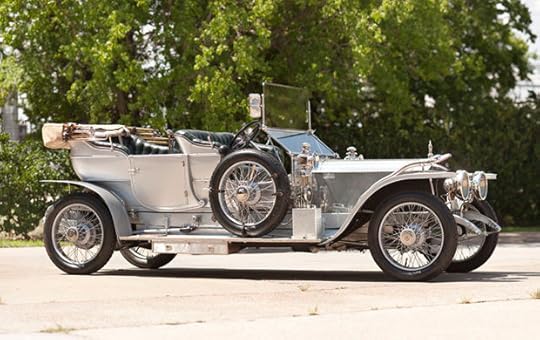
The plan is to grab a 1909 Rolls Royce Silver Ghost from a private collection (since simpler technology might be less troublesome) and make their way to Wales, where there have been rumors of a mysterious wood that's sprung up overnight, inhabited by a Necromancer.
A Quest is underway...
OK, this one in the trilogy is maintaining its remembered 4-star status. I really enjoyed it. (Although, I didn't recall how much focus, for a good part of the book, is placed on the car... probably because when I read it I was young enough that I had no idea what the car looked like, so it didn't create a visual memory. ) There is a LOT of love for this car in the book. (Though a lot of hate comes its way.)
Having now finished my re-read of the 'trilogy' I can say unequivocally that re-arranging the order in the omnibus from publication order to chronological order was a mistake. This one should be read first, and the other two should be regarded as ancillary works, only to be read afterward. It just makes more sense in the original publication order, and eliminates some of the issues I had with the other two books.
(Some of the issues - not all of them. There are still inconsistencies. For example, why, in this book, are animals as well as humans driven into a rage by technology, when in the other books animals seem to behave as usual?) Why are some people affected and not others? We still don't know.
The book is also not without its flaws. For example, Geoffrey's amnesia is nothing more than a plot device which gives Sally an excuse to explain the situation to her brother, and thus, the reader. Other than this, it's not really dealt with at all, and Jeff having lost 5 years of his life barely seems to upset him or his sister. This seems like a bit of authorial laziness. I also felt like the weather-magic aspect of the book was hyped-up enough that it's a bit of a let-down when it doesn't end up figuring more prominently in the plot.
I very much enjoyed the final reveal and denouement, however. From a dramatic perspective, it worked really well, even if the post-hoc scientific theorizing about explanations of great mysteries was a bit out-of-date (no one, at this point seriously thinks that there are large areas of the brain lying unused).
The final paragraphs of the book, as well as a few earlier lines, nicely encapsulate Dickinson's rather conflicted attitude toward the events of this book (and the other two).
BIG HUGE SPOILER DO NOT READ UNLESS YOU'VE READ THE BOOK OR DO NOT INTEND TO.
Recommended. And remember, read this one first!
Many thanks to NetGalley and Open Road Media for encouraging me to re-read these books. As always, my opinions are solely my own.
Had to order it from out-of-system ILL, but it was worth it. Best for ages 11 up, despite brevity of each third, because of provocative, subtle and sophisticated complexities... no simple good vs. evil, for example. I'm not really sure what to say. Exciting page-turning adventure, sure... but so much more. Would be wonderful to read at a young age, read again as a teen, and again as an adult, as one's perspective will change, one's sympathies will lie with the children at one read, with the families at another, with the leaders & the system and the history at another. ....... To choose two of the most simple ideas, I quote:
"Most people prefer to have their thinking done for them. Democracy is not a natural growth, it is a weary responsibility."
"But we've got to be lucky, Sal, so there's no point in thinking about it." "You're all like that. Boys and men, I mean. If there's no use in thinking about something, you don't." ....... I do wish I could see the other covers irl - the trilogy cover is a basic post-apocalyptic trope, and is not wrong, but inadequate as to content and tone of the gestalt.
The first story, Devil's Children, does stand alone if that's all you can get; in fact, read any that you can get, if you can't get the trilogy. The series page reveals that they were published out of order of story chronology, but they are best read in order of DC, H, W. That way you'll get the full impact of both the science fiction and fantasy elements.
Makes me want to reread Dickinson's The Kin, which is (iirc) even richer and even more creative and thought-provoking. ... Though I could be wrong, because I can't stop thinking about this and do not want to pick up another book just yet....
And, in fact, I was going to give it four stars, but the more I think the more I can't resist going all the way with it. I do believe almost every one of you would enjoy & appreciate this.
The changes trilogy is a three book compendium of children's stories written by the author in the 1960-1980's. Set in England, it is an England in which something has changed, leading to The Changes as people refer to them if they refer to them at all. A violent hatred of machines and mechanisms (even as basic a devise as a can opener or a compass can lead to a lynching) has swept the land, many people escaped overseas but those who remain live a very medieval style life in which cottage industries and manual labor are prominent. The world building is a bit erratic, and from book to book there are some inconsistencies which did not bother me at all, though I think other people found them more annoying than I did.
Back in the mists of time, growing up in the Middle East with very little English reading matter I cam across The Weathermonger, and adored it more than I can say. I was excited to find there were two more companion books and I was excited to read them all, despite trepidation, because those books you loved as a child do not always read as well when you are adult.
I need not have worried, the beautiful, complex writing was as good now as it ever was back in the 1980's.
I vacillated for a while on what order to read them in. I had heard that The Weathermonger was actually written first, though being chronologically last, and that I was best read first. The publishing info in the book seems to refute this and at last I read them in the chronological order in which they were presented in the compendium - which worked very well for me. As well as moving forward in time through the events, I felt that the authors writing style evolved in complexity as well. All three stories make perfectly good standalone stories also, and they are best reviewed this way.
The first, The Devil's Children Follows the fortunes of Nicky. In the first upheaval of the Changes her parents were among those fleeing to France and she was going with her them, but became separated from them and- as she had always been told to do- went home to wait. She has waited for a month and they never came. Nicky then attaches herself to a family group of Sikhs who are themselves unaffected by the changes, in that they do not hate machines and have not forgotten as much as most people have. They just want to find a safe place to live, but this is difficult in a country that has returned to a feudal fear of strangers.
In addition to the peculiar medieval social restructuring, morals and behaviours, there is also a very odd interpretation of medieval christianity in these books. This fist one, showcases all these oddities of the effect the changes have had on people. The fear of machines, the violence toward anyone using machines, the strange foggy memory loss that people affected by the changes get when they are trying to remember things from before. This issue are not addressed as comprehensively in the next two books, it is as if this is the one in which the author is exploring the concept the most. There are some pretty big inconsistencies with the way 'The Changes' work, and many of them make perfect sense only after you have read the last book- so that might be why some lists recommend reading the last one first.
This story was, to me very enjoyable, I enjoyed the dynamics of the group in which Nicky was traveling, the search for a place to live, the trials and tribulations, all were a lot of fun. I am not quite sure how old Nicky is - older than eight? Maybe ten? She is very young for her age I think, but the kids were a lot less worldly in kids books of the 70's. I especially loved the end of the story, as it sets up subsequent books.
Heartsease, like The Devil's Children, was new to me and I thoroughly enjoyed the story of Margaret and her cousin Jonathan. Their village has just stoned a 'witch' to death, but the children rescue him and find that he is in fact an American spy, come to the islands to try and figure out what is happening there. After saving his life the children decide to try and help him escape England and in this book, as in the next, there is are strong themes about machinery (as they try and fix it) which I am much more able to enjoy and follow these days than I was as a child.
The Weathermonger was a re-read for me, but just as vivid exciting and enjoyable as it had been when I read it back in the 80's. Geoffrey was a weathermonger ; he could create weather, call storms and rain and as such was an important and wealthy man in the village. He remembers none of it; he has been denounced as a witch, hit on the head, and now they have dumped him on an island and are trying to drown him and his kid sister Sally. They escape to France, but are sent back to England in another attempt to discover what has happened to England. The disturbance seems centered near the Welsh border. Of course, they do more than discover what it is....
All the stories seem to me to be an odd combination;there are young, naive characters who behave younger than a modern child of the same age would. However, at the same time the stories are complex, well written and interesting perhaps beyond the age of the characters in them. I am pretty sure that anyone who wants their kid's to read stuff with no sex, swearing ect will be well satisfied. But as an adult who enjoys kid's books they are mostly very satisfying as well.
They are not truly dystopian, for society has not really collapsed it has just reformed, but they do explore the notions of society in a world from which technology has been erased, so they should appeal to people who favour dystopia.
On the face of it, these three books are just showing different time periods of The Changes, but as you read you discover they're more intertwined.
In the first book (The Devil's Children) we see the beginning of it all, the sudden horror and turning on machines, the panic, and the blissful forgetfulness once they have all been destroyed. We also follow an unusual path: a young girl, Nicky, joins a group of Sikhs - apparently less affected than others - as they find a place to settle. Considered the Devil's Children by the locals, they still have to protect their own, and be able to trade for what they need.
Britain is now back in the Dark Ages, with witch hunts searching for those who try to use machines still. In book 2, Heartsease, the antipathy towards machines is beginning to slip, but only for some people. Jonathan and Margaret live on tenterhooks, trying to keep away from the dangerous Mr. Gordon but are coming to understand that something is wrong, and it's not witches or machines. Surely it's not right to stone people, even if they're designated as witches?
In book 3, Weathermonger, Geoffrey and Sally sense things are drawing to a close, risking their lives to reach freedom... and then again, to try to free everyone else. What they find is nothing I'd ever expected, but it reminds us all to heed dire warnings.
I loved some of the plot details, especially centering the first book on a group of Sikhs, and Margaret's loyalty to her pony Scrub, and enjoyed reading the enhanced information about Peter Dickinson at the end. It's always interesting to learn the context for favorite authors' writings.
Peter Dickinson is moving right up there with my favorite authors now. I love authors who don't dumb their writing down for children, and the beautiful flow of these is not to be missed.
Disclaimer: I received a free copy from Netgalley in exchange for an honest review.
The big dilemma in reading The Changes is whether to tackle the books in publication order or in internal chronological order. The three books are all snapshots in time and don't feature the same characters. Wisely the omnibus version goes for internal chronology, beginning with The Devil's Children in which we are introduced to a post apocalyptic Britain in which everyone has suddenly developed a horror and hatred of machines. Society has broken down. Even simple machines such as locks have suddenly become ineffable and working machines engender a murderous rage that doesn't stop until the machines have been destroyed. Even the language of machines
We see events through the eyes of Nicky Gore who has sensibly returned home to her house in London to await her parents--parents who never come. After a wait of 28 days, devastated by her abandonment, she takes refuge with a party of Sikhs, strangers and strange to her in their culture. Here she believes she can find succour without the danger of emotional involvement. These people are unfamiliar enough that she will be able to remain aloof.
But the Sikhs haven't been affected by the anti-machine madness as Nicky herself has, so Nicky becomes their canary, able to warn them if they are in danger of drawing attention by acting against what has become the new norm. They travel through the English countryside and eventually find a farm to settle on. The exploration of Sikh culture through Nicky, who seems to have forgotten what she knew about a lot of things (a symptom of the machine-madness), is fascinating and for its time (first published in 1970) made it unusual amongst its contemporaries. It explores xenophobia and the descent into feudalism in a fairly simplistic way
There follows Heartsease, which is set in the 'witch hunt' era of the changes, and finally The Weathermonger, which sees the solution to the original problem
I was impressed by these books when they were first published and I think they've stood the test of time reasonably well. I note that reviewers are talking about them as YA novels, but their original publication dates them to the timer when YA was barely developing as a concept. Originally these were just classed as children's books and as such I think they are accessible to a wide age range. This is a re-read courtesy of the electronic version from Netgalley, though I still have the original paperbacks on my bookshelf.
Two and a half, I think. Not sure it's quite a three, and I very, very rarely award fives. It's certainly not a four.
I came across a reference to this trilogy, and its 1970s BBC adaptation, on a web forum, and I'm a great lover of apocalyptic literature, so I was very keen to give it a read. It doesn't seem readily available these days, but I found this complete edition of the trilogy on the Waterstones website. Apparently it's printed on demand. It was quite expensive, and I was disappointed by frequent typos, and rather jarring use of American spellings throughout a very, very English book.
So...the basis of the story is that England is suddenly struck by a bizarre change that results in people becoming terrified of modern technology, considering it evil. Civilisation regresses to a historic state, with cities abandoned, and people returning to the country to farm and live as they did hundreds of years ago. Great idea, and well written in places, but some things jarred and didn't strike me as particularly good.
Obviously, I'm reviewing three books here, but they form a whole, taking place in chronological order and reaching a conclusion at the end of The Weathermonger. Unfortunately, it's a rather bizarre conclusion, that jarred somewhat with the rest of the stories, and completely trashed my suspension of disbelief. It felt like the genre of the trilogy very suddenly shifted from apocalyptic science fiction to high fantasy with very little warning, and the change was somewhat jarring. The first two instalments of the story were quite enjoyable and engrossing, although there's several criticisms I have that apply throughout.
First, not much actually seems to happen, especially in The Devil's Children, in which there's only one event of any real significance. Heartsease is a little better, but both of them are frustratingly inconclusive, and it would have been possible to tie up the loose ends in The Weathermonger, but that opportunity wasn't taken. Also, the "modern world" the book describes is that of the late sixties and early seventies, and as such, I don't think the series has aged well. This is partly because life has changed a lot in the last fifty years, and partly because the author uses a lot of terms I wasn't familiar with. If you're not familiar with farming, horse-riding and sailing terms of the mid-to-late twentieth century, and not au fait with the geography of the English countryside, you might end up getting a little baffled by it all. It's aimed at children, but I honestly found some passages rather confusing and hard to follow.
All that said, in places it was very atmospheric, and there was enough to keep me turning the pages and enjoying the eerie and strange world the author describes. It's part of a genre I love, along with books like Empty World by John Christopher - the vintage apocalyptic novel for children and young adults. Brilliant concept, and really good in places, just a bit too inconsistent and random to be really enjoyable for me.
The three books of this trilogy are linked by their common setting: a roughly contemporaneous (to the time the books were written, the late '60s) England the inhabitants of which, thanks to the titular Changes, have suddenly come to hate and fear machinery. But though the world is the common thread binding them together (no characters are shared between any two books), Dickinson is not all that interested in worldbuilding. Only "The Weathermonger", the last book chronologically but the first written, spends all that much time thinking about the causes and consequences of the Changes, propounding a magical explanation and even giving some people, including the protagonist, a magical power -- to, as the title suggests, control the weather -- because of them. This is part of the reason why "The Weathermonger" is also the weakest of the three: for the next two, "Heartsease" and "The Devil's Children", Dickinson is almost entirely concerned with the impact of the Changes on the coming of age of the protagonists, in all books children between the ages of 12 and 16. Conveniently, the Changes provide a solution to one of the main problems facing writers of books in which children have adventures, namely how to get rid of the parents: sudden massive societal upheaval makes it easy to, at the very least, shuffle them off to the side. But more importantly, the Changes serve as a metaphor for adolescence, in one sense in a really obvious way -- by calling the setting of his book the "Changes", Dickinson is fairly clearly offering it up as a metaphor for lots of processes -- but in a more subtle fashion as well. For Nicky and Margaret, the protagonists of "The Devil's Children" and "Heartsease" respectively, the Changes means having to define their place in the world, without being able to rely on adults to do it for them: i.e., growing up. The story of "The Weathermonger", by contrast, is more of a straight-up adventure, still enjoyable but largely lacking the depth of the first two books (and with a sizable plot hole in the ending).
Dickinson was a writer who undoubtedly improved as he went along: it's notable that while "The Weathermonger" can be described as an adventure story, and "Heartsease" as an unusual type of spy thriller, no similar simple description springs to mind for "The Devil's Children". In the larger scope of his oeuvre, the trilogy can be productively compared to the Pibble series, which he was writing at the same time in the other half of his strangely bifurcated career (in which he was a writer of mysteries). Both the Changes trilogy and the Pibble series can be thought of as Dickinson mastering the rules of his chosen genres: they are well-written, interesting, distinctive, and poke at the usual boundaries, but don't try to transcend them the way his later works do. Nonetheless, they are still well worth reading.
I've been wanting to read this series for a while, so I finally got it and started. The opening book is The Devil's Children.
It feels like The Devil's Children drops the reader in the middle of the story. We know "The Changes" happened, that modern technology was abandoned, and that people left the cities for the country. Since cars and trucks and such were abandoned, that means we follow the main character, Nicky, and her travels.
What I found the most interesting were her interactions with a clan of Sikhs, who are not affected by The Changes. She is used as a canary in a coal mine; their interactions with her let them know if they are about to upset other English people. This is really useful as the family settles down and starts farming and metalworking next to a village that is going down the feudal path.
At the end of the book, there are still a lot of questions to be answered. Why were only England and the English there currently affected by The Changes? What caused the Changes in the first place? And of course, what happens next? I'll keep reading.
Recommended as the start of the series. I think it could be used as a jumping-off point for a discussion on how the lack of technology would affect each of us.
The middle book of the trilogy is Heartsease. It is about five years after "The Changes." We find that some people have proven that absolute power corrupts absolutely. Other English children aren't as strongly affected by the technology avoidance. And, sadly, sheltering someone who is mentally-challenged is seen as absurd charity, even when he is kept in the barn. The kindness and heroism of the children are what kept me reading.
The Weathermonger is a great book. Finally, we get some answers as to why The Changes happened. But to get that answer requires a quest with the mount of a Silver Ghost Rolls-Royce. And there is even a meeting with a trickster.
Any more would be telling, and this book is worth reading.
A curiously-structured trilogy, but full of a particular, poetically English yearning for times gone by. Book One, "The Devil's Children", is the strongest; the dramatic tension of the Sikh travellers winning the trust of the wary English villagers is both heartwarming and exciting. The dramatic reveal of the power behind the changes at the end of "The Weathermonger" is a minor masterpiece of fantasy writing, although I would personally have preferred it to have been done in more detail and at a greater length. All in all a young adult novel that, fifty years after its writing, has relevance even now.
Read this book because the current circumstances (Covid19 lockdown) kept reminding me of the TV series from the 1970s. I had the books then but don't think I read them. I liked the order that they have been placed in in this single volume (different to the order that the books were published in). Each book is different and I am not sure which one I liked best. Was surprised by the Weathermonger as I didn't remember any of this (unlike the other 2).
The Change has come over England causing people to hate machines and suspect anyone unusual of being a witch. When a witch is found he or she is stoned to death. This should sound familiar, however not all of the children succumb. When a stoned witch is found to still be alive, a rescue occurs and with a lot of risk taking the witch is ferreted out of the country. The story of how this is done is riveting!
I always read ghis because it's so comforting. It is set in a fictional England but that England is the England of y youth, the one with English people in it. And the idea of being able to change the weather in a helpful way (or a vengeful way) is something that appeals to my sense of public duty.
And gthe prose he uses to describe how the weather changing works is the best part of the book.
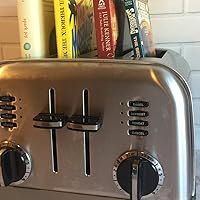
The changes begin with the invasion of an ancient tomb in Wales, and the result is that people in Wales, England, and Scotland become fearful of and/or enraged by any kind of technology, gathering and destroying even simple gadgets like toasters, regressing (or changing) their contemporary attitudes towards modern convenience into doing things the medieval way (with man or animal power).
It's a totally different kind post-apocalyptic story in that their are no nuclear bombs, zombies, or Thunderdomes... but there are Sikhs, action-packed pony chases, and the overgrown ruins of the M5 motorway, all adding up to an excellent combination of the magical and the mundane, connecting Dickinson's future Brittan to the Arthurian wizard Merlin.
It's a wonderful three part fantasy, full of rich and sympathetic characters who engage the heart and the mind... I recommend it for readers of all ages.
Excellent writing. What unique verbs he chooses to produce action and sound. Squelch, champ, and many others I’m sure he just made up. An author I want to read more of.
The Devil's Children Given that these are children's books, this is quite adult in its concepts: bigotry, taboo, control. I really enjoyed this first book about Nicky and the Sikh families she joins up with for mutual survival. The Sikh's are not affected by whatever phenomenon has taken over England, they are able to think about & use modern technology which puts them at great risk from the rest of the population. Nicky needs their help & protection, and she is affected, so the Sikhs use her as a miner's canary to warn them what is good & what is bad.
They manage to find a good place to settle, trading with neighbouring towns. The neighbours are frightened of the Sikhs, viewing them in a superstitious way as equivalent to the elves & fairies of legend: the Queer Folk. After fighting with the villagers against a common threat, life settles down as much as is likely for the Devil's Children. Nicky is not settled, she still has a fierce anger within her that is not needed during quiet times - she must continue to France to find her family.
Heartsease We're really in witch-hunting time now. Otto has been stoned to death as a stranger & for using the evil technology. Margaret hears him moaning under the stones, so she & her cousin, Jonathan, rescue him. They know they'll have to get him away before the witchfinder, Davey Gordon finds him & brings the whole family down. With the help of Lucy & Tim, helpers on the farm, they manage to get him away into an old tugboat on the canal. Suddenly, the hunt is on & they must escape for Ireland via the Bristol channel - a dangerous journey in which Margaret's horse is swept overboard.
These are very resourceful children, & this is an exciting read. I look forward to the final episode.
The Weathermonger I thought the ending was a bit silly but I did enjoy Geoffrey & Sally's wild ride across England in the old Silver Ghost Rolls. Needless to say, the pair manage to free England from the anti-technological grip of the strange forces. Arthurian legend has a lot to answer for.
A good kids' read with enough story to interest adults as well. It kept me interested until the end.
The three books were actually published in reverse order than that presented in this trilogy - each exploring a different aspect of The Changes, rather than a sequential storyline.
cover blurb: These three exciting adventures are set in England in the future. But instead of everything being more civilised, something has gone wrong and we are back in the Middle Ages. Not only that, but people are frightened of and hate all machines: cars, buses and trains have disappeared from life because they are regarded as evil...
The first book, The Devil's Children, is about the very beginning of the Changes, while this island was still settling down into its new pattern. The heroine is a London girl, Nicky, who has lost her parents. She joins a group of wandering nomads who become the only family she has. There are all sorts of problems and dramatic collisions as they journey through a strange, new England.
In Heartsease, the second book, Margaret and Jonathan rescue an American spy who has come to investigate the uncanny Changes that have taken place. Somehow, they must smuggle him out of the country - even if it costs them their lives ...
In the last book of the trilogy, The Weathermonger, the hero, Geoffrey, and his sister, Susan, are condemned to death as witches. They escape to France, but later return to England to try to discover the source of the strange and magical spell which has the island within its grip. Their objective is to restore England to its modern self.
This masterly series of adventure is peopled by vivid, real characters. Peter Dickinson has created an absorbing, gripping and sometimes terrifying trilogy. Once you have picked it up, you won't be able to put it down until it's finished.
not sci-fi, more like anti-sci-fi sci- fi? wait.. sci-fantasy? kinda, but still standard sci-fi, but with every day objects?
i really do not know what category this would fall into. it is definitely a young adult trilogy. it was also very good.
Peter Dickinson’s ‘The Changes’ trilogy follows the the experiences of three groups in the UK over a period of about a decade. This is basically a post apocalyptic tale with out the apocalypse.
one afternoon everybody just goes a little bit crazy and it sticks. They fear all things technological. Engines drive them mad and they fly into a fury of destruction. electricity is like witch craft, guns are completely out of the question. even simple machines like a bicycle could cause a mob scene.
in a matter of minutes, even seeing a unmoving vehicle or a telephone sitting idle makes people uncomfortable to the point of walking away.Only people in the UK are affected, the rest of the world fears the spread of their irrational fears.
unlike other turn society on it’s ear novels, these were a bit different because technology still works. people just refuse to use it, effectively placing themselves in a neo-dark age.
Written in the late 1960’s / early 70’s, The Changes trilogy covers three short books (about 200 pgs each).
* Book one is ‘The Devils Children’ followed by * The Heartease * The Weathermonger
interestingly, they were published backwards. The Weathermonger was the first published in 1968. it is by far the most Fantasy of the trilogy, it deals with a boy who can concentrate and call storms, fog, end rain, etc. He and his sister are seemingly immune to the effects of ‘the changes’ and are on a tech filled journey to wales, rumored to be where this ailment began. this is the conclusion to the series.
Heartease and the Devils Children were published in the two following years.
As standalone novels, i think that these would be enjoyable, but i believe they are best presented in the trilogy omnibus format. There are some simple introductions included which i am assuming wdid not exist for the standalones. as an example, in the preface, we are translucently introduced to a man ho is excavating in a pit, when he locates a stone slab covering a tomb. when he moves the slab, a bright green light shines out of his pit and the UK changes. you then start immediately into the story of a girl stuck at home awaiting her family. it has been 28 days since the change. these interludes are informative and the individual books would be difficult to link together with out these.
i think one of the huge benefits to this series is its flexibility to fit into modern eras. computers are not mentioned because they were not common household items. there are no lame fall back plots pertaining to cell phone use.. the internet does not exist. the tales do not come across as anything but antiquated.
i highly suggest this for any your adult reader as well as any adult sci-fantasy fan who wants some light but enjoyable reading.
apparently, there is also a 70’s british mini-series i may have to hunt down :)
about the author
Dickinson has written over 50 books and is a very humorous writer from what i can see. i would drink a beer with him.
folks who enjoyed the 1980’s movie “Flight of the Dragons” should note that it was based on one of his books.
on his Random house author page he is described as “Peter Dickinson is a tall, elderly, bony, beaky, wrinkled sort of fellow, with a lot of untidy grey hair and a weird hooting voice—in fact he looks and sounds a bit like Gandalf’s crazy twin, but he’s only rather absent-minded, probably because he’s thinking about something else. Day-dreaming, mostly. [...:]“
The Young Adult books contained in this trilogy were originally released in the opposite order to what they are in this book - in 1968, 1969 and 1970. The cover of the book shows the books in the order they were released. But the book order in the trilogy is:
The Devil's Children Heartsease The Weathermonger
The stories have stood the test of time well and, since I had never read the books before, I thought the order was just fine. It is chronological in the trilogy and makes sense.
These are post-apocalyptic descriptions of an England that was affected by the Changes. Just England, Scotland and Wales were affected. All of a sudden, one day, people are fearful and/or enraged by any kind of technology and Britons go back to doing everything by hand or with the use of animals.
THE DEVIL'S CHILDREN
Nicola Gore "Nicky" leaves London for the countryside after the Changes and after 19 days joins up with a group of Sikhs, who were unaffected (some groups of people were hit harder when the Changes hit and some were totally unaffected). While telling Nicky's story, the main thrust of this book seems to be intolerance towards Sikhs and how, with Nicky's help, this feeling is turned positive.
HEARTSEASE
Children seem to be less affected by the Changes than adults and two of them - Margaret and Jonathan along with a "spy" and two other children who are helping them - decide to get away from rural England over to Ireland by boat and using ponies. This was quite an action-packed book, full of chases and near-misses.
THE WEATHERMONGER
Geoffrey and his sister Sally are chased off England's shores and arrive by boat in France. One of the side effects for some people is an ability to control the weather and Geoffrey has been doing this for the five years since the Changes hit. Now they are being sent back to Wales to try and find - and stop - the source of the Changes, the Necromancer. This is action-packed too.
This was a totally different post-apocalyptic series of tales. I loved the books and can see reading them to my twin grandchildren one of these days.
The source of the Changes, revealed in THE WEATHERMONGER, was a big surprise and a good ending for the series.
Because this trilogy was put together years after the original books came out, the author was able to add some notes at the beginning of each new book that explained or gave some closure to the other books. Also, there is a pretty lengthy autobiography of the author at the very end of the book that was fun.
I recommend this to children and adults alike.
NOTE: I received this book from Open Road Integrated Media through Net Galley in exchange for my honest review.
This is a reprint of Dickinson's earlier trilogy with the books in a new order. Previously Devil's Children had been the final book in the series even though it is set first in the timeline.
Britain has been beset by some kind of plague that has killed off most of the population. Bizarrely when any of the survivors hears machinery they become insanely angry. This book centres on the exploits of a young girl who gives up waiting for her family to come home and joins a band of traveling Sikhs that she meets on Shepherd's Bush Green! It is not the strongest story but it plods along nicely.
Heartsease is the second book in the series and it feels a little more grown up than the first although obviously still aimed at young teenagers. It is set five years after the change and two teenagers befriend a witch (anyone who tries to use a machine!) who has been stoned and left for dead. When he has recovered he explains that he has been sent from America to find out what is happening and the children try to help him get home with his report.
The final book was originally the first in the set. I'm loathe to call it a trilogy because they are more loosely connected than I feel a trilogy should be. This book features Sally and Geoffrey who now have to contend with the weather conspiring against them as well as everything else. Its quite a short book - about 140 pages - and in many ways was my least favourite of the three. Geoffrey suffers from amnesia and it is hard to get to grips with him as a character.
In truth the series of three now feels very dated and very English. It is an interesting read but didn't set my world alight.
Provided by Net Galley in exchange for an honest review.
I read these titles in the order of the eBook, so I believe this edition had the titles in chronological order rather than original release date. This being the first time I've read them, I enjoyed the order that I was given.
The Devil's Children This book chronicled the journey and eventual settlement of a Sikh family who, for reasons not really explained, are unaffected by the Changes that have occurred in Britain. I found this book interesting and Dickinson uses the story to explore racial prejudices that are still apt today. This book, although the last originally published, is set at the very beginning of the Changes and sets up the trilogy nicely.
Heartsease This book is set near the end of the Changes and although it started a little slower than The Devil's Children, it really turned into an excellent adventure story for children. This title concentrates on the inherent good in everyone and how this will overcome evil in the end. Also hints at the end of the Changes as the effect starts to wear off people.
The Weathermonger This title, the first in the trilogy but last one chronologically, is set at the very end of the Changes. Details how the Changes came about in the first place and how they are eventually reversed. I'm not going to explain anything about this in case it spoils it for potential readers, but the reason for the Changes was certainly nothing I was expecting! I enjoyed this book.
This is a good trilogy though it hasn't really aged very well. I love old sci-fi and fantasy so that didn't bother me but this may not appeal to everyone. I thoroughly enjoyed it and think it original in its plot and storytelling technique.
An advance reader copy was kindly given by the publisher via Netgalley
This is a trilogy in which I would class as Distopian.
The Devil's Children 4* Read
This book is essence just after The Changes happened. I loved the feel of the book and how well it showed what could happen in society when something bad happens.
The book itself was a very good read which dealt with one young English girl who found a life for herself after all England's English inhabitants went berserk and destroy all technology. The girl found a new life being The Canary for a large family of Sikh people who decide to bring this girl along. She becomes an integral part of their society.
The book did have a somewhat happy ending where she was sent to France so that she could find her parents and be a normal little girl away from the contamination in England.
Book 2 : Heatsease 3* Book
This book had nothing to do with the first which was a bit disappointing since I was hoping for more about the first book.
The characters find a Witch who was really an American person who was sent over to see what had happened in England. The man was stone as a Witch by the town as he had a radio and was using it to try and communicate with his own people.
The two main characters are supposed to help him escape after they find that the stoning didn't kill the supposed Witch. The book in and of itself .
Book 3 2* Read
I didn't find the characters very good and that they were very hollow. The storyline was from a later time frame than the other two groups.
In all honesty I wish I had stopped reading after book 1 since it was a very entertaining book. The other two books were passable but they shouldn't have been considered a trilogy since the only thing that connected them is the Change and the reaction of the people.
I've always loved books of British fantasy and stories of alternative worlds, and this trilogy combines the two genres well. The three separate books have been arranged in a logical sequence with a satisfactory conclusion, but apparently this was not the way they were first imagined. Be that as it may, reading them in this order is the most sensible. The Devil's Children was gripping and The Weathermonger was also a good read. Heartsease, on the other hand, was full of boring description which I sped read to get to the predictable ending. You could probably skip this book altogether but since the kindle version included all three, you might as well plow on through. All in all, an entertaining exploration of a world without machines and technology.
I read the obit of Peter Dickinson in the NY Times last December and the mention of “The Changes Trilogy” sparked my interest. I just read “The Devil’s Children” and was rather disappointed. Besides the plea for multi-cultural tolerance (this in, what, 1970?), the story did not seem to have a point. The premise is promising: that the inhabitants of England have gone Luddite and have abandoned ALL machines and are quite hostile to them after some strange fit befalls them all. This idea is never really explored in any depth in this installment of “The Changes”. Perhaps the others will flesh them out – I understand that Dickinson wrote these books in the reverse order they are presented in my Puffin paperback volume: 1) The Devil’s Children; 2) Heartsease; 3) The Weathermonger.
I remember reading this when I was little and being confused and upset that each book has completely different characters from the others. I still wish there was more about each set of characters, but really that's praise for Dickinson's characterisation ability, not a complaint. The writing and setting are evocative, which seems to be a given for Dickinson, and he uses the central conceit to explore the dark sides of both agrarian traditionalism and technological modernity, with a complexity that I appreciate more now as an adult. The adventures, though, are just as gripping as I found them the first time round.
(I'm glad tiny!me didn't come across them in separate volumes in publication order - which is the reverse of their chronological order - or her head might have exploded.)
I've always loved books of British fantasy and stories of alternative worlds, and this trilogy combines the two genres well. The three separate books have been arranged in a logical sequence with a satisfactory conclusion, but apparently this was not the way they were first imagined. Be that as it may, reading them in this order is the most sensible. The Devil's Children was gripping and The Weathermonger was also a good read. Heartsease, on the other hand, was full of boring description which I sped read to get to the predictable ending. You could probably skip this book altogether but since the kindle version included all three, you might as well plow on through. All in all, an entertaining exploration of a world without machines and technology.
This was an interesting premise, basically: what happens if the modern world is suddenly thrust back into the Dark Ages, with a fear of all things mechanical... The book itself was just okay for me, well written, but it just didn't thrill me. It seems to have only been available on NetGalley as it is a re-release of a book from 1991 with an extended author biography (with pictures) that is longer than some chapters of the actual story. Nevertheless, I read it, and it was kind of just okay for me.
For whatever reason, technology in England has been forgotten and is considered evil. Anyone who shows an interest in technology is suspect, and in one book, is stoned. Outside England, the world continues to progress, so in the third book (technically the first as it was published first), Jeff and Sally are tasked by the French on finding the source of this phenomenon. I was wondering if the author was influenced by WWII, and Hitler, as the hatred toward technology and those who don’t hate it, has overtones of the Nazi attitude for any non-Aryan.



 )
)