"Full of wonder." ―Elizabeth Acevedo A Best Book of the Year at BuzzFeed, Refinery29, and Entropy Magazine What makes a self? In her remarkable debut collection of poems, Destiny O. Birdsong writes fearlessly towards this question. Laced with ratchetry, yet hungering for its own respectability, Negotiations is about what it means to live in this America, about Cardi B and top-tier journal publications, about autoimmune disease and the speaker’s intense hunger for her own body―a surprise of self-love in the aftermath of both assault and diagnosis. It’s a series of love letters to black women, who are often singled out for abuse and assault, silencing and tokenism, fetishization and cultural appropriation in ways that throw the rock, then hide the hand. It is a book about tenderness and an indictment of people and systems that attempt to narrow black women’s lives, their power. But it is also an examination of complicity―both a narrative and a black box warning for a particular kind of self-healing that requires recognizing culpability when and where it exists.
I heard the author read in Nashville in February, fell in love with "Love Poem that Ends at Popeyes," and have been working my way through the rest of the book, slowly and happily, since it came out in October.
This stunning collection of poems is a master class in form, structure, and line breaks. Birdsong knows how a poem works. Many of her poems were longer than I’m used to reading so sometimes I would lose focus and have to reread but that’s completely on me.
Read as an ARC received as a benefit from a Patreon contributor.
In her book, Destinations, poet Destiny O. Birdsong gathered a large collection of her writing that both captures and inflicts pain. Birdsong's voice tells readers of the pain of living as a second class citizen in America which tries so hard to deny its racism, sexism, and homophobia Her poems go beyond expressing pain, they express anguish and deep wounds which can heal only as scars. It is clear in her poetry that we are getting a glimpse of her soul, of her inner being, of the forces within her that govern how she lives her life. Her pain is not hers alone, however; it is the pain of all marginalized people. It is also pain that is greatly magnified when the margins apply simultaneously to race and gender and sexuality, all of which apply to Birdsong. For her, the pain and feeling of exclusion are quite frequently become expressed as anger in these poems, just as it does in the everyday world. One of those angry poems, "Elegy for the Man on Highway 52," seemed more than angry, it seemed violent. Yet, in her soul, Birdsong also holds values that hold hope as in the poem "i too sing america." i too sing america but mostly//when its convenient when i am abroad// i fucking love the constitution//the gall of the forefathers....." The hope is there, but is difficult to retrieve for her, "...mostly//whenits convenient when i am abroad...." But while hope and belief do reside in the poet, they do are not the guiding factor of the book. Pain amd anger dominate the work. The tone of the book seemed to lighten-up in its latter pages, but never do we get lyrical, happy, love-filled poetry, poetry that will make a reader's heart sing or make him want to quote the poems. The book's title, Negotiations, properly defines the thrust of the book, however, in that so much that Birdsong writes about is about accommodation, compromise, and even surrender. It is perhaps best summarized in her poem "My rapist once said he didn't need anything from me;" (punctuation, grammar, lack of capital letters in the title all taken from the poem as it is written). In this collection, the poem "the way i listen to you read poems." also summarizes much of the rest of the book's content. This poem is the one I found the most interesting in the entire collection. For a Black, female, lesbian writer, there is much pain to discuss, many hurts to get over, many hopes that will go unrealized, yet a book that provides such a drumbeat of anguish, pain, and anger is a challenging work to read.
beautiful beautiful beautiful such smart and clever writing that also feels very easy — perhaps not the right word, because each word does feel very spiky and intense and crazy but each word works … is what i mean
very different style of poetry than i am used to reading and liking… very similar to siani poetry and not at all similar to ***** ****** poetry …. 😒
i want to try to write like this … i’m not very good at it i think i have a very different style of writing but i did very much enjoy this! and it seems like the trend that poetry is headed towards
Outstanding, deeply moving poetry; Birdsong (what an apt name for a poet) can write lyrically about the most deeply personal emotions and also be a warrior for social justice to rouse her readers to action. A bold voice, new to me, and highly recommended.
My pussy is not made of microfiber. I can't put it on my head to conduct business, or plan insurrections. It's not big enough to hide in...It's not bulletproof. It can't be offered to neo-Nazis as a lure for conversion therapy. That didn't work for Sally Hemings...
And so begins the first poem and title poem of this collection, which draws you in with its first line and timely imagery of the "pussy hats" of the Women's March against Trump-and keeps you close with deeply personal work that touches on the body and illness, sexual assault, womanhood, and race. This, from "The 400-Meter Heat," a poem that recalls the contest between Bahamian Shaunae Miller and American Alyson Felix in the '16 Olympics, and contains echoes of DuBois' "The Souls of Black Folks" ("...to be a problem...") and "America the Beautiful":
... I'm always saddest whenever two black women are competing
because I never know who to root for, and I'm arrogant enough to believe my split loyalty
fails them (which makes me more American again). This is how it feels to be a problem:
hoping that, when a country's cameras are trained on your back, and you offer the fruited plain
of your body, its somehow enough to quench the parched land where all the mothers keep dying,
each ghost a breath-song trilling in your blood...
It's hard to read this and not think of Issa Rae's declaration at the '17 Emmys that she was "rooting for everybody black." Here, to that end, is a rare instance of a win-win-the two top finishers are Black, but notably, the achievement of winning (and almost winning) represents more to the speaker than the attainment of a goal the competitors had sought their whole lives. Sadly, it's hard for me to read of the "offer" off the "body's fruited plain" speaker and not sense that there's an implication here that that their physical achievement is, firstly, one that is necessary to humanize these women in the eyes of the (default White Western/American?) world and 2) one that engenders a greater sense of self-worth in "the mothers that keep dying." I thought of these mothers as Black women, given Miller and Felix's race, and then of the higher infant mortality rates of Black women (which then led me to wonder if Birdsong had been at all aware of of Felix's 2019 article that criticized Nike for offering her a contract that would've allowed for a cut in pay due to reduced performance capability caused by pregnancy [NYT, Allyson Felix: My Own Nike Pregnancy Story)]. The detail here about Felix's uniform being "blistered" with USA across the chest brings to mind notions of branding-and ownership and plunder-of so many "fruited plains."
"400 Meter Heat" does much of its work with allusion, but "Elegy for the Man on Highway 52" mostly does away with it, unambiguously brimming with white-hot anger directed at some anonymous redneck. In an interview, Birdsong relates that the man nearly sideswiped her, and doubled back when she got out of her car to tell her he'd done it because she'd been tailgating him. When she said she planned to call the police, he called her a "fuc-ing ni--er." As in the title poem, Birdsong's opening lines hit hard:
I hope everything you touch is infested the way you think ghettos are...
I hope someone tells you everything your culture made is meaningless: Stonehenge, democracies, and you.
I hope they call you something akin to nigger and mean it. I hope someone looks at your list of accomplishments and tells you you failed because you didn't work twice as hard...
Here, Birdsong imagines the white man being addressed offended by a stereotypical affinity for guns (according to a Harvard study, 50% of all guns are owned by just 3% of the population, and mostly by white people-also, most perpetrators of non-gang related mass shootings are white):
I want you to watch documentaries about yourself and feel like they got the theory of the lone wolf all wrong. I want you to be angry because you feel too inarticulate to correct them--after all, you use words like nigger in polite company. Even Spencer and Bannon know better...
And then, the rage in this ending:
...I want you to bleed uncontrollably and internally--it's cleaner that way. And if there are service-issued shells lodged in your chest, then all the better. And if it was your family who first called for help, then all the better.
And if your babies are watching, all the better.
Beyond the first section of the book, where the preceding poems appear, Birdsong increasingly turns her eye to other subject matter. In several poems, such as "Ode to My Body," she takes on body image:
you should know i never looked at you & blamed your mother though it is true
i have wished you smaller with more symmetry like the stone of a fruit nestled in the slick flesh
of the world. in so many ways I have tried to discard you.
or i have cut you in two with water fasts nicotine
stretched you to feed the men what they wanted
the women what they could love...
Perhaps the two poems that stand out most for me are "long division" and "love poem that ends at Popeyes," both poems about desire and readiness for love. From "long division":
Twenty percent of me wants women-- or maybe just Cardi B. I want us to fuck up the club after we get dressed at each other's houses, her jeweled tips grazing my ribs as she drags the faja tight between my breasts... I want us to stumble into the bathroom arm in arm; for her to thumb straight the smudged wings of my mascara, gum cracking against her expensive teeth... Sixty-nine percent of me wants men: I believe every mouth deserves a morsel. The rest of me just wants a bed alone, seas of unfucked stitches cool to the touch, and arms brave enough to lie open with no expectation of an embrace. Of that, half is terrified of men: of the intentions they hide between my fears, the messages sitting on read, and the easy way they are speaking to you, then suddenly, they forget. Though part of me longs for their forearms, for the way they lift me; and the laps, broad as my mother's, granite enough to hold me no matter what size I've become, no matter the number of cylindrical months I've spent alone, months the men moisten and dangle in front of me like squares between their lips...
And finally, this breathtaking conclusion to "...Popeyes"
...& i am trying i am lying in bed with my arms around myself thinking of what i will eat when i get hungry i am willing to wait for what i want like when i pull up to the window & the cashier says it'll take ten minutes for the spicy dark & i say yeah yeah that's ok i still want it & i pull my car over & i play my music & i imagine the fried flecks of flour smothering in the saliva of my mouth & oh the biscuits & oh the honey & oh the red beans in their salty velvet & i think this is my own gold it is not daffodil gold it is not supermarket-roses gold it is not a thin- stringed gold attached to a locket of expectations with my face clasped between two composite hearts
but it is good & it is filling & it is enough
Other faves include "Spilled Milk (for hoteps)" ("He joked that I was the whitest thing/he every put in his mouth...", "My Rapist once said he didn't need anything from me" ("I thought men his age should eat vegetables/and talk about their feelings...") and "Scope" ("I read through all/the doctors' reports. I ask/too many questions before/letting them enter me..."). I expect this ode to the author's survival and Black femininity to garner a lot of attention and award nominations-it had been longlisted for the 2021 PEN Award for Poetry as of this review. I expect that I'll be gifting this one more than once in the months (and years) to come.
i actively actually DEVOURED this book of poetry. thank you mel for lending me this book out of a whim. idk how to say this but this a book of poetry that absolutely in the best way possible. hollows your bones and places something else in it. birdsong is a very very very very smart poet and half of the meanings in her poems probably went over my head but i love how much she was able to incorporate in poems that are fat (and lovely with their fatness) in abstractions!! including popeyes, cardi b, and bacon fat in poems will always be so iconic. also the way birdsong wrote her acknowledgements was also extremely cool & sweet & lovely & intimate & this book of poetry means so much to me even though i need to reread & reread & reread it to get everything out of it!
What is a "negotiation" for Birdsong? Like what are her terms, and what are the terms the world has imposed on her? For me, this "negotiation" is the site for many of the book's poems. Or it's an ethos ruling each poem. I don't think I can escape it. And why try? When I apply negotiation thinking to each of the poems, it strengthens the work. Like how a good poem title can provide an implicit structure to reading the poem. I feel informed and prepared via the book's title.
Because, as the poems indicate, the terms Birdsong has been left to negotiate with are not of her choosing. There are political and cultural obstacles that dictate terms. There is a history, specifically with a man referred to in a series of poems she calls her rapist, that dictate terms. What does it mean, then, to negotiate in this space? To live among these variables? For me, the poems that are cognizant of this frame, interacting with the terms, highlighting the poet's personal responses, these are the poems I'm most interested in. My favorite is "love poem that ends at popeyes," partly because it shows the poet being kind to herself. And partly because it articulates what the man she is thinking about might be doing. And, importantly, what her response to those actions should be.
The book is so inventive when the poet speaks about how she reacts to the world or what it means to keep living among the terms the world dictates to her. It's assuredly the book's strength!
I liked but didn't love this book of poems about growing up and living as a black woman. The concerns are familiar enough and the poems are decent, though most of them felt more like an example of the genre, not quite interesting enough to stick with you all the way through the next poem in the book. The exception, weirdly enough, was the "letter to my rapist" section/ group of poems that made me uncomfortable in a way that felt really productive, and that kept moving around and rearranging the context of the rape itself, in a way that felt fresh and important.
In general, Birdsong here writes poems that are based in a kind of conceit-- so she'll be writing about an experience-- the death of her dad, let's say-- though the lens of solar winds. This is something a lot of poems do, nothing wrong with it. But for me, these poems were too long, and too separate from the thread of the conceit, that for me it lost its organizing gravity. Maybe it was just too hot when I read these poems for me to stick with them like I needed to.
Negotiations is a powerful collection of poems that explored the nation's untold stories of oppression and abuse while merging in stories from her speaker that furthers the notion of black women grappling for power from men. This book left me gasping at many parts, such as the line "and it never mattered / if she didn't want to be touched by a nation's needs." Negotiations is political, erotic, and deeply insightful about power dynamics that exist below the surface of every interaction between people, ourselves, and our bodies. My favorite poems include "Negotiations," "Found Art," "Macular Conception," "Scope," "my rapist once said he didn't need anything from me;," and "hyper vigilance."
I heard Destiny O Birdsong read in an online poetry event during the pandemic. The subject matter was haunting and hypnotic. I knew this book would be a future read and it didn’t disappoint. These poems are not all easy reads but they live with you long afterward. I keep going back to reread Pandemic (not the one we are experiencing)and hypervigilance.
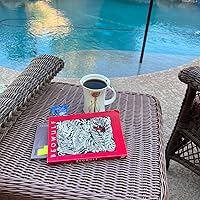
This is the kind of poetry you read on a quiet, warm day. With a cup of coffee and nothing going on but your own business. I don't wanna know what the world of poetry would look like without Black women. Grateful that I get to be a forever student in the class of verse & prose taught by us. 💛
This formidable debut collection is an ode to Black women. It honors the negotiations they must make on a daily basis to take up space, to be heard, to be safe, to be enraged, to love, to exist.
A collection of poems about life, family, oppression, identity, violence, and survival.
from Spilled Milk: "Sometimes, an animal asks for its own death / with the sound of a single branch breaking."
from My rapist said he didn't need anything from me: "The other one, she had been ripped open before, though not / with his sands. He considered making love to her / her healing. Just the boyfriend stitch until / she could find a suitor. See, he loved me / best because I wasn't broken like her. / But I wasn't broken enough."
from love poem that ends at popeyes:"i am not sad about whatever she will let him do / or what she will do to him to make him smile / make his mouth form & his breath catch the emptiness / where a few of his teeth used to be & make it ache / it's a good ache when something is missing & people still love you / I want him to be satisfied I want him to be happy / also i want to be happy we can do that separately / or we can do it together we can do it now"