

What do you think?

Hiroshima and Nagasaki: The Physical, Medical, and Social Effects of the Atomic Bombings
Written 36 years after the event, here is the definitive scientific report on the only experience to date with nuclear warfare. The short- and the long-range effects of the most portentous and terrifying event of the 20th century. Compiled by Japanese authorities, it combines physical, psychological and social consequences of the two events.
706 pages, Hardcover
First published June 1, 1981
Ratings & Reviews
Friends & Following
Create a free account to discover what your friends think of this book!
Community Reviews
Displaying 1 - 6 of 6 reviews

December 14, 2018
While the book is rather dry, the sheer amount of information provided in words, graphs, and tables allows it to overcome this detriment.
This book is a great overview of the physics and medical effects of nuclear weapons. The overall stance is critical towards nuclear weapons, but the explanations are clear and backed up by citations and research. There are a few nitpicks about the history because this book was written in the late 70's, some of the historical documents that provided strong evidence that the US did not drop the atomic bombs as a way of showing power to the Soviets were not yet available. (See Richard B Frank's Downfall for a more current historical overview). The medical effects are very comprehensive and use "doctor-speak", that is, a lot of medical jargon. I think this section can get a bit dense unless you are already familiar with medical lingo.
Another minor complaint is that they create the term "atomic bomb illness", as the collection of all ill effects from the bombs. I suppose in some sense this is useful, and it certainly makes sense to include the many negative effects that can occur from being present near a nuclear explosion together in some way. However, I think including the social effects often seems to stretch the usefulness of the term. This is not to say that we shouldn't underestimate the devastation of nuclear weapons, but I think simply calling it an illness or disease may not be a useful way of describing the multiple symptoms (on an individual and collective level) of experiencing a nuclear attack. It seems like simply saying "atomic bomb illnesses" would be better (so that this is mostly a translation issue, as Japanese doesn't [usually] have a difference between plural and singular forms), as it also suggests a common cause from the atomic bombs.
The figures on how society reacted and a short history of the anti-nuclear weapons movement in Japan is also nicely put together near the end.
Overall, I think this is a great resource for anyone wanting to understand the effects from nuclear weapon use. It does not draw on extensive witness accounts (though it points to many sources that do), and keeps a fairly academic tone. This is a positive in that it allows you to analyze the situation and figures with a cool head, but I think it means you should also read some witness accounts (or listen to some) to get a feeling for the horror of war, and especially of the devastation at that time.
Nuclear weapons seem like they will be around for quite a bit longer in our world, and I think it is for the best that if we are to keep them, we understand the power they have. If we should ever decide to get rid of them, it will be important to remember why.
This book is a great overview of the physics and medical effects of nuclear weapons. The overall stance is critical towards nuclear weapons, but the explanations are clear and backed up by citations and research. There are a few nitpicks about the history because this book was written in the late 70's, some of the historical documents that provided strong evidence that the US did not drop the atomic bombs as a way of showing power to the Soviets were not yet available. (See Richard B Frank's Downfall for a more current historical overview). The medical effects are very comprehensive and use "doctor-speak", that is, a lot of medical jargon. I think this section can get a bit dense unless you are already familiar with medical lingo.
Another minor complaint is that they create the term "atomic bomb illness", as the collection of all ill effects from the bombs. I suppose in some sense this is useful, and it certainly makes sense to include the many negative effects that can occur from being present near a nuclear explosion together in some way. However, I think including the social effects often seems to stretch the usefulness of the term. This is not to say that we shouldn't underestimate the devastation of nuclear weapons, but I think simply calling it an illness or disease may not be a useful way of describing the multiple symptoms (on an individual and collective level) of experiencing a nuclear attack. It seems like simply saying "atomic bomb illnesses" would be better (so that this is mostly a translation issue, as Japanese doesn't [usually] have a difference between plural and singular forms), as it also suggests a common cause from the atomic bombs.
The figures on how society reacted and a short history of the anti-nuclear weapons movement in Japan is also nicely put together near the end.
Overall, I think this is a great resource for anyone wanting to understand the effects from nuclear weapon use. It does not draw on extensive witness accounts (though it points to many sources that do), and keeps a fairly academic tone. This is a positive in that it allows you to analyze the situation and figures with a cool head, but I think it means you should also read some witness accounts (or listen to some) to get a feeling for the horror of war, and especially of the devastation at that time.
Nuclear weapons seem like they will be around for quite a bit longer in our world, and I think it is for the best that if we are to keep them, we understand the power they have. If we should ever decide to get rid of them, it will be important to remember why.

January 3, 2022
The strength of the work is in its comprehensiveness: from the beginning the authors insist on analysing the entire spectrum of devastation the bombs caused, from physical, to psychological, to social. Some of the research on e.g. radiation and its aeteological effects on the victims of Hiroshima and Nagasaki has been superceded in the 40 years since this work was published, but the rest is either complete (e.g. the physical destruction of the towns) or still the defining work in its area (e.g. the psychological survey of victims). While much of the book is somewhat dry and as dispassionate as it can be in its presentation of the data (and sometimes the data presentation could be improved with modern methods rather than publishing large tables or iffy line charts), the keen eye kept on the larger context in which this is all set means the data retains its meaning and relevance.
This perspective demonstrates clearly the full impact of the atomic bombs, literally tearing apart society itself at every level. For instance, many victims that survived had their immune systems damaged by radiation, rendering them vulnerable to infections during treatment, which was compounded by the destruction of medical staff and supplies (in Hiroshima the bomb was near-directly dropped on a hospital), the summer weather bringing flies and tropical storms, and the governments of Japan and America refusing to share information on the nature of the bombing. In the aftermath, children and elderly people were left utterly alone, and the psychological shock of the bombing was intensified by the Japanese government's refusal to afford care for the victims: rescue work at the sites lasted only two months since laws stipulated that relief efforts could only last sixty days.
The final section of the book is deeply moving and perhaps the most important. It details the efforts the victims made to gain justice following the attacks, and fight for peace, and a world without nuclear weapons. The atomic bombing, to this day, is still viewed as instrumental in ending the war, and therefore an instrument of peace; therefore, the victims must accept their 'punishment' for the sins of the war. To recognise their own collective identity as victims and to push for justice for themselves and the world took enormous strength the book is at pains to document. Notably, the first tenative steps towards this came from a Hiroshima women's labour organisation that surveyed the bomb victims and arranged a meeting among them, moderated by a primary school teacher who had her entire class killed by the bombing. Though it was not until the Bikini Atoll nuclear tests 4 years afterwards that the anti-nuclear movement became widespread in Japan and the world, the organisation of these women workers formed the nucleus of the movement to come.
This perspective demonstrates clearly the full impact of the atomic bombs, literally tearing apart society itself at every level. For instance, many victims that survived had their immune systems damaged by radiation, rendering them vulnerable to infections during treatment, which was compounded by the destruction of medical staff and supplies (in Hiroshima the bomb was near-directly dropped on a hospital), the summer weather bringing flies and tropical storms, and the governments of Japan and America refusing to share information on the nature of the bombing. In the aftermath, children and elderly people were left utterly alone, and the psychological shock of the bombing was intensified by the Japanese government's refusal to afford care for the victims: rescue work at the sites lasted only two months since laws stipulated that relief efforts could only last sixty days.
The final section of the book is deeply moving and perhaps the most important. It details the efforts the victims made to gain justice following the attacks, and fight for peace, and a world without nuclear weapons. The atomic bombing, to this day, is still viewed as instrumental in ending the war, and therefore an instrument of peace; therefore, the victims must accept their 'punishment' for the sins of the war. To recognise their own collective identity as victims and to push for justice for themselves and the world took enormous strength the book is at pains to document. Notably, the first tenative steps towards this came from a Hiroshima women's labour organisation that surveyed the bomb victims and arranged a meeting among them, moderated by a primary school teacher who had her entire class killed by the bombing. Though it was not until the Bikini Atoll nuclear tests 4 years afterwards that the anti-nuclear movement became widespread in Japan and the world, the organisation of these women workers formed the nucleus of the movement to come.

December 5, 2014
I'd like to start this review with a quote from the testimony of a second-grade girl in the Genbaku no ko by Arata Osada as quoted in Hiroshima and Nagasaki the Physical Medical and Social Effects of the Atomic Bombings on page 436:
I have to give this book 5 stars, not because I adored it, but because I feel it is an extremely important and indispensable compilation on the atomic bombings of Hiroshima and Nagasaki. The amount of information in this book is staggering. It is the work of exhaustive research and resource collecting to create a comprehensive tome on the subject with the hope that this knowledge will help prevent further use of nuclear weapons. I think it should be necessary reading for anyone in high military and government positions with the authority to oversee weapons manufacturing and use and those that work in weapons research and manufacturing laboratories.
I don't know much about the science of the atomic bombs, so there were a few chapters in this book that I did not fully comprehend (mainly Chapter 5, "Radiation from the Atomic Bomb") and other chapters that I had less interest in (Chapter 13, "Relief and Medical Care for A-bomb Victims," more of a comprehensive list of movements than anecdotal information), but the chapters on the damages, medical effects, and psychological effects of the bombings deeply disturbed and depressed me.
There was one chart in particular that had me in tears, Table 8.9A on page 143 from Part II "Injury to the Human Body." The title of the the table is "Serial Blood Findings in a Fatal Severe Case-Fourteen-year-old Boy." It was taken from the study "Hematological studies of A-bomb radiation injuries" published in 1953, a chronicles the last days of the boy's life from the 11th of August 1945 to his death on the 27th (his white blood cell count had fallen to only 120). A young human life reduced to eleven rows of table data, his sickness and death typed out in neat and precise numbers.
Another passage that moved me was by Shiro Nakayama. He was young at the time of the bombing and had been badly injured and disfigured. He was quoted on page 489:
One aspect of the atomic bombings that is not often discussed was covered in Chapter 12, "Psychological Trends Among A-bomb Victims". That chapter discusses the "total collapse" situation, in which "survival can seem unnatural. When devastation is so thorough that an overwhelming majority of the people around one die, it seems only natural for oneself to succumb, too." (page 490) Tsutomo Fujishima was quoted on surviving despite this (page 491):
Other information that is not widely known is the sheer numbers of non-Japanese A-bomb victims. Thousands of Koreans were killed and injured by both bombs as well as workers and students from other Asian countries. Allied POWs were also killed and injured. This is information that I was shocked has not been more emphatically discussed.
In 2008, I had the opportunity to travel to Nagasaki and stay with a classmate and her host family for New Year's. I met her host great-grandfather, a Japanese WWII veteran (drafted when he was fifteen-years-old) and the husband of a Nagasaki A-bomb survivor. Their family had stayed in Nagasaki despite their losses and managed to flourish. They were an exceptionally warm, loving, and close-knit family, and I greatly cherish the memories and experiences I had with them. As I read and saw images about Nagasaki, having been there, I found it very upsetting, and I hope that this book is issued an updated reprinting, made more widely available, and gets the readership it deserves. The further we get from Hiroshima and Nagasaki, the further people distance themselves from the tragedy and begin to forget about the lives that were lost. We should never forget.
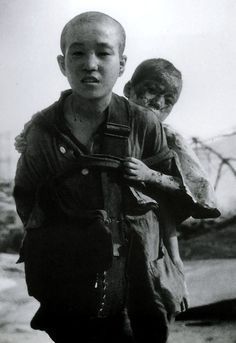
Photograph by Yosuke Yamahata, taken near Nagasaki Station 10 August, 1945, printed on page 333
My older brother went off to do compulsory labor and was never seen again. My younger brother was burned all over his body and died the following day at Koi Primary School.... Mother said she was going into town, as there was no good doctor in the country; the day after she got there, she suddenly became much worse. By evening word came from Uncle for us to come, so Father and I and my younger sister set out for town early the next morning. "At last we made it," I thought when we got there, only to find out that Mother had breathed her last a little earlier. Mother's body was burned in an open field by the river. That evening, just as we reached Uncle's house in the country, my older sister died. The day after her funeral, my lovable younger sister also passed away. Father managed to attend my older sister's funeral, but he just didn't have the strength to go to my younger sister's funeral. The temple priest who conducted my sister's rites must have breathed some poison, for he wasn't present at Father's funeral....
Father left this world on the morning of 10 September, worrying all the while about leaving me alone. Before dying, he often said, "I don't want to die. The bomb may have burned our home and our clothes; but even if we have to wear rags, let's stay in the country, just the two of us, and farm for a living."
I have to give this book 5 stars, not because I adored it, but because I feel it is an extremely important and indispensable compilation on the atomic bombings of Hiroshima and Nagasaki. The amount of information in this book is staggering. It is the work of exhaustive research and resource collecting to create a comprehensive tome on the subject with the hope that this knowledge will help prevent further use of nuclear weapons. I think it should be necessary reading for anyone in high military and government positions with the authority to oversee weapons manufacturing and use and those that work in weapons research and manufacturing laboratories.
I don't know much about the science of the atomic bombs, so there were a few chapters in this book that I did not fully comprehend (mainly Chapter 5, "Radiation from the Atomic Bomb") and other chapters that I had less interest in (Chapter 13, "Relief and Medical Care for A-bomb Victims," more of a comprehensive list of movements than anecdotal information), but the chapters on the damages, medical effects, and psychological effects of the bombings deeply disturbed and depressed me.
There was one chart in particular that had me in tears, Table 8.9A on page 143 from Part II "Injury to the Human Body." The title of the the table is "Serial Blood Findings in a Fatal Severe Case-Fourteen-year-old Boy." It was taken from the study "Hematological studies of A-bomb radiation injuries" published in 1953, a chronicles the last days of the boy's life from the 11th of August 1945 to his death on the 27th (his white blood cell count had fallen to only 120). A young human life reduced to eleven rows of table data, his sickness and death typed out in neat and precise numbers.
Another passage that moved me was by Shiro Nakayama. He was young at the time of the bombing and had been badly injured and disfigured. He was quoted on page 489:
I hated for people to stare at me.
Yet, every nerve in my body was attuned to the outside world; and to avoid even the slightest sinister look, I walked with a rigid [on guard] posture.
Even so, I secluded myself at home and spent hours before the mirror looking at my own face. What I saw was ugly hunks of flesh, like lava oozing from a crater wall, covering the left half of my face, with the eyebrow burned off and my eye and lips pulled out of shape. My neck was pulled over to one side, and however much I tried to straighten it, it wouldn't move back to the normal position.
One aspect of the atomic bombings that is not often discussed was covered in Chapter 12, "Psychological Trends Among A-bomb Victims". That chapter discusses the "total collapse" situation, in which "survival can seem unnatural. When devastation is so thorough that an overwhelming majority of the people around one die, it seems only natural for oneself to succumb, too." (page 490) Tsutomo Fujishima was quoted on surviving despite this (page 491):
If I died, then who would there be to look after our [family's] dead? My two children are dead. So is my wife. If I'm not around to pay respect to them, then there's no one...to look after them. That thought alone makes me feel like I just can't die.
Other information that is not widely known is the sheer numbers of non-Japanese A-bomb victims. Thousands of Koreans were killed and injured by both bombs as well as workers and students from other Asian countries. Allied POWs were also killed and injured. This is information that I was shocked has not been more emphatically discussed.
In 2008, I had the opportunity to travel to Nagasaki and stay with a classmate and her host family for New Year's. I met her host great-grandfather, a Japanese WWII veteran (drafted when he was fifteen-years-old) and the husband of a Nagasaki A-bomb survivor. Their family had stayed in Nagasaki despite their losses and managed to flourish. They were an exceptionally warm, loving, and close-knit family, and I greatly cherish the memories and experiences I had with them. As I read and saw images about Nagasaki, having been there, I found it very upsetting, and I hope that this book is issued an updated reprinting, made more widely available, and gets the readership it deserves. The further we get from Hiroshima and Nagasaki, the further people distance themselves from the tragedy and begin to forget about the lives that were lost. We should never forget.
Photograph by Yosuke Yamahata, taken near Nagasaki Station 10 August, 1945, printed on page 333
December 13, 2020
The book was well researched and laid out. There is a lot of information. The book is lengthy and can be a bit dry at times. However, everything ties together and is well presented by the author.
Read
June 30, 2009I should say I've read a fair portion of this--it's very long and dense, and I was reading a library copy.
As a study long after the fact (no studies were permitted during the occupation), the authors have had to be especially rigorous. The result is that this is the book that introduced me to the concept of statistical significance--which makes it useful, if for that alone. Otherwise, this is a reference book, and probably hypercautious, making it of limited utility to downwinders. It should probably be read in concert with Lifton's Death in Life: Survivors of Hiroshima. Lifton, as a psychologist, was much more personal in his accounts.
As a study long after the fact (no studies were permitted during the occupation), the authors have had to be especially rigorous. The result is that this is the book that introduced me to the concept of statistical significance--which makes it useful, if for that alone. Otherwise, this is a reference book, and probably hypercautious, making it of limited utility to downwinders. It should probably be read in concert with Lifton's Death in Life: Survivors of Hiroshima. Lifton, as a psychologist, was much more personal in his accounts.

Read
October 11, 2012The copy I read belonged to Paul Tibbits, the pilot of the Enola Gay. It is held with his collection at the Air Force's Historical Research Agency at Maxwell AFB, AL.
Displaying 1 - 6 of 6 reviews