Jump to ratings and reviews
Rate this book

A Time of Changes

Rate this book
Three thousand years after Earth's colonisation of the planet Borthan, stories of self-serving hypocrisy that occured among the first arrivals have bred a culture that forbids emotional sharing and denies the naturally human concept of 'self'. The result is a lasting peace, but at a terrible price. For it is a peace without love, without self, where even the mention of the word 'I' is taboo.

Spurred on by the arrival of an Earthman with a self-baring drug, Kinnall Darival breaks the strict code of the Covenant to record the sordid details of his rebelious life from the days of his royal youth to self-appointed prophet of love. He begins his account with the greatest of heresies:

'I am Kinnall Darival and I mean to tell you all about myself.'

304 pages, Paperback

First published January 1, 1971

66 people are currently reading
6077 people want to read

About the author

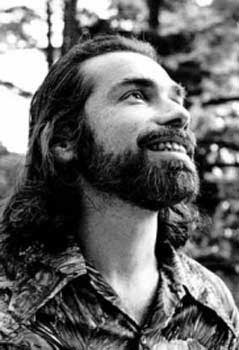
Robert Silverberg

2,339 books1,596 followers
There are many authors in the database with this name.

Robert Silverberg is a highly celebrated American science fiction author and editor known for his prolific output and literary range. Over a career spanning decades, he has won multiple Hugo and Nebula Awards and was named a Grand Master by the Science Fiction and Fantasy Writers of America in 2004. Inducted into the Science Fiction and Fantasy Hall of Fame in 1999, Silverberg is recognized for both his immense productivity and his contributions to the genre's evolution.
Born in Brooklyn, he began writing in his teens and won his first Hugo Award in 1956 as the best new writer. Throughout the 1950s, he produced vast amounts of fiction, often under pseudonyms, and was known for writing up to a million words a year. When the market declined, he diversified into other genres, including historical nonfiction and erotica.
Silverberg’s return to science fiction in the 1960s marked a shift toward deeper psychological and literary themes, contributing significantly to the New Wave movement. Acclaimed works from this period include Downward to the Earth, Dying Inside, Nightwings, and The World Inside. In the 1980s, he launched the Majipoor series with Lord Valentine’s Castle, creating one of the most imaginative planetary settings in science fiction.
Though he announced his retirement from writing in the mid-1970s, Silverberg returned with renewed vigor and continued to publish acclaimed fiction into the 1990s. He received further recognition with the Nebula-winning Sailing to Byzantium and the Hugo-winning Gilgamesh in the Outback.
Silverberg has also played a significant role as an editor and anthologist, shaping science fiction literature through both his own work and his influence on others. He lives in the San Francisco Bay Area with his wife, author Karen Haber.

Ratings & Reviews

What do you think?
Rate this book

Friends & Following

Create a free account to discover what your friends think of this book!

Community Reviews

5 stars
837 (22%)
4 stars
1,330 (36%)
3 stars
1,110 (30%)
2 stars
306 (8%)
1 star
92 (2%)
Displaying 1 - 30 of 268 reviews
Profile Image for Lyn.
2,007 reviews17.6k followers
November 15, 2016
A Time for Changes by Robert Silverberg is difficult to rate and even more difficult to review. I can begin by saying that I liked it.

Silverberg tells a good story, he’s a fine writer and his narration draws the reader in. Set in the distant future, on a planet inhabited by humans for thousands of years, but still with the knowledge of far off earth as an anachronistic home, we follow the life of Kenal, second son of a king in a strictly primogeniture hierarchy. The world is also strictly in the grips of a theocratic culture called the Covenant where it is profane, vulgar and even blasphemous to use “I”, “me”, or “myself” and these words are synonymous with the vilified concepts of “self bearing”.

Here is where Silverberg gets you, the psychological, sociological setting where people are so ingrained in the idea that they cannot express individuality that the words, “I love you” are criminal. Kenal discovers a drug (a lot like cocaine – or ecstasy), scratched from a feral jungle people in the southern continent (hmmmm) that he becomes addicted to and which ruins his life among this society.

Published in 1972, and winner of the Nebula Award that year, Silverberg creates a tension where the common ideas of sharing and love have been turned upside down and our protagonist struggles with whether he is a drug fiend or a revolutionary cultural messiah.

description
Profile Image for Bradley.
Author 9 books4,860 followers
February 9, 2017
This is a surprisingly different read.

At the very first, I thought it was going to be an alien-Odyssey, a SF treatment of the greek legend, with just a hint of something truly interesting, culturally, in that the entire race, or nearly the entire race, is devoted to self-abnegation.

Imagine, then, instead of relying on the world-building adventure that it began with, it turned into a very distinctive novel of the drug culture that reflects 1971 perfectly, changing Ulysses into Timothy Leary, and instead of being a Lotus Eater, he's become an LSD-like proponent of a drug that allows limited telepathy.

And then the cultural cool-bit now comes to the fore as the full and major plot point, because it is considered evil to say "I", and it's even more evil to say "I love you." How much worse is it when you can see right into the heart and mind of someone else who takes the drug with you? Is it a mystical entwining, an exploration of love and understanding? Or is it, as everyone else seems to think, a twisted aberration, an illegal and immoral pastime, or the destruction of everything good and right in the world? The tale of the gods does hold a moral, after all.

Honestly, I've read a lot of great drug-culture books, fiction and non-fiction, but this reads as one of the very best, exploring the highlights and the problems within our own culture and especially of the 60's and 70's. Not only is it a fascinatingly good story in its own right, but it reflects our world in equal measure, serving a dual duty nearly effortlessly.

Just a warning, though, for you readers who might get turned off by free-sex and shameless, almost laughable pornography: The novel has it. Just remember the times. It's all about throwing off the shackles of the accepted norm, after all, whether it's conformity, sexual repression, or opening your mind to new experiences. If you keep that in mind, I'm sure you'll get a kick out of this novel in the spirit it is offered.

Oh, and by the way, it was nominated for '72 Hugo and won the '71 Nebula. Interesting, no?
Profile Image for Lizz.
434 reviews113 followers
April 14, 2024
I don’t write reviews.

Silverberg explored an interesting idea: a society which actively shuns the idea of the self. Someone told me the other day that a secret is, in itself, a lie. I wasn’t sure if I agreed when I first heard that, but the more I reflect, including reading this story, the more I think he might be onto something. Imagine a world without secrets and division. Think of a world where you can openly tell everyone “I love you” and honestly mean it. Silverberg’s protagonist yearned for such a world. I do too.
Profile Image for Apatt.
507 reviews928 followers
February 8, 2016
Robert Silverberg is a legend, one of the all-time greats, and among these all-time greats he is probably the most underrated. He has Hugo and Nebula Awards up the wazoo but is relatively unknown compared to the giants of the genre like Asimov, Clarke, and Heinlein, IMHO he belongs up there with them in term of accolades.

A Time of Changes is one of his best novels if his Goodreads page is anything to go by. However, if you have never read anything by Silverberg before you may want to start with something more immediately accessible like Lord Valentine s Castle or Dying Inside. That said A Time of Changes is indeed an extremely good and unusual book. If you are in the mood for a thought provoking (but not action packed) book by all means dive straight into this one.

The novel gets off to a slow start and never really shifts into high gear. However, once you immerse into the story, characters and settings the fascination sets in, and the slow pace becomes a kind of virtue.
“this planet was settled by men who had strong religious beliefs, who specifically came here to preserve them, and who took great pains to instill them in their descendants.”
In a nutshell, the story is set on a human colony planet called Velada Borthan where intimacy is taboo and self-denial is the norm. Their society operates under a Covenant that prohibits opening up one’s feelings except to a designated bondbrother and bondsister. The usage of first person pronouns “I” and “me” is considered obscene. The title of the book refers to the protagonist Kinnall Darival’s discovery of a drug that forms a temporary telepathic link between the drinkers. After his first experience with the drug, it becomes clear that the Covenant is preventing people from intimacy, and thereby from understanding and loving each other.

It is actually fairly difficult to synopsize this book briefly and interestingly but it really is a wonderful thought experiment that explores human relationship, religiosity, and empathy. A culture where people build walls around themselves to keep everybody at a distance and human interactions are always impersonal have far-reaching implications. In some way, it is an allegory for impersonal, taciturn human relationships we often encounter in real life.

I hesitate to call A Time of Changes a “difficult book” as the narrative style is straightforward, and even the timeline is almost completely linear (except for the frame story at the beginning and the end) with only one plot stand and point of view. The possible difficulty lies in the unusual theme and slow, contemplative pacing. As usual, Robert Silverberg writes beautiful literary prose without lapsing into excessively lyrical passages. There is even some mild humour in the “polite circumlocution” dialogue which is the norm for this planet. For example:
”I should not have said, “One would have a room,” but rather, “Is there a room to be had? ” At a restaurant, it is wrong to say, “One will dine on thus and thus,” but rather, “These are the dishes that have been chosen.” And so on and so on, twisting everything into a cumbersome passive form to avoid the sin of acknowledging one’s own existence.”
In writing this review I find that while I love the book I can not sell it very well because it is not a “fun read” as such, unless you enjoy pondering thought experiments. If you read this book and dismiss it as “boring” you may want to pause to examine what you want from a novel. If it is purely entertainment then this may not be the book for you. If you enjoy imagining how our society may operating under very different sets of rules A Time of Changes is endlessly fascinating. The Nebula Award (1971) for Best Novel is well deserved.
Profile Image for Rachel (Kalanadi).
788 reviews1,499 followers
May 31, 2021
This book is far, far too preoccupied with its leading man's premature ejaculation.

The repetitive fact that he puts his penis in many willing receptacle women - but never sticks it in the one woman he truly lusts after - really distracted me from the story where he learns to bare his soul... or be human...

....
....
....

Guys, he gets high on a drug and it changes his life.

The End.

In case you're wondering,
Profile Image for Stuart.
722 reviews338 followers
September 20, 2015
This is one of Silverberg’s best novels from his most prolific and creative period in the late 1960s/early 1970s, along with Downward to the Earth and Dying Inside.

It’s about a repressive human society on a distant planet called Borthan, in which the terms “I” and “myself” are obscenities, and “self-bearing” is a serious crime. It’s the story of Kinnall Darival, the second son of a Plutarch (essentially a prince), who must leave his home to avoid being a threat to his older brother’s claim to rulership. When he encounters an Earthman trader named Schweiz, he forms an intimate bond that would be unacceptable with others of his kind, and when the Earthman introduces him to a mind-altering drug that allows a direct and complete telepathic sharing of the souls of both users, this breaks down the rigid bonds inside him and catalyzes him to form a new movement (perhaps religion is more accurate) to open up others to their own feelings, since they must “learn to love themselves in order to love others”. The idea of using drugs to break down the artificial barriers of society and the mind is a vintage 1960s/1970s theme.

In surprising ways, this book resembled Evgeny Zamyatin’s We (1924) and Ayn Rand’s Anthem (1938) since it depicted a repressive society that demonizes the individual, venerates the group, and suppresses private feelings. In both books, the concept of “I” is forbidden, and people have numbers in place of names. However, those early dystopian classics were written by Russian emigrates who had escaped oppressive totalitarian regimes, and forcibly showed the dangers of suppressing free will and individualism. What is most interesting is that Anthem came to a radically different conclusion from A Time of Changes. Instead of exhorting readers to love themselves and others and break down barriers, Ayn Rand pushes her famous philosophy of objectivity, which emphasizes self-interest, reason, and individual freedom. Despite the outward similarities of concept, the messages couldn’t be any more different.

I was also strongly reminded of Ursula K. LeGuin’s The Left Hand of Darkness. Both novels are set on distant planets settled by humanity but relatively isolated and somewhat undeveloped technologically. In LeGuin’s Gethen, the population consists of hermaphrodites that assume male and female aspects only when in heat (“kemmer”). When a human envoy named Genly Ai arrives, he goes through great difficulties understanding their cultures and recognizing his own shortcomings and gender biases. The plot has a lot of similarities as Genly’s companion Estraven is a powerful bureaucrat that is forced into exile and must hide in various guises as he travels to various kingdoms. This is similar to Kinnall Darival’s story, the second son of a septarch who must go into exile and disguise himself for political reasons at first, and later because he tries to spread the seditious new religion of self-discovery. Both books are journeys of self-discovery featuring spiritual awakenings and are highly recommended.
Profile Image for Amy H. Sturgis.
Author 42 books405 followers
March 18, 2015
This 1971 novel won the Nebula Award and was nominated for the Hugo, but I have to confess I found it to be quite underwhelming.

Robert Silverberg offers a first-person memoir of a future human (descended from Earthlings) on a far distant planet. In his society words like "I" and "me" are considered obscenities. Burdening others with one's individuality, sharing one's self with them, is held to be a sin that should be limited whenever possible. When he meets a man from Earth with a rare and illegal drug that allows individuals to fuse their consciousnesses, the protagonist questions and ultimately rebels against his culture's taboos, and he pays the price for his heresy.

The novel has problems. First, the world-building seems poorly thought out. If individuality and personal pride and sharing are evil -- if people must deflect attention from self by saying "one" instead of "I" or "me" -- why do they have personal names and take pleasure in having namesakes, for instance? Over and over again, when inconsistencies reared their heads, it occurred to me that Yevgeny Zamyatin (We) and George Orwell (1984) offered far more sophisticated explorations of how institutions may (try to) control language and how language in turn affects identity and self-perception, and they did it half a century before Silverberg wrote this.

Second, for the main character's "time of changes" to have the proper impact, the reader should empathize with him in some way and appreciate the depth and drama of his awakening and transformation. Instead, he's about as unsympathetic as they come: flat, uninspiring, oddly two-dimensional, and at times genuinely annoying. (I recognize there was a literary reason for his rambling discussions of his impressive genital size and premature ejaculation issues, but I won't miss them, that's for certain.)

Third, the novel comes across as dated in a way that novels a century older or more do not because of Silverberg's handling of the consciousness-expanding drug. It bears all the hallmarks of a late-sixties/early-seventies flirtation with the counterculture -- from a safe distance. Karin Boye's depiction of a "sharing" drug in 1940's Kallocain is far more nuanced; for that matter, Robert Heinlein's exploration of the counterculture in Stranger in a Strange Land (published ten years before A Time of Changes) is far more challenging.

In short, if I can be forgiven for collapsing my review into LOLcat speech, I see what Silverberg's doing there, but he's doing it wrong. Or, to be more precise, everything this novel attempts has been done better elsewhere by others.
Profile Image for Jim.
Author 7 books2,088 followers
April 10, 2017
Puritans to the stars? Something like that. As usual, Silverberg delves into a complex issue with realistic characters & manages to keep them distant enough that I never manage to care about them.

This has an interesting premise, a belief system of self-containment that our main character eventually fights. There are elements from many great classics, Heart of Darkness, The Scarlet Letter, & others. I could appreciate the complex theme, the world building, & tragedy, but it never sucked me in. He's a great editor & a technically accomplished author, but I rarely connect with his characters. That made his books a slog when I was younger. I thought I'd give him another chance. Still the same for me, though. My library has a few other books by him, but I doubt I'll bother any time soon. Like Frank Herbert's books, our interests rarely overlap.
Profile Image for Stephen.
1,516 reviews12.4k followers
February 5, 2011
4.0 to 4.5 stars Another intelligent and provocative story by Robert Silverberg who seems to have a real gift for evocative stories. This strong, emotional tale involves the journey of a repressed member of a repressed society to open himself up and find his “self."

The novel is set on a distant planet (originally colonized from an Earth over-populated and polluted). The planet's population lives by the "Covenant" whose most notable characteristic is the complete and utter denial of "self." Words like "I" and "me" are obscenities and their use is a crime (known as self-bearing). The central character is Kinnall Darival, a noble who has always found himself troubled by the ways of his people. Kinnall, through the use of a new drug finds that he is able to link telepathically with others and share their thoughts and feelings. This "sharing" leads Kinnall to revolt against the oppressive culture. The novel is presented in the style of an autobiography, written by Kinnall while he awaits impending capture and imprisonment for his cultural crimes. I found this to be a very well written and powerful story by one of the masters of psychological science fiction. HIGHLY RECOMMENDED!!!


Winner: Nebula Award Best Novel (1972)
Nominee: Hugo Award Best Novel (1972)
Nominee: Locus Award Best SF Novel (1972)
Profile Image for Ira (SF Words of Wonder).
270 reviews72 followers
January 22, 2025
Check out my full, spoiler light, video review HERE.

***Mild spoilers ahead.
This is a very different and unique science fiction story. In the beginning of the book, there are hints that some major events occurred in the narrator’s life. Then the first half of the book goes into the main character’s life story and does a lot of world building around this human colonized planet as well as the social and religious structure of their civilization. Midway through the book the narrator meets an earthman, and this is where our main character goes through his ‘time of change’. The earthman introduces him to a drug that breaks down everything that the rulers of this ~2000-year-old society have built up. This is a story about rebellion and going against tradition, religion, peer pressure, social norms, all to gain a better understanding of oneself and one’s place in the universe. And this is all sparked from a drug induced revolutionary with the aid and pressure of the open-minded earthman.

This was a book of it’s time and it brings up some interesting ideas on this subject. The ending is a bit ambiguous and leaves the reader wondering if the main character was truly opened up or just really high and an addict. As I read this, I kept waiting to get something more out of it, almost to get some sort of enlightenment like our character did, but in the end I didn’t quite feel fulfilled (maybe that was the point).
Profile Image for Michael Finocchiaro.
Author 3 books6,251 followers
May 20, 2023
This book suffered a bit of being so tied to the hippy period in which it was written. Silverberg has a thing for incest which really hurts the story here as it is hard to get behind a protagonist that goes all out so he can bone his sister. The ideas aren't bad: (1) the society with no "I" pronoun kind of presages some of the current societal debates on pronouns; and (2) the mind-opening power of drugs and the dangers therein. And the prose is ok. But, I hesitate between 2- and 3-stars here because the story just didn't resonate with me, even if I ignored the somewhat repulsive incest obsession. This book somehow won a Nebula in 1972 over Ursula Le Guin's excellent The Lathe of Heaven which is a bit mind-boggling.
Profile Image for David Rubenstein.
866 reviews2,784 followers
January 18, 2015
When settlers first colonized Borthan, they set up a society and a religion called "The Covenant" that makes "self-bearing" into a taboo. People cannot share their deepest thoughts with others, with the sole exception being one's "bond brother" and "bond sister". One can never say the words "I" or "me", because that indicates a sort of self-infatuation, or "self bearing". Those words are the most terribly obscene words one can possibly utter.

This science fiction novel is written as an autobiography. The story is set in the far future, on the world of Borthan. Kinall Darival is a prince who feels threatened by his older brother. So he runs from his homeland, in order that his brother might not think him a threat to his throne.


This book was first published in 1971, when hallucinogenic drugs were becoming mainstream and self-discovery and cultural freedom were the rage. The book is well written, but it is written in a dry style that is not particularly engaging. It is written as an autobiography, in a voice that is almost devoid of emotion. It is not an adventure story, more of a story of self-discovery. There are some great opportunities for exploring the conflicting philosophies, but those opportunities are not taken.
Profile Image for Denis.
Author 1 book34 followers
March 17, 2024
An excellently written novel by Silverberg. It is written in the form of a memoir by one who has gone into hiding after taking on a mission to change the ways of his world by freeing its citizens of the covenants constraint of the forbidden practice of acknowledgment of one's self. Had Silverberg come up with this idea and attempted this in the 1950's, it might have a pulpier title like, "The Man Who Dared Say "I". I'm glad the idea struck him twenty years later. This might be his master piece. If you care only to read one novel by Silverberg, this might be the one.
Profile Image for Xabi1990.
2,122 reviews1,370 followers
February 8, 2019
7/10. Media de los 30 libros leídos del autor : 6/10

Leí mucho a Silverberg de chaval. Junto a joyas como "Tiempo de mutantes" o "El hombre en el laberinto" (o incluso la saga e Majipur) tiene libros normalitos o malos-malos. Este le sube la media un poco.
Profile Image for Valentin Derevlean.
570 reviews153 followers
June 22, 2018
Deși romanul ăsta are aproape 50 de ani, încă rezistă binișor timpului și cred că subiectul aproape mainstream îl salvează după atâta timp. Acțiunea se petrece pe planeta Borthan, o planetă cu mai multe continente și mai multe națiuni aflate în competiție, uneori în război. Timpul planetei e un timp ciudat: un soi de final de ev mediu, dar care păstrează încă resturi de tehnologie din anii primilor colonizatori: mașini, arme, chiar mașini zburătoare. În rest, cetăți, vapoare, agricultură și o economie destul de medievală.
Kinnall, personajul central, e fiul septarului provinciei Salla, și după ce fratele său devine rege, e obligat să rătăcească prin celelalte provincii rivale, de frica unui asasinat. Credința majoritară pe această planetă e cea a Legământului - religie care interzice destăinuirea sentimentelor și gândurilor proprii altcuiva decât prelaților numiți decantatori, precum e interzisă și folosirea pronumelor personale. Toată lumea se referă la sine folosind persoana a 3-a, un soi de ștergere a individualității ca prim pas pentru anularea sinelui orgolios și poate păcătos.

Deși viața nu e așa dură cum am credea cu Kinnall, întâlnirea cu pământeanul Schweiz și descoperirea unui drog care leagă două suflete între ele, aruncă întreg sistemul de credințe în aer și-l transformă pe fiul fostului septarh în preot al unei erezii majore. Evident, nimic bun nu se anunță pentru viitorul personajului nostru.

Un roman ingenios, deși plasat într-un context istoric cu multe intrigi de curte, dar care reușește în puține pagini să spună o poveste coerentă care cred că astăzi, dacă ar fi fost scrisă, ar fi ocupat multe sute de pagini și poate mai multe volume. Recomand, mai ales că apare o ediție nouă la Paladin.
Profile Image for Ivan Lutz.
Author 31 books132 followers
August 20, 2016
Nije loša, iako malčice zamorna. Fino zamišljen svijet i politički ustroj. (Npr. ne smiješ o sebi govoriti u prvom licu). Orginalna ideja. Silverbergova kritika na Zemljane i opijate jer jasna kao dan. Otvoren kraj je fino zamišljen, ali ipak romanu fali ono nešto. Osvojio je Nebulu, bio nominiran za Hugo i Locus, vjerojatno zbog te orginalnosti.
Što se stila tiče, ovo je malčice drugačiji Silverberg od onoga na kojega smo naviknula, ali i dalje tečan, jasan i vrlo vrlo jednostavan. Ne skrivam da volim Robertovo pisanje i ranije i kasnije radove.
Uglavnom, roman je fina zabava, dobra je radnja, no nije ona da te raspameti.
Profile Image for Oscar.
2,231 reviews579 followers
July 25, 2025
"Tiempo de cambios" (1971), del estadounidense Robert Silverberg, galardonada con el Premio Nebula, es una novela de ciencia ficción introspectiva y filosófica que explora los confines de la identidad, la represión cultural y la búsqueda de la autenticidad personal. Ambientada en el planeta Borthan, un mundo donde la expresión del "yo" es un tabú cultural y lingüístico, la obra sigue la vida de Kinnall Darival, un príncipe de la provincia de Salla, quien escribe un diario autobiográfico que desafía las normas de su sociedad. En Borthan, la palabra "yo" es considerada obscena, y las referencias personales se ocultan tras eufemismos y construcciones gramaticales impersonales, reflejo de un rígido código moral, el Pacto, que exalta la negación del ego en favor de una modestia colectiva.

Kinnall, hijo de un septarca, vive atrapado en una cultura que reprime cualquier forma de intimidad emocional. Su encuentro con Schweiz, un comerciante terrestre, introduce en su vida una droga psicodélica procedente de Sumara Borthan que permite a los usuarios compartir sus conciencias, rompiendo las barreras del aislamiento impuestas por el Pacto. Este descubrimiento desencadena en Kinnall una profunda crisis existencial, llevándole a cuestionar las bases de su sociedad y a embarcarse en una cruzada personal para difundir esta experiencia liberadora, a pesar de las consecuencias sociales y legales que ello conlleva.

"Tiempo de cambios" de Robert Silverberg se erige como una de las obras más introspectivas y literariamente ambiciosas de su prolífica carrera, un texto que trasciende las convenciones de la ciencia ficción para adentrarse en una profunda meditación sobre la identidad, la libertad individual y los costes de desafiar un orden social opresivo. Publicada en 1971, en el apogeo de la contracultura y la revolución psicodélica de los años sesenta, la novela refleja las inquietudes de su tiempo, canalizando la búsqueda de autenticidad y conexión humana frente a estructuras sociales rígidas. Como el propio Silverberg señala en la introducción, la obra es un «registro de este solevantamiento interior, alterado por las metáforas de la ciencia ficción», un eco de su propia transición personal desde la rígida Nueva York de los años de Eisenhower hacia la liberadora California de los setenta.

El núcleo de la novela reside en la construcción de Borthan, un mundo distópico donde la represión del "yo" no es solo una norma social, sino una imposición lingüística que proscribe el uso de la primera persona singular. Silverberg, con su característico talento para la caracterización, utiliza esta premisa para explorar la alienación inherente a una sociedad que niega la subjetividad. La lucha de Kinnall Darival por abrazar su individualidad, simbolizada en su declaración inicial —«Soy Kinnall Darival, y voy a contártelo todo sobre mí»—, es tanto un acto de rebeldía como una afirmación ontológica.

La estructura narrativa, presentada como el diario de Kinnall, es un acierto formal que amplifica la tensión entre la voz del protagonista y las restricciones de su mundo. Silverberg logra que el lector sienta el peso de cada "yo" pronunciado, un acto que, en palabras del propio Kinnall, es «un torrente de desvergüenza». Esta elección estilística, que el autor compara con el desafío de escribir una novela sin la letra "e", no es un mero ejercicio acrobático, sino una representación visceral de la lucha interna de Kinnall: «Mis músculos se rebelan contra mí, y luchan por escribir las palabras al viejo estilo». La prosa, elegante y evocadora, captura tanto la aridez de las Tierras Bajas Abrasadas como la intensidad de las experiencias psicodélicas, descritas con un lirismo que eleva la novela al terreno de la literatura introspectiva: «Nadé en sus resplandecientes profundidades, y la suciedad de mi alma me abandonó: ella me curaba, ella me depuraba».

No obstante, la novela no está exenta de limitaciones. Algunos críticos han señalado que la alegoría de la droga sumarana, aunque efectiva como catalizador narrativo, puede percibirse como un recurso algo obvio para los lectores contemporáneos familiarizados con los tropos de la ciencia ficción de la New Wave. Asimismo, la tragedia de Halum, aunque dramáticamente poderosa, podría interpretarse como una advertencia conservadora contra la transgresión, un matiz que choca con el tono liberador del relato. Sin embargo, estas críticas no empañan la fuerza de la obra, que radica en su capacidad para universalizar la experiencia de Kinnall. Como señala el crítico John Clute, "Tiempo de cambios" es «una de las exploraciones más conmovedoras de Silverberg sobre la condición humana», un testimonio de su habilidad para tejer temas filosóficos en un marco de género.

En última instancia, "Tiempo de cambios" es una obra que desafía al lector a cuestionar las barreras que separan el yo del otro, invitándonos a imaginar un mundo donde, como Kinnall sueña, «todas las almas del género humano se fundieron en la mía». Su mensaje, profundamente humanista, resuena con una vigencia atemporal, consolidando a Silverberg como un maestro de la ciencia ficción que no solo entretiene, sino que también ilumina.

Una novela imprescindible para los amantes de la ciencia ficción literaria, que combina una premisa especulativa audaz con una exploración psicológica y filosófica de primer orden. Su relevancia cultural y su intensidad emocional la convierten en una obra perdurable, merecedora de su Nebula y de un lugar destacado en el canon del género.
Profile Image for Jeraviz.
1,017 reviews633 followers
October 15, 2025
No he podido terminarlo pero más por mi culpa que por la calidad del libro. Es una novela de ciencia ficción muy introspectiva y filosófica donde la expresión del "yo" es un tabú cultural. Vemos cómo el protagonista se va liberando poco a poco de ese tabú pero su viaje interior es a través de monólogos y no he podido pasar del 40%. Algún día intentaré darle otra oportunidad.
Profile Image for Craig.
6,291 reviews179 followers
September 17, 2019
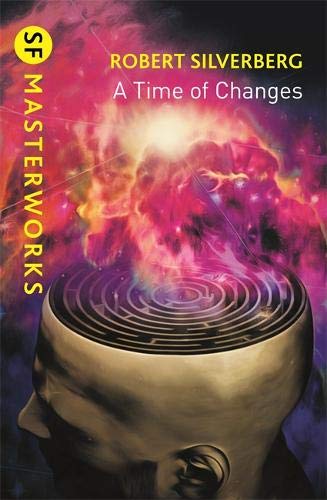
A Time of Changes won the Nebula Award for best novel of 1971. I never numbered it as among my favorite Silverberg titles, and after having listened to the audiobook version I haven't changed my opinion. It's a very well-written book, nicely paced and plotted, swinging back and forth in time to heighten tension and underline events and emphasize points. Silverberg was at his best in portraying complex characters here. It's very much a novel of the 1960's, being the story of finding and being yourself with lengthy examinations of sex and drugs and philosophy. (I can't help but wonder if it mightn't have been written in some small part as a response to the most famous novel by science fiction's other famous Robert-- Heinlein's Stranger in a Strange Land.) There's no real speculative element other than drug-induced telepathy; one character is identified as an Earthman and it's stated that the planet is but one of many inhabited by humans, but I believe the real setting of the novel is California (and what a long, strange trip it is...) A Time of Changes is great literature, but not necessarily great science fiction. (I never understood the original cover that seems to portray a bird growing out of an aboriginal head... still don't...)
Profile Image for Pablo Mallorquí.
788 reviews61 followers
July 25, 2021
Acabo en el autobús las últimas páginas de Tiempo de cambios con una sensación ambivalente pero de satisfacción. Satisfacción por haber leído una obra que trata temas de interés antropológico y social, que te deja reflexionando sobre los fundamentos de las sociedades y hasta qué punto estos pueden llegar a ser arbitrarios. En esta cuestión Silverberg vuelve a demostrar su capacidad para especular sobre sociedades humanas alternativas muy en la línea de las preocupaciones new wave del género en los años sesenta y setenta. Tiempo de cambios trata un tema inusual pero muy sugerente: el papel del tabú como norma que fundamenta una organización social. Lo único, eso sí, es que esta especulación tan potente no va acompañada de una trama al mismo nivel que hubiese acabado de hacer brillar la novela. Pero, sorprendentemente, no me ha molestado porque las ideas que maneja Silverberg son de alto voltaje y sus protagonistas profundamente humanos.
Profile Image for Matt.
221 reviews786 followers
July 23, 2008
'A Time of Changes' is classic Robert Silverburg of the sort that he rightly recieves acclaim for, but it suffers in my opinion from the fact that Silverburg makes no attempt at all to really maintain the fantastic conceit which is at the heart of the story. That conceit of the story is a world where self-deprication is so esteemed as virtuous and putting oneself forward is likewise deemed immoral, that no one is allowed to refer to oneself in the first person. The pronoun 'I' therefore is a true profanity within the culture eliciting outrage from all hearers and bring harsh censure on those that would use it. Likewise intimacy is criminal, and no one is allowed to discuss thier inner thoughts and feelings and indeed is encouraged to act as if they have none. But Silverburg makes no real sustained attempt to write in this mode, nor does he offer us a real window into the thoughts of someone who has, by the standards of the world, properly lived in such self-denial. Instead, the narrator of the story is recounting past events after having obtained a more familiar sense of the value of self, and as such the story lacks some of the punch it might have if the narrator's new self-awareness was concealed until a more dramatic point in the story. Whenever maintaining the conceit is difficult in the narrative, Silverburg simply drops it and so you never quite feel the setting lives anywhere other than in the story. The setting never quite achieves existance as an interesting mental toy for the reader to play with and ponder, and we are left to do the invention that the author left undone.

That said, this is Robert Silverburg, and the story is well written and reasonably gripping. I particularly like how the sharing of self and the mingling of the self with the other leads not to a less defined or nebulous sense of self, but a greater and more refined one. This easily could have been a five star work had Silverburg managed to maintain the central conciet, and even so its still easy to see why this story won the Nebula for 1971.
Profile Image for Estibaliz.
2,550 reviews71 followers
May 21, 2013
Hay algo en la prosa y las historias de Silverberg que a mí, personalmente, no me acaba de llegar. Su calidad no la pongo en duda, sobre todo para construir sociedades alternativas perfectamente creíbles y estructuradas, pero acaso le falta algo de profundidad a sus personajes que hace que sus novelas no me convenzan del todo y, por lo mismo, me resultan a veces un pelín tediosas y fácilmente relegables al olvido... Aplíquese el cuento a esta novela que, sin ser mala, bien podía haberse quedado en 'novella' y tan contentos.
Profile Image for Samichtime.
531 reviews5 followers
December 17, 2024
It’s just so cringy. I feel second hand embarrassment for the author having published this. It sucks. 😫

The cover is nice 🤩
Profile Image for Sandy.
575 reviews117 followers
March 18, 2014
After four years of successive losses, sci-fi great Robert Silverberg finally picked up his first Nebula Award in 1972. His 1967 novel "Thorns" had lost to Samuel R. Delany's "The Einstein Intersection," his brilliant '68 novel "The Masks of Time" had been bested by Alexei Panshin's equally brilliant "Rite of Passage," '69's time travel tale "Up the Line" had succumbed to Ursula K. Le Guin's "The Left Hand of Darkness," while 1970's unforgettable "Tower of Glass" had been beaten by Larry Niven's "Ringworld." But in '72, Silverberg finally copped the top prize given out by the Science Fiction and Fantasy Writers of America, winning for his superb novel "A Time of Changes" and prevailing over Le Guin's "The Lathe of Heaven" and novels by Kate Wilhelm, Poul Anderson, T.J. Bass and R.A. Lafferty. ("A Time of Changes" was also nominated for the Hugo Award, ultimately losing to Philip Jose Farmer's "To Your Scattered Bodies Go.") Originally appearing in the March - May '71 issues of "Galaxy" magazine, the novel was released as a hardcover book in June of that year, and in conjunction with the author's three other remarkable novels of 1971--"The Second Trip," "Son of Man" and "The World Inside"--demonstrate what a tremendous roll Silverberg was on during this phase of his lengthy career.

"A Time of Changes" takes the form of a memoir written by the fugitive prince Kinnall Darival, who pens his story in the desertlike Burnt Lowlands of the planet Borthan, at least 1,000 years from today. Darival is currently the most wanted man on the planet, and his story explains why. First settled by Earthmen a millennium earlier, Borthan--or, at least, Velada Borthan, the only continent that has been civilized--is now a society run in conformity with the dictates of their "Covenant." It is a society that severely frowns on any demonstration of the self. Speaking of one's feelings to another has been proscribed, to the point that even the use of such words as "I" and "myself" are deemed more offensive than the 21st century "F bomb." Indeed, one may only speak of such intimate matters to one's bondsister or bondbrother (everyone, apparently, gets two) or to the professional "drainers," who, in their quasireligious manner, seem to combine the attributes of both analyst and paid confessor. As Darival tells us from his crumbling shack in the middle of the burning desert, he had been forced to leave his province of Salla when his older brother, Stirron, had assumed the position of septarch, following the death of their father. He had found little welcome in the northern, ascetic province of Glin, and so had worked his way down to the southern, tropical province of Manneran, where he had wed the look-alike cousin of his bondsister Halum (who he'd been shamefully in love with), raised a family and risen to a position of prominence. All was going well with him until he'd encountered the roving Earthman named Schweiz, who made him realize what a repressive society he lived in, and with whom he'd partaken of a drug from the uncivilized southern continent of Sumara Borthan, which enabled its users to enter one another's minds and (gasp!) share feelings. And Darival's crimes were only compounded when, in company with Schweiz, he'd traveled to the unknown continent to get more of the drug, and come back to "turn on" the populace to a new covenant of love, feelings and mutual understanding....

"A Time of Changes" is a beautifully written book, and as it turns out, Kinnall Darival is almost as good a writer as Silverberg himself (LOL!). He is an immensely likable and self-effacing man, imposing physically yet constantly telling the reader about his perceived "shortcomings" (such as his premature ejaculation problem), and his slow conversion from upright observer of the puritanical Covenant to a messiah of free love is wonderful to behold. The world of Borthan is meticulously described by the author, down to its history, geography, customs, flora and fauna, and can almost be seen as a warm-up for Silverberg's most elaborately detailed planet, Majipoor (although it took him eight novels and change to flesh out THAT world fully). Very much a novel of its time, with its emphasis on drugs and "soul sharing" and the liberating power of love, the book retains its great effectiveness today, over four decades later. As for that Sumaran drug, it is described in a manner that forcefully brings to mind LSD, especially when Kinnall and Schweiz spill the powder into some wine, drink it down, and wait a 1/2 hour or so for the effects to manifest. Those initial effects DO seem reminiscent of the lysergic experience, too, although no acid that I have ever heard of, unfortunately, enabled soul-to-soul telepathy between its users. A pity. As in "Son of Man" (an extremely psychedelic, borderline unreadable book that makes one wonder about the extent of Silverberg's own drug experiments during that period!), our lead character here gets to know what it feels like to be a woman (by doing the drug with his mistress); as does the telepath David Selig in the author's 1972 novel "Dying Inside," our lead character also gets to experience a "double orgasm" (while doing the drug and having sex with that same woman). The book is absolutely compelling, fascinating and charming; a true "page-turner" that even contains some traces of genuine humor (in an apparent nod to "Star Trek," the shipmaster who takes Kinnall and Schweiz to the southern continent is named...Capt. Khrisch!). "My prose has its faults," Darival tells us at one point in his history, but there were certainly none that this reader could discern. In all, this is yet another wonderful creation from Mr. Silverberg, one of the best of the 15 or so that I have read so far, and surely deserving of that Nebula Award. To put it succinctly, and in a phrase that would surely shock and appall most of the inhabitants of Velada Borthan, "As for myself, I loved it!"
Profile Image for Alan.
1,265 reviews157 followers
November 15, 2009
It's a truism widely held that science fiction isn't so much about the future or the exotic locales it portrays as it is about the here and now, refracted through the lens of otherness. A Time of Changes certainly bolsters that theory. It won a Nebula award when it was published, possibly because of that very resonance with a particular time and place—but in the cold light of the 21st Century, it seems a little harder to read.

The story has two main quirks that intersect to create this impression. The first is an artful (but somehow not quite artful enough) portrayal of a society which has rejected the use of the personal pronoun - "I" and "me" are obscenities, which one uses only in extreme circumstances. This is a brilliant way to create an alien feeling for a human culture.

However, the point of view is that of a heretic "self-barer" who has chosen to break the taboo against using these words, and hence the impact of this societal difference is muted for the reader. This strikes me as a missed opportunity; contrast with Jack Womack's pitch-perfect control of first-person diction in Random Acts of Senseless Violence, in which the protagonist's own voice changes continuously, subtly and believably as she descends social strata. In A Time of Changes, Kinnall of Salla speaks in the same rather smug and self-centered voice throughout, so we get less of a sense of the wrenching changes that must have taken place for him before he could write "I mean to tell you all about myself" on the first page of his memoir.

The second noticeable thing is the way that the planet's cultures look so much like those of... southern California in the Sixties. Oh, not in detail, of course - most of the planet Borthan is in thrall to the Covenant-based theocracy of its puritan founders, and its patchwork politics of petty fiefdoms bears little resemblance to California's regional differences. But Kinnall's journey of literal self-discovery, the paths he takes and the solutions he is given, seem very much those that would have appealed to—well, no, not someone already immersed in the counterculture of the time, but to someone who was interested in the counterculture.

For all of that, the story's still a good one. Silverberg was a masterful writer at the top of his form when he wrote this book. Also, the foreword by Silverberg, new to this edition, contains some interesting observations about the context in which the book was written. As an artifact of a time of changes, Silverberg's novel still holds interest.
Profile Image for YT BarelyHuman77.
47 reviews3 followers
Read
March 8, 2025
Hey all :) Here's the general script of my video review of A Time of Changes. If you want, the video is here: https://youtu.be/Hbc8AWIIdac thanks <3

~~~

ATOC Book Review/Explanation
A Time of Changes was written in 1971 by Robert Silverberg. One YouTuber that I look up to a lot is Sci-Fi Finds, and because of his love for Silverberg, I decided I had to give one of his books a shot.

Introduction
- This book is set in the future where humans have proliferated to many other planets, one of which called Velada Borthan. On this planet, life is ruled by “the covenant”, which is like a religious order, and in the covenant, people are very against “the self”.
- The worst things you can say are self-possessing pronouns like “I” and “me”. They’re the dirtiest slurs. That’s because, according to the covenant, you’re not supposed to really talk about yourself too much, as they think it leads to “self-indulgence, self-pity, and self-corruption”.
- There are only two exceptions to this. First, you can sort of open up to what are your “bondbrother” and “bondsister". So, at birth, you’re assigned a bondbrother and bondsister, which are even closer to you than your actual siblings. You still can’t say “I” and “me” and stuff to them, but you can talk more about yourself and your aspirations and stuff.
- The other exception is there are these religious figures called “drainers”, which you can be totally transparent to. You can do what’s like confession in Catholicism with them where you basically go to a therapy session and talk about all your sins and you can be totally self-indulging during those sessions.
- The world in general is written in a very traditional way that makes it feels like the 1600s or something, but then they mention things like phones and planes and stuff and you’re reminded it’s the future. There’s not really crazy sci-fi tech like teleportation or ray guns or anything though.
- There is a decent amount of world building, but it’s all presented in a way that I don’t like. It reminds me of a textbook, where there’s a chunk of lecture for a few pages, and then there’s the actual implementation where you see it in action. Personally, rather than the narrator monologuing, I’d much prefer to have the worldbuilding just baked into the action of the book, which I didn’t think Silverberg did a good job of.

General Notes
- OK so let's talk about the main character Kinnal Darival. He is writing the story as a journal retrospectively on his life as he's been exiled for some reason.
- Now one might think that for a story about encouraging people to love themselves you might get an average Joe character, or even maybe someone who has an abnormal or ugly body. But that’s where my first real criticism of the book comes in to play.
- The main character, who is supposed to be this prophet for loving yourself is a very traditionally attractive and well-off man. He is very well-off financially, and he’s born into royalty. In terms of his body, he loves it: he’s tall, he has bulging muscles, he loves his nose, he's got attractive hair, and just a generally beautiful body. And of course, he also has a massive cock.
- It just was so annoying, like, is he the best one to relay this message of loving yourself? Because it would be easy for him; he has a classically perfect, enviable body! That’s like a billionaire advocating for lower taxes; it’s like “duh, dude, you’re advocating for your own life to be better!” This really put me off.
- OK so as I just hinted at, the big theme of this book is the importance of loving yourself and validating your own thoughts and feelings about yourself, which is very counterculture in Silverberg’s society.
- This is where I feel pretty torn. The entire book portrays a society that pretends they are all obsessed with selflessness yet they don’t follow through on that at all in the way people live in this culture.
- If a society was obsessed with collective self, you'd think it would be pseudo-communist. But no, it’s pretty much a monarchy and the society has a large wealth gap. This selfishness also manifests in other ways like how they’re super strict on having everyone fill out legal contracts for everything down to even just like a small favor.
- Also, you would think in a society like this people would probably not be allowed to engage in self indulgence but it seems like everyone has sex with hookers, drinks, and does other stereotypically self-indulgent things.
- So the whole book Silverberg is trying to make the case that this society is selfless yet everyone acts very selfishly aside from how they speak.
- And so the reason that I was torn is that on the one hand I can see how this was probably set up on purpose to highlight the hypocrisy of the culture, but on the other hand I feel like it was just poorly written.
- I would like to have seen some other societal things set up in the book to make it look like they actually thought they were setting up a selfless society, but literally the only thing was the language. And in my eyes, that felt like lazy worldbuilding.
- The other thing about this that I really disliked was how the main character overcame the trap of the society having this false understanding of selflessness. And this is maybe a slight spoiler but in some of the book inserts they mention this so I don't think that this is a big thing.
- The way that Kinnal ends up fully understanding the importance of loving yourself and loving others even through selfbaring is via a hallucinogenic drug. When he takes it, he learns how to collectively love everyone and that includes yourself. It becomes clear to him that by his society being hypersensitive to not being selfish they become super selfish.
- And then he believes it's his job to share the message but the only way that he can get this message out to people is by having them do this drug.
- And maybe I'm just a prude but to me if the message is really only receivable and logically understandable by doing a drug, the message loses a bunch of oomph. I thought it was super lame and I felt like it would've been a lot more powerful had his message been proliferated just by helping people receive the message as a sober epiphany.
- Anyway, while this theme of true selflessness was the biggest theme of the book, there were some other smaller themes as well.
- First I'm gonna touch on one that I liked. There's some pretty good commentary on religion. There's an earthling that meets Kinnal, and their discussion of religion leads to some really interesting insights. Like for example the earthling, who is agnostic, has a lot of envy for Kinnal’s devout convictions about the almighty gods.
- He expresses his wish that, even though he clearly doesn’t believe in it, he longs for that sort of comfort in life, to feel like there is a loving, higher power in charge of things. If you've watched my review of the “Hell is the Absence of God” short story, you’ve probably heard me already express how interested I am in this sentiment.
- Another one that I'm less fond of is the commentary on aboriginal people. Kinnal starts off seeing them as lesser people then shifts to the stereotypical change of heart that, "all these people are way more like us than I thought”. I think this really falls flat, though, because it's really only done in dialogue only.
- In terms of how he acts around these people he's very condescending. He still highlights their savageness, he talks down on their people, he flippantly has sex with them then is all scared about getting some STDs from them since they’re dirty, etc. So I feel like the idea was there with this theme, but it felt really shallow and like it wasn’t very much capitalized on. Maybe it was progressive for 1971 though.
- Women
- All right I want to talk about the women in this book for a second. I’d love to cathartically bitch about and give examples of the sexism in this book, but this book is from 1971. I think that when you read a book from this era it's unfair to judge it by today's standards and you need to try to view it from the lens of that time period.
- So I’m going to save you from me bitching like the pissed off annoying liberal that I am, and instead I’ll just say this: Kinnal is like when you have a racist uncle. Every time a minority walks into the room or shows up on TV you know they're going to make an uncomfortable comment. But in this book’s case it's about women. Any time a woman enters the plot, you know Kinnal is going to either have sex with them, fantasize about having sex with them, or comment about them sexually. Literally every single woman in the book. And I get it, this was written in 1971, but I'm entitled to say that it feels really really really dated regarding women. Take that however you want to.

Conclusion
- So yeah, I have a lot of criticism about this book, but I always found this book really easy to turn to and really easy to read and really comforting. I was reading this at the same time as another J. G. Ballard book that I'll review in the future and I felt that, unlike that book, this was a book I could settle in for bed with. Maybe it’s focus is a little less complicated than some of the books I read, but I liked it.
- It did bother me that it felt like the whole biggest theme of the book was done sort of clumsily regarding the message of the value of loving yourself and others holistically, but there was enough interesting themes and the prose was snappy enough that it made it a pretty okay read.
- Maybe this is just cope for me not wanting to feel I’ve wasted time, but i feel like sometimes reading a not so great book is about getting that one enjoyable nugget out of it. Like maybe for me it’s this interesting religious struggle that was maybe supposed to just be a small thing, but I magnified it to add a lot of value to my reading experience.
- So overall, I’m glad I got a look into Silverberg; I’m not sure I’m exactly itching for the next of his novels, but I felt like this was a fun little time capsule from the new age sci-fi era.
- Thanks for watching
Profile Image for M Cody McPhail.
129 reviews4 followers
April 22, 2025
My thoughts on A Time of Changes by Robert Silverberg::::::::::

A far off planet that was colonized long ago by humans is home to many new cultures.

The main focus of this book deals with one of these cultures.

Having fled the earth due to persecution and conflicting ideals, one society has become the dominant culture on this new planet. These people think it's a sin to recognize the self. There is no "I" for them, no me, no mine. To designate yourself as the subject in anyway is a crime. They are raised to focus on the collective and never the individual.

This story takes place in a monarchic society. A bit of an incongruence there. If it were to be a pure collective, it would look more like Zamyatin's 'We' in my opinion.

Our main character is a prince. His father, the Septarch, dies horribly on a hunting trip. The prince wishes he could mourn his father but this society doesn't do that. That's a self indulgent no no! After this we embark upon a very long drawn out exercise in world building.

At about the half way point, a shift happens.

We are introduced to an earth man that has come to corrupt the self denying people. He brings a special drug with him. This substance destroys preconceived ideals. Beliefs are shattered by the drugs' ability to combine your consciousness with whomever is around you. The drug shows you into the other person's mind. There are no secrets. No way to hide anything. It also proves that identifying as yourself, in the first person, is natural and not a sin.

The implication this has on our main character are grand. The way he perceives the world he lives in shifts drastically.

This seemingly simple story about a brutish, misogynist, and underdeveloped society on another planet feels a bit like something you'd read from Leigh Brackett. Like something in an issue of Heavy Metal magazine. Winged creatures and scantily clad sexy people. The additional elevation added by the not using first person language is a unique spice in the story. Another interesting frame used here is the fictional autobiography. Perhaps an early example of it. These aspects raise it up from basic sword and planet adventure.

Silverberg goes too far with his examination of the main character. For far too long in the first half.

After the halfway mark, the story shifts into high gear and becomes much better. I feel like this section could be a retelling of experiences Silverberg had with LSD. I don't know this but speaking from personal experience and also learning stories on the subject, one can glean the reality being camouflaged here as fiction. All of the landmarks are there. The breaking down of barriers. The unlearning of traditions that one believes from childhood. Hallucinogenic drugs often cause people to clear out their past beliefs. Religious allegories that process questions we don't have answers to......yet.

The last half of the book makes the read worthwhile. Not my favorite Silverberg. It's well written of course. It has hidden depth. Not a waste of time at all. The main character says the title of the book too many times.
Profile Image for prcardi.
538 reviews87 followers
May 8, 2017
Storyline: 2/5
Characters: 2/5
Writing Style: 2/5
World: 1/5

This is my fifth Robert Silverberg book, and it reaffirmed for me what I regard as his most distinctive quality: the wide divide between potential and execution. In his heyday Silverberg was reportedly writing 250,000 a words a month, and his books show it. They betray that they were hatched by an imaginative and rascally mind, stitched together by someone with an instinctual feel for plotting, and then glossed over with a stain of science fiction trappings. Publish it quickly then begin anew. In the introduction to this one, Silverberg comments how he struggled for a week over how to subvert grammar to give his characters and civilization their alien identity. A week?! The ambitions Silverberg had here were grand, worthy of a great book. A mindset of the sort Silverberg was trying to create would take months, years perhaps, to tinker with, adjust, and get right. My complaint against Silverberg is that he didn't take his science fiction work as serious work. The novels he were writing were amusing paperback genre fiction that stood out because they had pretensions to something greater. He knew that he was onto something challenging in this book. The idea of the iconoclast in a culture of Stoics was fertile ground for plays with language, unique character development, and broad culture building. From start to finish, however, you can see how he shrugs off the bigger challenges and opts for the shortcuts. From the very way this was framed - as flashback - this gives him leeway to avoid the heavy work of a serious novel. Instead of showing us the breadth of the repressive culture, he simply tells us to take his word that it exists. The experiences of this rebel, we are told, cannot be expressed in words; we must simply believe Silverberg that they are truly shocking. Most of this book is soliloquy where the author claims society is overly restrictive, the protagonist is newly awakened, and the clash is dramatic. I never felt the restrictions, the awakening, or the drama.

Silverberg notes that this idea of a society had been presented elsewhere . I haven't read that, though it is on my list of books to get to. I have to believe she handled it with more gravity. Two other, similar, books come to mind . Both were more deft with the elements of storytelling: plot, characters, and worldbuilding. If this review sounds embittered, it is because I am. This should have been a really good work, but I'm chagrined by just how expansive the gap was between potential and execution this time.
Profile Image for Chris.
179 reviews18 followers
November 5, 2021
I’ve read about a half dozen Silverberg novels. This one has the most literate prose out of the lot.

A Time of Changes is an unusual science fiction novel in that the “science fiction” is limited to the setting on a faraway planet which is inhabited by earthlings. Earth people branched out into space centuries ago, and still travel the stars, but this tale is grounded on one planet with a somewhat less-than-modern-day level of tech.

The world-building here is on par with novels that spend thousands of pages in development, yet A Time of Changes is a lean 214 pages in paperback. The storytelling is pretty dense considering the length.

The story involves what happens when a society is shaken to its core and has its societal constructs challenged, and potentially shattered. It works because Silverberg does a nice job in developing the way society functions on this world, including religion and political pecking order. It’s not quite the “rediscovery of the self and self-interest” story I was expecting.

The opening chapters talk about how the word “I” was considered vulgar in their world and how the protagonist was living in exile as a result.

The story became a lot more than a rediscovery of individuality in a collective society. I didn’t think their existing society was particularly harmed by their “collective” elements. If anything, the flawed protagonist’s actions during these pages did nothing to make the reader like or every respect him. Perhaps that’s the point.

The novel veers off into drug culture (for lack of a better phrase), and there’s plenty of free-love going on. It’s as if a 1971 virus infected Silverberg’s typewriter. Then again, Heinlein was doing that stuff to great success around the same time. Trends come and go, I guess.

This is a thoughtful novel that I’ll probably revisit in the future. Some say this is among Silverberg’s best, and that’s why I tracked it down, but after reading it I came away a little cold. It’s well written, thought provoking and enjoyable, but not all that special I’m my opinion.
This entire review has been hidden because of spoilers.
Displaying 1 - 30 of 268 reviews

Can't find what you're looking for?

Get help and learn more about the design.