

What do you think?

The Story of Civilization #5
The Renaissance
A colorful pageant of princes & kings, painters & philosophers, scientists & architects comes to life in Will Durant's study of the Italian Renaissance, Vol. 5 of The Story of Civilization. He sets the stage in Florence for the opening act of a magnificent cultural flowering spread across Europe & continued thru time. Even more than its artistic awakening, the Renaissance stands as a declaration of mental freedom. It was a great contribution to the progress of humankind.
"Dr. Durant has a keen and mordant wit that flashes forth frequently to enliven his pages...he is an artist in words."--Saturday Review
"Dr. Durant has a keen and mordant wit that flashes forth frequently to enliven his pages...he is an artist in words."--Saturday Review
776 pages, Hardcover
First published January 1, 1953
About the author
Will Durant
811 books3,206 followersWilliam James Durant was a prolific American writer, historian, and philosopher. He is best known for the 11-volume The Story of Civilization, written in collaboration with his wife Ariel and published between 1935 and 1975. He was earlier noted for his book, The Story of Philosophy, written in 1926, which was considered "a groundbreaking work that helped to popularize philosophy."
They were awarded the Pulitzer Prize for literature in 1967 and the Presidential Medal of Freedom in 1977.
They were awarded the Pulitzer Prize for literature in 1967 and the Presidential Medal of Freedom in 1977.
Ratings & Reviews
Friends & Following
Create a free account to discover what your friends think of this book!
Community Reviews
Displaying 1 - 30 of 133 reviews

June 2, 2019
"But it took more than a revival of antiquity to make the Renaissance. And first of all it took money—smelly bourgeois money: the profits of skillful managers and underpaid labor; of hazardous voyages to the East, and laborious crossings of the Alps, to buy goods cheap and sell them dear; of careful calculations, investments, and loans; of interest and dividends accumulated until enough surplus could be spared from the pleasures of the flesh, from the purchase of senates, signories, and mistresses, to pay a Michelangelo or a Titian to transmute wealth into beauty, and perfume a fortune with the breath of art." -- Will Durant, The Renaissance
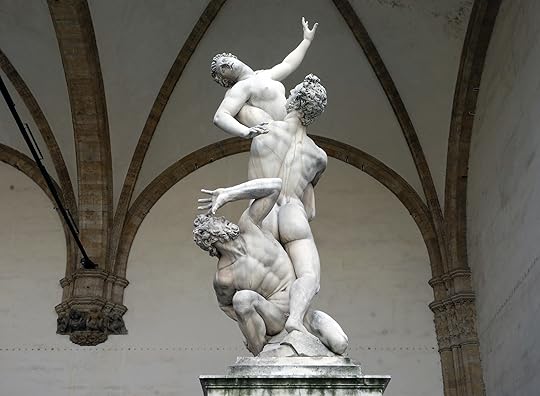
Probably my least favorite of the first five books in Durant's 11-volume "Story of Civilization". That said, I still give it four stars. Durant a philosopher/historian LOVES art and artists. A lot of this book seems like an expanded version of Vasari's Lives of the Most Excellent Painters, Sculptors and Architects: Illustrated - Biographies of the Greatest Artists of Renaissance, Including Leonardo da ... Giotto, Raphael, Brunelleschi & Donatello. The book focuses on the Renaissance in Italy (and not the later expansion of Renaissance ideas into Europe). So, a majority of this book focuses on Art, Sculpture, Popes, Literature, and the great Italian cities of the Renaissance (Rome, Florence, Venice, etc). The narrative isn't driven by time as location (genearally, exluding the Prelude w/ Petrarch and Bocaccio), and Durant's brush. His narrative brush goes from Florence and the Medici, to Milan, Tuscany, Mantua, Ferrara, Venice, Naples, and Rome. In each city he explores the major artists from those towns, their relationship with Rome, and the major Renaissance artists associated with those city states. He ends the book by discussing the moral, religious, political, and economic changes that were associated with the end of the Italian Renaissance.
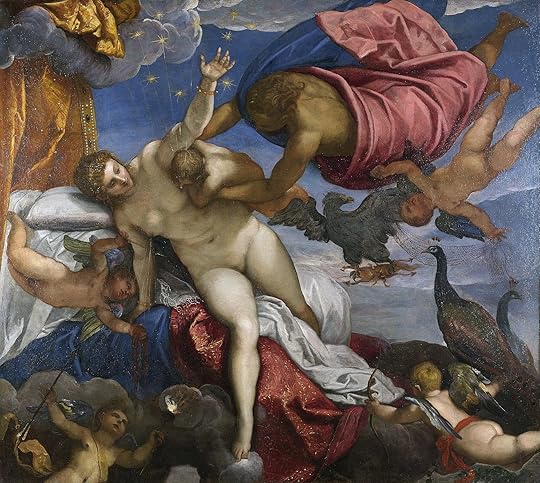
Again, let me add, although this is my least favoite of the first five, it is still pretty damn good. Durant does a pretty good job of putting a lot of the myths about the Renaissance to rest. He's a moderate historian. He's unprepared to criticize too harshly; knowing the worst said about someone often has little to do with truth and more to do with who is in power and gets to have the last word. His prose in this book is a bit more restrained than in other books. I'm not sure why. Perhaps, it is only when dealing with philosophy and ideas that Durant is able to write without restraint (and the Renaissance was heavy on art, and light on ideas, excluding exceptional cases). When discussing art, there is often less room (for Durant) to wax poetic. He seems content with describing the art well and puting the artists and the geniuses of the age into their proper context.
Probably my least favorite of the first five books in Durant's 11-volume "Story of Civilization". That said, I still give it four stars. Durant a philosopher/historian LOVES art and artists. A lot of this book seems like an expanded version of Vasari's Lives of the Most Excellent Painters, Sculptors and Architects: Illustrated - Biographies of the Greatest Artists of Renaissance, Including Leonardo da ... Giotto, Raphael, Brunelleschi & Donatello. The book focuses on the Renaissance in Italy (and not the later expansion of Renaissance ideas into Europe). So, a majority of this book focuses on Art, Sculpture, Popes, Literature, and the great Italian cities of the Renaissance (Rome, Florence, Venice, etc). The narrative isn't driven by time as location (genearally, exluding the Prelude w/ Petrarch and Bocaccio), and Durant's brush. His narrative brush goes from Florence and the Medici, to Milan, Tuscany, Mantua, Ferrara, Venice, Naples, and Rome. In each city he explores the major artists from those towns, their relationship with Rome, and the major Renaissance artists associated with those city states. He ends the book by discussing the moral, religious, political, and economic changes that were associated with the end of the Italian Renaissance.
Again, let me add, although this is my least favoite of the first five, it is still pretty damn good. Durant does a pretty good job of putting a lot of the myths about the Renaissance to rest. He's a moderate historian. He's unprepared to criticize too harshly; knowing the worst said about someone often has little to do with truth and more to do with who is in power and gets to have the last word. His prose in this book is a bit more restrained than in other books. I'm not sure why. Perhaps, it is only when dealing with philosophy and ideas that Durant is able to write without restraint (and the Renaissance was heavy on art, and light on ideas, excluding exceptional cases). When discussing art, there is often less room (for Durant) to wax poetic. He seems content with describing the art well and puting the artists and the geniuses of the age into their proper context.

February 12, 2020
“Those who desire immortality must pay for it with their lives.”
This well-researched and meticulously written book, which is the fifth volume in The Story of Civilization series, enlightens us about the life, art, literature, philosophy and science during Renaissance Italy. The narration begins by Petrarch (1304) and ends by Titian (1576).
“Wise men say that whoever wishes to foresee the future must consult the past; for human event ever resemble those of preceding times. This arises from the fact that they are produced by men who have been and ever will be animated by the same passions… I believe that the world has always been the same and has always contained as much good and evil…”
-Machiavelli
This well-researched and meticulously written book, which is the fifth volume in The Story of Civilization series, enlightens us about the life, art, literature, philosophy and science during Renaissance Italy. The narration begins by Petrarch (1304) and ends by Titian (1576).
“Wise men say that whoever wishes to foresee the future must consult the past; for human event ever resemble those of preceding times. This arises from the fact that they are produced by men who have been and ever will be animated by the same passions… I believe that the world has always been the same and has always contained as much good and evil…”
-Machiavelli

February 8, 2016
Doubtless like all of us he was many men, turned on one or another of his selves as occasion required, and kept his real self a frightened secret from the world.
So continues my tour through the ages.
The Renaissance, the fifth volume of The Story of Civilization, is unique in this series for its narrowness of scope. Instead of taking all of Western Europe as his subject, Durant confines himself to Italy; and whereas the previous volume took us from the death of Constantine (337) all the way to the death of Dante (1321), this volume covers the period from the birth of Petrarch (1304) to the death of Michelangelo (1564). Nevertheless, as usual, Durant casts a wide net, including political, economic, musical, philosophical, scientific, and literary history.
But of course, this being a book about the Renaissance, the bulk of it is given over to the visual arts: painting, sculpture, and architecture. This is shaky territory for Durant; he’s certainly no art critic, as he admits from the outset. As usual, he is urbane, eloquent, and learned; but this isn’t quite enough; some fire is missing. Durant was a man who lived on books, not paintings; he appreciates visual art as a dilettante rather than an aficionado. And since the literary activity of the Renaissance wasn’t nearly as impressive as its artistic output, this deprives Durant of his forte.
Still, if you are looking for a single volume treatment of this age, I’m sure you could do worse than this book. It isn’t deep, but it’s broad; you will come away knowing all the major names—of politicians, poets, and painters—as well as a good deal about the time. Indeed, you may not realize how much you’ve learned, as it is one of Durant’s signal talents that he is able to set down vast amounts of information in such a way that it sticks effortlessly in the memory.
Ignorant American that I am, I actually didn’t know a whole lot about the Italian Renaissance before I read this book, apart from the facts that everybody can’t help "knowing." For example, I “knew” the Renaissance consisted of a revival of classical learning, but of course the reality is far more complicated. Yes, during this time much classical learning was uncovered; but it’s main effect seems not to have been a conversion to Greek logic and morality, but simply the realization that a non-Christian culture could be just as vibrant as a Christian one. The immediate effects of this weren’t necessarily good. In his History of Western Philosophy, Bertrand Russell said: “The first effect of emancipation from the church was not to make men think rationally, but to open their minds to every sort of antique nonsense.” And indeed, it struck me that the ideal of rational thinking and empirical science made little headway during this time period—at least in Italy.
I suppose the most direct effect of paganism was the rediscovery of the body as a source of beauty. Medieval Art is wholly lacking in the muscular, graceful nudes of the Renaissance. This went hand in hand with humanism. Humanity itself, like the human form, began to be celebrated. The most interesting question about all is, Why? Why did this sudden change come about? This is the proper question for the historian. But Durant doesn’t try to answer it, or at the very least I found his answers superficial. I suppose I’ll have to keep reading.
I have to say, it does bother me that Durant, an incredibly well-read and well-traveled man, and an intelligent one too, can frequently be so superficial a thinker and a critic. I will hazard a guess for the reason. One of the main features of Durant’s style is its Olympian calm. He does not get excited; he avoids passion. Wars, revolutions, artistic triumphs—all are narrated in a tone of serene composure. He does his best to sound as if he is God himself, so far above the petty intellectual squabbles of historians, philosophers, and scientists that he need not deign to partake in them. Thus he has the habit of offering his opinion in the royal “We.” Either that, or his pronouncements are simply stated as facts.
This attempt to appear above the fray limited him, I think. To make a real intellectual contribution means getting down in the trenches, to risk being contradicted, to defend one’s views. By writing like he does, Durant always plays the role of a gentleman on horseback, watching a battle from far away. He never picks up a pike and charges himself. Durant isn’t interested in that. It's a shame, I think, because this impaired him as a historian, a philosopher, and a critic. For example, his pronouncements on literature and art, though articulate and fair, are seldom penetrating. To be a great critic, you have to expose yourself to the art, to let it wound you and overwhelm you, to let go of your composure and submit to the raw experience. Durant was apparently unwilling to do this. He wrote and thought through a spyglass.
Still, he was fantastic at what he did—namely, tell the story of western history as fully as possible, with clarity and charm—and that’s exactly I’ll keep reading him until I reach the end of this series. It’s been a great ride so far.

May 19, 2021
Before he started The Story of Civilization, which would occupy him and his wife from 1935 till their deaths in 1981, Will Durant had published the very successful Story of Philosophy, and thus had experience synthesizing diverse and complex ideas. In The Renaissance he brings all his talents to bear, writing about history, literature, art, science, religion, military strategy, and politics, somehow managing to pull all these threads into a single narrative which never loses its way. It is an astonishing achievement, and while some readers complain that his history is out of date, that is true only in the small details, not so in the big picture of history and humanity, and Durant is all about the big picture.
When I write a review, I usually try to summarize the text and provide apposite quotations, but, as with the previous volumes of this series, I am unequal to the task when it comes to Durant. Instead, I will let him speak for himself. I highlighted over 150 selections from the text, and below I have included the ones I found most insightful (and sometimes amusing), and it was only with great difficulty that I was able to cull them to fit within Goodreads’s length limitations.
Observations on life:
- Power, like freedom, is a test that only a sober intelligence can meet.
- Every town in Italy has fathered genius, and banished it.
- The simple common man, named Legion, tilled and mined the earth, pulled the carts or bore the burdens, toiled from dawn to dusk, and at evening had no muscle left for thought. He took his opinions, his religion, his answers to the riddles of life from the air about him, or inherited them with the ancestral cottage; he let others think for him because others made him work for them.
- Justice was expensive; the poor had to get along without it, and found it cheaper to kill than to litigate.
- When Lodovico Sforza welcomed Leonardo to Milan it was as a musician
- [Machiavelli] thought too much of the preservation, seldom of the obligations, never of the corruption, of power.
- Everywhere, at one time or another, the cities and their countryside suffered those earthquakes, floods, droughts, tornadoes, famines, plagues, and wars that a Malthusian Nature sedulously provides to compensate for the reproductive ecstasies of mankind.
- Bellincione was so quarrelsome that when he died a rival wrote an inscription for his tomb, warning the passer-by to tread quietly, lest the corpse should rise and bite him.
- One especially pretty and popular wife, Parisina Malatesta, committed adultery with her stepson Ugo; Niccolò had them both beheaded (1425), and ordered that all Farrarese women convicted of adultery should be put to death. When it became clear that this edict threatened to depopulate Ferrara, it was no longer enforced.
- We may loosely estimate the medieval relapse of medical science in Latin Christendom by noting that the most advanced anatomists and physicians of this age had barely reached, by 1500, the knowledge possessed by Hippocrates, Galen, and Soranus in the period from 450 B.C. to A.D. 200.
- [Within the Roman church hierarchy] sin became more prevalent as more funds were provided to meet its costs.
- we should remind ourselves at the outset that man is by nature polygamous, and that only the strongest moral sanctions, a helpful degree of poverty and hard work, and uninterrupted wifely supervision, can induce him to monogamy.
- Weddings themselves consumed enormous sums; Leonardo Bruni complained that his matrimonium had squandered his patrimonium.
Humanism:
- Doubting the dogmas of the Church, no longer frightened by the fear of hell, and seeing the clergy as epicurean as the laity, the educated Italian shook himself loose from intellectual and ethical restraints; his liberated senses took unabashed delight in all embodiments of beauty in woman, man, and art; and his new freedom made him creative for an amazing century (1434–1534) before it destroyed him with moral chaos, disintegrative individualism, and national slavery. The interlude between two disciplines was the Renaissance.
- By common consent [Petrarch] was the first humanist, the first writer to express with clarity and force the right of man to concern himself with this life, to enjoy and augment its beauties, and to labor to deserve well of posterity.
- they thought they had found in Plato—clouded with Plotinus—a mystical philosophy that would enable them to retain a Christianity that they had ceased to believe in, but never ceased to love.
- to many others the revelation of a Greek culture lasting a thousand years, and reaching the heights of literature, philosophy, and art in complete independence of Judaism and Christianity, was a mortal blow to their belief in the Pauline theology, or in the doctrine of nulla salus extra ecclesiam—”no salvation outside the Church.” Socrates and Plato became for them uncanonized saints; the dynasty of the Greek philosophers seemed to them superior to the Greek and Latin Fathers, the prose of Plato and Cicero made even a cardinal ashamed of the Greek of the New Testament and the Latin of Jerome’s translation; the grandeur of Imperial Rome seemed nobler than the timid retreat of convinced Christians into monastic cells;
- the humanists, by and large, acted as if Christianity were a myth conformable to the needs of popular imagination and morality, but not to be taken seriously by emancipated minds.
- Pomponazzi had put into philosophic form a skepticism that had for two centuries been attacking the foundations of Christian belief. The failure of the Crusades; the influx of Moslem ideas through Crusades, trade, and Arab philosophy; the removal of the papacy to Avignon and its ridiculous division in the Schism; the revelation of a pagan Greco-Roman world full of wise men and great art and yet without the Bible or the Church; the spread of education, and its increasing escape from ecclesiastical control; the immorality and worldliness of the clergy, even of popes, suggesting their private disbelief in the publicly professed creed; their use of the idea of purgatory to raise funds for their purposes; the reaction of the rising mercantile and moneyed classes against ecclesiastical domination; the transformation of the Church from a religious organization into a secular political power: all these factors, and many more, combined to make the Italian middle and upper classes, in the late fifteenth and early sixteenth century, “the most skeptical of European peoples.”
Religion:
- In the second story of The Decameron the Jew Jehannat is converted to Christianity by the argument (adapted by Voltaire) that Christianity must be divine, since it has survived so much clerical immorality and simony.
- Venetian merchants invaded every market from Jerusalem to Antwerp; they traded impartially with Christians and Mohammedans, and papal excommunications fell upon them with all the force of dew upon the earth.
- Morals in Rome, to which Petrarch importuned the popes to return, were then no better than in Avignon, except as poverty is an aid to chastity.
- The grandeur of Savonarola lay in his effort to achieve a moral revolution, to make men honest, good, and just. We know that this is the most difficult of all revolutions, and we cannot wonder that Savonarola failed where Christ succeeded with so pitiful a minority of men. But we know, too, that such a revolution is the only one that would mark a real advance in human affairs; and that beside it the bloody overturns of history are transient and ineffectual spectacles, changing anything but man.
- Some cardinals had an income of 30,000 ducats a year. They lived in stately palaces manned by as many as three hundred servants and adorned with every art and luxury known to the time. They did not quite think of themselves as ecclesiastics; they were statesmen, diplomats, administrators; they were the Roman Senate of the Roman Church; and they proposed to live like senators. They smiled at those foreigners who expected of them the abstinence and continence of priests. Like so many men of their age, they judged conduct not by moral but by esthetic standards; a few commandments might be broken with impunity if it was done with courtesy and taste.
- a pantheistic conclusion: God is the soul of the world. This became the philosophy of Lorenzo and his circle, of the Platonic Academies in Rome, Naples, and elsewhere; from Naples it reached Giordano Bruno; from Bruno it passed to Spinoza and thence to Hegel; it is still alive.
- Petrarch lamented the fact that in the minds of many scholars it was a sign of ignorance to prefer the Christian religion to pagan philosophy.
- Masuccio described the monks and friars as “ministers of Satan,” addicted to fornication, homosexualism, avarice, simony, and impiety, and professed to have found a higher moral level in the army than in the clergy.
- “In our corrupt times,” said Guicciardini, “the goodness of a pontiff is commended when it does not surpass the wickedness of other men.”
- It was a prime defect of the Medici as popes that they thought of themselves as a royal dynasty, and sometimes rated the glory of their family above the fate of Italy or the Church.
Life in the Renaissance:
- So Italy advanced, in wealth and art and thought, a century ahead of the rest of Europe; and it was only in the sixteenth century, when the Renaissance faded in Italy, that it blossomed in France, Germany, Holland, England, and Spain. The Renaissance was not a period in time but a mode of life and thought moving from Italy through Europe with the course of commerce, war, and ideas.
- Guicciardini was one of thousands in Renaissance Italy who had no faith whatever; who had lost the Christian idyll, had learned the emptiness of politics, expected no utopia, dreamed no dreams; and who sat back helpless while a world of war and barbarism swept over Italy; somber old men, emancipated in mind and broken in hope, who had discovered, too late, that when the myth dies only force is free.
- They transformed the ideal of a gentleman from a man with ready sword and clanking spurs into that of the fully developed individual attaining to wisdom and worth by absorbing the cultural heritage of the race.
- [For the Renaissance man] his immorality was part of his individualism. His goal being the successful expression of his personality, and his environment imposing upon him no standards of restraint either from the example of the clergy or from the terror of a supernatural creed, he allowed himself any means to his ends, and any pleasure on the way….He was a realist, and seldom talked nonsense except to a reluctant woman. He had good manners when he was not killing, and even then he preferred to kill with grace. He had energy, force of character, direction and unity of will; he accepted the old Roman conception of virtue as manliness, but added to it skill and intelligence.
- Assassins could be bought almost as cheaply as indulgences. The palaces of Roman nobles swarmed with bravi, thugs ready to kill at a nod from their lords. Everyone had a dagger, and brewers of poison found many customers; at last the people of Rome could hardly believe in the natural death of any man of prominence or wealth.
- The morals of war worsened with time. In the early days of the Renaissance almost all battles were modest engagements of mercenaries, who fought without frenzy and knew when to stop; victory was judged won as soon as a few men had fallen; and a live ransomable prisoner was worth more than a dead enemy. As the condottieri became more powerful, and armies larger and more costly, troops were allowed to plunder captured cities in lieu of regular pay; resistance to plunder led to the massacre of the inhabitants, and ferocity grew at the smell of the blood it shed.
- As religious belief declined, the notion of right and wrong was replaced, in many minds, by that of practicality; and as governments seldom enjoyed the authority of legitimation by time, the habit of obedience to law lapsed, and custom had to be supplanted by force. Against the tyranny of governments the only recourse was tyrannicide.
- The restoration of slavery as a major economic institution belongs to this period. When Pope Paul III opened war upon England in 1535 he decreed that any English soldiers captured might lawfully be enslaved.
- Politically the Renaissance was the replacement of republican communes with mercantile oligarchies and military dictatorships. Morally it was a pagan revolt that sapped the theological supports of the moral code, and left human instincts grossly free to use as they pleased the new wealth of commerce and industry. Unchecked by censorship from a Church herself secularized and martial, the state declared itself above morality in government, diplomacy, and war.
The End of an Era:
- The intensity of religious debate in the age of the Reformation, the Calvinist intolerance, the mutual persecutions in England, encouraged a corresponding dogmatism in Italy; the urbane Catholicism of Erasmus gave place to the militant orthodoxy of Ignatius Loyola. Liberalism is a luxury of security and peace.
- France, Spain, and Germany, weary of sending tribute to finance the wars of the Papal States and the luxuries of Italian life, looked with amazement and envy at a peninsula so shorn of will and power, so inviting in beauty and wealth. The birds of prey gathered to feast on Italy.
- Italy was economically doomed. She was also politically doomed. While she remained divided into warring economies and states, the development of a national economy was compelling and financing, in other European societies, the transition from feudal principalities to the monarchical state.
- England, France, Spain, and Germany raised national armies out of their own people, and their aristocracies provided cavalry and leadership; the Italian cities had small forces of mercenaries inspired only by plunder, led by purchasable condottieri, and prejudiced against sustaining mortal injuries. It needed only one engagement to reveal to Europe the defenselessness of Italy.
When I write a review, I usually try to summarize the text and provide apposite quotations, but, as with the previous volumes of this series, I am unequal to the task when it comes to Durant. Instead, I will let him speak for himself. I highlighted over 150 selections from the text, and below I have included the ones I found most insightful (and sometimes amusing), and it was only with great difficulty that I was able to cull them to fit within Goodreads’s length limitations.
Observations on life:
- Power, like freedom, is a test that only a sober intelligence can meet.
- Every town in Italy has fathered genius, and banished it.
- The simple common man, named Legion, tilled and mined the earth, pulled the carts or bore the burdens, toiled from dawn to dusk, and at evening had no muscle left for thought. He took his opinions, his religion, his answers to the riddles of life from the air about him, or inherited them with the ancestral cottage; he let others think for him because others made him work for them.
- Justice was expensive; the poor had to get along without it, and found it cheaper to kill than to litigate.
- When Lodovico Sforza welcomed Leonardo to Milan it was as a musician
- [Machiavelli] thought too much of the preservation, seldom of the obligations, never of the corruption, of power.
- Everywhere, at one time or another, the cities and their countryside suffered those earthquakes, floods, droughts, tornadoes, famines, plagues, and wars that a Malthusian Nature sedulously provides to compensate for the reproductive ecstasies of mankind.
- Bellincione was so quarrelsome that when he died a rival wrote an inscription for his tomb, warning the passer-by to tread quietly, lest the corpse should rise and bite him.
- One especially pretty and popular wife, Parisina Malatesta, committed adultery with her stepson Ugo; Niccolò had them both beheaded (1425), and ordered that all Farrarese women convicted of adultery should be put to death. When it became clear that this edict threatened to depopulate Ferrara, it was no longer enforced.
- We may loosely estimate the medieval relapse of medical science in Latin Christendom by noting that the most advanced anatomists and physicians of this age had barely reached, by 1500, the knowledge possessed by Hippocrates, Galen, and Soranus in the period from 450 B.C. to A.D. 200.
- [Within the Roman church hierarchy] sin became more prevalent as more funds were provided to meet its costs.
- we should remind ourselves at the outset that man is by nature polygamous, and that only the strongest moral sanctions, a helpful degree of poverty and hard work, and uninterrupted wifely supervision, can induce him to monogamy.
- Weddings themselves consumed enormous sums; Leonardo Bruni complained that his matrimonium had squandered his patrimonium.
Humanism:
- Doubting the dogmas of the Church, no longer frightened by the fear of hell, and seeing the clergy as epicurean as the laity, the educated Italian shook himself loose from intellectual and ethical restraints; his liberated senses took unabashed delight in all embodiments of beauty in woman, man, and art; and his new freedom made him creative for an amazing century (1434–1534) before it destroyed him with moral chaos, disintegrative individualism, and national slavery. The interlude between two disciplines was the Renaissance.
- By common consent [Petrarch] was the first humanist, the first writer to express with clarity and force the right of man to concern himself with this life, to enjoy and augment its beauties, and to labor to deserve well of posterity.
- they thought they had found in Plato—clouded with Plotinus—a mystical philosophy that would enable them to retain a Christianity that they had ceased to believe in, but never ceased to love.
- to many others the revelation of a Greek culture lasting a thousand years, and reaching the heights of literature, philosophy, and art in complete independence of Judaism and Christianity, was a mortal blow to their belief in the Pauline theology, or in the doctrine of nulla salus extra ecclesiam—”no salvation outside the Church.” Socrates and Plato became for them uncanonized saints; the dynasty of the Greek philosophers seemed to them superior to the Greek and Latin Fathers, the prose of Plato and Cicero made even a cardinal ashamed of the Greek of the New Testament and the Latin of Jerome’s translation; the grandeur of Imperial Rome seemed nobler than the timid retreat of convinced Christians into monastic cells;
- the humanists, by and large, acted as if Christianity were a myth conformable to the needs of popular imagination and morality, but not to be taken seriously by emancipated minds.
- Pomponazzi had put into philosophic form a skepticism that had for two centuries been attacking the foundations of Christian belief. The failure of the Crusades; the influx of Moslem ideas through Crusades, trade, and Arab philosophy; the removal of the papacy to Avignon and its ridiculous division in the Schism; the revelation of a pagan Greco-Roman world full of wise men and great art and yet without the Bible or the Church; the spread of education, and its increasing escape from ecclesiastical control; the immorality and worldliness of the clergy, even of popes, suggesting their private disbelief in the publicly professed creed; their use of the idea of purgatory to raise funds for their purposes; the reaction of the rising mercantile and moneyed classes against ecclesiastical domination; the transformation of the Church from a religious organization into a secular political power: all these factors, and many more, combined to make the Italian middle and upper classes, in the late fifteenth and early sixteenth century, “the most skeptical of European peoples.”
Religion:
- In the second story of The Decameron the Jew Jehannat is converted to Christianity by the argument (adapted by Voltaire) that Christianity must be divine, since it has survived so much clerical immorality and simony.
- Venetian merchants invaded every market from Jerusalem to Antwerp; they traded impartially with Christians and Mohammedans, and papal excommunications fell upon them with all the force of dew upon the earth.
- Morals in Rome, to which Petrarch importuned the popes to return, were then no better than in Avignon, except as poverty is an aid to chastity.
- The grandeur of Savonarola lay in his effort to achieve a moral revolution, to make men honest, good, and just. We know that this is the most difficult of all revolutions, and we cannot wonder that Savonarola failed where Christ succeeded with so pitiful a minority of men. But we know, too, that such a revolution is the only one that would mark a real advance in human affairs; and that beside it the bloody overturns of history are transient and ineffectual spectacles, changing anything but man.
- Some cardinals had an income of 30,000 ducats a year. They lived in stately palaces manned by as many as three hundred servants and adorned with every art and luxury known to the time. They did not quite think of themselves as ecclesiastics; they were statesmen, diplomats, administrators; they were the Roman Senate of the Roman Church; and they proposed to live like senators. They smiled at those foreigners who expected of them the abstinence and continence of priests. Like so many men of their age, they judged conduct not by moral but by esthetic standards; a few commandments might be broken with impunity if it was done with courtesy and taste.
- a pantheistic conclusion: God is the soul of the world. This became the philosophy of Lorenzo and his circle, of the Platonic Academies in Rome, Naples, and elsewhere; from Naples it reached Giordano Bruno; from Bruno it passed to Spinoza and thence to Hegel; it is still alive.
- Petrarch lamented the fact that in the minds of many scholars it was a sign of ignorance to prefer the Christian religion to pagan philosophy.
- Masuccio described the monks and friars as “ministers of Satan,” addicted to fornication, homosexualism, avarice, simony, and impiety, and professed to have found a higher moral level in the army than in the clergy.
- “In our corrupt times,” said Guicciardini, “the goodness of a pontiff is commended when it does not surpass the wickedness of other men.”
- It was a prime defect of the Medici as popes that they thought of themselves as a royal dynasty, and sometimes rated the glory of their family above the fate of Italy or the Church.
Life in the Renaissance:
- So Italy advanced, in wealth and art and thought, a century ahead of the rest of Europe; and it was only in the sixteenth century, when the Renaissance faded in Italy, that it blossomed in France, Germany, Holland, England, and Spain. The Renaissance was not a period in time but a mode of life and thought moving from Italy through Europe with the course of commerce, war, and ideas.
- Guicciardini was one of thousands in Renaissance Italy who had no faith whatever; who had lost the Christian idyll, had learned the emptiness of politics, expected no utopia, dreamed no dreams; and who sat back helpless while a world of war and barbarism swept over Italy; somber old men, emancipated in mind and broken in hope, who had discovered, too late, that when the myth dies only force is free.
- They transformed the ideal of a gentleman from a man with ready sword and clanking spurs into that of the fully developed individual attaining to wisdom and worth by absorbing the cultural heritage of the race.
- [For the Renaissance man] his immorality was part of his individualism. His goal being the successful expression of his personality, and his environment imposing upon him no standards of restraint either from the example of the clergy or from the terror of a supernatural creed, he allowed himself any means to his ends, and any pleasure on the way….He was a realist, and seldom talked nonsense except to a reluctant woman. He had good manners when he was not killing, and even then he preferred to kill with grace. He had energy, force of character, direction and unity of will; he accepted the old Roman conception of virtue as manliness, but added to it skill and intelligence.
- Assassins could be bought almost as cheaply as indulgences. The palaces of Roman nobles swarmed with bravi, thugs ready to kill at a nod from their lords. Everyone had a dagger, and brewers of poison found many customers; at last the people of Rome could hardly believe in the natural death of any man of prominence or wealth.
- The morals of war worsened with time. In the early days of the Renaissance almost all battles were modest engagements of mercenaries, who fought without frenzy and knew when to stop; victory was judged won as soon as a few men had fallen; and a live ransomable prisoner was worth more than a dead enemy. As the condottieri became more powerful, and armies larger and more costly, troops were allowed to plunder captured cities in lieu of regular pay; resistance to plunder led to the massacre of the inhabitants, and ferocity grew at the smell of the blood it shed.
- As religious belief declined, the notion of right and wrong was replaced, in many minds, by that of practicality; and as governments seldom enjoyed the authority of legitimation by time, the habit of obedience to law lapsed, and custom had to be supplanted by force. Against the tyranny of governments the only recourse was tyrannicide.
- The restoration of slavery as a major economic institution belongs to this period. When Pope Paul III opened war upon England in 1535 he decreed that any English soldiers captured might lawfully be enslaved.
- Politically the Renaissance was the replacement of republican communes with mercantile oligarchies and military dictatorships. Morally it was a pagan revolt that sapped the theological supports of the moral code, and left human instincts grossly free to use as they pleased the new wealth of commerce and industry. Unchecked by censorship from a Church herself secularized and martial, the state declared itself above morality in government, diplomacy, and war.
The End of an Era:
- The intensity of religious debate in the age of the Reformation, the Calvinist intolerance, the mutual persecutions in England, encouraged a corresponding dogmatism in Italy; the urbane Catholicism of Erasmus gave place to the militant orthodoxy of Ignatius Loyola. Liberalism is a luxury of security and peace.
- France, Spain, and Germany, weary of sending tribute to finance the wars of the Papal States and the luxuries of Italian life, looked with amazement and envy at a peninsula so shorn of will and power, so inviting in beauty and wealth. The birds of prey gathered to feast on Italy.
- Italy was economically doomed. She was also politically doomed. While she remained divided into warring economies and states, the development of a national economy was compelling and financing, in other European societies, the transition from feudal principalities to the monarchical state.
- England, France, Spain, and Germany raised national armies out of their own people, and their aristocracies provided cavalry and leadership; the Italian cities had small forces of mercenaries inspired only by plunder, led by purchasable condottieri, and prejudiced against sustaining mortal injuries. It needed only one engagement to reveal to Europe the defenselessness of Italy.

August 5, 2022
At last I have finished the fifth volume of Will Durant's Story of Civilization. I've been reading it for quite a while, 5 pages a day. I read it for a month in April 2021; then steadily from February to July 2022.
As I always do with his books, because he makes history enjoyable to read, I learned much I had not known about the Renaissance. He set the volume in Italy but due to political events in Europe and Great Britain, he also covers other aspects of Western Civilization from 1304-1576.
All the great Renaissance painters, sculptors and architects make their appearances. Italy is still a collection of cities, kingdoms and duchies squabbling over power, territory and trade routes. The Catholic Popes are corrupt in most cases, defending their Papal States and the right to rule Europe religiously. Meanwhile Martin Luther and his guys are preparing the largest challenge so far in history to the Catholic Church.
The artists are making breakthroughs while making their livings primarily from the Church and wealthy dukes. Morals and tenets that had held sway for the centuries of Medieval times are losing their hold. Science and medicine are making advances due to military needs and the ravages of the plague. Discoveries of riches in the Americas are another powerful influence. Over all this hangs a fear of the Turks.
Durant's last sentence, written from the perspective of the mid 1950s, pretty well holds true today, I think.
"Everywhere today in Europe and the Americas there are urbane and lusty spirits...who feed and live on this legacy of freedom, esthetic sensitivity, friendly and sympathetic understanding; forgiving life its tragedies, embracing its joys of sense, mind and soul; and hearing ever in their hearts, amid hymns of hate and above the cannon's roar, the song of the Renaissance."
The next volume will be The Reformation, set in approximately the same time period, but following what was going on outside of Italy. My guess is that I will be reading that for at least another year.
As I always do with his books, because he makes history enjoyable to read, I learned much I had not known about the Renaissance. He set the volume in Italy but due to political events in Europe and Great Britain, he also covers other aspects of Western Civilization from 1304-1576.
All the great Renaissance painters, sculptors and architects make their appearances. Italy is still a collection of cities, kingdoms and duchies squabbling over power, territory and trade routes. The Catholic Popes are corrupt in most cases, defending their Papal States and the right to rule Europe religiously. Meanwhile Martin Luther and his guys are preparing the largest challenge so far in history to the Catholic Church.
The artists are making breakthroughs while making their livings primarily from the Church and wealthy dukes. Morals and tenets that had held sway for the centuries of Medieval times are losing their hold. Science and medicine are making advances due to military needs and the ravages of the plague. Discoveries of riches in the Americas are another powerful influence. Over all this hangs a fear of the Turks.
Durant's last sentence, written from the perspective of the mid 1950s, pretty well holds true today, I think.
"Everywhere today in Europe and the Americas there are urbane and lusty spirits...who feed and live on this legacy of freedom, esthetic sensitivity, friendly and sympathetic understanding; forgiving life its tragedies, embracing its joys of sense, mind and soul; and hearing ever in their hearts, amid hymns of hate and above the cannon's roar, the song of the Renaissance."
The next volume will be The Reformation, set in approximately the same time period, but following what was going on outside of Italy. My guess is that I will be reading that for at least another year.

July 15, 2021
Death by Detail
What was the renaissance, and what caused it? Read something else if you want to find out. 4500 pages into the Story of Civilization, Durant departs from sweeping epochs to the comparatively tight focus on 100 years of Italian history. After Age of Faith which covered nearly 1000 years of history, I assumed that Durant's specific focus in Italy implied specific import to the story of civilization. But like a meandering joke without a punchline, Durant never explained the context, origins, or uniqueness of the period. After countless vignettes, it seems the only thing special about the renaissance was the willingness of wealthy patrons to spend on art:
It took more than a revival of antiquity to make the renaissance, and first of all it took money. Smelly bourgeois money. The profits of skillful managers and underpaid labor, the hazardous voyages to the east and laborious crossings of the alps to buy goods cheap and sell them dear.
To pay a Michelangelo or a Titian to transmute wealth into beauty and perfume a fortune to the breath of art.
[...]
New freedom made [the Italian] creative for an amazing century 1434-1534 before it destroyed him with moral chaos, disintegrative individualism, and national chaos.
Because Italy was divided into city states with ceaseless internecine struggles, reading political vicissitudes was an exercise in drudgery. Gibbon's critique of the Eastern Roman Empire kept coming to mind:
These annals must continue to repeat a tedious and uniform tale of weakness and misery; the natural connection of causes and events broken by frequent and hasty transitions, and a minute accumulation of circumstances must destroy the light and effect of those general pictures which compose the use and ornament of a remote history.
In this case, the structure of the book, focusing on city states, followed by politics, followed by critique of individual art pieces, kept adding detail that confused the whole. By the time Durant started making references to events previous in the book I had already forgotten the specifics of the reference. Tuchman's approach to a similar scope and time period in A Distant Mirror was much more illuminating.
Perhaps Durant is a better 4th or 5th book to read on a given time period (this was my first on renaissance Italy), perhaps the renaissance cannot be adequately described by a textual art critique, but this was tedious.
61st book of 2021.
What was the renaissance, and what caused it? Read something else if you want to find out. 4500 pages into the Story of Civilization, Durant departs from sweeping epochs to the comparatively tight focus on 100 years of Italian history. After Age of Faith which covered nearly 1000 years of history, I assumed that Durant's specific focus in Italy implied specific import to the story of civilization. But like a meandering joke without a punchline, Durant never explained the context, origins, or uniqueness of the period. After countless vignettes, it seems the only thing special about the renaissance was the willingness of wealthy patrons to spend on art:
It took more than a revival of antiquity to make the renaissance, and first of all it took money. Smelly bourgeois money. The profits of skillful managers and underpaid labor, the hazardous voyages to the east and laborious crossings of the alps to buy goods cheap and sell them dear.
To pay a Michelangelo or a Titian to transmute wealth into beauty and perfume a fortune to the breath of art.
[...]
New freedom made [the Italian] creative for an amazing century 1434-1534 before it destroyed him with moral chaos, disintegrative individualism, and national chaos.
Because Italy was divided into city states with ceaseless internecine struggles, reading political vicissitudes was an exercise in drudgery. Gibbon's critique of the Eastern Roman Empire kept coming to mind:
These annals must continue to repeat a tedious and uniform tale of weakness and misery; the natural connection of causes and events broken by frequent and hasty transitions, and a minute accumulation of circumstances must destroy the light and effect of those general pictures which compose the use and ornament of a remote history.
In this case, the structure of the book, focusing on city states, followed by politics, followed by critique of individual art pieces, kept adding detail that confused the whole. By the time Durant started making references to events previous in the book I had already forgotten the specifics of the reference. Tuchman's approach to a similar scope and time period in A Distant Mirror was much more illuminating.
Perhaps Durant is a better 4th or 5th book to read on a given time period (this was my first on renaissance Italy), perhaps the renaissance cannot be adequately described by a textual art critique, but this was tedious.
61st book of 2021.

April 3, 2013
This Durant volume was disappointing, particularly when compared to Volumes I-IV. In this history, Durant covers three centuries or so of Italy's renaissance history. By "renaissance," it seems that Durant means Italy's artistic impulses (e.g., Da Vinci, Michelangelo, Raphael) and its economic vitality.* While acknowledging Durant's fondness for all things Italian of this age, there's plenty of "same old, same old" in this historical period in this historical place. Politics were power politics; the papacy was ordinary and rude; religiosity was pervasive and the poor were kept in their place. More importantly, in his "history of civilization," Durant is strikingly silent about why this period and this place warrants its own volume, i.e., why it is significant for us to know and why, say, equivalent treatments should not be given to Indian and Chinese civilizations. That brings the reader to the troubling impression that civilization for Durant is Western.**
Tucked into this volume is a brief account of the Great Spiritual Awakening that occurred in western Europe with the rediscovery of Plato after years tucked away in the backrooms of the Muslim world. Three Italians in particular were responsible for this rehabilitation of Plato. Georgius Gemistus (1350s-1450s) introduced Plato to western Europe at the Council of Florence (1438-39), which attempted to bridge the East-West schism in religious-philosophical thought. Because he admired Plato so much, Gemistus took on a Platonic-like name, Plethon. For western philosophy, it was Plethon who stopped the philosophical love affair with Aristotle and replaced him with Plato. Aristotle was of this world. Plato was about a divine world. Plethon wrote about Plato’s views on reincarnation and other topics including reason. But reason was not of the material world, and it was not about objectivity as we understand that term today. Rather, it was the vehicle to access the divine world. These thoughts on Plato were further developed by the founder of the Medici-sponsored Platonic Academy in Florence, Marsilio Ficino (1433-1499), who revived Neoplatonism and translated Plato’s works into Latin.*** The most elegant expression of the Divine Platonic world is the youthful exuberance of Giovanni Pico della Mirandola in his Oration on the Dignity of Man where being godlike was “the dignity of man.”**** These three Renaissance figures were central in transforming Plato into a major thinker for Western philosophy. It seems clear enough that there is a straight path running from Plato’s dialogues to Christianity to Neoplatonism to the Renaissance Platonists. It is theological in essence. How Plato was secularized – stripped of these divine elements – by western philosophy is not clear.
As in his other works, Durant's writing itself in this volume is impressive but, in the sweep of history, there is way too much information. Durant is so knowledgeable but a good part of the historian's task is to be selective, even highly so, and not to share it all.
*In "The Course of Civilization," historians Joseph Strayer, Hans Gatzke, and E. Harris Harbison write of the Renaissance that "Italian Humanists managed to persuade future generations that theirs was an age of light after darkness" but that this "remained a vague and hazy historical conception" until Jacob Burckhardt's "brilliant book called 'The Civilization of the Renaissance in Italy' (1860)." Strayer, Gatzke, and Harbison, state that Burckhardt "exaggerated both the sharpness of the breach with the medieval past and the uniqueness of Italy over against the rest of Europe." They go on to say that the 'Renaissance' is best used to describe the revolution in artistic and literary taste," but that the term is less useful when applied to political and ecclesiastical history," and that "it is quite useless when applied to economic and social history...."
** A Wikipedia reference reminds us that Durant tried "to improve understanding of viewpoints of human beings and to have others forgive foibles and human waywardness. He chided the comfortable insularity of what is now known as Eurocentrism, by pointing out in Our Oriental Heritage that Europe was only 'a jagged promontory of Asia'. He complained of 'the provincialism of our traditional histories which began with Greece and summed up Asia in a line' and said they showed 'a possibly fatal error of perspective and intelligence'." That said, a question then becomes why Durant, in his eleven volume history of civilization, has only one volume (Volume 1) on South Asia and the Far East and even that volume is characterized as "our" (Western) oriental heritage.
*** In his major treatise on Platonic thinking , Platonic Theology on the Immortality of the Soul (1474), Ficino wrote about, in the words of Wikipedia, the world’s ensoulment and its integration with the human soul.” Also from Wikipedia, Ficino “coined the term Platonic love” that resulted in the “popularization of this term in Western philosophy.”
****My Goodreads review: https://www.goodreads.com/review/show...
Tucked into this volume is a brief account of the Great Spiritual Awakening that occurred in western Europe with the rediscovery of Plato after years tucked away in the backrooms of the Muslim world. Three Italians in particular were responsible for this rehabilitation of Plato. Georgius Gemistus (1350s-1450s) introduced Plato to western Europe at the Council of Florence (1438-39), which attempted to bridge the East-West schism in religious-philosophical thought. Because he admired Plato so much, Gemistus took on a Platonic-like name, Plethon. For western philosophy, it was Plethon who stopped the philosophical love affair with Aristotle and replaced him with Plato. Aristotle was of this world. Plato was about a divine world. Plethon wrote about Plato’s views on reincarnation and other topics including reason. But reason was not of the material world, and it was not about objectivity as we understand that term today. Rather, it was the vehicle to access the divine world. These thoughts on Plato were further developed by the founder of the Medici-sponsored Platonic Academy in Florence, Marsilio Ficino (1433-1499), who revived Neoplatonism and translated Plato’s works into Latin.*** The most elegant expression of the Divine Platonic world is the youthful exuberance of Giovanni Pico della Mirandola in his Oration on the Dignity of Man where being godlike was “the dignity of man.”**** These three Renaissance figures were central in transforming Plato into a major thinker for Western philosophy. It seems clear enough that there is a straight path running from Plato’s dialogues to Christianity to Neoplatonism to the Renaissance Platonists. It is theological in essence. How Plato was secularized – stripped of these divine elements – by western philosophy is not clear.
As in his other works, Durant's writing itself in this volume is impressive but, in the sweep of history, there is way too much information. Durant is so knowledgeable but a good part of the historian's task is to be selective, even highly so, and not to share it all.
*In "The Course of Civilization," historians Joseph Strayer, Hans Gatzke, and E. Harris Harbison write of the Renaissance that "Italian Humanists managed to persuade future generations that theirs was an age of light after darkness" but that this "remained a vague and hazy historical conception" until Jacob Burckhardt's "brilliant book called 'The Civilization of the Renaissance in Italy' (1860)." Strayer, Gatzke, and Harbison, state that Burckhardt "exaggerated both the sharpness of the breach with the medieval past and the uniqueness of Italy over against the rest of Europe." They go on to say that the 'Renaissance' is best used to describe the revolution in artistic and literary taste," but that the term is less useful when applied to political and ecclesiastical history," and that "it is quite useless when applied to economic and social history...."
** A Wikipedia reference reminds us that Durant tried "to improve understanding of viewpoints of human beings and to have others forgive foibles and human waywardness. He chided the comfortable insularity of what is now known as Eurocentrism, by pointing out in Our Oriental Heritage that Europe was only 'a jagged promontory of Asia'. He complained of 'the provincialism of our traditional histories which began with Greece and summed up Asia in a line' and said they showed 'a possibly fatal error of perspective and intelligence'." That said, a question then becomes why Durant, in his eleven volume history of civilization, has only one volume (Volume 1) on South Asia and the Far East and even that volume is characterized as "our" (Western) oriental heritage.
*** In his major treatise on Platonic thinking , Platonic Theology on the Immortality of the Soul (1474), Ficino wrote about, in the words of Wikipedia, the world’s ensoulment and its integration with the human soul.” Also from Wikipedia, Ficino “coined the term Platonic love” that resulted in the “popularization of this term in Western philosophy.”
****My Goodreads review: https://www.goodreads.com/review/show...

May 31, 2012
Probably not the best book on the renaissance available these days, but Will Durant's writing style is always delightful which alone is why this surely belongs on a shelf of a half dozen or more renaissance books. Nice continuation of where his The Age of Faith left off. (Fun side note to that book was how singing and music in church initially were considered BAD before it was seen as a way of enhancing faith.)
As standard fare, excellent mention of Leonardo's multifaceted interests which apparently was also responsible for his falling out with Michelangelo when he tried to get Michel into a conversation on a topic unrelated to art. (Michelangelo apparently thought Leonardo was poking at his ignorance.) Even today it seems a lot of Leonardo's inventions (early form of a parachute, a tank design -- apparently the designs had an intentional flaw to keep people from stealing his design -- and so on) proved feasible. Lot was said Michelangelo's statues (including his disappointment with his final one), paintings, architecture (which he insisted he was NOT an architect, and dissections. (While the Church may have generally shunned the practice, it did teach him vital aspects of anatomy. As Durant's writing style goes, also a mention that Michelangelo put the energy into his art that other men would have put into love-making and suggested Michelangelo was never involved with anyone, male or female.
Among the more amusing passages were how illegitimate children were quite common during during the renaissance and it was quite uncommon for there to be a town without.
Among the memorable lines:
Wise men say, and not without reason, that whoever wishes to foresee the future must consult the past; for human events ever resemble those of preceding times. This arises from the fact that they are produced by men who have been, and ever will be, animated by the same passions and thus they must necessarily have the same results. - Niccoló Machiavelli, The Discourses. 1517.
Fun to mention how Machiavelli thought mercenaries were a waste of money, as they had no patriotic pride they were fighting for. They would therefore engage in "pretend" skirmishes to limit their casualties while fattening their wallets.
As standard fare, excellent mention of Leonardo's multifaceted interests which apparently was also responsible for his falling out with Michelangelo when he tried to get Michel into a conversation on a topic unrelated to art. (Michelangelo apparently thought Leonardo was poking at his ignorance.) Even today it seems a lot of Leonardo's inventions (early form of a parachute, a tank design -- apparently the designs had an intentional flaw to keep people from stealing his design -- and so on) proved feasible. Lot was said Michelangelo's statues (including his disappointment with his final one), paintings, architecture (which he insisted he was NOT an architect, and dissections. (While the Church may have generally shunned the practice, it did teach him vital aspects of anatomy. As Durant's writing style goes, also a mention that Michelangelo put the energy into his art that other men would have put into love-making and suggested Michelangelo was never involved with anyone, male or female.
Among the more amusing passages were how illegitimate children were quite common during during the renaissance and it was quite uncommon for there to be a town without.
Among the memorable lines:
Wise men say, and not without reason, that whoever wishes to foresee the future must consult the past; for human events ever resemble those of preceding times. This arises from the fact that they are produced by men who have been, and ever will be, animated by the same passions and thus they must necessarily have the same results. - Niccoló Machiavelli, The Discourses. 1517.
Fun to mention how Machiavelli thought mercenaries were a waste of money, as they had no patriotic pride they were fighting for. They would therefore engage in "pretend" skirmishes to limit their casualties while fattening their wallets.

October 22, 2023
The Italian Renaissance began in during the Middle Ages and with the Reformation in northern Europe ended the Middle Ages and brought about the beginnings of the Early Modern world that we live with today. The Renaissance is the fifth volume of Will Durant’s The Story of Civilization series as he explores the history, culture, and artistic achievements of the various Italian polities from Venice and Milan in the north to Florence and Rome in the center and Naples in the south and such individuals as Petrarch, Leonardo, Michelangelo, and Titian.
Taking up the historical narrative where he left off in the previous volume, Durant presents a wide-ranging survey of nearly three centuries worth of events, individuals, and artistic accomplishments while putting them all in context with one another. Not since the volume focusing on Greece has Durant’s prose brought across his excitement for covering a subject, mostly because of his meticulous descriptions on the artistic accomplishments of so many individuals that includes not only the very well-known to those we might only read about in this volume. Yet those lesser-known individuals are given such a treatment by Durant that readers could quickly search for images of their work on the Internet today to see why he is so passionate about them. Given Durant’s issues with problematic language and his seeming contempt of religion in previous volumes, those issues didn’t really come up until close to the end of the volume with the emergence of the domination of the Italian peninsula by the Spanish at the conclusion of the Italian Wars with Valois France.
The Renaissance features the best aspects of Will Durant’s prose as he lovingly gushes over the accomplishments of nearly three centuries of Italian culture even as it was politically divided which would lead to its eventual subjection to foreign rule.
Taking up the historical narrative where he left off in the previous volume, Durant presents a wide-ranging survey of nearly three centuries worth of events, individuals, and artistic accomplishments while putting them all in context with one another. Not since the volume focusing on Greece has Durant’s prose brought across his excitement for covering a subject, mostly because of his meticulous descriptions on the artistic accomplishments of so many individuals that includes not only the very well-known to those we might only read about in this volume. Yet those lesser-known individuals are given such a treatment by Durant that readers could quickly search for images of their work on the Internet today to see why he is so passionate about them. Given Durant’s issues with problematic language and his seeming contempt of religion in previous volumes, those issues didn’t really come up until close to the end of the volume with the emergence of the domination of the Italian peninsula by the Spanish at the conclusion of the Italian Wars with Valois France.
The Renaissance features the best aspects of Will Durant’s prose as he lovingly gushes over the accomplishments of nearly three centuries of Italian culture even as it was politically divided which would lead to its eventual subjection to foreign rule.
October 21, 2023
I feel apologetic giving anything in Durant's series "the story of civilization"less than a 5 star. Undoubtedly this volume doesn't deserve anything less. I'll stand by my 4 stars, as a way of saying I am not captivated by the Renaissance. The literature bores me, the poetry leaves me unmoved, the painting and architecture overwhelms me. Doubtless tis the shortcoming of me, not the Renaissance. So I finished the book, with effort. Of it wasn't in the middle of a series I love, with an author I highly respect, I may not have finished. Maybe with age and polishing, I'll reach a stage where I love the Renaissance, and I can give this volume The admiration it deserves.

October 14, 2022
A lively, art-centric, look at all things Italian.
Durant's mammoth "Story of Civilization" series continues with the fifth volume, 1953's "The Renaissance." The title is a bit of a misnomer insofar as it ONLY covers the Italian Renaissance from the early 14th-16th centuries. The sixth volume "The Reformation" covers the rest of Europe. That being said, this is very enjoyable, detailed, and empassioned look at one of the most dynamic and productive eras and areas in human history.
Durant's approach of synthesizing everything into a single "story of civilization" remains as compelling as ever and is mostly a function of Durant's skills as a writer. As such, we get detailed survey histories of Renaissance Florence, Venice, Milan, Naples et al filled with energetic prose that is both insightful and often amusing/snide. Because this is the Renaissance, art plays a major role in the narrative and Durant's best and most vivid writing is about the artistic accomplishments of the age. Be it Michaelangelo, Raphael, or da Vinci -- Durant's lens is focused the most sharply on the sublime and reflects his most passionate writing.
For a reader not immediately familiar with the pieces Durant is discussing, this flowery language sometimes feels overwrought and a bit like listening to a wine aficionado describing all the tasting notes in a particular vintage. The reader feels like Thomas Hayden Church's character in the film "Sideways" listening to Paul Giamatti's character wax poetic about a glass of wine to which Church's character, not having a clue, responds with: "Wow. Strawberries, yeah! Strawberries. Not the cheese..." -- I'll take Durant's word for it most of the time.
While Durant's approach requires him to talk about everything, it's clear he has the least interest in the martial or even political. Durant has little interest in marching armies or political backbiting (even though Machiavelli gets a well executed extended look) and his writing is the least interesting when Durant has to wallow in the mud of warfare. Otherwise, "The Renaissance" has Popes and anti-popes and Medicis and Borgias come and go throughout the narrative and through it all, the conflict between the classical paganism that the Renaissance reignited and the Catholic divine these new styles and approaches were meant to glorify remains a consistent theme.
Observant, witty, and thoroughly enjoyable. "...[but] not the cheese."
Durant's mammoth "Story of Civilization" series continues with the fifth volume, 1953's "The Renaissance." The title is a bit of a misnomer insofar as it ONLY covers the Italian Renaissance from the early 14th-16th centuries. The sixth volume "The Reformation" covers the rest of Europe. That being said, this is very enjoyable, detailed, and empassioned look at one of the most dynamic and productive eras and areas in human history.
Durant's approach of synthesizing everything into a single "story of civilization" remains as compelling as ever and is mostly a function of Durant's skills as a writer. As such, we get detailed survey histories of Renaissance Florence, Venice, Milan, Naples et al filled with energetic prose that is both insightful and often amusing/snide. Because this is the Renaissance, art plays a major role in the narrative and Durant's best and most vivid writing is about the artistic accomplishments of the age. Be it Michaelangelo, Raphael, or da Vinci -- Durant's lens is focused the most sharply on the sublime and reflects his most passionate writing.
For a reader not immediately familiar with the pieces Durant is discussing, this flowery language sometimes feels overwrought and a bit like listening to a wine aficionado describing all the tasting notes in a particular vintage. The reader feels like Thomas Hayden Church's character in the film "Sideways" listening to Paul Giamatti's character wax poetic about a glass of wine to which Church's character, not having a clue, responds with: "Wow. Strawberries, yeah! Strawberries. Not the cheese..." -- I'll take Durant's word for it most of the time.
While Durant's approach requires him to talk about everything, it's clear he has the least interest in the martial or even political. Durant has little interest in marching armies or political backbiting (even though Machiavelli gets a well executed extended look) and his writing is the least interesting when Durant has to wallow in the mud of warfare. Otherwise, "The Renaissance" has Popes and anti-popes and Medicis and Borgias come and go throughout the narrative and through it all, the conflict between the classical paganism that the Renaissance reignited and the Catholic divine these new styles and approaches were meant to glorify remains a consistent theme.
Observant, witty, and thoroughly enjoyable. "...[but] not the cheese."
May 6, 2020
As an Italian, I was raised to hold our cultural heritage in awe. From the early, almost mythical figures of Dante and Giotto, to the misanthropic Michelangelo, the joyous Raffaele, the "divine" Arretino (who was anything but divine in his scurrility, and reminds one of Juvenal than the somber and pious Dante) are among but a select few leading figures in this impetuous and visceral age.
We see the birth of the modern Germano\Spanish\French-Italian rivalry in the form of the exploitation of the papacy and levying of thites and tributes to enrich the peninsula at the expense of the rest of Europe. As much as I sympathise with the exploited Europe, its hard to begrudge Julius II, the Warrior Pope who patroned Raffaele, or Leo X, when one thinks and beholds the art they patroned. Karma, like in the previous titles, always finds its way, as when Rome was brutally sacked and ravaged by the triumphant Germans in 1527.
No review could do any of these masterpieces justice: the reader is simply left with the weight of the efforts and tribulations of untold generations, and feels gratitude for this often beautiful, often horrifying, legacy of our forefathers. It is in this spirit that I proceed to the next volume: the Reformation
We see the birth of the modern Germano\Spanish\French-Italian rivalry in the form of the exploitation of the papacy and levying of thites and tributes to enrich the peninsula at the expense of the rest of Europe. As much as I sympathise with the exploited Europe, its hard to begrudge Julius II, the Warrior Pope who patroned Raffaele, or Leo X, when one thinks and beholds the art they patroned. Karma, like in the previous titles, always finds its way, as when Rome was brutally sacked and ravaged by the triumphant Germans in 1527.
No review could do any of these masterpieces justice: the reader is simply left with the weight of the efforts and tribulations of untold generations, and feels gratitude for this often beautiful, often horrifying, legacy of our forefathers. It is in this spirit that I proceed to the next volume: the Reformation
January 18, 2021
I feel like Renaissance artists were like modern stand-up comedians being forced into acting.
You're into sculpture, huh? Here's a paintbrush. Good luck.
You're into sculpture, huh? Here's a paintbrush. Good luck.

February 5, 2024
A superb history of this time period as described in Europe and other regions of the world, continuing this strong series.

April 23, 2020
I'm not sure if I've read the 700-page version or the 1,000-page version, but in any case, it's hard to summarize or review such a monumental work.
Although the book was written over half a century ago, it is clear, effervescent, and interesting. It deals in detail the people, the principals, and the popes who made up the era.
Naturally (which may disappoint political or political history enthusiasts), the book focuses on art and artists as this era cannot be separated from its art, and that is the main reason this book attracted me.
This is the first book I read from this series, and it's hard for me to imagine how the writers have deeply covered so much material in the history of human civilization, and it's just one chapter of their life's work.
Although the book was written over half a century ago, it is clear, effervescent, and interesting. It deals in detail the people, the principals, and the popes who made up the era.
Naturally (which may disappoint political or political history enthusiasts), the book focuses on art and artists as this era cannot be separated from its art, and that is the main reason this book attracted me.
This is the first book I read from this series, and it's hard for me to imagine how the writers have deeply covered so much material in the history of human civilization, and it's just one chapter of their life's work.

January 5, 2020
Perhaps the most narrow book in this series. With the fractured politics of the era, there was a lot going on in Italy, but I still don't think I could fully absorb all the art history packed in here.
February 6, 2025
The Story of Civilization, Volume V: The Renaissance
By Will Durant
উইল ডুরান্টের কাছে “সভ্যতার গল্প” শুনতে শুনতে এসে পড়েছি “রেনেসা” যুগে। “সভ্যতার গল্প” এর পঞ্চমতম এই খণ্ডে রেনেসা যুগের অনন্য-সাধারণ ইতালির গল্প শোনানো হয়েছেঃ ১৩০৪ খ্রিস্টাব্দে পেট্রার্কের জন্ম হতে ১৫৭৬ খ্রিস্টাব্দে টিশিয়ানের মৃত্যু পর্যন্ত।
এই বইয়ে ডুরান্ট রেনেসা যুগের আর্থ-সামাজিক ভিত্তি ও পটভূমি নিয়ে বিশদ আলোচনা করেছেন। রেনেসা যুগের সাংস্কৃতিক প্রস্ফুটন ও বিকাশের ধারাবাহিকতার বর্ণনা করতে গিয়ে, ডুরান্ট সাহেব তার পাঠকদের নিয়ে ঘুরে বেড়িয়েছেন তৎকালীন ফ্লোরেন্স হতে মিলান, মানচুয়া, ফেরারা, ভেরোনা, ভেনিস, বলোনিয়া, রিমিনি, উরবিনো, সিয়েনা, নেপলস এবং রোম।
মহান মানুষদের মহান কীর্তিগাথার উপর দাঁড়িয়ে আছে সভ্যতা। ডুরান্ট সাহেব প্রতিবারের মতই এই খন্ডেও অসামান্যতীতভাবে তুলে ধরেছেন মহান এই যুগের মহান মানুষদের কীর্তিগাথা। পেত্রার্ক, বোকাচিও, কসিমো দে মেডিচি, ফ্রা এঞ্জেলিকো, ডনাটেলো, লরেঞ্জো দ্যা ম্যাগ্নিফিসেন্ট, বাত্তিচেল্লি, আন্দ্রেয়া দেল সার্তো, পিকো দেলা ফ্রাঞ্চেস্কা, সিনিয়োরেলি, পেরুজিনো, মান্টেনিয়া, এরিস্টো, জিয়োভান্নি বেলিনি, জর্জিয়োনে, অলডাস ম্যানিউশাস, করেজিয়ো, পোপ আলেক্সান্ডার-৪, সিজার বোর্জিয়া, লুক্রেজিয়া, জুলিয়াস দ্যা সেকেন্ড, লিও ১০, রাফায়েল, মাইকেল এঞ্জেলো, লিওনার্দো দ্যা ভিঞ্চি, ক্লেমেন্ট দ্যা সেভেন্থ – রেনেসা যুগের মহান এই মানুষগুলো ডুরান্টের জাদুর কলমে জীবন্ত হয়ে উঠেছে পাঠকের সামনে।
রেনেসা যুগের মাধ্যমে হাজার বছরের মধ্যযুগীয় অন্ধকার যুগের পরিসমাপ্তি হয়েছিল। ডুরান্ট দেখিয়েছেন কিভাবে রেনেসা যুগের হাত ধরে জন্ম নিয়েছেন মডার্ণ মাইন্ডস - এরাসমুস, বেকন, ডেকার্ত, স্পিনোজা, ভলতেয়ার, গিবন, Goethe। Durant Concludes, “Everywhere today in Europe and the Americas there are urbane and lusty spirits—comrades in the Country of the Mind—who feed and live on this legacy of mental freedom, esthetic sensitivity, friendly and sympathetic understanding; forgiving life its tragedies, embracing its joys of sense, mind, and soul; and hearing ever in their hearts, amid hymns of hate and above the cannon’s roar, the song of the Renaissance.”
বরাবরের মত ডুরান্ট সাহেবের লেখনী ছিল ম্যাগনিফিসেন্ট। প্রায় ১২০০ পেজের এই পড়তে একবারও ক্লান্ত লাগে নি, বারবার শুধু একটা কথাই মনে হয়েছে, ‘এরপরে কি?’ দেখতে দেখতে ৫ টি খন্ড শেষ করে ফেললাম, আরোও ৬ টি খন্ড শেষ করা এখনও বাকি। ডুরান্ট সাহেবের মতই বলতে চাই, “Happy Reading, dear friend readers.”
By Will Durant
উইল ডুরান্টের কাছে “সভ্যতার গল্প” শুনতে শুনতে এসে পড়েছি “রেনেসা” যুগে। “সভ্যতার গল্প” এর পঞ্চমতম এই খণ্ডে রেনেসা যুগের অনন্য-সাধারণ ইতালির গল্প শোনানো হয়েছেঃ ১৩০৪ খ্রিস্টাব্দে পেট্রার্কের জন্ম হতে ১৫৭৬ খ্রিস্টাব্দে টিশিয়ানের মৃত্যু পর্যন্ত।
এই বইয়ে ডুরান্ট রেনেসা যুগের আর্থ-সামাজিক ভিত্তি ও পটভূমি নিয়ে বিশদ আলোচনা করেছেন। রেনেসা যুগের সাংস্কৃতিক প্রস্ফুটন ও বিকাশের ধারাবাহিকতার বর্ণনা করতে গিয়ে, ডুরান্ট সাহেব তার পাঠকদের নিয়ে ঘুরে বেড়িয়েছেন তৎকালীন ফ্লোরেন্স হতে মিলান, মানচুয়া, ফেরারা, ভেরোনা, ভেনিস, বলোনিয়া, রিমিনি, উরবিনো, সিয়েনা, নেপলস এবং রোম।
মহান মানুষদের মহান কীর্তিগাথার উপর দাঁড়িয়ে আছে সভ্যতা। ডুরান্ট সাহেব প্রতিবারের মতই এই খন্ডেও অসামান্যতীতভাবে তুলে ধরেছেন মহান এই যুগের মহান মানুষদের কীর্তিগাথা। পেত্রার্ক, বোকাচিও, কসিমো দে মেডিচি, ফ্রা এঞ্জেলিকো, ডনাটেলো, লরেঞ্জো দ্যা ম্যাগ্নিফিসেন্ট, বাত্তিচেল্লি, আন্দ্রেয়া দেল সার্তো, পিকো দেলা ফ্রাঞ্চেস্কা, সিনিয়োরেলি, পেরুজিনো, মান্টেনিয়া, এরিস্টো, জিয়োভান্নি বেলিনি, জর্জিয়োনে, অলডাস ম্যানিউশাস, করেজিয়ো, পোপ আলেক্সান্ডার-৪, সিজার বোর্জিয়া, লুক্রেজিয়া, জুলিয়াস দ্যা সেকেন্ড, লিও ১০, রাফায়েল, মাইকেল এঞ্জেলো, লিওনার্দো দ্যা ভিঞ্চি, ক্লেমেন্ট দ্যা সেভেন্থ – রেনেসা যুগের মহান এই মানুষগুলো ডুরান্টের জাদুর কলমে জীবন্ত হয়ে উঠেছে পাঠকের সামনে।
রেনেসা যুগের মাধ্যমে হাজার বছরের মধ্যযুগীয় অন্ধকার যুগের পরিসমাপ্তি হয়েছিল। ডুরান্ট দেখিয়েছেন কিভাবে রেনেসা যুগের হাত ধরে জন্ম নিয়েছেন মডার্ণ মাইন্ডস - এরাসমুস, বেকন, ডেকার্ত, স্পিনোজা, ভলতেয়ার, গিবন, Goethe। Durant Concludes, “Everywhere today in Europe and the Americas there are urbane and lusty spirits—comrades in the Country of the Mind—who feed and live on this legacy of mental freedom, esthetic sensitivity, friendly and sympathetic understanding; forgiving life its tragedies, embracing its joys of sense, mind, and soul; and hearing ever in their hearts, amid hymns of hate and above the cannon’s roar, the song of the Renaissance.”
বরাবরের মত ডুরান্ট সাহেবের লেখনী ছিল ম্যাগনিফিসেন্ট। প্রায় ১২০০ পেজের এই পড়তে একবারও ক্লান্ত লাগে নি, বারবার শুধু একটা কথাই মনে হয়েছে, ‘এরপরে কি?’ দেখতে দেখতে ৫ টি খন্ড শেষ করে ফেললাম, আরোও ৬ টি খন্ড শেষ করা এখনও বাকি। ডুরান্ট সাহেবের মতই বলতে চাই, “Happy Reading, dear friend readers.”
May 10, 2025
Competition stimulates; competition consumes. This book is about the arts and sculptures of marble, finance, politics, and war. The age of Machiavelli and Michelangelo, Cosimo and Da Vinci, Leo X and Raphael, were all by products of the wealth produced by the Medici family. Ignorant as I am, I am starting to learn the value of economics and the role it plays in all art, morality, and philosophy. Fill man’s stomach, then he can begin to fill his mind.

February 25, 2026
Lengthy but worthwhile overview of all the major characters, cities, works, events, and cultural features of Italy during the Renaissance. By now Durant's highs and lows are quite familiar. You can tell when he's bored, when he's a partisan but trying to seem even-handed, when he has an axe to grind. That's okay. He's human.
January 28, 2025
Definitely the worst one of the series so far

May 17, 2020
Every bit as good as I expected it to be, and now I am on to Vol 6, The Reformation. I'll write a recap of all the volumes I've read after I finish Vol 6.

May 26, 2021
I must re read it!!

August 20, 2019
This is my least favorite Will Durant book. I admit I may have been a harsh audience, although I love all of history, the Renaissance holds no especially cherished spot in my heart, but neither did the Ancient Greeks or Egyptians before Will Durant brought them to life in previous books. I listened to this as an audio book on the Appalachian trail, when my standards should have been remarkably low due to the lack of any other distractions. However, this book failed to charm me.
Everything good about Will Durant's writing is absent here. Durant is incredible at illustrating the grand narratives of history. Why certain civilizations fall and others survive, what was beautiful and was cruel about Egyptian society or why Thomas Aquinas really influenced the way we view the world and dominated a Christian outlook. This was not the way this book was written. Instead of looking at whole civilizations over hundreds of years this investigated a peninsula the size of Michigan for 150 years. Don't get me wrong, those were remarkably eventful 150 years but giving it the same length as a book about the whole of Roman society from Romulus and Remus to the Fall of Rome is silly. Also, remember that even though it was artistically brilliant, the Renaissance produced no scientific, philosophical, religious, political or military breakthroughs.
This books was written like a reminiscence of Will Durant's tour of Italy. It went from city to city listing his favorite artists and his vague opinions on them. This is what I disliked the most about previous Will Durant books. He would drop 30 pages on Dantes' life but completely ignore Genghis Khan's genius military tactics or would have 60 pages on Medieval Indian theater and 20 on the economy and general well being of the people. After 300 pages, the artistic and political leaders start to meld together. Politically you get the same decadent partiers, corrupt bureaucrats and vicious warlords over and over again ad-nauseum. The artists all become the same, they whine about lost loves, party too much and their success depends much more on their financial than their artistic abilities. A good historian would bring these commonalities to light and summarize them, analyzing the differing cultural contexts and trying to understand why we see these characters again and again. A good historian would highlight a few dazzling figures while summarizing the monotonous. REMEMBER, THIS ISN'T AN ART HISTORY, THIS IS A HISTORY OF CIVILIZATION. This book maintains 3 stars since Will Durant is still brilliant and some parts are truly gems. The parts on politics are quite good, the research is breathtaking and some of the character portraits are remarkably tender. Will Durant remains a remarkably good writer, although after 4,000 pages I can easily parody his style.
In summary this book should have been a third the length, probably combined with the book on the Reformation and it should have been more of a history rather than "ooh, some cool things I found on vacation in Italy."
Everything good about Will Durant's writing is absent here. Durant is incredible at illustrating the grand narratives of history. Why certain civilizations fall and others survive, what was beautiful and was cruel about Egyptian society or why Thomas Aquinas really influenced the way we view the world and dominated a Christian outlook. This was not the way this book was written. Instead of looking at whole civilizations over hundreds of years this investigated a peninsula the size of Michigan for 150 years. Don't get me wrong, those were remarkably eventful 150 years but giving it the same length as a book about the whole of Roman society from Romulus and Remus to the Fall of Rome is silly. Also, remember that even though it was artistically brilliant, the Renaissance produced no scientific, philosophical, religious, political or military breakthroughs.
This books was written like a reminiscence of Will Durant's tour of Italy. It went from city to city listing his favorite artists and his vague opinions on them. This is what I disliked the most about previous Will Durant books. He would drop 30 pages on Dantes' life but completely ignore Genghis Khan's genius military tactics or would have 60 pages on Medieval Indian theater and 20 on the economy and general well being of the people. After 300 pages, the artistic and political leaders start to meld together. Politically you get the same decadent partiers, corrupt bureaucrats and vicious warlords over and over again ad-nauseum. The artists all become the same, they whine about lost loves, party too much and their success depends much more on their financial than their artistic abilities. A good historian would bring these commonalities to light and summarize them, analyzing the differing cultural contexts and trying to understand why we see these characters again and again. A good historian would highlight a few dazzling figures while summarizing the monotonous. REMEMBER, THIS ISN'T AN ART HISTORY, THIS IS A HISTORY OF CIVILIZATION. This book maintains 3 stars since Will Durant is still brilliant and some parts are truly gems. The parts on politics are quite good, the research is breathtaking and some of the character portraits are remarkably tender. Will Durant remains a remarkably good writer, although after 4,000 pages I can easily parody his style.
In summary this book should have been a third the length, probably combined with the book on the Reformation and it should have been more of a history rather than "ooh, some cool things I found on vacation in Italy."

March 25, 2020
Just like all other volumes of The Story of Civilization, the volume of The Renaissance is the best guide to me in the study of history, however, it also doubles as an excellent guide in the study of art. The author's efforts and knowledge are amazing: he personally examined all the art works discussed in the book and his comments seem to me as first-rate critiques. Here below is one sample excerpt:
"There is seldom any sublimity in Andrea del Sarto, nor majesty of Michelangelo, nor the unfathomable nuances of Leonardo, nor the finished perfection of Raphael, nor yet the range of power of the great Venetians. Yet he alone of the Florentines rivals the Venetians in color and Correggio in grace; and his mastery of tones--in their depth and modulation and transparency--might well be preferred to the lavishment of color in Titian, Tintoretto, and Veronese. …no one has surpassed him in composition, few in anatomy, modeling and design."
This volume to me is even better than the previous five, as it guilds me through the most important artists and their works of the immensely rich era of the Renaissance. I have not seen such expert, honest and apolitical guild elsewhere, because most other instructors, tour guilds, museum interpreters, etc., simply praise all old masters, and dare not critically analyze them in anyway. Not Dr. Durant. No one escapes his critiques, and what he says makes most sense to me. He truly understands art.
"There is seldom any sublimity in Andrea del Sarto, nor majesty of Michelangelo, nor the unfathomable nuances of Leonardo, nor the finished perfection of Raphael, nor yet the range of power of the great Venetians. Yet he alone of the Florentines rivals the Venetians in color and Correggio in grace; and his mastery of tones--in their depth and modulation and transparency--might well be preferred to the lavishment of color in Titian, Tintoretto, and Veronese. …no one has surpassed him in composition, few in anatomy, modeling and design."
This volume to me is even better than the previous five, as it guilds me through the most important artists and their works of the immensely rich era of the Renaissance. I have not seen such expert, honest and apolitical guild elsewhere, because most other instructors, tour guilds, museum interpreters, etc., simply praise all old masters, and dare not critically analyze them in anyway. Not Dr. Durant. No one escapes his critiques, and what he says makes most sense to me. He truly understands art.

June 5, 2013
The Durants have a way with words, that even sixty years later are still amusing and appealing. Here they are, describing the falsely maligned Lucrezia Borgia: She "was not offended when her father chose a husband for her; that was then normal procedure for all good girls, and produced no more unhappiness than our own reliance on the selective wisdom of romantic love."
They also constantly cast a line hooking the Renaissance to the (then) present. Such as these passages:
[The Italian people] "oppressed by.. economic masters, and weary of faction, welcomed dictatorship in Florence in 1434, in Perugia in 1389, in Bologna in 1401, in Siena in 1477, in Rome in 1347 and 1922." Or this one: "We cannot hold the popes responsible for all the vice that gathered in papal Avignon. The cause was wealth, which has had like results in other times - in the Rome of Nero, the Rome of Leo X, the Paris of Louis XIV, the New York and Chicago of today." Or another, melancholy this time: "Filippino was invited to Prato to paint a Madonna; Vasari praised it, the Second World War destroyed it."
I always think of the Durants as the pop historians of their time; every library has this set of the History of Civilization. But the writing is really good; there is much detail connected by excellent prose.
They also constantly cast a line hooking the Renaissance to the (then) present. Such as these passages:
[The Italian people] "oppressed by.. economic masters, and weary of faction, welcomed dictatorship in Florence in 1434, in Perugia in 1389, in Bologna in 1401, in Siena in 1477, in Rome in 1347 and 1922." Or this one: "We cannot hold the popes responsible for all the vice that gathered in papal Avignon. The cause was wealth, which has had like results in other times - in the Rome of Nero, the Rome of Leo X, the Paris of Louis XIV, the New York and Chicago of today." Or another, melancholy this time: "Filippino was invited to Prato to paint a Madonna; Vasari praised it, the Second World War destroyed it."
I always think of the Durants as the pop historians of their time; every library has this set of the History of Civilization. But the writing is really good; there is much detail connected by excellent prose.
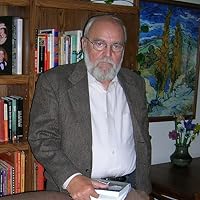
February 19, 2018
Though I like Durant's writing style and the book is well organized for relating the information, he differs from the conclusions of other historians. He whitewashes the characters of many of the popes and other higher clergy, even those of the notorious Borgias and denies that Leonardo and Michelangelo were homosexual. He also claims that the immorality that plagued Italy came from people falling away from the church. In reality, the church gave a grievous example of morality for worshippers.

January 3, 2022
First book of 2022 finished! I listened to this audiobook all through December and into the first days of January, so I'll count this as a 2022 read. Such a fantastically informative book, super in depth to all aspects of the Italian Renaissance, and on top of that, I learned that my best friend and I had ancestors that were both cardinals who worked together during the Avignon Papacy! A really great read. Here's to more books read in 2022!

July 29, 2026
One of the many surprises—and really, it should be obvious, but perhaps not for those with thicker heads like myself—is why the renaissance began where it began: Italy. Why? In a way, Roman culture never really left. Elsewhere, fast deterioration to the point where even ruins were becoming the talk of legends. In Italy? The vernacular (at least in some circles) and the ruins were still front row and center...well, that is until people starting tearing them down to build churches to house some sweet art. Of course, there’s more to it than that and when Ariel and Will Durant pens a gargantuan tome covering such a monumental era in Western civilization, few stones will be left unturned. Still, even in ‘old’ history books, it’s delightful to uncover new nuggets of curiosities.
The Story of Civilization is a series that keeps on giving and is an excellent—nay, probably the *the* example nonpareil of ‘classic’ history books that feel as fresh today as they were when originally published (for the most part, see my review of Greece for a counterexample)(https://kobushi.substack.com/p/the-li...). What normally may appear like banal reading, the minute history of Petrarch outside of his literary output, the trials and tribulations of the status of Popes in and outside of Rome, and even what patrons such as the Medicis did with their money all somehow elevate from that banality to a status akin to ‘fascinating’ thanks to the gifted pens of the Durants. In fact, we learn something very salient by looking into that sliver of normalcy:
“The desire of patrons to receive such mundane immortality was one of the strongest generative forces in the art and literature of the Renaissance.” This was in regards to wealthy donors simply being pleased to see their names etched on sculptures and fancy construction projects and the like, something that still exists even today. When one has achieved wealth and wants to give back, the backdoor way of building a legacy becomes tempting though sadly for them (and thankfully for humanity’s positive sides), “Medici” may be a name some have heard today, but it carries much less weight than the longer and albeit poor “Leonardo da Vinci” whom, as we learn, may have lived comfortably, but was not of the ultra wealthy class, but only sponsored by them.
Large survey books like this one can be scary affairs for the lay reader. The Durants have a knack for it, a knack for writing well, keeping the curious reader buckled in, and thus, go in the opposite direction of dryness by occasionally dropping a few—for me at least—surprising zingers that do a great job summing everything up: “...the unique aroma of the Italian Renaissance in which scholarship could be a passion and literature could be war.” While not about painting (don’t worry, that gets covered and then some), people may think that since this period saw Europe coming out of the ‘dark’ ages, people acted more civilized. Sadly, the Enlightenment was still a few centuries off and like a Japanese yakuza going after a code-breaker, if violence is needed, violence, as the Durants tell us, would be served.
But the Renaissance of course was not a period of intense violence like say, the Crusades were. If the book cover isn’t obvious enough, if there’s one thing this period was known for more than anything else, it was its art and if there is one figure from this period that stands head over shoulders above all others, it’s none other than Leo—actually, while he gets a lot of focus early on, if there’s a real hero to this tale, it’s his ‘arch-nemesis’ Michelangelo whom perhaps due to living (and being productive) to such an advanced age, is featured all throughout this massive book. When you read survey books—especially ones that are over 70 years old—you don’t expect to be hit with new information on a micro level but four books into Story of Civilization, I keep finding myself surprised.
Before I conclude this review, allow me to note here two ‘unique’ things about Leonardo da Vinci whom thanks to the Durants I now know even more about (and this was after not too long ago reading Isaacson’s biography!): “His spelling was individualistic.” What a lovely phrase for someone who can’t spell well! Let’s all internalize this ande when wie start speling as wee see fitt, wie can yuse this as a reejoindar. Secondly, reminding me more of Dr. Evil from Austin Powers when talking about his father ‘making the outrageous claim that he invented the question mark’, we’re told that “He (Leonardo) had a plan for underwater navigation but refused how to explain it.”
It’s going to be obvious if the cover art didn’t give it away, but while there is focus on things outside of Italian art, a massive amount of this book is indeed focused on that subject matter beyond anything else. But it’s hard not to talk about the Renaissance and not to talk about its art. For this was a time of an incredibly corrupt Catholic church, but it also was a time when art was valued like it never was before (and perhaps never since!). A question not raised in the book—which is excellent by the way lack of non-art aside—is what would our world be like today if those at the top of the Catholic church acted properly? Perhaps no Raphael, no Michelangelo...perhaps no Luther.
The Story of Civilization is a series that keeps on giving and is an excellent—nay, probably the *the* example nonpareil of ‘classic’ history books that feel as fresh today as they were when originally published (for the most part, see my review of Greece for a counterexample)(https://kobushi.substack.com/p/the-li...). What normally may appear like banal reading, the minute history of Petrarch outside of his literary output, the trials and tribulations of the status of Popes in and outside of Rome, and even what patrons such as the Medicis did with their money all somehow elevate from that banality to a status akin to ‘fascinating’ thanks to the gifted pens of the Durants. In fact, we learn something very salient by looking into that sliver of normalcy:
“The desire of patrons to receive such mundane immortality was one of the strongest generative forces in the art and literature of the Renaissance.” This was in regards to wealthy donors simply being pleased to see their names etched on sculptures and fancy construction projects and the like, something that still exists even today. When one has achieved wealth and wants to give back, the backdoor way of building a legacy becomes tempting though sadly for them (and thankfully for humanity’s positive sides), “Medici” may be a name some have heard today, but it carries much less weight than the longer and albeit poor “Leonardo da Vinci” whom, as we learn, may have lived comfortably, but was not of the ultra wealthy class, but only sponsored by them.
Large survey books like this one can be scary affairs for the lay reader. The Durants have a knack for it, a knack for writing well, keeping the curious reader buckled in, and thus, go in the opposite direction of dryness by occasionally dropping a few—for me at least—surprising zingers that do a great job summing everything up: “...the unique aroma of the Italian Renaissance in which scholarship could be a passion and literature could be war.” While not about painting (don’t worry, that gets covered and then some), people may think that since this period saw Europe coming out of the ‘dark’ ages, people acted more civilized. Sadly, the Enlightenment was still a few centuries off and like a Japanese yakuza going after a code-breaker, if violence is needed, violence, as the Durants tell us, would be served.
But the Renaissance of course was not a period of intense violence like say, the Crusades were. If the book cover isn’t obvious enough, if there’s one thing this period was known for more than anything else, it was its art and if there is one figure from this period that stands head over shoulders above all others, it’s none other than Leo—actually, while he gets a lot of focus early on, if there’s a real hero to this tale, it’s his ‘arch-nemesis’ Michelangelo whom perhaps due to living (and being productive) to such an advanced age, is featured all throughout this massive book. When you read survey books—especially ones that are over 70 years old—you don’t expect to be hit with new information on a micro level but four books into Story of Civilization, I keep finding myself surprised.
Before I conclude this review, allow me to note here two ‘unique’ things about Leonardo da Vinci whom thanks to the Durants I now know even more about (and this was after not too long ago reading Isaacson’s biography!): “His spelling was individualistic.” What a lovely phrase for someone who can’t spell well! Let’s all internalize this ande when wie start speling as wee see fitt, wie can yuse this as a reejoindar. Secondly, reminding me more of Dr. Evil from Austin Powers when talking about his father ‘making the outrageous claim that he invented the question mark’, we’re told that “He (Leonardo) had a plan for underwater navigation but refused how to explain it.”
It’s going to be obvious if the cover art didn’t give it away, but while there is focus on things outside of Italian art, a massive amount of this book is indeed focused on that subject matter beyond anything else. But it’s hard not to talk about the Renaissance and not to talk about its art. For this was a time of an incredibly corrupt Catholic church, but it also was a time when art was valued like it never was before (and perhaps never since!). A question not raised in the book—which is excellent by the way lack of non-art aside—is what would our world be like today if those at the top of the Catholic church acted properly? Perhaps no Raphael, no Michelangelo...perhaps no Luther.

July 16, 2013
Unlike other volumes of Durant's Story of Civilization this one is relatively confined to a short period and small geographical area, namely the renaissance in Italy.

June 13, 2024
BOOK I. PRELUDE: 1300-77
Chapter I: THE AGE OF PETRARCH AND BOCCACCIO:
1304-75
I. The Father of the Renaissance
II. Naples and Boccaccio
III. The Poet Laureate
IV. Rienzo's Revolution
V. The Wandering Scholar
VI. Giotto
VII. The Decameron
VIII. Siena
IX. Milan
X. Venice and Genoa
XI. Twilight of the Trecento
XII. Perspective
Chapter II: THE POPES IN AVIGNON: 1309-77
I. The Babylonian Captivity
II. The Road to Rome
III. The Christian Life
BOOK II: THE FLORENTINE RENAISSANCE: 1378-1534
Chapter III: THE RISE OF THE MEDICI: 1378-1464
I. The Setting
II. The Material Basis
III. Cosimo Pater Patriae
IV. The Humanists
V. Architecture: the Age of Brunellesco
VI. Sculpture
1. Ghiberti
2. Donatello
3. Luca della Robbia
VII. Painting
1. Masaccio
2. Fra Angelico
3. Fra Filippo Lippi
VIII. A Miscellany
Chapter IV: THE GOLDEN AGE: 1464-92
I. Piero il Gottoso
II. The Development of Lorenzo
III. Lorenzo the Magnificent
IV. Literature: the Age of Politian
V. Architecture and Sculpture: The Age of Verrocchio
VI. Painting
1. Ghirlandaio
2. Botticelli
VII. Lorenzo Passes
Chapter V: SAVONAROLA AND THE REPUBLIC: 1492-1534
I. The Prophet
II. The Statesman
III. The Martyr
IV. The Republic and the Medici
V. Art under the Revolution
BOOK III: ITALIAN PAGEANT: 1378-1534
Chapter VI: MILAN
1. Background
II. Piedmont and Liguria
III. Pavia
IV. The Visconti: 1378-1447
V. The Sforzas: 1450-1500
VI. Letters
VII. Arts
Chapter VII: LEONARDO DA VINCI
1. Development: 1452-83
II. In Milan: 1482-99
III. In Florence: 1500-01, 1503-06
IV. In Milan and Rome: 1506-16
V. The Man
VI. The Inventor
VII. The Scientist
VIII. In France: 1516-19
IX. The School of Leonardo
Chapter VIII: TUSCANY AND UMBRIA
I. Piero della Francesca
II. Signorelli
III. Siena and Sodoma
IV. Umbria and the Baglioni
V. Perugino
Chapter IX: MANTUA
I. Vittorino da Feltre
II. Andrea Mantegna
III. The First Lady of the World
Chapter X: FERRARA
I. The House of Este
II. The Arts in Ferrara
III. Letters
IV. Ariosto
V. Aftermath
Chapter XI: VENICE AND HER REALM
I. Padua
II. Venetian Economy
III. Venetian Government
IV. Venetian Life
V. Venetian Art
1. Architecture and Sculpture
2. The Bellini
3. From the Bellini to Giorgione
4. Giorgione
5. Titian: the Formative Years
6. Minor Artists and Arts
VI. Venetian Letters
1. Aldus Manutius
2. Bembo
VII. Verona
Chapter XII: EMILIA AND THE MARCHES
I. Correggio
II. Bologna
III. Along the Emilian Way
IV. Urbino and Castiglione
Chapter XIII: THE KINGDOM OF NAPLES
I. Alfonso the Magnanimous
II. Ferrante
BOOK IV: THE ROMAN RENAISSANCE: 1378-1521
Chapter XIV: THE CRISIS IN THE CHURCH: 1378-1447
I. The Papal Schism: 1378-1417
II. The Councils and the Popes
III. The Triumph of the Papacy
Chapter XV: THE RENAISSANCE CAPTURES ROME: 1447-92
I. The Capital of the World
II. Nicholas V: 1447-55
III. Calixtus III: 1455-58
IV. Pius II: 1458-64
V. Paul II: 1464-71
VI. Sixtus IV: 1471-84
VII. Innocent
VIII: 1484-92
Chapter XVI: THE BORGIAS
I. Cardinal borgia
II. Alexander
VI: 1492-1503
III. The Sinner
IV. Caesar Borgia
V. Lucrezia Borgia
VI. The Collapse of the Borgia Power
Chapter XVII: JULIUS II: 1503-13
I. The Warrior
II. Roman Architecture: 1492-1513
III. The Young Raphael
1. Development: 1483-1508
2. Raphael and Julius II: 1508-13
IV. Michelangelo
1. Youth: 1475-1505
2. Michelangelo and Julius II: 1505-13
Chapter XVIII: LEO X: 1513-21
I. The Boy Cardinal
II. The Happy Pope
III. Scholars
IV. Poets
V. The Recovery of Classic Art
VI. Michelangelo and Leo X: 1513-20
VII. Raphael and Leo X: 1513-20
VIII. Agostino Chigi
IX. Raphael: the Last Phase
X. Leo Politicus
BOOK V: DEBACLE
Chapter XIX: THE INTELLECTUAL REVOLT
I. The Occult
II. Science
III. Medicine
IV. Philosophy
V. Guicciardini
VI. Machiavelli
1. The Diplomat
2. The Author and the Man
3. The Philosopher
4. Considerations
Chapter XX: THE MORAL RELEASE
I. The Founts and Forms of Immorality
II. The Morals of the Clergy
III. Sexual Morality
IV. Renaissance Man
V. Renaissance Woman
VI. The Home
VII. Public Morality
VIII. Manners and Amusements
IX. Drama
X. Music
XI. Perspective
Chapter XXI: THE POLITICAL COLLAPSE: 1494-1534
I. France Discovers Italy: 1494-95
II. The Attack Renewed: 1496-1505
III. The League of Cambrai: 1508-16
IV. Leo and Europe: 1513-21
V. Adrian VI: 1522-23
VI. Clement VII: the First Phase
VII. The Sack of Rome: 1527
VIII. Charles Triumphant: 1527-30
IX. Clement VII and the Arts
X. Michelangelo and Clement VII: 1520-34
XI. The End of an Age: 1528-34
BOOK VI: FINALE: 1534-76
Chapter XXII: SUNSET IN VENICE
I. Venice Reborn
II. Aretino
III. Titian and the Kings
IV. Tintoretto
V. Veronese
VI. Perspective
Chapter XXIII: THE WANING OF THE RENAISSANCE
I. The Decline of Italy
II. Science and Philosophy
III. Literature
IV. Twilight in Florence
V. Benvenuto Cellini
VI. Lesser Lights
VII. Michelangelo: The Last Phase
Chapter I: THE AGE OF PETRARCH AND BOCCACCIO:
1304-75
I. The Father of the Renaissance
II. Naples and Boccaccio
III. The Poet Laureate
IV. Rienzo's Revolution
V. The Wandering Scholar
VI. Giotto
VII. The Decameron
VIII. Siena
IX. Milan
X. Venice and Genoa
XI. Twilight of the Trecento
XII. Perspective
Chapter II: THE POPES IN AVIGNON: 1309-77
I. The Babylonian Captivity
II. The Road to Rome
III. The Christian Life
BOOK II: THE FLORENTINE RENAISSANCE: 1378-1534
Chapter III: THE RISE OF THE MEDICI: 1378-1464
I. The Setting
II. The Material Basis
III. Cosimo Pater Patriae
IV. The Humanists
V. Architecture: the Age of Brunellesco
VI. Sculpture
1. Ghiberti
2. Donatello
3. Luca della Robbia
VII. Painting
1. Masaccio
2. Fra Angelico
3. Fra Filippo Lippi
VIII. A Miscellany
Chapter IV: THE GOLDEN AGE: 1464-92
I. Piero il Gottoso
II. The Development of Lorenzo
III. Lorenzo the Magnificent
IV. Literature: the Age of Politian
V. Architecture and Sculpture: The Age of Verrocchio
VI. Painting
1. Ghirlandaio
2. Botticelli
VII. Lorenzo Passes
Chapter V: SAVONAROLA AND THE REPUBLIC: 1492-1534
I. The Prophet
II. The Statesman
III. The Martyr
IV. The Republic and the Medici
V. Art under the Revolution
BOOK III: ITALIAN PAGEANT: 1378-1534
Chapter VI: MILAN
1. Background
II. Piedmont and Liguria
III. Pavia
IV. The Visconti: 1378-1447
V. The Sforzas: 1450-1500
VI. Letters
VII. Arts
Chapter VII: LEONARDO DA VINCI
1. Development: 1452-83
II. In Milan: 1482-99
III. In Florence: 1500-01, 1503-06
IV. In Milan and Rome: 1506-16
V. The Man
VI. The Inventor
VII. The Scientist
VIII. In France: 1516-19
IX. The School of Leonardo
Chapter VIII: TUSCANY AND UMBRIA
I. Piero della Francesca
II. Signorelli
III. Siena and Sodoma
IV. Umbria and the Baglioni
V. Perugino
Chapter IX: MANTUA
I. Vittorino da Feltre
II. Andrea Mantegna
III. The First Lady of the World
Chapter X: FERRARA
I. The House of Este
II. The Arts in Ferrara
III. Letters
IV. Ariosto
V. Aftermath
Chapter XI: VENICE AND HER REALM
I. Padua
II. Venetian Economy
III. Venetian Government
IV. Venetian Life
V. Venetian Art
1. Architecture and Sculpture
2. The Bellini
3. From the Bellini to Giorgione
4. Giorgione
5. Titian: the Formative Years
6. Minor Artists and Arts
VI. Venetian Letters
1. Aldus Manutius
2. Bembo
VII. Verona
Chapter XII: EMILIA AND THE MARCHES
I. Correggio
II. Bologna
III. Along the Emilian Way
IV. Urbino and Castiglione
Chapter XIII: THE KINGDOM OF NAPLES
I. Alfonso the Magnanimous
II. Ferrante
BOOK IV: THE ROMAN RENAISSANCE: 1378-1521
Chapter XIV: THE CRISIS IN THE CHURCH: 1378-1447
I. The Papal Schism: 1378-1417
II. The Councils and the Popes
III. The Triumph of the Papacy
Chapter XV: THE RENAISSANCE CAPTURES ROME: 1447-92
I. The Capital of the World
II. Nicholas V: 1447-55
III. Calixtus III: 1455-58
IV. Pius II: 1458-64
V. Paul II: 1464-71
VI. Sixtus IV: 1471-84
VII. Innocent
VIII: 1484-92
Chapter XVI: THE BORGIAS
I. Cardinal borgia
II. Alexander
VI: 1492-1503
III. The Sinner
IV. Caesar Borgia
V. Lucrezia Borgia
VI. The Collapse of the Borgia Power
Chapter XVII: JULIUS II: 1503-13
I. The Warrior
II. Roman Architecture: 1492-1513
III. The Young Raphael
1. Development: 1483-1508
2. Raphael and Julius II: 1508-13
IV. Michelangelo
1. Youth: 1475-1505
2. Michelangelo and Julius II: 1505-13
Chapter XVIII: LEO X: 1513-21
I. The Boy Cardinal
II. The Happy Pope
III. Scholars
IV. Poets
V. The Recovery of Classic Art
VI. Michelangelo and Leo X: 1513-20
VII. Raphael and Leo X: 1513-20
VIII. Agostino Chigi
IX. Raphael: the Last Phase
X. Leo Politicus
BOOK V: DEBACLE
Chapter XIX: THE INTELLECTUAL REVOLT
I. The Occult
II. Science
III. Medicine
IV. Philosophy
V. Guicciardini
VI. Machiavelli
1. The Diplomat
2. The Author and the Man
3. The Philosopher
4. Considerations
Chapter XX: THE MORAL RELEASE
I. The Founts and Forms of Immorality
II. The Morals of the Clergy
III. Sexual Morality
IV. Renaissance Man
V. Renaissance Woman
VI. The Home
VII. Public Morality
VIII. Manners and Amusements
IX. Drama
X. Music
XI. Perspective
Chapter XXI: THE POLITICAL COLLAPSE: 1494-1534
I. France Discovers Italy: 1494-95
II. The Attack Renewed: 1496-1505
III. The League of Cambrai: 1508-16
IV. Leo and Europe: 1513-21
V. Adrian VI: 1522-23
VI. Clement VII: the First Phase
VII. The Sack of Rome: 1527
VIII. Charles Triumphant: 1527-30
IX. Clement VII and the Arts
X. Michelangelo and Clement VII: 1520-34
XI. The End of an Age: 1528-34
BOOK VI: FINALE: 1534-76
Chapter XXII: SUNSET IN VENICE
I. Venice Reborn
II. Aretino
III. Titian and the Kings
IV. Tintoretto
V. Veronese
VI. Perspective
Chapter XXIII: THE WANING OF THE RENAISSANCE
I. The Decline of Italy
II. Science and Philosophy
III. Literature
IV. Twilight in Florence
V. Benvenuto Cellini
VI. Lesser Lights
VII. Michelangelo: The Last Phase
Displaying 1 - 30 of 133 reviews