Khadija was the first believer, to whom the Prophet Muhammad often turned for advice. At a time when strongmen quickly seized power from any female Muslim ruler, Arwa of Yemen reigned alone for five decades. In nineteenth-century Russia, Mukhlisa Bubi championed the rights of women and girls, and became the first Muslim woman judge in modern history. After the Gestapo took down a Resistance network in Paris, British spy Noor Inayat Khan found herself the only undercover radio operator left in that city. In this unique history, Hossein Kamaly celebrates the lives and achievements of twenty-one extraordinary women in the story of Islam, from the formative days of the religion to the present.
حسین کمالی، نویسندهای اسلامگرا با سابقهی خمینیستی، تازگی کتابی منتشر کرده دربارهی زندگی 21 زن در تاریخ اسلام. در حالت عادی نوشتهی چنین آدمی ارزش اعتنا نداشت، منتها وقتی فهمیدم فصلی از کتاب به مریم میرزاخانی (!!) اختصاص دارد، رفتم سراغش. هدف نویسنده از سر هم کردن چنین کشکولی، به گفتهی خودش، این بوده تا به خوانندهی شکاکی که تصور میکند اسلام زنان را برای مادری و خانهداری در نظر گرفته، حالی کند که اشتباه میکرده؛ که زنان در تاریخ اسلام از بچهداری و پردهنشینی بسیار فراتر رفتهاند. و خب برای یک اسلامگرای دغلباز چه نمونهای بهتر از مریم میرزاخانی تا دستاوردهای درخشانش را به پای تاریخ زنان مسلمان بنویسد (همانطور که پیشتر هم با سلام، فیزیکدان هندی-پاکستانی، کرده بودند)، بدون این که ذرهای به خودش زحمت توضیح به خواننده بدهد که زندگی و دستاوردهای او چه ارتباطی به تاریخ زنان مسلمان و تاریخ اسلام (!) دارد. بگذریم از این که از قضا موفقیت مریم میرزاخانی مرهون رها شدن از زمینهای است که نویسنده تلاش کرده دوباره و به زور در آن جایش دهد. توصیف نویسنده از وقایع و زمینههای تاریخی در این فصل پر است از دروغ و دلنگ و اشتباه و اتفاقا در نقل زندگی علمی مریم میرزاخانی هم مهمترین نکتهها را مغفول گذاشته. سوءاستفادهی کمالی از اسم مریم میرزاخانی و قلب واقعیت زندگیاش مرزهای نادانی و نفهمی را رد کرده و به مرحلهی شیادی رسیده
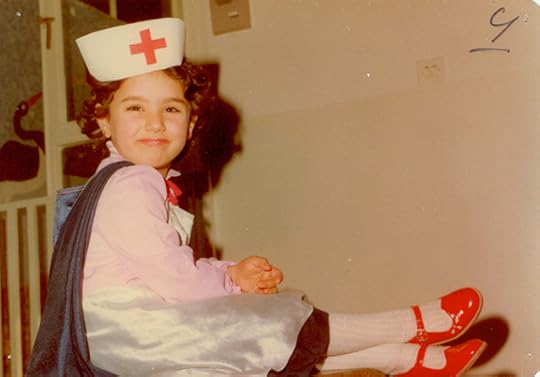
تصویر: مریم میرزاخانی در کودکی
پینوشت: با نگاهی به یکی دیگر از فصلهای کتاب ابعاد بیشتری از شارلاتانی نویسنده برایم روشن شد. کمالی در یکی از فصلها به طاهره قرةالعین، از رهبران بابیت، پرداخته و با کمپین تحریفش زندگی و دستاوردهای او را هم به نام تاریخ زنان مسلمان زده! همان قلب واقعیتی که در فصل مربوط به مریم میرزاخانی مرتکب شده بود، اینجا هم عینا تکرار کرده
پینوشت 2: اخیرا متوجه شدم که انتشارات وانورلد، ناشر این کتاب، متعلق به یک زوج بهایی است. این که چنین انتشاراتی کتابی را چاپ کرده که به دروغپردازی شیادانه علیه طاهره قرةالعین دست زده، فقط جای تاسف دارد. مسلمانان آزادند هر نسبت دروغی که میخواهند به دیگران ببندند. باید آزادی بیانشان را محترم شمرد. ولی کافی است کسی، نسبت دروغ که هیچ، تنها انتقادی از اسلام یا مسلمانان بکند. آن وقت است که رسانههای غربی، آکادمیسین-اکتیویستها، اسلاموفمینیستها و جیرهخواران ریز و درشت ایدئولوژی چپ از سراسر جهان بسیج میشوند و زیر عَلم اسلاموفبیا تا مدتها سینه میزنند و دست آخر هم اسلامگرایان یکی دو حرکت انتحاری صادر میکنند
History of Islam in 21 Women by Hossein Kamaly recounts the lives of influential Muslim women who have played a pivotal role in Islamic history. I enjoyed reading about these powerful women, especially the ones who I previously knew nothing about and enjoyed reuniting with the ones that I already familiar with (e.g Khadija and Aisha).
However, this book fell short due to several reasons. I am not a fan of Hossein Kamaly’s style of writing. It suffers from dry prose and read like a Wikipedia. He basically told us about the women without offering any analysis with actual depth on the lives of these women and the impact they made to women everywhere. I couldn’t help but think that the absence of nuances stems from the fact that this book is written by a male author. There was also a lack of cohesion as the author tries to make connection between the historical narratives and the stories of the women. I would also appreciate if there was room for a bit more information on the women from the 8th to 13th century rather than focusing on the historical and political surrounding at that time.
That said, this is an accessible book that serves as an invitation to learn more about the lesser known Muslim women in the history of Islam. It showcases how resilient and powerful women can be in the face of cultural and societal restraints imposed upon them. While it makes me ponder and appreciate the fundamental progress that women have made so far, I also can’t deny that we still have got a long way to go. Highly recommended. Thank you Times Reads for the review copy in exchange for an honest review 💛
I'm always on the hunt for books about Muslim women throughout history, and this fairly new title caught my eye. (Yes, I'm aware of the irony of a man writing such a book instead of a Muslim woman.)
I will admit that I was initially skeptical - the author is Shi'i - but I was, by and large, both surprised and impressed by the range of women included. Many were names I had never heard of before (Fatima of Nishapur, Terken Khatun, Safiye Sultana, Safiatuddin Syah, Mukhlisa Bubi and others); others I was vaguely familiar with, but didn't know well.
The book opens with the stories of Khadijah, Fatimah, and A'ishah (radhiAllahu anhunna); predictably, there was a definite Shi'i slant to them, but not as bad as it could have been.
Many of the other stories were actually pretty amazing. I was stunned to learn about the female rulers of Aceh, and of the Russian qadhi Mukhlisa Bubi and her extensive da'wah and activism (I legit feel betrayed that I never knew she existed!!!).
Towards the end, he includes stories of women who - while accomplished (Noor Inayat Khan, the spy; Zaha Hadid, an architect, and Maryam Mirzakhani, mathemetician) - did not really exhibit or embody an overtly Muslim identity, other than their ethnic backgrounds. While interesting nonetheless, I do feel that other women should have been included instead.
Altogether, I very much enjoyed this book and learned a great deal from it. It is an excellent resource (other than the telling of Fatimah's story), and I would recommend it for a personal or school library.
The author's introduction and conclusion contain some powerful statements as well; my favourite was the simple but poignant "Women's history is human history."
This book was filled with many kickass ladies! Take this for an eg. A queen that was captured into slavery as a child, from a non muslim lineage going on to rule a state that remained prosperous despite the aftermath of the brutal attack of Mongols in the Arab world in the 13th century. 🤯🤯
A history of Islam in 21 women is a collection of short biographies of 21 Muslim women who have/had managed to make it big in this world through their work & contribution towards the society as a whole. The book started with Khadija r.a., the first believer and the wife of Muhammed s.a.w and went ahead to talk about Queens, Princess, Teachers, Architects & Mathematicians. Safe to say that it covered a variety of fields of work. The chronology of the women mentioned is such that side by side you also get a brief knowledge of the changes and the overall history of how Islam ...or rather Muslims have changed or developed over time.
Often at times the text focused more on the political surrounding of the main protagonist. I wish it had more of personal experiences of the person in talk. However even though I didn't like the excessive description of the same as the chapters proceed you realize that it helps understand the struggle of the personality better especially when the concerned person served as some kind of leader(which most of them in the book did).
I can't help but point out the bias-ness when it talked about the Shia-Sunni conflict in the chapter of Fatima r.a. I understand that there was a need to mention the conflict in order to understand some later consequences but the details were totally uncalled for especially if you're taking a side in such matter. The narrative mentions a couple of incidents that shades the image of certain sahabas in a very bad way (and THOSE incidents may I mention are not accepted as the truth by the majority) so if someone with no good knowledge of this issue get into reading this book I am afraid they'll be pulled into believing something that is so controversial and will retain them to do their own research on it instead.
3.5 stars. This book was a very interesting look on 21 Muslim women through history and the powerful thing they did. I sadly know very little about women in different cultures outside my own and found this to be an interesting start to learn more. However I feelt like I wanted a bit more, more facts about them and so on.
This enlightening and well-researched collection highlighted an eclectic group of vitally important Muslim women. While not “unputdownable,” this book was nevertheless intriguing and extremely educational. I think it would be a wonderful starting point for further study on both Muslim women and Islamic history.
The first three chapters were alright, but I found myself not being able to take more than one chapter at a time. I did not enjoy chapters four to 14 so much. There was a period that I couldn’t even pick the book up. I guess it’s mainly due to my expectations. I read Al-Muhaddithat a few years ago, and I found the ladies inspiring as they were known as teachers during their time. Sheikh Akram Nadwi told us about how their parents, especially fathers, made sure that the ladies had good education, even accompanying them to cities hundreds of miles away from home to study from other teachers (male and female alike). He told us about the number of students each female scholar had, how they came from all backgrounds, male and female, about their compassion, their generosity, and their drive to deliver the best to their students. However, the middle chapters of the History of Islam mainly talks about family feuds and dramas, about politics and power, which I’m really not interested with. Maybe I read them wrongly. There are many aspects of the middle chapters that I could not comment on because I don’t have much knowledge of the era. I’m thinking perhaps it was my ignorance, and the angle of the history that I was not interested with, that I almost gave the book up until I reached chapter 15. Here onwards is the best part of the book. We learn about Nana Asmau who helped her people by educating the ladies around her (and I really respect her father who made sure she was well educated), and then Mukhlisa Bubi from Russia who was a well-educated and one of the very very very few people that I would describe as a true feminist, Helide Edib who fought for women through her writing, Umm Kulthum raising the spirit of the Arabs after the six-day war in 1967 through her voice, Zaha Hadid, the highly educated, extremely creative lady who fought her way through a male-dominated field of architecture, and Maryam Mirzakhani, a mathematic genius of our time. One very prominent thing that I do not understand is that he said Malaysia does not uphold women’s rights until the year 2010. I don’t know on what aspect of women’s rights is he talking about. In terms of education, I’m very sure that he’s completely wrong. Even our ex-deputy prime minister, Dr Wan Azizah was educated overseas in the 1970s with Malaysian government scholarship. I just witnessed an online conference in which almost 80% of the speakers were female aged more than 35, who are experts in their own fields. I can tell you about a government health centre that is totally run by women who were educated way before the year 2010. We know many successful businesswomen who started their businesses way before 2010. There are many university courses that has more than 80% female attendance. Divorce have recently made easier so that the women would not need to wait years to have the process concluded. Of course, there are fields that still need much improvement in terms of women’s rights, like how domestic abuse is handled by the law enforcement officers in this country. There is always something to improve in terms of women’s rights, in any countries, but to say that Malaysian women only had their rights recently is totally unfair.
Studying Islam and its history is inseparable from its women, right from its founding days. And why should it be any different? The first person to accept the shahadah from the Prophet (saw) was a woman, thus driving home the inextricable relationship between Islam and the role of women in it. This book is a useful reference guide for those who might want to learn more about women who have left a mark in the world and who identify as Muslim. I did find it ironic that a book about women was written by a man, and for sure, I was initially disappointed.
The first three chapters on the Mothers of our faith - Khadija (ra), Fatima (ra), and A'isha (ra) all seem evident that they were written by a man as their importance is emphasized according to their relationships with the men around them. I felt that Khadija's (ra) chapter deserved much more love and felt like Kamaly left out some crucial aspects of her life and character. I would have personally loved to read more of her acumen as a businesswoman. However, I was thoroughly impressed by the way he handled the chapters of Fatima (ra) and A'isha (ra). Reading the chapter on the former, I was afraid Kamaly's Shia sensibilities would colour the portrayal of all the women. Thankfully, I noted that this wasn't the case as A'isha's (ra) chapter was dealt with as much love and care as Fatima's (ra). A part that really left an impression on me is how adept and capable A'isha (ra) was in matters of the state as a politician, as well as a strategist, and how it was only her defeat in the final Battle of the Camel that impacted the treatment of women in the Muslim community through time. There is one quote in her chapter that seems to direct the trajectory of the lives of women in the rest of this book and, by extension, of Muslim women in our history: "Those who entrust power [mulk] to a woman will never know prosperity." This quote was allegedly attributed to the Prophet (saw) by a Companion Abu Bakra and seems to go against the way the Prophet (saw) treated women according to A'isha's (ra) narrations of his life. But with her defeat at a crucial battle for power and succession and this quote from one of the Companions, the damage was done. Patriarchy gripped it with its power-hungry hands and used it to subjugate women down the ages.
After this, we are met with chapter after chapter of famous women, queens, heads of state, and sovereigns, who ruled their lands and subjects with intelligence, tenacity, and wisdom, but who were ultimately taken down or whose legacies were erased with the help of this quote (Arwa of Yemen, Shajara'-al-Durr, Sayyida Al-Hurra, Pari Khanum, among others). We have women who impacted Islamic studies as scholars of great renown on an equal footing with established intellectuals of their period (Fatima of Nishapur, Nana Asmau), spiritual Sufi saints to rival the most devoted (Rabia al-Adawiyya), rebels, jurists, educators and visionaries. Who hasn't heard of Umm-Kulthum's voice lighting up the events of twentieth-century MENA geopolitics? And why wouldn't anyone root for Nur Jahan and Safiye Sultana's keen insight into politics that steered the destinies of two of the world's biggest Islamic empires? One of my favorites was definitely the chapter on Nana Asmau that offered me a glimpse into an oft-neglected part of Islam's history, that of West African legacy.
While much of the book is about women who identified as Muslims in the past, the chapters on the current influential women fell short. The last few chapters focussed more on women with Muslim names than on women who identify as practising Muslims, and anyone can tell you that the two are very different. As the book was published in 2019, it would have been better to include people like Malala or Tawakkol Karma, to name a couple alternatives. All in all, this book is great as an introduction to the lives of these women. It does not delve into great detail and it left me wanting for more depth and nuance in these incredible lives. In any case, it definitely has me looking harder in the history of Islam for the contributions by women that are often glossed over by the patriarchal pen of scholarship. Read it to be awed and inspired.
If you liked my review, do feel free to stop by my Instagram here!
This was disappointing on many levels, partly, but not entirely, due to the format of the book and the somewhat arbitrary choices of 21 women. The chapters felt bitty and disconnected and on several occasions it felt like a tick-box exercise ("13 down, 8 to go..." kind of feeling). The writing style was poor and immature and there seemed to be unsubstantiated statements as to the character and demeanour of several of the women.
At the time of reading I didn't pick up on the fact that the author's Shia faith has permeated the writing when discussing the contrasts between Shia and Sunni practices and social contexts, but was very interested to read the reviews of Goodreads members who did point this out.
I've given the book two stars rather than one as it has piqued my interest to learn more about some of the women, particularly Mukhlisa Bubi (disclaimer: I spent a lot of time in the former USSR as a student so am always drawn to books and programmes on the history and culture of all the former Soviet republics and autonomous regions) and I am grateful for the Further Reading section at the back of the book. Other than that, I did feel that the book was a missed opportunity.
I find it hard to disguise just how excited I was about the title of this book. I have been working in a male dominated industry for almost a decade now (construction in the Middle East) and the one thing more scarce than the opportunities for women, is finding women who can kick ass at it. So when I saw the title, which seemed to highlight the hard work of women in the eyes of the belief system I follow and the trail blaze they have left behind, I was over the moon and couldn’t stop gushing about this tremendous find!
However, It took me just a few chapters to figure out the agenda of the author of this book. It was my unfortunate mistake to not have researched the author before getting so excited about this book. As it turns out, I come from a different belief sect in Islam and it was rather a biased view of the belief sect he follows (Shia’) and how it identified powerful women (whom also happen to primarily follow his belief sect or follow other sects yet with a biased view of how his sect acknowledges their accomplishments) in the history of our religion till our modern day.
I would like to believe that I’m an open minded person whom latches on to any opportunity to widen her horizons. Nevertheless, there is a limit or perhaps a territory of thought where I find it hard to stand in and bask in its danger.
I’m adamant not to give up on this book and try to keep reading to widen my horizons - however, i might take a break for now. So my over all review, is not an entirely positive one and I don’t see myself recommending it, unless I’m trying to prove a point.
Do domestic tasks merit the attention of the historian? They should. Reducing women's history to silence signals poor analysis anywhere and at any time in history. Women's history is human history.
3.5 stars.
I cannot believe I'd never heard of a single one of these fierce women, but I'm so glad I read this book. It's a great introduction to Muslim women, and with that, a history of the Muslim world. I hate that my formal education never included any classes on the Middle East or Islamic history (aside from a few passing remarks about the Ottoman Empire), and I haven't been great at seeking that information out on my own. But this was a book I can get behind!
There was a lot of political context given for all of the biographies, which was helpful to me. I will be honest that I sometimes had to read portions multiple times to be sure I'd followed the family trees and relationships between people. This often didn't leave much room for the biography of the woman, but the context is important.
I know this book is not enough to truly introduce myself to Islamic culture and the women who shaped it, but it's a good place to start and I cannot wait to learn more.
When I picked up this historical book, I had a different idea of what it’d be about. Or at least the women that would be highlighted. I thought I’d be reading about 21 female companions of the prophet PBUH. The first three chapters aided my belief; they were about Khadijah, Aisha & Fatima. The other 18 women? I’ve not heard of. I learnt from their lives, how they were not passive victims of circumstances and took on powerful roles in times when women were hated for speaking up. However I feel the selection of certain women were influenced by the author’s Shia-Islam
The political situations in their times (7th - 20th century) filled the book that one would have to make reference to it and not assimilate the information once. In short, it dragged the points. A lot about the Ottoman Empire and pre-Islamic Arabic customs show that Islam and people’s deviations are parallel; I had to question the decisions some women and men made when it came to killings in the case of Safiye Sultan and Pari Khanum.
Apart from the first three women, the stories of these women in particular drew me in and were written brilliantly: Nur Jahan, Nana Asmau, Halida Edip, Noor Inayat Khan, Mukhlisa Bubi, Zaha Hadid & the mathematical prowess, Maryam Mirzakhani.
I especially admire how several of these women were sold into slavery, or sent off to be concubines or mistresses for Sultans, Kings, Men in power, but fought their way into being more than that, balancing faith and intellect, putting effort to change the status quo of their societies. Many of these women, when their voices gained power, were brought down violently by men in their times. Either through murder or imprisonment or stripping them totally of their power.
The misogyny did not start today! History has evidences of these things! And the fact that many of these women were successful regardless of their circumstances because they chose to be active and do more than traditional roles is impressive and worthy of their names to be mentioned.
"The crucial factor in the happiness and preservation of our nation and the most necessary thing for strengthening our religion is educating our women and adorning them with knowledge" - Mukhlisa Bubi-
Through the book A History of Islam in 21 Women, Hossein Kamaly ( A.P of Islamic Studies Holder of the Imam Ali Chair for Shi’i Studies and Dialogue among Islamic Legal School in Hartford Seminary) sets to challenge the cliché notion among many that Muslim women are being oppressed & suppressed.
The 📖 brings to us biographical sketches of selected 21 Muslim women; transversing vast geographical terrains & intricate cultures - in which their lives are shown to shape the evolution of the history of Islam.
Illustration of the roles of the charismatic women around the Prophet Muhammad (pbuh) i.e Khadija, Fatimah & Aisha; powerful female rulers like Terken Khatun & Sayyida al-Hurra; trailblazers of the likes of Mukhlisa Bubi, one of the earliest Muslim female judge & the game-changers in the examples of Halidé Edip whose written & spoken words shaped the Turkish Republic; clearly exemplified that Islam has always elevates women & frees them from the bindings of the society.
In fact, going through the historical narratives; it was clear that the restrictions that bound women (despite the different eras & locations) were the patriarchal cultures that are embedded in the societies that the women were living in.
In many ways that I found the 📖 to be illuminating, there are some parts that I disagree on especially in the narration of Fatimah, the Prophet's daughter in which there were little evidence to support some of the claims which are mostly based on the Shia's controversial beliefs.
I suggest the potential readers of this 📖 to approach the reading with an open & cautious mind; especially on the accounts of the early historical figures in which little or very few verified written resources on them can be found.
3.6 ⭐️
Recommended for females & males all around the 🌎; who seek enlightenment & inspiration.
This book is about the biographies of 21 women in history of Islam of their powerful roles in political , education , social , economy, art- as a ruler of the country , scholar , mathematician , author , architect , educator , singer & more. • For me , the book such an inspiring, interesting , empowering , an eye-opening read . It excites me when the book begin with the story of women that we really known & love in Prophet Muhammad’s family : Khadija , Fatima and Aisha ❤️. Then, it goes to the story of other powerful women in 11th, 16th, 19th & 20th centuries. Even though , some of the powerful women been mentioned in the book I don’t really familiar with their name before. But, there are some story that I heard or knew especially related to the Ottoman Empire - ruled by the Suleyman the Magnificent . When I read the Ottoman Empire, it reminds me about my Balkan trip back in 2019 . Quite great to read a story of Nur Jahan that is related to the Taj Mahal . There’s Zaha Hadid - all I knew that she was an architect for the Dongdaemun Design Plaza in Seoul & it is great to know a little details of her story. We can see that all the powerful women in this book such an inspiring to us - their determination, resilient, fight for their causes & believe including fight for the women right . • I’m really glad that I buddy read this book with @nrlhakimin and @familimembaca because there are some part that need to be careful , discuss and cross checked the fact especially the first 4 chapters to avoid any misunderstanding about what we belief . I also glad to have a little discussion with @neboreads . For those who are interested in history , biographies & islamic topics this book is for you. • I love this quote from the book : “ In the same way you care that your clothes be beautiful & clean , never forget to adorn yourself with knowledge & good manners . A human becomes a human not with clothes but with knowledge & good manner “ . 👍🏻 Thank you so much @putrifariza , @times.reads for the book.
It started out quite interesting but then I felt it fizzled out like the author ran outta women to cover on this topic. After a few chapters. it was really difficult to carry on because really there wasn't enough female contribution to the topic.
I was sent an ARC by One World Publications in exchange for an honest review.
I really enjoyed reading this book, reading about Muslim women, some which I already knew about and some who were new to me.
When this book was announced I literally squealed with joy! Finally a book that includes Muslim women! Whenever I see a book published about amazing women, I have always found that consistently Muslim women are excluded or at most only one Muslim women is in there (always Malala) and I always felt upset because surely in 1400 years they must have found more than one woman worthy of being put into these books?
It actually put me off reading them eventually as even in books to empower women, women who looked like me were still excluded. The only time I found Muslim women being spoken about were in classical Islamic texts but I wanted something that was accessible to all and then this gem of a book was published.
While this book isn’t perfect, it is certainly a great book for anyone wanting to learn about Muslim women and how much they have achieved and in so many fields. From being literal queens and leaders of their communities to mathematicians and so much more. This book shows how accomplished women were throughout Islamic history and it is just the tip of the iceberg.
These are the women I was raised learning about, Khadijah (ra) who is the first woman spoken about in this book is my role model and always has been since I was young. She was a successful businesswoman and one of the wealthiest people in her tribes. She proposed to Prophet Muhammad (pbuh) and he worked for her even after they were married. I could honestly write a whole essay about her and my love for her. And I am so glad that she is in this book and that you all get to meet her.
This book has a wide range of women, starting from when Islam first came all the way up to modern times and I can’t imagine how difficult it must have been to narrow it down to just 21. But I am so glad to have read this book because there are so many women that even I hadn’t heard of. Muslim women who lived in different places in the world but all had a huge impact on their society.
These women are shown as they were, independent, outspoken, brave, smart, and so much more. It was refreshing to see this and not the usual media narrative which perpetuates stereotypes and always shows Muslim women as weak and submissive. This book amongst others I have read this year are the beginning of us taking back the narrative of who we truly are.
I highly recommend this book to everyone, especially if you do not know much about Muslim women throughout history. It is a great starting point as it gives a great overview of their lives and achievements but it isn’t so dense that it puts you off reading.
Of course it starts with Khadija (RA), the first woman who accepted Islam, then Aisha (RA) and Fatima (RA). I think a lot of women will find themselves understanding Aisha (RA), there’s a certain quality about her that feels very real and present. The origins of the Shia-Sunni divide is briefly narrated and I found it really interesting, in fact, I wanted to know more; it’s definitely an area of knowledge I’d like to expand.
The much earlier Muslim women covered in such a time period transported me back to Game of Thrones. Honestly, I felt as if I was reading Game of Thrones. Notorious power struggles and significantly less on the inculcation of Islamic values that it almost, for me, made me wonder what was all this struggle for? Of all these trailblazing, pioneering, powerful Muslim women - some with a strategic mind much to be reckoned with - Nur Jahan shines. Political nous and foresight, grace and charm are words that spring into mind. Far less violent for sure as well.
But the real standout for me was Mukhlisa Bibi. What a woman. After the failure of her marriage, having been ‘married off’ at the age of 18, she takes over her father’s local madrasah and implements large-scale educational reforms. She eventually becomes the first female Qadi in Russia, prioritising women’s issues, moving Russian Muslim women towards progressive and fairer values. Her tragic end which potentially also signalled the end of globalising more modern (and kinder) policies for women in the Muslim world or at least creating a blueprint to be emulated makes me question why this mantle hasn’t been taken up again. We have some fantastic scholars, sure, but the prominence of Muslim women in the scholarly world seems limited to Yasmin Mogahed in terms of fame and exposure and visibility.
I would really recommend this. I wouldn’t say it is the most engagingly written which is one of its drawbacks, but it is definitely inspiring.
I have limited knowledge on the intersection between Islam and Feminism having only previously read 'It's not about the burqa' by Mariam Khan (which I'd highly recommend) and was looking forward to learning more about how Muslim women shaped history. Unfortunately i was very disappointed with this book. The writing style was more like a wikipedia list of facts/events with poor flow, and i found that often the stories of the women were more stories of the political climate and the men in their lives. For many i finished a chapter knowing next to nothing about the woman it was dedicated too. In particular the middle chapters were especially tedious to me, and i ended up skim reading the book to finish it as quickly as possible. It felt unfair to give this book only 1 star as perhaps my own lack of faith or interest in political history didn't help my enjoyment of this book, but nevertheless it wasn't what i was expecting or hoping for.
Where to start? - if I can tell what sect you are by chapter 2 with my limited religious education, you should probably work on your neutral voice - some of the chapters were really interesting and im curious to read more on those ladies (nana asmau, halide edip, nur jahan, noor inayat khan, mukhlisa bubi, tahereh) - some chapters were very much here is a woman that I have made the title of this chapter, and now let me tell you a few sentences about every man in her sphere. mostly these were the earlier chapters like the ones on terken khatun, rabia al adawiyya and fatima of Nishapur. I understand that the history is too long or complex to fully show in a few pages and there's limited resources about them, but it's disingenuous to try passing off something so male-centric as the story of a woman :/ - the writing style felt inconsistent, varying between textbook style and then narrative and then almost preachy
A very simple and straightforward biographical book of 21 women and their contributions in spreading islam but i cant help but to rate this book 5 star as the author’s approach to the differences of shia and sunni is one for standing ovation. It requires a lot of thinking in order to tone down such controversial issue and tell the tales of both parties without any biased opinions and sided views. This book perfectly portrayed the misogynistic cliches that had been rooting in the islam community (and the worldwide one at that) and how women are always denigrated and denied their right to be on the equal social standing as men despite them having the same or in some cases, even better critical thinking and skills level.
I enjoyed this, but it's more "21 Islamic women through history" than a history of Islam. Each chapter touches on important points in Islamic history, as far as I can tell, but it focuses on the life and actions of individuals. It's still a very cool read and enlightening for the uninformed (AKA me).
(My biggest issue was that some of the early entries are rather... sparse when it comes to details, as would be expected from a patriarchal society's documentation of women, but it felt like inferrences were filled in and presented as facts, which I did not like from a history book. I picked this up specifically for the chapter on Rabi'a Al-Adawiyya and I didn't feel like I learned anything from her chapter.)
I expected a lot from the book to get the more unheard of women from islamic history. The author has taken 21 women for this book which is mostly known to vide audience and there is nothing new in the book about women .