
What do you think?
Rate this book

104 pages, Paperback
First published June 1, 2018





“Affection is a coal that must be cooled
Else, suffered, it will set the heart on fire.
The sea hath bounds, but deep desire hath none;
Therefore no marvel though thy hope be gone.”
Gabriel Josipovici has been writing short, modernist-inflected novels for a long time. This beautifully patterned work, both playful and serious, reminds us that he is one of our great writers. To be as elegant and clever as this without ever being cold is a rare skill.Qual occulto poter di questi orrori,
There couldn’t be a greater contrast between Gunaratne’s book (*) and the quiet unspooling of Gabriel Josipovici’s The Cemetery in Barnes, which shows the powerful effects that can be achieved without ever raising your voice. In one way this is the most “literary” of the books on the list, with its deceptively serene progress and wide range of reference, but it is also charged with awareness of last things, all the threats to culture and happiness.And the novel is published by a small independent publisher Carcanet Press, best known for their poetry and whose name is taken from Shakespeare's Sonnet 52:
(* the also shortlisted In Our Mad and Furious City)
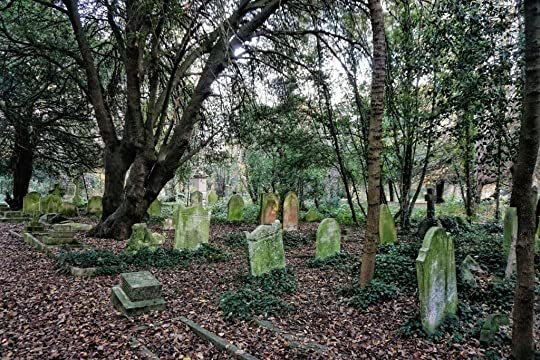
Therefore are feasts so solemn and so rare,Cemetery in Barnes: A Novel tells the story of an unnamed literary translator and begins:
Since, seldom coming in the long year set,
Like stones of worth they thinly placed are,
Or captain jewels in the carcanet.
In an age teased by post-Modern relativism and post-millennial uncertainty, where literary value sometimes plays second fiddle to the demon profit and that other demon of ephemeral political imperatives, Carcanet takes its bearing from Modernism. It bases its activities on the best practice of the last century, during which great lists were forged -- some of which did not survive as independents into the changing twenty-first century.
(from https://www.carcanet.co.uk/cgi-bin/sc...)
What is uncanny here is that the novel is based on the short story Steps about the same unnamed translator, in which Paris, Wales and fantasies of drowning all feature, that was first published in 1984.The novel ends with our unnamed translator again recalling his fantasies of drowning:
In the one life are many lives. Alternative lives. Some are lived and others imagined. That is the absurdity of biographies he would say, of novels. They never take account of the alternative lives casting their shadows over us as we move slowly, as though in a dream, from birth to maturity to death
Sometimes you also went to concerts, his wife - his second wife - would interrupt him. And he seemed to need these interruptions, was adept at incorporating them into his discourse, using them as stepping stones to the development of his theme.
You are dead, oh my life, and I breathe on?
You have left me
Never to return and I remain
No…
“By talking to his absent friends, du Bellay begins to understand who he is. Without them there would have been no Regrets. Without them he would have remained mute. For you never talk to yourself. You have to have another to talk to, even when you are alone”
“Unlike later opera composers, Monteverdi did not pause and repeat himself for emphasis but let his music, like life itself, move on”
One sprouts so many lives, he would say, and look at her and smile. One is a murderer. One an incendiary. One a suicide. One lives in London. One in Paris. One in New York”
“It was the quiet precision in the writing and profound despair in what was being written about that never failed to move him …… despair and love and resignation all yoked together in fourteen lines ..”
"After all, everyone has fantasies. In the one life there are many lives. Alternative lives. Some are lived and others imagined. That is the absurdity of biographies, he would say, of novels. They never take account of the alternative lives casting their shadows over us as we move slowly, as though in a dream, from birth to maturity to death."


