Filipe Stilwell d'Avillez takes us on a fascinating journey into the colourful world of the Portuguese Cup. The book provides a unique window into the footballing culture of a country that lives and breathes the beautiful game, culminating with the Jamor experience when fans gather to sing, drink and feast outside the stadium on cup final day.
The "History of football in x country" books can often tend to get a bit samey - this one on Portuguese football takes the unusual approach of going to a match in each round of the Cup. And, after a faltering start - three times in the opening chapter we're told that Angrense are from the Azores, the author hopes the first round draw won't be in the Azores as he can't afford to go and that the second round draw won't clash with work (but we don't care), and even the name of the book changes from cover to frontispiece (is it One Thousand Miles from Jamor or One Thousand Miles to Jamor?) - it actually settles down into a very valid approach.
The author's initial plan is to pick the team furthest from Lisbon (an Azorean team who conveniently end up playing away against the club closest to the author) and follow the winners all the way to the Cup final. He abandons this half-way through to pick ties of interest instead - again better editing might have made this seem less jarring - but what falls out of it is small clubs in the first round, and progressively bigger clubs through the rounds until we get to the big three in the semis and the final.
Either the idea of picking a tie of interest is more solid than trusting to the luck of the draw, or there's plenty of other interesting stories out there to cover, but the clubs featured are strong from the off. The first round tie is Graciosa from the Azores, whose local island league has been temporarily disbanded due to club being promoted to different levels in the Portuguese pyramid, against Casa Pia, who draw their players and fans from a boarding school for orphans who were once Portugal's strongest side and whose alumni founded Benfica. Graciosa are in the localised fourth tier, Casa Pia are in the regionalised third tier. Graciosa get a €10k grant for their youth academy while their island rivals Maritimo Graciosa decline that money so they can buy in outsiders instead; Casa Pia are managed by a rookie manager called Ruben Amorim (obviously noted here just as the former Benfica player). It's an obscure game - with no online coverage at all, a Graciosa fan at the game gets a call from the island looking for updates and says they're 2-0 up but under pressure; they're actually 6-0 down, but the fan says "For the next 10 minutes, the island will be on fire"
In round 3, Casa Pia play Azorean side Angrense (of the Azores) and win 2-1 - but d'Avilez uses the chance to delve into Cup history, noting the 1967 Cup tie between Angrese and Benfica; when Benfica were unable to travel to the Azores for the game, they asked if the Azorean side would be so kind as to drop out of the tournament, and Benfica would send a full team for a friendly as compensation. And both of these things happened.
The fourth round tie is top flight Tondela against local side Vale Formosa, who had already been knocked out twice. After losing their opening tie 5-0 after extra time, they were one of 22 first round losers to be in the second round draw to make up numbers; they lost 3-0 to Uniao Leiria, who were kicked out for fielding an ineligible player.
In the quarter-finals, it's Braga against unlikely holders Desportivo das Aves, playing only their sixth top flight campaign - they were maybe helped by the infamous incident the previous week when 40 fans of Cup final opponents Sporting invaded their own team's dressing room and attacked their own players. "Win the Cup and be relegated? Where do I sign?", one Aves fan says. They don't even mind that they never played in Europe because they didn't submit their licence application on time.
It's Benfica v Sporting in the two-leg semi, and plenty of club rivalry (Jorge Jesus leaving Benfica after six successful years in charge and going straight to Sporting is one highlight, as is Benfica's women's team, set up when Sporting started winning trophies, scoring 406 goals in their debut season in the Portuguese second tier, with Darlene top scorer on 103) and inter-family rivalry - partners who support either team, large families where one black sheep supports a different team to the rest of his family)
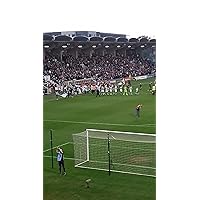
The final is Sporting v Porto in the Jamor, the Portuguese national stadium, a pleasingly anachronistic venue with no roof and overlooked by trees from the forest it's located in. The day is presented as a celebration of football, with a good atmosphere and fans intermingling, many of whom don't have tickets but want to experience the atmosphere and watch the game on big screens in pop-up bars outside. d'Avillez suggests the Cup Final is often a good game because many players are playing their last game in Portugal and can relax with a big move already sealed (Ruben Dias, Joao Felix and Bruno Fernandes are just some of the up-and-coming names encountered in the Cup run)
We also touch on unnecessary Euro 2004 stadia (Leiria), the frustration of fans outside the top three at the excessive coverage the top three get, the changing demographics which see many fans in smaller cities now supporting the top three rather than their local team, weird things on club crests (Leixoes' cricket bat and tennis racket), obsessive media coverage (three daily sports papers needing to manufacture controversy to keep going) and the big three offering prostitutes to referees or hacking each others' servers.
All in all, a surprisingly enjoyable trip through the country.
I saw somebody enjoying this on Twitter, thought I don't know a lot about Portuguese football, and then flew through it over a weekend. The photographs in the last chapter seemed pretty poignant given that supporters can't currently attend football, but damned colourful, too.