

What do you think?

Tarte Tatin
Further adventures on life in a small French town from Susan Loomis, cookery book writer and author of On Rue Tatin.On Rue Tatin was a delightful discovery, and every reader asked for more. The life on Rue Tatin seemed like a dream fulfilled.Now in Tarte Tatin, Susan Loomis shares with us how she, her husband and two children settled into life in a small French town, learnt about their neighbours and how to be accepted as inhabitants of the town. With her son going to a French school and her husband finding work in the town, Susan Loomis discovers the joys of the French lifestyle the markets and the food in particular but also some of the difficulties, particularly for those who are not born French.The creation of the long dreamt-of cookery school is a story of great appeal everyone who has ever thought of starting their own small business will enjoy the ups and downs of their enterprise, and long to go to Rue Tatin.
312 pages, Hardcover
First published July 1, 2003
Ratings & Reviews
Friends & Following
Create a free account to discover what your friends think of this book!
Community Reviews
Displaying 1 - 16 of 16 reviews

January 26, 2017
Sometimes, I cannot hold my tongue.
When I started to read this book, I came across a review on goodreads. First, it revealed that Susan and her husband, Michael, had divorced since the book was published.
This disgruntled me, as it was a bit of a spoiler.
But, then, the rest of the review really chapped me.
Now, I don't know Susan, but I read this book, after reading this review, and found that I could not DISagree with the review more.
[ The goodread stranger's review is below, in quotes, my comments are beneath the quotes.]
"I read this book having lived in France and the US, both foreign countries for me and I speak both languages."
That is swell for you.
"The book was really quite insufferable at times - it is an extended diary with a few themes corresponding to the author's preoccupations, and very much like 'On Rue Tatin' it lacks a narrative structure, or any recurrent themes or plot resolution."
The book is NOT literature. As you said, it is more like a diary. The book is about this author's life. Since the author is a professional cook and journalist her "preoccupation" with cooking and building a home in order to host cooking classes seems like a logical "theme" to me. Since, again, the book is based on just a couple of years of the author's life [maybe not even that], and the author did not die, the only "resolution" in the "plot" of her existence would be to solve problems...as she did with neighbors and teachers, or with the remodeling of her home, etc.
"The most annoying feature was the painstaking account of her husband building her kitchen in their restored home - no picture or plan to help the reader visualise what was going on, and much too complex as a result."
Her first book about her home on Rue Tatin created the momentum to again mention the house in this "sequel", especially since starting a cooking school in her home kitchen was an important focus during this time of her life. So, of course, she needed the reader to know the painstaking process of building this portion of the house. If you read the first book, you would know how difficult it was for them to get the materials and permits necessary to remodel a home in France. It made sense to bring this up in her follow-up book. The book does not have photos because most books written for adults with narrative prose, do not. If you want to see photos of the completed kitchen, they are online.
"Loomis is a good cook I am sure, but I found the text uncritical of her own views and opinions, and self-righteous about other people - the French school system, babysitters and nannies, market salespeople, neighbours, attitudes of the French in general. As someone who has lived in both cultures, I would say this is not 'done' - it is possible from the narrative to identify those people and those places."
This book was written PRE-Facebook status.
What does that mean?
It means that there was a time when authors actually said, in detail, what they were really experiencing in the world. They did not sugar coat it to make their lives or the world look good, when, in fact, it was not.
What would be the purpose of writing a book, as a journalist [ which she is trained as], if you are not honest? And what is a book about your own life, if it does not reflect YOUR thoughts and opinions about your experiences?
I did not buy this book to hear anyone else's opinions BUT those of Susan Loomis.
Her friends and neighbors know what she does for a living [except maybe those people who thought she was in the CIA, but I thought that was cleared up in the first book].
She is a writer. Of course she is going to write about her friends!
I have a friend who is a writer, and if I end up in a book she might write in the future, it's a risk I will take for interacting with her.
If writing about people and places is just not "done", what is Facebook and Twitter all about? It's all people do anymore.
And what kind of weirdo memorizes every person in a nonfiction book they read anyway? ...It's not like I would go and hunt them down.
"We can certainly forgive an 'American abroad is devastated by 9-11' section, but sanctimonious nationalism and nostalgia for America-past and its values I could live without (from somebody who has lived in France since the 1990s, yet says she is still not integrated). Your would not get this from a British writer, say - they would slag off their own culture - none of that here."
If I want to know about a particular British person's integration into another culture and nation, I'll read their book. Susan Loomis said in the book that she is a straightforward person. Her friends get her, and that is all that matters. Let her be honest about her love of America, as a French author, who has had to live in America might be honest about their love of France. Gee whiz.
"There are one or two glimmerings of dissent with her husband in this book (he wants his private space...) and as any web search will reveal, they later divorced. Seems she kept the house, which he largely restored, and her current website makes no mention of him. Remarkably little is learned about either of them in this book."
I wonder if you speed read.
I learned that Susan is an honest, no-nonsense, hard working woman, who has a passion for cooking, and a deep respect for the nation, France, that champions her profession and adoration for well-made food with ingredients from local farms. I learned she is a caring mother and that she and her husband worked hard at a mutual dream. I learned her husband is a resourceful man, who supported his wife in her dreams, and who loves his children with a passion.
I wonder, in fact, if we even read the same book.
When I started to read this book, I came across a review on goodreads. First, it revealed that Susan and her husband, Michael, had divorced since the book was published.
This disgruntled me, as it was a bit of a spoiler.
But, then, the rest of the review really chapped me.
Now, I don't know Susan, but I read this book, after reading this review, and found that I could not DISagree with the review more.
[ The goodread stranger's review is below, in quotes, my comments are beneath the quotes.]
"I read this book having lived in France and the US, both foreign countries for me and I speak both languages."
That is swell for you.
"The book was really quite insufferable at times - it is an extended diary with a few themes corresponding to the author's preoccupations, and very much like 'On Rue Tatin' it lacks a narrative structure, or any recurrent themes or plot resolution."
The book is NOT literature. As you said, it is more like a diary. The book is about this author's life. Since the author is a professional cook and journalist her "preoccupation" with cooking and building a home in order to host cooking classes seems like a logical "theme" to me. Since, again, the book is based on just a couple of years of the author's life [maybe not even that], and the author did not die, the only "resolution" in the "plot" of her existence would be to solve problems...as she did with neighbors and teachers, or with the remodeling of her home, etc.
"The most annoying feature was the painstaking account of her husband building her kitchen in their restored home - no picture or plan to help the reader visualise what was going on, and much too complex as a result."
Her first book about her home on Rue Tatin created the momentum to again mention the house in this "sequel", especially since starting a cooking school in her home kitchen was an important focus during this time of her life. So, of course, she needed the reader to know the painstaking process of building this portion of the house. If you read the first book, you would know how difficult it was for them to get the materials and permits necessary to remodel a home in France. It made sense to bring this up in her follow-up book. The book does not have photos because most books written for adults with narrative prose, do not. If you want to see photos of the completed kitchen, they are online.
"Loomis is a good cook I am sure, but I found the text uncritical of her own views and opinions, and self-righteous about other people - the French school system, babysitters and nannies, market salespeople, neighbours, attitudes of the French in general. As someone who has lived in both cultures, I would say this is not 'done' - it is possible from the narrative to identify those people and those places."
This book was written PRE-Facebook status.
What does that mean?
It means that there was a time when authors actually said, in detail, what they were really experiencing in the world. They did not sugar coat it to make their lives or the world look good, when, in fact, it was not.
What would be the purpose of writing a book, as a journalist [ which she is trained as], if you are not honest? And what is a book about your own life, if it does not reflect YOUR thoughts and opinions about your experiences?
I did not buy this book to hear anyone else's opinions BUT those of Susan Loomis.
Her friends and neighbors know what she does for a living [except maybe those people who thought she was in the CIA, but I thought that was cleared up in the first book].
She is a writer. Of course she is going to write about her friends!
I have a friend who is a writer, and if I end up in a book she might write in the future, it's a risk I will take for interacting with her.
If writing about people and places is just not "done", what is Facebook and Twitter all about? It's all people do anymore.
And what kind of weirdo memorizes every person in a nonfiction book they read anyway? ...It's not like I would go and hunt them down.
"We can certainly forgive an 'American abroad is devastated by 9-11' section, but sanctimonious nationalism and nostalgia for America-past and its values I could live without (from somebody who has lived in France since the 1990s, yet says she is still not integrated). Your would not get this from a British writer, say - they would slag off their own culture - none of that here."
If I want to know about a particular British person's integration into another culture and nation, I'll read their book. Susan Loomis said in the book that she is a straightforward person. Her friends get her, and that is all that matters. Let her be honest about her love of America, as a French author, who has had to live in America might be honest about their love of France. Gee whiz.
"There are one or two glimmerings of dissent with her husband in this book (he wants his private space...) and as any web search will reveal, they later divorced. Seems she kept the house, which he largely restored, and her current website makes no mention of him. Remarkably little is learned about either of them in this book."
I wonder if you speed read.
I learned that Susan is an honest, no-nonsense, hard working woman, who has a passion for cooking, and a deep respect for the nation, France, that champions her profession and adoration for well-made food with ingredients from local farms. I learned she is a caring mother and that she and her husband worked hard at a mutual dream. I learned her husband is a resourceful man, who supported his wife in her dreams, and who loves his children with a passion.
I wonder, in fact, if we even read the same book.
April 21, 2020
This memoir is truly delectable. The descriptions of food and atmosphere of Louviers, France made me want to build a professional kitchen in a small foodie village and wile away my time cooking and hosting. This was such a welcome piece of escapism, and is excellent for a light read.
The only problem I had, and this is more a reflection on the author, is the very ‘America is best’ viewpoint in certain sections of the book. Certainly not all; the author moved away from the USA to settle her family in France for reasons! However, in areas such as the descriptions of French schools and Driving tests, I feel as if the author took one look and went ‘too complicated and weird, US system is better’. A very small critique, and perhaps this is more on the author herself than the books account - which otherwise I enjoyed.
The only problem I had, and this is more a reflection on the author, is the very ‘America is best’ viewpoint in certain sections of the book. Certainly not all; the author moved away from the USA to settle her family in France for reasons! However, in areas such as the descriptions of French schools and Driving tests, I feel as if the author took one look and went ‘too complicated and weird, US system is better’. A very small critique, and perhaps this is more on the author herself than the books account - which otherwise I enjoyed.
April 5, 2018
I found this book amongst the stacks of friendly reading at our friend's holiday home in France. It looked like light reading - one expat's insight into France, with the added bonus of being about food. What could be better for an American-English expat on holiday, right? No. Not right. There is food here, certainly. The book is at its best when the author begins waxing eloquent on food markets and meals she has prepared. And indeed, I liked the concept for the book, intermingling the pulse of good food with observations about daily French life. But in the end, the reality of this book fell short of its ideal. This was not a book of astute, humorous, or insightful observations. This was a small-minded woman's snarky diary. At too many points in the book I paused and asked myself, "who publishes this kind of stuff?" I see from the internet that she still lives in the same village/town in Northern France, in her ancient home, painstakingly restored by her artist ex-husband. I'm surprised the inhabitants of the village have not up and ousted her, given her often blunt and unkind observations about them. It hurt to read this book and know these were real people she described. Did she assume the book would not be published in French and she could therefore get away with it? Yes, of course other books do such things - typically fiction - and even then those authors are called out when unfavourable descriptions of characters hit too close to home. Here, there was no artistic embellishment, just the kind of spiteful, irritable observations that most of do actually make about others, but do so in our minds, or behind closed doors. And that is where Susan reveals that she actually struggles at her core to adapt to France. As an American expat, I get it. In America we are hopelessly open about our opinions. Even in America, however, we do not have free license to slag off others. But in many countries across Europe (not all!), tact and privacy are valued. There are strict unwritten mores about when and how to express one's opinions. Susan clearly hasn't gotten the memo. She is hopelessly cruel. And no, following up vociferous complaints about somebody's weaknesses with a weak accolade to their character does not make all of your negativity okay. This, in combination with her incessant bragging about her house, her dinner parties, her incredible friends, and her clearly advanced children adds to up to a mountain of annoyingness. The book reads less like a diary, and more like we are her personal Narcissistic reflecting pool. I just hope she is better in person...
May 19, 2014
I read this book having lived in France and the US, both foreign countries for me and I speak both languages. The book was really quite insufferable at times - it is an extended diary with a few themes corresponding to the author's preoccupations, and very much like 'On Rue Tatin' it lacks a narrative structure, or any recurrent themes or plot resolution.
The most annoying feature was the painstaking account of her husband building her kitchen in their restored home - no picture or plan to help the reader visualise what was going on, and much too complex as a result.
Loomis is a good cook I am sure, but I found the text uncritical of her own views and opinions, and self-righteous about other people - the French school system, babysitters and nannies, market salespeople, neighbours, attitudes of the French in general. As someone who has lived in both cultures, I would say this is not 'done' - it is possible from the narrative to identify those people and those places.
We can certainly forgive an 'American abroad is devastated by 9-11' section, but sanctimonious nationalism and nostalgia for America-past and its values I could live without (from somebody who has lived in France since the 1990s, yet says she is still not integrated). Your would not get this from a British writer, say - they would slag off their own culture - none of that here.
There are one or two glimmerings of dissent with her husband in this book (he wants his private space...) and as any web search will reveal, they later divorced. Seems she kept the house, which he largely restored, and her current website makes no mention of him. Remarkably little is learned about either of them in this book. The house: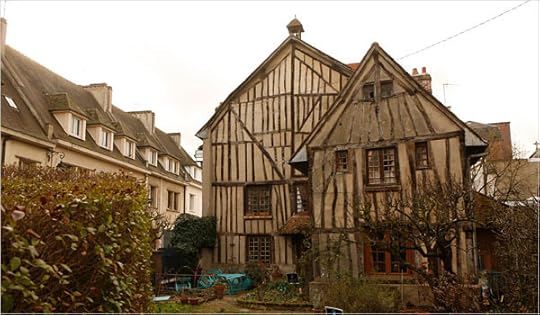
The most annoying feature was the painstaking account of her husband building her kitchen in their restored home - no picture or plan to help the reader visualise what was going on, and much too complex as a result.
Loomis is a good cook I am sure, but I found the text uncritical of her own views and opinions, and self-righteous about other people - the French school system, babysitters and nannies, market salespeople, neighbours, attitudes of the French in general. As someone who has lived in both cultures, I would say this is not 'done' - it is possible from the narrative to identify those people and those places.
We can certainly forgive an 'American abroad is devastated by 9-11' section, but sanctimonious nationalism and nostalgia for America-past and its values I could live without (from somebody who has lived in France since the 1990s, yet says she is still not integrated). Your would not get this from a British writer, say - they would slag off their own culture - none of that here.
There are one or two glimmerings of dissent with her husband in this book (he wants his private space...) and as any web search will reveal, they later divorced. Seems she kept the house, which he largely restored, and her current website makes no mention of him. Remarkably little is learned about either of them in this book. The house:
July 4, 2014
Vreselijk. Slecht geschreven, zelfingenomen schrijfster.
August 20, 2024
I enjoyed it.
February 14, 2026
Good to have a sequel and follow up how Susan progressed with living in France and her family. Would like to read a follow up book now as these books were written over 20 years ago

January 17, 2014
As part of our holiday to Brittany, France, we planned to spend several days in Normandy, so when I spotted Tarte Tatin on the library shelf it seemed a perfect book to take with me to get a flavour of the region.
This second book, I discovered, follows on from Loomis’ first book, On Rue Tatin, which I am now hoping to track down and read as well. On Rue Tatin tells of how cook and writer Susan Loomis and her artist husband moved from the USA to Normandy and settled into an ancient property in need of renovation in the village of Louviers. (The village is close to the cathedral city of Rouen, famed in particular for its connections with Joan of Arc.)
Tarte Tatin has plenty of local colour and character in its tales of village life, with tales of shopping in the local market and enjoyable meals shared with a jolly sounding group of friends. With the family, now numbering four, having settled into the community and putting down roots, the dream to open a cookery school finally becomes reality.
The book is filled with food related information with plenty of recipes to try out, most feeling French but with an American twist. On return from holiday I made Loomis’ Raw Beetroot Salad, which I have already posted: an extremely simple recipe which was a great success. There were plenty of other recipes that caught my eye and which I hope to eventually try out. Corn Bread, Allspice Ice Cream, Ginger Madeleines, Rosemary Baked Potatoes, Three Nut Biscotti and Winter Fruit Tarte Tatin caught my eye in particular.
Susan Loomis has also written recipe books, including Farmhouse Cookbook, French Farmhouse Cookbook and Italian Farmhouse Cookbook.
This second book, I discovered, follows on from Loomis’ first book, On Rue Tatin, which I am now hoping to track down and read as well. On Rue Tatin tells of how cook and writer Susan Loomis and her artist husband moved from the USA to Normandy and settled into an ancient property in need of renovation in the village of Louviers. (The village is close to the cathedral city of Rouen, famed in particular for its connections with Joan of Arc.)
Tarte Tatin has plenty of local colour and character in its tales of village life, with tales of shopping in the local market and enjoyable meals shared with a jolly sounding group of friends. With the family, now numbering four, having settled into the community and putting down roots, the dream to open a cookery school finally becomes reality.
The book is filled with food related information with plenty of recipes to try out, most feeling French but with an American twist. On return from holiday I made Loomis’ Raw Beetroot Salad, which I have already posted: an extremely simple recipe which was a great success. There were plenty of other recipes that caught my eye and which I hope to eventually try out. Corn Bread, Allspice Ice Cream, Ginger Madeleines, Rosemary Baked Potatoes, Three Nut Biscotti and Winter Fruit Tarte Tatin caught my eye in particular.
Susan Loomis has also written recipe books, including Farmhouse Cookbook, French Farmhouse Cookbook and Italian Farmhouse Cookbook.

November 25, 2014
I agree with Harrowagenda21. I bought this book today to start reading in my lunch break. There is just something odiously complacent about this woman. She also raves about foie gras, displaying a total lack of concern or compassion for animals. I find her frequent references to "being American" rather sad. I have American cousins and friends and they don't come across like this at all. She is probably perfectly nice in person but I was repelled by the way she came across and didn't want to read any more of her book.

December 5, 2011
I really enjoyed reading about the author's life in France with her family as she develops a cooking school in a small town not far from Paris. Her descriptions in each chapter enable the reader to visualise the town, it's inhabitants, it's cycleways and other elements. Not to forget the food descriptions which make the preparations look so easy.
As an American, her perspective on this subject is different, and this lends more interest to her storytelling.
As an American, her perspective on this subject is different, and this lends more interest to her storytelling.

March 16, 2009
The sequel to On Rue Tatin, as interesting as the first. More about living, working, and raising a family in Louviers, France, including the establishment of the author's cooking school and more great recipes.

July 26, 2009
Susan Loomis and family move back to Louviers, rural France and set up a cooking school. Lots of gorgeous recipes included!
Easy read, great insight into rural life in France, lots of tips and simple French cuisine included.
Easy read, great insight into rural life in France, lots of tips and simple French cuisine included.
Read
April 1, 2007Very good, though not as good as the first one (but that is probably because I love reading about renovations and the first book had a lot more of that).

July 29, 2011
combining stories with recipes--yum
January 29, 2016
I read this book when we moved out to France and really enjoyed it. I still use the recipe for Scourtins today (2015).

Displaying 1 - 16 of 16 reviews