“What passing bells for those who die as cattle? Only the monstrous anger of the guns.” —Wilfred Owen, ‘Anthem for Doomed Youth’ On 28 June 1914, two pistol shots shattered the peace of a sunny afternoon in Sarajevo. Those shots reverberated around Europe and shattered the peace of the whole world. This was the beginning of the Great Slaughter. Could it have been avoided? Alan Woods uses the method of Marxism to answer this question. He explains that, actually, whilst the individual can often play a role in history, to explain events such as wars, you must look at deeper causes. As well as dealing with the origin of the war, Woods traces the conflict through its development, looking at the role of all the major actors, and their imperialist aims. He shows how, in the midst of the despair of the trenches and the home front, a new consciousness was formed. He also makes the case that it was the German Revolution that brought the war to an end, and how a revolutionary wave swept across Europe. The book also looks at the Treaty of Versailles and how the victorious powers imposed the deal on not just Germany but the rest of Europe. Given the amount of nationalistic mystification from all sides about the First World War, a history of the subject from the standpoint of the world working class is essential.
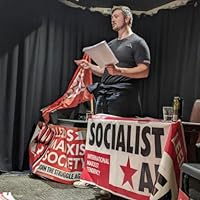
Alan Woods is a Trotskyist political theorist. He is one of the leading members of the British group Socialist Appeal as well as its parent group, the International Marxist Tendency (IMT). He is political editor of the IMT's In Defence of Marxism website.
Woods supported the Militant tendency within the UK Labour Party until the early 1990s, when he and Ted Grant were expelled from the tendency and founded the Committee for a Marxist International (soon renamed International Marxist Tendency) in 1992. They continued with the policy of entryism into the Labour Party.
Woods has been particularly vocal in his support for the Bolivarian Revolution in Venezuela, and has repeatedly met with the socialist Venezuelan president Hugo Chávez, leading to speculation he was a close political adviser.
Big robbers and small robbers trying to screw each other over while sending millions to die against other robbers' victims for a chance at the spoils. Each time a new chapter started about a different country the story was pretty much the same, based on the "rank" of robber they were. If they're a big one - they had to defend their colonial interests but they also had to side with big robbers, who are their opponent in looting the same colonies, in order to prevent other big robbers from getting too big in Europe. If they're a small robber - they still have imperialist ambitions (Italian bourgeois members wishing to restore the Roman Empire LMAO that gave me a good laugh) and they ally with whoever can give, or rather - promise but not really make good on it later, a bigger portion of stolen territory from the losers.
Chapter 12 showing us an account of what it was like in the trenches was what I thought was missing before that point and I'm glad that Barbusse's seemingly excellent novel is the way to present this to us. The endless waiting, "luxury" items like matchboxes being more valuable than medals, hopelessness, death. Their class consciousness seemed to be on point, but at what cost: “There is little or no hatred for the Germans, who, they imagine, are slaves and cannon-fodder just like themselves. But there is a burning hatred of the rich, the parasites, the speculators and those who avoid being drafted through money and connections.”
“The conclusion becomes inescapable: here are two worlds inhabited by two classes of people: those who fight wars and those who profit by them; those who work and those who enjoy the fruits of the labour of others; those who create and those who exploit”
I will be giving "Le Feu" a read in the future, most definitely.
The epilogue urges us to be optimistic at the prospect of an upsurge in the class war. I find it very hard to sustain the belief that I will catch a glimpse at a better world in my lifetime, but I will not reject the opportunity to work for it so that my children can.
This is in my opinion the best Alan Woods book so far. Its well structured and balanced, engaging and has a sober, historical materialist approach to war. Nevertheless it is touching, especially when including the writings of comrade Barbusse. Alan is irreconcilably pouring scorn over any legitimation of the war or nationalist sentiments and writing strictly from a class perspective, which has given me an insight, bourgeois historians weren't able to give me so far. This book immensely contrasts with the narrative that the winners established (the winning bourgeoisie) and also provides a broad understanding of the imperialist effects of WWI on other parts of the world that are often left out of the western point of view.
An exceptional collection of essays that comprehensively covers many aspects of the war from the material and economic conditions that set up the world for a spiral into war to painting a gritty, hellish picture of the horrors of war.
It dispells the supposedly mysterious causes and developments of the war, and establishes a clear culprit: Capitalist Imperialism and the arrogant, decaying propertied class at the helm. Does a great job of laying out the blunders and utter incompetence of the ruling class (particularly “enjoyed” how Churchill makes a fool of himself militarily). Clearly establishes the culprits of escalations, and the opportunistic nature of imperialists (particularly young and ambitious new (at the time) players like Italy and Japan). The chapter on the carving out of the corpse of the Ottoman Empire and the repercussions that can still be felt in the Middle East today.
The last two chapters and the Epilogue end on a good note by highlighting and detailing the role of (both potential and realized) revolutions of the masses in ending the conflict (“This bloody conflict was brought to an end by revolution — a fact that has been buried under a mountain of myths, pacifist sentimentality, and lying patriotic propaganda”) and in particular the key role of the Russian Revolution in stopping the slaughter. The epilogue ends on a great note which I share here:
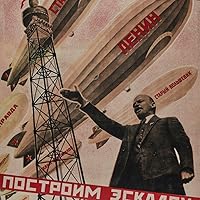
“Lenin said that capitalism is horror without end. The bloody convulsions that are spreading throughout the world right now show that he was right. All these horrors are the expression of a socio-economic system that has exhausted itself and is ripe for overthrow. Middle-class moralists weep and wail about these horrors, but theyhave no idea what the causes are, still less the solution. Pacifists and moralists point to the symptoms but not the underlying cause, which lies in a diseased social system that has outlived its historical role. … …Not world war, but an unprecedented upsurge in the class war is the perspective for the period into which we have entered. The horrors we see before us are only the outward symptoms of the death agony of capitalism. But they are also the birth pangs of a new society that is fighting to be born. It is our task to cut short this pain and hasten the birth of a new and genuinely human society”.
The title of this book is bold and certainly caught my eye, but unfortunately it doesn’t really deliver. The first half reads like any other albeit revisionist breakdown of WW1, and it is not until the second half that the author introduces some evidence of the main thesis.
Although I wholly agree with the view that the First World War was a capitalist war of imperialistic aggression and protection, the evidence is hotchpotch at first, then drifts into a slight rantish account of working class power.
Overall I think some credit is deserved for tackling a difficult and contentious topic, so three stars for me.
Very readable overview. I don't know much about WWI but I do think it was light on some details, say Japan's role for example. But it's a short book, so what did I expect?
An excellent book written in a typical powerful trotskyist literary style where the most complicated historical and political problems are explained in a very simple way. This book, in conclusion, can be freely called a brief introduction to WW I from a Marxist perspective...