R.D. Laing presented madness as a voyage of discovery that could open out onto a free state of higher consciousness, or hypersanity. But if there is such a thing as hypersanity, then mere sanity is not all it’s cracked up to be, a state of dormancy and dullness with less vital potential even than madness. We could all go mad, in a way we already are, minus the promise. But what if there was another route to hypersanity, one which, compared to madness, was less fearsome, less dangerous, and less damaging? What if, as well as a backdoor way, there was also a royal road strewn with petals and sprayed with perfume?
This is a book about thinking, which, astonishingly, is barely taught in formal education. Our culture mostly equates thinking with logical reasoning, and the first few chapters examine logic, reason, their forms, and their flaws, starting with the basics of argumentation. But thinking is also about much more than logical reasoning, and so the book broadens out to examine concepts such as intelligence, knowledge, and truth, and alternative forms of cognition that our culture tends to overlook and underplay, including intuition, emotion, and imagination.
If Hypersanity fails to live up to its tall promise, it should at least make you into a better thinker. And so you can approach the book as an opportunity to hone your thinking skills, which, in the end, are going to be far more important to your impact and wellbeing than any facts that you could ever learn. As B.F. Skinner once put it, ‘Education is what survives when what has been learnt has been forgotten.’
Dr Neel Burton is a psychiatrist, philosopher, and wine-lover who lives and teaches in Oxford, England. He is a Fellow of Green-Templeton College in the University of Oxford, and the winner of several book prizes including, the feather in his cap, a Best in the World Gourmand Award. His work features regularly in the likes of Aeon and Psychology Today and has been translated into several languages. When he is not reading or writing, or imbibing, he enjoys cooking, gardening, skiing, learning languages, visiting museums and gardens, and travelling, especially to wine regions.
His books include:
- The Meaning of Myth (Ancient Wisdom 1) - Stoic Stories (Ancient Wisdom 2) - The Gang of Three: Socrates, Plato, Aristotle (Ancient Wisdom 3) - The Meaning of Madness (Ataraxia 1) - Hide and Seek: The Psychology of Self-Deception (Ataraxia 2) - Heaven and Hell: The Psychology of the Emotions (Ataraxia 3)
I was pretty sceptical as to what would be involved in this book. It could go one of two ways, either it would confuse me to no end, or it would make sense of a few things. Hypersanity really does make you think and it does help you to focus more. Having suffered from anxiety for several years now, I feel like I'm in a constant battle with my thoughts. I'm not saying that this book is some sort of miracle cure for anxiety but it has definitely helped me to think more positively.
My mind is still spinning from the most excellent content in this book! Despite that I have already read this book, I will have to return to it often in the future re: the difficulty in assimiliating this esoteric material. Clearly, I am not hypersane. I believe that this book is actually a text outlining what the content of an organized, relevant and coherent mind would contain. By the way, those three words (coherent, organized, and relevant) are my go-to short-hand method of judging the quality of something, whether it is spoken, written, graphic, or any other product of human construction.
Years ago, as a pre-teen, I came across a book called "Right Thinking," published, I believe, in 1946 or so. I tried so hard to understand it, as it seemed to me then that right thinking (read: ordered, logical thoughts) would help one get through life. I failed miserably to comprehend the content, despite revisiting it annually for decades. Neel Burton's book takes the same content and makes it abundantly clear. Okay, clearer. It's still a lot of work for most people, I'm sure. I tried to explain why I was so excited about this book to a few colleagues, Ph.D. professors, but they balked.
In this age of postmodernism [gone too far] it relevant more than ever to subscribe to standards of performance, and that we realize that those who have discarded them don't understand their folly. Few professions currently require entrants into that profession to measure up to the stringent standards of just 30 years ago. I suppose too many parents were afraid of disappointing or taxing their offspring, and so fought, along side the children, to rid society of these awful demands. What has resulted is what we see daily in the news: because of the dissipation of standards we are having more airplane crashes; because of the lack of standards ANYTHING qualifies as art. And malaprops are not laughable, but okay (e.g., the FBI executive who announced that even as a certain person was being detained, his home was being raided "contemporaneously." - Instead of "concurrently.") Crap is king.
Of course, this is not a new phenomenon. During the Middle Ages people were apt to think illogically, mindlessly, and it wasn't until the great intellects were recruited to help organize society that things began to make sense. This happened after the fall of the Roman Empire and took centuries to occur. But since we do not look to history for helpful lessons to apply to our present, we need someone to step up to the plate and teach people how to think again. In just a few generations, as a culture, we have stupidized our society. The costliness of the decaying infrastructure of our minds is astronomical.
So why would I say all of the above in relationship to Neel Burton's book? Simply because if one uses the logical processes he's described and presented in the text, one will see the fallacies of living in the manner we are slowly succumbing to. It does take an effort and discipline to teach oneself to think in a logical and orderly manner, especially if one has been undisciplined and lazy for decades. But the payoff is so worth it. His writing style is easy, breezy, and accessable. It's the method and skill to be learned that is difficult.
As for his actual writing, my only complaint is that the first chapter should, logically, clearly define the topic. I read and reread the first chapter, only to have to move on encumbered by my assumptions. After finishing the book, I realized I was 97% on target, but felt resentful (mildly) that I had to plow through this book in order to asssemble the actual meaning. Just describing the use of the word by Laing, or talking about other authors, doesn't clarify and nail down the concept.
Neel Burton's references and notes are worth exploring, and there is an excellent index. This is a book I know I'll be revisiting often, not only because it is difficult to assimilate and retain the content (personally speaking), but because doing so is so gratifying. And if crap is King, this book represents the Emperor.
I liked it so much, a wonderful journey that was really accessible! The only thing I have to say is I wish it was waaay longer and I wish it had a second book that was more technical? Idk I feel like I just read the start of something.
The book didn’t grab me right away but I continued reading and soon became intrigued. Now I find myself thinking about my thinking and hope that the tips on improving memory really work.
An introduction to the world of logic, reasoning, and philosophy (Western). This is one of the books in Burton's ataraxia series. The Greek word ataraxia means a state of calm tranquility and the books in this series are more of a gentle exploration of human existence and our interactions with the world. The word "Hypersanity" is taken from a book "Politics of Experience" by RD Laing where he presents the idea that madness can provide an opportunity for self-discovery to a higher state of consciousness. Just as ancient heroes like Odysseus, Giglamesh, Orpheus travel the underworld and confront their subconscious in the same way every human has the ability to expand their intellectual and human potential if only given the proper nudge and outlook. This book is an introduction into the classical subjects of arguments and classification of various fallacies. The writer gives examples from our world and daily life to identify instances of ad hominem, hurdles in our rational thinking of which I found "intellectualization" particularly interesting, cognitive bias and distortion, etc. The power of language and rhetoric is deftly presented here. How the spoken word is deeply entrenched in reason, intelligence, and wisdom comes out in the author's approachable explanation about certain teachings of Plato and Aristotle among other philosophers. Some paraphrases from Nicomachean Ethics will certainly attract the general readers who are not well-versed in philosophy. The final half of the book slowly builds the ground for scientific philosophy, Popperian falsification, the dissection of truth and reality, and the importance of intuition, emotions, and inspiration in completing the journey of an enriched, self-sufficient life. Burton gives both pros and cons for every topic he has chosen which makes it an open-ended thought experiment for the reader. Looking for a short summer read to enrich your thinking? Pick this book up.
While I found this text crossing various shelves on my list, it fits nicely on the 'human flourishing' shelf. I found myself reading this after completing Nietzsche's Thus Spoke Zarathustra: A Book for All and None. The concept of the 'overcoming human' came to mind (Übermensch). Being a fan of the the philosophical giants who reveal various archetypal expressions that resonate in people who have overcoming capacities as well as seen within my self (the sage, rebel, innocent), the concept and various qualities of hypersanity is in my view a way of reflecting and even planning to work at areas for growth with respect to the extensive phenomenon of the human becoming more fully human, i.e., making use a larger part of our possible mental and physical resources. Burton describes various "concepts such as intelligence, knowledge, and truth, and alternative forms of cognition that our culture tends to overlook and underplay, including intuition, emotion, and imagination." They are perhaps what William James called "The Energies of Men" and may well be pointing to a fuller spectrum of human self-consciousness, allowing us to move from childhood (the sentient consciousness), the self-awareness to a consciousness reaching a more expansive knowledge when one knows one knows, when one thinks its time and world and acts on them instead of merely experiencing it.
What an intriguing book! It truly is a book that makes you think about thinking. The earlier sections of the book dissect various aspects of logical and illogical thought. I particularly enjoyed the chapter on fallacies, as these seem to be so rife in today's political climate. But the author does not only attend to the left brain; the right brain is also given analysis and exploration in sections on intuition, wisdom, emotion, inspiration, and even music. I actually wish more time was spent on the more right-brain parts of thinking that aren't usually given such prominence or importance. Throughout the book, the author uses examples to illustrate the various points he is making. I have just recently read another book on thinking, and that book seemed to be more about getting you around to the author’s way of thinking. This book is better and completely different, thank goodness! This author presents his ideas and arguments clearly and succinctly and urges the reader, directly and indirectly, to engage and explore the various ways of thinking, taking no sides or positions that are self-serving. I recommend reading this book in small doses, as it can tax our human minds to think about thought, and I also heartily suggest that you continue to think about thinking when engaging with the world around you. You will understand not only your own thinking better but also the thinking of others who matter in your world.
I received a free copy of this book, but that did not affect my review.
Hypersanity: Thinking Beyond Thinking digs deeper into our thinking patterns and processing. Neel Burton challenges our reasoning and how we come to conclusions. He includes examples that allows you to test the theories he presents and explains how faulty the general public as they come up with conclusions that are off the wall and not even relevant.
Neel Burton begins with simple explanations and builds to deeper thoughts and methods. Hypersanity: Thinking Beyond Thinking is for those who desire a more profound concept of life. His ideas are not what you would hear from an average author, his work is definitely above average. I did not understand everything he discussed in his book, though he presented his theories with a precise explanation. My favorite chapter was on fallacies. I will look deeper into how I read the news and the agenda they are pushing though they don’t line up with the facts.
While the book is a good introduction to rational, systematic thought processes while minimizing certain biases, it has one big flaw: It does not deliver on the title's or the abstract's promise. Unfortunately, it in no way introduces "hyper"sane approaches, but "only" proper rational thinking. I guess though that the title "Very Sane Thinking: Thoughts on Thinking" would not have sounded so interesting.
For anybody with a background in exact sciences and/or knowledge on epistemology, this book will not offer much. For anybody, however, who would like a good introduction into "clean and clear thinking" I can recommend this book.
This book accomplishes a difficult task in bringing together myriad elements of human thought and presenting them in a way that doesn't overwhelm the reader with too much technical jargon. I was particularly impressed by the many instances in which Burton highlighted present-day characters or scenarios from today's news or pop culture, then drew parallels between these examples and old world philosophy. I would absolutely recommend this to anyone interested in the process of human thought.
I don't feel like I learned anything new. The book is well written and ties ideas together neatly, and I enjoyed reading it. But it hasn't made me hyper sane, or enhanced my cognition in new ways.
I was intrigued by the introduction: "...if there is such a thing as hypersanity, the implication is that mere sanity is not all it's cracked up to be, a state of dormancy and dullness with less vital potential even than madness. This I think is most apparent in people's frequently suboptimal—if not frankly inappropriate—responses, both verbal and behavioural, to the world around them." We are also tempted with the question: "...what if there was another route to hypersanity, one which, compared to madness, was less fearsome, less dangerous, and less damaging? What if, as well as a backdoor way, there was also a royal road strewn with petals and sprayed with perfume?"
In retrospect, as I read the introduction closely again, the author suggests that "in a way we [all] already are [mad]," and he refers to the preoccupation with sanity as the "fear of losing our selves, of breaking down...as life, mysterious, magical life, passes us by." For him, then, madness is loosely equated with genius and the ability to be radically honest with ourselves. It seems it can be both creative and destructive. With that assumption, the book's structure makes more sense. There's a series of brief chapters on various topics about thinking, feeling, and cognition. There's an introduction to logic (what makes a "valid" and a "sound" argument) with some critical thinking quizzes; cognitive biases; language, rhetoric, emotion, and so on. It reads like a collection of blog posts. Any one of them could have been developed into a whole book. They do provide opportunities to reflect upon the impressive and quirky cognitive/emotional machinery of our minds.
For me, though, there was a misunderstanding. When I hear references to mental illness, I think of something more specific and pathological and generally undesirable to the one who suffers from it. (Ten years ago, I was displeased by Thomas Szasz's The Myth of Mental Illness because he focused on the people who are often called "the worried well" without acknowledging the existence of people who are more clearly unwell and for whom mental illness is more fact than fiction. Burton, here, doesn't mention Szasz, but he does mention Szasz's contemporary Laing, who was from the same anti-psychiatry school of thought.) Anyway, Burton's chapters on human cognition don't knit together around the phenomena of mental illnesses in the sense of afflictions that may be caused by chemical imbalances or malformed brain structures. The chapters may instead knit together around a looser idea of what it means to be holistically mentally well, in a vague, broad sense, i.e. reasonable, open-minded, behaviorally flexible, and happy.
I got itchy during the first couple chapters, "Arguments" and "Fallacies," as they were too elementary for me (I majored in philosophy) and I had no idea how the author planned to relate them to mental illness. As it turns out, he never did. Ultimately, he conveys that "thinking" can leverage or refer to a lot of different things; we are capable of different modes of thought simultaneously; and we can do so consciously and happily — all of which are certainly true. I don't think, though, that this gets us to any meta-concept of "hypersanity" that straddles or reconciles the concepts of mental illness/wellness.
At the end, we are returned to the part that is potentially the most interesting because it is the most unusual: “…until very recently, most human societies did not mark a strict divide between imagination and belief, or fiction and reality, with each one informing and enriching the other. In fact, it could be argued that, in many important respects, the fiction primed over the reality—and even that this has been, and no doubt still is, one of the hallmarks of Homo sapiens. Today, there are potent pills for people who confuse imaginings and beliefs, but back in the day no one ever thought that life, despite its much harder hardships, might be meaningless—which I think tells us quite a bit about imagination and its uses, and also, incidentally, about mental illness and its causes."
I think the author is suggesting that, once you understand that the human brain works in complex ways, you can lifehack your mind and go into your state of creativity and flow, and then you'll be on the perfumed rosepetal path to "hypersanity" rather than a distressingly maladapted "mentally ill" path to said place. But I don't think that's quite how it works. I don't think that, generally, mad people avoid the unpleasant parts of their madness by adopting a detached, academic perspective on human cognition. In other words, this book might be helpful if you are basically already well and perhaps can be counted among the "worried well," but it doesn't have any practical advice nor worldview-insight for someone dealing with a serious mental illness.
The subject is intriguing, but the promising start gives way to a series of anecdotal chapters and stops there. While each chapter reviews interesting topics surrounding our consciousness, they don't seem to integrate or point the way to the promised path to hypersanity. In its defense, I was already very familiar with most of the facts presented in each chapter. Also, the author admits that his research on the subject is very difficult to pin down to a concise text. As the book explains, language is limited. For people with no prior knowledge of the subjects presented, this book might be very enlightening and, at the very least, will set them on the path to self-awareness and more minded choices, if not hypersanity itself.
Any open minded individual that consciously evolves him/herself would be glad to have read this. It affirms thought patterns that somehow elude most, uncommon yet logical ideas and ways of thinking you may have considered while showing you new avenues you may not have considered yet. Thank you Dr. Neel Burton for redefining what sane is in this insane world. To be sane is to be hypersane if being insane is sane.
This is not a bad book, and I guess if you wanted a bunch of short chapters that try to give a quick high level overview about thinking, intelligence vs wisdom, imagination etc, it's actually a good book. I just got to the end and felt like I didn't get much from it.
This is the second of Neel's books I have read this week. This book has made me think even more than I ever have and I have learned a great deal. A really compelling read.
Considering the name of my business hypersanity books. I say this is well worth the read and discussion with a professional. I love his psychology books.
A book that encourages the reader to identify and challenge habitual ways of thinking. The arguments are made using contemporary examples and turn commonly accepted thought patterns on their head. For a book about the way we think this is an easy and quick read, the ideas are presented in such a way that they are simple to understand and unlike other books on this subject I have read this is jargon free and doesn’t rely on regurgitating research paper after research paper.
I wasn’t sure about this book to begin with. While the content is interesting, it’s presented in a way that can sometimes be difficult to follow (especially if you're less familiar with the subject.) Some of the chapters offer too much condensed information to be able to take it all in, while others only tread lightly over things. The regular use of philosophical quotes also broke up the flow of the text in places. Having reached the end of the book however, I’m glad that I decided to stick with it as it's left me considering the way that I think about things in my own life. I'll probably need to read it again to get the most out of it.
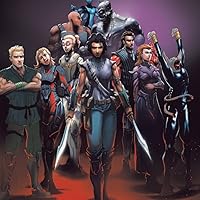
The cover is so interesting, it pulls you right in. I have no shame in admitting that I requested an arc of this book without even reading the description, just on the basis of the cover alone.
Hypersanity is a book about thinking rationally, at least a little more rationally than we currently do. Burton does a good job by explaining the components that he thinks play some role starting with arguments and going all the way to wisdom and intuition.
He tries to include a little bit of his own personality by admitting to intuition in addition to the scientific method. He talks about the five big things that prevent rational thinking. He talks about the ancient philosophers as well as the modern scientists.
The book was well-rounded and included tips on things like improving memory and enhancing creativity.
I give this book 3.5 stars and recommend it.
I received a free copy of this book from NetGalley.
Hypersanity is a book about seeking balance, all other things stripped away. Most of the content was simple, uncomplicated common sense and although there weren't any big revelations to be discovered within for my own opinion - I'm familiar with many of the works and thinkers referenced already, being an avid reader, particularly of philosophical works and the classics, Hypersanity was well written and still an interesting enough read with plenty of food for thought provided.
The book provided me with exactly what I needed, a timely break from the pretentious intellectualism of the current world, where sharing in thought and discussion is more of a pressured competition to impress and a way to prove and be judged on one's 'worth', than the source of joy, pleasure and fulfilment it ought to be. Perhaps humility is not quite dead yet after all.
Similar to another reviewer, the cover art went a long way, as far as drawing me into this book. Thankfully, it is more than just a fun, unusual cover. Much more. It’s a book about thinking, which will change and/or expand upon what it is that you think about thinking, how you think, what you think, and why you think. (Or at least I think it will.). There were a number of points - as I worked my way through this enjoyable, enlightening book - where I thought, “I’m going to want to revisit this part again”, because of how insightful it was. And despite the complexity of much of what is covered, it is presented in very approachable, easily understandable way. I received a free ARC of this book from Netgalley, in exchange for an honest review.
Similar to another reviewer, the cover art went a long way, as far as drawing me into this book. Thankfully, it is more than just a fun, unusual cover. Much more. It’s a book about thinking, which will change and/or expand upon what it is that you think about thinking, how you think, what you think, and why you think. (Or at least I think it will.). There were a number of points - as I worked my way through this enjoyable, enlightening book - where I thought, “I’m going to want to revisit this part again”, because of how insightful it was. And despite the complexity of much of what is covered, it is presented in very approachable, easily understandable way. I received a free ARC of this book from Netgalley, in exchange for an honest review.
The details on cognitive bias and heuristics have been covered by other authors with more rigour and in greater depth. The constant cherry-picking quotes (frequently from ancient Greek philosophers) becomes slightly annoying (hmmm so Plato said backs you up on that does he - what about his objections to poetry and, yes we know paradoxical, linked disdain for metaphor - how does that square with your section on inspiration). In the last analysis this review of modes of thinking rapidly veers off into the well trodden territory of the "New Age" Self-help book.
I love this book! It's simply written, and it succeeds in making you truly think. I wanted to learn how to better engage people in arguments or debates over socio-political issues and reading this was the refresher course I needed. Thank you Netgalley for the eARC. What I do know for sure is that it's not a book to be read in one sitting- you can select a chapter or two to reflect on and this means as a reader you actually get more from the book.
This is a wonderful book thst examines thinking and shows you how to think better. It doesn't just examine the logical aspect but the imaginative as well, among other things. Absolutely wonderful. I highly recommend it if you are at all interested in the science of thought or want to improve your own.
I would like to thank Netgalley and the publisher for providing me with a copy free of charge. This is my honest and unbiased opinion of it.
Interesting but not for everyone. I found it difficult to engage but the concepts are quite good for developing thinking and logic. I think you need to be in a philosophical mood to fully dig in and enjoy.