

What do you think?

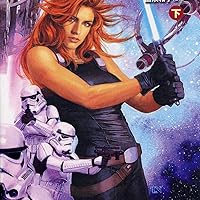
Star Wars: X-Wing #3
The Krytos Trap
They are the galaxy's most elite fighting force. And as the battle against the Empire rages, the X-wing fighters risk life and machine to protect the Rebel Alliance. Now they face their greatest challenge yet—in the face of the deadliest betrayal.
The Rebels have taken Coruscant. But their problems are far from over. A killer virus called Krytos is wiping out the indigenous population, and a counterrevolution is exploding. At the center of the storm is the highly charged treason trial of Rebel hero Tycho Celchu. While agents provacateurs carry out their acts of terrorism, the fledging state can be defended only by the blood and courage of the Rogue Squadron. As the X-wing fighters scramble to save the Rebellion, Corran Horn, given up for dead in Ysanne Isard's inescapable prison, discovers he alone holds the key to freeing Coruscant from the Empire!
The Rebels have taken Coruscant. But their problems are far from over. A killer virus called Krytos is wiping out the indigenous population, and a counterrevolution is exploding. At the center of the storm is the highly charged treason trial of Rebel hero Tycho Celchu. While agents provacateurs carry out their acts of terrorism, the fledging state can be defended only by the blood and courage of the Rogue Squadron. As the X-wing fighters scramble to save the Rebellion, Corran Horn, given up for dead in Ysanne Isard's inescapable prison, discovers he alone holds the key to freeing Coruscant from the Empire!
355 pages, Mass Market Paperback
First published October 1, 1996
Ratings & Reviews
Friends & Following
Create a free account to discover what your friends think of this book!
Community Reviews
Displaying 1 - 30 of 318 reviews

April 11, 2016
It's easy to see why the X-Wing novels are among the best-loved in the Star Wars Expanded Universe. With a convoluted plot and an engaging writing style, this one is just how I like my space operas.

July 23, 2016
2,5 stars.
Ah, Stackpole. You are ridiculous.
You do get a little better, though, I’ll give you that.
In the third instalment of the “Rogue One” series, the New Republic must do battle on many fronts. The Krytos virus, engineered on Ysanne Isard’s orders, is attacking the non-human population of Coruscant, and the death toll is staggering. Simultaneously, Kirtan Loor, secreted away in the city, is striking at the New Republic with his Palpatine Counter-insurgency Front, destroying, among other things, bacta reserves, invaluable in curing the Krytos virus. On a third front Warlord Zsinj is making his bid for power, striking at their convoys.
In other words, this instalment is rife with excitement, and it has been the most enjoyable of Stackpole’s books so far. In earlier instalments, perhaps particularly the first book, he had a tendency of diffusing all tension by basically skipping all the most exciting parts and summarising them after the fact. Thankfully, this is a technique he has (largely) put behind him, so that the reader actually gets to experience things as they are happening.
This book was actually so exciting at times that, had it not been for Stackpole’s continued and obvious ignorance of basic human interaction, I might have been tempted to give this an even three stars.
I’ve expounded on the problems with Stackpole’s characterisation in previous reviews, so I will only summarise here:
1. Stackpole has three descriptive terms for the female physique, and they are “trim”, “lithe” and “slender”. Other female body types do not exist. Women are also consistently described in terms of how much their male colleagues and friends may or may not wish to have sex with them. This gets really irritating after a while.
2. Stackpole does not know how human beings (and/or aliens) relate to one another. The most ridiculous example in this instalment is when (MILD SPOILER) Wedge contemplates asking out Iella Wessiri. He imagines a whole relationship in his head, having only just developed an attraction to her, and when he discovers her husband is alive, he realises that this man he does not know (AT ALL) is obviously a much better fit for her than he could be.
Characters have a sorry tendency of jumping to conclusions in this way, of betraying more knowledge and foresight than they could possibly have at a particular juncture. Stackpole confuses the narrating voice with that of his characters. The narrator can, of course, be omniscient, and can therefore make these kinds of judgments. His characters must, however, travel the slow path if their thoughts and actions are to be considered even remotely believable.
3. Stackpole insists on pairing everyone off and creating a bunch of romantic angles that simply aren’t interesting, largely because he has no skill in writing them. He should stop.
4. Stackpole’s vocabulary and syntax betray that he lacks quite a bit in the English department, and there are parts where I wonder if his writing has actually gone through any kind of editing process.
5. He creates this huuuuuge tense vacuum surrounding the identity of the spy in Rogue Squadron. I’ve known who it is since the first book. Lol.
Ok, this review is already longer than I had intended, and seems very negative. And there is a lot to nitpick at when it comes to Stackpole’s writing, but this book really is better than its predecessors. If Stackpole can just avoid the interpersonal relationshippy stuff in the next instalment, who knows but that he might receive three stars at last?
Ah, Stackpole. You are ridiculous.
You do get a little better, though, I’ll give you that.
In the third instalment of the “Rogue One” series, the New Republic must do battle on many fronts. The Krytos virus, engineered on Ysanne Isard’s orders, is attacking the non-human population of Coruscant, and the death toll is staggering. Simultaneously, Kirtan Loor, secreted away in the city, is striking at the New Republic with his Palpatine Counter-insurgency Front, destroying, among other things, bacta reserves, invaluable in curing the Krytos virus. On a third front Warlord Zsinj is making his bid for power, striking at their convoys.
In other words, this instalment is rife with excitement, and it has been the most enjoyable of Stackpole’s books so far. In earlier instalments, perhaps particularly the first book, he had a tendency of diffusing all tension by basically skipping all the most exciting parts and summarising them after the fact. Thankfully, this is a technique he has (largely) put behind him, so that the reader actually gets to experience things as they are happening.
This book was actually so exciting at times that, had it not been for Stackpole’s continued and obvious ignorance of basic human interaction, I might have been tempted to give this an even three stars.
I’ve expounded on the problems with Stackpole’s characterisation in previous reviews, so I will only summarise here:
1. Stackpole has three descriptive terms for the female physique, and they are “trim”, “lithe” and “slender”. Other female body types do not exist. Women are also consistently described in terms of how much their male colleagues and friends may or may not wish to have sex with them. This gets really irritating after a while.
2. Stackpole does not know how human beings (and/or aliens) relate to one another. The most ridiculous example in this instalment is when (MILD SPOILER) Wedge contemplates asking out Iella Wessiri. He imagines a whole relationship in his head, having only just developed an attraction to her, and when he discovers her husband is alive, he realises that this man he does not know (AT ALL) is obviously a much better fit for her than he could be.
Characters have a sorry tendency of jumping to conclusions in this way, of betraying more knowledge and foresight than they could possibly have at a particular juncture. Stackpole confuses the narrating voice with that of his characters. The narrator can, of course, be omniscient, and can therefore make these kinds of judgments. His characters must, however, travel the slow path if their thoughts and actions are to be considered even remotely believable.
3. Stackpole insists on pairing everyone off and creating a bunch of romantic angles that simply aren’t interesting, largely because he has no skill in writing them. He should stop.
4. Stackpole’s vocabulary and syntax betray that he lacks quite a bit in the English department, and there are parts where I wonder if his writing has actually gone through any kind of editing process.
5. He creates this huuuuuge tense vacuum surrounding the identity of the spy in Rogue Squadron. I’ve known who it is since the first book. Lol.
Ok, this review is already longer than I had intended, and seems very negative. And there is a lot to nitpick at when it comes to Stackpole’s writing, but this book really is better than its predecessors. If Stackpole can just avoid the interpersonal relationshippy stuff in the next instalment, who knows but that he might receive three stars at last?
July 16, 2010
"Great risk is necessary to defeat great evil"
Corran is captured in Isard's feared Lusankya. Tycho Celchu is being convicted of Corran's murder and treason. And the Krytos Virus, a deadly virus that affects only non-humans, threatens to destroy the New Republic. Will Corran return? Will Tycho be released of charges? And can the New Republic get enough bacta to reverse the affects of the virus?
NOTE: Based on audiobook and novel.
I Liked:
This has to be my most favorite of the X-Wing novels. It has everything I love in books: torture, trials, insidious villains, smart plots, and daring heroics!
Firstly, I loved the trial of Tycho Celchu. It was an awesome way of bringing Law & Order into Star Wars and to show off Nawara Ven's skills as an attorney. Plus, we don't know...maybe Tycho *is* the bad guy!
Wedge and Iella have a nice little romance blossoming, one that puts to shame the "romance" between Wedge and Qui Xux. I thought it was a very interesting development, how Iella was married and how he returned.
Corran's capture on Lusankya was also very well done. I've read some bad torture sequences or ones that just don't have me buying it, but this one was interesting. We learn more about Corran and see how he really knows nothing of importance (something that made me chuckle: too often, an author tends to make his/her pet character the best at everything, so this is one thing that Corran lacks). I loved Corran's escape, the reintroduction of Jan Dodonna, and how Corran learns about his Jedi Medallion. Stackpole adds to the Jedi lore, and I thought he did a great job. Sure, it "conflicts" with recent materials, but how was Stackpole supposed to know that back in 1996?
Stackpole also makes some really great, memorable villains. Kirtan Loor is a favorite, obviously, and I liked how he gets himself worked into a corner. Moff Flurry Vorru is really getting interesting in my eyes, starting out ingratiating himself to the New Republic, who freed him, but is slowly worming his way into his own agenda. Even Isard is getting a little more backbone and creepiness. Her releasing of the Krytos Virus to bring down the New Republic is very deft and interesting. This novel is a good example of a well-done bio-weapon.
I Didn't Like:
Lord, this is a hard one.
Dogfights continue to be challenging to work through. The mourning ceremony for Corran was a bit cringe-inducing (random pilot #46886 gets a big, fancy ceremony?).
Dialogue/Sexual Situation/Violence:
Same as the previous.
The Bothan pilot (can't remember her name) has a relationship with Gavin Darklighter. Wedge has feelings for Iella. Erisi has the hots for Corran.
Overall:
This novel is pure brilliance. Great characters, great action, great story. The characters grew and developed, the story handled the well-worn bioweapon/superweapon plot well, and we get to learn more about Jedi! 5 brilliant stars.
Corran is captured in Isard's feared Lusankya. Tycho Celchu is being convicted of Corran's murder and treason. And the Krytos Virus, a deadly virus that affects only non-humans, threatens to destroy the New Republic. Will Corran return? Will Tycho be released of charges? And can the New Republic get enough bacta to reverse the affects of the virus?
NOTE: Based on audiobook and novel.
I Liked:
This has to be my most favorite of the X-Wing novels. It has everything I love in books: torture, trials, insidious villains, smart plots, and daring heroics!
Firstly, I loved the trial of Tycho Celchu. It was an awesome way of bringing Law & Order into Star Wars and to show off Nawara Ven's skills as an attorney. Plus, we don't know...maybe Tycho *is* the bad guy!
Wedge and Iella have a nice little romance blossoming, one that puts to shame the "romance" between Wedge and Qui Xux. I thought it was a very interesting development, how Iella was married and how he returned.
Corran's capture on Lusankya was also very well done. I've read some bad torture sequences or ones that just don't have me buying it, but this one was interesting. We learn more about Corran and see how he really knows nothing of importance (something that made me chuckle: too often, an author tends to make his/her pet character the best at everything, so this is one thing that Corran lacks). I loved Corran's escape, the reintroduction of Jan Dodonna, and how Corran learns about his Jedi Medallion. Stackpole adds to the Jedi lore, and I thought he did a great job. Sure, it "conflicts" with recent materials, but how was Stackpole supposed to know that back in 1996?
Stackpole also makes some really great, memorable villains. Kirtan Loor is a favorite, obviously, and I liked how he gets himself worked into a corner. Moff Flurry Vorru is really getting interesting in my eyes, starting out ingratiating himself to the New Republic, who freed him, but is slowly worming his way into his own agenda. Even Isard is getting a little more backbone and creepiness. Her releasing of the Krytos Virus to bring down the New Republic is very deft and interesting. This novel is a good example of a well-done bio-weapon.
I Didn't Like:
Lord, this is a hard one.
Dogfights continue to be challenging to work through. The mourning ceremony for Corran was a bit cringe-inducing (random pilot #46886 gets a big, fancy ceremony?).
Dialogue/Sexual Situation/Violence:
Same as the previous.
The Bothan pilot (can't remember her name) has a relationship with Gavin Darklighter. Wedge has feelings for Iella. Erisi has the hots for Corran.
Overall:
This novel is pure brilliance. Great characters, great action, great story. The characters grew and developed, the story handled the well-worn bioweapon/superweapon plot well, and we get to learn more about Jedi! 5 brilliant stars.
June 27, 2023
A Random Thought: When things go sideways on Coruscant millions gets crushed in the rubble, I guess?
A very '90s bizarre mix of a courtroom drama and a prison escape adventure, with espionage elements and juuuust enough dogfighting to still qualify as an "X-Wing" book, this one basically serves as a logical endpoint for a lot of the plot points introduced throughout the first 2 books.
A very '90s bizarre mix of a courtroom drama and a prison escape adventure, with espionage elements and juuuust enough dogfighting to still qualify as an "X-Wing" book, this one basically serves as a logical endpoint for a lot of the plot points introduced throughout the first 2 books.

January 5, 2021
Out of the first three X-Wing books, this is the one I enjoyed most during my re-read.
Also, this quote right here is very 2020:
"Kirtan Loor would have been trembling with outrage, but the lethargy of despair had a higher priority."
But.
BUT... (skip this paragraph if you don't enjoy sarcasm and take the fandom too seriously)
"A railing had even been set up to prevent prisoners from accidentally falling[...]"
Really? See, this is the kind of content I don't understand. How can they just let clueless new people take over Star Wars and allow them to introduce things that are completely unrealistic in this world? I mean, everybody, everybody knows there are no railings in Star Wars! With railings, the deaths of countless characters don't make sense in retrospect anymore! Just stop butchering my Star Wars with this kind of stuff!
(Yes, I am still angry about what this fandom has become, thank you for asking. And yes, I am fully aware of the fact that there were railings on the second Death Star. That's part of my point here.)
Back to the review.
In my review of Wedge's Gamble I expressed a wish for the characters to be more fleshed out. Well, this book did exactly that, at least for a lot of them. I enjoyed the mix of action and non-action (or rather, other kind of action), the mix of scenery and the various points of view. The story was fun, entertainingly written, pacing was good - everything I want from my Star Wars books.
There was a bit too much plot armor and convenience in it for me to give it five stars - I don't mind a little of that, this is Star Wars and those people are heroes, after all. But specially Corran Horn was just too much of a Gary Stu to keep my suspension of disbelief going, complete with the "he released a breadth he didn't know he was holding" line.
And I will just leave this quote from New Republic Hero Wedge Antilles' inner monologue here for all the people who complain about how "in the Good Old Days(TM) we didn't need to talk about sexism and racism and all that, so why do we have to do it now?":
"By seeing her as being so seductive and beautiful, and reacting to her on a physiological level, it was very easy for him to forget she was a living, thinking creature. That made it deceptively simple for him to see how the Imperials found objectifying and dehumanizing other races justifiable[...]"
Also, this quote right here is very 2020:
"Kirtan Loor would have been trembling with outrage, but the lethargy of despair had a higher priority."
But.
BUT... (skip this paragraph if you don't enjoy sarcasm and take the fandom too seriously)
"A railing had even been set up to prevent prisoners from accidentally falling[...]"
Really? See, this is the kind of content I don't understand. How can they just let clueless new people take over Star Wars and allow them to introduce things that are completely unrealistic in this world? I mean, everybody, everybody knows there are no railings in Star Wars! With railings, the deaths of countless characters don't make sense in retrospect anymore! Just stop butchering my Star Wars with this kind of stuff!
(Yes, I am still angry about what this fandom has become, thank you for asking. And yes, I am fully aware of the fact that there were railings on the second Death Star. That's part of my point here.)
Back to the review.
In my review of Wedge's Gamble I expressed a wish for the characters to be more fleshed out. Well, this book did exactly that, at least for a lot of them. I enjoyed the mix of action and non-action (or rather, other kind of action), the mix of scenery and the various points of view. The story was fun, entertainingly written, pacing was good - everything I want from my Star Wars books.
There was a bit too much plot armor and convenience in it for me to give it five stars - I don't mind a little of that, this is Star Wars and those people are heroes, after all. But specially Corran Horn was just too much of a Gary Stu to keep my suspension of disbelief going, complete with the "he released a breadth he didn't know he was holding" line.
And I will just leave this quote from New Republic Hero Wedge Antilles' inner monologue here for all the people who complain about how "in the Good Old Days(TM) we didn't need to talk about sexism and racism and all that, so why do we have to do it now?":
"By seeing her as being so seductive and beautiful, and reacting to her on a physiological level, it was very easy for him to forget she was a living, thinking creature. That made it deceptively simple for him to see how the Imperials found objectifying and dehumanizing other races justifiable[...]"

March 17, 2011
The thing that strikes me the most about the expanded universe novels I've been reading since starting this little project is how books in the grand scheme of things, and even on a smaller scale within the context of their own saga, can jump from genre to genre with such amazing frequency. The first novel in the "X-Wing" series was a straight up military adventure story, a sort of Top Gun for Star Wars in many ways. I had anticipated the rest of the novels following a similar structure. The second novel, Wedge's Gamble, took a different turn altogether, playing itself out as a spy/espionage thriller that read in many ways like a James Bond novel set to a sci-fi setting. Once again the series hops genres and this time plays itself as a John Grisham courtroom drama mixed with a little bit of The Great Escape thrown in for good measure. Incidentally, I found it to be the most engaging novel in the series thus far, with the twists and turns of the courtroom drama moving at such a brisk pace and in a manner that invited a great deal of speculation on the part of the reader. At the end of the previous novel, we are left wondering about the guilt of Tycho Celchu's involvement with the supposed death of a Rogue Squadron member, and the revelation that he was captured and not killed by Ysanne Isard in the epilogue of book two does nothing to sway opinion either way, so the court case is handled with the reader not having concrete evidence either way, making the drama around the proceedings all the more potent.
With the secondary plot of the supposedly dead pilot trapped in the infamous Lusankya prison, the tone is evocative of films like The Great Escape, with our rebel pilot having a twinge of Steve McQueen in his character from the get-go, the comparison is more than adequate. His escape attempt, in which we learn that he is in fact descended from Jedi stock could have been considered a bit cliche if not for the fact that hints had been dropped since the first book in the series that this might be the case. There is of course a tendency to want to tie things to the Jedi in the Star Wars universe, and the revelation could have come out like badly written fan fiction if the writer had decided out of the blue to make one of his main characters a Jedi on whim, instead we get a major plot point that informs the climax of the novel and sets up the next installment. The choice of either becoming a Jedi and abandoning Rogue Squadron or remaining with the team and making good on promises made earlier in the narrative becomes the crux of the denouement here and leaves the reader energized to read the next installment, almost knowing that things that have been building over the course of three books and 1,000 pages worth of story will seemingly get a final payoff.
The next book in the series is the last for the author and the saga is taken over by perennial Star Wars writer Aaron Allston for books five through seven, so there is an expectation of closure with The Bacta War. Whether that holds true is yet to be seen, as it could be much as it was with the Republic Commando series and only leads further down the rabbit hole.
With the secondary plot of the supposedly dead pilot trapped in the infamous Lusankya prison, the tone is evocative of films like The Great Escape, with our rebel pilot having a twinge of Steve McQueen in his character from the get-go, the comparison is more than adequate. His escape attempt, in which we learn that he is in fact descended from Jedi stock could have been considered a bit cliche if not for the fact that hints had been dropped since the first book in the series that this might be the case. There is of course a tendency to want to tie things to the Jedi in the Star Wars universe, and the revelation could have come out like badly written fan fiction if the writer had decided out of the blue to make one of his main characters a Jedi on whim, instead we get a major plot point that informs the climax of the novel and sets up the next installment. The choice of either becoming a Jedi and abandoning Rogue Squadron or remaining with the team and making good on promises made earlier in the narrative becomes the crux of the denouement here and leaves the reader energized to read the next installment, almost knowing that things that have been building over the course of three books and 1,000 pages worth of story will seemingly get a final payoff.
The next book in the series is the last for the author and the saga is taken over by perennial Star Wars writer Aaron Allston for books five through seven, so there is an expectation of closure with The Bacta War. Whether that holds true is yet to be seen, as it could be much as it was with the Republic Commando series and only leads further down the rabbit hole.

February 14, 2023
I understand now why they chose to rename the Essential Legends edtion from X-Wing to the Rogue Squadron series. Just as the previous book, X-Wing flying and space combat takes the backseat, giving it more of a political spy thriller vibe. And it worked alot better in this one than in Wedges Gamble.
I have grown to like the Rogue crew alot over the few books and I like a series thats more about normal people and not just about Jedi and Sith. Also with minimal involvement of the normal main characters like Luke, Leia and so on.
Overall I enjoyed this one and I am excited to read whats next in store for the crew.
I have grown to like the Rogue crew alot over the few books and I like a series thats more about normal people and not just about Jedi and Sith. Also with minimal involvement of the normal main characters like Luke, Leia and so on.
Overall I enjoyed this one and I am excited to read whats next in store for the crew.
March 18, 2011
Since when is Admiral Ackbar qualified to rule on trial procedure? "Objection Sustained, the question is a Trap"

March 9, 2024
A 4.5 star out of 5 for a phenomenal book from Stackpole
Book three of the X-Wing series was not a disappointment. Similar to Wedges Gamble, this was much more of a espionage, boots on the ground take and Top Gun in Space but it was far better executed that book two.
We pick up immediately where Wedge’s Gamble left off with the New Republic picking up the pieces from Iceheart releasing the Krytos Virus to the alien population of Coruscant. There is a deal of political tension and racial/species tension due to the virus. We deal with the aftermath of Corran’s “death”, Captain Celchu’s implication in his death and the curing of the fatal disease.
We see a lot of Law and Order in space with Nawara dealing with Celchu’s trial and I actually thought these were some of the more interesting parts of the book, I wish more was written about the trial because it was so engrossing.
Stackpole does a really good job pulling the wool over our eyes that Celchu COULD have been a spy while also intricately laying the ground work for Ersi’s role as the traitor. We also (finally) get the revelation that Corran comes from a line of Jedi and has the potential to be a Jedi, though he declines Luke’s offer to train in order to free Thyferra from Icehearts clutches after she takes over after escaping from Coruscant.
I am very interested in seeing how the New Republics deal with the Rogues disbanding and the impending Bacta War. I am also excited to see if Corran makes good on his promise to rescue Jan. I’m fascinated to learn if Jan is General Jan Dordonna who was inexplicably name dropped earlier in the novel.
Looking forward to Stackpole’s book four!
Book three of the X-Wing series was not a disappointment. Similar to Wedges Gamble, this was much more of a espionage, boots on the ground take and Top Gun in Space but it was far better executed that book two.
We pick up immediately where Wedge’s Gamble left off with the New Republic picking up the pieces from Iceheart releasing the Krytos Virus to the alien population of Coruscant. There is a deal of political tension and racial/species tension due to the virus. We deal with the aftermath of Corran’s “death”, Captain Celchu’s implication in his death and the curing of the fatal disease.
We see a lot of Law and Order in space with Nawara dealing with Celchu’s trial and I actually thought these were some of the more interesting parts of the book, I wish more was written about the trial because it was so engrossing.
Stackpole does a really good job pulling the wool over our eyes that Celchu COULD have been a spy while also intricately laying the ground work for Ersi’s role as the traitor. We also (finally) get the revelation that Corran comes from a line of Jedi and has the potential to be a Jedi, though he declines Luke’s offer to train in order to free Thyferra from Icehearts clutches after she takes over after escaping from Coruscant.
I am very interested in seeing how the New Republics deal with the Rogues disbanding and the impending Bacta War. I am also excited to see if Corran makes good on his promise to rescue Jan. I’m fascinated to learn if Jan is General Jan Dordonna who was inexplicably name dropped earlier in the novel.
Looking forward to Stackpole’s book four!

April 25, 2023
These books are just really fun reads.
4.25 stars
4.25 stars
April 7, 2026
Probably 3.5 stars
I guess the positive is that a murder trial hasn’t really been done in Star Wars, but the negative is that I didn’t find it super thrilling and kind of felt like the audience knew too much about the events for anything really surprising to happen with it. Corran’s plotline also didn’t really grab me for most of the book, but the ending discoveries he makes are neat and probably would have been even more exciting if I didn’t already know the main reveals from having read a lot of books from later in the timeline.
Still worth a read to conclude the main stuff w this Rogue Squadron/Coruscant arc and I am going to read the rest of these books to see what’s up w the infamous Horse Pilot.
I guess the positive is that a murder trial hasn’t really been done in Star Wars, but the negative is that I didn’t find it super thrilling and kind of felt like the audience knew too much about the events for anything really surprising to happen with it. Corran’s plotline also didn’t really grab me for most of the book, but the ending discoveries he makes are neat and probably would have been even more exciting if I didn’t already know the main reveals from having read a lot of books from later in the timeline.
Still worth a read to conclude the main stuff w this Rogue Squadron/Coruscant arc and I am going to read the rest of these books to see what’s up w the infamous Horse Pilot.
November 26, 2023
Co prawda długo to czytałam, ale było fajnie.
Podejrzewałam, że ktoś inny jest zdrajcą; mądrze rozegrane.
Końcówka piękna. Tak piękna, jak żarty na temat Huttów trenujących free falling ;)
Podejrzewałam, że ktoś inny jest zdrajcą; mądrze rozegrane.
Końcówka piękna. Tak piękna, jak żarty na temat Huttów trenujących free falling ;)
July 26, 2025
4.25/5
this was awesome and is easily the best x-wing book so far. a court case, a prison break, and various revelations and major story moments. Great novel.
this was awesome and is easily the best x-wing book so far. a court case, a prison break, and various revelations and major story moments. Great novel.

January 8, 2019
The Krytos Trap, the third Michael A. Stackpole novel in the Star Wars Legends X-Wing series, picks up directly where its predecessor, Wedge’s Gamble, left off: the Rebels have taken Coruscant, Ysanne Isard has fled, a plague is ravaging the non-human inhabitants of the planet, and Corran Horn is MIA.
Although still thoroughly an X-Wing novel, this book adds some variation to the formula.
Interestingly, much of the character-based action takes the form of a courtroom drama, with Twi’lek pilot Nawara Ven performing a defence of another pilot from Rogue Squadron who has been accused of treason, leading up to Corran’s death.
The other main venue for the story is the Imperial prison of Lusankya, where Ysanne Isard uses psychological torture and manipulation to turn prisoners into mentally conditioned sleeper agents as weapons against her enemies.
Of course, the space battles continue, with Warlord Zsinj making another off-page demonstration of his might, the effects of which confront Rogue Squadron. (Zsinj is an ever-present background threat in these novels, which acts as a great entrée before the main anti-Zsinj narrative of the Wraith Squadron novels.)
I think that one of the things I most enjoy about the X-wing books is the fact that they deal with much more ordinary inhabitants of the Star Wars universe - people seldom dwelt upon in the other novels (which are often too occupied with flashing lightsabres and escalating Force powers).
The description of the hideous effects of the Krytos plague (and in particular the case of the noble Gamorrean who kept his family safe by quarantining himself) is macabre yet fascinating It really helps to raise the stakes whilst at the same time keeping it at a personal level that makes pale by comparison any number of blown-up planets in the Hosnian system. I felt more for that green pig-guy than I felt for any of the anonymous people wiped out in a flash by Starkiller Base.
The rest of the characters gain a lot more fleshing out, Corran in particular, and there is even a brief cameo from Luke Skywalker towards the end. Still, the series still does lack a hilarious double-act like Face and Ton Phanan from the Wraith Squadron books - Stackpole plays it much straighter than Allston.
Sadly, aside from a very brief mention at the very beginning of the novel, we get to hear no more of the adventures of Portha the Trandoshan.
Nonetheless, despite these (minor) missed opportunities, I still really enjoy these books and feel they take me into the Star Wars universe like no others. There is an action sequence towards the end of the book that contains some passages that I really like, helping me to really visualise a Star Destroyer pummelling its way through a planetary shield in the midst of a starfighter battle in a way that really captures the essence of Star Wars for me.
I’m off to read the fourth book in the series, which the “available in all good bookshops” page of my paperback assures me is called X-Wing: Rogues Unbound, and is forthcoming (sometime in 1997). Perhaps it has been renamed by now?
Although still thoroughly an X-Wing novel, this book adds some variation to the formula.
Interestingly, much of the character-based action takes the form of a courtroom drama, with Twi’lek pilot Nawara Ven performing a defence of another pilot from Rogue Squadron who has been accused of treason, leading up to Corran’s death.
The other main venue for the story is the Imperial prison of Lusankya, where Ysanne Isard uses psychological torture and manipulation to turn prisoners into mentally conditioned sleeper agents as weapons against her enemies.
Of course, the space battles continue, with Warlord Zsinj making another off-page demonstration of his might, the effects of which confront Rogue Squadron. (Zsinj is an ever-present background threat in these novels, which acts as a great entrée before the main anti-Zsinj narrative of the Wraith Squadron novels.)
I think that one of the things I most enjoy about the X-wing books is the fact that they deal with much more ordinary inhabitants of the Star Wars universe - people seldom dwelt upon in the other novels (which are often too occupied with flashing lightsabres and escalating Force powers).
The description of the hideous effects of the Krytos plague (and in particular the case of the noble Gamorrean who kept his family safe by quarantining himself) is macabre yet fascinating It really helps to raise the stakes whilst at the same time keeping it at a personal level that makes pale by comparison any number of blown-up planets in the Hosnian system. I felt more for that green pig-guy than I felt for any of the anonymous people wiped out in a flash by Starkiller Base.
The rest of the characters gain a lot more fleshing out, Corran in particular, and there is even a brief cameo from Luke Skywalker towards the end. Still, the series still does lack a hilarious double-act like Face and Ton Phanan from the Wraith Squadron books - Stackpole plays it much straighter than Allston.
Sadly, aside from a very brief mention at the very beginning of the novel, we get to hear no more of the adventures of Portha the Trandoshan.
Nonetheless, despite these (minor) missed opportunities, I still really enjoy these books and feel they take me into the Star Wars universe like no others. There is an action sequence towards the end of the book that contains some passages that I really like, helping me to really visualise a Star Destroyer pummelling its way through a planetary shield in the midst of a starfighter battle in a way that really captures the essence of Star Wars for me.
I’m off to read the fourth book in the series, which the “available in all good bookshops” page of my paperback assures me is called X-Wing: Rogues Unbound, and is forthcoming (sometime in 1997). Perhaps it has been renamed by now?

January 6, 2008
Star Wars Legends Project #326
Background: The Krytos Trap was written by Michael A. Stackpole and published in October 1996. It is the third of the X-Wing series of novels. Stackpole wrote two more from this series, along with several other novels, comics, and other stories.
The Krytos Trap takes place three years after the Battle of Endor (7 years after the battle of Yavin), and begins in the aftermath of Wedge's Gamble (my review). The main characters are the surviving pilots of Rogue Squadron and their allies, along with Ysanne Isard and Kirtan Loor, and a major appearance by Jan Dodonna. The story takes place on Coruscant, Ryloth, amid the ruins of Alderaan, and in the Imperial prison of Lusankya.
Summary: The New Republic has taken possession of Coruscant, but at a cost. Ysanne Isard's Krytos virus is ravaging the non-human population of the planet, and the new government's resources are stretched thin. Meanwhile, Rogue Squadron rallies behind Tycho Celchu, who is standing trial for treason and the murder of Corran Horn. The Rogues are certain Tycho has been framed, but what none of them realize is that Corran is still alive, held captive deep in the depths of the feared Lusankya prison. Can he be the first person ever to escape Isard's clutches, or is the New Republic already doomed?
Review: This book was such a big deal to me when I first read it over 25 years ago. I remember so vividly the experience of reading it with a friend and both of us being blown away by it, geeking out about it. I quickly declared it one of my favorite books of all time, and although the whole X-Wing series was an inspiration, this probably more than any of them inspired us to get into fan fiction. We created our own squadron of mercenary characters and started writing stories about their adventures. Thanks to Star Wars, I have a lot of great memories from a time when I might otherwise not have very many, and The Krytos Trap played a starring role.
This book will probably not be a life-changing read for you (but you never know!) . . . Still, it weaves together multiple action-packed subplots that you'll find yourself invested in, and it delivers quite a punch at the end. The finale blew my mind when I first read it. Going back through the book again, I'm thrilled to see that Stackpole plays fair with the reader throughout. He's written a rousing Star Wars adventure, but also a compelling mystery and courtroom drama and prison escape, all while continuing the development of an ever-growing cast of memorable characters.
I don't know if I'd still say this is one of my favorite books of all time, but for any Star Wars fan it's an absolute must-read.
A-
Background: The Krytos Trap was written by Michael A. Stackpole and published in October 1996. It is the third of the X-Wing series of novels. Stackpole wrote two more from this series, along with several other novels, comics, and other stories.
The Krytos Trap takes place three years after the Battle of Endor (7 years after the battle of Yavin), and begins in the aftermath of Wedge's Gamble (my review). The main characters are the surviving pilots of Rogue Squadron and their allies, along with Ysanne Isard and Kirtan Loor, and a major appearance by Jan Dodonna. The story takes place on Coruscant, Ryloth, amid the ruins of Alderaan, and in the Imperial prison of Lusankya.
Summary: The New Republic has taken possession of Coruscant, but at a cost. Ysanne Isard's Krytos virus is ravaging the non-human population of the planet, and the new government's resources are stretched thin. Meanwhile, Rogue Squadron rallies behind Tycho Celchu, who is standing trial for treason and the murder of Corran Horn. The Rogues are certain Tycho has been framed, but what none of them realize is that Corran is still alive, held captive deep in the depths of the feared Lusankya prison. Can he be the first person ever to escape Isard's clutches, or is the New Republic already doomed?
Review: This book was such a big deal to me when I first read it over 25 years ago. I remember so vividly the experience of reading it with a friend and both of us being blown away by it, geeking out about it. I quickly declared it one of my favorite books of all time, and although the whole X-Wing series was an inspiration, this probably more than any of them inspired us to get into fan fiction. We created our own squadron of mercenary characters and started writing stories about their adventures. Thanks to Star Wars, I have a lot of great memories from a time when I might otherwise not have very many, and The Krytos Trap played a starring role.
This book will probably not be a life-changing read for you (but you never know!) . . . Still, it weaves together multiple action-packed subplots that you'll find yourself invested in, and it delivers quite a punch at the end. The finale blew my mind when I first read it. Going back through the book again, I'm thrilled to see that Stackpole plays fair with the reader throughout. He's written a rousing Star Wars adventure, but also a compelling mystery and courtroom drama and prison escape, all while continuing the development of an ever-growing cast of memorable characters.
I don't know if I'd still say this is one of my favorite books of all time, but for any Star Wars fan it's an absolute must-read.
A-
July 14, 2017
2.5 Stars You know what the Krytos Trap really was? Having a 2nd straight book about Rogue Squadron almost completely planet-bound. There are a few bookend battle scenes, but the middle is quite dull. Granted, I have read this multiple times, but most of the twists are pretty well telegraphed. You know Tycho won't be found guilty. The twist about the prison being upside down was cool, but Corran's escape from the prison was laughably easy. I will say the revelation about Lusankya is one of the cooler scenes in a Star Wars book, but not enough in the end. One thing that really started to bug me was how little several of the characters have been fleshed out. We are book 3 now and several of the pilots are still cardboard thin characters. You might as well put a red-shirt on them because they are doomed to be cannon fodder.

April 28, 2023
Much Better
It felt like this books was more intriguing and focused. It wrapped up some storylines established in the first book and wrapped up others from the second. I wish there was more X-Wing action but maybe we will get there at some point
It felt like this books was more intriguing and focused. It wrapped up some storylines established in the first book and wrapped up others from the second. I wish there was more X-Wing action but maybe we will get there at some point

February 26, 2013
I've forgotten how good these books are. This one lives up to the intrigue of the first book in my mind.

April 29, 2016
the last chapter of this book is all I needed to confirm that Luke/Wedge used to be canon *GREATJOB*

April 8, 2025
Courtroom drama and a great escape! Stackpole dials back the aerial combat in favor of a strong cast of characters, the very reason I continue returning to this series.

June 18, 2025
This is one of the best Star Wars novels I’ve ever read, and I’ve read quite a few. Very impressed with the overall story and tone. This felt like I was reading an episode of Andor, only better. I’ve got a newfound respect for Michael Stackpole! Really looking forward to continuing this series, and I think a large part of that has to do with this book.
June 13, 2026
I swear these books have the best endings.
![Profile Image for [boredom.is.overrated].](https://i.gr-assets.com/images/S/compressed.photo.goodreads.com/users/1393269879i/29013992._UY200_CR3,0,200,200_.jpg)
July 19, 2020
So far, this has been the best of the 10 book series.
The great: The character development is allowed to occur because we now know most of the main characters. Stackpole does a good job of not relying on Star Wars film tropes, such as constant namedropping of Han/Luke/Leia and reusing film dialogue. This entry had a lot of twists that were enjoyable. The main one (in my opinion, the identity of the Imperial spy) was very predictable, but the other twists were more interesting and surprising as they came up. My favorite bits were what I will call the “space court case” and the “gravity prison.” As a kid, I don’t think I understand how great these were. As an adult, 20 years later, these are fun additions to a story that could’ve been a bunch of space battles but were elevated by the overall humanism and creativity of Stackpole.
The needs-more-polishing: Some of the fight scenes were a bit confusing. For example, near the end of the book; did the lightsaber her pushed through the wall into an adversary or did the main character duck out from behind the wall? I reread the same paragraph four times and still can’t tell you. Another time a character was hit by a shovel and I had to reread to determine what was happening. Stackpole does a good job picking new words to keep his action from becoming stale but sometimes the actual action gets lost in the literary shuffle.
The speech: I haven’t decided if I’m annoyed or impressed but Stackpole took a page out of Tolkien’s Fellowship and turned an entire chapter into a single speech. You don’t see writing like that in Star Wars books often. It was a bit dry but fit the character making the speech. At least it wasn’t three chapters of Elrond talking about Mt. Doom.
I give it 4.5 ugly fighters out of 5. :)
The great: The character development is allowed to occur because we now know most of the main characters. Stackpole does a good job of not relying on Star Wars film tropes, such as constant namedropping of Han/Luke/Leia and reusing film dialogue. This entry had a lot of twists that were enjoyable. The main one (in my opinion, the identity of the Imperial spy) was very predictable, but the other twists were more interesting and surprising as they came up. My favorite bits were what I will call the “space court case” and the “gravity prison.” As a kid, I don’t think I understand how great these were. As an adult, 20 years later, these are fun additions to a story that could’ve been a bunch of space battles but were elevated by the overall humanism and creativity of Stackpole.
The needs-more-polishing: Some of the fight scenes were a bit confusing. For example, near the end of the book; did the lightsaber her pushed through the wall into an adversary or did the main character duck out from behind the wall? I reread the same paragraph four times and still can’t tell you. Another time a character was hit by a shovel and I had to reread to determine what was happening. Stackpole does a good job picking new words to keep his action from becoming stale but sometimes the actual action gets lost in the literary shuffle.
The speech: I haven’t decided if I’m annoyed or impressed but Stackpole took a page out of Tolkien’s Fellowship and turned an entire chapter into a single speech. You don’t see writing like that in Star Wars books often. It was a bit dry but fit the character making the speech. At least it wasn’t three chapters of Elrond talking about Mt. Doom.
I give it 4.5 ugly fighters out of 5. :)

December 6, 2019
This one was really hard to rate. On the one hand, some of the bits away from Corran were a bit better, but, on the other hand, there was just so much nonsense. (Also, Corran still annoys the heck out of me.) Why does Isard have the prison? Why not ship failures to a prison colony somewhere to get actual use out of them, or simply shoot them? She's not a nice person and she doesn't seem to have any actual reason for keeping these prisoners alive. (Even catatonic ones? Hell, the guards use stun, and there's medical help and it just doesn't make any sense.) I know, it's so Corran can escape from it and not some prison colony so that he can continue to be ~~super special~~.
Speaking of said escape? It is ridiculously easy. Short of him walking out a door clearly marked "exit," it couldn't have been much easier. He even finds proof that Tycho isn't a traitor! Not proof he can take with him, of course, so basically its a matter of everyone else taking the word of someone else who's been in Isard's brainwashing facility, so...uh... yeah.
The reveal of where Isard's prison was is one of the most bonkers things in Star Wars, and that's saying a lot.
Still, for all the ridiculousness, it was enjoyable enough (in spite of itself) that I almost gave it three stars. These books are both terrible and entertaining. It makes them ever so hard to rate and review.
Speaking of said escape? It is ridiculously easy. Short of him walking out a door clearly marked "exit," it couldn't have been much easier. He even finds proof that Tycho isn't a traitor! Not proof he can take with him, of course, so basically its a matter of everyone else taking the word of someone else who's been in Isard's brainwashing facility, so...uh... yeah.
The reveal of where Isard's prison was is one of the most bonkers things in Star Wars, and that's saying a lot.
Still, for all the ridiculousness, it was enjoyable enough (in spite of itself) that I almost gave it three stars. These books are both terrible and entertaining. It makes them ever so hard to rate and review.

January 18, 2024
This series consistently manages to piss me off, mostly because it has very interesting plot threads, intrigue, action etc. and is fairly good at doing most of these, BUT it is also absolutely hellbent on sucking off the MC at any given opportunity and point out what a beyond perfect specimen of any species he is. In addition to that there is also the absolute mess of basically any interaction between a male and female character, and especially female characters behaviors in those interactions. If you're a woman in this series you have to either have major political power or be at least somewhat important to any male character otherwise you will fade into the background as soon as you arrived on the page.
From the overall concepts and plot it could have been one of my favorite series in the legends canon, but it annoys me not only because of the issues but also because of how much better it could be if it got control of its flaws. I will begrudgingly continue since I am invested in the plot, but oh boy do I hope it gets its act together
From the overall concepts and plot it could have been one of my favorite series in the legends canon, but it annoys me not only because of the issues but also because of how much better it could be if it got control of its flaws. I will begrudgingly continue since I am invested in the plot, but oh boy do I hope it gets its act together
July 15, 2021
I absolutely loved this book. I was wondering where they had left to go after the Rebels took Coruscant, but the directions Stackpole takes this book in are so cool. Characters other than Corran are given more time to shine, which is great, but the also develop him in a really great way that sets up future storylines. The political intrigue surrounding the trial was one of my favorite parts of the book, it actually manages to make all the courtroom scenes fascinating. The main antagonist essentially disappears from the narrative, but it's so busy and there's a decent replacement anyway, so she's not quite missed, but the way she and the Rogues are set up for the last book in this arc is awesome and I can't wait to read it. This was my favorite X-Wing so far, and with Corran being separated from the rest of the squadron I didn't expect to feel that way. I could hardly put this book down. Fantastic.

October 15, 2021
Personally I think this is the strongest entry in the Rogue Squadron series so far. I still want more space combat but the trial of Tycho was quite exciting and Corrans escape from Lusankya equally so. It's amazing that this book having released over 20 years ago managed to keep the secret from me of having the SSD buried on Coruscant. I can understand why so many people who began their EU Legends journey in the 90s were saddened by the loss of these novels. The Zahn books and Stackpole stuff really was top tier. It's a shame that later ers stuff wasn't able to produce the same level of quality at all times.

August 12, 2021
I had to force myself to finish this book...and I think I've reached the end of my journey with the "Rogue Squadron" series. While I still love the political machinations of the fledgling New Republic (those Bothans are outrageous), the rest of the novel and its characters just makes me yawn. Like the Hutts and their milieu, this isn't the corner of the Lucasverse that makes me excited. Consider this rounded up from 2.5 stars.

January 5, 2012
Advances the plot nicely. Was easy to read (3 sittings, two of which were over 100 pages apiece). I knew that Erisi was the traitor, and was satisfied that my detective work was accurate. Loved the Jedi stuff at the end, and I can’t wait for I, Jedi and the development of Corran Horn as a Knight of the New Republic.
This entire review has been hidden because of spoilers.

August 2, 2009
3.5. Half way through i realized I had read this book before. A long time ago. Not quite "Long, long ago ..." but pretty near.
Anyway. Good story; good storytelling.
Anyway. Good story; good storytelling.
Displaying 1 - 30 of 318 reviews