

What do you think?

Matt Goulding's Deep Travels Through Food Culture
Sushi, Ramen, Sake
Sushi, ramen, sake, uno de los libros más ambiciosos y completos sobre la cultura y la gastronomía niponas desde una perspectiva occidental, es un viaje apasionante a las entrañas del fabuloso acervo culinario de Japón y una absorbente exploración de los profundos vínculos existentes entre comida, historia y cultura de ese país.
Matt Goulding, que ha recorrido más de ocho mil kilómetros por locales de fideos, templos de tempura y casas de té, nos toma de la mano para examinar el arte de la cocina japonesa en siete regiones clave, desde la tradición del kaiseki de Kioto hasta los maestros del sushi de Tokio, pasando por los puestos callejeros de Osaka y la historia del ramen de Fukuoka. Urdido con una original combinación de ingenio literario, información muy detallada y magníficas fotografías, Sushi, ramen, sake, gustará tanto a los viajeros más intrépidos como a quienes prefieren quedarse en el sofá. Una guía entretenida y sugerente que inaugura la nueva era del turismo gastronómico y cultural.
Matt Goulding es un exitoso periodista y cocinero norteamericano afincado en Barcelona. Ha escrito más de veinte libros y la popular serie Eat This, Not That, un conjunto de guías sobre gastronomía y nutrición que ha vendido más de diez millones de ejemplares. Es también cocreador de Roads & Kingdoms, una publicación digital centrada en la política y la cultura a través de la cocina y los viajes. Su carrera profesional, distinguida con los prestigiosos premios Emmy y James Beard, ha estado ligada a chefs de la talla de Anthony Bourdain o José Andrés. Divide su tiempo entre los bares de tapas barceloneses y las barbacoas en Carolina del Norte.
Matt Goulding, que ha recorrido más de ocho mil kilómetros por locales de fideos, templos de tempura y casas de té, nos toma de la mano para examinar el arte de la cocina japonesa en siete regiones clave, desde la tradición del kaiseki de Kioto hasta los maestros del sushi de Tokio, pasando por los puestos callejeros de Osaka y la historia del ramen de Fukuoka. Urdido con una original combinación de ingenio literario, información muy detallada y magníficas fotografías, Sushi, ramen, sake, gustará tanto a los viajeros más intrépidos como a quienes prefieren quedarse en el sofá. Una guía entretenida y sugerente que inaugura la nueva era del turismo gastronómico y cultural.
Matt Goulding es un exitoso periodista y cocinero norteamericano afincado en Barcelona. Ha escrito más de veinte libros y la popular serie Eat This, Not That, un conjunto de guías sobre gastronomía y nutrición que ha vendido más de diez millones de ejemplares. Es también cocreador de Roads & Kingdoms, una publicación digital centrada en la política y la cultura a través de la cocina y los viajes. Su carrera profesional, distinguida con los prestigiosos premios Emmy y James Beard, ha estado ligada a chefs de la talla de Anthony Bourdain o José Andrés. Divide su tiempo entre los bares de tapas barceloneses y las barbacoas en Carolina del Norte.
336 pages, Paperback
First published October 27, 2015
Ratings & Reviews
Friends & Following
Create a free account to discover what your friends think of this book!
Community Reviews
Displaying 1 - 30 of 258 reviews

May 28, 2015
It’s eleven o’clock on a Saturday night. I should be out at the bar sucking up bourbon the way my parched California lawn opens wide for spilled afternoon beers. I should be making poorly rehearsed passes at people I’ll never have a chance with. I should be begging my Uber driver to take me back through the Del Taco drive-thru a second time because three burritos obviously won’t be enough. Or maybe In-N-Out? I should be doing the stupid stuff I usually do on the weekend, but I’m home. I’m home because I’m procrastinating.
Rice, Noodle, Fish couldn’t have arrived at a better time. I had just finished a long novel and it seemed irresponsible of me to start another when I had so many pressing tasks, but this isn’t a novel, it’s a travel guide! Or is it food journalism? History? Wait, what is this book? I work in the food industry and have been assiduously avoiding tidying up my affairs and packing for the second half of a six-month stint in Tokyo this year. Whatever this book is, surely I could justify my reading through it as being work-related; this is my wheelhouse.
Interestingly—and perhaps to its detriment (more on that later)—Rice, Noodle, Fish is all of those different books. Written by Matt Goulding, co-founder and editor of the excellent food and travel journal Roads & Kingdoms, the book is a culinary excursion through Japan. From the sushi-ya of central Tokyo and the ramen shops of Kyushu to the lesser known bakeries dotting Hokkaido’s ski slopes and the shokeba fermentation rooms of the Noto Peninsula, readers follow Goulding into the kitchens and homes of Japan’s master artisans.
Ingrained in Japanese culture is a sense of devotion (perhaps slavish, if post-work salaryman binge-drinking is any indication) and pride in the work they do. It can be seen everywhere: white glove-clad bartenders in Western-style pubs stirring an Old Fashioned exactly 100 times when the drunk Australian kid who ordered it couldn’t care less; the taxi driver chasing his last passenger down the block to return a ten yen coin that fell out of their pocket in the back seat; the couple who run the local washoku place watching and waving from their door until you round the corner; the Domino’s delivery guy who deep bows to you even though he knows you just woke up hungover at five in the afternoon because this is his third time there this week and it’s only Wednesday; the shinkansen cleaning crew who bow to the trains they clean.
Shokunin (職人, lit. “craftsman”) take this ethos to its extreme and pour every ounce of their existence into the pursuit of perfection in one trade. Goulding describes them as “artisan[s] deeply and singularly dedicated to [their] craft.” The bulk of Rice, Noodle, Fish consists of the author’s experiences eating with culinary shokunin, studying them in their kitchens, following them to the market, and retelling their stories.
Goulding begins in the most high-profile area of Japan’s food scene, the sushi bars of Tokyo’s Ginza neighborhood, made famous in the West by the shokunin biopic Jiro Dreams of Sushi. There he meets with Koji Sawada, a former truck driver who dropped everything to devote his life to the art of presenting his customers with perfect nigiri. Readers will learn that “perfect” doesn’t mean simply having the highest quality fish—or even “fresh” fish, as considered by Westerners. There is the complex rice cookery and seasoning involved to deliver a perfect temperature and consistency to every customer, with every piece; there are the fish market contacts, shokunin in their own right, who know sea creatures better than most people will know any one thing; the exact timing involved in aging raw fish; the perfect slicing angle (40°) where knife meets flesh; the carefully constructed refrigeration systems; the maintenance of the hardwood bar itself.
Over the course of the book it becomes clear that perfect is an unattainable goal, but practitioners like Sawada-san will continue moving forward, obsessing over every detail, no matter how minute, until they physically can’t go further. In Kyoto, Goulding tells the endearing story of kaiseki chef Shunichi Matsuno and his son Toshio, who will soon take over his father’s duties. The father stands in awe of his son’s talents, but is still compelled to deliver professional admonishments. In Western Japan, on the Noto Peninsula (a place I haven’t visited, but will after reading this book), he meets the unlikely successors to a family business where fermented fish guts and preserved vegetables are their bread and butter, figuratively and literally.
The stories Goulding has uncovered would be fascinating on their own, but his straightforward conversational style creates the effect of being in the room with him. A literary comparison can be drawn between the author and his R&K benefactor Anthony Bourdain (who is publishing Rice, Noodle, Fish through his HarperCollins imprint) in their casual tone and open-minded approach to food. Yet, while Bourdain tends to be a little “insider” along with his characteristic brashness, Goulding remains accessible and admits to not being an expert. He translates his excitement about certain dishes without hyperbole and describes food as it is, avoiding the adjective avalanche of many contemporary food writers, like when he tastes a tonkotsu broth that’s been bubbling for sixty years: “The flavor is pig in its purest form, a milky white broth with no aromatics or condiments to mitigate the purity of its porcine essence.”
The book is a series of free-form narratives divided by city. Interspersed among the shokunin stories are tales from drunken nights out, brief history lessons, and related insights into Japanese culture, all told in the same inviting language. Between chapters are photo essays and guidelines for travelers covering a wide range of topics from sushi etiquette to how to use a love hotel, including the joys of convenience store food (I’m #TeamLawson), a photographic menu of yakitori cuts, a few helpful Japanese phrases, and some vending machine favorites. All useful information for vacationers or daydreamers.
Unfortunately, this wealth of information belies Rice, Noodle, Fish’s flaws. The book doesn’t quite know what it wants to be. If it’s a travel guide, it should include contact information for the restaurants listed and more practical infographics like how to use the subway or a ramen vending machine. If it’s a series of biographies, then it should paint a wider picture of its subjects. If it’s a culinary compendium then it should highlight more delicacies than the handful of foods and styles detailed. An entire chapter of Fukuoka, but no mention of motsunabe, yuzukoshō, or mentaiko? Ramen certainly deserves the pages it received (if not more), but mentaiko is so important to Fukuoka they make spicy pollack roe-flavored Kit-Kats! No tempura, no tonkatsu, no everyday washoku. Also, the title is strangely reductive; it doesn’t reflect the amount of personal stories and diverse food showcased.
These complaints, however, reflect more on why it’s so difficult to write about Japan than on the quality of the book. Most of the time, Japan is inscrutable. Occasionally you’ll feel like you’ve made a breakthrough—how to judge a piece of chūtoro, being able to tolerate nattō, finally understanding how to use the が particle in speech—but then you’ll be presented with a new ingredient, a new rule, the next in a line of infinite secrets that you will never know. It was one of these confident nights, when I felt like I had Tokyo wrapped around my finger, that I was served dirt—actual dirt, like from the ground—by a well-known chef. It was so inexplicably delicious and mind-wrecking that I didn’t leave my apartment for a day. This happens all the time.
Foreigners in Japan will always be relegated to the margins. Many doors are closed to gaijin. The open doors you do find lead to countless others and it gets harder and harder to find your way out—you’ll certainly never find your way in. Writing about Japan is an admirable task because it’s almost impossible to tell broad stories. Whole books could be written about each of the dishes, cuisines, and shokunin in Rice, Noodle, Fish. Goulding’s book may seem half-baked at times, but he’s doing important work in bridging the culture gap and bringing these stories to a larger audience. (I still don’t like the title).
After the mouth-watering descriptions of just-cracked sea urchins, greasy Osaka street food, and scalding bowls of ramen, beyond the moving history of Hiroshima, the Edo-era origins of sushi, and the brief biographies of accomplished artisans, above all of it, Goulding gets it. He understands that Japan is a country and a culture worth the effort. It’s confounding and confusing, a blend of tradition, modernity, and batshit insanity that will leave you always wanting more. Japan is a place that everyone needs to visit. It will change you.
The tales of the high price of travel to Japan are myths. If you put in the time and effort, you will be rewarded by a unique culture and amazingly hospitable people. And the food. Oh, the food. Pick up a copy of Rice, Noodle, Fish and read the first chapter. If you don’t throw it in your carry-on and hop a flight then and there, you’ll at least seriously consider it. The book is that good and what you’ll find when you get there is even better. I guess I should start packing now. See you at the ramen counter.
Full disclosure: I received an uncorrected proof of this book for review via a Goodreads giveaway. Thanks to Goodreads, HarperCollins, et al.
Rice, Noodle, Fish couldn’t have arrived at a better time. I had just finished a long novel and it seemed irresponsible of me to start another when I had so many pressing tasks, but this isn’t a novel, it’s a travel guide! Or is it food journalism? History? Wait, what is this book? I work in the food industry and have been assiduously avoiding tidying up my affairs and packing for the second half of a six-month stint in Tokyo this year. Whatever this book is, surely I could justify my reading through it as being work-related; this is my wheelhouse.
Interestingly—and perhaps to its detriment (more on that later)—Rice, Noodle, Fish is all of those different books. Written by Matt Goulding, co-founder and editor of the excellent food and travel journal Roads & Kingdoms, the book is a culinary excursion through Japan. From the sushi-ya of central Tokyo and the ramen shops of Kyushu to the lesser known bakeries dotting Hokkaido’s ski slopes and the shokeba fermentation rooms of the Noto Peninsula, readers follow Goulding into the kitchens and homes of Japan’s master artisans.
Ingrained in Japanese culture is a sense of devotion (perhaps slavish, if post-work salaryman binge-drinking is any indication) and pride in the work they do. It can be seen everywhere: white glove-clad bartenders in Western-style pubs stirring an Old Fashioned exactly 100 times when the drunk Australian kid who ordered it couldn’t care less; the taxi driver chasing his last passenger down the block to return a ten yen coin that fell out of their pocket in the back seat; the couple who run the local washoku place watching and waving from their door until you round the corner; the Domino’s delivery guy who deep bows to you even though he knows you just woke up hungover at five in the afternoon because this is his third time there this week and it’s only Wednesday; the shinkansen cleaning crew who bow to the trains they clean.
Shokunin (職人, lit. “craftsman”) take this ethos to its extreme and pour every ounce of their existence into the pursuit of perfection in one trade. Goulding describes them as “artisan[s] deeply and singularly dedicated to [their] craft.” The bulk of Rice, Noodle, Fish consists of the author’s experiences eating with culinary shokunin, studying them in their kitchens, following them to the market, and retelling their stories.
Goulding begins in the most high-profile area of Japan’s food scene, the sushi bars of Tokyo’s Ginza neighborhood, made famous in the West by the shokunin biopic Jiro Dreams of Sushi. There he meets with Koji Sawada, a former truck driver who dropped everything to devote his life to the art of presenting his customers with perfect nigiri. Readers will learn that “perfect” doesn’t mean simply having the highest quality fish—or even “fresh” fish, as considered by Westerners. There is the complex rice cookery and seasoning involved to deliver a perfect temperature and consistency to every customer, with every piece; there are the fish market contacts, shokunin in their own right, who know sea creatures better than most people will know any one thing; the exact timing involved in aging raw fish; the perfect slicing angle (40°) where knife meets flesh; the carefully constructed refrigeration systems; the maintenance of the hardwood bar itself.
Over the course of the book it becomes clear that perfect is an unattainable goal, but practitioners like Sawada-san will continue moving forward, obsessing over every detail, no matter how minute, until they physically can’t go further. In Kyoto, Goulding tells the endearing story of kaiseki chef Shunichi Matsuno and his son Toshio, who will soon take over his father’s duties. The father stands in awe of his son’s talents, but is still compelled to deliver professional admonishments. In Western Japan, on the Noto Peninsula (a place I haven’t visited, but will after reading this book), he meets the unlikely successors to a family business where fermented fish guts and preserved vegetables are their bread and butter, figuratively and literally.
The stories Goulding has uncovered would be fascinating on their own, but his straightforward conversational style creates the effect of being in the room with him. A literary comparison can be drawn between the author and his R&K benefactor Anthony Bourdain (who is publishing Rice, Noodle, Fish through his HarperCollins imprint) in their casual tone and open-minded approach to food. Yet, while Bourdain tends to be a little “insider” along with his characteristic brashness, Goulding remains accessible and admits to not being an expert. He translates his excitement about certain dishes without hyperbole and describes food as it is, avoiding the adjective avalanche of many contemporary food writers, like when he tastes a tonkotsu broth that’s been bubbling for sixty years: “The flavor is pig in its purest form, a milky white broth with no aromatics or condiments to mitigate the purity of its porcine essence.”
The book is a series of free-form narratives divided by city. Interspersed among the shokunin stories are tales from drunken nights out, brief history lessons, and related insights into Japanese culture, all told in the same inviting language. Between chapters are photo essays and guidelines for travelers covering a wide range of topics from sushi etiquette to how to use a love hotel, including the joys of convenience store food (I’m #TeamLawson), a photographic menu of yakitori cuts, a few helpful Japanese phrases, and some vending machine favorites. All useful information for vacationers or daydreamers.
Unfortunately, this wealth of information belies Rice, Noodle, Fish’s flaws. The book doesn’t quite know what it wants to be. If it’s a travel guide, it should include contact information for the restaurants listed and more practical infographics like how to use the subway or a ramen vending machine. If it’s a series of biographies, then it should paint a wider picture of its subjects. If it’s a culinary compendium then it should highlight more delicacies than the handful of foods and styles detailed. An entire chapter of Fukuoka, but no mention of motsunabe, yuzukoshō, or mentaiko? Ramen certainly deserves the pages it received (if not more), but mentaiko is so important to Fukuoka they make spicy pollack roe-flavored Kit-Kats! No tempura, no tonkatsu, no everyday washoku. Also, the title is strangely reductive; it doesn’t reflect the amount of personal stories and diverse food showcased.
These complaints, however, reflect more on why it’s so difficult to write about Japan than on the quality of the book. Most of the time, Japan is inscrutable. Occasionally you’ll feel like you’ve made a breakthrough—how to judge a piece of chūtoro, being able to tolerate nattō, finally understanding how to use the が particle in speech—but then you’ll be presented with a new ingredient, a new rule, the next in a line of infinite secrets that you will never know. It was one of these confident nights, when I felt like I had Tokyo wrapped around my finger, that I was served dirt—actual dirt, like from the ground—by a well-known chef. It was so inexplicably delicious and mind-wrecking that I didn’t leave my apartment for a day. This happens all the time.
Foreigners in Japan will always be relegated to the margins. Many doors are closed to gaijin. The open doors you do find lead to countless others and it gets harder and harder to find your way out—you’ll certainly never find your way in. Writing about Japan is an admirable task because it’s almost impossible to tell broad stories. Whole books could be written about each of the dishes, cuisines, and shokunin in Rice, Noodle, Fish. Goulding’s book may seem half-baked at times, but he’s doing important work in bridging the culture gap and bringing these stories to a larger audience. (I still don’t like the title).
After the mouth-watering descriptions of just-cracked sea urchins, greasy Osaka street food, and scalding bowls of ramen, beyond the moving history of Hiroshima, the Edo-era origins of sushi, and the brief biographies of accomplished artisans, above all of it, Goulding gets it. He understands that Japan is a country and a culture worth the effort. It’s confounding and confusing, a blend of tradition, modernity, and batshit insanity that will leave you always wanting more. Japan is a place that everyone needs to visit. It will change you.
The tales of the high price of travel to Japan are myths. If you put in the time and effort, you will be rewarded by a unique culture and amazingly hospitable people. And the food. Oh, the food. Pick up a copy of Rice, Noodle, Fish and read the first chapter. If you don’t throw it in your carry-on and hop a flight then and there, you’ll at least seriously consider it. The book is that good and what you’ll find when you get there is even better. I guess I should start packing now. See you at the ramen counter.
Full disclosure: I received an uncorrected proof of this book for review via a Goodreads giveaway. Thanks to Goodreads, HarperCollins, et al.

July 15, 2021
An excellent introduction to Japanese food culture and some of the key regions, this book has also nice photos, stories, tips for travelers. The 7 key regions here are Tokyo, Osaka, Kyoto, Fukuoka, Hiroshima, Hokkaido, and Noto. We get a look into restaurants, bars, cafes, inns, farms, homes etc.; of relationship between master and apprentice, husband and wife, and different generations working in the same (or near each other) place. Between the region-chapters are the tips, some simple, some familiar, some maybe-new-to-a-reader.
Although this book didn’t collect them, I feel that certain things were common, certain key words: minimal moves in food-making, patience, sacrifice, dedication to the work, nature awareness (and use), attention to details (like cooking temperatures, or what kind of water to wash the entrance stones with :) ).
Each region got something of its own, foodwise, or the food was just mentioned there – whatever the reasons… plus the author talks a bit about each region, what particularly unique atmosphere it has, and the reader might ponder what region would suit them.
(Tokyo: variety – Osaka: relaxed eating capital – Kyoto: culture – Fukuoka: unconventional – Hiroshima: the okonomiyaki (and the author’s sense of guilt) – Hokkaido: the nature, reinventing yourself – Noto: fermentation, peace of nature)
I liked how enthusiastic the author was about finding the good stuff, and how deeply he appreciated the food he ate (or the drinks). Some great personalities also appeared, and great stories behind their careers and life. Immigrants, changing jobs or moving within the country, love stories…
This book makes you hungry (even though I don’t like every food here), and can be good inspiration for traveling plans. And you can just travel by reading, and perhaps find some recipes after this. I put this book on my ‘essential books’ list, because I can see myself rereading this in the future.
Although this book didn’t collect them, I feel that certain things were common, certain key words: minimal moves in food-making, patience, sacrifice, dedication to the work, nature awareness (and use), attention to details (like cooking temperatures, or what kind of water to wash the entrance stones with :) ).
Each region got something of its own, foodwise, or the food was just mentioned there – whatever the reasons… plus the author talks a bit about each region, what particularly unique atmosphere it has, and the reader might ponder what region would suit them.
(Tokyo: variety – Osaka: relaxed eating capital – Kyoto: culture – Fukuoka: unconventional – Hiroshima: the okonomiyaki (and the author’s sense of guilt) – Hokkaido: the nature, reinventing yourself – Noto: fermentation, peace of nature)
I liked how enthusiastic the author was about finding the good stuff, and how deeply he appreciated the food he ate (or the drinks). Some great personalities also appeared, and great stories behind their careers and life. Immigrants, changing jobs or moving within the country, love stories…
This book makes you hungry (even though I don’t like every food here), and can be good inspiration for traveling plans. And you can just travel by reading, and perhaps find some recipes after this. I put this book on my ‘essential books’ list, because I can see myself rereading this in the future.

January 25, 2020
"There is an underlying belief that nearly imperceptible improvements are made in the quality of the food by the most subtle actions of its creators. The tempura batter tastes better when stirred with chopsticks from the Meija era; the dashi is purer when simmered by a cook with a clear mind and a light heart."
A gorgeous food and travel reportage /guide to Japan, both in the cities, small towns, and rural areas.
The thing that shines about this book is Goulding's interviews and studies with the chefs, restauranteurs, mixologists, and farmers all over the country; very much in the same vein as the late Anthony Bourdain - this book was published by his imprint and includes an entertaining text/email dialogue between Bourdain and Goulding in the beginning.
There was so many wonderful things about this book - the narrative voice, the phenomenal photography and additional content (infographics, photo essays, etc.) My favorite chapter (ch5) focused on the food scene in Hiroshima, specifically okonomiyaki and it's popularity. Goulding follows and studies the process at a okonomiyaki restaurant owned by a Guatemalan man who married a Japanese woman and immigrated to Japan. He shares about immigration politics in a largely racially homogenous country, how people perceive an immigrant cooking traditional Japanese food, learning the language as an adult, how the community embraced the couple and their business, and how Hiroshima rebuilt after the bomb in 1945. It was about life, culture, but also about the fried eggs and soba noodles that they serve up to the masses. Beautiful!
Highly recommended food and travel memoir.
A gorgeous food and travel reportage /guide to Japan, both in the cities, small towns, and rural areas.
The thing that shines about this book is Goulding's interviews and studies with the chefs, restauranteurs, mixologists, and farmers all over the country; very much in the same vein as the late Anthony Bourdain - this book was published by his imprint and includes an entertaining text/email dialogue between Bourdain and Goulding in the beginning.
There was so many wonderful things about this book - the narrative voice, the phenomenal photography and additional content (infographics, photo essays, etc.) My favorite chapter (ch5) focused on the food scene in Hiroshima, specifically okonomiyaki and it's popularity. Goulding follows and studies the process at a okonomiyaki restaurant owned by a Guatemalan man who married a Japanese woman and immigrated to Japan. He shares about immigration politics in a largely racially homogenous country, how people perceive an immigrant cooking traditional Japanese food, learning the language as an adult, how the community embraced the couple and their business, and how Hiroshima rebuilt after the bomb in 1945. It was about life, culture, but also about the fried eggs and soba noodles that they serve up to the masses. Beautiful!
Highly recommended food and travel memoir.

February 9, 2017
"The concept of shokunin, an artisan deeply and singularly dedicated to his or her craft, is at the core of Japanese culture. Japan's most famous shokunin these days is Jiri Ono, immortalized in the documentary Jiro Dreams of Sushi, but you will encounter his level of relentless focus across the entire food industry. Behind closed doors. Down dark alleyways. Up small stairwells. Hiding in every corner of this city and country...."
This amazing travel book examines the culture, history, and people of Japan against the backdrop of their cuisine. Even more than that, the sheer craft and intensity of the food presented in Rice Noodle Fish provide an inside look into the soul of the Japanese.
There are plenty of deep thoughts in this book, but more generally the book reads like a series of emails from a friend on an awesome roadtrip. In fact, the book begins with an email exchange between the author, Matt Goulding, and Anthony Bourdain, another fan of the country and cuisine.
One of the things that the book does exceptionally well is provides a compelling visual commentary to the written word. Here are samples of ramen, there you'll find railway bento boxes. Elsewhere are photos of the individuals whose stories are told within these pages.
There are many surprising facts (Tokyo has 300,000 restaurants compared with NYC's 30,000; Japan has any number of magazines dedicated to ramen), and layers of history and tradition in so many of the dishes examined here. With plenty of awe for its food purveyors, Goulding never takes himself or his journey too seriously (see "One Night at a Love Hotel") or slips into stereotypes (no long asides on Hello, Kitty or manga).
Instead what you get is a wonderful look at the breadth and depth of Japanese culture. From Hokkaido to Fukuoka and everywhere in between, there are nothing but wonders to behold and dishes to try. Even for the armchair traveler, this book is deeply satisfying.

April 16, 2017
Recommended if you are actually in Japan now, or if you are taking a trip there before, say, 2020, because it will steer you toward a lot of interesting-sounding places to eat. NOT recommended for the armchair traveller, because there's a lot of “oh, this is a great place to eat” and “that is great but not-well-known type of pickle” and “here's a must-visit spot”, which will be of limited utility if you are condemned, by life-choices or otherwise, not to be able to get to the Land of the Rising Sun anytime soon. I set 2020 as a limit because, even though some of the chefs, bakers, etc., portrayed in this book are parts of generations-long dynasties, generally the food business changes so fast that a five-year-old book detailing cool places to eat will be of only limited reliability in a fairly short time.
There are a lot of great pictures which display well on the Kindle app of your phone but not on your Kindle e-book reader. There are also many pictures of scrummy-looking Japanese dishes with the names of the dishes rendered in at least one of the alphabets they use over there, so it's possible you may be able to just hold it up to as many bewildered Japanese people as it takes to get served.
The author lauds the idea, held (he says) by the bakers of Hokkaido, that “[e]very detail matters” (Kindle location 3275). However, if the author is speaking about history, apparently detail matters less, so it can be said falsely at location 363 that Tokyo was the Japanese capital in the year 1800, even though Kyoto was the capital until 1868. Similarly, the claim at the same spot that it was the world's largest city in 1800 is disputed by Wikipedia here. As is well-known, a Wikipedia citation is not by itself proof, but in this case the statistics appear fairly well supported by more reliable on-line information.
Similarly, at location 393, the author's claim that there are 30,000 restaurants in New York is disputed by a publication of the US National Restaurant Association (.pdf download available here), which puts the number at over 45,000 in the year 2015, the year this book was published. The author's contention, made in the same sentence, that there are 300,000 restaurants in Tokyo is harder to confirm or debunk. Sources of prestige and respect (meaning, the BBC and the New York Times) both said in 2009 that Tokyo had 160,000 restaurants, apparently citing a Michelin guide. I guess it's possible the number of restaurants could have nearly doubled since that time (eight years at this writing), but it seems like that level of sustained crazed expansion would have been noted by somebody, somewhere, if it had really taken place, so I'm skeptical.
Listen to a February 2016 interview with the author on the National Public Radio program “The Splendid Table” here.
There are a lot of great pictures which display well on the Kindle app of your phone but not on your Kindle e-book reader. There are also many pictures of scrummy-looking Japanese dishes with the names of the dishes rendered in at least one of the alphabets they use over there, so it's possible you may be able to just hold it up to as many bewildered Japanese people as it takes to get served.
The author lauds the idea, held (he says) by the bakers of Hokkaido, that “[e]very detail matters” (Kindle location 3275). However, if the author is speaking about history, apparently detail matters less, so it can be said falsely at location 363 that Tokyo was the Japanese capital in the year 1800, even though Kyoto was the capital until 1868. Similarly, the claim at the same spot that it was the world's largest city in 1800 is disputed by Wikipedia here. As is well-known, a Wikipedia citation is not by itself proof, but in this case the statistics appear fairly well supported by more reliable on-line information.
Similarly, at location 393, the author's claim that there are 30,000 restaurants in New York is disputed by a publication of the US National Restaurant Association (.pdf download available here), which puts the number at over 45,000 in the year 2015, the year this book was published. The author's contention, made in the same sentence, that there are 300,000 restaurants in Tokyo is harder to confirm or debunk. Sources of prestige and respect (meaning, the BBC and the New York Times) both said in 2009 that Tokyo had 160,000 restaurants, apparently citing a Michelin guide. I guess it's possible the number of restaurants could have nearly doubled since that time (eight years at this writing), but it seems like that level of sustained crazed expansion would have been noted by somebody, somewhere, if it had really taken place, so I'm skeptical.
Listen to a February 2016 interview with the author on the National Public Radio program “The Splendid Table” here.
April 24, 2016
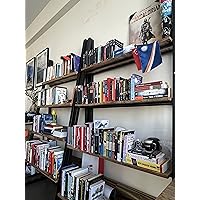
The first book you see in a bookstore (finished reading April 24, 2016)
What is wrong with this book? I don't suppose there is actually something "wrong" with it, and in fact the book did provide me with some entertainment and the book did make me lust about traveling to Japan the whole time.
The whole concept of eating your own across Japan is actually a really great idea for a book and I felt that if there were similar books like this one in Japanese, I would have loved to read them. I would have also liked to have read similar books about eating your way through Spain or eating your way through Italy because who doesn't love to eat and read about eating?
"As a reader, I don't feel a story has an obligation to make me happy. I want stories to show me a bigger world than the one I know." --John Green
Paradoxically, a book that attempts to explain the mysteries of eating in Japan or the love affair one has with Japanese food is not really helping me appreciate the real Japan because it doesn't go very deep. This book tries to go for breadth by trying to cover different "areas" of Japan but at the same time the way Japan is "sectioned" off is based on say, udon in this place, and seafood don in that place, but it doesn't really describe Japan for an outsider because your whole trip becomes running around Japan to eat something which is supposedly a specialty in that region when the foods described can be found elsewhere (except for maybe the Kyoto section). So meaning to say, it categories food without enough background for the reader to truly appreciate the context and then focuses on restaurants and foods that the author happened to eat at. I guess what I am trying to say is that if the author were to look back at his own book say 10 years from now, I am sure the author would himself agree that the book would be better arranged, and he would even include other foods and other "representative" restaurants, because you learn as you grow.
For example, the section on Tokyo restaurants. It mentions the cocktail bar, the sushi place, and that one yakitori place, and a coffee review? It is not that helpful actually. It is like a compilation of reviews but I cannot get the sense of what the author wants me to take away from this section.
Maybe after reading this book my only takeaway is to stop reading this book and hop on an airplane to Japan right now. Maybe for this book, it may be considered a success.
EDIT May 27, 2016: I have kept my review back at 2 stars after watching Mind of a Chef with David Chang, because after watching 4 episodes of the show, I've found that the the book is very similar to the show. Could also be because Anthony Bourdain was narrating the show, and I would like to read a book about eating your way through Japan written by David Chang.
What is wrong with this book? I don't suppose there is actually something "wrong" with it, and in fact the book did provide me with some entertainment and the book did make me lust about traveling to Japan the whole time.
The whole concept of eating your own across Japan is actually a really great idea for a book and I felt that if there were similar books like this one in Japanese, I would have loved to read them. I would have also liked to have read similar books about eating your way through Spain or eating your way through Italy because who doesn't love to eat and read about eating?
"As a reader, I don't feel a story has an obligation to make me happy. I want stories to show me a bigger world than the one I know." --John Green
Paradoxically, a book that attempts to explain the mysteries of eating in Japan or the love affair one has with Japanese food is not really helping me appreciate the real Japan because it doesn't go very deep. This book tries to go for breadth by trying to cover different "areas" of Japan but at the same time the way Japan is "sectioned" off is based on say, udon in this place, and seafood don in that place, but it doesn't really describe Japan for an outsider because your whole trip becomes running around Japan to eat something which is supposedly a specialty in that region when the foods described can be found elsewhere (except for maybe the Kyoto section). So meaning to say, it categories food without enough background for the reader to truly appreciate the context and then focuses on restaurants and foods that the author happened to eat at. I guess what I am trying to say is that if the author were to look back at his own book say 10 years from now, I am sure the author would himself agree that the book would be better arranged, and he would even include other foods and other "representative" restaurants, because you learn as you grow.
For example, the section on Tokyo restaurants. It mentions the cocktail bar, the sushi place, and that one yakitori place, and a coffee review? It is not that helpful actually. It is like a compilation of reviews but I cannot get the sense of what the author wants me to take away from this section.
Maybe after reading this book my only takeaway is to stop reading this book and hop on an airplane to Japan right now. Maybe for this book, it may be considered a success.
EDIT May 27, 2016: I have kept my review back at 2 stars after watching Mind of a Chef with David Chang, because after watching 4 episodes of the show, I've found that the the book is very similar to the show. Could also be because Anthony Bourdain was narrating the show, and I would like to read a book about eating your way through Japan written by David Chang.
November 15, 2019
Relentlessly self-conscious- a rich kid trying to act like he knows what humility is. The text feels cold and insincere even as you read what feels like the millionth use of the word 'perfection.'
The failure of the book is illustrated on the last page: after reading about masters who spend 60 or even 80 years achieving impossible levels of skill with their food of choice, the book ends with a picture of some jerk butchering a fish with a cigarette hanging out of his mouth. A cigarette whose scent and filthy ash may linger on the meat, whose presence in the butcher's mouth shows that his full focus is not on his work. It's like the author is saying, "hey, everything I just wrote? Whatever, bruh."
The failure of the book is illustrated on the last page: after reading about masters who spend 60 or even 80 years achieving impossible levels of skill with their food of choice, the book ends with a picture of some jerk butchering a fish with a cigarette hanging out of his mouth. A cigarette whose scent and filthy ash may linger on the meat, whose presence in the butcher's mouth shows that his full focus is not on his work. It's like the author is saying, "hey, everything I just wrote? Whatever, bruh."

January 2, 2017
I had to abandon this book. I was so excited about it- having lived in Japan for four years and loving the food and culture, I thought it would be the perfect book for me. Not so. The book is oozing with pretentiousness, making it absolutely impossible to enjoy. It's wonderful that they highlight those dedicated to their craft, I'll give them that. But it's too painfully obnoxious to read.

February 11, 2016
An exquisite book that I'm now tempted to buy after borrowing this from the library. There's a real empathy and respect for the Japanese art of shokunin - craftsmen who concentrate on one specific item, whether it's okonomiyaki or ramen or yakitori - beautifully written and accompanied by deliciously moody photographs. I love that there are profile pieces on so many fascinating characters too. It's a terrific homage that never veers into patronising territory or gawking sensationalism as many travel writers are wont to do.
May 25, 2017
Maybe it's because I've never dropped my cutlery after being so astounded by the first bite of some food, but Rice, Noodle, Fish came across as overly dramatic and often pretentious. The more factual writing about the history of some item of food or type of meal was well written and the small guides to various things like types of sushi were nicely displayed, but the anecdotes were often painful to read.
I could tell from the moment I began reading the correspondance between the author and Anthony Bourdaine that I probably wouldn't get on with the author, but hoped that its style wouldn't continue throughout the book. Unfortunately, it did. The first three chapters were especially bothersome and whilst the later chapters contained fewer anecdotes, focusing more on food and the people creating it, they still slipped into hyperbole every so often.
I wish I hadn't felt this way about the author or his style as the book was often interesting, but it ripped me out of the world he was creating and that unfortunately ruined the book for me. If you enjoy, or can get over, the initial correspondence, you'll probably enjoy this book; if not, then I'd avoid it.
I could tell from the moment I began reading the correspondance between the author and Anthony Bourdaine that I probably wouldn't get on with the author, but hoped that its style wouldn't continue throughout the book. Unfortunately, it did. The first three chapters were especially bothersome and whilst the later chapters contained fewer anecdotes, focusing more on food and the people creating it, they still slipped into hyperbole every so often.
I wish I hadn't felt this way about the author or his style as the book was often interesting, but it ripped me out of the world he was creating and that unfortunately ruined the book for me. If you enjoy, or can get over, the initial correspondence, you'll probably enjoy this book; if not, then I'd avoid it.

December 6, 2021
What a fantastic reading/listening experience! Brilliantly written by Matt Goulding and superbly narrated by Will Damron, this book is literally a combination of symphony and poetry - at the altar of Japan's food, travel, and culture. I am amazed and in awe of the author's ability to beautifully describe the food, culture, and Japanese precision and commitment to the art of the senses. Traveling across Japan, he showcases the many faces of Japan's food culture region by region, made deeply personal and intimate by his relationships and insights into those who prepare and serve exquisite and sumptuous fare - whether it's street food or a several course meal evening. Beyond food, the author takes the reader inside Japanese society and gives us a taste of what it's like for an outsider in Japan - a challenging feat in a culture not even accepting of those outside of local communities let alone foreigners. This is the best food book I've ever read - not only because of the food, but also because of the author's ability to capture the homage and pride the Japanese people have regarding the art and science of food. Goulding's writing is beyond phenomenal. He so aptly conveys the complete oneness and communion the chefs have with their ingredients, the painstaking and precise preparation, and the careful harmony of dishes that are served at the table. To be an expert on food is one thing, to wax eloquently about it is another - hands down Goulding does both brilliantly. The book was superbly narrated by Will Damron. I can't wait to read/listen to Grape, Olive, Pig: Deep Travels Through Spain's Food Culture and Pasta, Pane, Vino: Deep Travels Through Italy's Food Culture. This is a five-plus stars read and I highly recommend the book - bon appetit!

February 19, 2021
Rice, Noodle, Fish is an immersive read that takes the reader into the depths of Japanese food culture from the eyes of an eager outsider. This formula was tried and perfected by Anthony Bourdain, and Goulding wrote this book with consultation from Bourdain. It's a sensual read that does balance the uglier sides of Japan with the glitz and glamor. My biggest problem with this genre of food writing is on full display, though: that the author portrays his experiences as universal to those interested, without the recognition as a handsome white journalist a lot more doors were open to him.
I came across Goulding's series and was pleasantly surprised by his second entry, Grape, Olive, Pig (about Spain). The stories in Grape, Olive, Pig felt strongly personal and written in such a way that felt immersive and captivating. As I noted in my review there, I started with Spain, because I dreaded the kind of treatment a white guy in Japan would give. While Rice, Noodle, Fish was better than my initial dismissiveness, that gaijin special treatment does come through in his dispatches from Japan.
I really shouldn't focus on how much the special treatment that Goulding receives in Japan irks me, but he does write it in second-person. "You" do x,y,z thing that was really only open to the white guy at a snug izakaya. When I was in Japan, I never got random "kanpais" at every bar I went to. I never got treated special by hosts and chefs alike. The presumption that "you" walk into a bar and are treated like an honored guest by virtue of being there reeks of both the colonial attitude of the Japanese Goulding encounters, as well as the lack of recognition from Goulding that this is anything but ordinary.
It just frustrates me. I really do enjoy Goulding's love and passion for food and respect for the work that goes into it. I appreciate this richness of his descriptions, and I even like his use of second-person narrative. But as an Asian-American, I can see the forces at play by reading between-the-lines. And for that, this book is tainted.
And it's not just Goulding's own experiences. His snapshots of okonomiyaki in Hiroshima and onsens in Hokkaido rely on a Guatemalan-American chef and a hulking Australian guy's narratives, respectively. Having an outsider's in-depth, multi-year experience with Japan's food culture is a fair way to extract the nuance that a journalist could only have a cursory personal experience with, but it can't be a substitute for being born and raised into that culture. Goulding either seeks out the rebels in the culture, or can only get access with them. But how can a rebel give a clear-eyed picture of the real state of affairs when they're actively rebelling against it?
Let's just say that if I didn't follow my gut instinct, and read Goulding's Japan book before Spain, I wouldn't have continued with the series. The gorgeous writing of food is just too overshadowed by my own negative experiences with the underbelly of American foodie culture: Columbusing foods I once was mocked for eating, having a white guy to explain my culture's own rich cuisine because somehow we're not capable of doing so, and that callous cruelty of claiming to be an advocate for people who want to speak for themselves.
I'm hoping to see more of Goulding's humility in Pasta, Pane, Vino (Italy) that I read in Spain, than the privileged POV that I got with Japan.
I came across Goulding's series and was pleasantly surprised by his second entry, Grape, Olive, Pig (about Spain). The stories in Grape, Olive, Pig felt strongly personal and written in such a way that felt immersive and captivating. As I noted in my review there, I started with Spain, because I dreaded the kind of treatment a white guy in Japan would give. While Rice, Noodle, Fish was better than my initial dismissiveness, that gaijin special treatment does come through in his dispatches from Japan.
I really shouldn't focus on how much the special treatment that Goulding receives in Japan irks me, but he does write it in second-person. "You" do x,y,z thing that was really only open to the white guy at a snug izakaya. When I was in Japan, I never got random "kanpais" at every bar I went to. I never got treated special by hosts and chefs alike. The presumption that "you" walk into a bar and are treated like an honored guest by virtue of being there reeks of both the colonial attitude of the Japanese Goulding encounters, as well as the lack of recognition from Goulding that this is anything but ordinary.
It just frustrates me. I really do enjoy Goulding's love and passion for food and respect for the work that goes into it. I appreciate this richness of his descriptions, and I even like his use of second-person narrative. But as an Asian-American, I can see the forces at play by reading between-the-lines. And for that, this book is tainted.
And it's not just Goulding's own experiences. His snapshots of okonomiyaki in Hiroshima and onsens in Hokkaido rely on a Guatemalan-American chef and a hulking Australian guy's narratives, respectively. Having an outsider's in-depth, multi-year experience with Japan's food culture is a fair way to extract the nuance that a journalist could only have a cursory personal experience with, but it can't be a substitute for being born and raised into that culture. Goulding either seeks out the rebels in the culture, or can only get access with them. But how can a rebel give a clear-eyed picture of the real state of affairs when they're actively rebelling against it?
Let's just say that if I didn't follow my gut instinct, and read Goulding's Japan book before Spain, I wouldn't have continued with the series. The gorgeous writing of food is just too overshadowed by my own negative experiences with the underbelly of American foodie culture: Columbusing foods I once was mocked for eating, having a white guy to explain my culture's own rich cuisine because somehow we're not capable of doing so, and that callous cruelty of claiming to be an advocate for people who want to speak for themselves.
I'm hoping to see more of Goulding's humility in Pasta, Pane, Vino (Italy) that I read in Spain, than the privileged POV that I got with Japan.

July 18, 2017
"Rice, Noodle, Fish" is a travelogue through the delicious and fascinating food culture of Japan. When I travel, one of my favorite things to do is to explore the new place through their food. This is a gorgeous book that takes us to many different parts of Japan to show us how the Japanese prepare and eat their food. One word of warning: do not read this book while you are hungry. If you do and you don't have quick access to authentic Japanese food, you're probably going to eat the book and that's really frowned upon! So count yourself warned...
This is not only a book about food but a book about the culture around the food. In many different cultures, food brings people together. It's no different in Japan. This book was published under Anthony Bourdain's publishing imprint and that's no surprise: this book feels like a readable version of "Parts Unknown," a show I absolutely love! The author talks not only about the food but about the people who make the food and the people that eat the food. This whole book is a treat for the senses and could only be made better if it actually came with the food that the book talks about.
I have never been to Japan before but it is definitely on my list of places to visit someday. I really, really want to visit now after reading this book!
This is not only a book about food but a book about the culture around the food. In many different cultures, food brings people together. It's no different in Japan. This book was published under Anthony Bourdain's publishing imprint and that's no surprise: this book feels like a readable version of "Parts Unknown," a show I absolutely love! The author talks not only about the food but about the people who make the food and the people that eat the food. This whole book is a treat for the senses and could only be made better if it actually came with the food that the book talks about.
I have never been to Japan before but it is definitely on my list of places to visit someday. I really, really want to visit now after reading this book!
July 30, 2023
Just by reading this book, I believe one would immediately shortlist Japan as a place to trek for weeks or months to experience its cultures, witness its geography, and of course enjoy its gastronomy.
This is not simply a book about Japanese cuisine. With food and beverages as the protagonists, Goulding introduces his readers basically to everything about Japan. I particularly enjoyed him diarising his encounters with the local restauranteurs and inn owners, sights and observations that he made while traveling and eating, as well as succinctly telling his readers about Japanese history relevant to any anecdote and food that he was spotlighting. He sought to ensure that I got as much context as I could without being verbose, so that I still find this a therapeutic read despite constantly taking in lots of information.
And definitely read this if you love Japanese cuisine, and are interested in food history and food culture. This book left no stone unturned in terms of showcasing Japanese food, even educating readers about the quintessential Japanese vending machines that dispenses all sorts of food, and the convenience stores which in Japan are ubiquitous food repositories.
This is not simply a book about Japanese cuisine. With food and beverages as the protagonists, Goulding introduces his readers basically to everything about Japan. I particularly enjoyed him diarising his encounters with the local restauranteurs and inn owners, sights and observations that he made while traveling and eating, as well as succinctly telling his readers about Japanese history relevant to any anecdote and food that he was spotlighting. He sought to ensure that I got as much context as I could without being verbose, so that I still find this a therapeutic read despite constantly taking in lots of information.
And definitely read this if you love Japanese cuisine, and are interested in food history and food culture. This book left no stone unturned in terms of showcasing Japanese food, even educating readers about the quintessential Japanese vending machines that dispenses all sorts of food, and the convenience stores which in Japan are ubiquitous food repositories.

December 21, 2018
Good writing, nice photos, nice feel to the book overall. He’s very enthusiastic but I don’t relate because the food just mostly is unappealing to me as a vegetarian... maybe my score would’ve been higher otherwise. I wish he addressed the inherent cultural sexism more, especially since the food world is also already sexist most places. I liked how he featured various people. Didn’t like how he always seemed eager to point out how “Japanese” expats were after living there for a few years... it just seemed a weird thing to do especially for a country with so little immigration/diversity.

August 12, 2015
Nicely done foodie travelogue of Japan. If you like Jiro Dreams of Sushi, you will love this. No recipes, tho.

November 7, 2015
I had my first piece of sashimi between the ages of seven and nine. My father and paternal grandfather had taken my sister and myself out for dinner, and since my paternal grandfather was one of the co-owners of Saisaki, at the time one of the most popular Japanese restaurants in the Philippines, he and my father decided it was high time to introduce us to Japanese food. On that night, we had sashimi (but not sushi - my father isn’t a very big fan of it), shrimp tempura, and sukiyaki: not exactly a challenging set of dishes, to be sure, but good enough to get a pair of little girls out of their comfort zone so they can try something new.
Since I was just a child at the time, I don’t have enough memories to describe that meal in the way I could now. The strongest memory I carry from that time is the hard-earned lesson that one must not, under any circumstance, eat the entire lump of wasabi paste that comes with the sashimi. I still wince a little every time I remember the pain that came with that particular experience, to say nothing of how my sinuses seemed to drip nonstop for what felt like hours afterwards.
Despite painful recollections of eating nearly-pure wasabi, that initial introduction was successful, because I’ve enjoyed Japanese food ever since. From high-end delights to fast-food desperations (and occasionally regrets), I’ve tried to eat as much of Japanese cuisine as I possibly can - or at least, what’s available of it in the Philippines, which can be remarkably good, but isn’t quite the same as what can be had in its country of origin.
It is unsurprising, therefore, that when I saw a copy of Rice, Noodle, Fish: Deep Travels Through Japan’s Food Culture by Matt Goulding, my curiosity was immediately piqued. I enjoy reading about food, and travel, and since this book combined those two things in one volume while focusing on a country I’ve always wanted to visit but haven’t had the chance to, I thought it would be an enjoyable read.
Rice, Noodle, Fish is divided into seven chapters and a foreword, with each chapter titled after a particular area of Japan that Goulding visited over the course of writing the book, and over the course of his own, personal journeys through the country. Some of those areas might be familiar to the reader because of their popularity as tourist destinations (such as Tokyo, Osaka, and Kyoto), or because they weigh heavily in historical memory (such as Hiroshima). But Goulding tackles some unfamiliar places as well, places that might not ring any bells in the minds of some readers: Hokkaido, Fukuoka, Noto. Starting with the most popular destination (Tokyo) and working his way to the most obscure (Noto), Goulding eats his way across Japan, and through its food, and the people who make that food, tries to understand a culture that, in many ways, is still closed to outsiders.
The book opens with an exchange of letters between Goulding and Anthony Bourdain, in which the two of them discuss the feasibility of Roads & Kingdoms (a media outlet Goulding cofounded with Nathan Thornburgh) creating a book about food and travel in Japan. In those letters, both Goulding and Bourdain talk about the fascinating yet impenetrable nature of Japanese culture, attempting to answer the main question Goulding has about the whole endeavour: how does a gaijin, a foreigner, even begin to talk about a culture where he or she will forever be on the outside? Bourdain understands the challenge, but also the appeal, as shown in this quote from his response to one of Goulding’s letters:
In Japan you are confronted constantly, almost violently, with how much you don’t know. I liked that feeling. I liked that steep, virtually impossible learning curve. I liked, it turned out, that feeling of being a stranger in a strange yet wonderful land, not understanding the language, lost. Every little thing was a discovery.
In his response, Goulding acknowledges that he is entirely aware of his outsider status, and instead of attempting to rectify it, he will accept it wholeheartedly, and let the insiders do the talking:
There is no escaping my place as the most outside of outsiders here, so I might as well embrace it. There will be plenty of expertise proffered along the way, just not from me—from the chefs and artisans and families who have this cuisine in their DNA, and who have opened up many doors as I’ve begun to eat my way through this country.
Then Goulding asks what might probably be the second most important question of all: who is this book for? Bourdain’s response is straightforward:
And as I sit here and reflect on “who this book is for and what its appeal might be” I no longer care. The more layers you can peel back, the better. The deeper you dive into all those things that make Japan so fascinating and so pleasurable to us, the better for humanity.
In many ways, Bourdain’s response has shaped Goulding’s approach to the subject at hand: Rice, Noodle, Fish is a wonderful, delicious dive into Japanese food, certainly, but Goulding tries to go deeper than that. He uses food as a doorway to other aspects of Japanese culture, aspects that might be lost on tourists who are just passing through, or foodies who only care about ticking off items on a list of Things to Eat While in Japan. For example, in the chapter about Osaka, Goulding attempts to use the relationship of food and drink to the Japanese people as a key to understanding who they are - in this instance, the difference between the Japanese at work, and the Japanese after work:
It takes place every evening between approximately five and six in cities across Japan, as salarymen and women emerge from gleaming steel structures that hold them captive during daylight hours and beeline it to the closest izakaya to eat and drink away the sting of the workday. The same people who stood so quietly, so tensely in line behind you, soon grow animated. Ties are loosened, hair let down, and kanpais ring out in spirited choruses as rank and order dissolve with each passing sip. From soba to miso to raw-tuna red, the most aggressive transformers wear the stages of devolution on their faces. You want to be near this; this is the Japan that runs antithetical to the one you have constructed in your head. This is the beauty of Japan: it builds a set of beliefs and perceptions during the day, only to destroy them once the sun goes down. Rigid? Reserved? Formal? Find a table, fill it with food and beer and new friends, and watch as all those stiff postures slacken.
Goulding is not, however, just about wide-eyed wonder: he does have a few slightly-less positive observations to make about Japanese culture. For example, in this excerpt he addresses the way the Japanese treat immigrants:
The Japanese are heroically hospitable when it comes to foreign visitors, but for immigrants the welcome mat can be harder to find. Even if you do make it here, adapt to the culture, commit a thousand kanji characters to memory, denounce your birth country, and feel deep down in your soul that you are as Japanese as pickled fish and electronic toilets, you will always be an outsider.
He also points out the deep-seated misogyny in Japan, one so deeply embedded in tradition that it persists into the twenty-first century - this, despite the fact that the role of women in the preservation of Japanese traditions, especially food traditions, is vital to its coherency and continuity:
You won’t find many women in the professional kitchens of Japan. The traditional structure for a family-owned restaurant involves the father running the kitchen, the mother controlling service, and son and daughter—if involved—divided along the same lines. Deep-rooted domestic roles and the odd backward belief arguably make the gender division here worse than you’d find in other parts of the world… There are, of course, women working hard to dissolve these divisions in restaurant kitchens across the country, but it’s mostly men you find slicing fugu, boiling soba, battering vegetables, and working the grills, griddles, and stovetops of Japan.
But behind closed doors, women are the ones who feed this country. More than domestic cooks, they are the guardians of secrets, keepers of the culinary flame, the ones who work silently to safeguard Japan’s remarkable food culture. At the heart of this preservation is the mother-daughter relationship.
While these insights are interesting, and may perhaps provide readers with some new perspective into Japanese culture as a whole, this is still a book about food, and Goulding turns his ample writing talents towards describing the food he encounters in all its glorious, delicious detail, using language that is guaranteed to give the reader intense cravings for whatever it is he’s describing. Take, for example, this excerpt, describing the tempura course of a kaiseki meal he has in Kyoto:
A round of tempura comes next: a harvest moon of creamy pumpkin, a gold nugget of blowfish capped with a translucent daikon sauce, and finally a soft, custardy chunk of salmon liver, intensely fatty with a bitter edge, a flavor that I’ve never tasted before.
Those familiar with kaiseki cuisine - Japan’s version version of French haute cuisine - might say that a kaiseki course warrants such language, but Goulding applies that kind of language even to something as prosaic as ramen:
[Akira Yoshino’s] is a Goldilocks bowl: medium body, golden in color, made from all parts of the pig cooked over twenty-four hours with nothing but water from the Chikobe River nearby. It asserts itself, coats your throat on the way down, but it doesn’t stick to your ribs the way the most intense bowls do.
While there are plenty such descriptions, Goulding does leave room for gentle irreverence, such as when he attempts to briefly describe, for those who have no patience for long-winded descriptions, what a shokunin is:
In the Western world, where miso-braised short ribs share menu space with white truffle pizza and sea bass ceviche, restaurants cast massive nets to try to catch as many fish as possible, but in Japan, the secret to success is choosing one thing and doing it really fucking well. Forever.
This touch of irreverent humour extends to other aspects of dining, besides the food:
A ramen shop in full feast mode sounds like a car vacuum suctioned against your front seat. It will take a few scaldings and a few stained shirts, but until you learn to properly slurp, expect to be lapped by grandpas whose bowls are dry before you’ve had the chance to slip the first noodles past your lips.
These are certainly not laugh-out-loud moments, but they are likely to elicit at least a chuckle, which is a lot more than some other food and travel writers can manage.
In addition to Goulding’s writing, there are plenty of lovely photographs - of the food, yes, of course, but also of the people who make the food. There are quite a few lovely portraits of the cooks and chefs whom Goulding speaks with throughout his journey. Some are clearly posed, but many of them are candid; I’m especially fond of a picture of Toyo-san, the one-man wizard behind a popular tachinomi eatery in Osaka. The photograph shows him grinning broadly, a cigarette dangling from one side of his mouth as he gives a thumbs-up to the camera, all while he sends an enormous jet of flame from a blowtorch onto some cubed meat resting on a grill in front of him. It is such a charismatic portrait that I’ve decided to look for this man and eat his food when I finally get the chance to go to Japan, if only because he seems like the kind of guy who makes the kind of food I like to eat.
It is this focus on the human aspect that I appreciate the most about this Rice, Noodle, Fish: the food is the way it is because of the people behind it, and the people behind the food are the way they are because of the culture that shaped them, and because of the way they view the future. From the father-and-son pair who are trying to move kaiseki cuisine forward into the twenty-first century, to the Guatemalan transplant making a name for himself as one of the best okonomiyaki chefs in the country, to the mother-and-daughter team working to keep alive age-old preservation techniques: Rice, Noodle, Fish reminds the reader that where there is good food there are, inevitably, good people who do the best they can, in the best way they know how.
Overall, Rice, Noodle, Fish: Deep Travels Through Japanese Food Culture is everything it promises on the cover: a journey through Japan’s psyche and history via its food and the people who dedicate themselves to making that food. Goulding’s writing is a delight to read: often funny, sometimes contemplative, but always entertaining. The pictures that accompany the writing serve to enhance the experience of the book, not only because it shows the reader the food Goulding describes, but also the people who make that food. This helps to keep the book true to Goulding and Bourdain’s idea of embracing the outsider status all foreigners bring with them when they come to Japan, and put the focus on the insiders - which is only as it should be. At the end of the book, it is almost guaranteed that the reader will dream of turning a corner in a sketchy part of Osaka or a country lane in Hokkaido, and finding, almost by serendipity, the delights that Goulding has described. I can think of no better encouragement to get onto the next flight to Japan than that.
Since I was just a child at the time, I don’t have enough memories to describe that meal in the way I could now. The strongest memory I carry from that time is the hard-earned lesson that one must not, under any circumstance, eat the entire lump of wasabi paste that comes with the sashimi. I still wince a little every time I remember the pain that came with that particular experience, to say nothing of how my sinuses seemed to drip nonstop for what felt like hours afterwards.
Despite painful recollections of eating nearly-pure wasabi, that initial introduction was successful, because I’ve enjoyed Japanese food ever since. From high-end delights to fast-food desperations (and occasionally regrets), I’ve tried to eat as much of Japanese cuisine as I possibly can - or at least, what’s available of it in the Philippines, which can be remarkably good, but isn’t quite the same as what can be had in its country of origin.
It is unsurprising, therefore, that when I saw a copy of Rice, Noodle, Fish: Deep Travels Through Japan’s Food Culture by Matt Goulding, my curiosity was immediately piqued. I enjoy reading about food, and travel, and since this book combined those two things in one volume while focusing on a country I’ve always wanted to visit but haven’t had the chance to, I thought it would be an enjoyable read.
Rice, Noodle, Fish is divided into seven chapters and a foreword, with each chapter titled after a particular area of Japan that Goulding visited over the course of writing the book, and over the course of his own, personal journeys through the country. Some of those areas might be familiar to the reader because of their popularity as tourist destinations (such as Tokyo, Osaka, and Kyoto), or because they weigh heavily in historical memory (such as Hiroshima). But Goulding tackles some unfamiliar places as well, places that might not ring any bells in the minds of some readers: Hokkaido, Fukuoka, Noto. Starting with the most popular destination (Tokyo) and working his way to the most obscure (Noto), Goulding eats his way across Japan, and through its food, and the people who make that food, tries to understand a culture that, in many ways, is still closed to outsiders.
The book opens with an exchange of letters between Goulding and Anthony Bourdain, in which the two of them discuss the feasibility of Roads & Kingdoms (a media outlet Goulding cofounded with Nathan Thornburgh) creating a book about food and travel in Japan. In those letters, both Goulding and Bourdain talk about the fascinating yet impenetrable nature of Japanese culture, attempting to answer the main question Goulding has about the whole endeavour: how does a gaijin, a foreigner, even begin to talk about a culture where he or she will forever be on the outside? Bourdain understands the challenge, but also the appeal, as shown in this quote from his response to one of Goulding’s letters:
In Japan you are confronted constantly, almost violently, with how much you don’t know. I liked that feeling. I liked that steep, virtually impossible learning curve. I liked, it turned out, that feeling of being a stranger in a strange yet wonderful land, not understanding the language, lost. Every little thing was a discovery.
In his response, Goulding acknowledges that he is entirely aware of his outsider status, and instead of attempting to rectify it, he will accept it wholeheartedly, and let the insiders do the talking:
There is no escaping my place as the most outside of outsiders here, so I might as well embrace it. There will be plenty of expertise proffered along the way, just not from me—from the chefs and artisans and families who have this cuisine in their DNA, and who have opened up many doors as I’ve begun to eat my way through this country.
Then Goulding asks what might probably be the second most important question of all: who is this book for? Bourdain’s response is straightforward:
And as I sit here and reflect on “who this book is for and what its appeal might be” I no longer care. The more layers you can peel back, the better. The deeper you dive into all those things that make Japan so fascinating and so pleasurable to us, the better for humanity.
In many ways, Bourdain’s response has shaped Goulding’s approach to the subject at hand: Rice, Noodle, Fish is a wonderful, delicious dive into Japanese food, certainly, but Goulding tries to go deeper than that. He uses food as a doorway to other aspects of Japanese culture, aspects that might be lost on tourists who are just passing through, or foodies who only care about ticking off items on a list of Things to Eat While in Japan. For example, in the chapter about Osaka, Goulding attempts to use the relationship of food and drink to the Japanese people as a key to understanding who they are - in this instance, the difference between the Japanese at work, and the Japanese after work:
It takes place every evening between approximately five and six in cities across Japan, as salarymen and women emerge from gleaming steel structures that hold them captive during daylight hours and beeline it to the closest izakaya to eat and drink away the sting of the workday. The same people who stood so quietly, so tensely in line behind you, soon grow animated. Ties are loosened, hair let down, and kanpais ring out in spirited choruses as rank and order dissolve with each passing sip. From soba to miso to raw-tuna red, the most aggressive transformers wear the stages of devolution on their faces. You want to be near this; this is the Japan that runs antithetical to the one you have constructed in your head. This is the beauty of Japan: it builds a set of beliefs and perceptions during the day, only to destroy them once the sun goes down. Rigid? Reserved? Formal? Find a table, fill it with food and beer and new friends, and watch as all those stiff postures slacken.
Goulding is not, however, just about wide-eyed wonder: he does have a few slightly-less positive observations to make about Japanese culture. For example, in this excerpt he addresses the way the Japanese treat immigrants:
The Japanese are heroically hospitable when it comes to foreign visitors, but for immigrants the welcome mat can be harder to find. Even if you do make it here, adapt to the culture, commit a thousand kanji characters to memory, denounce your birth country, and feel deep down in your soul that you are as Japanese as pickled fish and electronic toilets, you will always be an outsider.
He also points out the deep-seated misogyny in Japan, one so deeply embedded in tradition that it persists into the twenty-first century - this, despite the fact that the role of women in the preservation of Japanese traditions, especially food traditions, is vital to its coherency and continuity:
You won’t find many women in the professional kitchens of Japan. The traditional structure for a family-owned restaurant involves the father running the kitchen, the mother controlling service, and son and daughter—if involved—divided along the same lines. Deep-rooted domestic roles and the odd backward belief arguably make the gender division here worse than you’d find in other parts of the world… There are, of course, women working hard to dissolve these divisions in restaurant kitchens across the country, but it’s mostly men you find slicing fugu, boiling soba, battering vegetables, and working the grills, griddles, and stovetops of Japan.
But behind closed doors, women are the ones who feed this country. More than domestic cooks, they are the guardians of secrets, keepers of the culinary flame, the ones who work silently to safeguard Japan’s remarkable food culture. At the heart of this preservation is the mother-daughter relationship.
While these insights are interesting, and may perhaps provide readers with some new perspective into Japanese culture as a whole, this is still a book about food, and Goulding turns his ample writing talents towards describing the food he encounters in all its glorious, delicious detail, using language that is guaranteed to give the reader intense cravings for whatever it is he’s describing. Take, for example, this excerpt, describing the tempura course of a kaiseki meal he has in Kyoto:
A round of tempura comes next: a harvest moon of creamy pumpkin, a gold nugget of blowfish capped with a translucent daikon sauce, and finally a soft, custardy chunk of salmon liver, intensely fatty with a bitter edge, a flavor that I’ve never tasted before.
Those familiar with kaiseki cuisine - Japan’s version version of French haute cuisine - might say that a kaiseki course warrants such language, but Goulding applies that kind of language even to something as prosaic as ramen:
[Akira Yoshino’s] is a Goldilocks bowl: medium body, golden in color, made from all parts of the pig cooked over twenty-four hours with nothing but water from the Chikobe River nearby. It asserts itself, coats your throat on the way down, but it doesn’t stick to your ribs the way the most intense bowls do.
While there are plenty such descriptions, Goulding does leave room for gentle irreverence, such as when he attempts to briefly describe, for those who have no patience for long-winded descriptions, what a shokunin is:
In the Western world, where miso-braised short ribs share menu space with white truffle pizza and sea bass ceviche, restaurants cast massive nets to try to catch as many fish as possible, but in Japan, the secret to success is choosing one thing and doing it really fucking well. Forever.
This touch of irreverent humour extends to other aspects of dining, besides the food:
A ramen shop in full feast mode sounds like a car vacuum suctioned against your front seat. It will take a few scaldings and a few stained shirts, but until you learn to properly slurp, expect to be lapped by grandpas whose bowls are dry before you’ve had the chance to slip the first noodles past your lips.
These are certainly not laugh-out-loud moments, but they are likely to elicit at least a chuckle, which is a lot more than some other food and travel writers can manage.
In addition to Goulding’s writing, there are plenty of lovely photographs - of the food, yes, of course, but also of the people who make the food. There are quite a few lovely portraits of the cooks and chefs whom Goulding speaks with throughout his journey. Some are clearly posed, but many of them are candid; I’m especially fond of a picture of Toyo-san, the one-man wizard behind a popular tachinomi eatery in Osaka. The photograph shows him grinning broadly, a cigarette dangling from one side of his mouth as he gives a thumbs-up to the camera, all while he sends an enormous jet of flame from a blowtorch onto some cubed meat resting on a grill in front of him. It is such a charismatic portrait that I’ve decided to look for this man and eat his food when I finally get the chance to go to Japan, if only because he seems like the kind of guy who makes the kind of food I like to eat.
It is this focus on the human aspect that I appreciate the most about this Rice, Noodle, Fish: the food is the way it is because of the people behind it, and the people behind the food are the way they are because of the culture that shaped them, and because of the way they view the future. From the father-and-son pair who are trying to move kaiseki cuisine forward into the twenty-first century, to the Guatemalan transplant making a name for himself as one of the best okonomiyaki chefs in the country, to the mother-and-daughter team working to keep alive age-old preservation techniques: Rice, Noodle, Fish reminds the reader that where there is good food there are, inevitably, good people who do the best they can, in the best way they know how.
Overall, Rice, Noodle, Fish: Deep Travels Through Japanese Food Culture is everything it promises on the cover: a journey through Japan’s psyche and history via its food and the people who dedicate themselves to making that food. Goulding’s writing is a delight to read: often funny, sometimes contemplative, but always entertaining. The pictures that accompany the writing serve to enhance the experience of the book, not only because it shows the reader the food Goulding describes, but also the people who make that food. This helps to keep the book true to Goulding and Bourdain’s idea of embracing the outsider status all foreigners bring with them when they come to Japan, and put the focus on the insiders - which is only as it should be. At the end of the book, it is almost guaranteed that the reader will dream of turning a corner in a sketchy part of Osaka or a country lane in Hokkaido, and finding, almost by serendipity, the delights that Goulding has described. I can think of no better encouragement to get onto the next flight to Japan than that.

September 13, 2025
An American’s culinary travelogue that details a sampling of Japan’s food shokunin (master craftsmen) circa 2010–2014. How it lands depends a lot on what you expect: as a guidebook it’s too impressionistic; as pure food writing the lyricism can verge on precious; as cultural history it skims the surface—but as on-the-ground snapshots, it mostly works.
Chapters are organized by culinary destinations—sometimes a city, sometimes a prefecture, occasionally an entire region—depending on how Goulding felt Japanese food culture was best represented. The itinerary: Tokyo, Osaka, Kyoto, Fukuoka, Hiroshima (cities); Hokkaidō (prefecture/island); Noto (peninsula in Ishikawa Prefecture). The “Plus” asides (e.g., “Know Before You Go,” “The Knife Makers of Sakai,” “The Ramen Matrix”) function as lively rest stops between narratives.
The emphasis is on mom-and-pop shops and the people behind them—a focus that gives the book a human, soulful touch and privileges craft over spectacle, which I prefer to glossy franchises and big-name temples of gastronomy.
Reading can feel uneven; with no overarching thesis, each chapter stands alone and the connective tissue is mostly thematic. Stylistically, Goulding sometimes drops from lush, carefully wrought prose into casual crudity—e.g., a tossed-off “shit”—which cheapens the register and undercuts the cultivated tone he spends pages building.
I wavered between 3 and 4 stars and settled around 3.75: entertaining and informative—if broadly superficial—a vivid snapshot of Japan’s food culture at a particular moment in time.
Chapters are organized by culinary destinations—sometimes a city, sometimes a prefecture, occasionally an entire region—depending on how Goulding felt Japanese food culture was best represented. The itinerary: Tokyo, Osaka, Kyoto, Fukuoka, Hiroshima (cities); Hokkaidō (prefecture/island); Noto (peninsula in Ishikawa Prefecture). The “Plus” asides (e.g., “Know Before You Go,” “The Knife Makers of Sakai,” “The Ramen Matrix”) function as lively rest stops between narratives.
The emphasis is on mom-and-pop shops and the people behind them—a focus that gives the book a human, soulful touch and privileges craft over spectacle, which I prefer to glossy franchises and big-name temples of gastronomy.
Reading can feel uneven; with no overarching thesis, each chapter stands alone and the connective tissue is mostly thematic. Stylistically, Goulding sometimes drops from lush, carefully wrought prose into casual crudity—e.g., a tossed-off “shit”—which cheapens the register and undercuts the cultivated tone he spends pages building.
I wavered between 3 and 4 stars and settled around 3.75: entertaining and informative—if broadly superficial—a vivid snapshot of Japan’s food culture at a particular moment in time.

June 28, 2024
Oh baby, I’ve been waiting all day to write this review :)
Rating this book led me to some major self-evaluation. I recently read another book in this series which was about Italy while I myself was in Italy. That prior reading was an exceptional experience because I could tangibly relate to many of the things he was sharing / I was living. This book was decisively less enjoyable for me; as has been a theme recently, I think that’s my fault. I listened to this book sped-up on audio which is not the ideal format for a novel about food in an unfamiliar language with really detailed descriptions. I think my desire to read fast and often (100 book year, here I come) impedes my enjoyment of and ability to learn from my reads.
My reading experience was 3 stars, but I’m confident that the quality is 4/5 worthy and I just got in the way. Thank you for engaging with my monologue; I’m committed to being not only a reader, but a quality reader, so I need to make some thoughtful changes.
Rating this book led me to some major self-evaluation. I recently read another book in this series which was about Italy while I myself was in Italy. That prior reading was an exceptional experience because I could tangibly relate to many of the things he was sharing / I was living. This book was decisively less enjoyable for me; as has been a theme recently, I think that’s my fault. I listened to this book sped-up on audio which is not the ideal format for a novel about food in an unfamiliar language with really detailed descriptions. I think my desire to read fast and often (100 book year, here I come) impedes my enjoyment of and ability to learn from my reads.
My reading experience was 3 stars, but I’m confident that the quality is 4/5 worthy and I just got in the way. Thank you for engaging with my monologue; I’m committed to being not only a reader, but a quality reader, so I need to make some thoughtful changes.

March 24, 2017
What an awesome book! Thoroughly enjoyed it.
“The concept of shokunin, an artisan deeply and singularly dedicated to their craft, is at the core of Japanese culture. Behind closed doors. Down dark alleyways. Hiding in every corner of this country. The 80-year-old tempura man who has spent six decades discovering the subtle differences yielded by temperature and motion. The 12th-generation unagi sage who uses metal skewers like an acupuncturist uses needles, teasing the muscles of wild eel into new territories. The young man who has grown old at his father’s side, measuring his age in kitchen lessons. Any moment now, it will be his turn to be the master and, when he is, he’ll know exactly what to do.” -Matt Goulding
“In Japan, the secret to success is choosing one thing and doing it really well. Forever. There are people who dedicate their entire lives to grilling chicken, slicing fish, kneading buckwheat into tangles of chewy noodles—microdisciplines with infinite room for improvement.”-Matt Goulding
“The concept of shokunin, an artisan deeply and singularly dedicated to their craft, is at the core of Japanese culture. Behind closed doors. Down dark alleyways. Hiding in every corner of this country. The 80-year-old tempura man who has spent six decades discovering the subtle differences yielded by temperature and motion. The 12th-generation unagi sage who uses metal skewers like an acupuncturist uses needles, teasing the muscles of wild eel into new territories. The young man who has grown old at his father’s side, measuring his age in kitchen lessons. Any moment now, it will be his turn to be the master and, when he is, he’ll know exactly what to do.” -Matt Goulding
“In Japan, the secret to success is choosing one thing and doing it really well. Forever. There are people who dedicate their entire lives to grilling chicken, slicing fish, kneading buckwheat into tangles of chewy noodles—microdisciplines with infinite room for improvement.”-Matt Goulding

August 30, 2017
It's easy for food and travel writing to fall flat, or circle around cliches that are just as easy to stumble upon on sites like Medium or even Tumblr. But Goulding takes an incredibly fresh look at a foreign country that I've lived in, waxing lyrical but brilliantly on Japanese food culture. Spanning the culinary must-sees of Tokyo to the neglected regions of Fukuoka and Noto, Goulding tells the stories of each sub-region's cuisine through engaging and interesting characters. In some settings, his guides are more of a deus ex machina to propel him through the bewildering list of food options, while other persons are more the core of the story than the food itself. But each chapter was a distinct pleasure to read, and consumers are treated to some excellent photographic intermissions as well. Although not a Japan expert himself, I'd argue that Goulding does a good job of capturing the curious and beauty of Japanese cuisine without fetishizing it as mysterious of exotic, which is not always an easy task.

July 3, 2019
Apasionante y didáctico viaje (con toques de humor) por la extraordinaria cultura gastronómica japonesa. A través de varios shokunins (artesanos dedicados a buscar la perfección) conocemos mejor el sushi, ramen, yakitori, cocina kaiseki, okonomiyaki, karaage....El elemento esencial, como en la vida, es el "kimochi" (la emoción). La búsqueda de la emoción es el camino hacia el éxito.
March 12, 2017
Simply too pretentious throughout. Rhapsodizing over a chef whose passion is showcasing water? It's time to tell the emperor he has no clothes on. The two stars are for the interesting pictures.

September 2, 2022
Glorious, just glorious. This should be considered the Bible of Japanese food (and I say that as a devout Christian). I spent several weeks savoring it, equal parts nostalgic for the dishes I remember and fantasizing about the ones I haven’t tried. I also appreciate the breadth covered here: not just Tokyo, Kyoto, or Osaka which would be typical but also some lesser known or rural areas. As sparkling as the prose is, I have to say I think it’s the beautiful photography that really pushes it over the top for me. It’s a gorgeous, well written and well designed love letter to Japanese food and I can’t wait to reread it.

May 26, 2025
A hefty tome on the various regional foods of Japan ranging from the obvious to the more niche. Each chapter focuses in a different region telling a story of the current chefs, farmers and artisan and the history of the regions food culture. These chapters feature rich storytelling and excellent food writing. They particularly excel in lesser known regions like rural Hokkaido and Noto.
The more obvious regions can be a little weaker especially with Japanese food culture becoming as popular as it is today.
Peppered in between the chapters are some more photo heavy sections highlighting particular foods, ingredients or techniques. These are honestly mostly skippable as they tend to just retread the chapters or say very obvious things.
All in all another great book on Japanese food.
The more obvious regions can be a little weaker especially with Japanese food culture becoming as popular as it is today.
Peppered in between the chapters are some more photo heavy sections highlighting particular foods, ingredients or techniques. These are honestly mostly skippable as they tend to just retread the chapters or say very obvious things.
All in all another great book on Japanese food.

August 21, 2026
Another stop on the honeymoon prep book tour! My only critiques of this book are format ones. I enjoyed the narrative style and the layout, but I felt like some of the full page photos and infographics were misplaced and took me out of the narrative. These would have been better placed at the end of chapters - or at least in a natural stopping point mid chapter, instead of splitting a sentence or, in at least one case, an entire word. I am coming away from this book with a much greater knowledge of Japanese cuisine and I’m so excited to try everything!

November 21, 2023
An incredible book about all the amazing food in various cities around Tokyo, you learn about their culture, what to look for when you travel, the quirks and uniqueness of this country. I have seen quite a few chefs/restaurant they mention in the book, on Netflix, which is amazing to read about it more detail. A must read for a foodie.

March 12, 2024
Matt te transporta a Japón con su escritura llena de admiración por la cultura japonesa, descubres lugares, gentes, olores y sabores. No es el típico libro sobre comida, en él no solo descubres una cultura culinaria muy distinta a la occidental, también descubres a sus gentes y motivaciones.
Tiene el peligro de acabar el libro y empezar a buscar vuelos a Japón.
Tiene el peligro de acabar el libro y empezar a buscar vuelos a Japón.
September 18, 2018
Was surprised by how much I enjoyed the book. Loved the anecdotes and history behind Japanese food local to each city. This is food writing at its best. Going to pick up Goulding's books on Spain and Italy now.
July 23, 2024
There were some terrific chapters telling the story of Japanese cuisine. Unfortunately, some of the chapters descended into a list of ingredients. If I had a nickel for every time he said “Daikon marinaded in soy and ginger”….
Most excited to eat the yakitori in Osaka and tonkotsu ramen. And of course the sushi.
Most excited to eat the yakitori in Osaka and tonkotsu ramen. And of course the sushi.
Displaying 1 - 30 of 258 reviews